Table of Contents
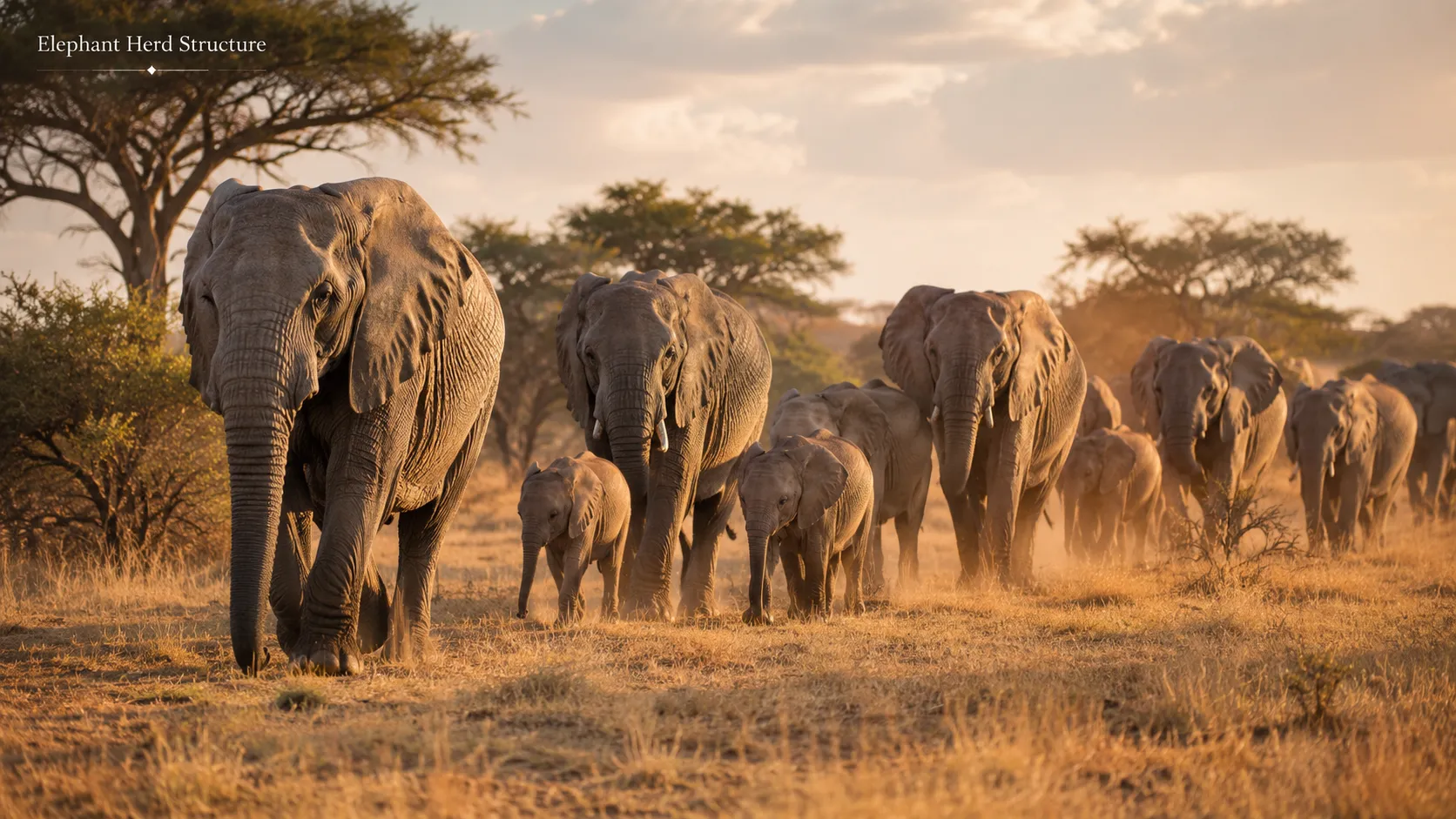
Elephants are among the most socially complex animals on Earth. Their elephant herd structure is built on deep family bonds, clear leadership, and decades of shared memory. A single herd can include up to 30 individuals, all led by one experienced female.
Researchers at the Amboseli Elephant Research Project, running since 1972, have documented over 1,600 individual African elephants across multiple generations.
That long-term data confirms one fact: elephant society is not random. It is highly organized, emotionally rich, and biologically driven. Understanding elephant herd structure tells us a great deal about intelligence, cooperation, and survival in the wild.
The Core Unit: What Is an Elephant Family Group?
Size and Composition
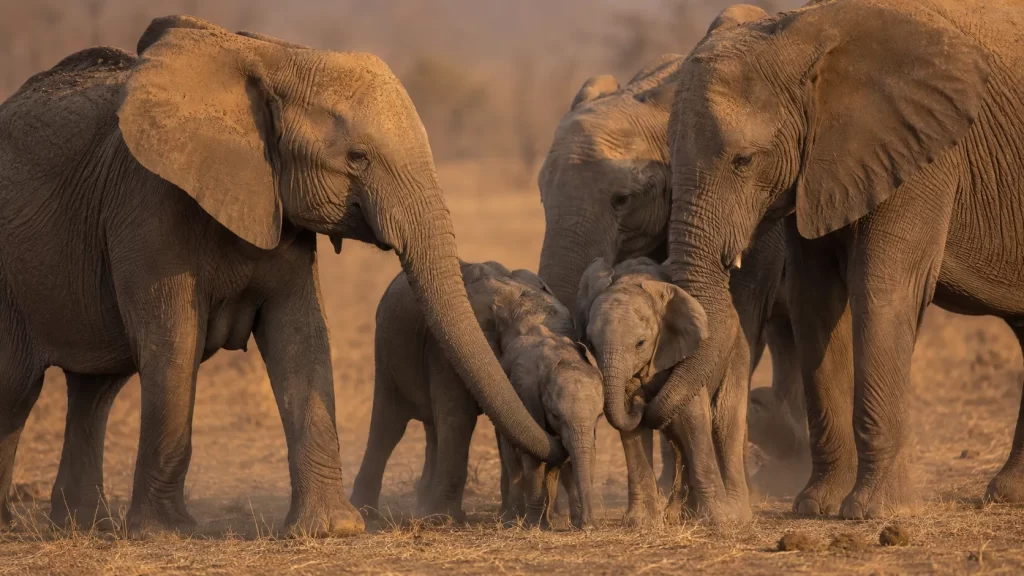
The basic unit of elephant social life is the elephant family group. This group typically contains 6 to 20 related females and their offspring. Family groups are not loosely gathered animals. They are tightly bonded units, often including a grandmother, her daughters, and their calves.
- Average family group size: 6–12 individuals (African savanna elephants)
- Asian elephant family groups tend to be slightly smaller, averaging 4–8 members
- Calves under 5 years old make up roughly 25% of any given family group
Family members coordinate daily movement, share food sources, and collectively protect young calves. Research published in Animal Behaviour (2011) found that elephant calves raised in larger family groups had a 39% higher survival rate in drought years than calves from smaller units.
Why Families Stay Together
Elephant family groups persist because cooperation improves survival. Females share allomothering duties; younger females help care for calves that are not their own. This behavior benefits the calf and gives younger females early parenting experience. Studies show allomothers spend up to 4.3 hours per day with calves, reducing stress on the biological mother by 31%.
The Elephant Matriarch: Leader, Memory Keeper, and Decision Maker
Who Becomes the Matriarch?
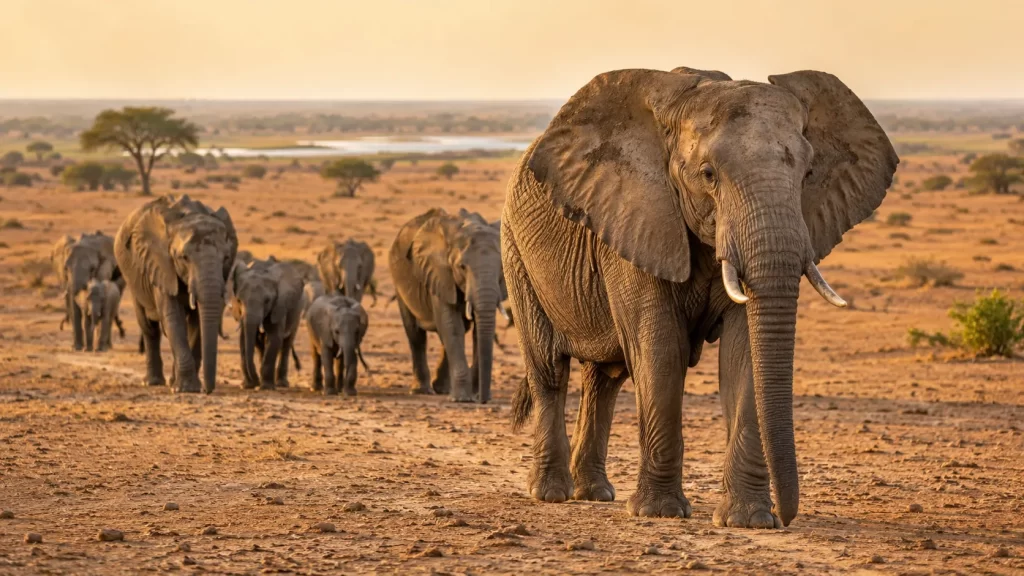
The elephant matriarch is the oldest and most experienced female in the group. She is rarely chosen; she earns her position through age and knowledge. Most matriarchs are over 45 years old. In Amboseli, matriarchs aged 55–65 led groups with the highest calf survival rates during periods of drought and predator pressure.
The matriarch makes critical daily decisions:
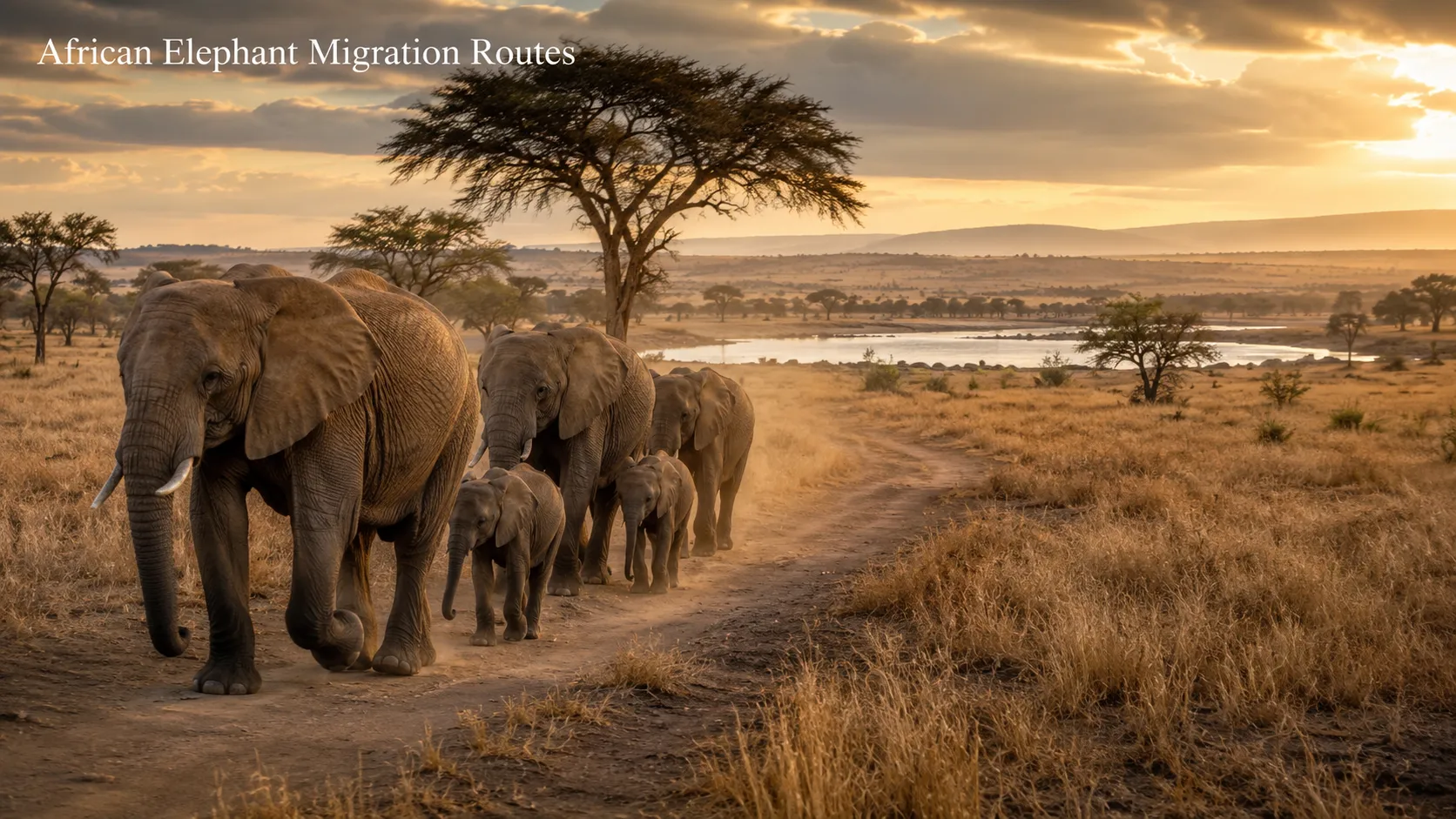
- Where to travel, she holds mental maps of water and food sources spanning hundreds of miles
- When to flee, she interprets threat signals and directs the herd’s escape
- When to engage, she leads defensive formations when calves are threatened
- How to respond socially, she manages interactions with rival groups and bull elephants
The Matriarch’s Social Knowledge
A 2011 study in Proceedings of the Royal Society B tested matriarchs’ ability to identify threatening male lion roars versus non-threatening ones. Matriarchs over 50 responded correctly 100% of the time. Younger females scored only 59%. This gap reflects accumulated knowledge, not instinct. The matriarch literally stores social intelligence that keeps the herd alive.
When a matriarch dies, herd cohesion weakens measurably. Post-poaching data from Kenya showed that groups losing their matriarch experienced a 47% increase in aggressive encounters with other herds within 12 months.
Elephant Herd Structure: Tiers Beyond the Family
Bond Groups and Clans
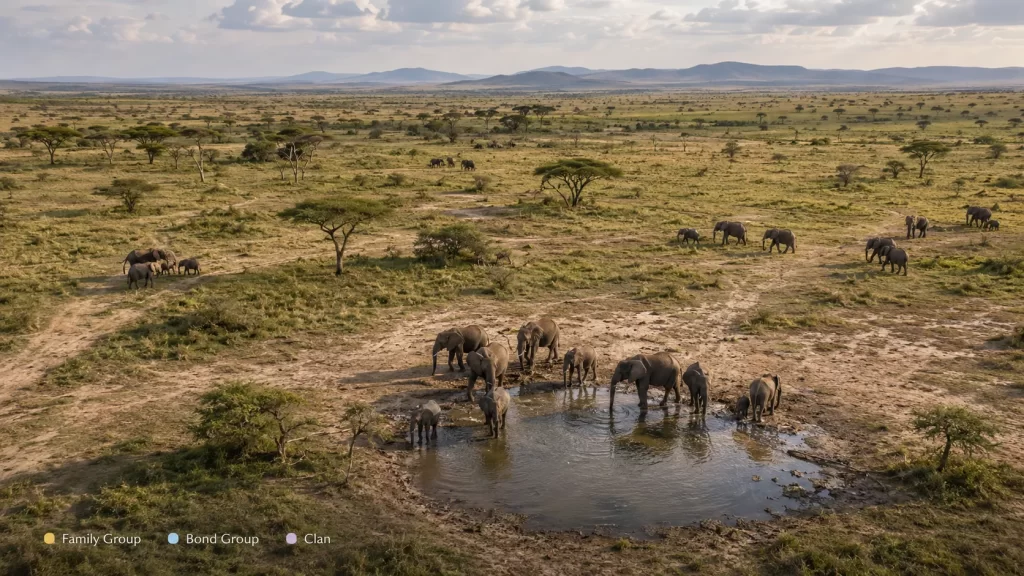
Elephant herd structure extends beyond the immediate family. Multiple family groups that share a home range and interact peacefully form what researchers call a bond group. A bond group typically includes 2–4 family units, around 30–50 elephants in total.
Above bond groups sit clans, loose collections of bond groups that occupy overlapping territories. Clan members may not interact daily, but they share the same dry-season refuges and water points.
| Level | Members | Size Range | Interaction Frequency |
|---|---|---|---|
| Family Group | Related females + calves | 6–20 individuals | Daily |
| Bond Group | 2–4 family groups | 30–50 individuals | Weekly |
| Clan | Multiple bond groups | 100–500 individuals | Seasonal |
| Population | All clans in a region | 500–thousands | Rare / dispersed |
This layered elephant herd structure ensures that knowledge, resources, and social relationships are distributed across a wide network, not concentrated in a single unit.
Bull Elephants: The Solitary Males
Why Males Leave the Herd
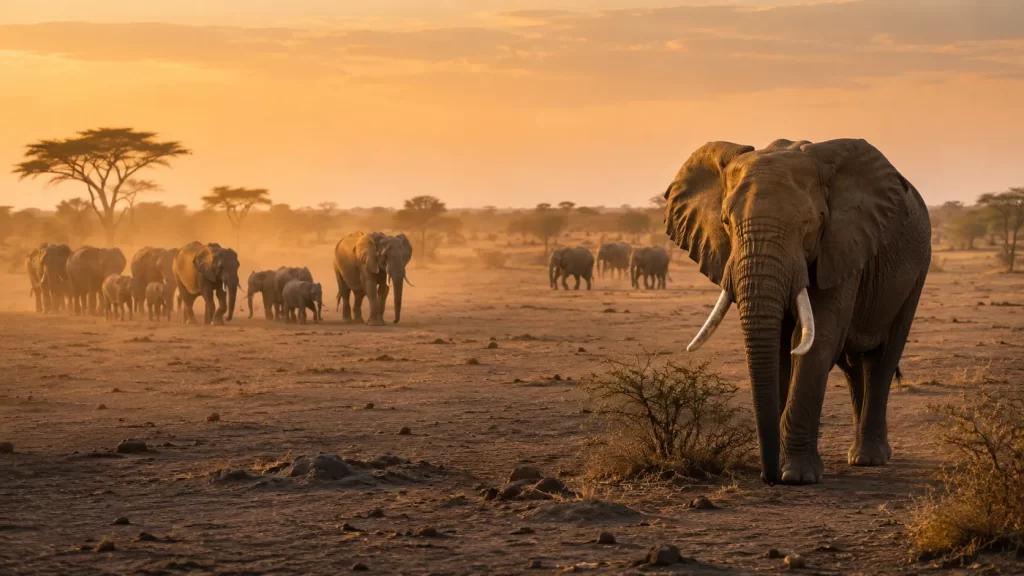
Male elephants, or bull elephants, leave their birth family between ages 10 and 14. This departure is gradual; young males begin spending more time on the edges of the group, then join all-male bachelor groups. By age 15, most bulls have separated from the family group.
Bull elephants are not antisocial. They form their own loose hierarchies within bachelor groups, with older bulls guiding younger males. These relationships teach young males critical social rules on how to display dominance without triggering injury, and when to retreat.
Key facts about bull elephant behavior:
- Adult bulls rejoin female herds primarily during musth, a hormonal state marked by elevated testosterone (up to 60 times normal levels)
- Musth periods last 2–3 months annually in mature bulls
- Dominant bulls over 40 years old father the vast majority of calves
- A study in Molecular Ecology (2006) found that bulls over 45 sired 75% of all calves in sampled Amboseli groups
Bull Hierarchy and Musth
Within bachelor groups, bull elephants establish rank through size, age, and confidence. Larger ears, deeper rumbles, and slow, deliberate walks signal high status. Direct fights are rare; most rank disputes are settled by posture alone. When musth does escalate into combat, bulls can sustain serious tusk injuries. Mortality from bull-on-bull combat averages 1.3% annually in studied populations.
Elephant Social Behaviour: Communication and Emotion
How Elephants Communicate Within the Herd
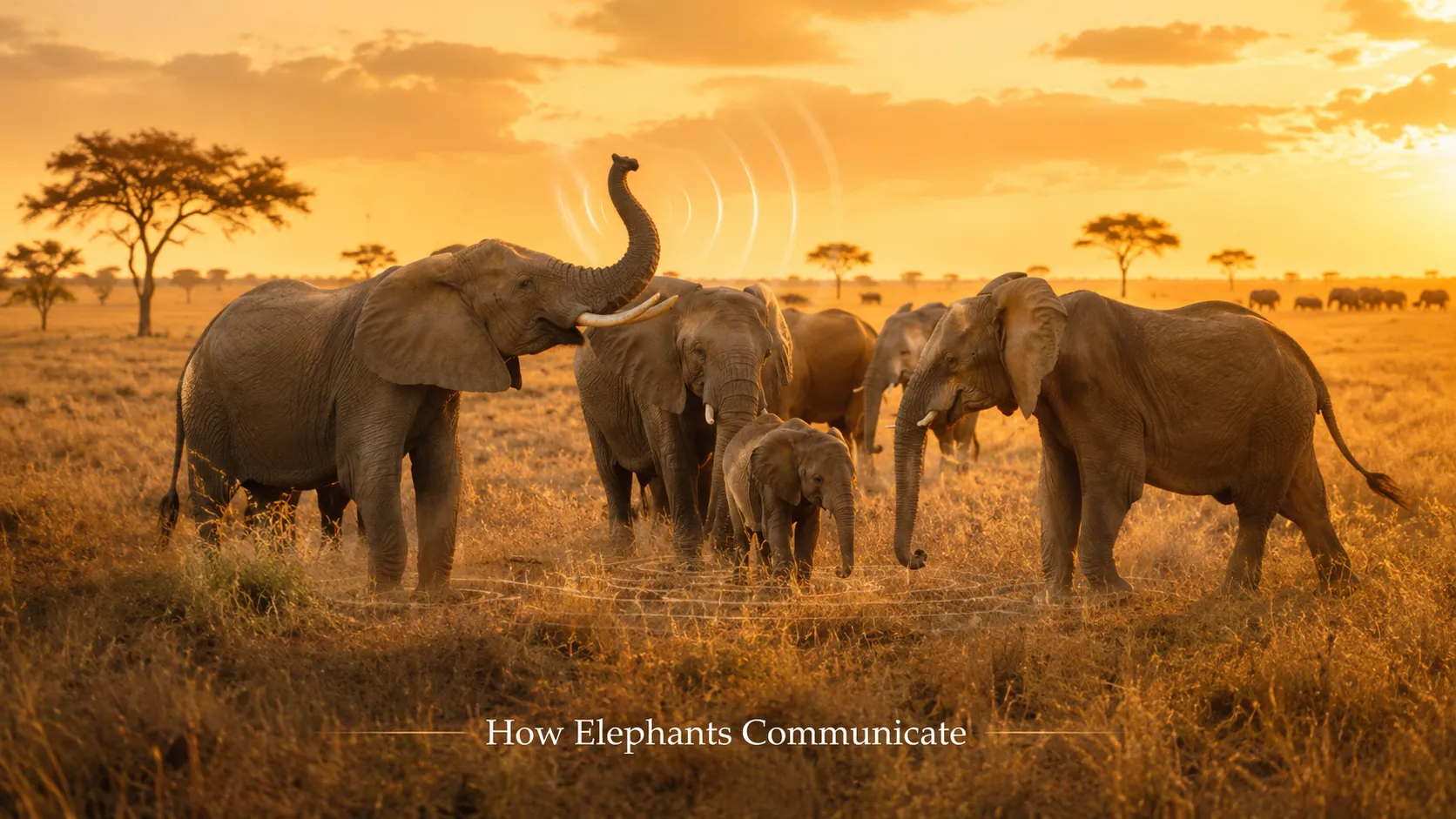
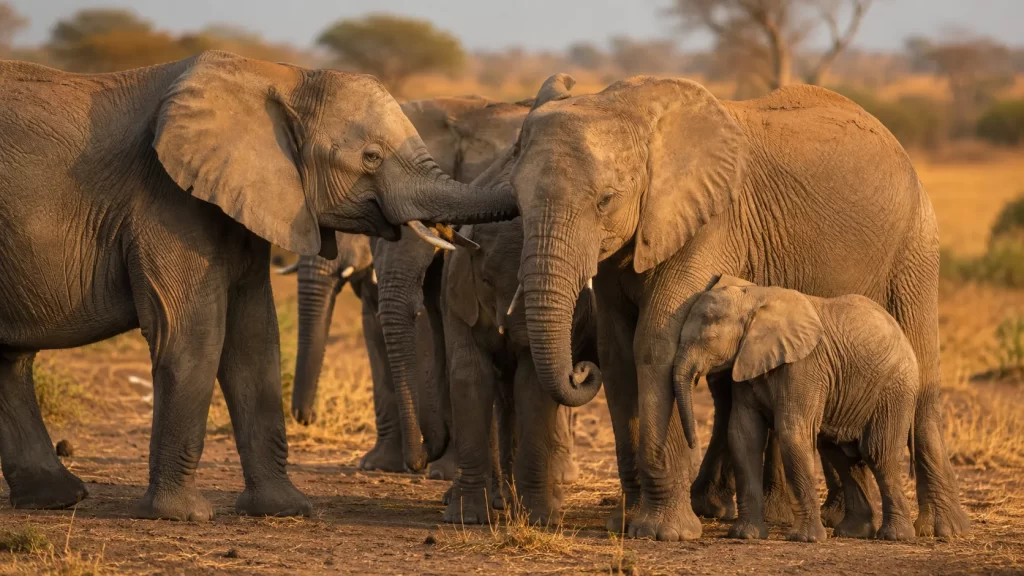
Elephant social behaviour depends on a sophisticated communication system. Elephants use:
- Infrasonic rumbles below 20 Hz, detectable up to 6 miles away through ground vibration
- Tactile contact trunk touches, leaning, and embraces reinforce social bonds
- Chemical signals, temporal gland secretions, and urine mark reproductive status and identity
- Visual displays, such as ear spreading, head shaking, and mock charges, convey threat level
A family group can produce over 70 distinct vocalizations. Researchers at Cornell University’s Elephant Voices Project have catalogued 65 call types in African savanna elephants alone. The matriarch interprets and responds to these calls. Fastest reaction time studies show she initiates group responses within 8 seconds of a distress call.
Grief, Play, and Long-Term Memory
Elephant social behaviour includes responses to death that parallel human mourning. Herds return to the bones of deceased members, touch them with their trunks, and sometimes remain at the site for hours. This behavior has been documented across African and Asian species. It suggests long-term memory of individuals, consistent with research showing elephants can recognize at least 100 other individuals by sound, scent, and sight simultaneously.
Elephant Herd Size: What Shapes Group Numbers?
Environmental and Historical Factors
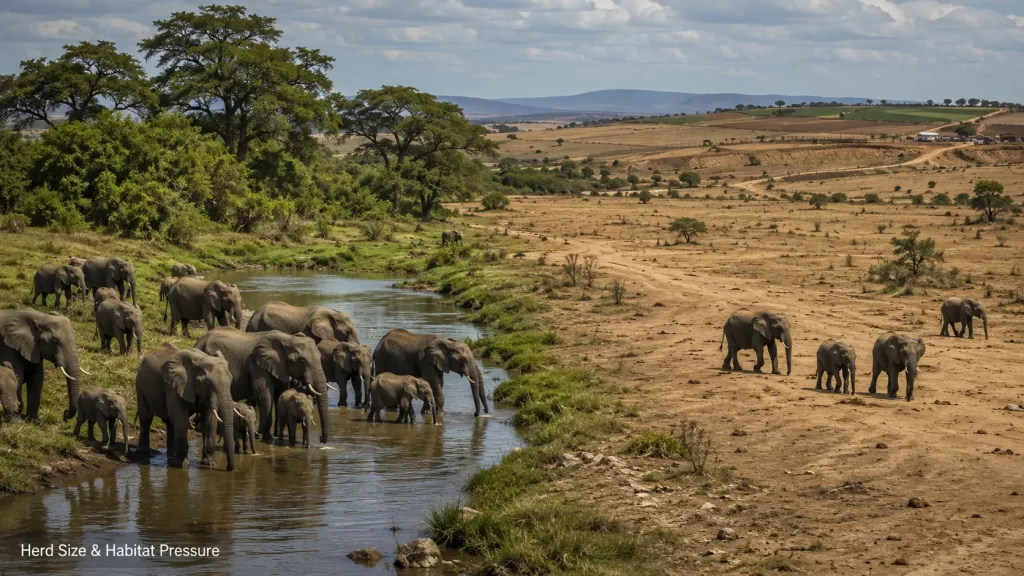
Elephant herd size is not fixed. It responds to habitat quality, water availability, human pressure, and historical poaching. In areas with high resource density, herds aggregate into larger temporary groupings called aggregations, which can exceed 500 individuals during the wet season.
Factors that increase herd size:
- Access to permanent water (herds consolidate near rivers in dry seasons)
- High vegetation productivity (enough food for larger groups)
- Low predator pressure (fewer threats reduces the need to split)
- Post-poaching recovery (surviving elephants cluster for mutual protection)
Factors that reduce herd size:
- Habitat fragmentation, roads, and farms block traditional movement corridors
- Water scarcity forces groups to split and forage independently
- Trophy and ivory poaching kill matriarchs, destabilizing family groups
A 2021 IUCN report noted that fragmented elephant populations in West Africa average only 4–6 individuals per group, far below the functional minimum for normal social development. This has measurable effects on calf behavior and lifetime reproductive success.
Why Elephant Herd Structure Matters for Conservation
Social Structure as a Conservation Tool
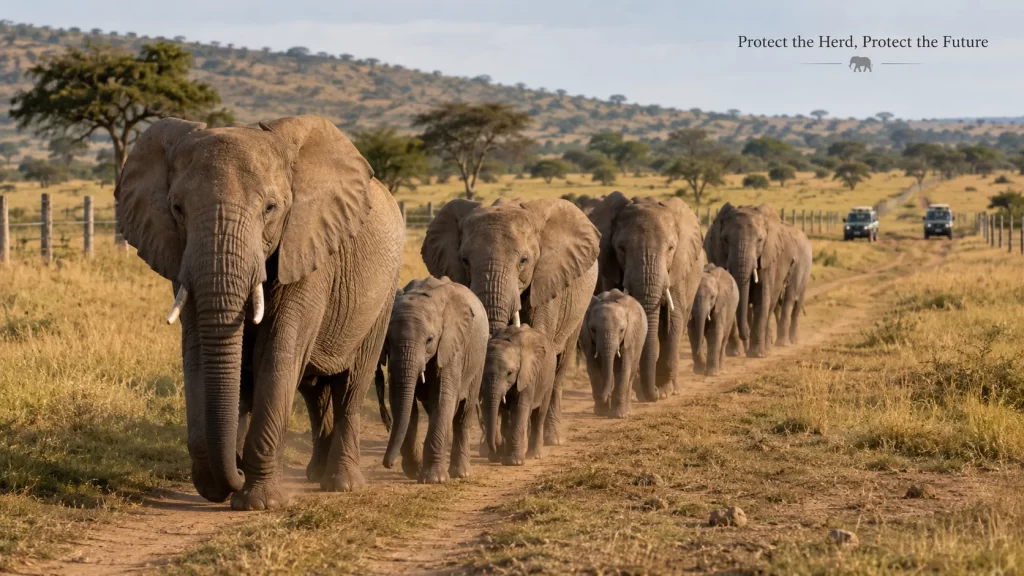
Protecting elephants is not only about counting individuals. It requires preserving intact elephant herd structure. When matriarchs are killed by poachers or legal culling, the social network collapses faster than the population numbers suggest. Orphaned young elephants display abnormal aggression and failed reproductive behavior into adulthood.
Conservation programs now actively track herd composition, not just total numbers. The Save the Elephants database covers over 2,500 named individuals across multiple African countries. Interventions focus on protecting high-value matriarchs and maintaining corridor access between bond groups.
Reintroduction programs also use herd structure data. Moving individual elephants without compatible social companions produces 68% higher stress hormone levels (cortisol) in the first 12 months, per research from the Elephant Reintegration Trust (2018).
Bottom Line
Elephant herd structure is one of nature’s most intricate social systems. It rests on the experience of the matriarch, the loyalty of the family group, and the layered bonds between clans and bond groups. Bull elephants play a separate but essential role, contributing genetic diversity and behavioral modeling. Every layer of this structure, from daily allomothering to seasonal clan gatherings, serves a survival function refined over millions of years. Protecting elephants means protecting these social networks intact. The more we understand elephant herd structure, the better equipped we are to ensure these extraordinary animals endure.