Table of Contents
Community based conservation has become one of the most effective approaches to protecting wildlife. Traditional conservation often separated people from nature. However, many experts now believe local communities must become partners rather than outsiders. When residents receive economic and social benefits, they have stronger reasons to protect ecosystems and wildlife.
Across Africa, Asia, and Latin America, community conservation programmes have helped reduce poaching, restore habitats, and create jobs. These initiatives allow people living near wildlife areas to participate in decision-making and share tourism or resource revenues. This approach has transformed conservation from a government-only effort into a partnership with local communities.
From Namibia’s conservancies to Zimbabwe’s CAMPFIRE programme, successful examples show that involving local people delivers lasting results. While challenges remain, research increasingly supports the idea that wildlife protection works best when communities benefit alongside nature.
What Is Community Based Conservation?
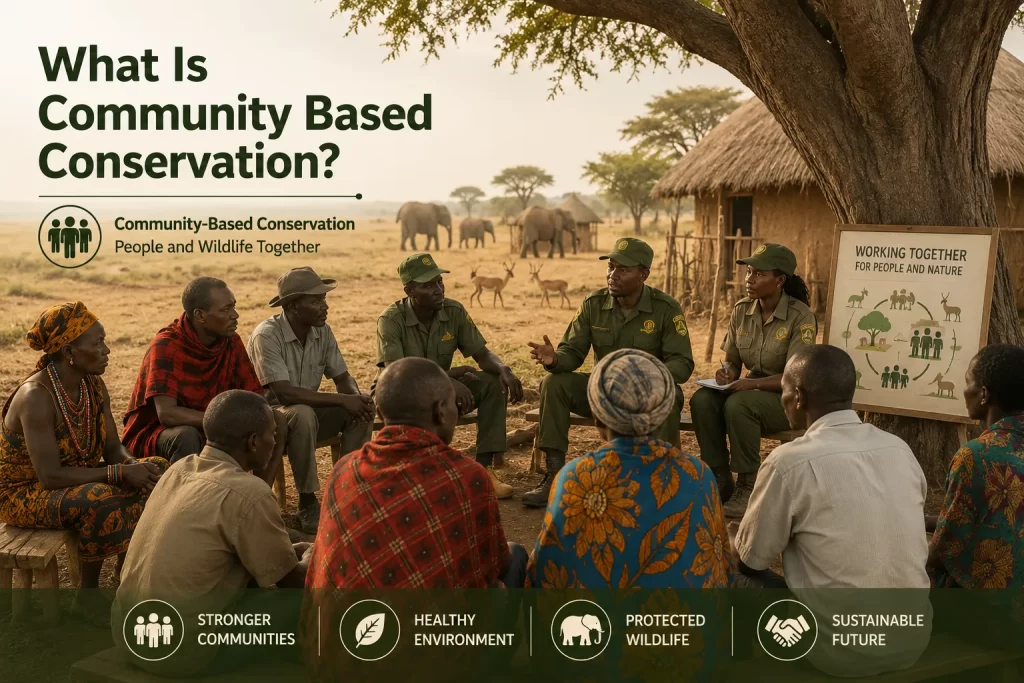
Community based conservation is a wildlife management approach that involves local communities in protecting natural resources while sharing economic and social benefits. Instead of excluding people from conservation areas, this model encourages cooperation between residents, governments, and conservation organisations.
Definition of a Community Conservation Model
A community conservation model gives local people responsibility for managing wildlife and habitats. Communities may receive income from tourism, sustainable resource use, or conservation projects. In return, they help safeguard biodiversity and reduce illegal activities.
Why Traditional Protection Approaches Often Fail
Older conservation methods often focused on strict protection. In many cases, communities lost access to land and resources without receiving benefits. This created resentment and sometimes increased poaching or illegal land use.
How Local Wildlife Management Differs From Fortress Conservation
Local wildlife management recognises that people and wildlife share landscapes. Communities become active participants rather than barriers to conservation. This approach aims to balance ecological goals with economic and social needs.
Why Community Based Conservation Works Better for Wildlife
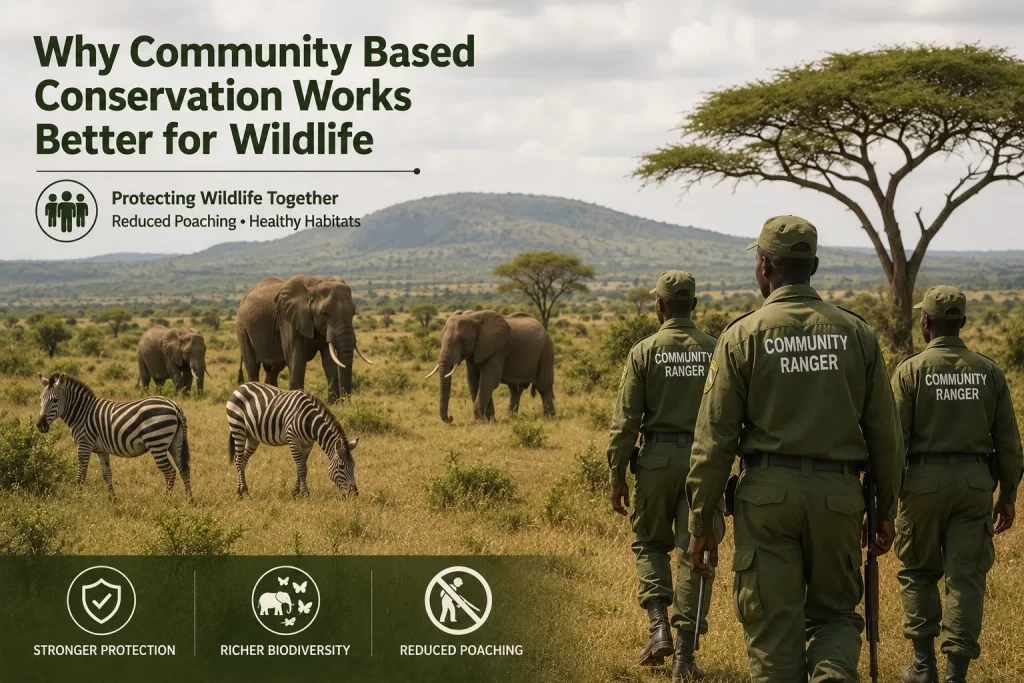
Community based conservation succeeds because it creates incentives for people to protect species and habitats.
Local Communities Become Wildlife Stewards
Residents living near protected areas often have deep knowledge of ecosystems. Their experience helps monitor wildlife, identify threats, and support conservation efforts.
Reduced Poaching Through Shared Benefits
Communities that earn income from tourism or conservation projects are less likely to support illegal hunting. Wildlife becomes an economic asset rather than a burden.
Stronger Habitat Protection and Biodiversity Outcomes
Local involvement encourages sustainable land use practices. Communities help preserve forests, grasslands, and water sources that support numerous species. Studies have shown that community-managed areas can achieve biodiversity outcomes similar to traditional protected areas.
How Wildlife Benefits Local Communities
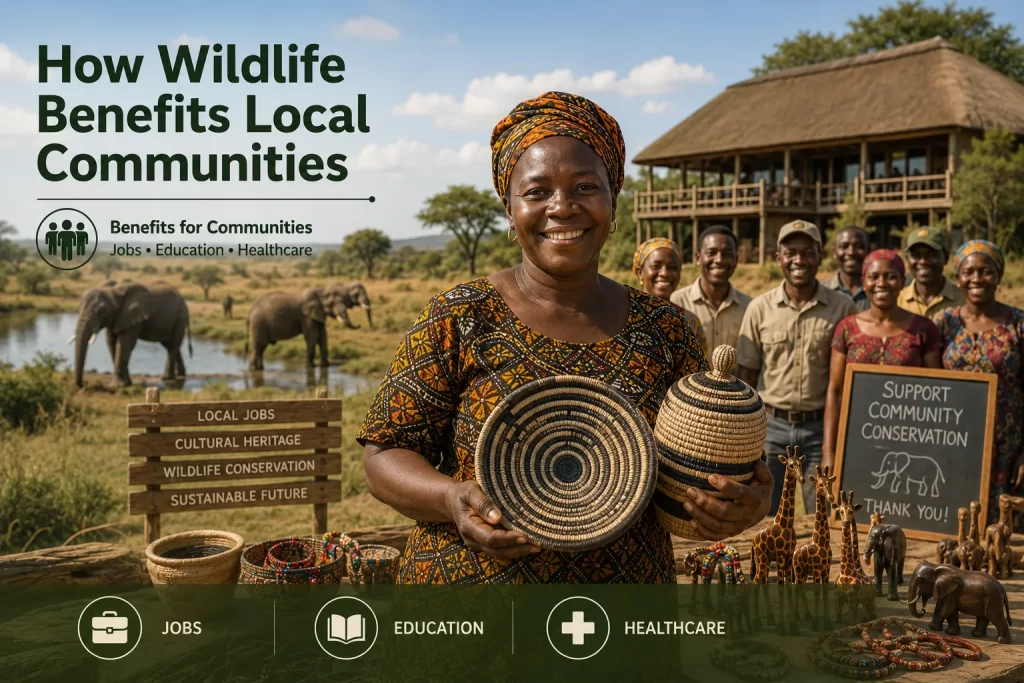
Wildlife benefits local communities in many ways beyond species protection.
Income From Tourism and Sustainable Resource Use
Ecotourism provides income through lodges, guiding services, and cultural experiences. Sustainable use programmes also generate revenue while maintaining natural resources.
Education and Healthcare Improvements
Conservation revenues often fund schools, clinics, and infrastructure projects. Communities may use tourism income to improve roads and public services.
Wildlife Benefits Local Communities Beyond Economics
Conservation also strengthens cultural traditions and community pride. Healthy ecosystems provide clean water, fertile soils, and climate resilience.
Key Benefits of Community Conservation
- Employment opportunities.
- Tourism revenue.
- Improved education facilities.
- Better healthcare services.
- Reduced illegal hunting.
- Increased community ownership.
- Stronger ecosystem protection.
Community Conservation Models Around the World
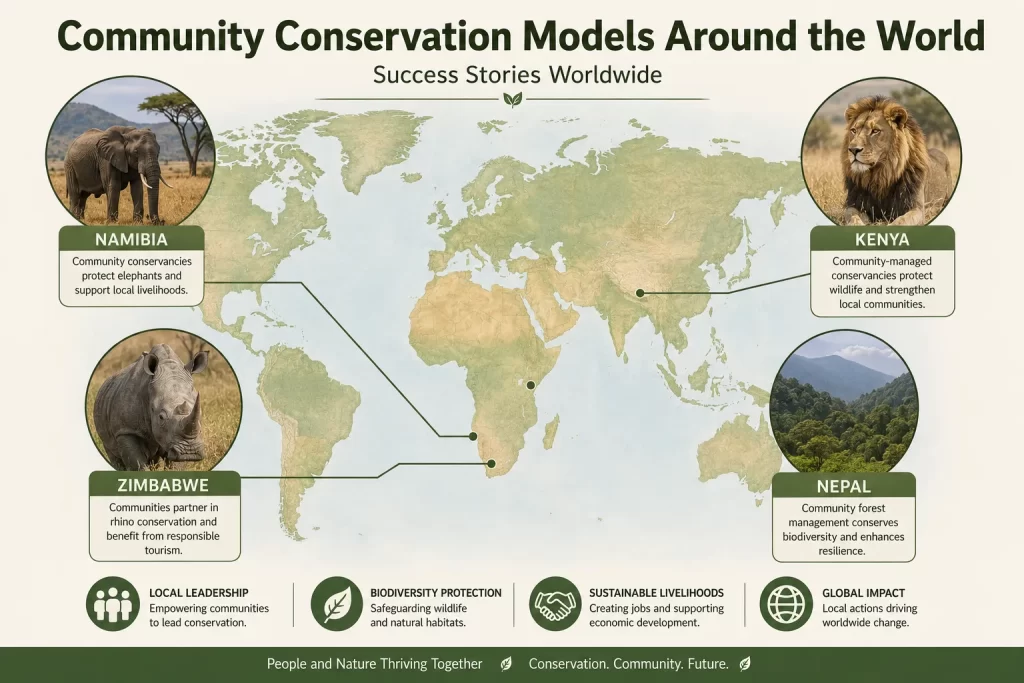
Several countries have demonstrated the success of community conservation models.
Namibia’s Conservancy System
Namibia has become a leading example of community conservation. Local conservancies manage vast areas and support populations of elephants, lions, and black rhinos. Tourism income has created incentives for wildlife protection.
Kenya’s Community Conservancies
Community conservancies in Kenya have helped protect elephants and predators. These programmes provide jobs while supporting sustainable grazing and tourism.
Botswana’s Wildlife Projects
Botswana has implemented community-based initiatives that combine tourism with habitat protection. Local participation remains central to many conservation efforts.
Nepal’s Community Forestry Success
Nepal’s community forestry programmes have restored degraded forests and improved habitats for tigers and rhinos.
Examples of Community-Based Conservation
| Country | Programme | Species Protected | Main Benefits |
|---|---|---|---|
| Namibia | Conservancies | Elephants, rhinos | Tourism revenue |
| Zimbabwe | CAMPFIRE | Elephants | Revenue sharing |
| Kenya | Community Conservancies | Lions, elephants | Employment |
| Nepal | Community Forestry | Tigers, rhinos | Habitat restoration |
The CAMPFIRE Programme and Lessons From Zimbabwe
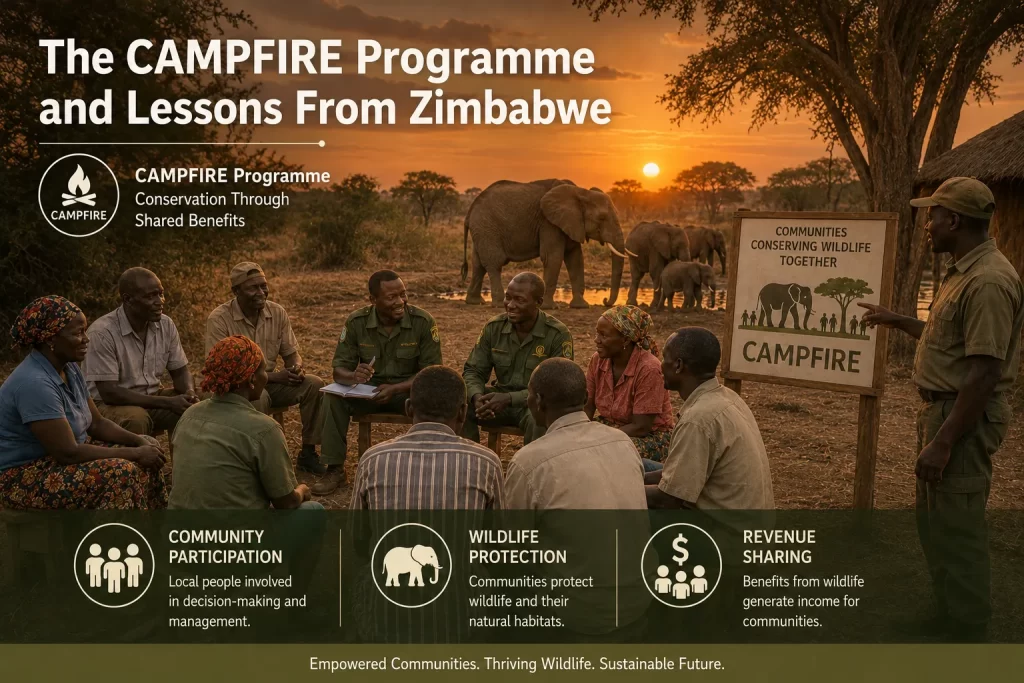
The CAMPFIRE programme remains one of Africa’s best-known examples of community based conservation.
How the CAMPFIRE Programme Started
Launched during the 1980s, the programme aimed to allow rural communities to benefit from wildlife resources. Communities received a share of revenues generated from tourism and regulated hunting.
Revenue Sharing With Local Communities
The programme provided income that supported schools, roads, and healthcare projects. Wildlife became an important economic resource for many communities.
Achievements and Criticisms
CAMPFIRE demonstrated that conservation can support rural development. However, critics have pointed to governance issues and uneven distribution of benefits. These challenges highlight the importance of transparency and strong local institutions.
Community Based Conservation Creates Jobs in Africa

Conservation jobs in Africa have become an important topic as wildlife tourism supports millions of livelihoods across the continent.
Growth of Conservation Employment
Protected areas and tourism operations require guides, rangers, hospitality staff, and researchers. Community projects also create opportunities in handicrafts and sustainable agriculture.
Rangers, Guides, and Ecotourism Workers
Many young people find employment through wildlife tourism. These jobs provide alternatives to activities that may threaten biodiversity.
Women and Youth Employment Opportunities
Community conservation programmes increasingly focus on empowering women and young people. Training and entrepreneurship programmes help communities diversify income sources.
Challenges Facing Community Based Conservation
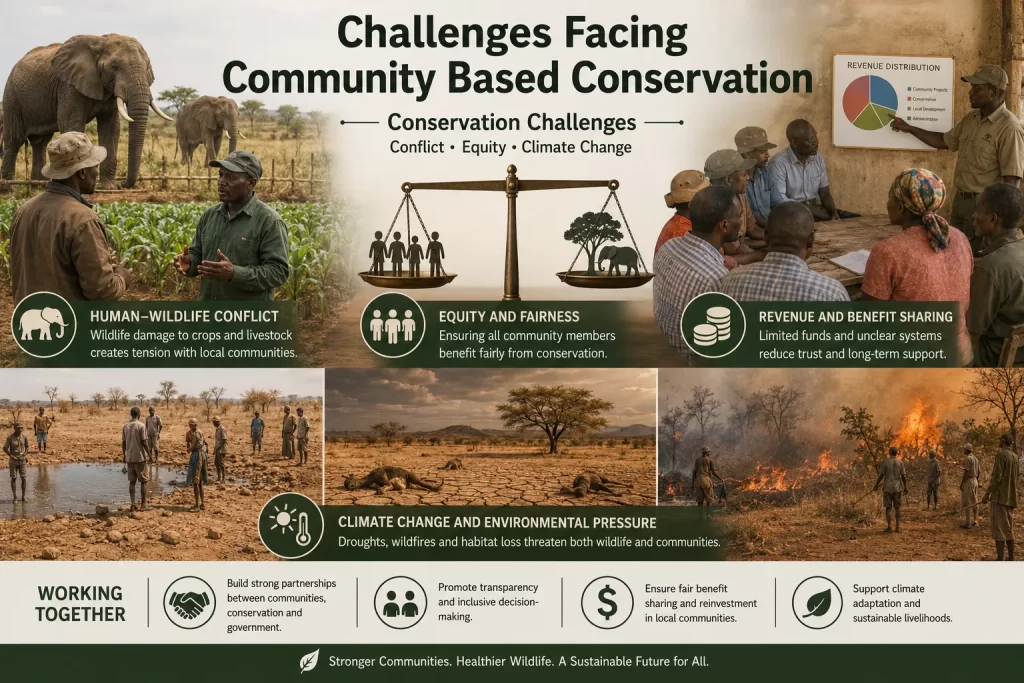
Despite many successes, community based conservation faces several obstacles.
Human-Wildlife Conflict
Elephants, predators, and other animals can damage crops and threaten livestock. Communities may suffer financial losses without adequate support.
Unequal Revenue Distribution
Benefits are not always shared fairly. Poor governance can weaken trust and reduce support for conservation.
Governance and Corruption Issues
Weak institutions sometimes prevent communities from receiving promised revenues. Effective management remains essential.
Climate Change and Habitat Loss
Rising temperatures and changing rainfall patterns increase pressure on ecosystems. Conservation strategies must adapt to these challenges.
What Scientists Say About Community Based Conservation
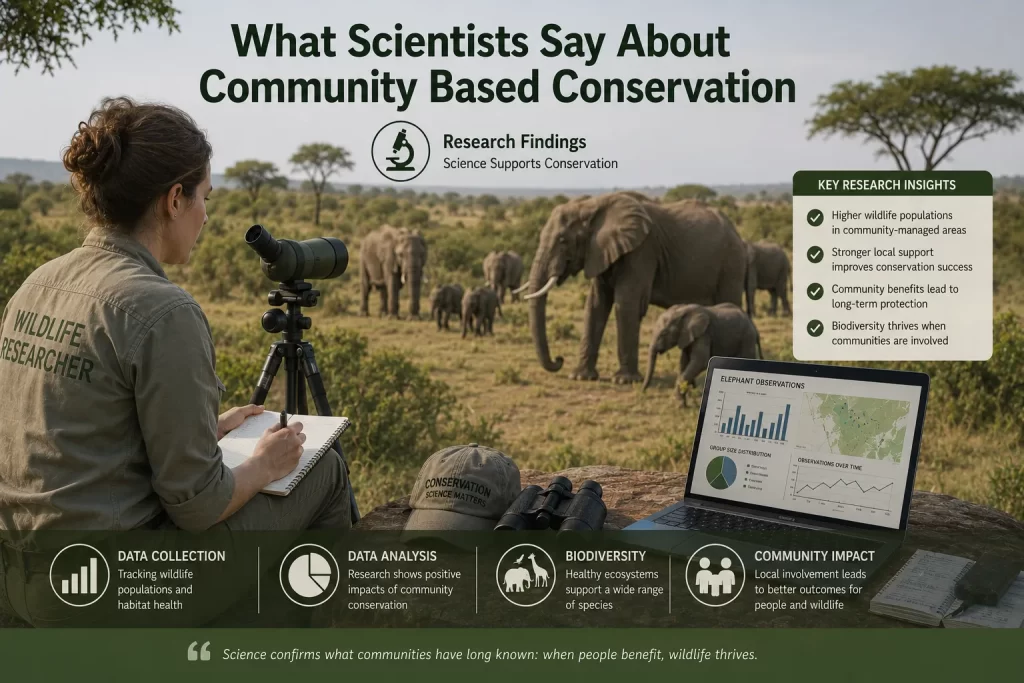
Researchers increasingly support community conservation approaches.
Evidence From Peer-Reviewed Studies
Many studies have found that local participation improves conservation outcomes. Community-managed areas often deliver significant biodiversity benefits.
Why Experts Support Community Conservation Models
Experts argue that conservation cannot succeed without addressing human needs. Communities that benefit from wildlife are more likely to protect it.
Future Directions for Wildlife Management
Technology, education, and stronger partnerships will shape future conservation efforts. Governments and conservation organisations are increasingly investing in community-led approaches.
Conclusion
Community based conservation has changed the way wildlife protection works. Instead of separating people from nature, this approach recognises that local communities are essential partners. Successful examples from Namibia, Kenya, Zimbabwe, and Nepal demonstrate that conservation works best when people share the benefits.
Although challenges such as governance and human-wildlife conflict remain, evidence continues to support community-led solutions. By creating jobs, supporting development, and protecting ecosystems, community based conservation offers a sustainable path that benefits both people and wildlife.