Table of Contents
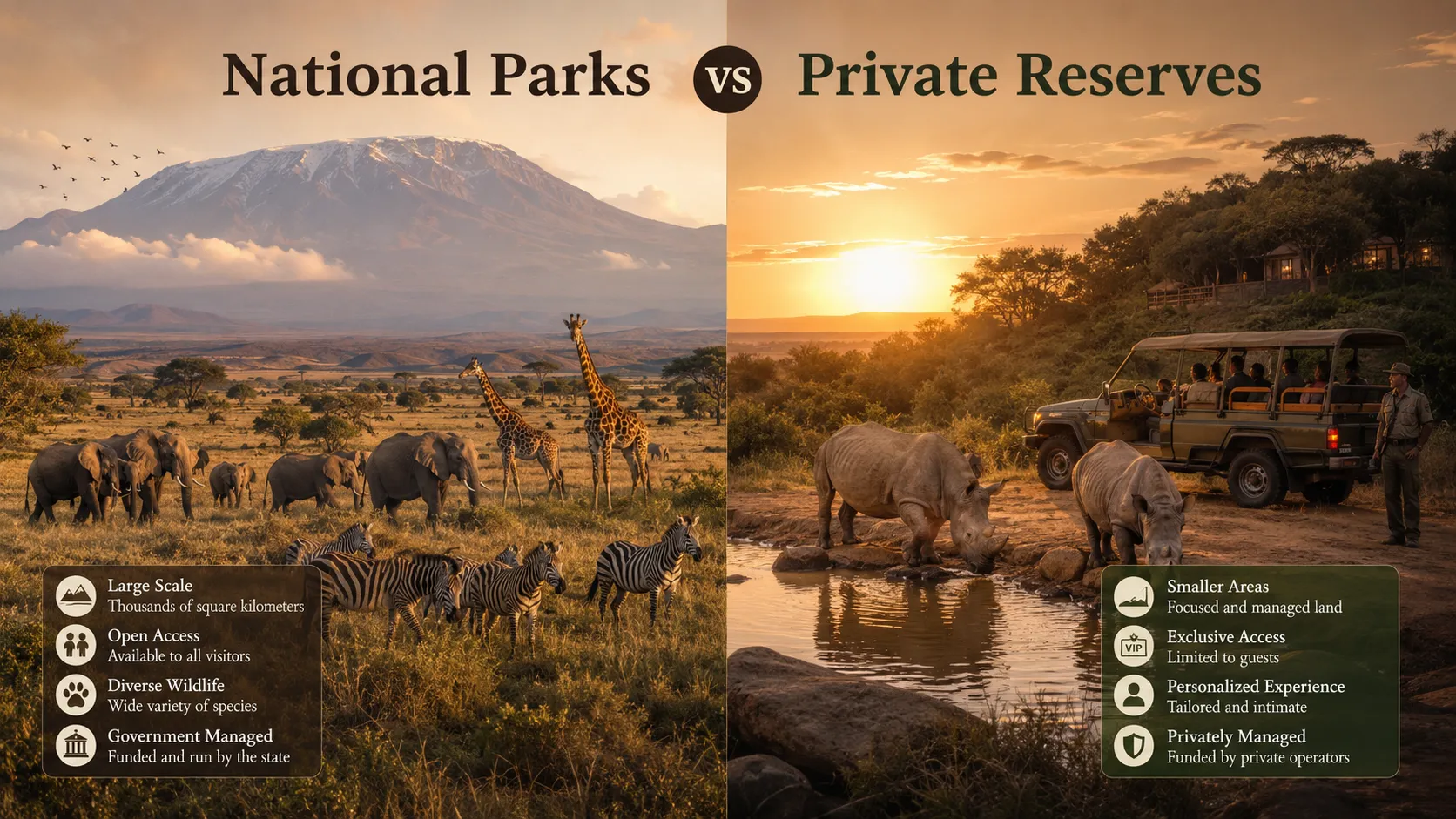
Wildlife conservation relies on many approaches, but one debate continues to attract attention: National Parks vs Private Reserves. Both models aim to protect species and ecosystems, yet they operate differently. National parks are usually managed by governments, while private reserves are owned and funded by individuals, organisations, or companies.
Protected areas now cover about 17% of the world’s land surface, according to the Protected Planet Report. However, protecting land alone does not guarantee biodiversity success. Factors such as funding, anti-poaching efforts, habitat connectivity, and wildlife management influence conservation outcomes.
Understanding the strengths and limitations of each approach helps explain why some species thrive while others remain under pressure. Rather than asking which system is universally better, conservation experts increasingly focus on how these models work together. In many regions, collaboration between public and private protected areas delivers stronger results for wildlife and local communities.
Understanding National Parks vs Private Reserves
What Is a National Park?
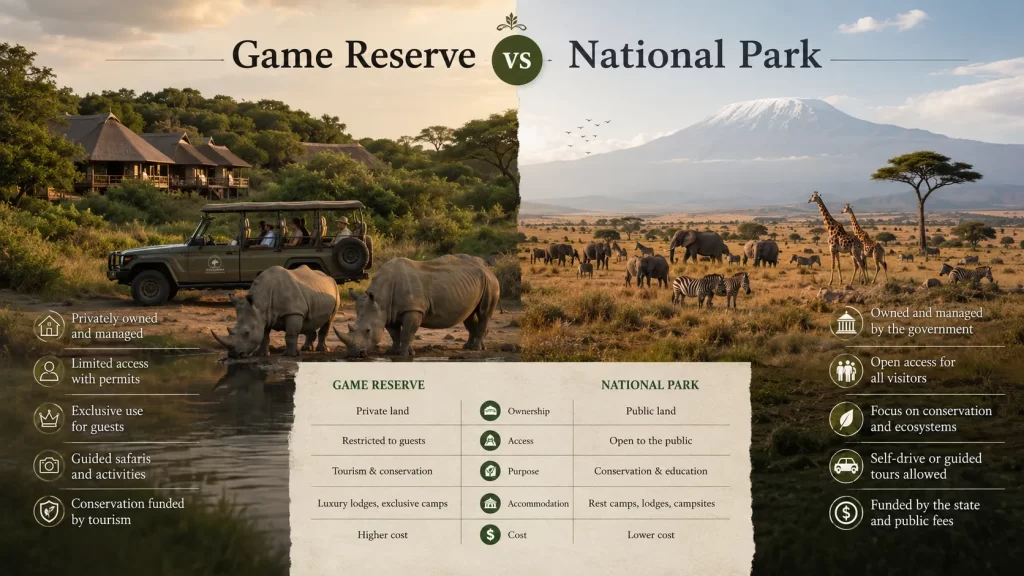
National parks are protected areas established and managed by governments. Their primary goal is conserving biodiversity and preserving natural ecosystems. Examples include Kruger National Park in South Africa, Yellowstone National Park in the United States, and Serengeti National Park in Tanzania.
These parks often cover vast landscapes and protect thousands of species. Governments create laws to restrict hunting, mining, and habitat destruction within their boundaries.
What Is a Private Game Reserve?
A private game reserve is privately owned land dedicated to wildlife conservation and tourism. Owners invest in anti-poaching operations, habitat restoration, and wildlife management. Many reserves generate income through safari tourism and luxury lodges.
Private reserves can range from a few thousand hectares to areas connected with larger ecosystems. Some operate independently, while others share unfenced boundaries with national parks.
Game Reserve vs National Park Explained
The main difference lies in ownership and management. National parks rely heavily on public funding and government agencies. Private reserves depend on tourism revenue and private investment.
Despite these differences, both contribute to species protection and ecosystem preservation.
How National Park Conservation Protects Wildlife
Large Landscapes and Natural Ecosystems
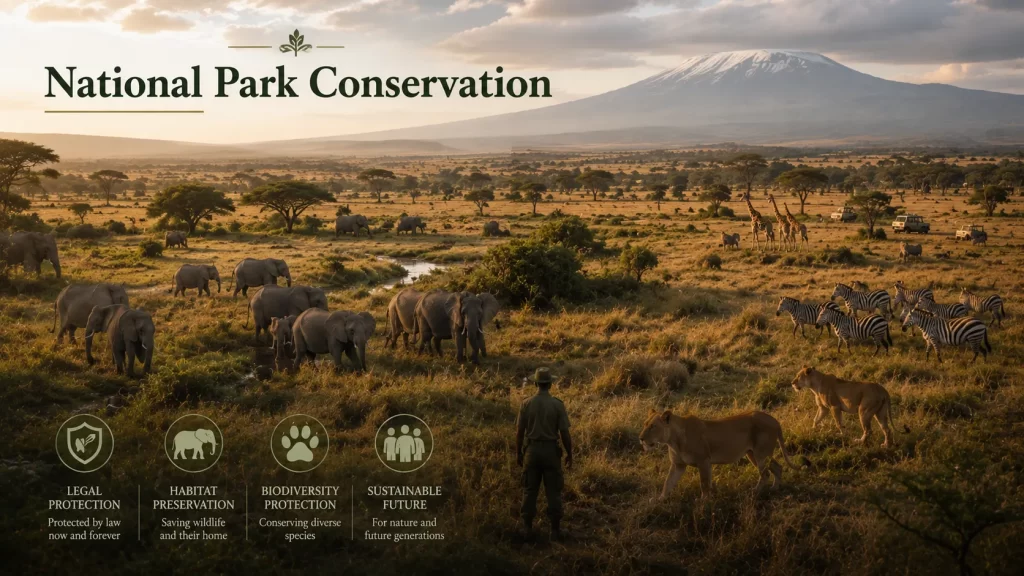
One of the greatest strengths of national park conservation is scale. Large protected areas allow animals to migrate naturally and maintain healthy populations.
Wide landscapes support predator-prey relationships and reduce habitat fragmentation. Species such as elephants, lions, and wildebeest depend on extensive territories to survive.
Government Management and Legal Protection
National parks benefit from legal protection. Governments establish regulations that prevent land conversion and resource exploitation.
Many parks also receive support from international organisations and conservation partnerships. These collaborations strengthen research, monitoring, and habitat restoration programmes.
Challenges Facing National Parks
National parks face several difficulties. Limited budgets, illegal poaching, and increasing human populations can strain conservation efforts.
Some parks struggle to maintain infrastructure and provide sufficient ranger patrols. Climate change also creates new challenges through droughts, habitat shifts, and changing migration patterns.
How a Private Game Reserve Protects Species
Intensive Wildlife Management
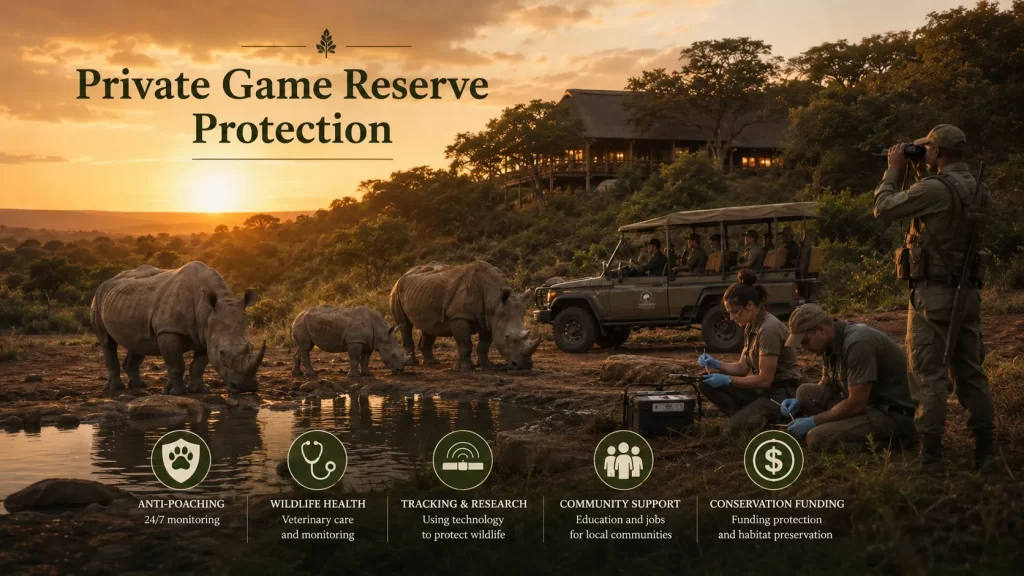
A private game reserve often provides more intensive management than public parks. Reserve managers regularly monitor animal populations and habitat conditions.
This approach allows quicker responses to disease outbreaks, invasive species, and environmental pressures.
Anti-Poaching Programmes and Veterinary Care
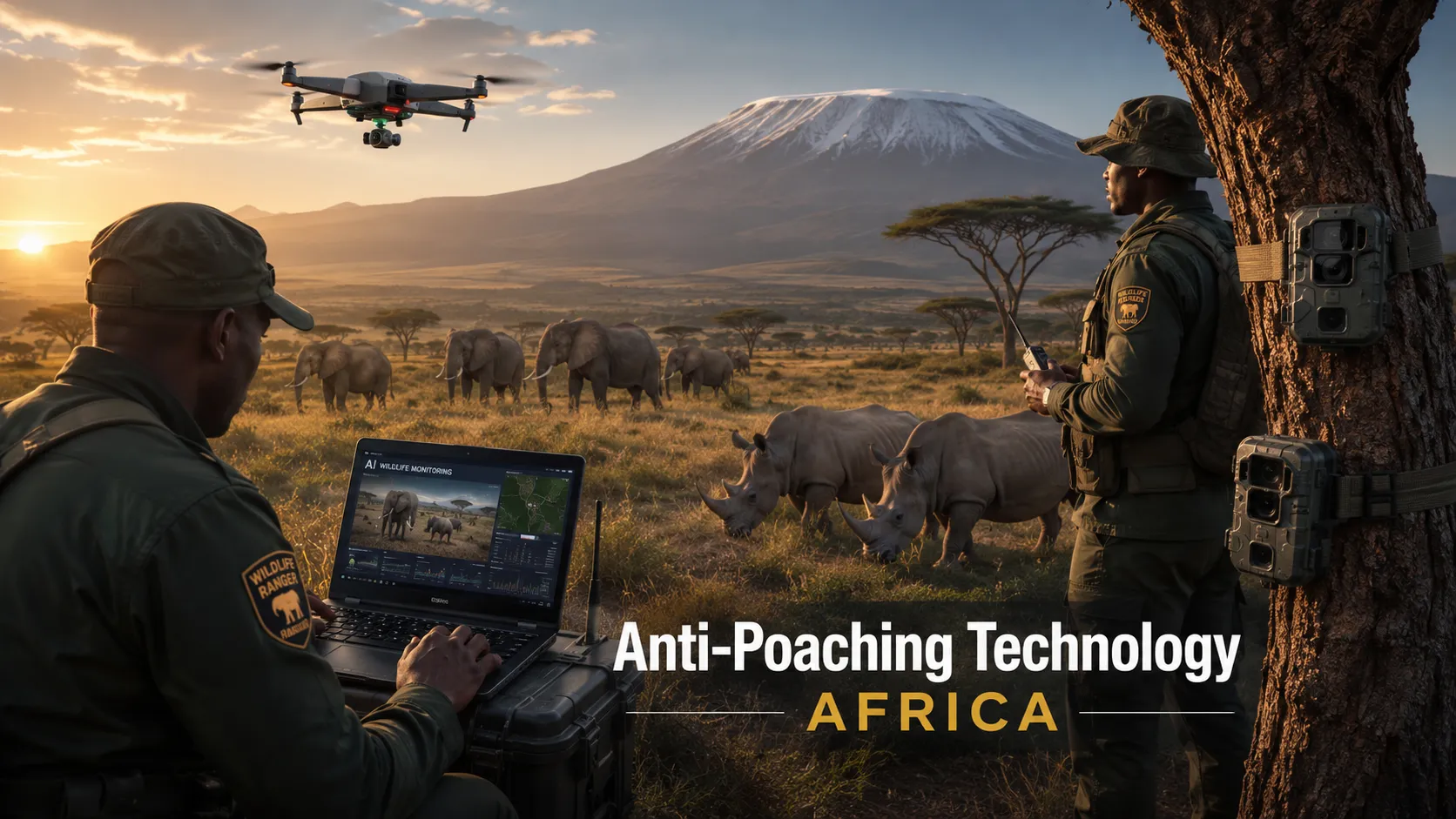
Many private reserves invest heavily in anti-poaching units. Surveillance technology, trained rangers, and rapid response teams help protect endangered species.
Veterinary interventions also support injured animals and improve breeding success. These efforts have contributed to the recovery of species such as white rhinos in several southern African reserves.
Tourism Revenue and Conservation Funding
Tourism provides a major source of funding for private reserves. Visitor income supports staff salaries, conservation programmes, and local employment.
However, dependence on tourism can create financial risks. Global events or economic downturns may reduce visitor numbers and limit conservation budgets.
National Parks vs Private Reserves for Biodiversity Conservation
Species Diversity and Population Stability
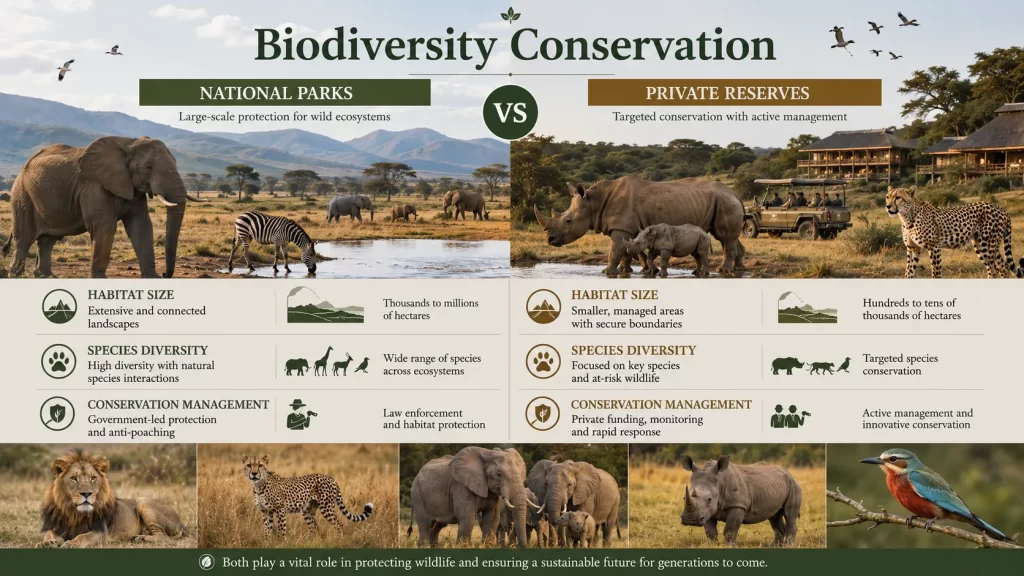
National parks usually contain larger ecosystems and greater species diversity. Their size helps maintain stable populations and natural ecological processes.
Private reserves may protect fewer species but often deliver intensive care for vulnerable animals. Some reserves specialise in breeding and reintroducing endangered species.
Predator Management and Carrying Capacity
Private reserves actively manage predator numbers and prey populations. Managers monitor carrying capacity to prevent overgrazing and ecosystem imbalance.
National parks generally allow natural processes to regulate wildlife populations. This approach preserves ecological integrity but can produce slower responses to changing conditions.
Reintroduction Programmes for Endangered Species
Private reserves have played an important role in reintroducing species such as cheetahs, black rhinos, and African wild dogs.
National parks provide extensive habitats where these species can establish long-term populations. Together, these systems strengthen biodiversity conservation.
Comparison Table
| Factor | National Parks | Private Reserves |
|---|---|---|
| Ownership | Government | Private |
| Size | Usually larger | Often smaller |
| Funding | Public budgets | Tourism and private investment |
| Wildlife Management | Natural processes | Intensive management |
| Anti-Poaching Efforts | Moderate to strong | Often highly specialised |
| Species Reintroductions | Large habitat support | Active breeding programmes |
| Visitor Experience | High visitor numbers | Smaller and exclusive |
| Flexibility | Limited bureaucracy | Faster decision-making |
Fenced vs Unfenced Reserve Systems
Why Some Reserves Use Fences
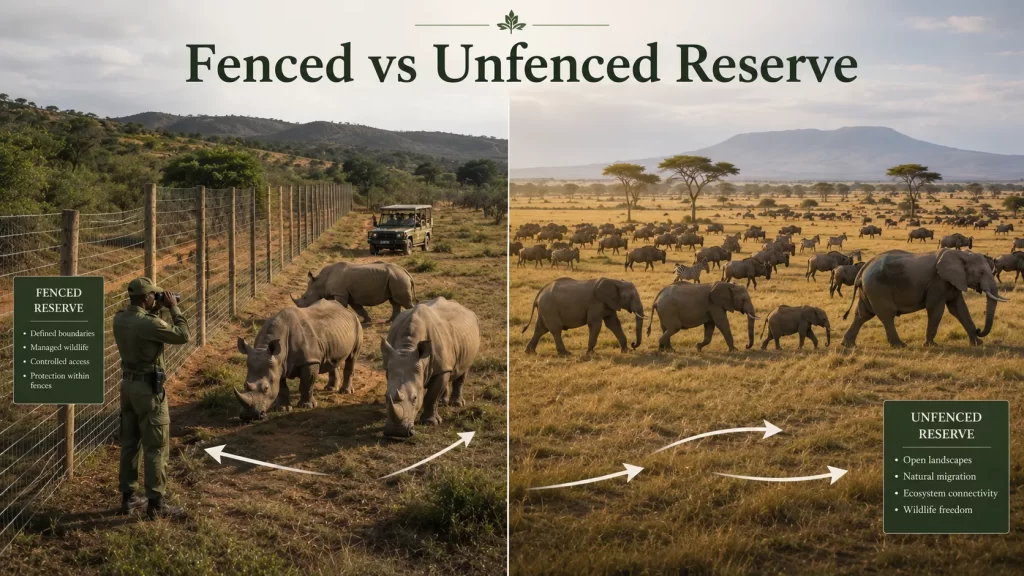
The debate surrounding fenced vs unfenced reserve systems remains important. Fences help prevent human-wildlife conflict and reduce poaching risks.
They also enable managers to control animal numbers and protect neighbouring communities.
Ecological Benefits of Unfenced Landscapes
Unfenced reserves allow wildlife to move freely between ecosystems. Natural migrations improve genetic diversity and reduce population isolation.
Connected landscapes also support seasonal movements that many species require.
Genetic Diversity and Animal Movement
Genetic diversity improves species resilience. Isolated populations may suffer from inbreeding and declining health.
Conservation scientists increasingly support landscape connectivity rather than isolated protected areas. Maintaining movement corridors strengthens long-term survival prospects.
Why Wildlife Corridors Matter More Than Boundaries
What Are Wildlife Corridors?
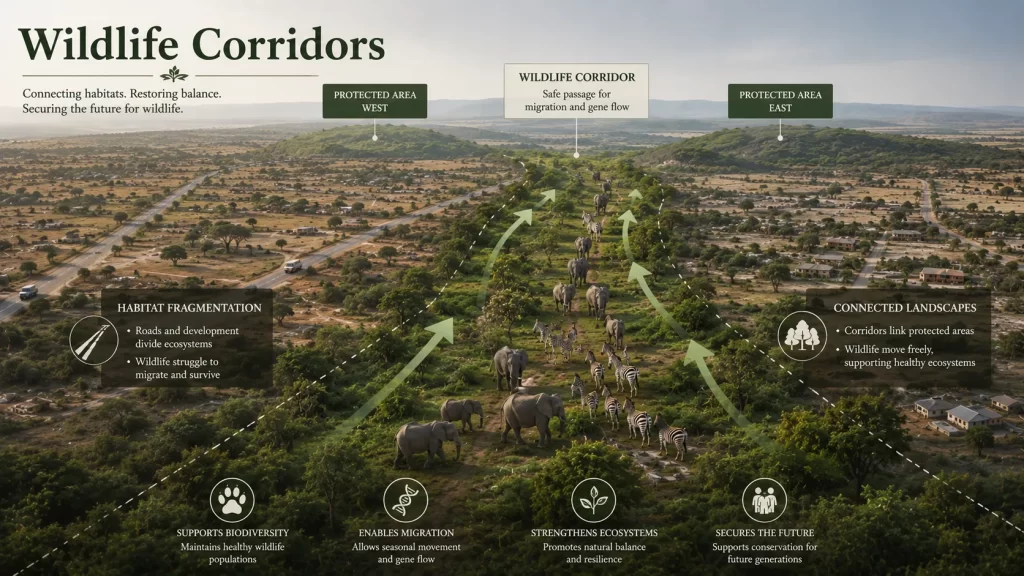
Wildlife corridors are natural pathways that connect habitats and protected areas. These corridors allow animals to migrate, find food, and reproduce.
Examples include the Greater Limpopo Transfrontier Conservation Area and migration routes in East Africa.
Preventing Habitat Fragmentation
Habitat fragmentation remains one of the major threats to biodiversity. Roads, agriculture, and urban development divide ecosystems into isolated sections.
Wildlife corridors reduce these effects and improve species survival.
Examples from Africa and Asia
Kruger National Park and adjacent private reserves form one connected ecosystem. Animals move freely across boundaries without recognising ownership.
In India, elephant corridors connect fragmented habitats and support seasonal migrations. Similar strategies have improved conservation outcomes across Asia and Africa.
Case Studies Comparing Conservation Success
Kruger National Park and Adjacent Private Reserves
South Africa’s Kruger ecosystem demonstrates the benefits of cooperation. Several private reserves share unfenced borders with the national park.
Together, these areas create one of the largest protected landscapes in Africa.
Serengeti Ecosystem and Community Conservancies
The Serengeti ecosystem supports one of the world’s most famous wildlife migrations. National parks and surrounding conservancies work together to maintain ecological connectivity.
This cooperation benefits wildlife and local communities.
Namibia’s Conservancy Model
Namibia has become a global conservation success story. Community conservancies and protected areas have helped increase populations of elephants, black rhinos, and other threatened species.
The model shows how local involvement and diverse management systems can support biodiversity.
National Parks vs Private Reserves: Which Protects Wildlife Better?
Situations Where National Parks Perform Better
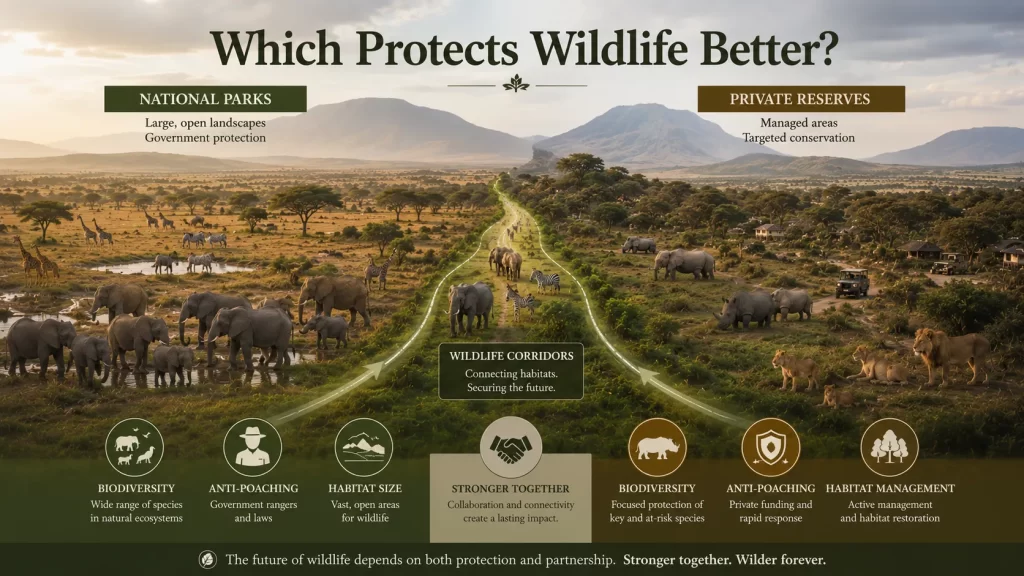
National parks excel when species require large, connected habitats. They provide strong legal protection and preserve natural ecological processes.
Large mammals and migratory species often benefit from extensive landscapes.
Situations Where Private Reserves Excel
Private reserves perform well when intensive management is necessary. Their flexibility allows rapid responses to poaching threats and disease outbreaks.
Specialised breeding programmes also support endangered species recovery.
Why Both Models Work Best Together
Modern conservation increasingly recognises that cooperation matters more than competition.
Key advantages include:
- Larger connected ecosystems.
- Improved genetic diversity.
- Better anti-poaching capacity.
- Increased funding opportunities.
- Stronger support for endangered species.
- Greater community involvement.
Neither system alone can solve every conservation challenge. Collaboration creates stronger and more resilient landscapes.
The Future of Wildlife Protection Depends on Cooperation
The debate surrounding National Parks vs Private Reserves does not have a simple winner. National parks provide vast landscapes and legal protection, while private reserves offer flexibility and intensive wildlife management.
The most successful conservation strategies combine the strengths of both systems. Wildlife corridors, collaborative management, and connected ecosystems are increasingly recognised as the foundation of long-term biodiversity protection.
Rather than viewing these models as competitors, conservationists see them as complementary tools. Together, they help safeguard endangered species, preserve ecosystems, and ensure future generations inherit a world rich in wildlife.