Table of Contents
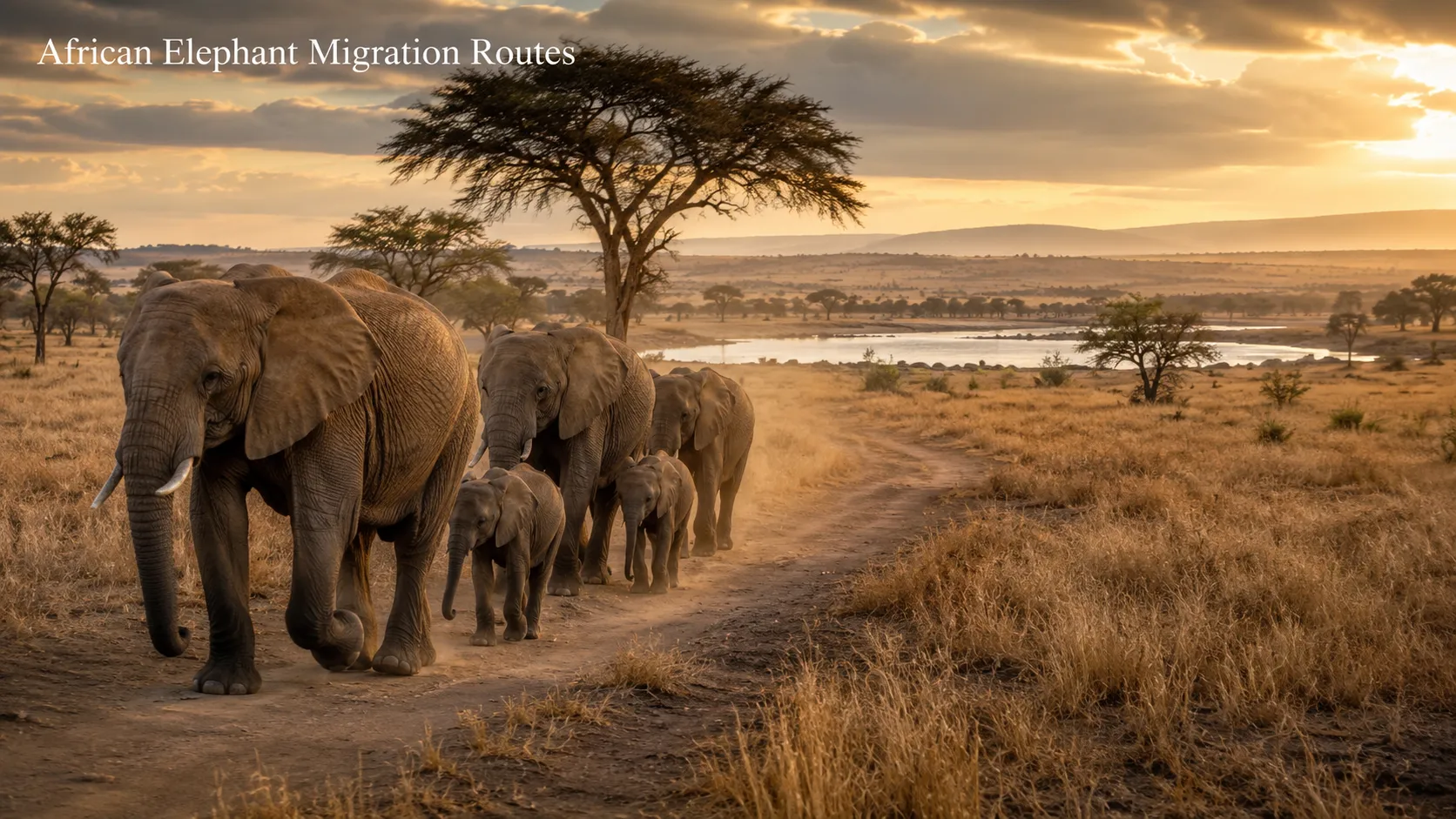
African elephant migration routes are not random paths across the savanna. They are learned travel networks shaped by water, food, memory, safety, and family survival. We often picture elephants walking in one long seasonal line, but real movement is more complex. Some herds migrate long distances. Others shift between smaller seasonal ranges. Some stay near permanent water when habitat allows it.
African savanna elephants are built for movement. They need huge feeding areas because adults can consume large amounts of grass, leaves, bark, fruit, and water each day. Their routes often connect dry-season refuges, wet-season grasslands, rivers, salt licks, woodlands, and safer resting zones. In Botswana, one study found individual elephants used locations up to 260 km apart, showing how wide seasonal movement can become in open landscapes.
Today, elephant migration routes matter more than ever. Roads, farms, fences, towns, and land subdivisions can block old paths. When routes close, elephants enter crops, conflict rises, and herds lose access to food and water. Protecting movement is now central to elephant conservation.
What Are Elephant Migration Routes?
Movement Is Seasonal, Social, and Memory-Based
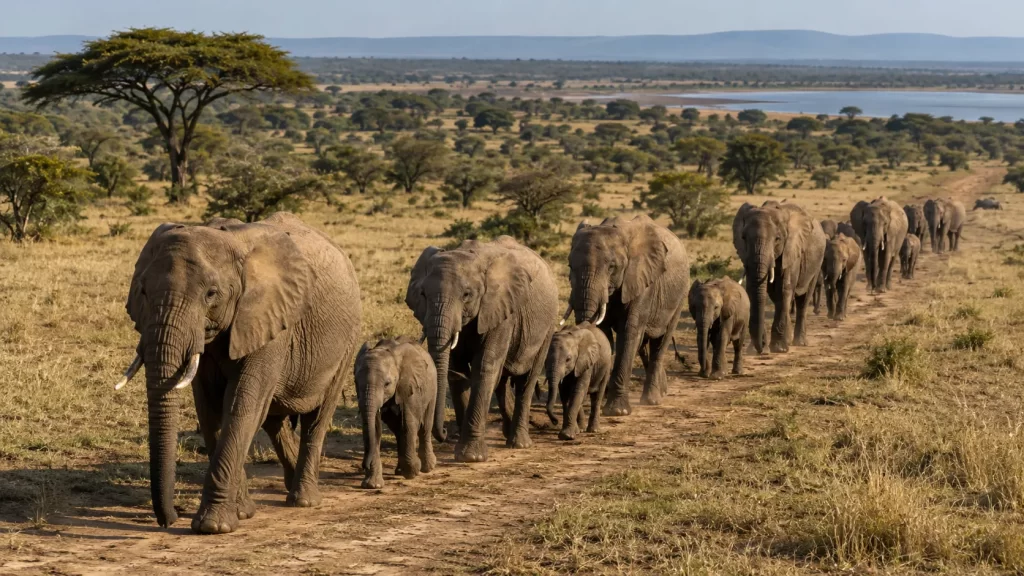
Elephant migration routes are repeated movement paths used by elephants to reach key resources. These paths may follow rivers, valleys, forest edges, old cattle tracks, or open plains. Older females often guide family groups because they remember where water and food appear during difficult seasons.
Seasonal elephant movement usually follows rainfall. During wet months, elephants spread into fresh grasslands and woodlands. During dry months, they return toward rivers, swamps, springs, or permanent waterholes. This pattern helps herds balance food quality, water access, calf safety, and heat stress.
Elephants do not all move the same way. Some populations show full migration, while others show partial migration. In partial migration, only some groups move long distances while others remain closer to permanent water. That choice depends on age, family structure, risk, habitat condition, and human pressure.
How Far Do Elephants Travel?
Elephant Migration Distance Varies by Landscape
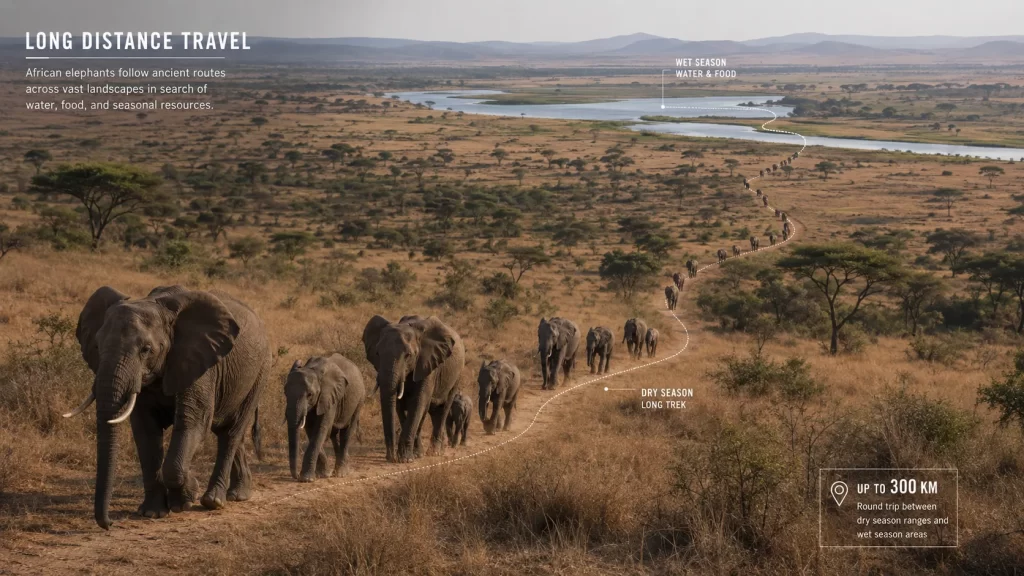
Elephant migration distance can range from a few miles per day to hundreds of kilometers across seasons. A herd in a protected wetland may move shorter distances because water remains available. A herd in a dry savanna may travel much farther between feeding grounds and water sources.
In northern Botswana, research found that the distance between the farthest recorded locations of individual elephants reached 260 km. The same study found that more than 20% of tracked elephants had wet-season ranges outside protected areas. That means elephants often need land beyond national parks to complete seasonal movement.
Daily movement also changes with conditions. Elephants may move slowly while feeding in safe zones. They may travel faster through narrow corridors, farms, or risky areas. A study on African elephant corridors found that elephants moved faster along corridors than elsewhere in their range, suggesting they recognized greater danger outside protected zones.
| Movement factor | Typical effect on elephant movement | Conservation meaning |
|---|---|---|
| Dry season water shortage | Longer trips toward rivers and wetlands | Protect permanent water access |
| Wet season grass growth | Wider dispersal into open range | Keep seasonal range connected |
| Fences and farms | Route blockage or detours | Plan safe elephant corridors |
| Human activity | More night movement and faster travel | Reduce conflict near corridors |
| Older matriarch knowledge | Better route selection in drought | Protect stable family groups |
Why Do Elephants Migrate?
Water Is the Strongest Driver
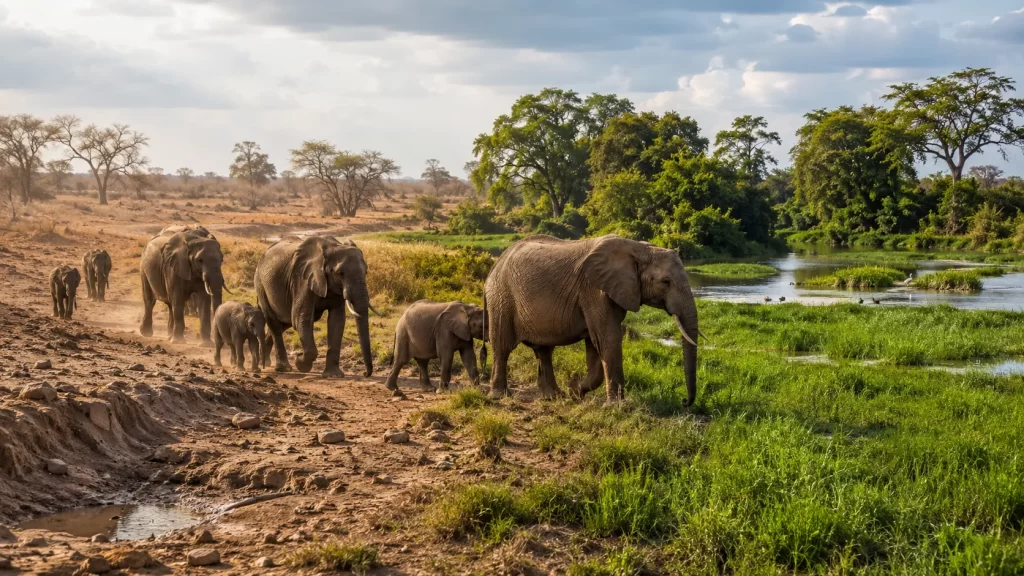
Water shapes many elephant migration routes because elephants often drink and cannot ignore the heat for long. During dry months, herds gather near rivers, swamps, pans, or permanent boreholes. These dry-season refuges can support many elephants, but they also increase competition and habitat pressure.
Food quality changes with water. After rain, fresh grasses grow across wider landscapes. Elephants then move outward to feed on higher-quality plants. This seasonal elephant movement prevents overuse of one area and lets vegetation recover. When routes stay open, elephants can spread their impact across a larger elephant range.
Water management can also change movement. Artificial waterholes may keep elephants in one area longer than normal. That can increase browsing pressure on trees and reduce natural migration. Good conservation planning uses water carefully, so elephants can move without damaging the landscape.
Elephant Corridors: The Safe Links Between Habitats
Corridors Keep Old Routes Alive
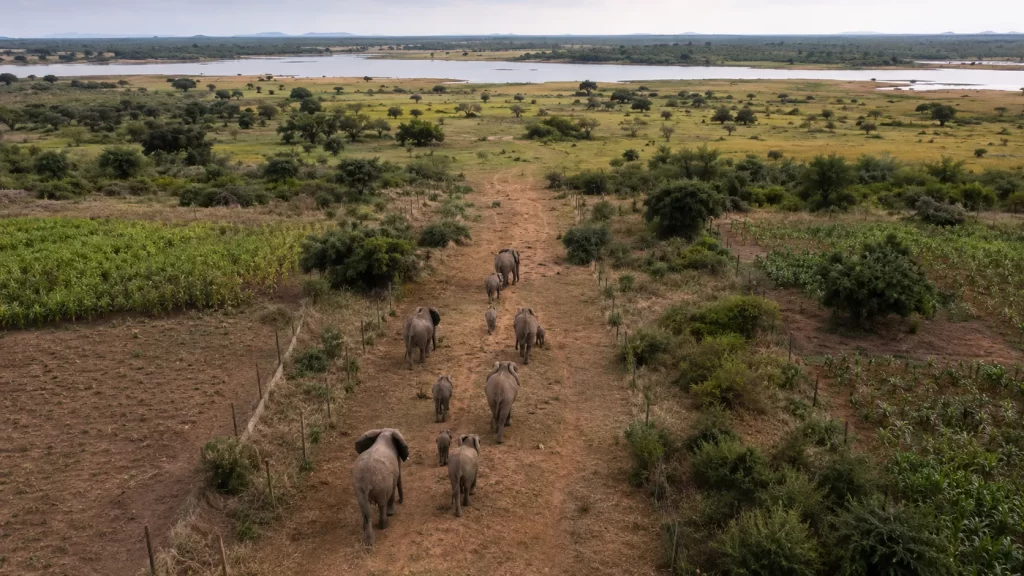
Elephant corridors are the narrow or broad connections between feeding areas, water sources, and protected landscapes. They may cross community land, ranches, farms, roads, or private conservancies. A corridor does not need to be a fenced tunnel. It can be a protected strip, a land-use agreement, or a low-conflict passage.
Corridors matter because elephants often live in landscapes larger than parks. WWF notes that expanding settlements, agriculture, roads, canals, and fences fragment elephant habitat and ancient migratory routes. This fragmentation increases human-elephant conflict when elephants enter farms or villages.
Strong corridors help both people and wildlife. Elephants can avoid crop fields when safe routes exist. Communities can reduce crop loss with better planning, early warning systems, fencing, and land-use zoning. Conservation teams can also use GPS collar data to identify the most used paths before development blocks them.
Amboseli Elephants and Seasonal Movement
A Long-Studied Example From Kenya
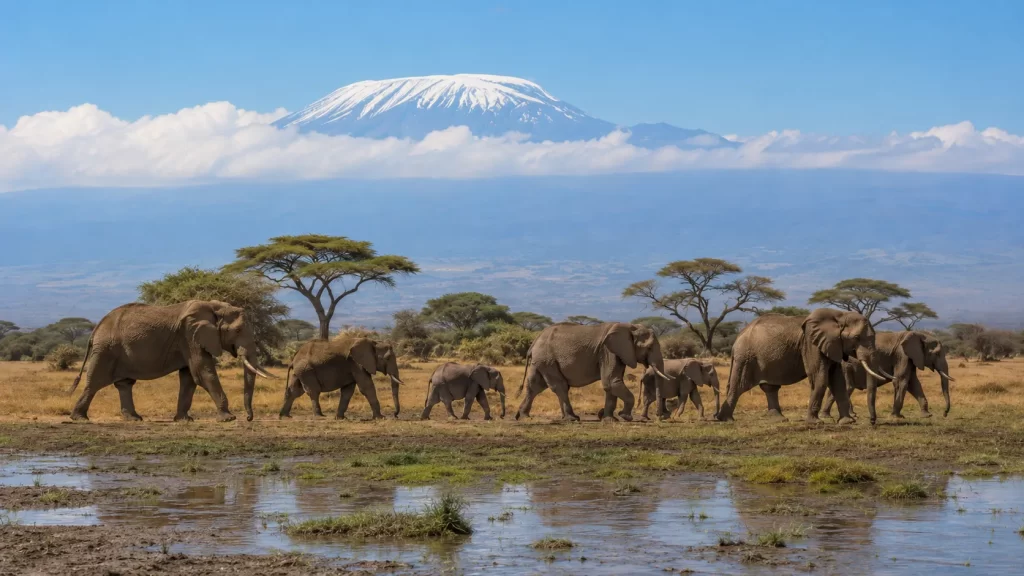
Amboseli elephants offer one of the clearest examples of long-term elephant movement research. The Amboseli Elephant Research Project began in 1972 and has tracked life histories and association patterns for more than 2,000 individual elephants. This long record helps scientists understand family leadership, seasonal range use, birth patterns, and survival.
Amboseli National Park itself is only about 390 km², so elephants must use the surrounding lands. The wider Amboseli ecosystem includes group ranches, dispersal areas, wetlands, and corridors toward Kilimanjaro, Chyulu, and Tsavo landscapes. This shows why protecting only the park cannot protect the full elephant range.
How Elephants Choose Migration Routes
Memory, Smell, Sound, and Risk All Matter
Elephants choose migration routes through a mix of memory and sensory information. Older females can remember drought refuges used years earlier. Herds also respond to smell, distant calls, vegetation greenness, water availability, and the behavior of other elephants.
Rainfall creates short-term decisions. Fresh grass may pull elephants into open plains. Drying waterholes may push them toward rivers. Human pressure creates another layer. Elephants may avoid busy roads during daylight, cross farms at night, or move quickly through exposed corridors.
Threats Blocking Elephant Migration Routes
Fragmentation Creates Conflict
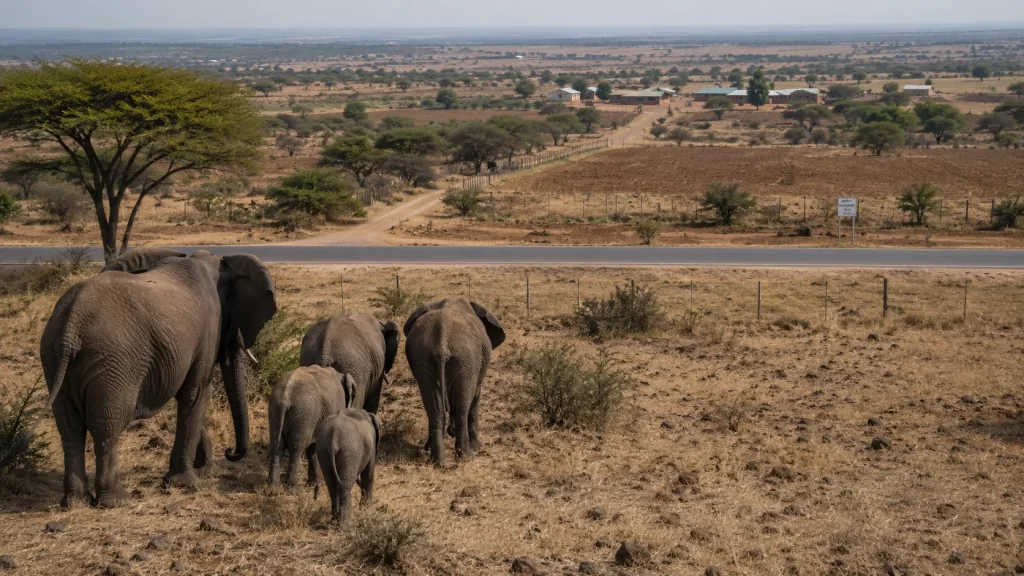
The biggest modern threat to elephant migration routes is habitat fragmentation. A route used safely for generations can become blocked by farms, fences, roads, railways, mines, or towns. Once a route narrows, elephants may damage crops, break fences, or enter settlements.
This pressure affects conservation at the population level. The IUCN reported in 2021 that African savanna elephants declined by at least 60% over 50 years, while African forest elephants declined by more than 86% over 31 years. Habitat loss and poaching remain major drivers of these declines.
Blocked movement can also isolate populations. A 2026 Reuters report on elephant genetics described isolation concerns in some African populations, including Eritrea and Ethiopia, where shrinking land and separation can reduce genetic resilience. The report noted about 100 elephants in Eritrea and roughly 300 elephants at Ethiopia’s Babile Elephant Sanctuary.
How Conservation Protects Elephant Movement
Science Helps Map the Right Land
Modern conservation uses GPS collars, aerial surveys, local knowledge, camera traps, and conflict records to map elephant migration routes. These tools show where elephants move, when they move, and which routes face the greatest pressure. Good maps help governments and communities protect corridors before they disappear.
In Tanzania’s Tarangire-Manyara ecosystem, researchers detected several transit corridors, including routes about 40 km, 50 km, 20 km, and 16 km long. These corridor lengths show that connectivity is often about specific, defendable land strips, not only huge national parks.
Bottom Line
African elephant migration routes are survival systems built through memory, family leadership, and seasonal change. Elephants travel to find water, fresh food, mates, shade, and safer ground. In some landscapes, elephant migration distances can stretch across hundreds of kilometers, especially when rainfall and water sources shift.
We protect elephants best when we protect movement. Parks remain vital, but elephants also need corridors, community land, and safe crossings beyond park borders. Amboseli elephants, Botswana elephants, and Tarangire elephants all show the same lesson: connected landscapes keep herds healthier and reduce conflict. When migration routes stay open, elephants can move naturally, ecosystems stay balanced, and people have better tools to live beside wildlife.