Table of Contents
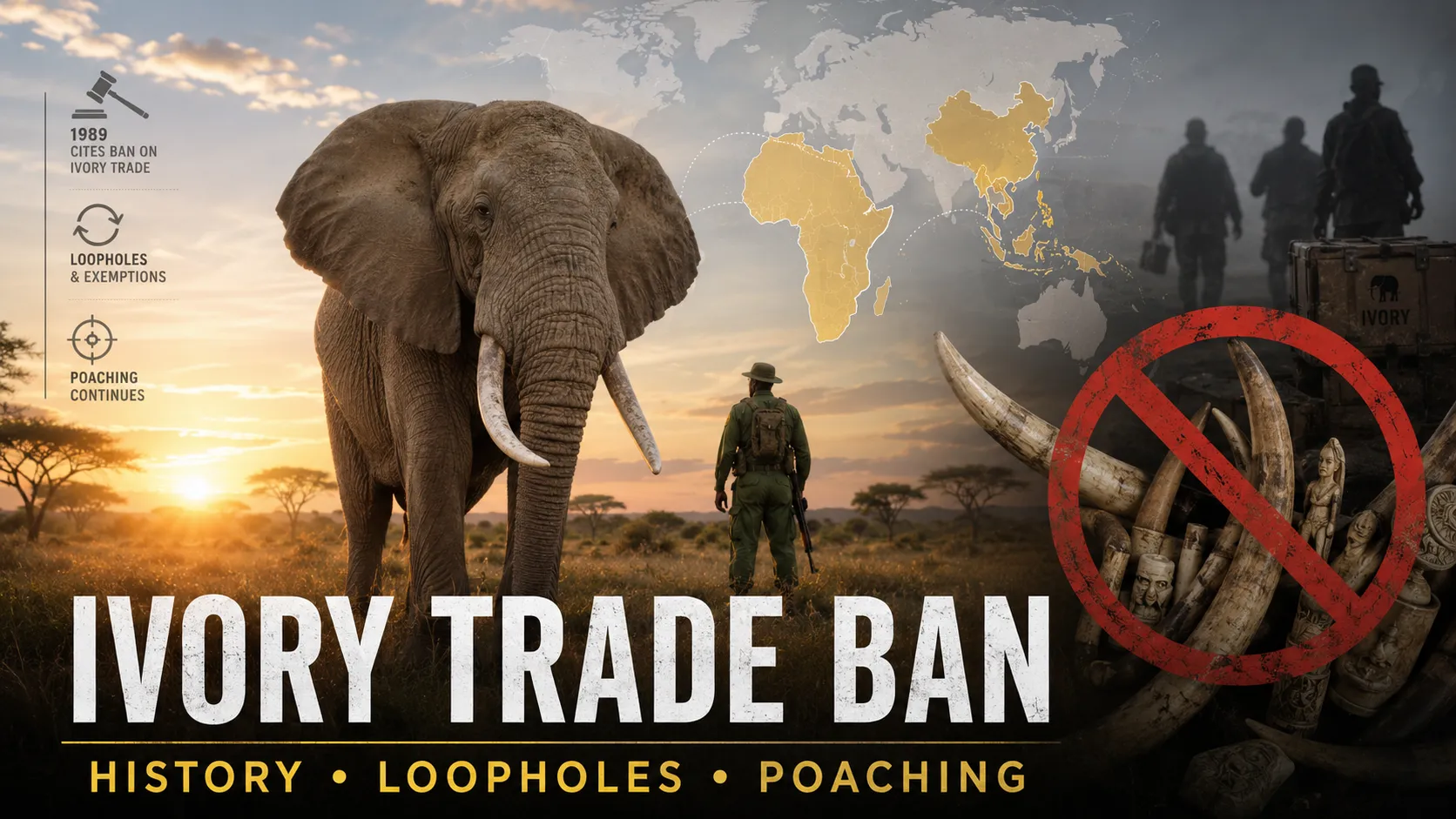
The ivory trade ban was introduced to protect elephants from unsustainable hunting and the growing international demand for ivory. Although the global ban marked a major victory for conservation, elephant poaching remains a serious threat across parts of Africa and Asia. Criminal networks, loopholes in regulations, and persistent consumer demand have allowed the illegal trade to survive despite decades of international action.
Elephants are among the world’s most iconic animals. Their populations have suffered from habitat loss and the lucrative ivory market for centuries. The international community responded through the Convention on International Trade in Endangered Species of Wild Fauna and Flora, commonly known as CITES. While the ban helped reduce legal trade, illegal trafficking continues to undermine conservation efforts.
Understanding the history of the ivory trade ban and the reasons poaching persists helps explain why protecting elephants requires more than legislation alone.
What Is the Ivory Trade Ban?
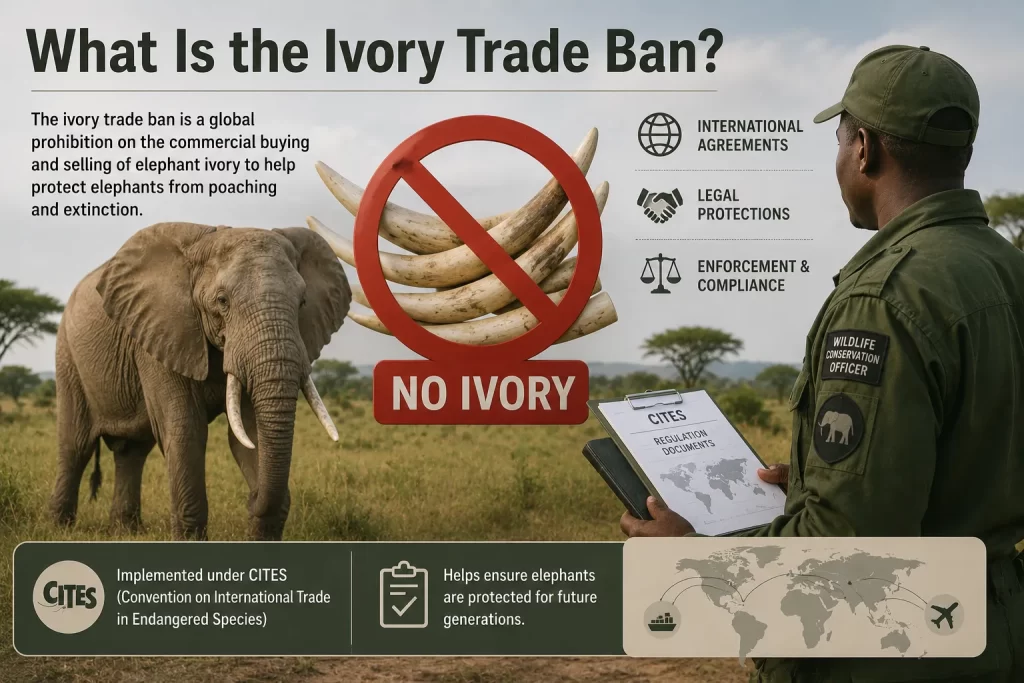
The ivory trade ban refers to international restrictions designed to prevent the commercial trading of elephant ivory. These measures aim to reduce demand and protect elephant populations from overexploitation.
Ivory comes primarily from elephant tusks, which have historically been used for jewellery, carvings, and decorative objects. Rising demand during the twentieth century contributed to severe declines in elephant numbers across many regions.
Today, most international commercial trade in elephant ivory is prohibited. However, some exemptions and domestic regulations differ between countries, creating opportunities for illegal activities.
Why Ivory Became a Global Conservation Issue
By the 1970s and 1980s, elephant populations were declining rapidly due to heavy poaching. Conservation groups and governments recognised that international action was necessary.
The growing crisis pushed countries to strengthen protections under CITES. The goal was to stop commercial demand and give elephant populations a chance to recover.
Which Elephant Species Are Protected?
African elephants and Asian elephants both receive protection under international agreements. African forest elephants and African savanna elephants are listed separately by the International Union for Conservation of Nature (IUCN), reflecting differences in their conservation status.
The History of the Ivory Trade Ban
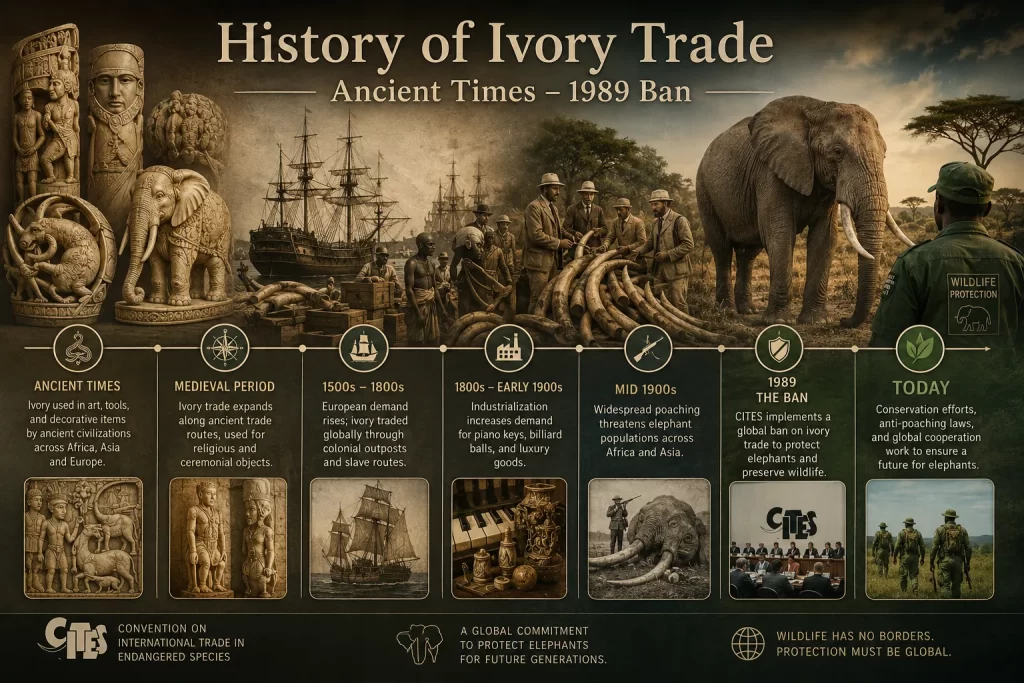
Ivory has been traded for thousands of years. Ancient civilisations valued ivory for art, religious objects, and luxury goods.
During the colonial period, hunting expanded dramatically. Improved transportation and global markets increased demand, resulting in widespread elephant killings.
The 1989 CITES Ivory Ban
A major turning point came in 1989 when CITES placed African elephants under Appendix I protection. This decision effectively prohibited most international commercial ivory trade.
The ban represented one of the most significant conservation measures in modern history. Many countries strengthened their domestic laws to support the new restrictions.
How Countries Implemented Restrictions
Implementation varied among nations. Some countries introduced strict domestic bans, while others allowed limited exemptions for antiques and historical artefacts.
These differences created inconsistencies that continue to challenge enforcement efforts today.
Understanding the CITES Ivory Ban
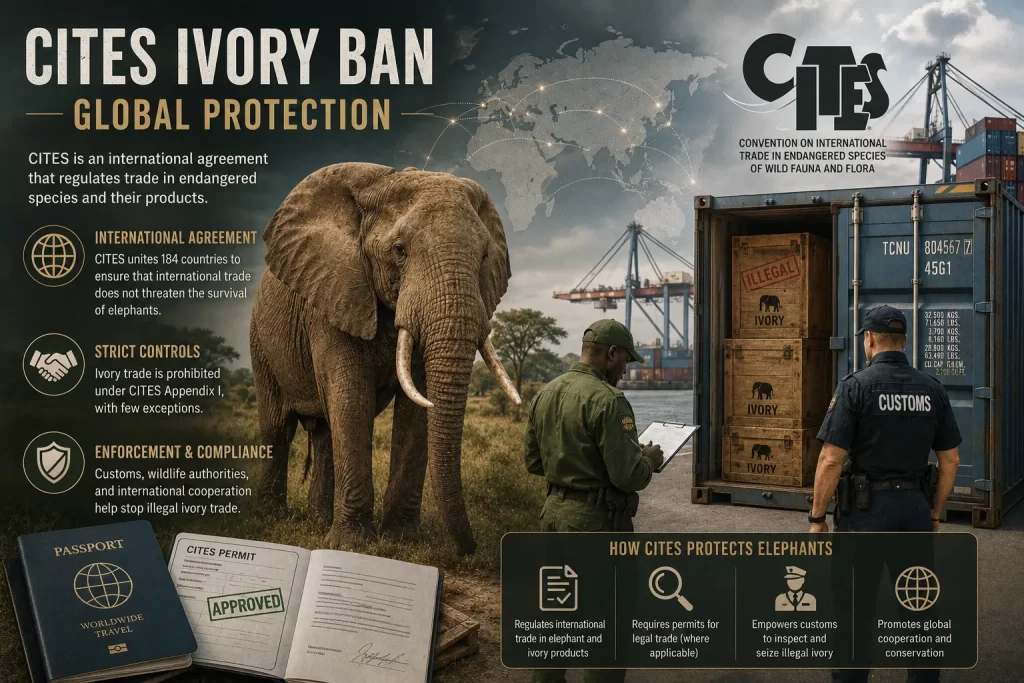
The CITES ivory ban regulates international trade in endangered species and their products. More than 180 countries participate in the agreement.
What Is CITES?
CITES is an international treaty established to ensure that wildlife trade does not threaten species survival. Member countries cooperate to regulate and monitor trade activities.
Exceptions and Legal Exemptions
Although commercial trade is largely prohibited, certain exceptions exist. Antique ivory and some historical items may still be legally traded under specific conditions.
Unfortunately, these exemptions have sometimes been exploited to disguise illegal ivory products.
How International Enforcement Works
Customs authorities, wildlife agencies, and international organisations work together to identify illegal shipments. Cooperation between countries plays a vital role in combating trafficking networks.
Why Elephant Poaching Continues Despite the Ivory Trade Ban
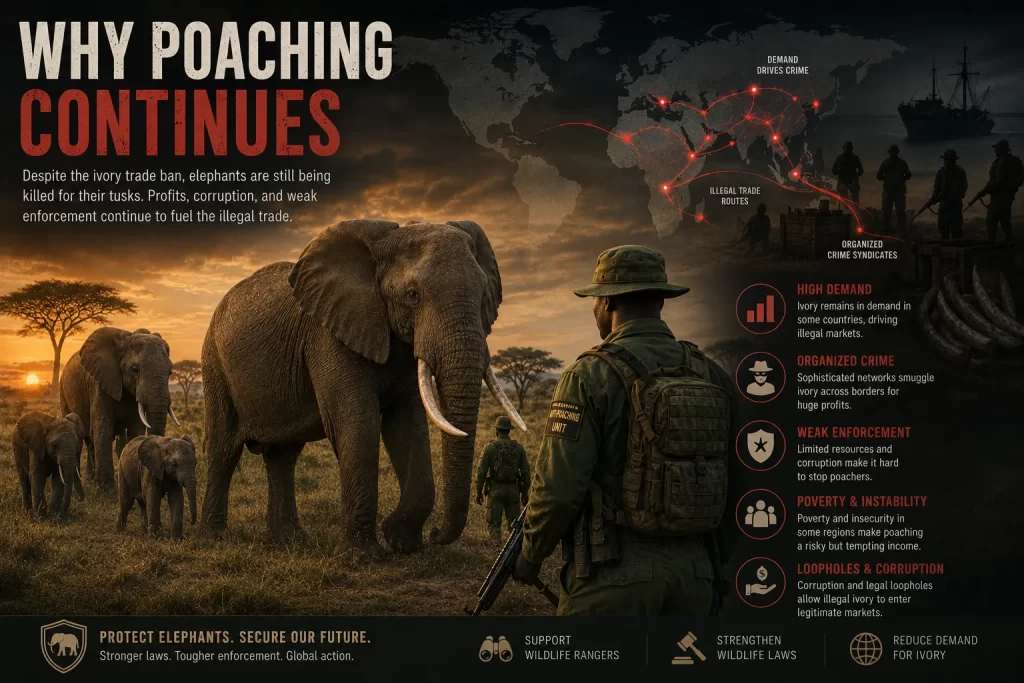
Despite decades of regulation, poaching remains a profitable criminal activity.
High Profits and Organised Crime
Illegal wildlife trafficking generates enormous profits. Criminal syndicates often view ivory as a low-risk and high-reward commodity.
Sophisticated smuggling networks move ivory across borders using hidden routes and false documentation.
Poverty and Weak Enforcement
Communities facing poverty may become vulnerable to recruitment by traffickers. Limited resources and insufficient law enforcement can make it difficult to prevent illegal hunting.
Corruption further complicates conservation efforts in some regions.
Border Challenges
Many elephant habitats span national boundaries. Monitoring remote areas and preventing smuggling require strong international cooperation and substantial funding.
Major Loopholes Exploited by the Illegal Ivory Trade
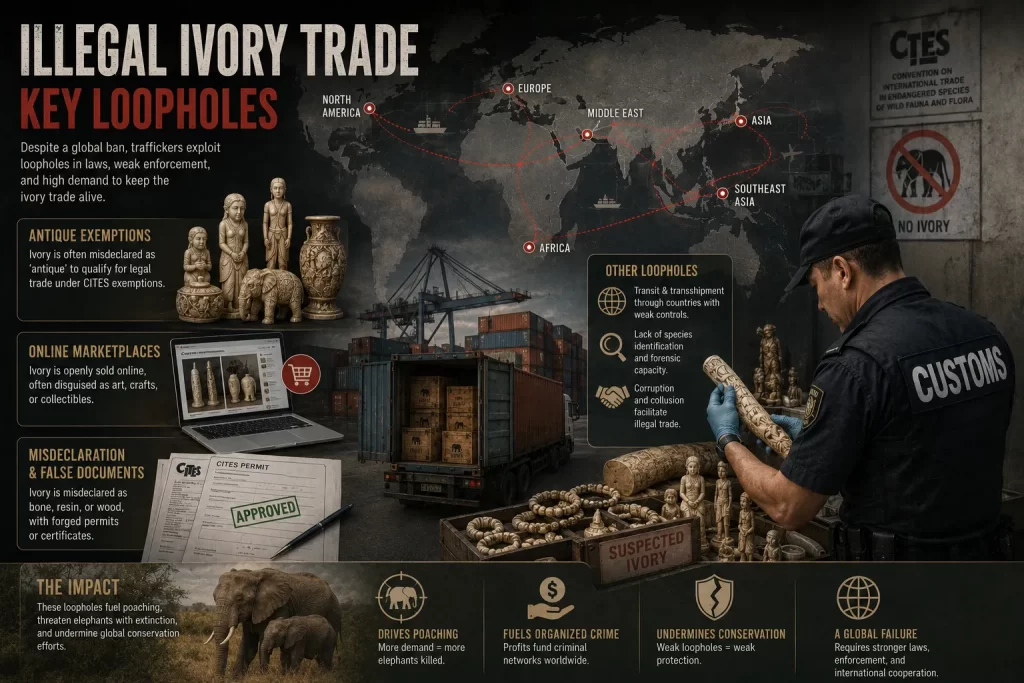
The illegal ivory trade continues to exploit weaknesses in regulations.
Antique Ivory Exemptions
Some countries permit the sale of antique ivory. Determining the age of ivory products can be difficult, creating opportunities for laundering recently obtained ivory.
Domestic Markets
Different national laws have created uneven regulations. Traders may exploit countries with weaker restrictions.
Online and Black-Market Sales
Internet platforms and social media have introduced new challenges. Illegal products can be advertised quickly and anonymously.
Enforcement agencies now face a rapidly evolving digital marketplace.
How Ivory Demand in China Influenced Elephant Poaching
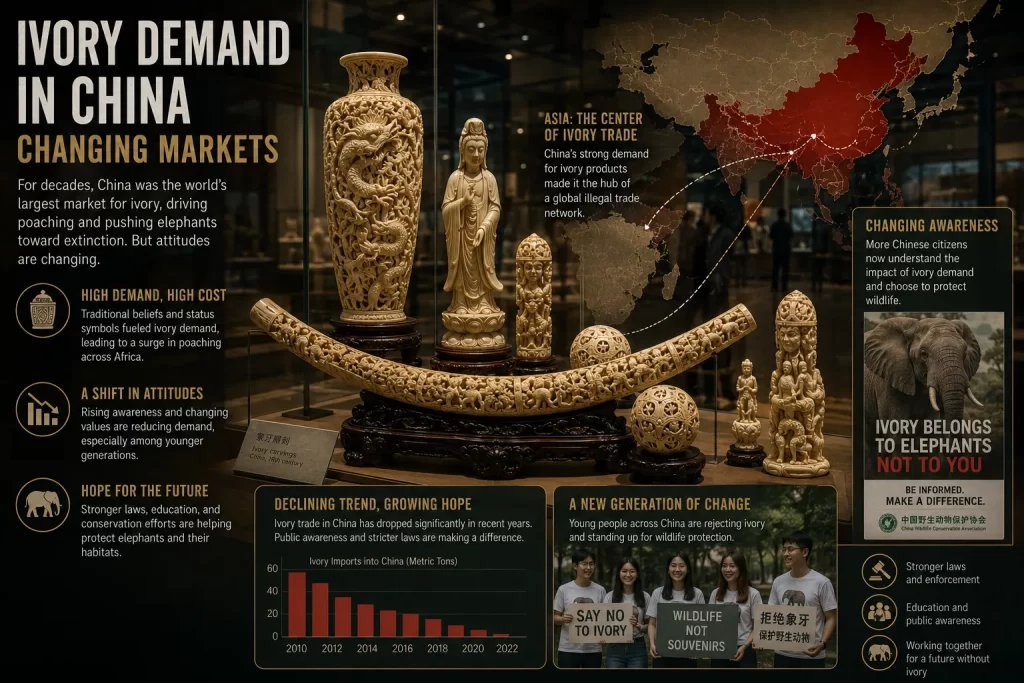
For many years, China represented one of the largest markets for ivory products.
Historical Consumer Demand
Ivory carvings and luxury items held cultural and economic value. Strong demand contributed significantly to poaching pressures.
China’s Domestic Ban
China closed its legal domestic ivory market in 2017. Conservation organisations viewed the move as an important milestone.
The decision helped reduce legal sales, although illegal markets and demand in neighbouring regions remain concerns.
Changing Consumer Behaviour
Public awareness campaigns and stronger regulations have encouraged changes in consumer attitudes. Younger generations increasingly support wildlife conservation.
Elephant Poaching Statistics and Global Trends
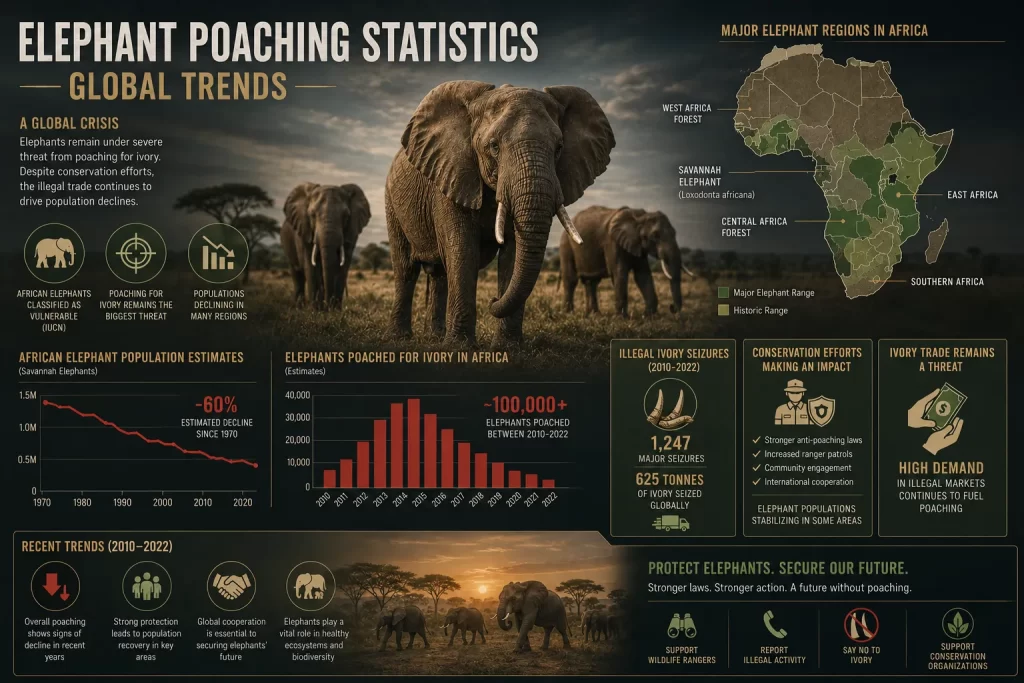
Conservation groups continue to monitor elephant populations and illegal trafficking patterns.
Research by the IUCN has shown that African forest elephants experienced severe declines over recent decades. Savanna elephants have also suffered population losses in several regions.
At the same time, some countries have achieved local population recoveries through strong conservation programmes and anti-poaching measures.
Regions Most Affected
Central Africa has experienced some of the highest poaching rates historically. Parts of East and Southern Africa have also faced significant challenges.
National parks and protected areas remain essential for elephant conservation.
Table: Key Milestones in Elephant Conservation
| Year | Event |
|---|---|
| 1975 | The CITES treaty entered into force |
| 1989 | International ivory trade ban adopted |
| 1990 | African elephants are listed under Appendix I |
| 2017 | China closed its domestic ivory market |
| Present | Ongoing anti-poaching and demand reduction efforts |
The Black Market Ivory Trade Today
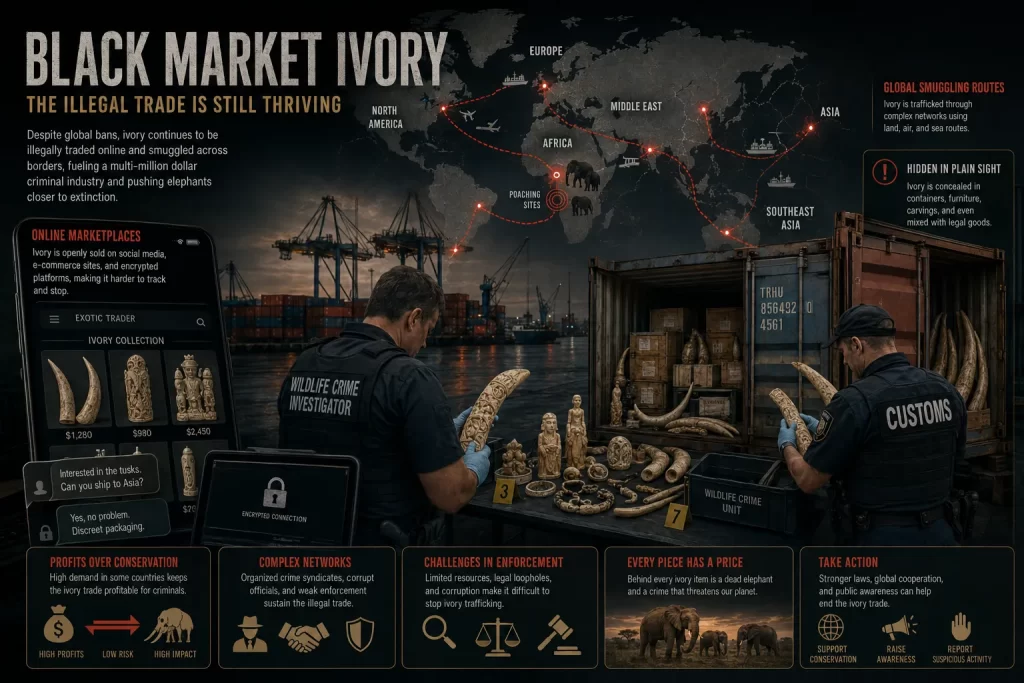
The black market ivory trade has adapted to modern technology.
Criminal Networks and Smuggling Routes
Traffickers use complex international routes to avoid detection. Organised crime groups often operate across multiple countries.
Online Platforms
Digital marketplaces and encrypted communication tools have created new challenges for investigators.
Key Drivers of Illegal Ivory Markets
- High financial rewards.
- Continued consumer demand.
- Weak enforcement in some regions.
- Corruption and organised crime.
- Online marketplaces.
- International smuggling networks.
Stopping these activities requires cooperation among governments, conservation groups, and local communities.
Are Ivory Trade Bans Working?
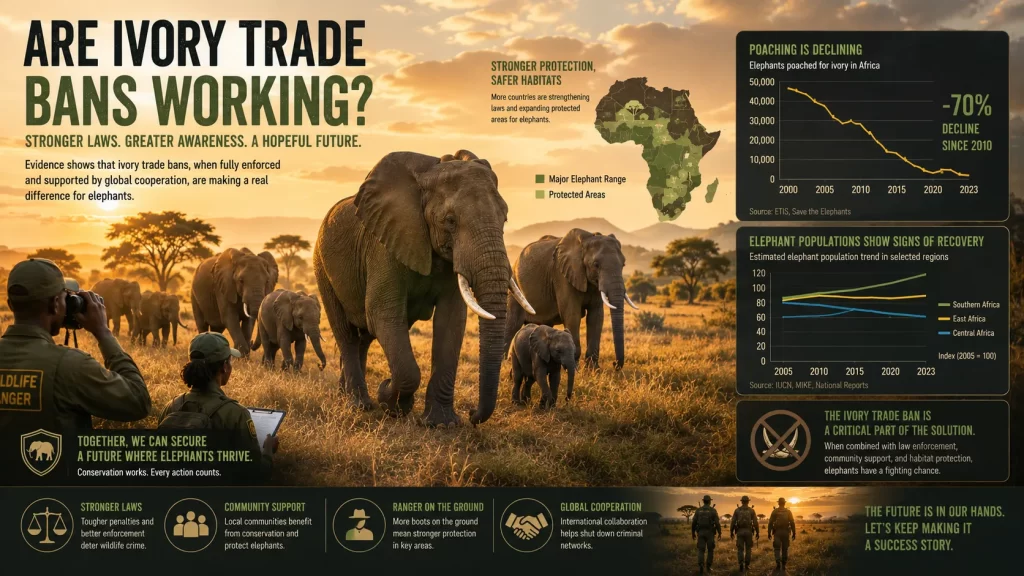
The ivory trade ban has achieved important successes. Several elephant populations have stabilised or increased where conservation measures are well funded and effectively enforced.
Public awareness campaigns, ranger programmes, and stronger laws have reduced demand in some markets. However, challenges remain.
Illegal trafficking, habitat loss, and human-wildlife conflict continue to threaten elephant populations. Experts agree that legislation alone cannot solve the problem.
Long-term success depends on international cooperation, community involvement, and sustained conservation investment.
Conclusion: Why Ending Elephant Poaching Requires More Than a Ban
The ivory trade ban transformed global wildlife conservation and remains one of the most important measures ever introduced to protect elephants. Yet the persistence of illegal trafficking demonstrates that bans alone are not enough.
Loopholes, organised crime, and continuing demand have allowed poaching to survive despite international restrictions. Progress has been made, particularly through stronger laws and changing consumer attitudes, but elephants still face serious threats.
Protecting these remarkable animals requires continued cooperation between governments, conservation organisations, and local communities. Only a combination of enforcement, education, and habitat protection can ensure that elephants survive for future generations.