Table of Contents
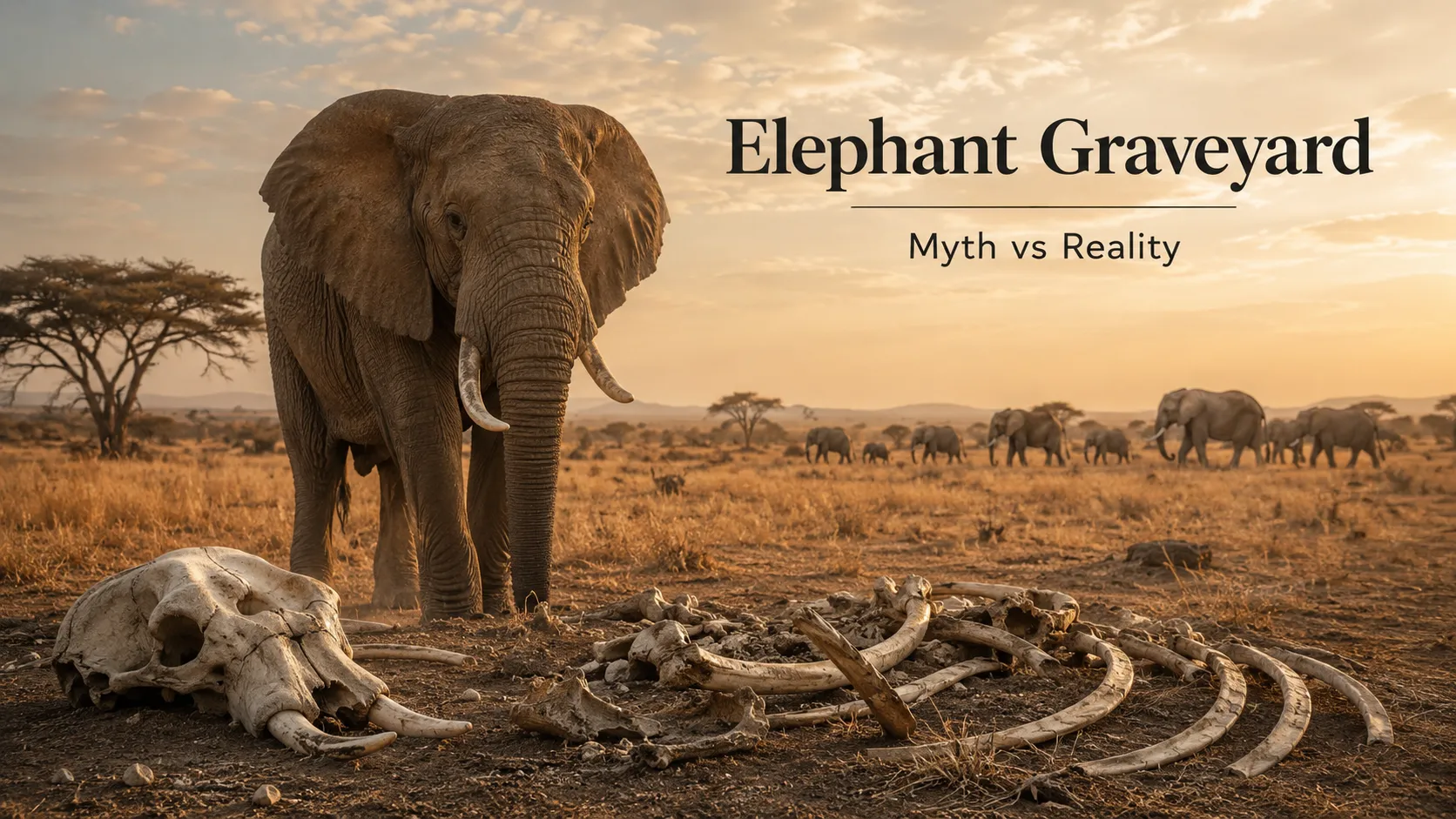
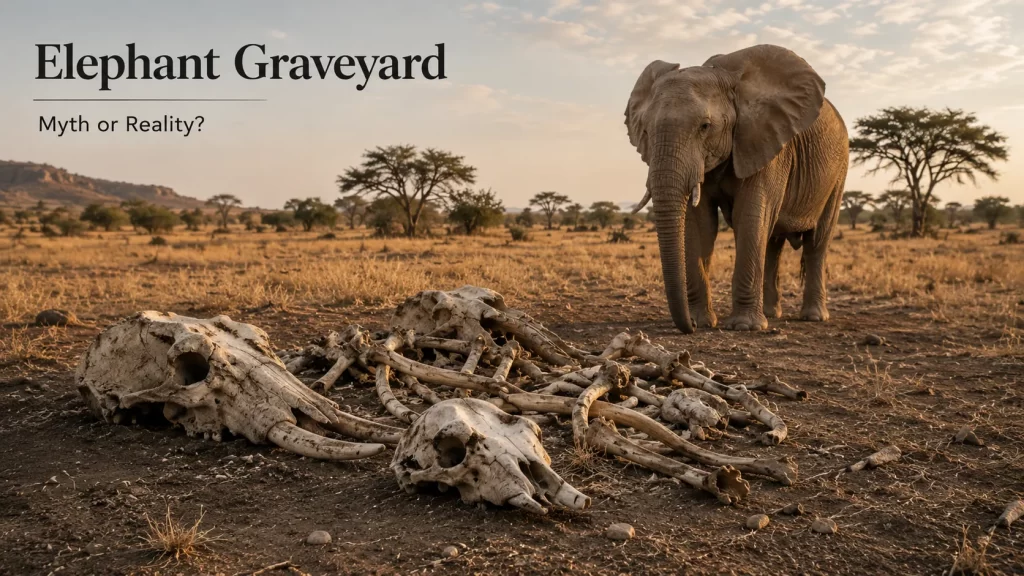
Elephant graveyard stories sound dramatic, but the real science is more interesting. For more than 100 years, people have repeated the idea that old elephants leave the herd and walk to a secret place to die. Movies, adventure books, and ivory hunters helped spread that image. Yet wildlife research does not support a hidden cemetery where generations of elephants gather at death.
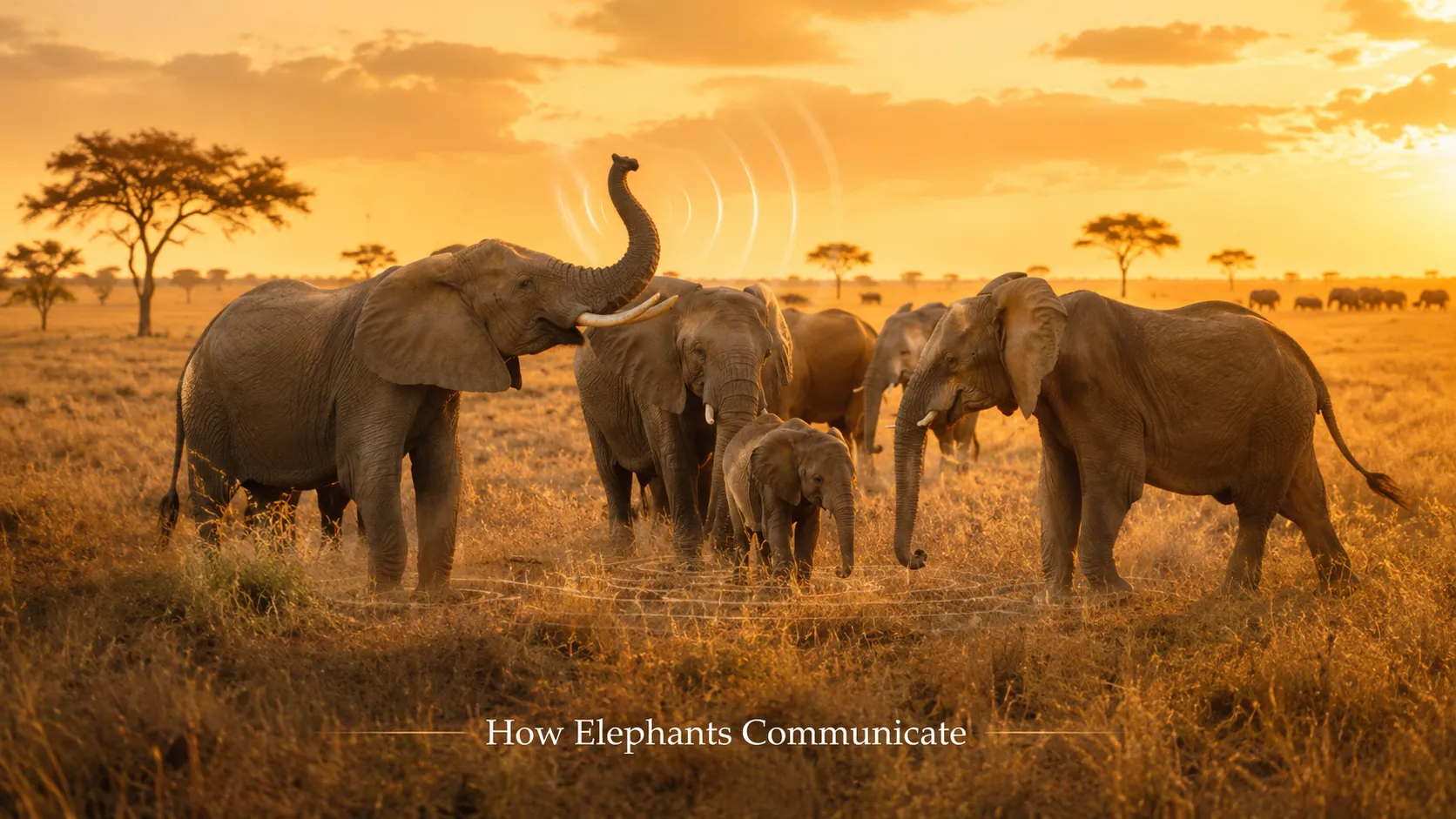
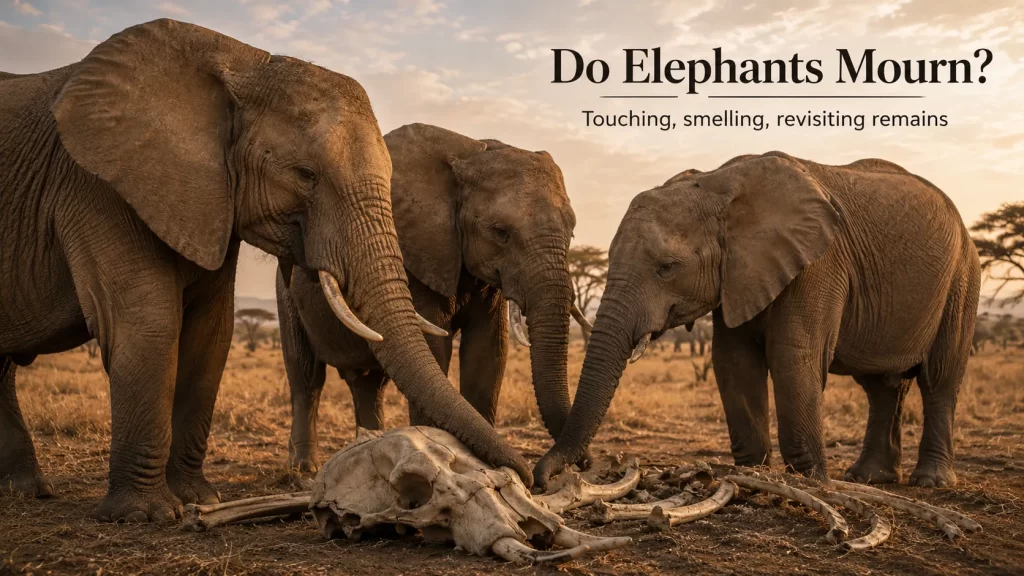
What we do know is clear. Elephants show a strong interest in dead elephants, especially skulls, tusks, and bones. Researchers have recorded elephants touching carcasses with their trunks, smelling remains, standing quietly nearby, and revisiting death sites. A 2020 review found that elephants most often approach, touch, and investigate dead bodies or remains of their own species.
So, the myth is false, but the behavior behind it is real. Elephants do not follow a planned death route. Instead, they die where age, drought, disease, injury, poaching, or conflict catches them. Their bones may collect near water, salt, shade, or old travel routes, which likely created the elephant graveyard legend.
What Is an Elephant Graveyard?
The myth behind the story
An elephant graveyard is usually described as a secret place filled with elephant bones and ivory. In the legend, old elephants leave their herd when they sense death. They then walk alone to a hidden site used by many generations. This story became popular because elephant skeletons are sometimes found in clusters.
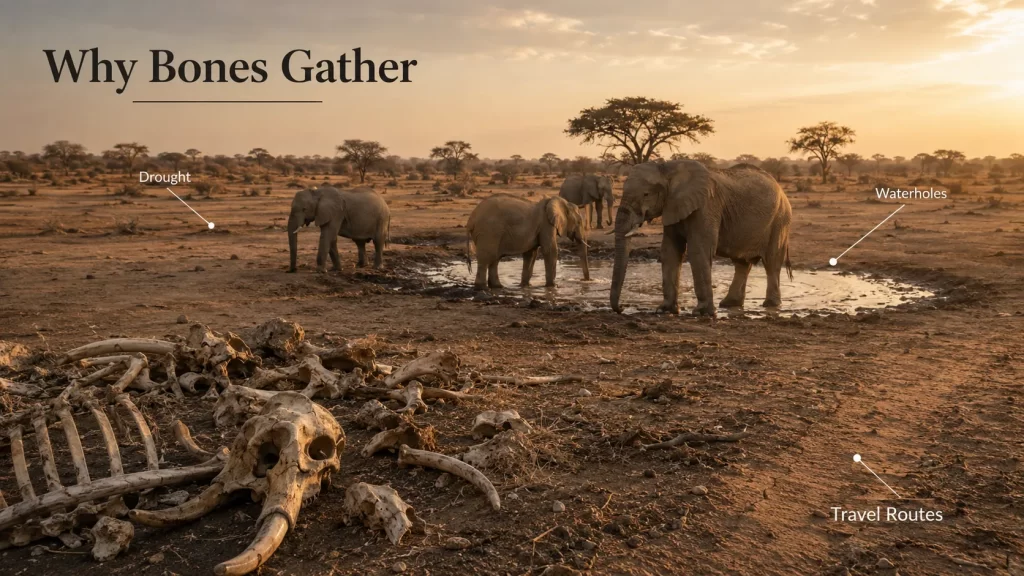
The real reason is more practical. Elephants need water, shade, minerals, and soft vegetation, especially when weak or old. During drought, many animals may die near the same shrinking water source. Over time, bones can gather in one place. That can look like a planned graveyard, but it is usually ecology, not ritual.
| Claim | Reality |
|---|---|
| Elephants travel to secret graveyards | No scientific proof supports this. |
| Elephants know where all old elephants die | No evidence shows planned death migration. |
| Elephant bones can collect in one area | Yes, often near water, salt, or drought zones. |
| Elephants react to dead elephants | Yes, they touch, smell, and investigate remains. |
| Elephants mourn | Evidence suggests grief-like behavior, but emotions remain hard to prove fully. |
Where Elephants Die in the Wild
Death usually follows survival needs
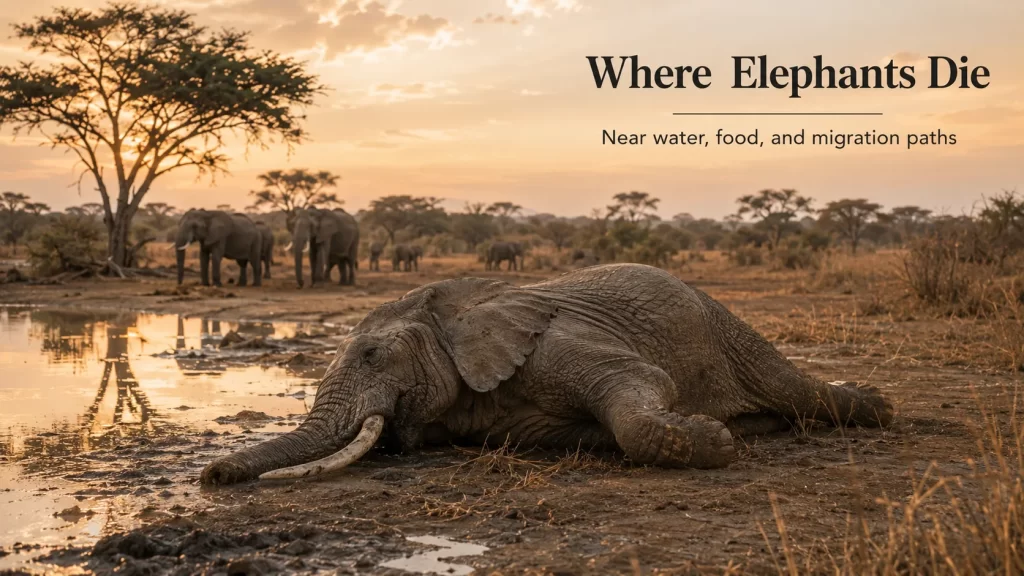
Most elephants die where elephants already live, feed, and move. That includes riverbanks, dry-season waterholes, forests, savannas, farms, and migration corridors. A weak elephant may stay close to water because walking becomes harder. This pattern helps explain why people find several skeletons in the same area.
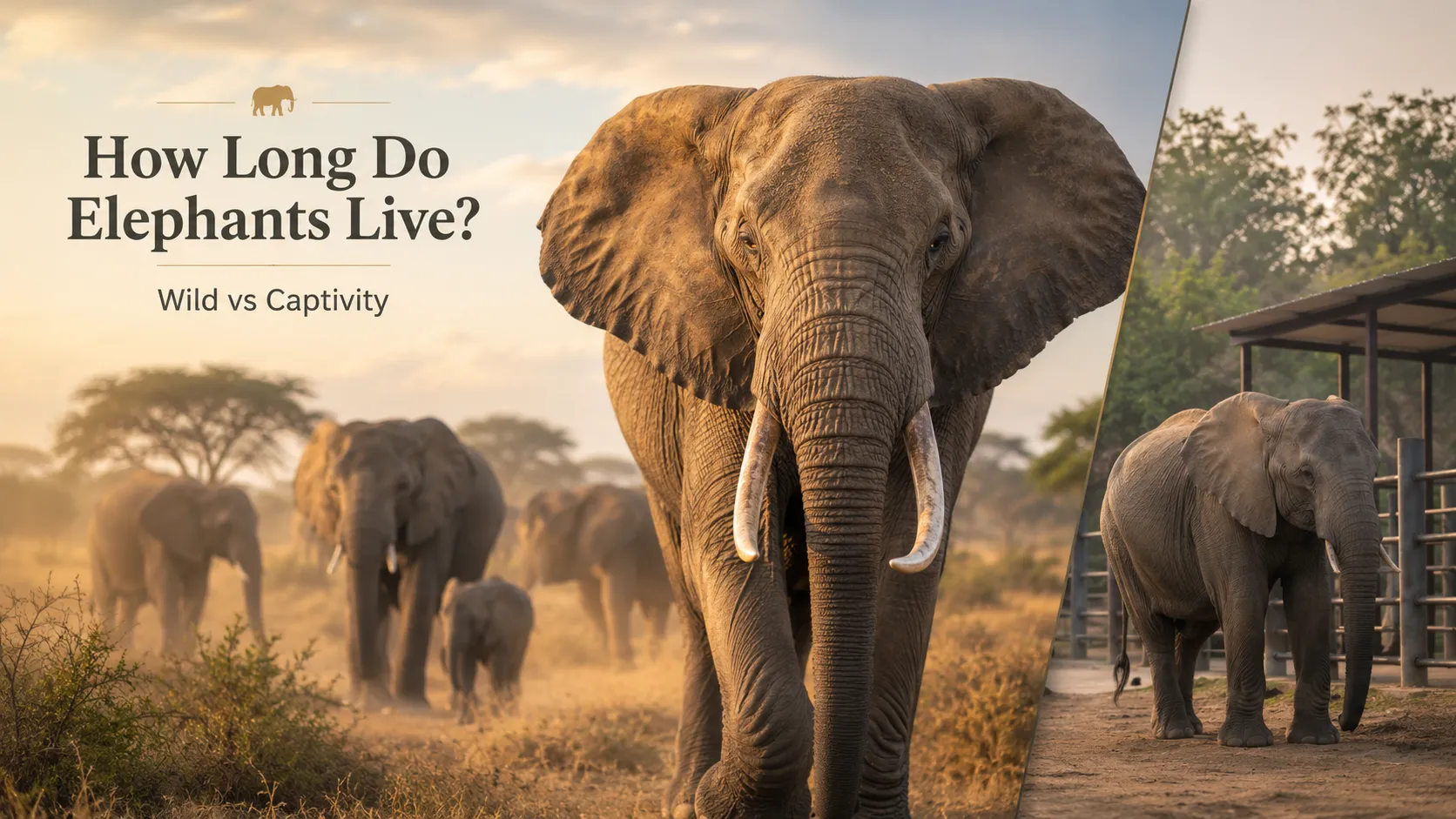
Age also matters. Elephants may live about 65 years or more, although young calves face a high risk. Calf mortality can exceed 30% in the first year, making early life especially dangerous.
Human pressure now changes where elephants die. In Kenya, one long-term study found elephant deaths came from natural causes at 33.1%, ivory poaching at 31.5%, and human-elephant conflict at 19.9%. That data shows elephant deaths are often tied to people, not secret burial places.
Why Elephant Bones Appear in Clusters
Water, drought, and minerals explain the pattern
Elephant bones often gather where elephants spend more time. Waterholes attract weak animals during dry months. Mineral-rich soils and salt licks also draw elephants repeatedly. If drought lasts for weeks, several elephants may die near the same resource. Scavengers then scatter bones, while the sun and weather clean them.
This creates a scene that looks like an elephant graveyard. However, the pattern comes from landscape pressure. In a dry ecosystem, the last water source can become the final place for many animals. Elephants are large, so their skulls, ribs, and leg bones remain visible for years.
Ivory hunters also helped fuel the myth. A place with many bones could mean old mortality, drought loss, or poaching waste. It did not prove that elephants chose that site as a death ritual.
Do Elephants Mourn Their Dead?
Their behavior looks careful and emotional
The question “Do elephants mourn?” has a serious scientific base. Elephants show unusual attention toward dead elephants. They may touch the skull, lift bones, smell the body, stand near the carcass, or return later. A well-known 2006 study recorded elephants helping and investigating a dying and deceased matriarch, showing concern around death.
Scientists avoid saying elephants mourn exactly like humans. Still, their actions go beyond random curiosity. Elephants show special interest in elephant remains, not just any large animal bones. Reports note that they approach bodies at different stages, from fresh carcasses to sun-bleached bones.
This behavior may explain the idea of an elephant death ritual. It is not a formal funeral, but it shows social awareness.
Myth vs Reality: The Better Answer
The truth is less magical but more meaningful
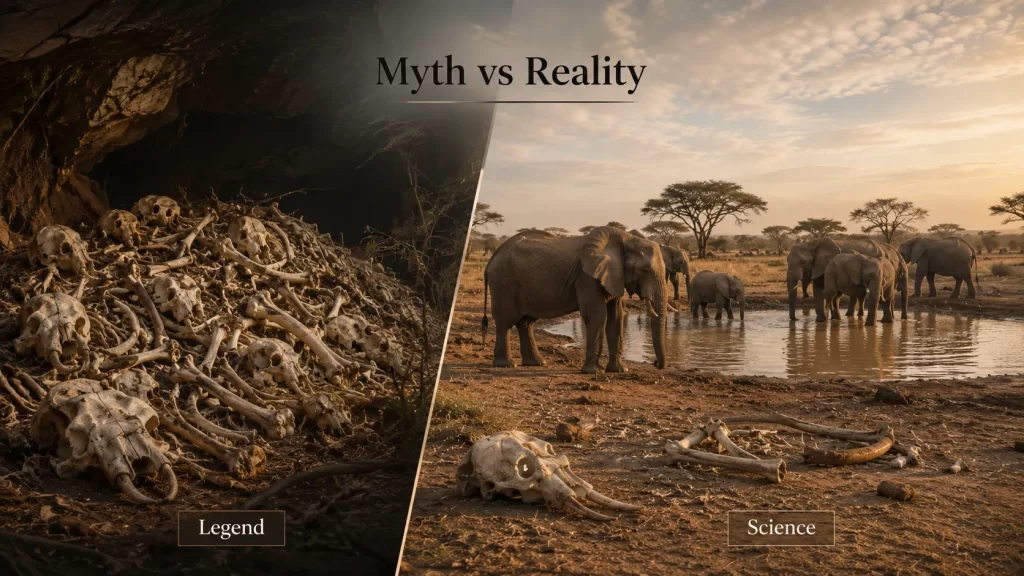
The elephant graveyard myth is not true as a literal place. Elephants do not leave for a known cemetery when death approaches. They usually die near water, food, conflict zones, or herd ranges. Their bones remain because elephants are massive animals with durable skeletons.
Yet the myth survives because it contains one real observation. Elephants notice death. They respond to bodies and bones in ways few animals do. That response gives the story emotional power, even when the graveyard idea fails.
For conservation, this distinction matters. Elephant death is not mysterious when we study the data. Habitat loss, poaching, drought, disease, and human conflict explain far more than legend. Protecting corridors, water access, and safe ranges helps elephants live longer and die naturally.
FAQs About Elephant Graveyards
Are elephant graveyards real?
No, no proven secret elephant graveyard exists. Bone clusters usually form near water, drought sites, salt licks, or old movement routes.
Where do elephants go to die?
Elephants usually die within their normal range. Weak elephants may stay close to water, shade, or soft vegetation because movement becomes harder.
Do elephants mourn their dead?
Elephants show grief-like behavior. They touch, smell, and investigate dead elephants, but scientists still study what those actions mean emotionally.