Table of Contents
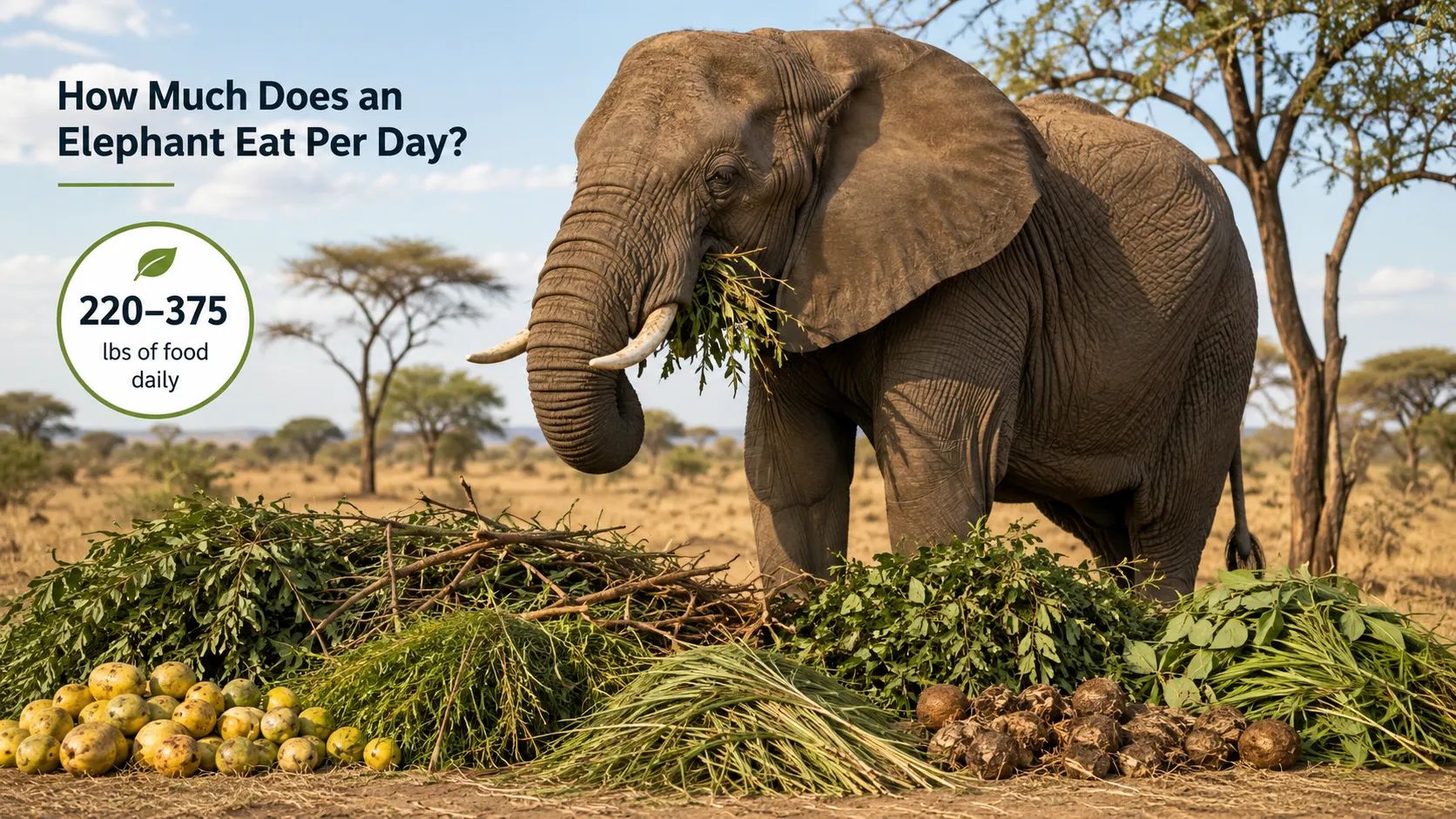
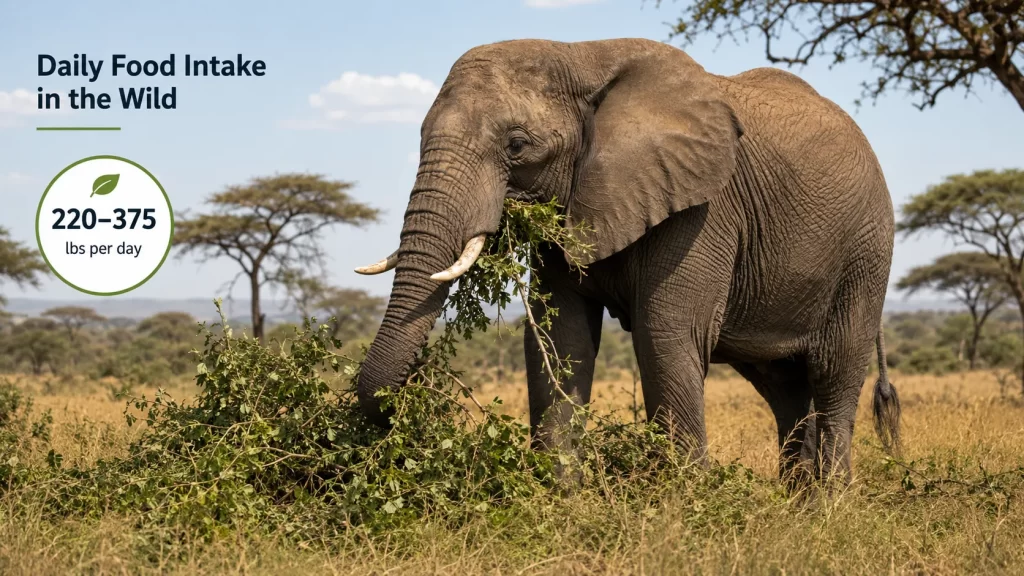
How much does an elephant eat per day? A healthy adult elephant usually eats 220 to 375 pounds of plant food daily, while some large individuals may eat more when food is rich and available. SeaWorld reports a daily range of 330 to 375 pounds, and Britannica lists about 220 pounds for an adult elephant. These numbers vary because species, body size, season, habitat, and pregnancy all change food needs.
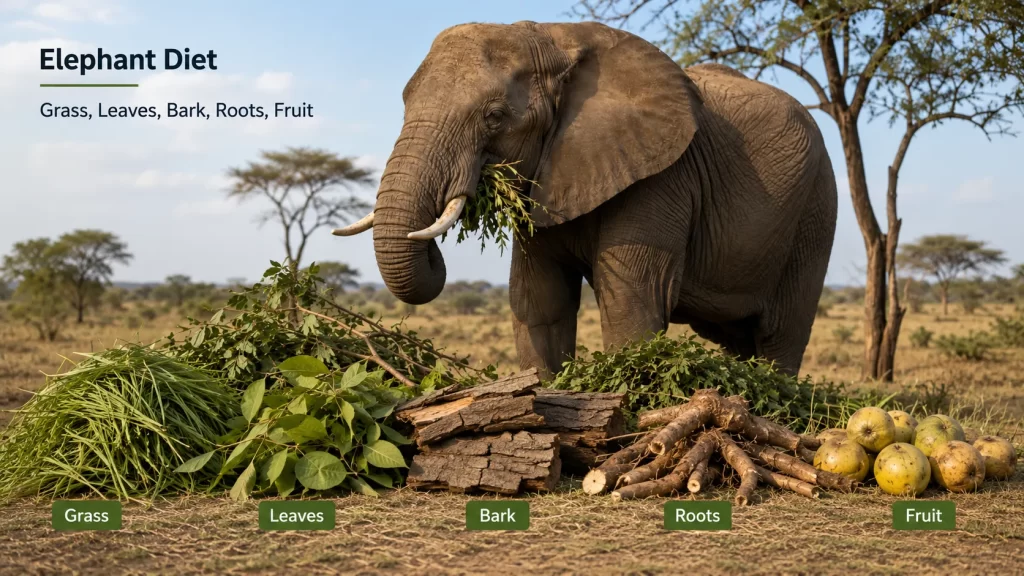
Elephants are massive herbivores, but they do not digest food very efficiently. They must keep feeding for long hours to fuel movement, growth, reproduction, and body heat. Their elephant diet includes grasses, leaves, bark, fruit, roots, twigs, and shrubs. In the wild, feeding is not one meal. It is a full-day routine built around walking, browsing, drinking, and resting.
How Much Does an Elephant Eat Per Day in the Wild?
Daily Food Intake by Species
How much does an elephant eat per day depends first on the elephant’s size. African savanna elephants are the largest land animals, so their food consumption can be higher than that of Asian elephants. A full-grown African elephant may weigh 6,000 to 13,000 pounds, which creates a huge daily energy demand.
Most adult elephants eat around 4% to 7% of their body weight in fresh vegetation each day. That sounds high, but fresh plants contain plenty of water and fiber. Dry matter intake is much lower because water weight makes fresh food heavier. Scientific research on African savanna elephants reports dry matter intake near 1.0% to 1.2% of body weight for non-pregnant adults.
| Elephant Type | Daily Food Intake | Main Foods | Feeding Time |
|---|---|---|---|
| African elephant | 220–375+ pounds | Grass, bark, leaves, fruit | 16–18 hours |
| Asian elephant | 150–300+ pounds | Grass, bamboo, roots, fruit | 12–18 hours |
| Zoo elephant | 100–400 pounds | Hay, browse, produce | Scheduled feedings |
What Do Elephants Eat Every Day?
The Elephant Diet Is Built on Fiber
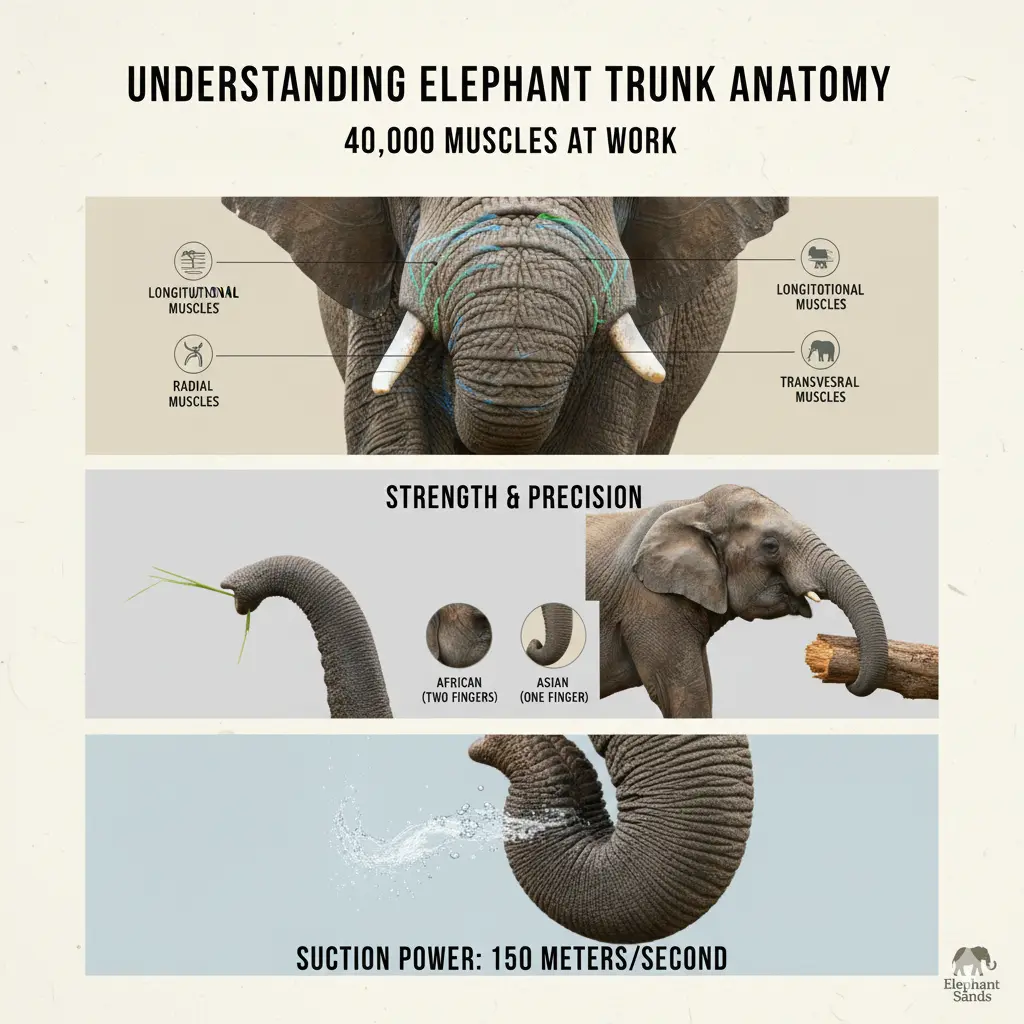
An elephant’s diet is mostly rough plant material, not soft fruit. Elephants eat grasses during wet seasons, then switch more toward bark, branches, roots, and leaves during dry months. Tree bark matters because it provides roughage and minerals, including calcium. Tusks help elephants strip bark, while trunks pull grass, break branches, and sort food.
Elephants also eat fruits, seed pods, herbs, bamboo, and aquatic plants when available. This wide diet helps them survive across forests, savannas, wetlands, and scrublands. Their feeding also shapes ecosystems. They spread seeds through dung, open paths through thick vegetation, and create feeding gaps that help smaller animals move.
Elephant Feeding Hours and Daily Routine
Why Elephants Feed for So Long
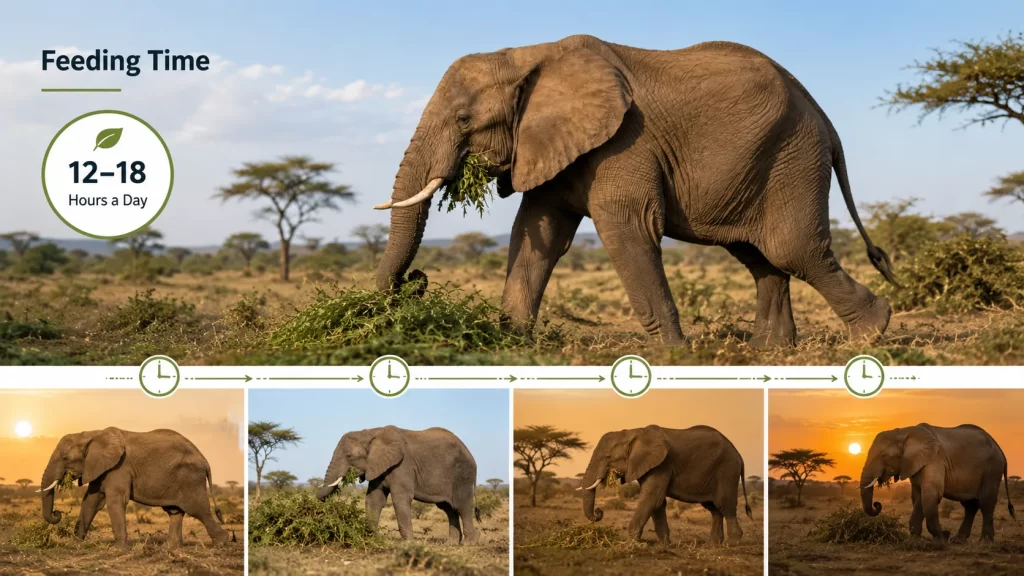
Elephant feeding hours are extreme because their food is bulky and low in calories. Most elephants spend 12 to 18 hours per day feeding. SeaWorld states elephants may spend 16 to 18 hours, or nearly 80% of the day, eating. WWF also notes elephants can feed up to 18 hours daily.
This routine includes walking between food patches, selecting plants, chewing, drinking, and resting briefly. Wild elephants often feed more during cooler morning and evening hours. During hot afternoons, they may rest in the shade or visit water. In dry seasons, herds may travel long distances because food and water become harder to find.
Elephant Calorie Intake and Digestion
Big Bodies Need Constant Fuel
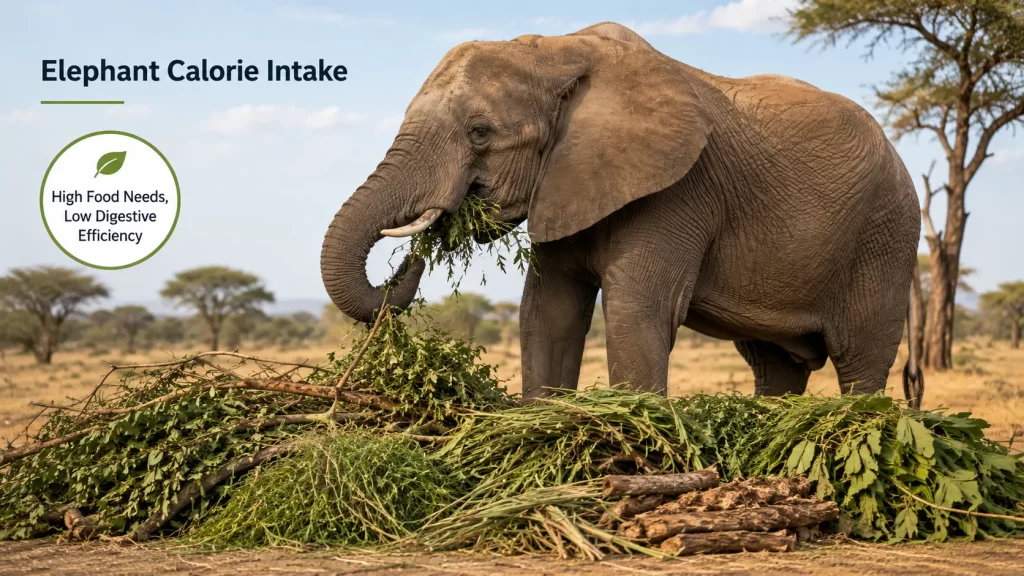
An elephant’s calorie intake can reach tens of thousands of calories daily. Some elephant care sources place adult needs near 50,000 to 70,000 calories per day, depending on size, activity, and condition. That energy supports walking, social behavior, milk production, pregnancy, and body maintenance.
Elephants are hindgut fermenters, so food passes through their digestive system faster than in cattle. They extract nutrients from large volumes instead of digesting every bite completely. This explains why elephant food consumption stays high. A huge body, a plant-heavy diet, and limited digestive efficiency all push elephants to eat for most of the day.
Why Captive Elephant Feeding Looks Different
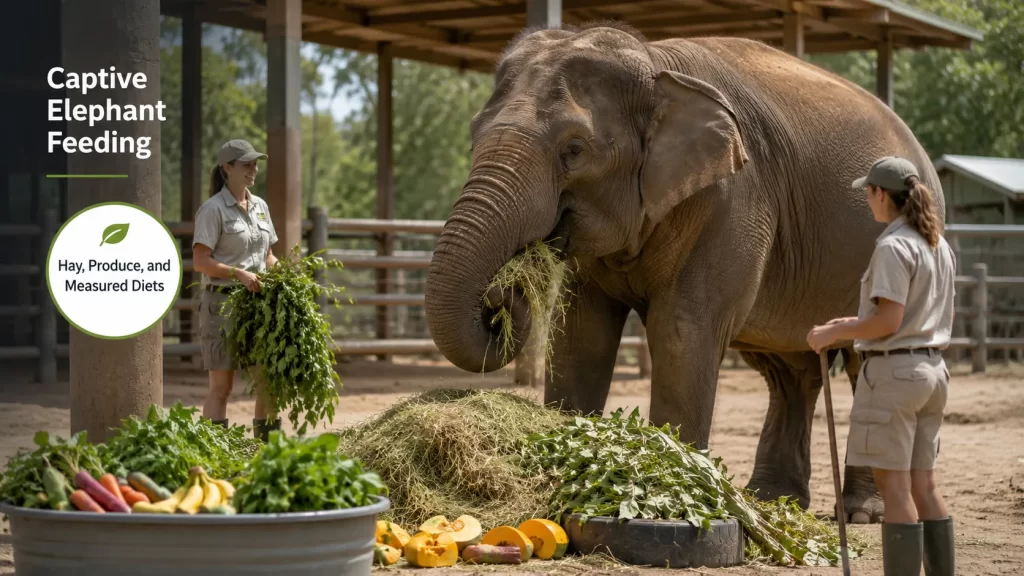
Zoos Measure Diets Carefully
In zoos and sanctuaries, keepers measure food more closely than wild elephants can. Cleveland Zoological Society reports its African elephants eat 100 to 400 pounds daily, depending on the individual. Much of that diet is hay, with produce and browse added for nutrition and enrichment.
Captive feeding plans focus on body condition, dental health, age, pregnancy, activity, and medical needs. Keepers also scatter food, hang browse, and use puzzle feeders. These methods encourage natural movement and longer feeding time. Good care does not just ask how much does an elephant eat per day. It also asks how naturally the elephant can feed.
FAQs
How much does an elephant eat per day in pounds?
An adult elephant usually eats 220 to 375 pounds of food per day. Some zoo elephants may eat 100 to 400 pounds, depending on size, age, and diet plan.
How many hours does an elephant eat each day?
Most elephants feed for 12 to 18 hours daily. They spend so long eating because plant foods are bulky, fibrous, and often low in calories.
What is the main food in an elephant’s diet?
The main foods are grasses, leaves, bark, roots, twigs, shrubs, and fruit. Their exact elephant diet changes with season, habitat, and food availability.