Table of Contents
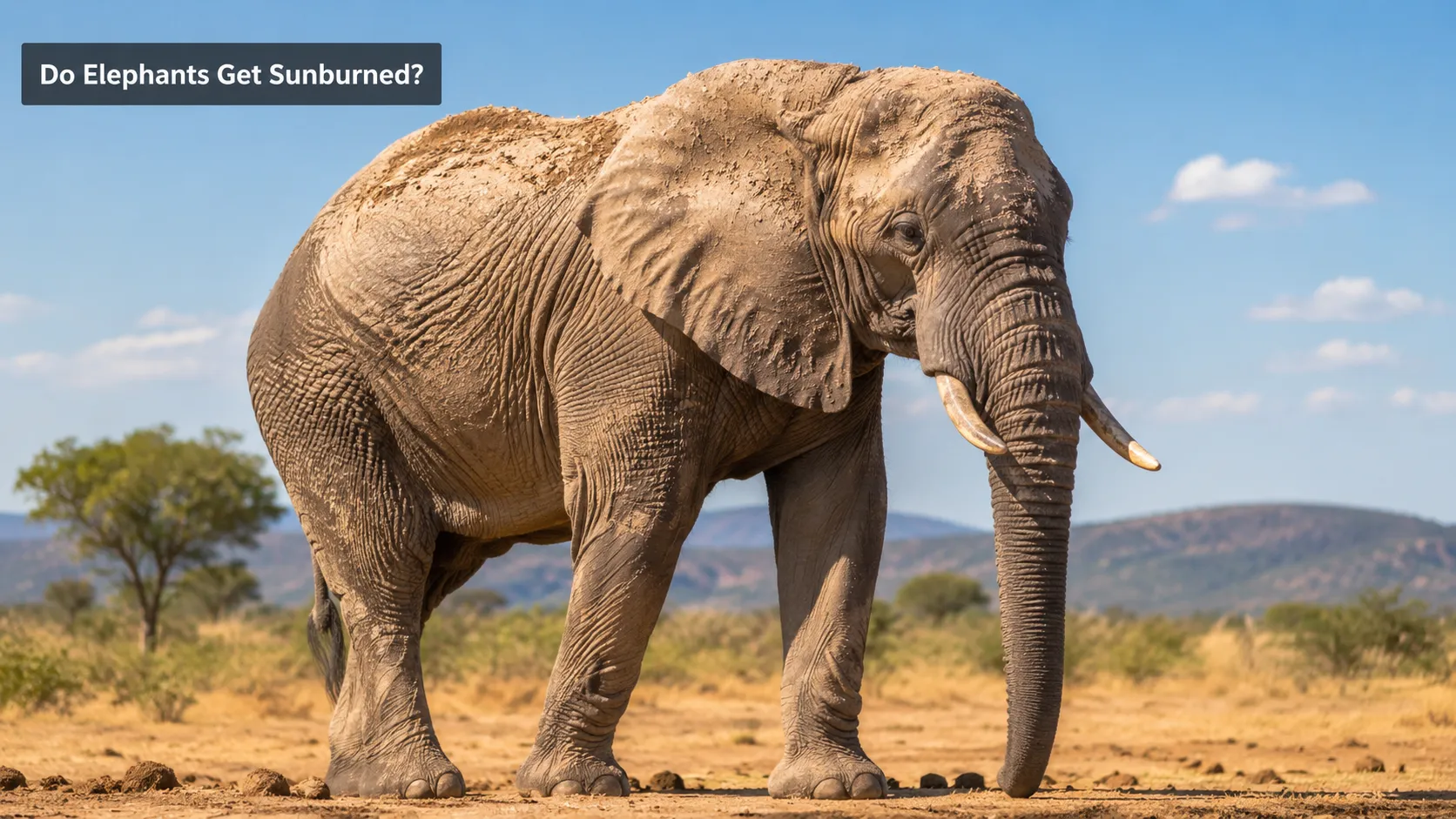
Do elephants get sunburned? Yes, elephants can suffer skin damage from harsh sunlight, especially on thinner areas like the ears, back, and young calves’ skin. Their skin looks tough, but it is sensitive, cracked, and exposed for long hours in hot habitats. That is why elephants use natural skin care every day, not as a rare habit.
Elephants do not rely on fur, shade, or sweat like many animals. Instead, they use mud, dust, water, shade, and wrinkled skin to manage heat and sunlight. African elephants are especially interesting because their cracked skin can hold 5 to 10 times more water than a smooth surface, which supports cooling after bathing.
This natural routine also protects them from insects and dryness. When we watch elephant mud bathing, we are seeing a practical survival behavior. Mud works like a physical shield, while wrinkles help hold moisture longer. Together, these habits explain how elephant skin protection works in the wild.
Do Elephants Get Sunburned in the Wild?
Yes, but natural behavior lowers the risk
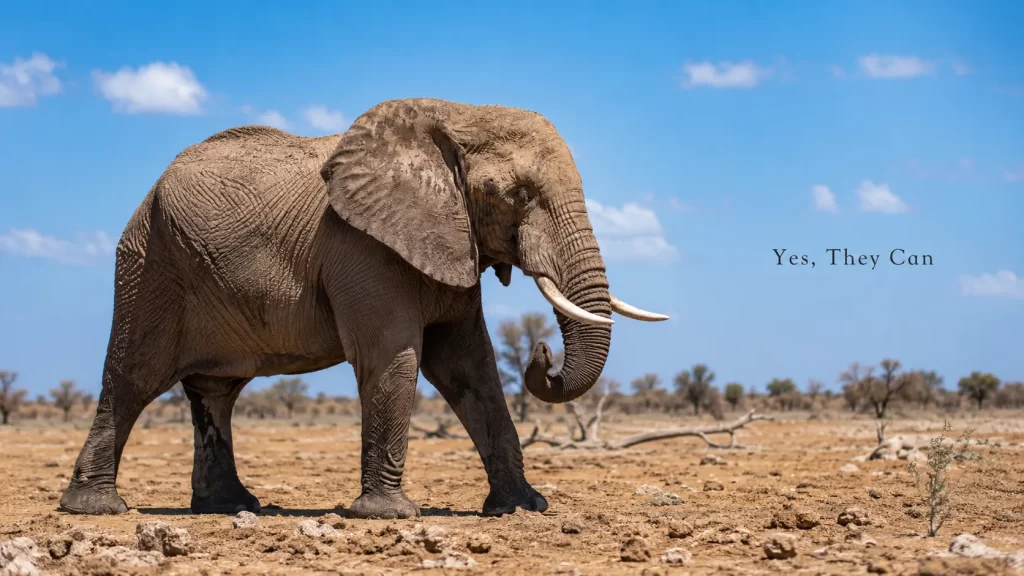
Elephants can get sunburned when direct sunlight hits exposed skin for long periods. Their skin may reach up to 1 inch thick in some areas, but thickness does not make it immune. Calves face more risk because their skin is softer, thinner, and less weathered than adult skin.
Wild elephants reduce that risk by changing their behavior during hot hours. They rest in shade, splash water, throw dust, and coat their bodies with mud. These actions create a barrier between the skin and ultraviolet rays. Dust and mud also help reduce insect bites and moisture loss.
Conservation groups and elephant care teams often describe mud as a natural sunscreen. That does not mean mud works like SPF cream. It works as a physical cover that blocks direct sun contact. This simple behavior makes a major difference in hot, open landscapes.
How Elephant Mud Bathing Protects Skin
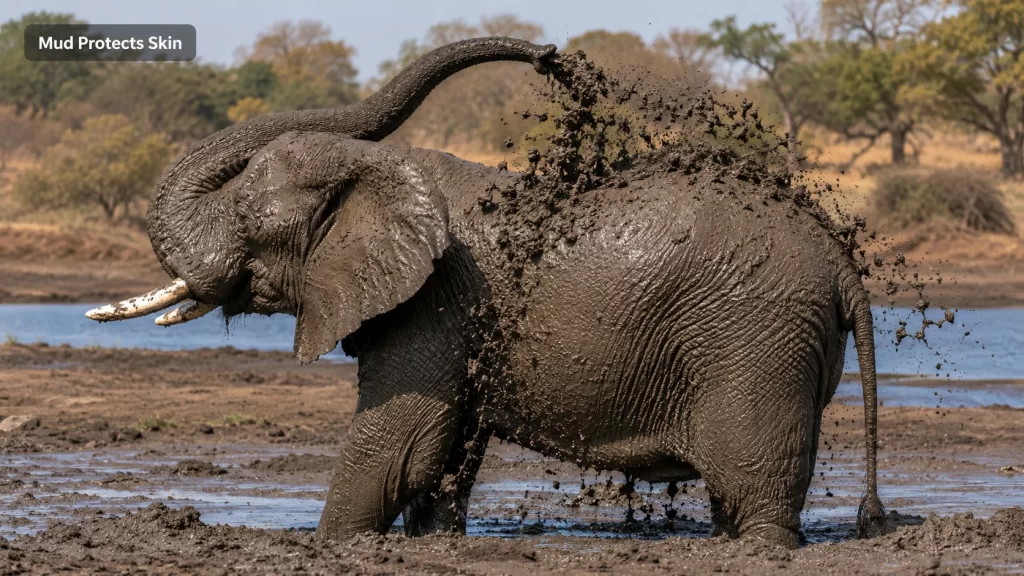
Mud acts like sunscreen, moisturizer, and cooling armor
Elephant mud bathing is one of the most important skin protection behaviors. After bathing, elephants use their trunks to spray mud across the back, sides, head, and ears. These areas receive heavy sunlight during walking and feeding.
Mud protects the skin in 3 main ways:
- It blocks direct sunlight from reaching exposed skin.
- It slows moisture loss during hot weather.
- It helps reduce irritation from insects and parasites.
Mud also supports cooling because wet mud evaporates slowly. As it dries, it pulls heat away from the body surface. This helps elephants manage high temperatures without sweating. Scientists note that elephants lack the sweat and sebum systems many mammals use for cooling, so external water and mud become essential.
This behavior is not random play. It is practical skin care built into daily life. Healthy elephants often repeat mud bathing whenever water and soil are available.
Elephant Wrinkled Skin Thermoregulation
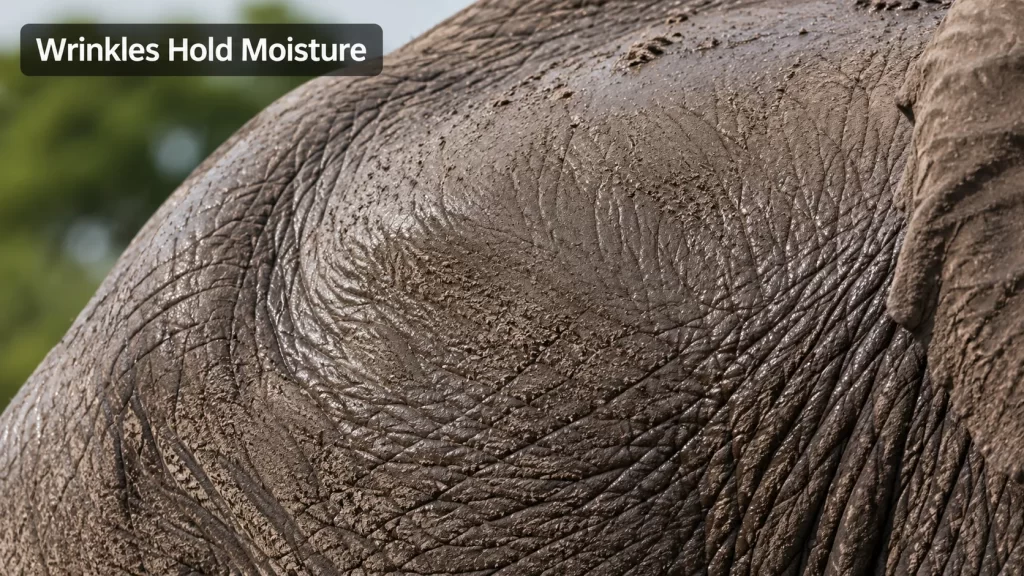
Wrinkles trap water and keep cooling active
Elephant wrinkled skin thermoregulation is one of nature’s best cooling systems. African elephant skin contains deep cracks, folds, and microscopic channels. A 2018 study in Nature Communications found that these channels form as fractures in the outer skin layer.
Those cracks help water and mud stay on the body after bathing. Instead of sliding off quickly, moisture remains trapped in folds. This increases cooling time and supports hydration of the outer skin surface.
The numbers are impressive. Research summaries report that cracked elephant skin can retain 5 to 10 times more moisture than a smooth surface. This matters because elephants live in hot environments and carry large bodies that store heat.
Wrinkles also increase surface area. More surface area allows more heat exchange with the air. That is why elephant skin is not just thick armor. It is a cooling tool shaped by survival pressure.
Elephant Skin Protection: Quick Facts
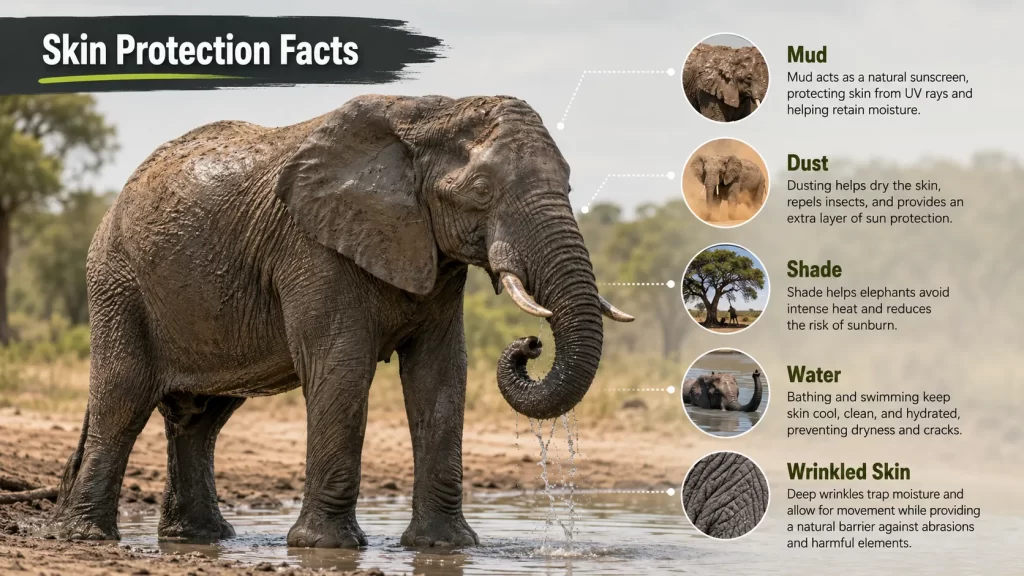
Natural protection works as a full routine
| Protection method | Main benefit | Exact role in skin care |
|---|---|---|
| Mud bathing | Sun barrier | Covers exposed skin and reduces UV contact |
| Dust bathing | Dry shield | Adds a protective layer after water dries |
| Wrinkled skin | Moisture retention | Holds 5 to 10 times more water than smooth skin |
| Shade seeking | Heat control | Reduces direct sun during peak heat |
| Water spraying | Fast cooling | Lowers skin temperature through evaporation |
Elephants combine these methods instead of using one defense. This layered routine helps them stay active, fed, and travel under the strong sun. It also explains why a dusty or muddy elephant is usually a healthy elephant, not a dirty one.
Bottom Line
So, do elephants get sunburned? Yes, they can, but they protect themselves with smart natural habits. Mud, dust, water, shade, and wrinkled skin all work together. This routine blocks sunlight, stores moisture, reduces insects, and supports cooling. The science is clear: elephant skin is not just thick. It is active, sensitive, and highly adapted. When we see elephants covered in mud, we are seeing natural skin protection at work.
FAQs: Do Elephants Get Sunburned?
Can baby elephants get sunburned?
Yes, baby elephants can get sunburned more easily than adults. Their skin is more delicate, and they depend on their mothers and herd shade. Calves often stand under adults or stay close during hot periods.
Why do elephants throw dirt on their backs?
Elephants throw dirt on their backs to protect their skin from the sun, insects, and dryness. Dust forms a dry coating after bathing. This extends elephant skin protection when mud is not available.
Do elephants sweat?
Elephants do not sweat like humans. They depend on water, mud, ears, shade, and wrinkled skin for cooling. Their skin cracks help hold moisture after bathing.
Is mud better than water for elephants?
Mud often lasts longer than water on elephant skin. Water cools quickly, but mud clings to wrinkles and dries slowly. That makes elephant mud bathing useful for longer protection.