Table of Contents
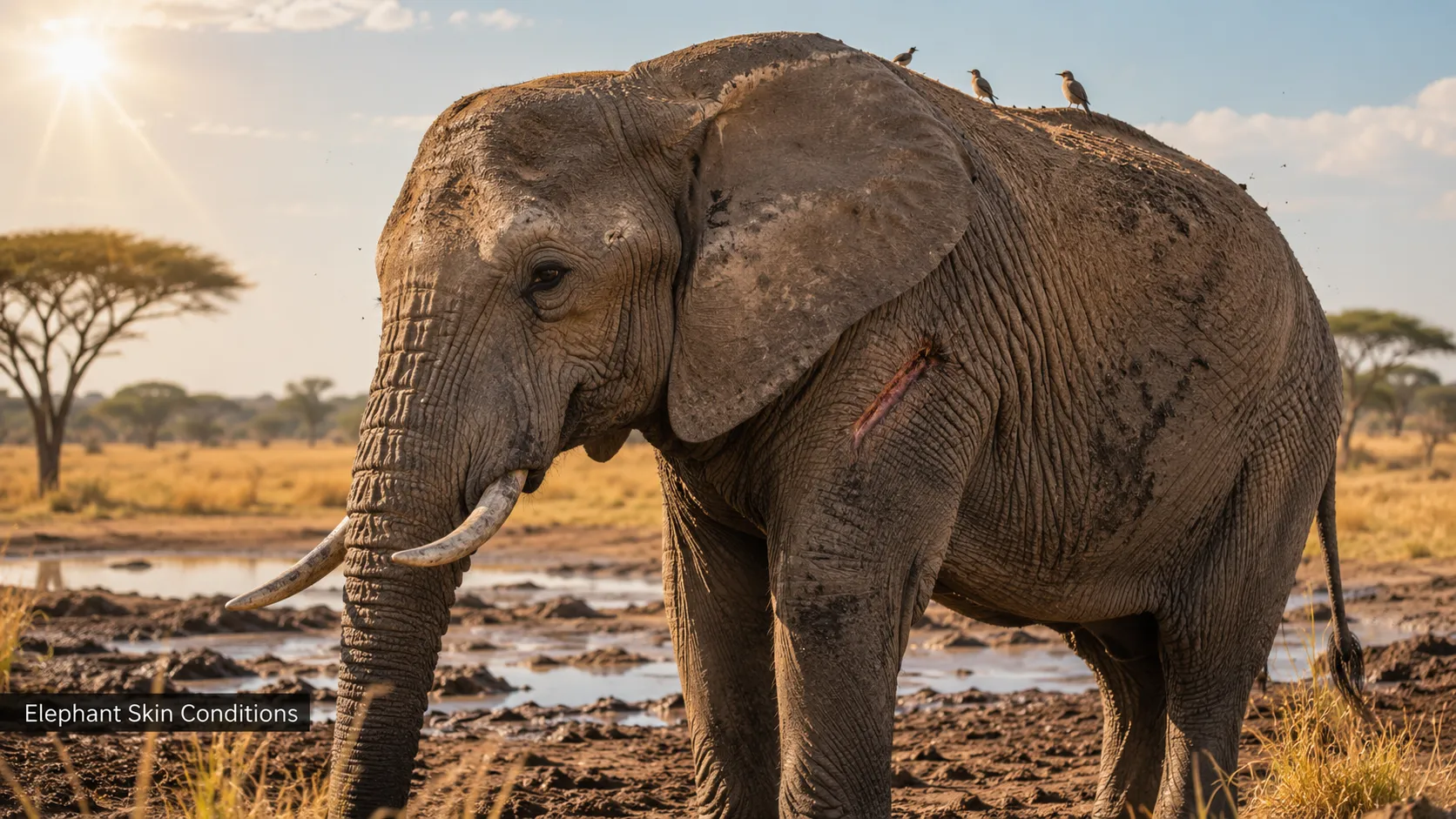
Elephant Skin Conditions look simple from far away, but the skin tells a detailed health story. An elephant’s skin must handle strong sun, biting insects, parasites, thorn injuries, fights, mud, heat, and long dry seasons. African elephants also have deep skin cracks that hold 5–10 times more water than a flat surface, which helps cooling and mud retention. That mud layer supports natural protection against heat, insects, parasites, and intense solar radiation.
We often think thick skin means full protection. That is not true. Elephant skin can still burn, crack, itch, bleed, swell, or become infected. Calves face a higher risk because their skin is softer and their immune defenses are still developing. Adults face wounds from tusks, branches, snares, predators, and human conflict. Good elephant dermatology starts by reading these signs early. In the wild, skin health depends on water, shade, mud, dust, social grooming, and strong immune function.
Why Elephant Skin Is Tough but Still Sensitive
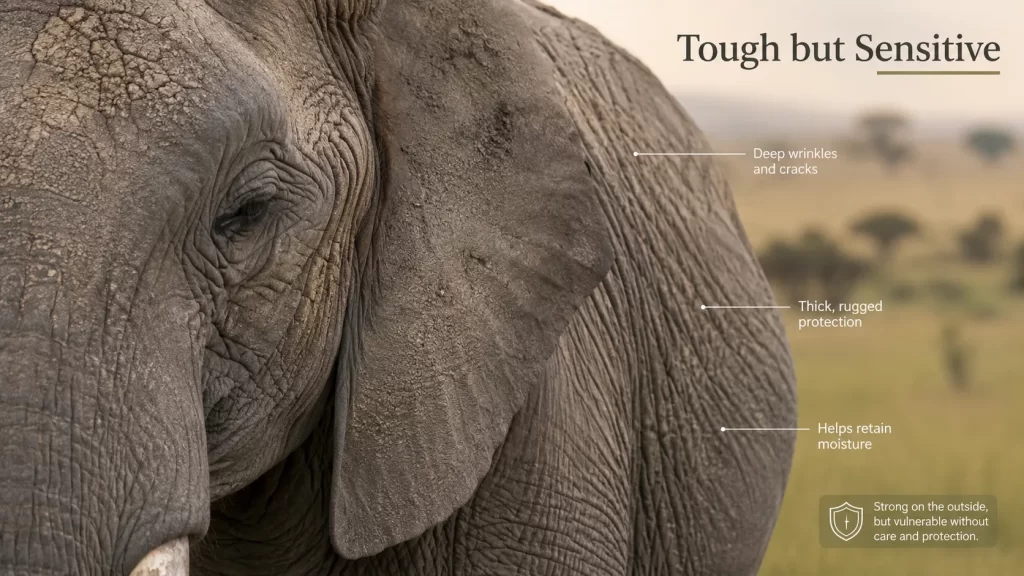
Skin Thickness, Cracks, and Moisture Control
Elephant skin is built for survival, not comfort. It has wrinkles, folds, and tiny channels that trap water and mud after bathing. Researchers found African elephant skin channels form through cracks in the outer skin layer. These channels improve thermal control and help mud stick longer to the body.
This design matters because elephants have limited sweating compared with many mammals. They rely on behavior to manage heat. They bathe, spray water, wallow in mud, rest during hot hours, and seek shade. A 2016 study on savanna elephants found that behavior changes help manage heat stress when environmental temperatures rise.
Common Elephant Skin Problems in the Wild
Wild elephant skin problems often come from the environment. Dry seasons can make skin rougher. Wet areas can increase insect pressure. Thorn scrub can cause scratches. Muddy ground can help cool down, but dirty wounds may attract flies.
Common signs include:
- Dry cracking around folds and joints.
- Raised lumps, swelling, or abscesses.
- Bleeding scratches from thorns or fights.
- Tick clusters near soft skin folds.
- Fly strike around open wounds.
- Thick scabs after minor trauma.
- Excessive rubbing on trees or rocks.
These signs do not always mean severe elephant skin disease. Still, repeated swelling, pus, foul smell, or deep wounds need veterinary attention.
Sunburn and Heat Stress in Elephant Skin Conditions
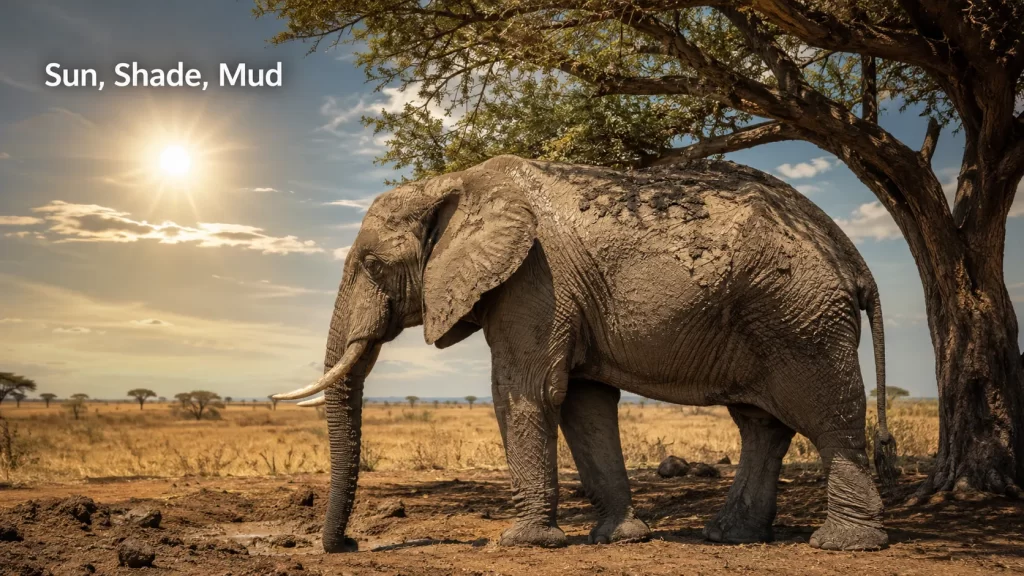
How Sun Affects Elephant Skin
Sunburn risk increases when elephants lack shade, water, mud, and dust. Calves are more exposed because they have softer skin and spend time under adult bodies for shade. Adults reduce exposure by dusting their backs, using mud coats, and standing under trees during peak heat.
Mud is more than dirt. It acts like elephant sunscreen mud by forming a physical layer over the skin. The FAO elephant care manual notes that elephants throw dirt and roll in mud to protect against the sun and insects. It also says bathing gives handlers a chance to inspect wounds, abscesses, and parasites.
Why Mud and Dust Work Like Natural Sunscreen
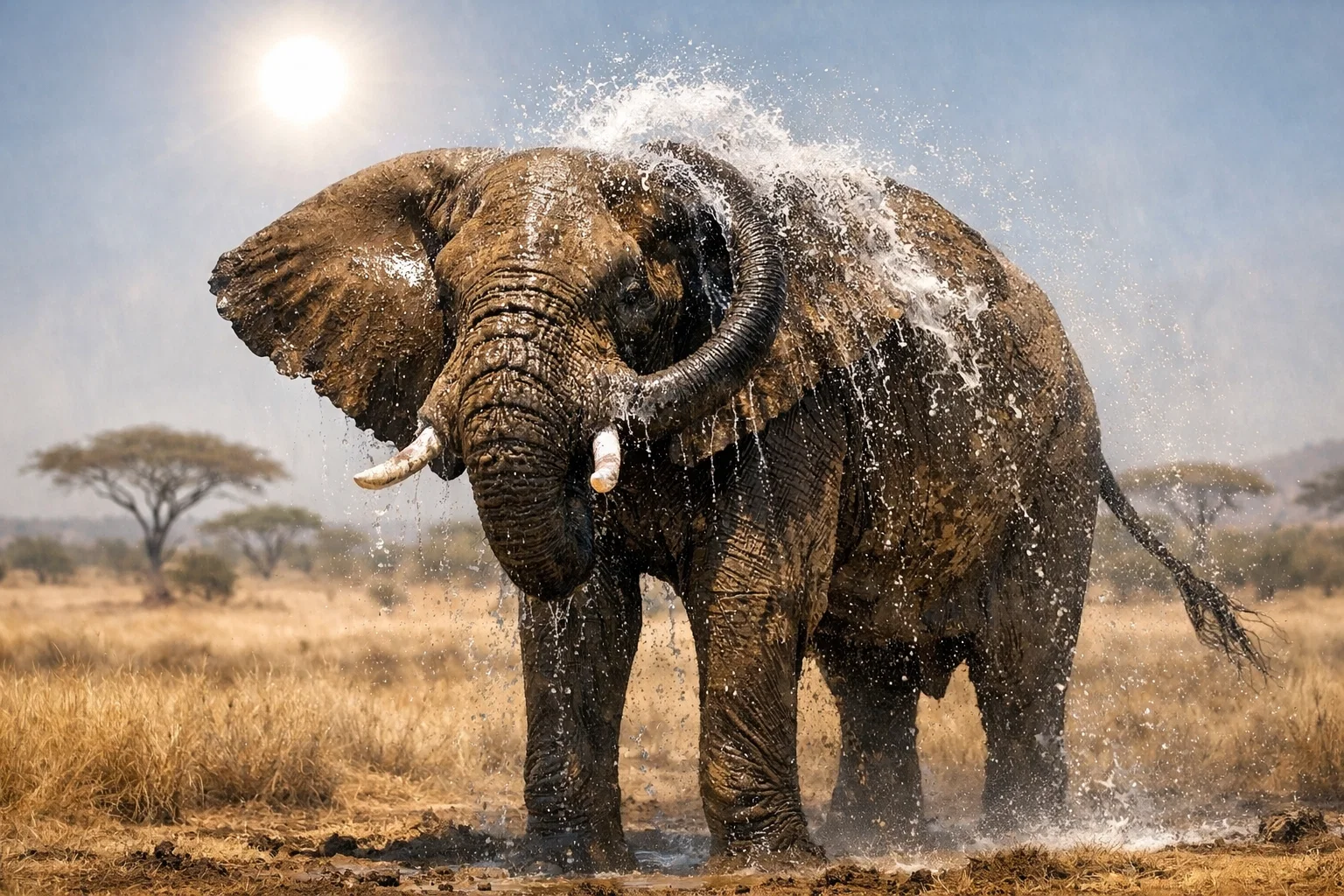
Mud helps in three ways. First, wet mud cools the skin as water evaporates. Second, dry mud blocks direct sunlight. Third, mud and dust create a barrier against biting insects. This is why elephants often spray water first, then throw dust over the wet surface.
Researchers also showed that bathing lowers skin temperature in elephants. A 2013 study found African elephant skin temperatures were generally lower after bathing. The same study linked bathing and water use with thermal balance.
Key protection behaviors include:
- Wallowing in mud after drinking.
- Spraying water over the back and ears.
- Dusting wet skin with soil.
- Resting in the shade during hot hours.
- Keeping calves near adult shade.
These habits reduce heat stress and support healthier skin during harsh seasons.
Parasites and Elephant Skin Disease
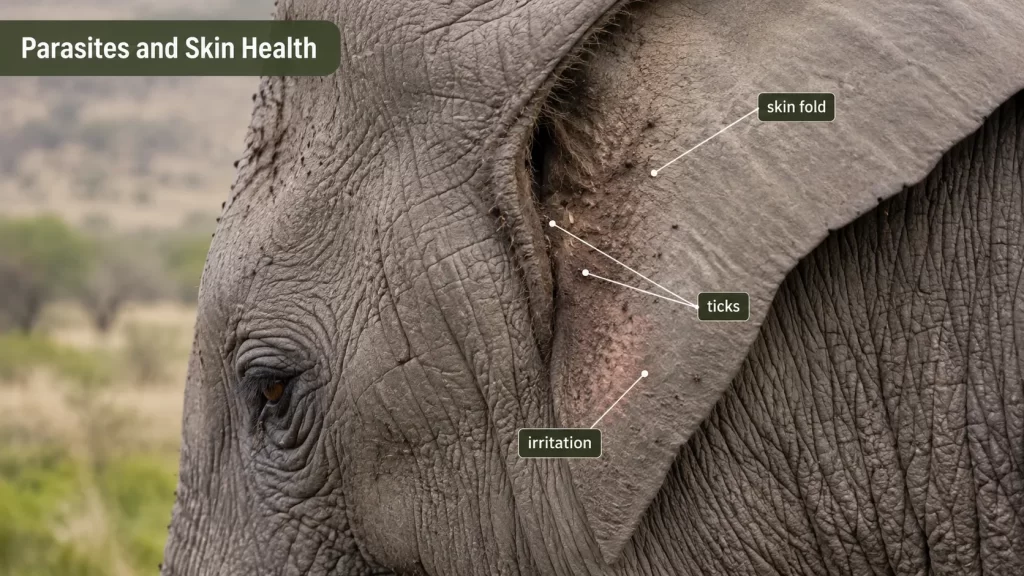
Ticks, Flies, Mites, and Wound Myiasis
An elephant parasite problem often starts small. Ticks attach to thin skin, folds, ears, tail base, and wounds. Flies gather around blood, pus, and moist tissue. Some larvae can infest open wounds and feed on damaged tissue, a condition called wound myiasis. MSD Manual explains that wound myiasis occurs when fly larvae infest existing wounds or ulcers.
Wild elephants manage parasites through mud, dust, water, rubbing, and social contact. Rubbing removes loose scabs, dead skin, ticks, and dried mud. Birds may also pick insects from the body. Still, parasite pressure rises near stagnant water, dense herds, and weakened animals.
When Parasites Become Serious
Parasites become dangerous when they cause blood loss, infection, or constant irritation. Repeated scratching can turn a small bite into a raw wound. In calves, this can happen faster because their skin barrier is weaker.
Warning signs include:
- Constant rubbing against trees.
- Open sores around tick-heavy areas.
- Maggots in wounds.
- Thick crusts with wet discharge.
- Swelling around bites.
- Weakness, fever, or reduced feeding.
This is where elephant dermatology becomes field medicine. Rangers and vets must decide whether the animal can heal naturally or needs darting, cleaning, antibiotics, or parasite control.
Elephant Wound Healing in the Wild
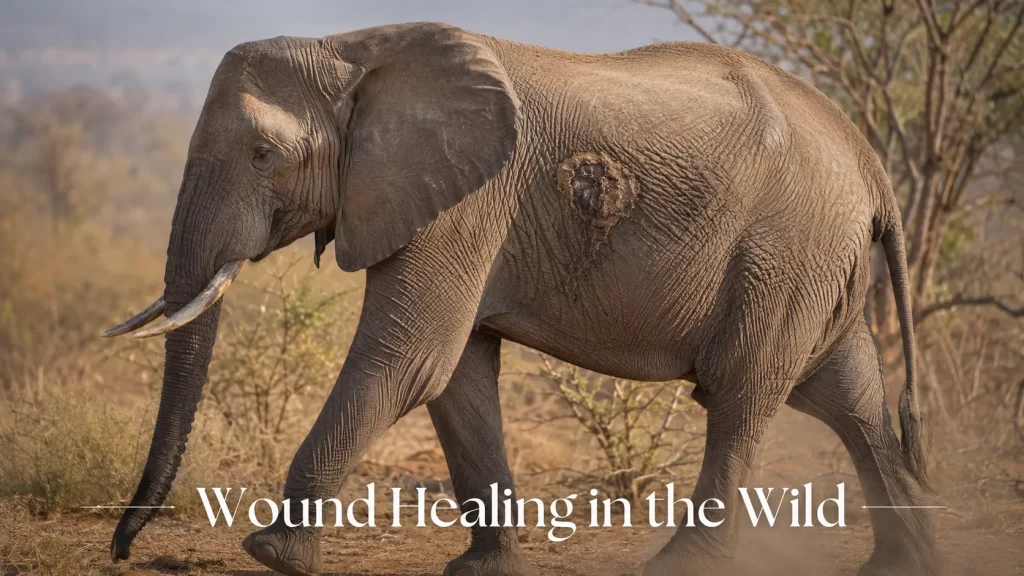
How Wild Wounds Usually Happen
Elephant wound healing depends on injury depth, location, age, nutrition, and infection risk. Wild wounds often come from tusk fights, tree branches, predator attacks, snares, arrows, spears, and vehicle conflict. Small surface wounds may close with scabs. Deep punctures can trap bacteria and form abscesses.
The FAO elephant care manual explains that abrasions often happen when elephants rub against trees or boulders until wounds appear. It also notes that rubbing may begin because of itching from insects or small skin wounds.
Why Large Wounds Heal Slowly
Elephants are huge animals, so wound care is hard. A deep injury in the shoulder, flank, leg, or trunk moves constantly. Movement can reopen tissue. Mud may protect from the sun, but dirty mud can also contaminate open wounds.
Healing works best when the wound drains, stays free of heavy fly strike, and avoids repeated trauma. Good body condition matters too. A well-fed adult with access to water and minerals can form stronger tissue. A drought-stressed elephant may heal more slowly because its immune system is under pressure.
Field teams usually look for exact signs before intervention. They check wound size, smell, swelling, discharge, walking ability, feeding behavior, and herd support.
Practical Field Guide to Elephant Skin Conditions
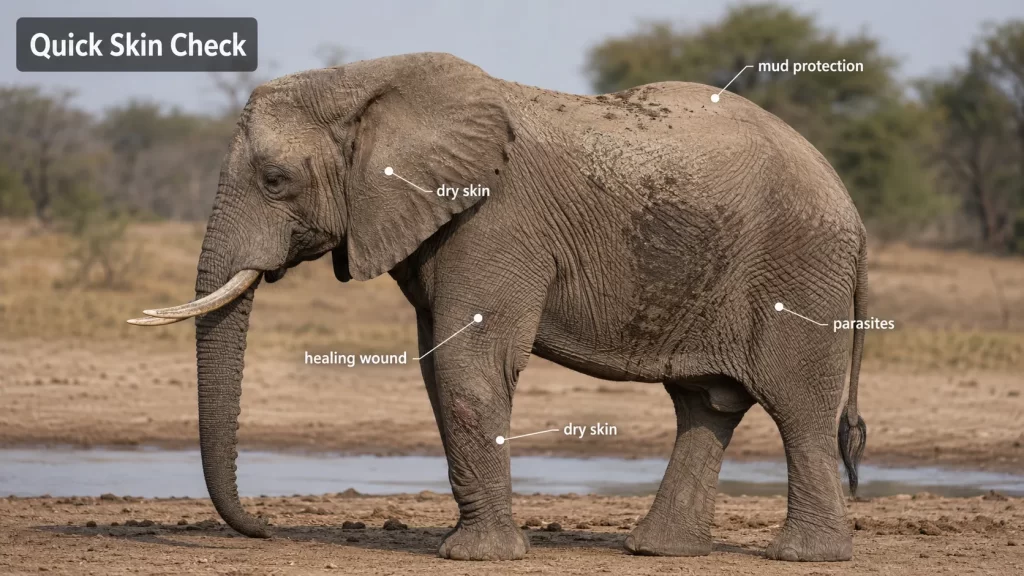
Quick Comparison Table
| Skin issue | Main cause | Visible signs | Wild response | When vets worry |
|---|---|---|---|---|
| Sunburn risk | Strong UV, no shade | Dry, irritated skin | Mud, dust, shade | Calves, burns, peeling |
| Parasites | Ticks, flies, mites | Bites, rubbing, crusts | Mud, dust, rubbing | Heavy ticks, infection |
| Wounds | Tusks, thorns, snares | Blood, swelling, pus | Scabbing, drainage | Deep wounds, maggots |
| Abscesses | Trapped bacteria | Lump, heat, discharge | May drain naturally | Fever, large swelling |
| Papilloma warts | Viral infection | Raised wart-like growths | Often observed | Calves, trunk issues |
What Healthy Elephant Skin Looks Like
Healthy elephant skin is not smooth. It should look wrinkled, dusty, cracked, and sometimes mud-covered. That is normal. Healthy skin also moves well, has no foul smell, and does not show deep bleeding or spreading swelling.
Good signs include:
- Regular mud bathing and dusting.
- Normal feeding and walking.
- No repeated rubbing in one spot.
- Dry scabs without pus.
- Calves are staying active with the herd.
- No maggots or foul wound smell.
Poor signs include deep discharge, fresh bleeding, severe lameness, sunken body condition, and isolation from the herd.