Table of Contents
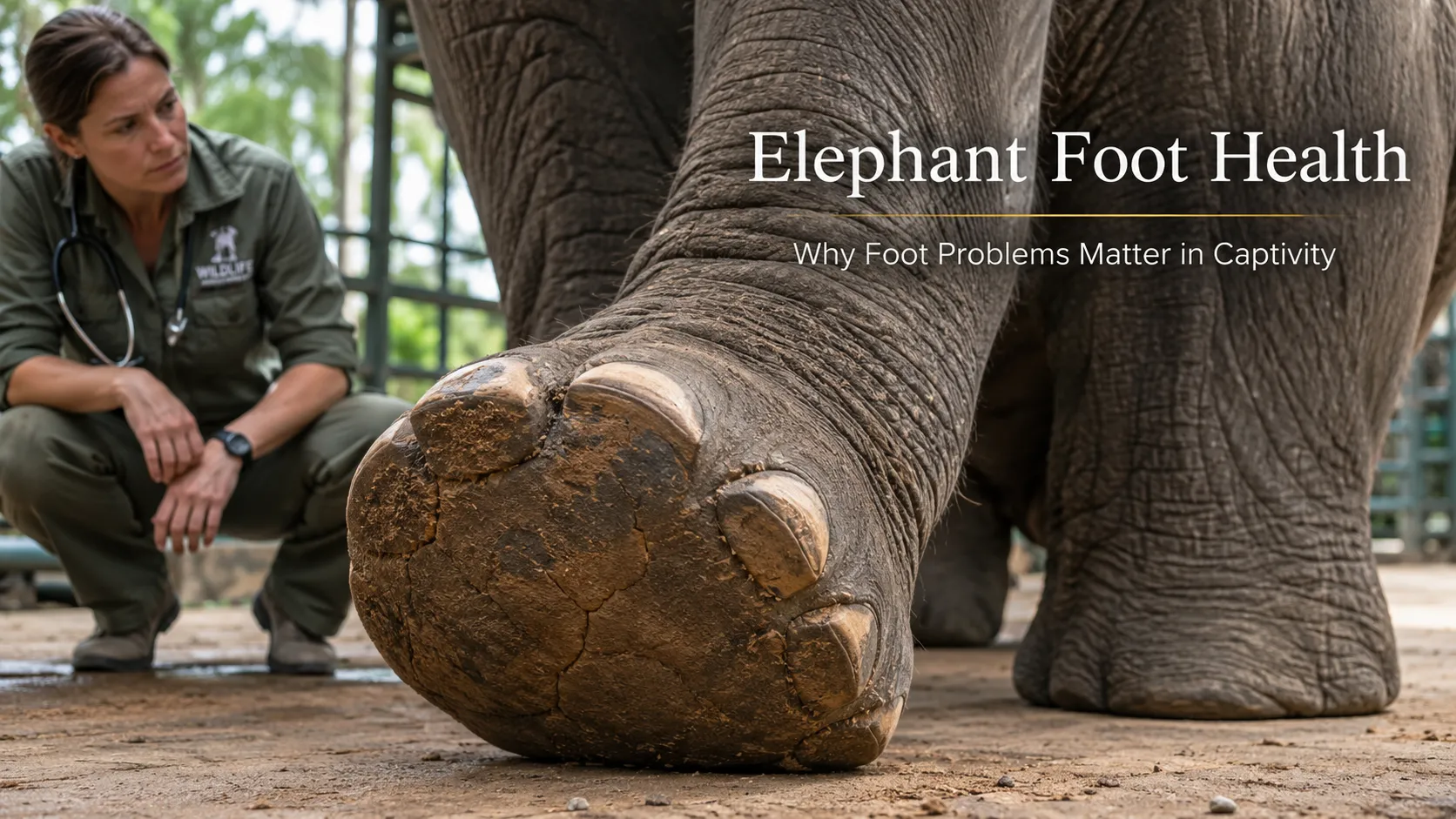
Elephant Foot Health is one of the most important issues in captive elephant care. An elephant can weigh 6,000 to 12,000 pounds, and every step puts huge pressure on the feet, joints, nails, and pads. In the wild, elephants walk many miles each day across soil, sand, grass, mud, and uneven ground. That movement naturally wears the feet and supports circulation.
Captivity changes that system. Many elephants spend long hours on concrete, compacted soil, wet floors, or limited space. These conditions increase the risk of cracks, overgrown nails, pad disease, abscesses, arthritis, and chronic elephant lameness. The University of Queensland notes that foot and joint problems are estimated to cause 50% of captive elephant deaths, which shows why this topic needs serious attention.
Good elephant foot care is not just grooming. It is preventive medicine, welfare protection, and life support. When foot disease becomes chronic, pain limits movement, movement loss worsens health, and infections can become fatal.
Why Elephant Foot Health Matters So Much
Feet Carry the Whole Elephant
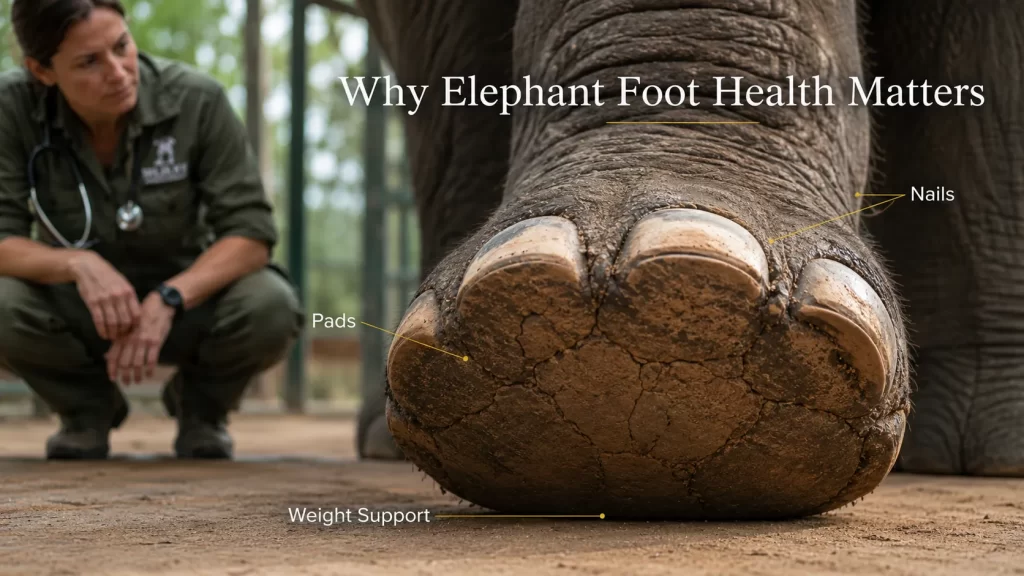
Elephant Foot Health matters because the foot works like a living shock absorber. Each foot has nails, a thick sole pad, soft tissue, bones, blood vessels, and sensitive structures. When one part fails, the whole body feels the damage. A sore foot changes how an elephant stands, walks, rests, and shifts weight.
Captive elephants often hide pain well. EAZA best practice guidance warns that elephants can suffer severe foot lesions without obvious lameness. Care teams may first notice posture changes, uneven weight shifting, or shorter steps before clear limping appears.
That delay makes elephant foot disease dangerous. A small crack can trap debris. A wet pad can soften and split. A nail infection can move deeper into the bone. By the time an elephant shows severe pain, the condition may already need long-term treatment. Early checks save lives.
Why Captivity Creates Foot Problems
Hard Floors Change Natural Wear
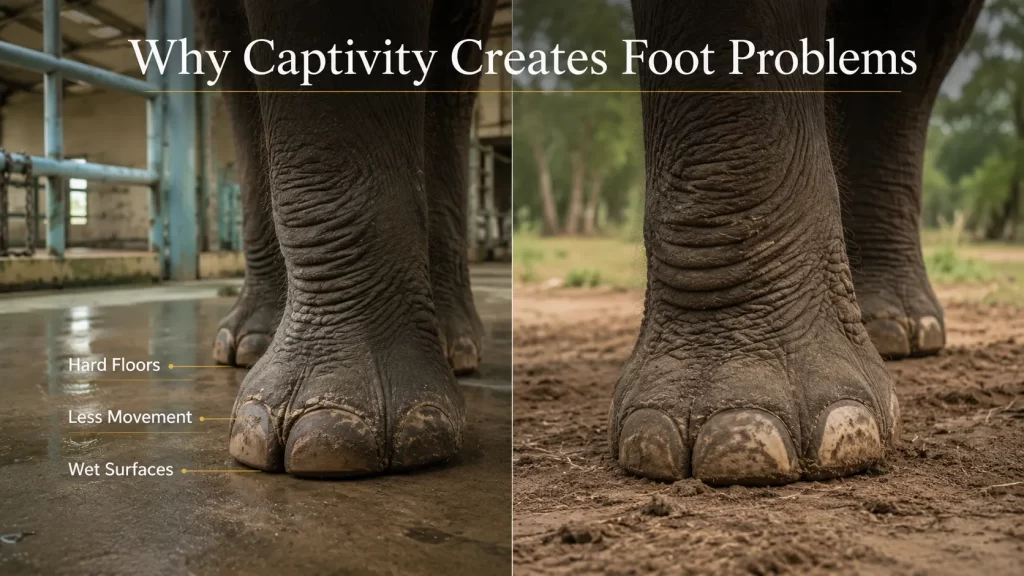
Captive elephant health depends heavily on flooring, movement, hygiene, and space. A major North American zoo study linked hard surface exposure with joint stiffness and elephant lameness. Elephants exposed to hard surfaces for 4 hours daily showed more risk than those exposed for 2.5 hours daily.
Wild elephants move across varied ground all day. Captive elephants may stand in one area for long periods. Concrete and other hard floors do not flex like soil. They also create constant pressure points under the foot pad and nail edges.
Limited walking adds another problem. Natural movement helps wear nails and pads. Without enough movement, nails overgrow, pads thicken, and pressure builds in the wrong places. That is why elephant foot problems in captivity often start with housing design, not just medical neglect.
Common Elephant Foot Disease Conditions
Abscesses, Cracks, and Bone Infection
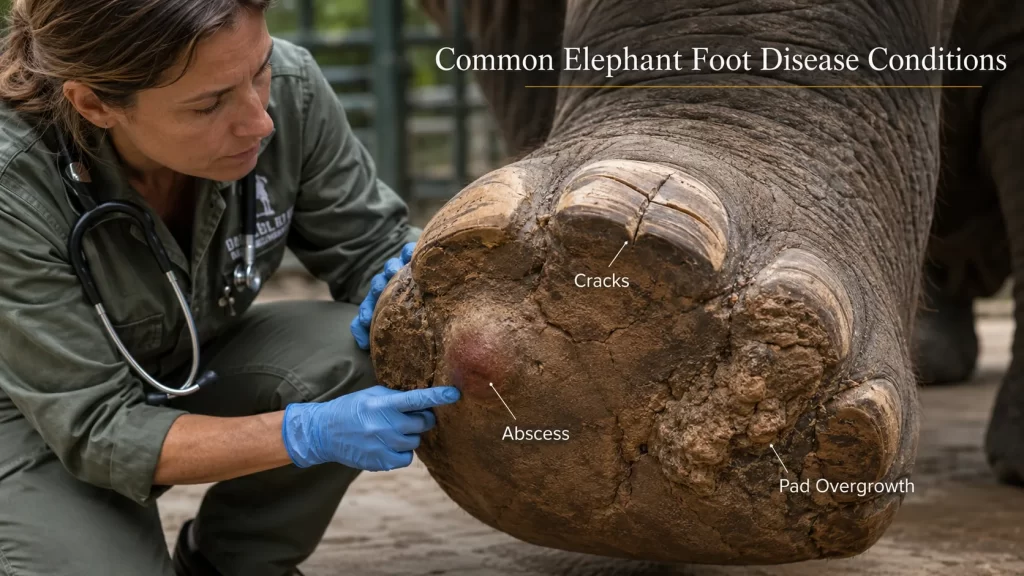
Elephant foot disease can begin with simple-looking damage. Common problems include nail cracks, sole cracks, pad overgrowth, bruising, foreign bodies, infected nail beds, and elephant foot abscess cases. These issues can cause pain, swelling, heat, drainage, and reluctance to walk.
Abscesses are especially serious. They may form after punctures, cracks, bruises, or trapped debris. If bacteria move deeper, infection can reach the bone. Elephant Aid International describes osteomyelitis as a bacterial infection that damages toe bones and can lead to physical collapse and death.
A real case shows the risk clearly. In December 2024, AP reported that Sonia, a 19-year-old elephant in Karachi, died after bacteria spread from an advanced foot abscess. Four Paws linked the death to poor living conditions and malnutrition.
Main Causes of Elephant Foot Problems: Captivity
Several Risks Often Work Together
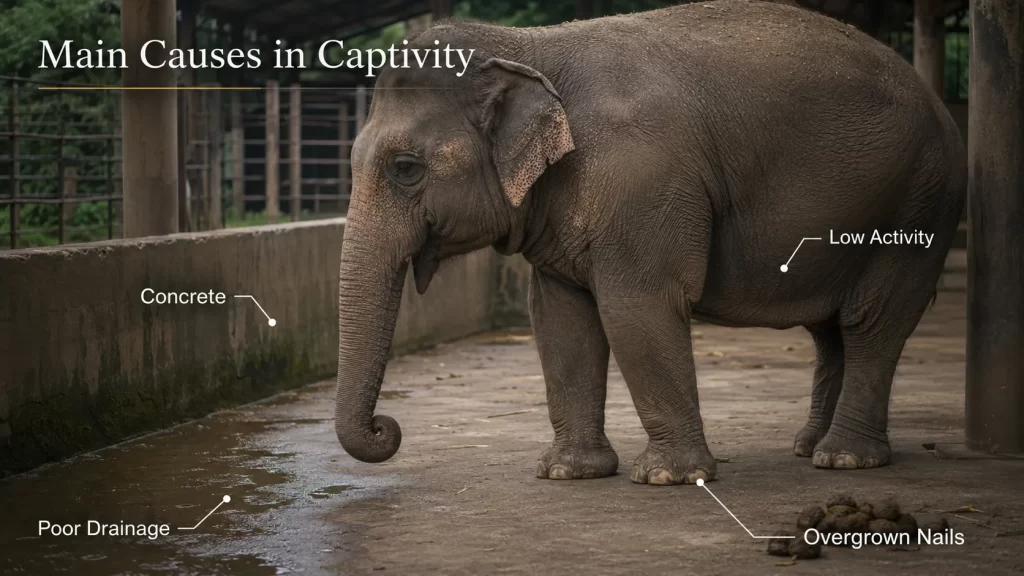
Elephant Foot Health usually declines when several small risks combine. One wet floor may not cause a disaster. One overgrown nail may not kill an elephant. But months of poor drainage, low movement, hard floors, dirty bedding, and missed inspections can turn minor damage into chronic disease.
Key causes include:
- Hard surfaces that increase pressure on joints and pads.
- Wet or dirty flooring that softens the sole and supports bacteria.
- Limited movement that reduces natural nail and pad wear.
- Poor trimming that changes the weight balance.
- Obesity that increases pressure on every step.
- Aging joints make weight shifting harder.
- Low staff training delays early treatment.
The AZA Standards for Elephant Management and Care require written foot care protocols. They also state that staff must be trained, elephants must accept care, and feet should be inspected daily.
What Elephant Lameness Tells Caregivers
Limping Often Means Pain Is Advanced
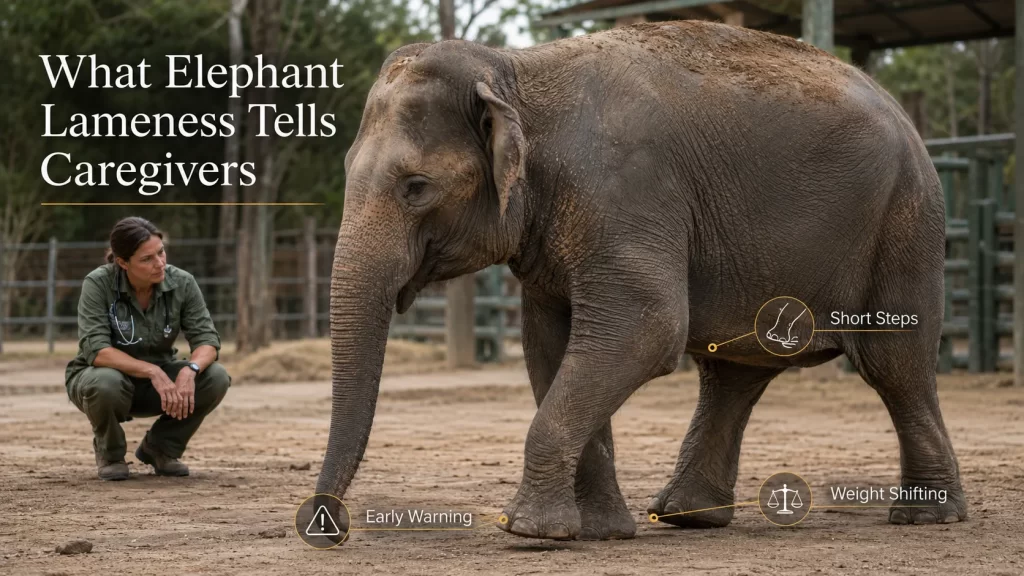
Elephant lameness is a warning sign, not a diagnosis. It tells caregivers the elephant is protecting a painful foot, leg, joint, or nail. The rhythm of movement may change. The elephant may shorten one step, lean away from one foot, or place weight on the edge of the pad.
A veterinary lameness guide explains that weight-bearing lameness often links to sole lesions, foreign bodies, abscesses, fractures, or acute osteoarthritis.
The challenge is that elephants are heavy, intelligent, and pain-tolerant. They may continue eating and moving while serious damage develops. That is why strong elephant foot care programs focus on daily observation. Caregivers watch gait, posture, standing time, sleeping habits, nail shape, pad texture, heat, swelling, odor, and drainage. Small behavior changes often matter more than dramatic symptoms.
Elephant Foot Care Standards That Work
Daily Checks Must Be Non-Negotiable
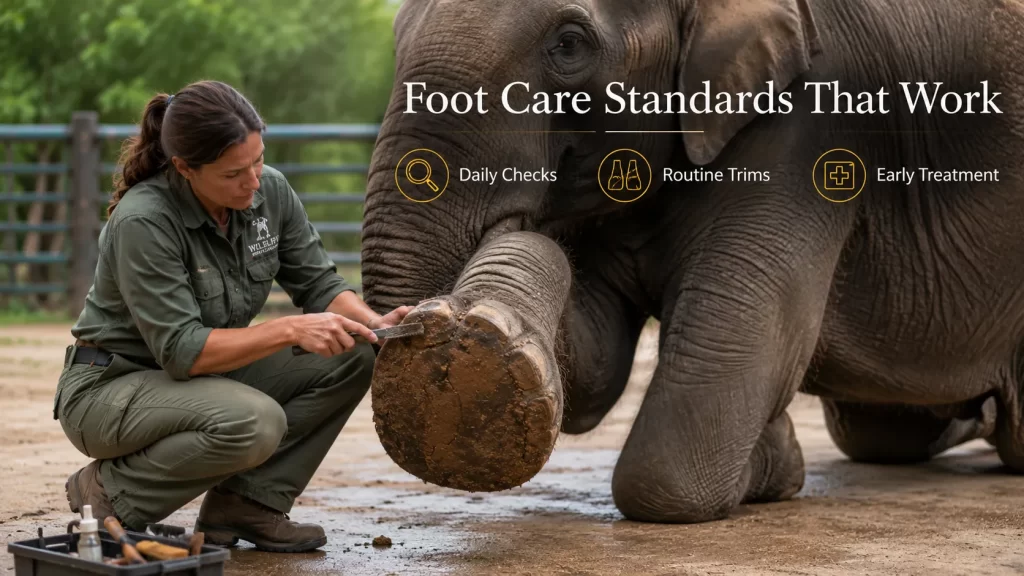
Elephant Foot Health improves when facilities treat feet as a daily medical priority. AZA guidance says foot care protocols should include daily cleaning and inspection of all elephant feet. It also suggests baseline foot radiographs or thermographs for adult elephants, with annual monitoring for animals with chronic foot problems.
Good elephant foot care includes:
- Daily washing under good light.
- Careful sole, pad, and nail inspection.
- Routine nail and pad trimming.
- Positive-reinforcement training for voluntary foot lifts.
- Written records with photos and measurements.
- Fast treatment for cracks, heat, swelling, or drainage.
- Flooring changes when injuries suggest environmental causes.
- Radiographs for chronic or deep disease cases.
This work requires trained keepers, veterinarians, and managers. A foot trim is not cosmetic. It changes pressure, balance, comfort, and long-term survival.
Prevention Data and Care Table
Better Management Reduces Risk
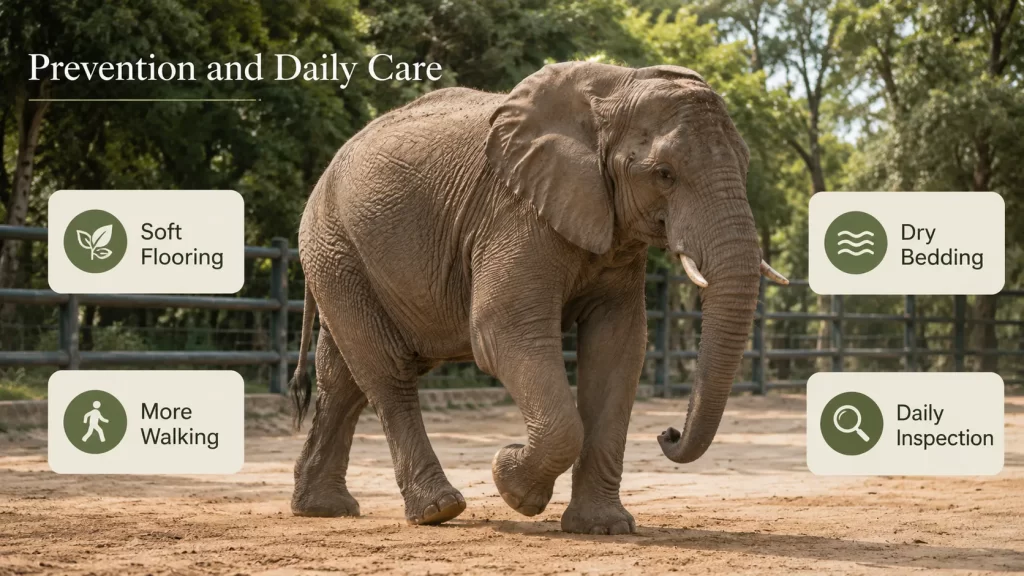
Captive elephant health improves when facilities design daily life around movement, dry footing, and skilled monitoring. Elephants need space, varied substrates, shade, clean water, enrichment, and social stability. They also need trained staff who can spot tiny changes before infection spreads.
| Risk Factor | What It Causes | Prevention Step |
|---|---|---|
| Concrete exposure over 4 hours daily | Higher risk of stiffness and lameness | Use sand, soil, rubber, and outdoor rotation |
| Wet flooring | Soft pads, cracks, bacterial growth | Improve drainage and dry bedding |
| Limited walking | Overgrown nails and pads | Add foraging routes and movement-based enrichment |
| Missed inspections | Late abscess detection | Clean and inspect every foot daily |
| Poor trimming | Uneven pressure and pain | Use trained foot care staff |
| Chronic cracks | Deep infection risk | Record, treat, and monitor with photos |
| Deep abscess | Bone infection and death | Use veterinary treatment and imaging |
Strong prevention saves money, labor, and lives. More importantly, it prevents long periods of hidden pain.
Why Foot Disease Can Become Fatal
Pain Starts a Dangerous Cycle
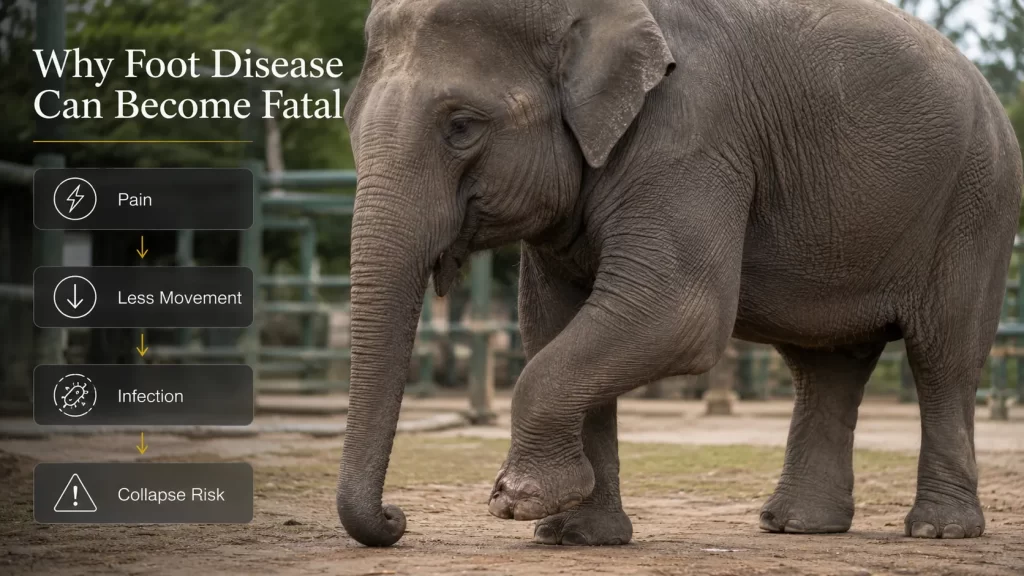
Elephant Foot Health becomes life-threatening when pain reduces movement. A sore elephant walks less. Less walking worsens circulation, weakens muscles, increases weight gain, and overloads the healthier feet. That extra pressure can then create new injuries.
Deep infections create the greatest danger. An elephant foot abscess can stay hidden under thick tissue. Once bacteria enter deeper structures, treatment becomes harder. Bone infection, septicemia, severe arthritis, and collapse can follow. Sonia’s 2024 death in Karachi shows how a foot abscess can become systemic and fatal when conditions and treatment fail.
This is why many elephant care experts treat foot disease as one of the top killers in captivity. It may start as a crack, bruise, or nail problem. But without early intervention, it can end as a whole-body crisis.
What Ethical Facilities Should Do
Welfare Starts From the Ground Up
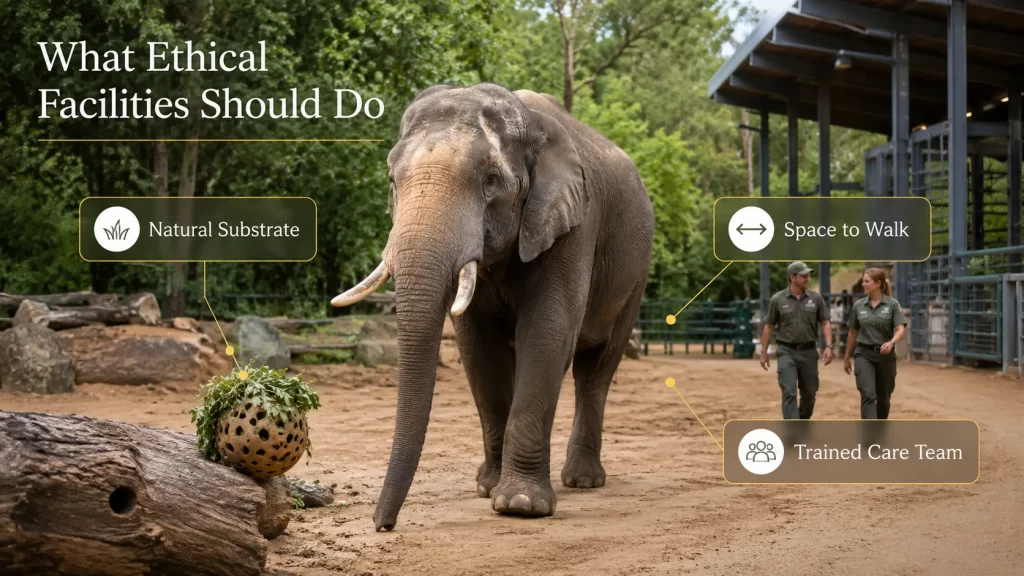
Ethical elephant facilities build care around the feet first. They avoid long concrete exposure, provide deep natural substrates, encourage daily walking, and keep floors clean. They also train elephants to present each foot voluntarily. This reduces stress and allows safer treatment.
Care teams should review every case of elephant foot disease for root causes. If multiple elephants have cracks, abscesses, or lameness, the problem may be flooring, drainage, movement, or routine care. Treating one wound is not enough when the environment keeps causing damage.
The best programs also keep records. Photos, trim dates, radiographs, gait notes, and treatment logs help teams see patterns. Good records turn elephant foot care from guesswork into evidence-based management. That approach supports longer, healthier lives in captivity.