Table of Contents
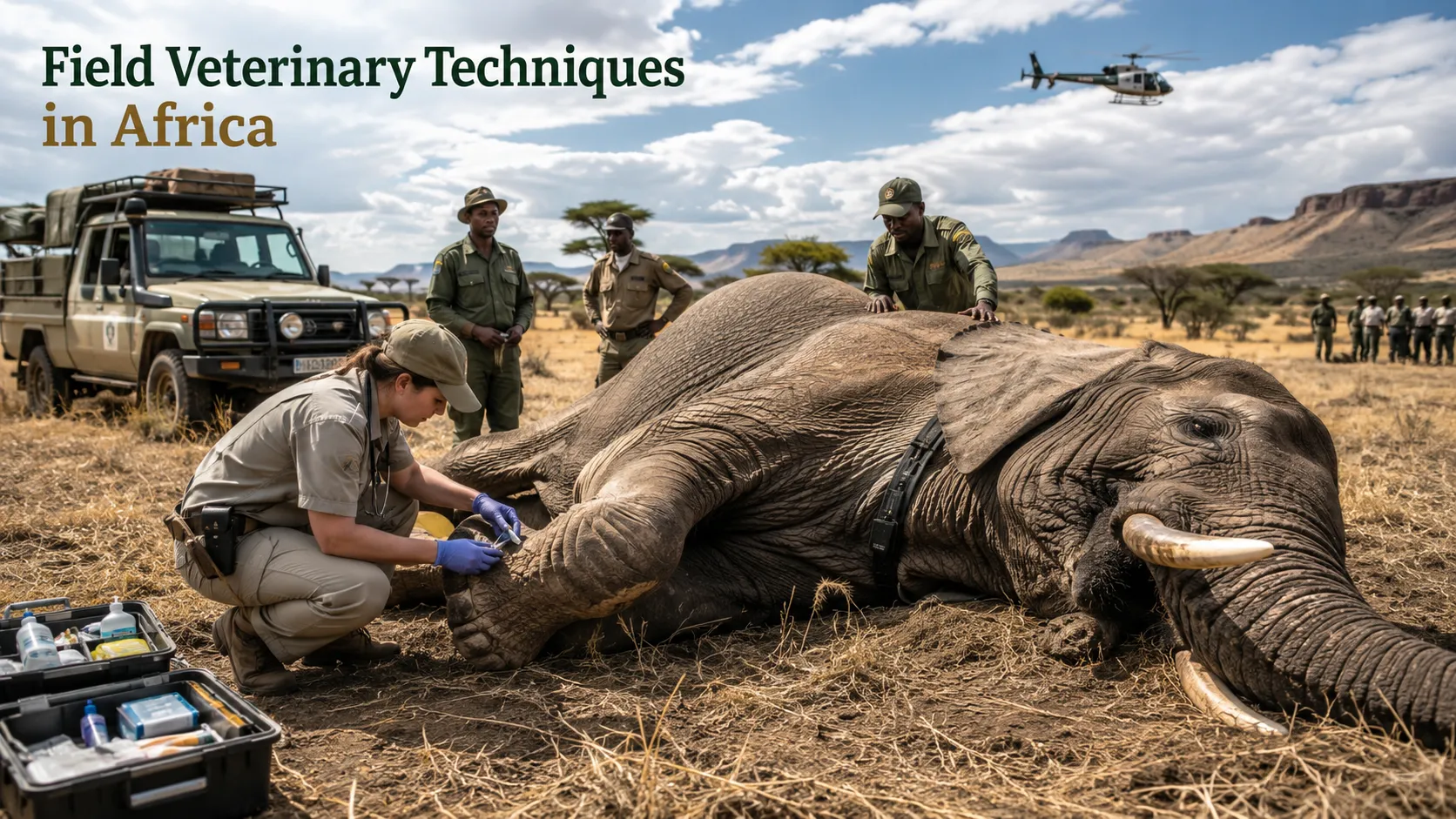
How Do Vets Treat Wild Animals in open African landscapes where patients weigh tons, run fast, hide well, and never understand help is coming? The answer blends medicine, logistics, animal behavior, and split-second field judgment. A wild animal vet cannot use a clinic table, a quiet exam room, or routine restraint. Instead, the team brings the clinic to the bush, often by helicopter, 4×4, mobile drug kit, oxygen, ropes, GPS, and trained rangers.
Field veterinary work in Africa covers elephant darting, snare removals, wound care, collar fitting, rescue, disease testing, and translocation. Kenya Wildlife Service notes that African elephant interventions include diagnosis, injury treatment, collar fitting, translocation, and orphan rescue. Its elephant protocol also records more than 840 elephants moved in Kenya from 1996 to 2018, with 34 deaths, or 4% mortality. That shows both the value and risk of this work.
This guide explains how wildlife veterinary treatment in Africa teams actually works. We will cover planning, wildlife darting immobilisation, treatment, recovery, and aftercare in the field.
How Do Vets Treat Wild Animals in the Field?
Field care starts before the dart
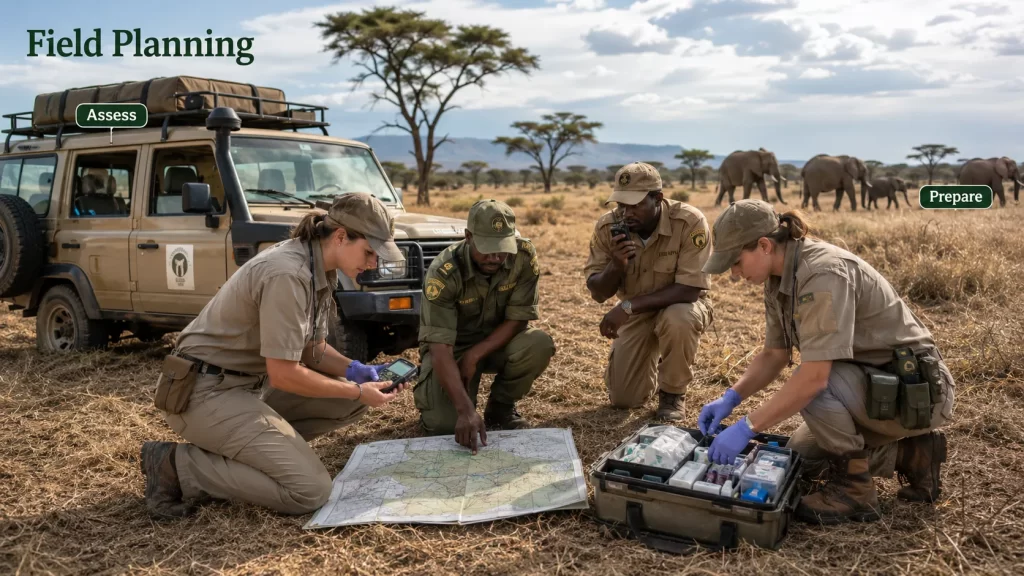
Wild animal treatment begins with planning, not medicine. The field vet Africa team first confirms the species, age, sex, body condition, terrain, herd structure, and reason for intervention. In elephants, KWS advises that the veterinarian must receive age, sex, and body condition details before choosing drug dosages. That step reduces underdosing, overdosing, and dangerous recovery problems.
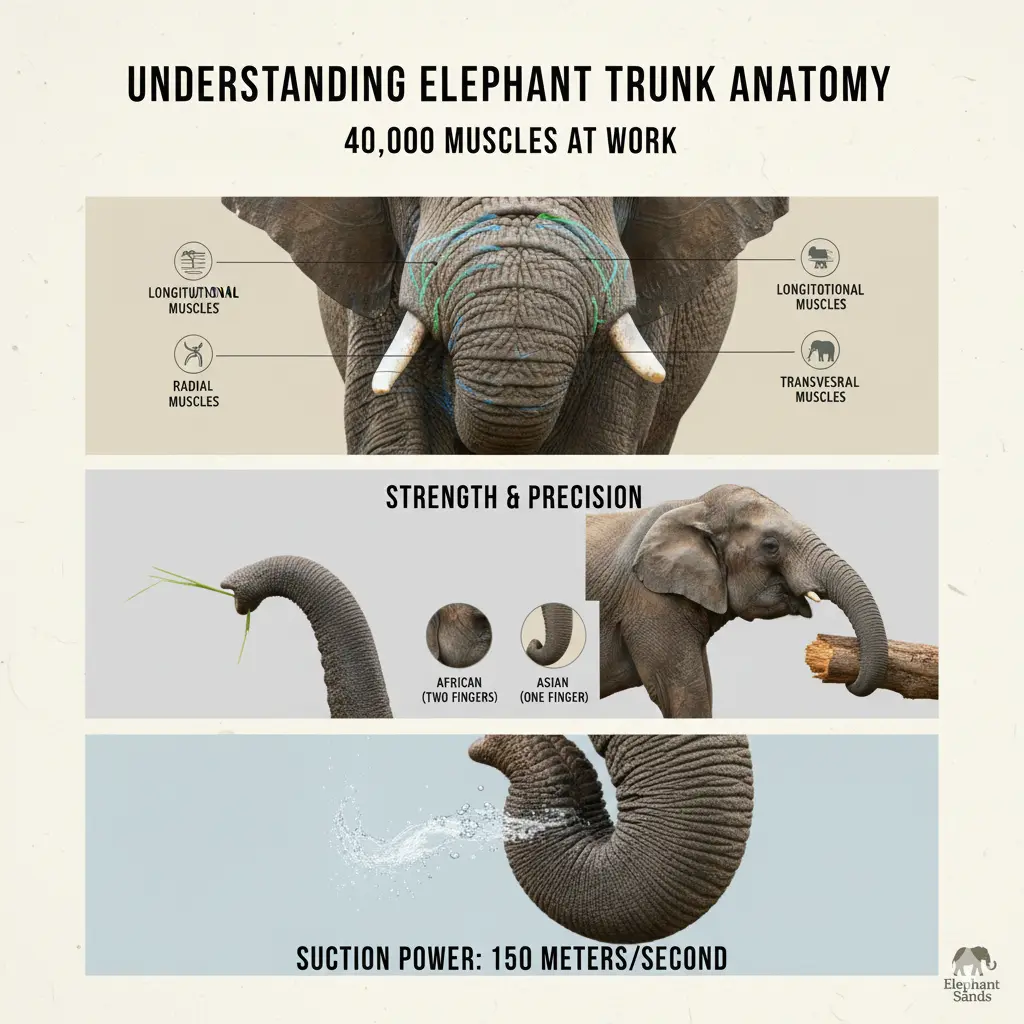
Teams also study the treatment site before they approach. They avoid cliffs, water bodies, slippery ground, and dense bush when possible. These areas can turn an immobilized animal into an emergency within minutes. For elephants, a blocked trunk can cause suffocation because they breathe through the trunk. KWS also notes elephant skin can measure 20–30 mm thick, which affects dart needle selection.
Key pre-treatment checks include:
- Species, age, sex, and estimated weight.
- Terrain, water, cliffs, roads, and escape routes.
- Herd behavior and nearby calves or aggressive adults.
- Drug dose, antidote dose, oxygen, and emergency support.
- Ranger safety, vehicle access, and post-treatment monitoring.
Wildlife Darting Immobilisation: How It Works
Darting is controlled anesthesia, not just sedation
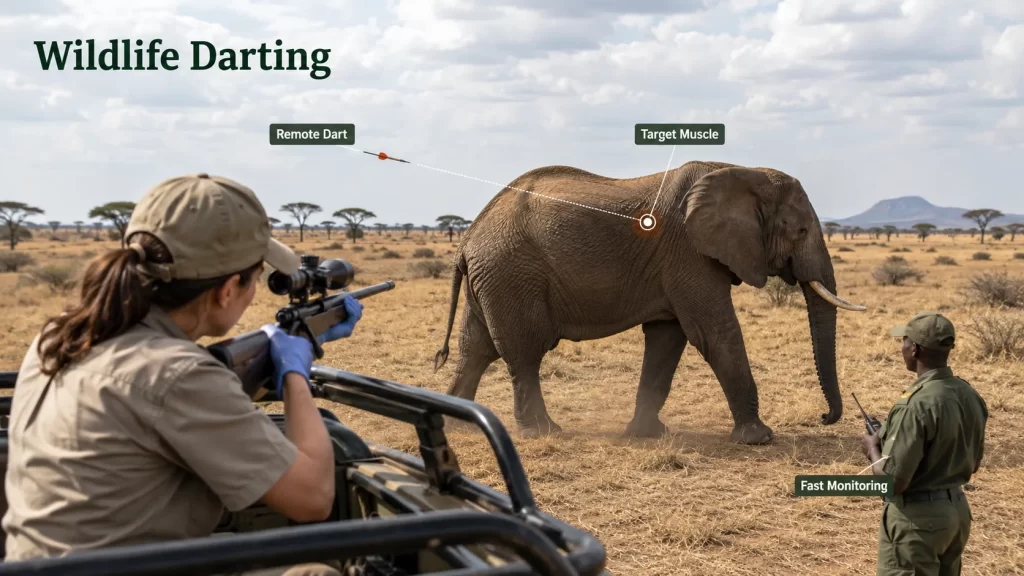
Wildlife darting immobilisation uses remote drug delivery to safely stop movement. The dart enters a large muscle mass, then injects a measured dose. In African megaherbivores, concentrated drugs matter because dart volume must stay small. A 2024 veterinary review notes that etorphine and thiafentanil allow small dart volumes, can be reversed, and have helped advance chemical capture over 60 years.
Elephant darting often happens from a helicopter when terrain or herd behavior makes ground access unsafe. Vehicle darting may work in open areas, while foot darting is rare and risky. The goal is always quick induction, safe positioning, fast treatment, and smooth reversal. A good team measures success by minutes saved, stress reduced, and complications avoided.
Common drugs used in elephant darting
Elephant immobilization usually relies on an opioid plus a tranquilizer. KWS lists etorphine hydrochloride as a routine opioid for African elephants. It also notes that thiofentanil can act slightly faster, but may cause shallower breathing. Azaperone can support the protocol by helping manage opioid-related blood pressure effects.
Exact elephant doses vary by country, drug supply, health status, and terrain. In Kenya’s protocol, adult bulls may receive 14–18 mg etorphine or 14–18 mg thiofentanil. Adult females may receive 12–16 mg of either drug. Sub-adults may receive 7–10 mg, with reduced azaperone and hyalase amounts.
| Field situation | Main technique | Key risk | Vet response |
|---|---|---|---|
| Injured elephant | Darting from vehicle or helicopter | Breathing obstruction | Keep trunk open and monitor closely |
| Snared antelope | Chemical immobilization | Capture myopathy | Reduce chase time and cool the animal |
| Giraffe collaring | Darting and rope control | Trauma, aspiration, high blood pressure | Support head and limit handling time |
| Rhino wound care | Darting and oxygen support | Opioid breathing depression | Give oxygen and reversal drugs |
| Translocation | Capture, loading, transport, release | Stress, falls, heat, transport injury | Plan route, monitor, and track after release |
How Do Vets Treat Wild Animals After Immobilization?
The first minutes decide the outcome
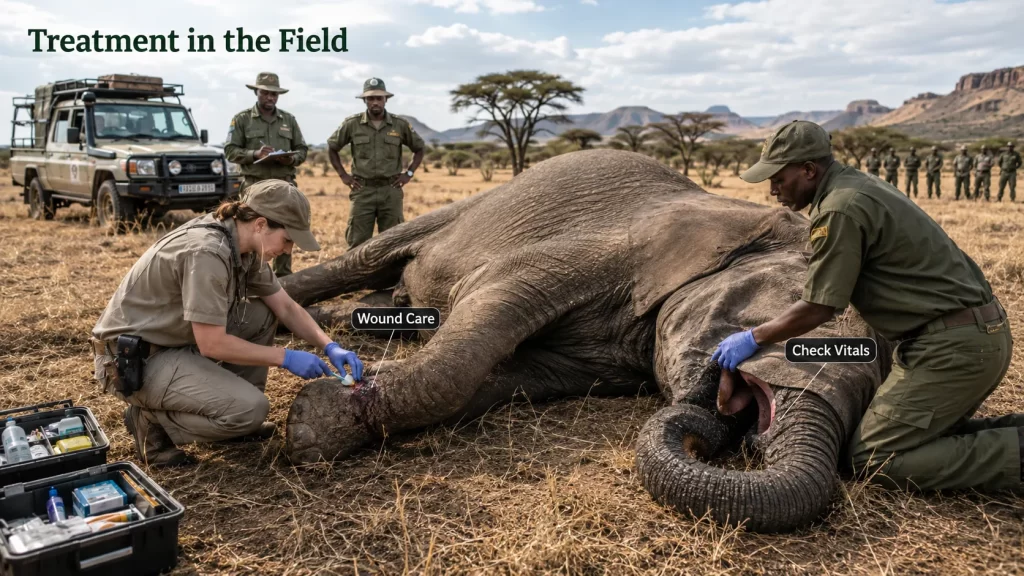
The first job after immobilization is airway safety. For elephants, vets pull the trunk straight and keep both nostrils clear. The team then checks breathing rate, pulse quality, temperature, gum color, and body position. KWS warns that immobilized elephants should not remain on their sternum for more than a few minutes because abdominal pressure can impair breathing and circulation.
Field teams work fast because anesthesia time increases risk. One person monitors vital signs while others treat the injury. A typical case may include removing a wire snare, flushing an abscess, cutting dead tissue, applying antibiotics, collecting blood, or fitting a GPS collar. Dart wounds also need care. KWS recommends treating all dart wounds with antibiotic application to prevent abscess formation.
Treatment depends on the problem
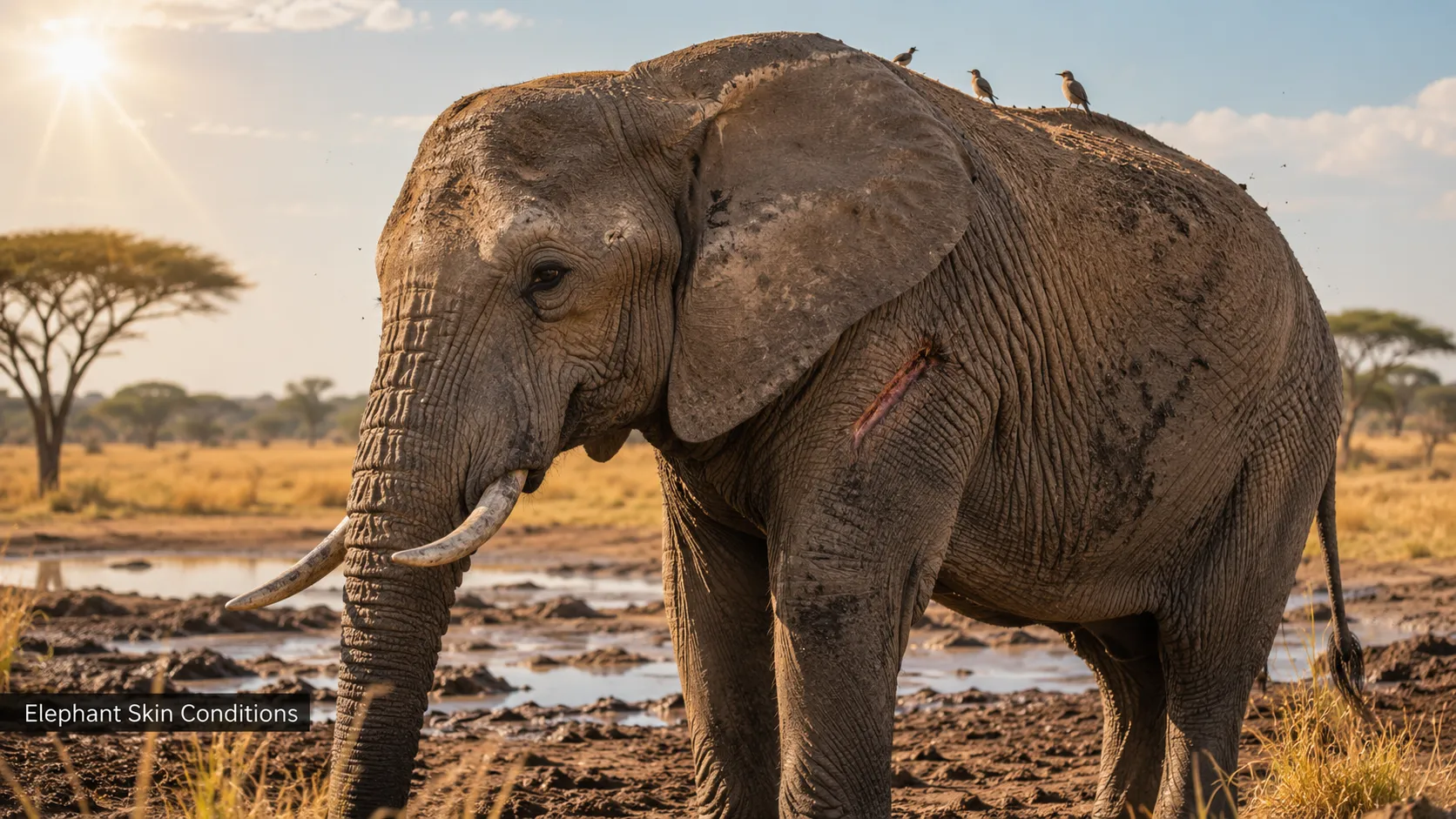
Wildlife veterinary treatment Africa teams handle injuries that clinics rarely see at this scale. Elephants often need treatment for spear wounds, poisoned arrows, wire snares, abscesses, lameness, or collar-related checks. Rhinos may need horn injury treatment, dehorning support, or poaching wound care. Lions and hyenas may need snare removal around the neck, jaw, or limb.
Vets usually carry broad tools because the field diagnosis can change fast. A “simple snare” may hide deep tissue damage, septic infection, nerve injury, or bone exposure. The team may use long-acting antibiotics, anti-inflammatory drugs, wound lavage, topical medication, and pain relief. Severe cases may need repeat visits because full hospital care is impossible in free-ranging wildlife.
Capture Myopathy: The Hidden Emergency
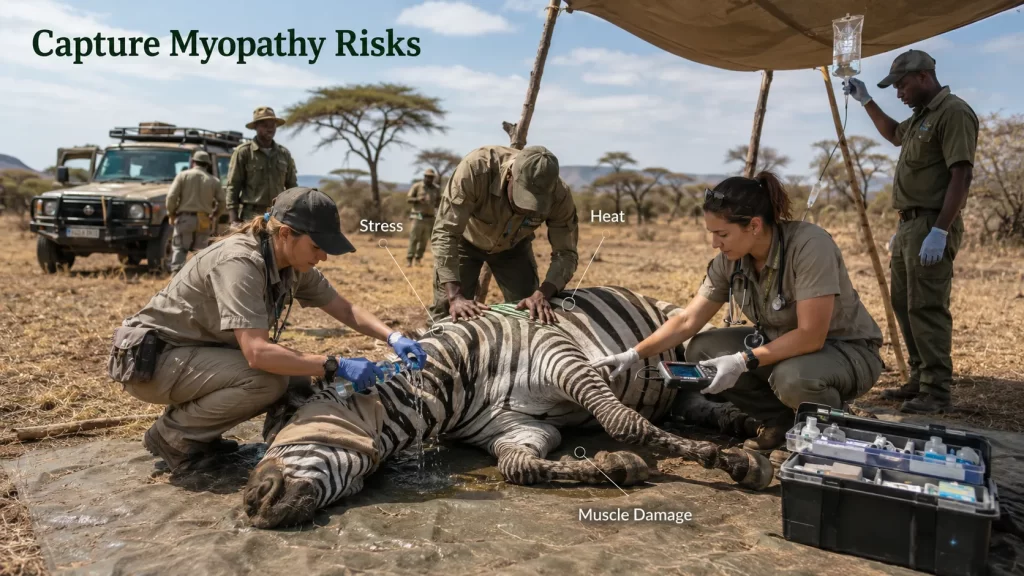
Stress can kill even after treatment
Capture myopathy is one of the biggest risks in wildlife darting immobilisation. It happens when stress, fear, heat, and overexertion damage muscles and disrupt body chemistry. A major review describes capture myopathy as life-threatening and a leading cause of death during and after capture work.
The warning signs can include high body temperature, stiffness, weakness, dark urine, collapse, and death. Antelope, zebra, giraffe, and some deer-like species are especially vulnerable. Elephants can also suffer stress complications, but smaller prey species often crash faster after long chases. Prevention matters because treatment becomes difficult once muscle damage advances.
Prevention is better than rescue
Field vets reduce capture myopathy by shortening chase times, avoiding extreme heat, using the right drug protocol, and keeping handling quiet. They also blindfold animals, reduce noise, cool overheated bodies, and give fluids when needed. Oxygen can also help in many immobilized animals.
Research on blesbok immobilization showed severe hypoxemia with both tested etorphine combinations. The same study recommended oxygen supplementation during immobilization. That finding supports a core field principle: immobilized wildlife may look still, but breathing can be dangerously poor.
Practical prevention steps include:
- Avoid long vehicle or helicopter chases.
- Dart in cooler hours when possible.
- Keep people, engines, and shouting away.
- Use oxygen when breathing quality drops.
- Cool hot animals with water and shade.
- Reverse drugs as soon as safe treatment ends.
Monitoring, Reversal, and Recovery
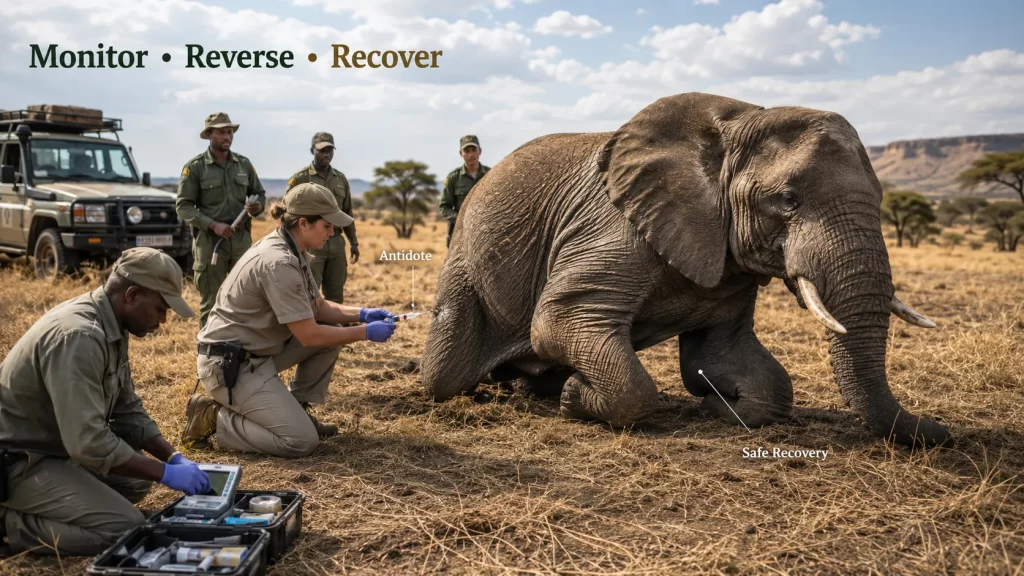
Vets monitor like anesthetists in the bush
A wild animal vet treats immobilization like full anesthesia. The team tracks breathing, heart rate, temperature, mucous membranes, reflexes, and body position. When equipment is available, they also use pulse oximetry, capnography, blood pressure tools, and blood gas testing. The goal is not only to complete treatment, but to return the animal safely.
Opioid drugs can depress breathing, especially in large herbivores. A South African study on blesbok used 45 minutes of immobilization monitoring and reversed etorphine with naltrexone at 20 mg per mg etorphine. It also found oxygen supplementation was highly recommended.
Reversal must be timed carefully
Reversal drugs wake the animal by blocking the immobilizing drug effects. Timing matters because the vet must finish treatment, clear people away, and choose a safe recovery path. For elephants, teams withdraw to a safe distance after antidote delivery. KWS also advises caution around family groups because relatives may stay near a downed elephant.
Recovery is watched until the animal stands, walks, and rejoins normal movement. In translocation, recovery may happen inside a crate or after release. Selected elephants may receive collars for post-release monitoring. KWS lists body condition, abnormal behavior, herd cohesion, location, and movement patterns as key post-release checks.
How Field Vet Africa Teams Work With Communities
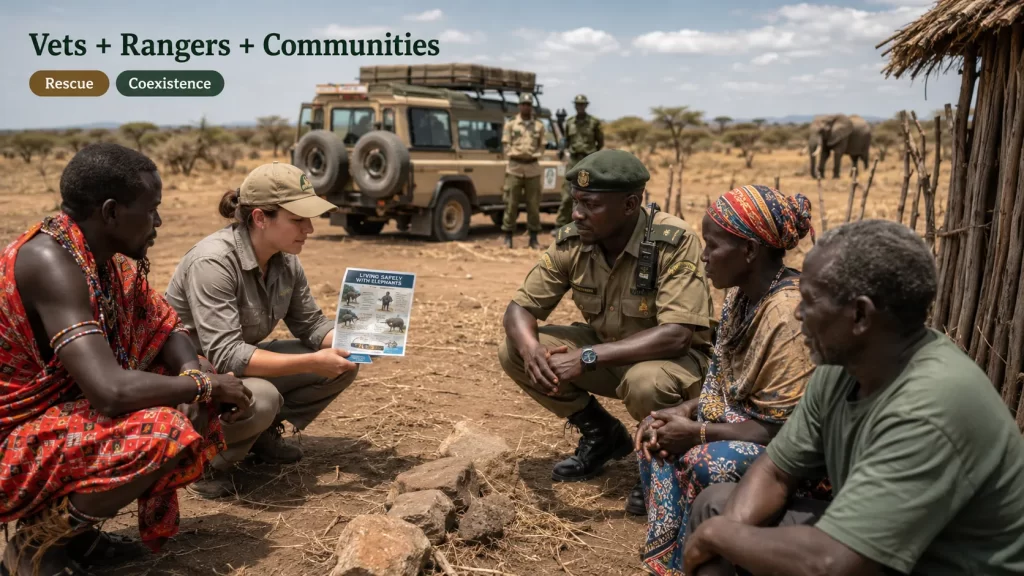
Conservation medicine protects animals and people
Field veterinary work in Africa often begins with human-wildlife conflict. An elephant may be injured by a spear after crop raiding. A lion may carry a snare from bushmeat trapping. A giraffe may need relocation from an unsafe area. In each case, the vet supports conservation, animal welfare, and community safety together.
Good teams include rangers, pilots, trackers, ecologists, community officers, and sometimes local police. The vet leads medical decisions, but the wider team controls safety and logistics. That shared structure matters because a 6,000–7,000 kg elephant bull cannot be managed by medicine alone. KWS lists adult male elephants at 6,000–7,000 kg and females at 4,000–6,000 kg, showing the scale involved.
Records turn field cases into better science
Every case should produce useful data. Teams record drug doses, dart site, induction time, treatment details, vital signs, reversal time, and recovery outcome. KWS recommends recording darting procedures, anesthesia monitoring, top-up drugs, measurements, age, sex, and biological samples where appropriate.
These records improve future treatment decisions. They also show which areas produce more snare injuries, conflict wounds, or disease concerns. Over time, field notes become conservation intelligence. That is why modern wildlife veterinary treatment in Africa programs blend emergency care with long-term monitoring.