Table of Contents
Elephant lovers often ask one core question: how long do elephants live in real life? The honest answer depends on species, habitat, care quality, and early-life risk. In protected wild populations, elephants can often reach 50 to 70 years. Some African elephants may approach the mid-70s, based on tooth-wear aging studies. Researchers have estimated the maximum wild female African elephant lifespan at 74 years, with some reports near 80 years.
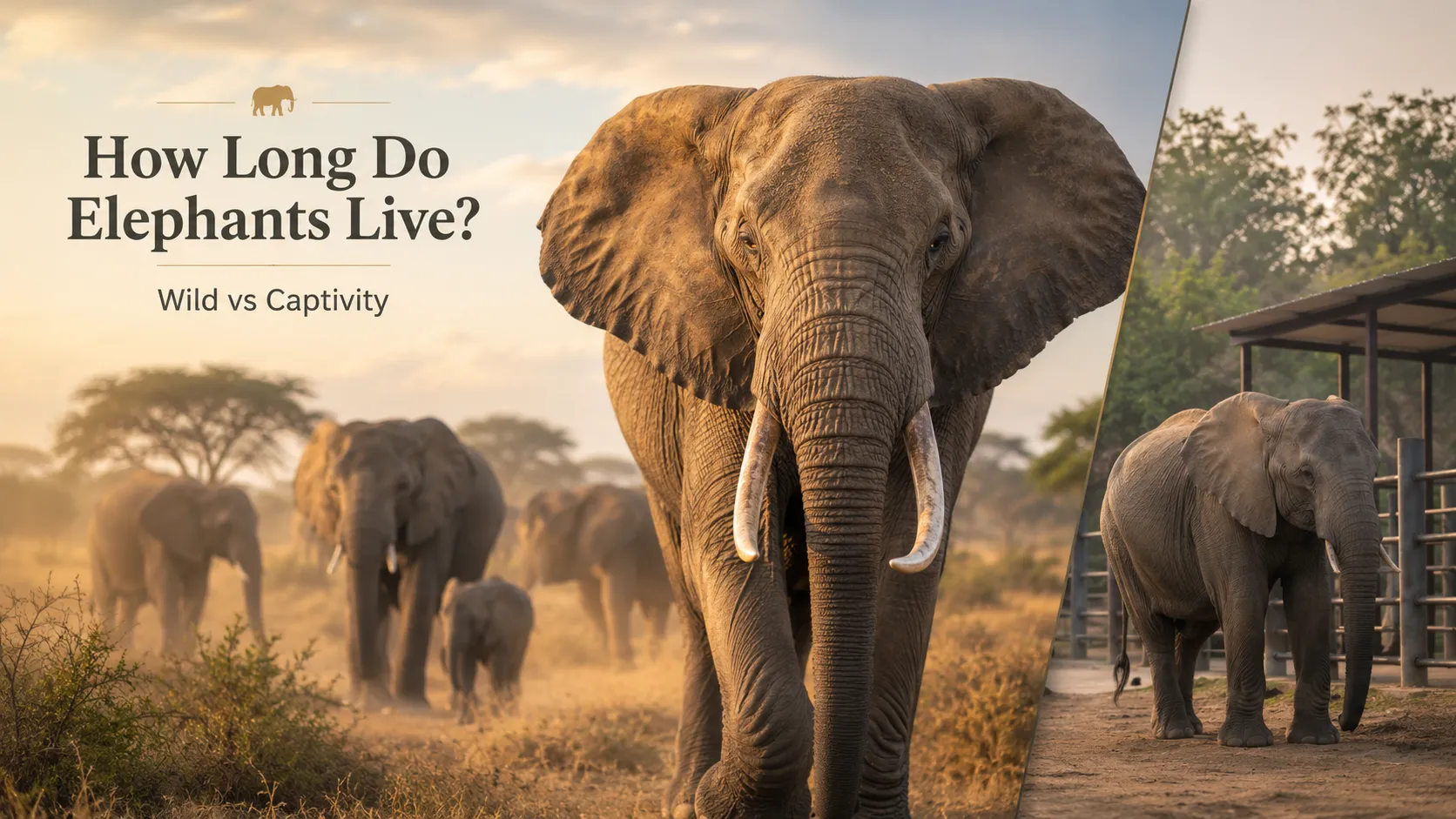
Captivity does not always mean a longer life. A major 2008 Science study analyzed more than 4,500 elephants and found lower survivorship in many zoo populations. Female African elephants in Kenya’s Amboseli population had a reported median lifespan of 56 years, compared with 17 years for zoo-born females in that study.
So, how long do elephants live? In simple terms, healthy wild elephants often live longer than poorly managed captive elephants. But top sanctuaries and modern zoos can improve outcomes through space, diet, foot care, social groups, and veterinary support.
Quick Facts: How Long Do Elephants Live?
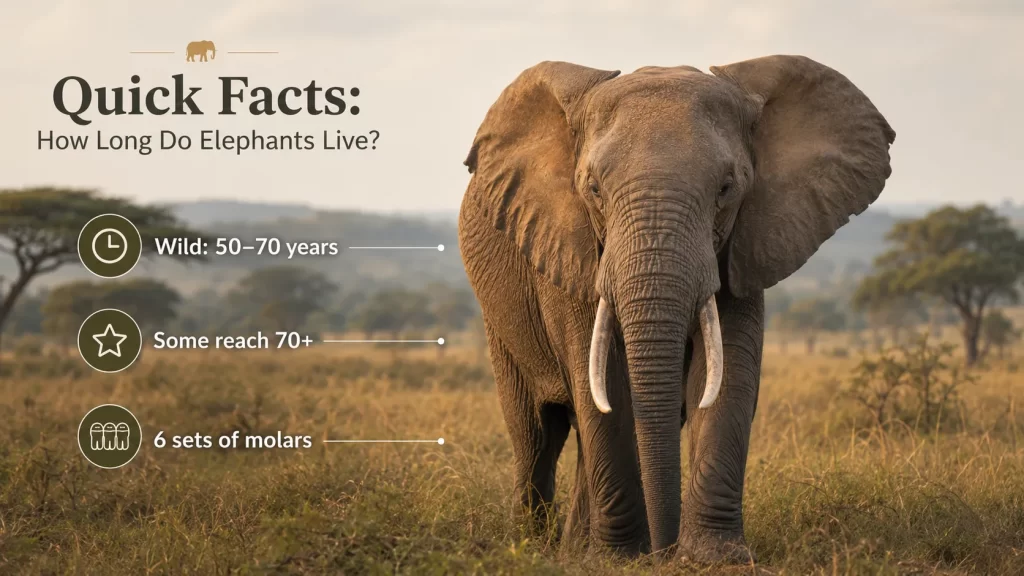
- African elephants can often live 60 to 70 years in protected wild conditions.
- Asian elephants may reach similar ages, but survival varies widely by setting.
- Wild female African elephants in Amboseli showed a median lifespan of 56 years.
- Zoo-born African females in one major study showed a median lifespan of 17 years.
- Elephants use six molar sets, and tooth loss can limit old-age survival.
- Elephant age wild estimates often use tooth wear, records, and long-term monitoring.
- Elephant mortality rises with drought, poaching, habitat loss, conflict, and poor captive welfare.
Elephant Lifespan by Species
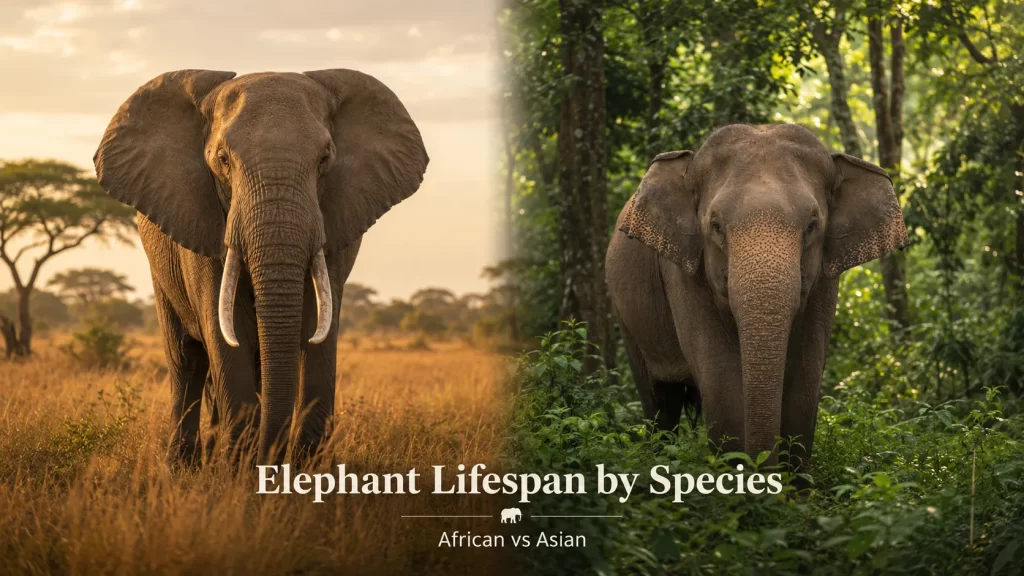
African Elephants Usually Live Longer in Protected Wild Areas
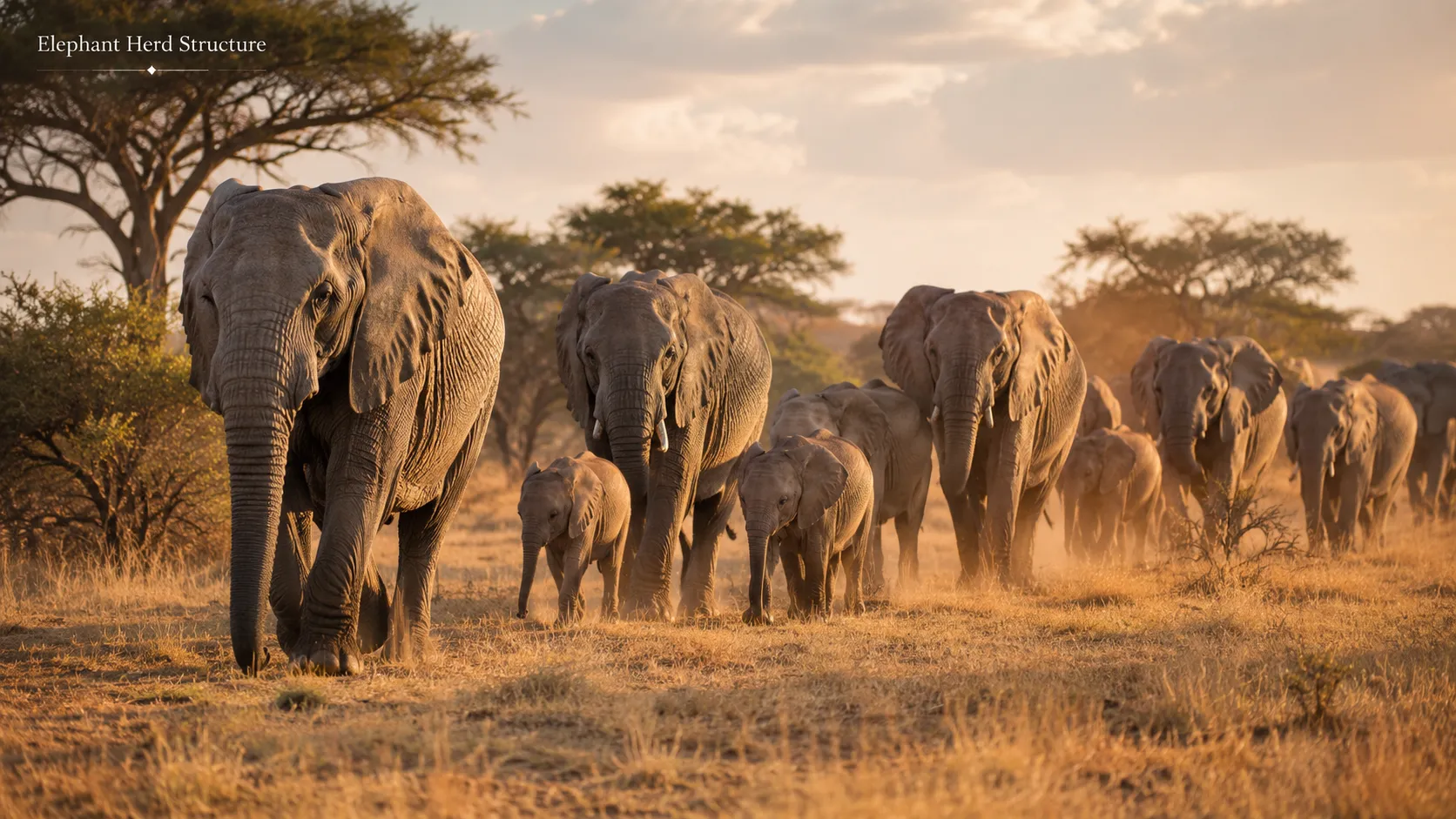
African elephants can live into their 60s and 70s when they avoid poaching, drought, disease, and conflict. Their long life supports complex family groups led by older females. These matriarchs guide younger elephants to water, food, and safer movement routes. That knowledge becomes vital during dry seasons and periods of stress.
The key phrase how long do elephants live often hides one detail: survival is not just biology. It is also protection. Wild elephants in secure parks can age naturally. Elephants near farms, roads, or poaching zones face higher elephant mortality. Human-elephant conflict, ivory poaching, habitat loss, and blocked migration routes can reduce survival before old age.
Asian Elephants Face Different Lifespan Pressures
Asian elephants may also live around 60 years in strong conditions. However, their lives can be shortened by habitat fragmentation, work stress, disease, and captive management problems. One study on semi-captive Asian elephants found a predicted median lifespan of 30.81 years for males and 44.73 years for females.
This matters because Asian elephants are endangered and reproduce slowly. Females usually have long pregnancies of around 18 to 22 months, and calves need years of care. A population loses momentum when adults die early. That is why elephant lifespan data matters for conservation planning, not just curiosity.
Wild vs Captive Elephant Lifespan
Lifespan Comparison Table
| Elephant setting | Typical lifespan pattern | Key numbers | Main risks |
|---|---|---|---|
| Protected wild African elephants | Often longest survival | Median 56 years in Amboseli females | Drought, poaching, conflict |
| Zoo-born African females in 2008 study | Shorter survivorship | Median 17 years | Stress, obesity, foot disease |
| Captive Asian elephants in Europe/North America | Mixed results by care system | Britannica cites female medians near 35.9–41.9 years | Low birth rates, health issues |
| Semi-captive Asian elephants | Sex-based gap | 30.81 years male, 44.73 years female | Workload, capture history, disease |
| Very old elephants | Rare but possible | Wild estimates near 74–80 years | Tooth loss, starvation, weakness |
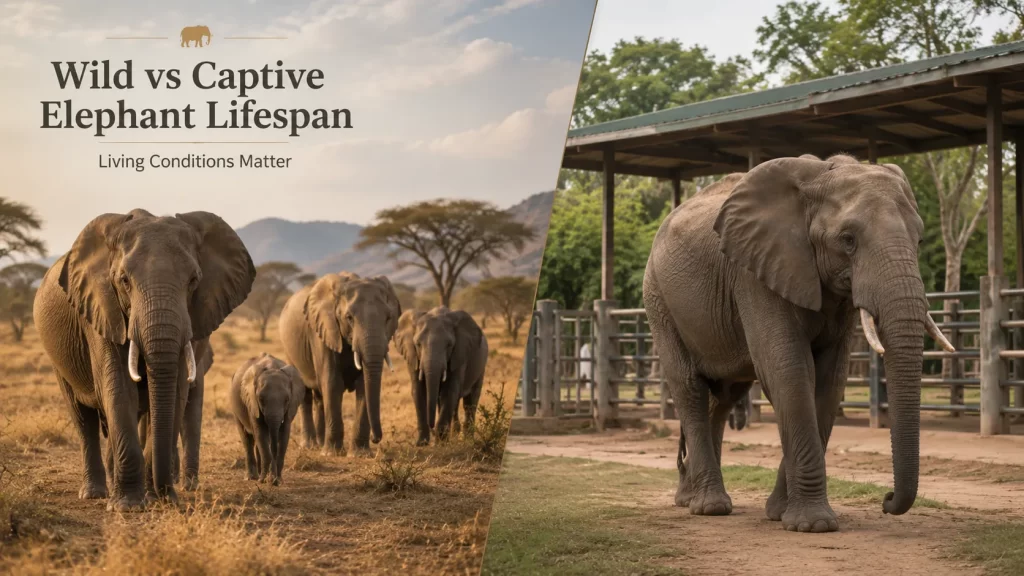
Captivity can protect elephants from predators, poachers, and drought. Yet captivity can also create chronic health issues. Elephants evolved to walk long distances, browse varied foods, and live in layered social groups. Restricted space, hard flooring, poor diet, isolation, and transfers can harm welfare over decades.
The 2008 survivorship study remains important because it used a large dataset. Researchers reported that many zoo elephants had about half the median lifespan of protected populations. They also suggested stress and obesity as likely factors.
Why Elephant Teeth Control Lifespan
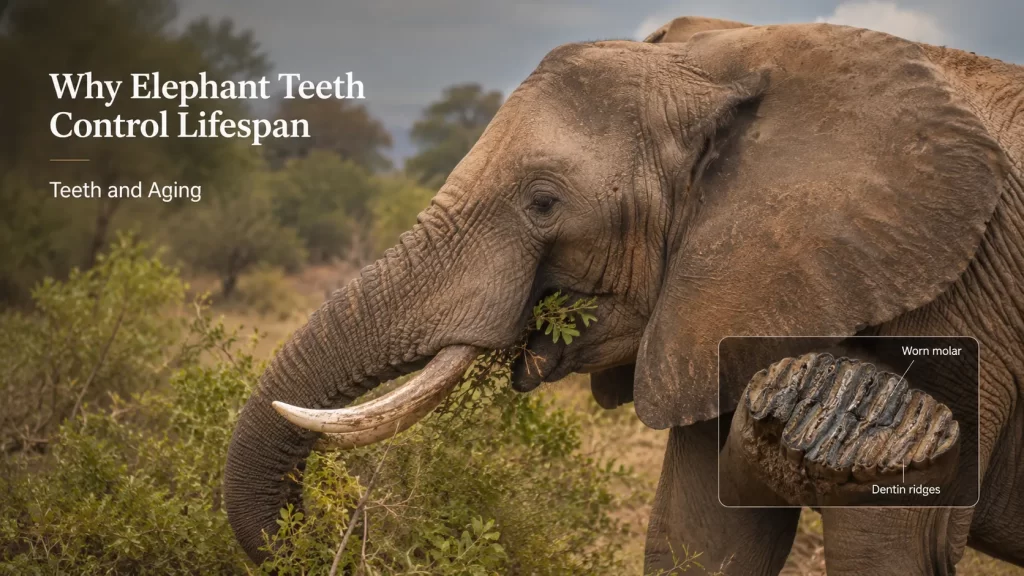
Elephant Teeth Lifespan Is a Natural Clock
The lifespan of elephant teeth plays a direct role in old age. Elephants do not keep one permanent chewing surface like humans. Instead, they replace large molars in a conveyor-belt pattern. New teeth move forward from the back of the jaw as older teeth wear down.
Most elephants get six sets of molars during their lives. By around 40 to 60 years, the final molars may wear out. Once an elephant cannot grind tough grass, bark, roots, or branches, it loses body condition. Starvation becomes a common natural cause of death in very old elephants.
This makes elephant teeth lifespan one of the clearest limits on longevity. An elephant may avoid disease and human threats, but it cannot outlive chewing function forever. In the wild, older elephants often shift toward softer vegetation and wetter habitats. That behavior helps them conserve energy and eat safely.
What Causes Elephant Mortality?
Early Death Often Comes From Human Pressure
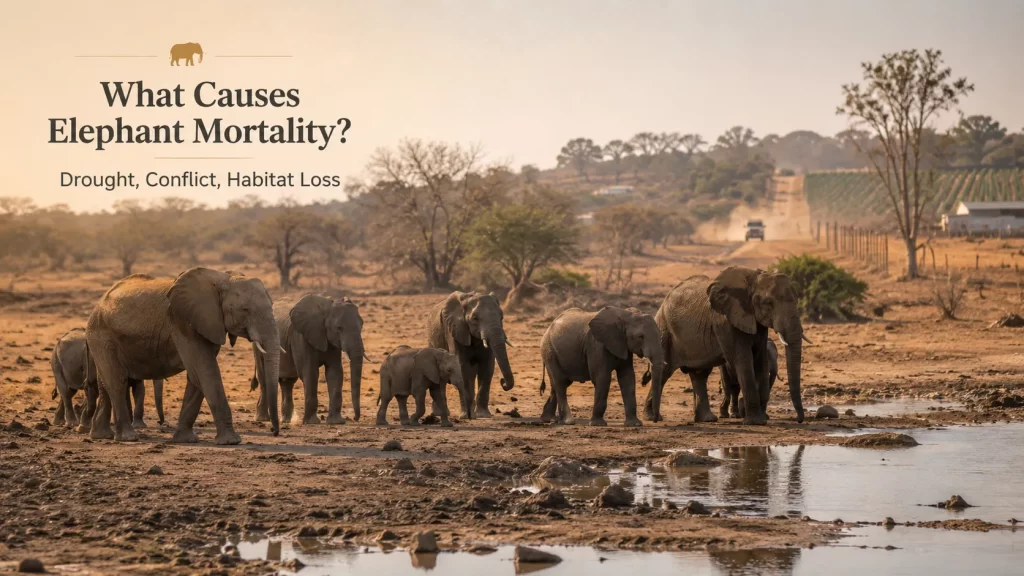
Elephant mortality changes across life stages. Calves may die from disease, malnutrition, predation, or drought. Young males face higher risks after leaving family groups. Adults face conflict with people, poaching, injuries, and habitat loss.
Human pressure is now one of the biggest threats. Farms, roads, railways, fences, and settlements can cut ancient movement routes. When elephants lose access to safe corridors, they enter crop fields or towns. That increases deaths on both sides. Recent reporting has highlighted blocked migration paths and rising human-elephant conflict in parts of Africa.
Captive elephant mortality often involves different patterns. Foot disease, arthritis, obesity, reproductive problems, herpesvirus, and social stress can shorten life. Good facilities reduce those risks through soft surfaces, deep bedding, walking space, varied feeding, and stable social groups.
Oldest Elephant: What Do We Know?
Extreme Age Is Rare and Hard to Verify
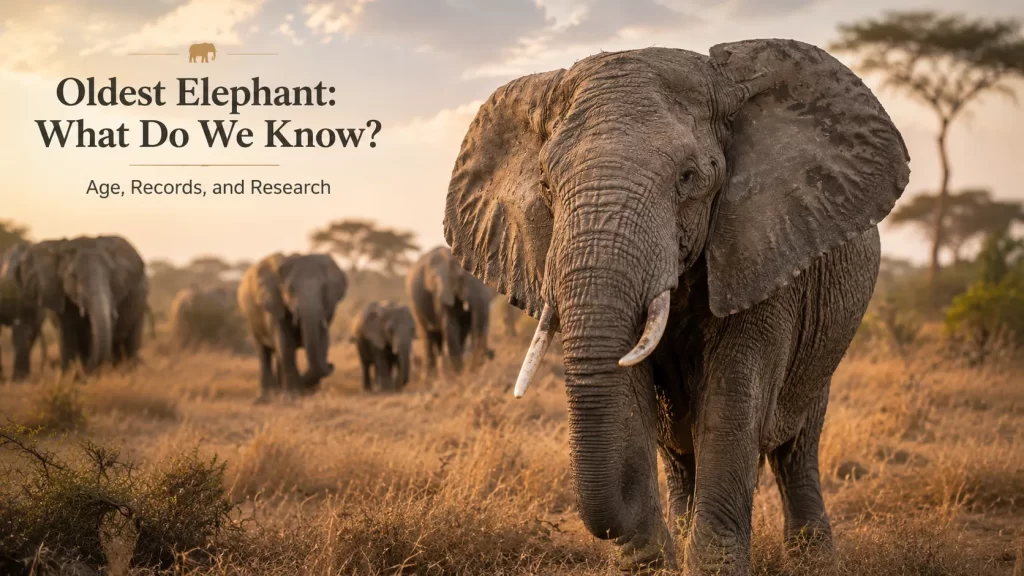
The phrase oldest elephant often appears in search results, but exact records can be messy. Many older elephants were born before strict recordkeeping. Some ages rely on tooth wear, local records, zoo logs, or historical claims. That makes verification difficult.
Scientifically, it is safer to say elephants can live into their 70s, and rare individuals may approach 80 years. The strongest evidence comes from long-term field research, tooth-wear analysis, and managed population records. Wild female African elephants have been estimated to have a maximum lifespan of 74 years in published research.
Older elephants matter beyond age records. Senior females store social and ecological knowledge. Older bulls also influence younger males through social control. Removing these animals can weaken group behavior, even when total population numbers look stable.
Bottom Line
So, how long do elephants live? Most healthy elephants can live several decades, and many reach 50 to 70 years under strong conditions. Wild elephants in protected landscapes often show the best survival because they move, feed, and socialize naturally. Captive elephants may live long lives, too, but only when welfare standards are high. Teeth, habitat, social bonds, food, disease, and human pressure all shape the final number. The clearest lesson is simple: elephants live longest when their bodies, families, and landscapes stay intact.