The African Elephant is the largest land animal on Earth, but its size is only part of the story. This animal also has deep family bonds, strong memory, complex communication, and a major role in African ecosystems. When we study African Elephant facts, we quickly see that this species shapes forests, savannas, wetlands, and human communities across the continent.
Today, scientists recognize two African elephant species. The African savanna elephant is Loxodonta africana, while the African forest elephant is Loxodonta cyclotis. This distinction matters because both species face different threats, live in different habitats, and need different conservation plans. In 2021, IUCN listed the savanna elephant as Endangered and the forest elephant as Critically Endangered.
This guide covers African Elephant behaviour, elephant biology, African Elephant size, elephant family structure, habitat, reproduction, threats, and conservation. It is built for readers who want a complete, clear, and useful guide. We will look at the animal as a living system, not just a wildlife symbol.
African Elephant Facts at a Glance
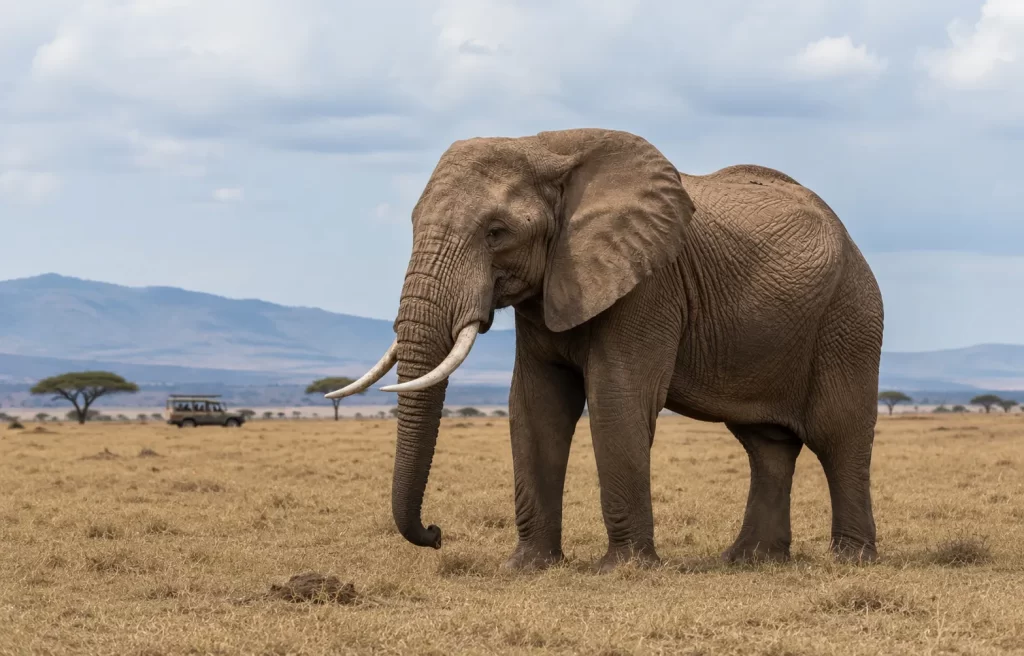
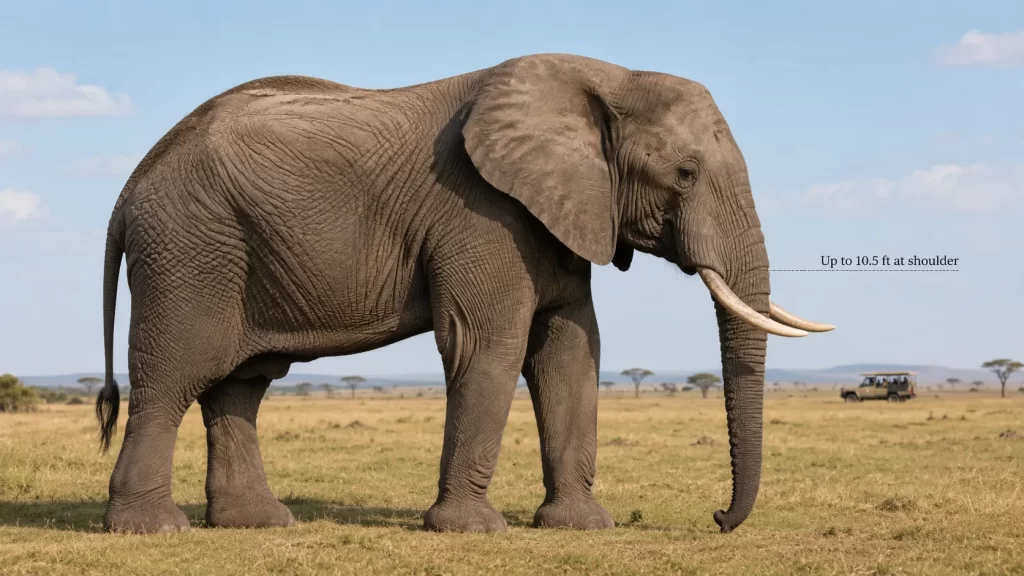
The African Elephant is a giant herbivore with a slow life cycle and a powerful social structure. A male African savanna elephant can reach 10 to 10.5 feet at the shoulder. Females may weigh up to 8,000 pounds, while males can weigh 12,000 to 15,000 pounds. These numbers explain why space, water, and food access are central to survival.
| Feature | Data | Why It Matters |
|---|---|---|
| Common name | African Elephant | Refers broadly to African elephant species. |
| Savanna species | Loxodonta africana | Largest land animal alive today. |
| Forest species | Loxodonta cyclotis | Smaller, forest-adapted, and critically endangered. |
| Male height | 10 to 10.5 feet | Shows extreme African Elephant size. |
| Male weight | 12,000 to 15,000 pounds | Requires large feeding ranges. |
| Female weight | Up to 8,000 pounds | Females lead most family groups. |
| Gestation | 22 months | Longest pregnancy among mammals. |
| Calf interval | 4 to 5 years | Makes recovery slow after population loss. |
| Wild African elephants | About 415,000 | Current widely cited estimate. |
| Forest elephant estimate | 135,690 | Updated 2025 DNA-based estimate. |
These African Elephant facts show why conservation is difficult. The animal is large, intelligent, social, and slow to reproduce. A population cannot rebound quickly after poaching, drought, or habitat loss. A single adult female may represent decades of survival knowledge for her family group.
What Is an African Elephant?
Loxodonta africana and Loxodonta cyclotis
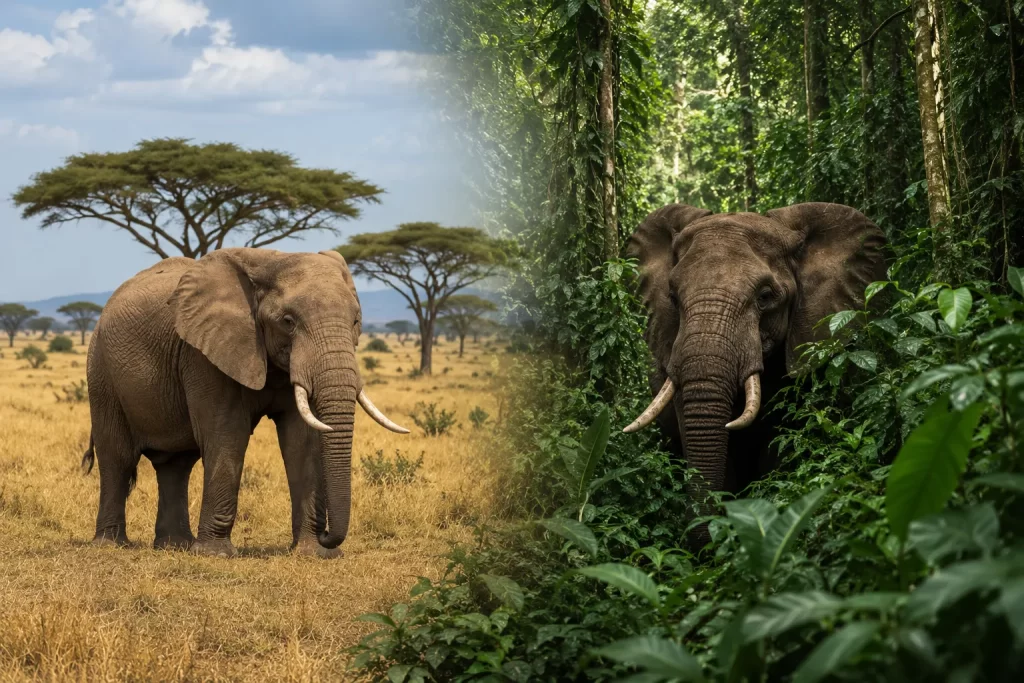
The term African Elephant often gets used as one broad label. In modern conservation, we should separate the savanna elephant and the forest elephant. The savanna elephant, Loxodonta africana, usually lives in open grasslands, woodlands, wetlands, and dry country. The forest elephant, Loxodonta cyclotis, lives mainly in dense Central and West African forests.
The two species differ in body shape, tusk form, ear shape, habitat use, and population monitoring methods. Savanna elephants are easier to survey from aircraft because they often live in open areas. Forest elephants are harder to count because dense vegetation hides them. Scientists now use dung DNA and field surveys to improve forest elephant estimates.
This split is important for SEO and education. Many older guides still treat African elephants as one species. A complete guide should explain both. When we discuss African Elephant conservation, we should not ignore forest elephants. Their habitat is harder to access, but their ecological role is huge.
African Elephant Size and Physical Features
How Big Is an African Elephant?
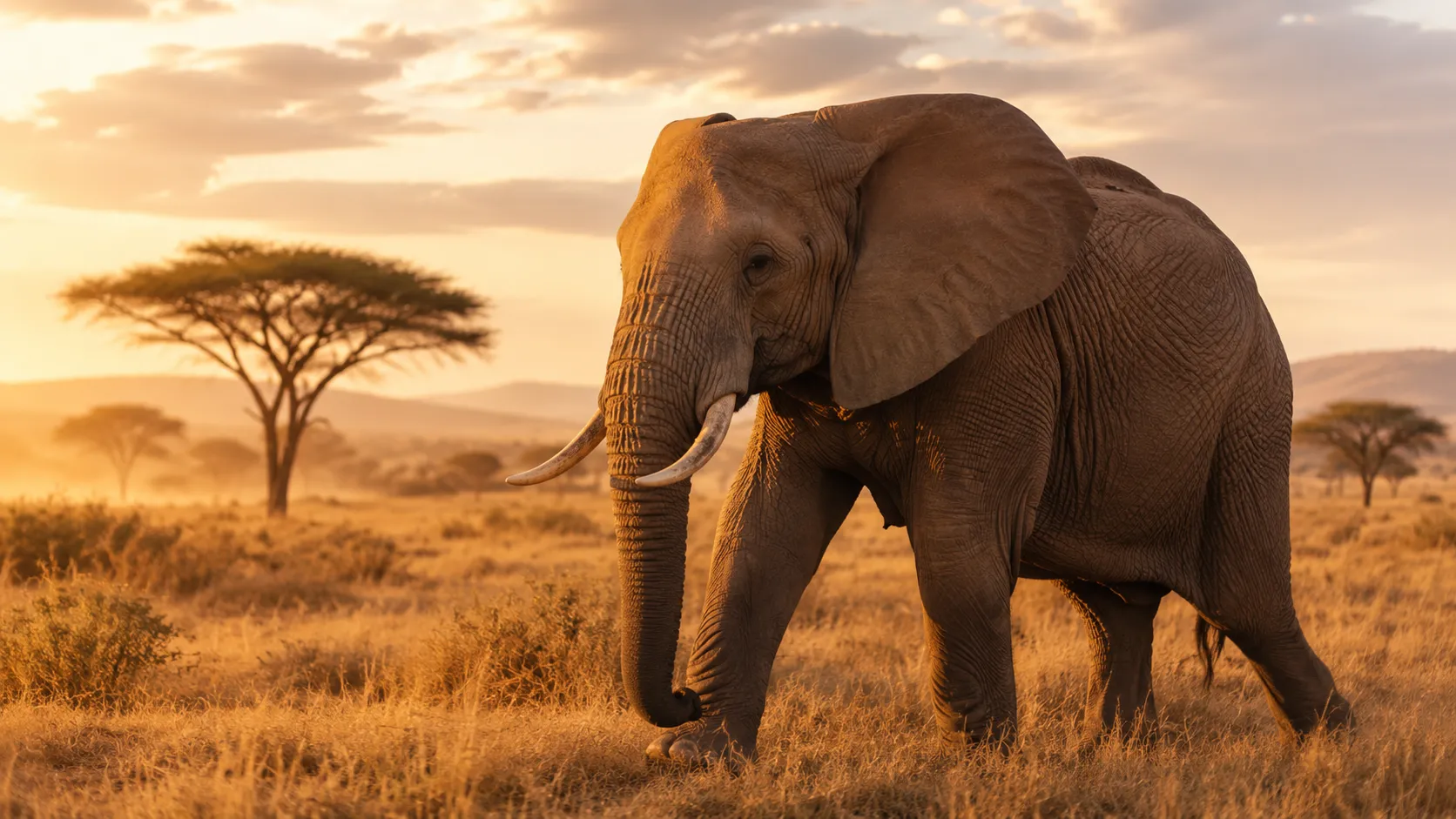
African Elephant size is one of the clearest ways to identify the species. Adult males are much larger than females. A mature savanna bull can stand over 10 feet at the shoulder and weigh several tons. Females are smaller, but they still rank among the most powerful mammals alive.
This size gives the African Elephant major advantages. It can push through thick vegetation, break branches, dig water holes, and defend itself from most predators. Yet size also creates pressure. A large body needs huge amounts of food and water. During drought, elephants may travel long distances to survive.
The size of the African elephant also affects human-elephant conflict. A hungry herd can damage crops in one night. A frightened or trapped elephant can destroy fences, vehicles, or water systems. This is why conservation must combine wildlife protection with practical community planning.
Elephant Biology: Trunk, Tusks, Ears, Skin, and Teeth
The Trunk Is a Survival Tool
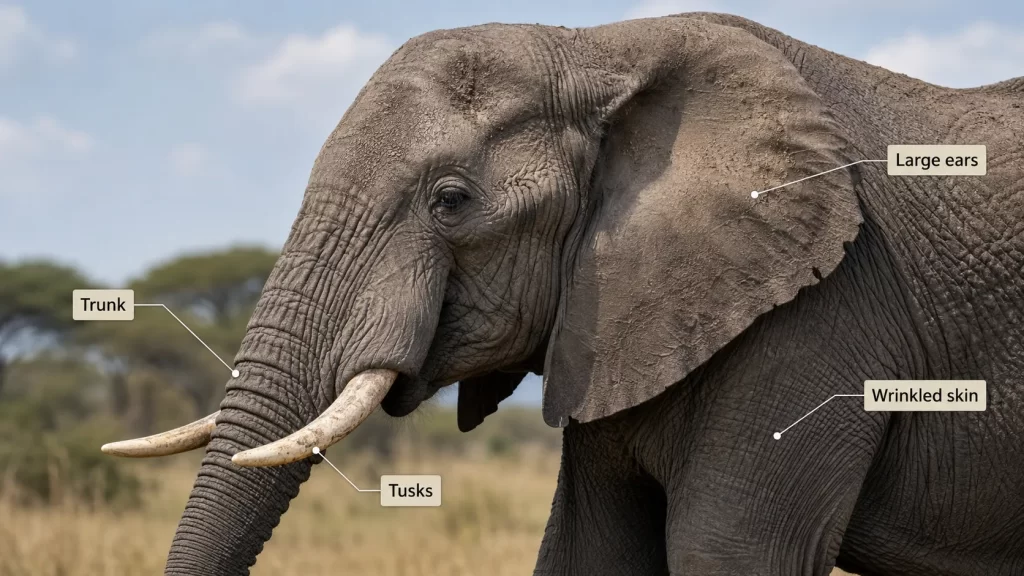
Elephant biology starts with the trunk. The trunk works as a nose, hand, drinking tube, snorkel, sound tool, and social organ. Elephants use it to smell water, lift food, touch calves, greet relatives, and explore objects. It is one of the most flexible organs in the animal kingdom.
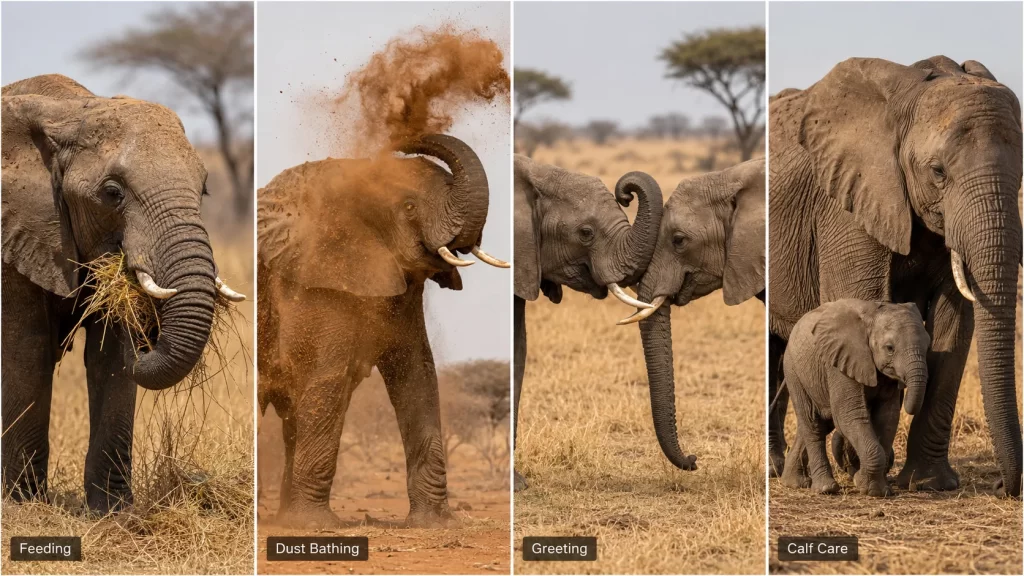
The trunk also helps with feeding precision. An African Elephant can pull grass, strip leaves, break branches, and lift fruit. It can also spray water and dust over the body. Dust bathing helps protect skin from insects, sun, and moisture loss. This daily behavior is practical, not decorative.
Tusks are enlarged incisor teeth. African elephants use tusks to dig, strip bark, move objects, and compete. Both males and females can have tusks, though tusk size varies. Heavy ivory poaching has changed tusk patterns in some populations. This shows how human pressure can affect elephant biology across generations.
African Elephant Diet and Water Needs
What Does an African Elephant Eat?
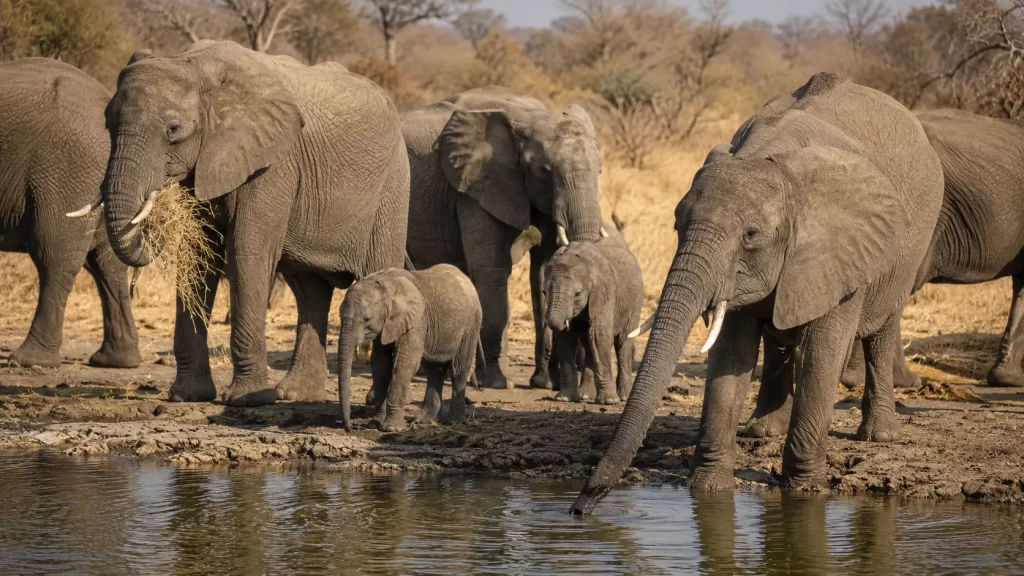
The African Elephant is a herbivore with a wide diet. It eats grasses, leaves, bark, roots, fruit, shrubs, branches, and aquatic plants. Diet changes with season and habitat. After rain, elephants often graze on fresh grasses. During dry months, they may browse trees and strip bark.
Water is just as important as food. San Diego Zoo reports that elephants drink about 20 to 50 gallons of water each day. That equals roughly 75 to 190 liters. This need shapes movement, migration, habitat choice, and conflict risk near farms or villages.
Elephants also change landscapes while feeding. They break branches, open pathways, and move seeds through dung. In forests, fruit-eating elephants help spread tree species. In savannas, browsing can reduce dense woody growth. This makes the African Elephant an ecosystem engineer, not just a large grazer.
Habitat and Range
Where African Elephants Live
The African Elephant lives across parts of sub-Saharan Africa. Savanna elephants use grasslands, woodlands, floodplains, scrublands, and drylands. Forest elephants live in tropical forests, especially in Central Africa. Habitat use depends on water, food, safety, season, and human pressure.
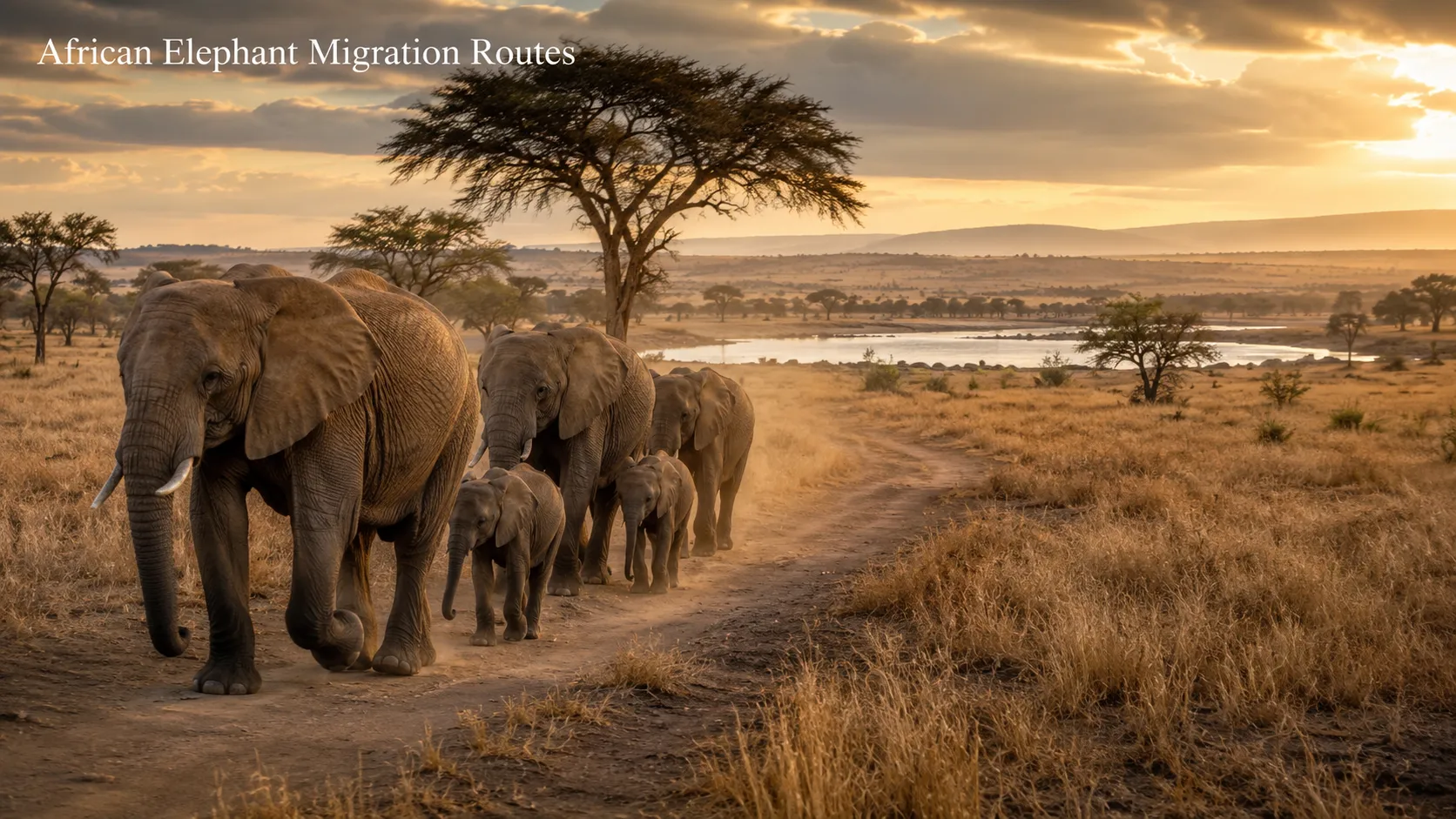
Elephants do not respect park boundaries. They follow seasonal routes learned over many years. A family may move from woodland to river systems as rainfall changes. Bulls may travel even farther while searching for mates. These movement patterns explain why protected areas alone are not enough.
A major study reported that 57% of the current elephant range lies outside protected areas. This is a critical conservation point. If elephants need land outside parks, then farms, roads, corridors, and community lands must be part of conservation planning.
Elephant Behaviour and Daily Activity
How African Elephants Spend the Day
Elephant behaviour changes with season, temperature, food, water, and social needs. African elephants feed for many hours because plant material has low energy density. They walk, browse, graze, rest, drink, bathe, socialize, and care for calves. Their day is busy, structured, and highly responsive.
Heat shapes activity. In hot areas, elephants may feed early, rest during peak heat, and move again later. They use shade, mud, water, and ear flapping to manage temperature. Large ears help release body heat, especially in open savanna habitats.
Elephants also show curiosity and caution. They investigate bones, smells, vehicles, water points, and unfamiliar objects. Their reactions depend on experience and group leadership. A calm matriarch can steady a family. A stressed group may bunch together, raise heads, or move calves inward.
Elephant Family Structure
Why Female-Led Families Matter
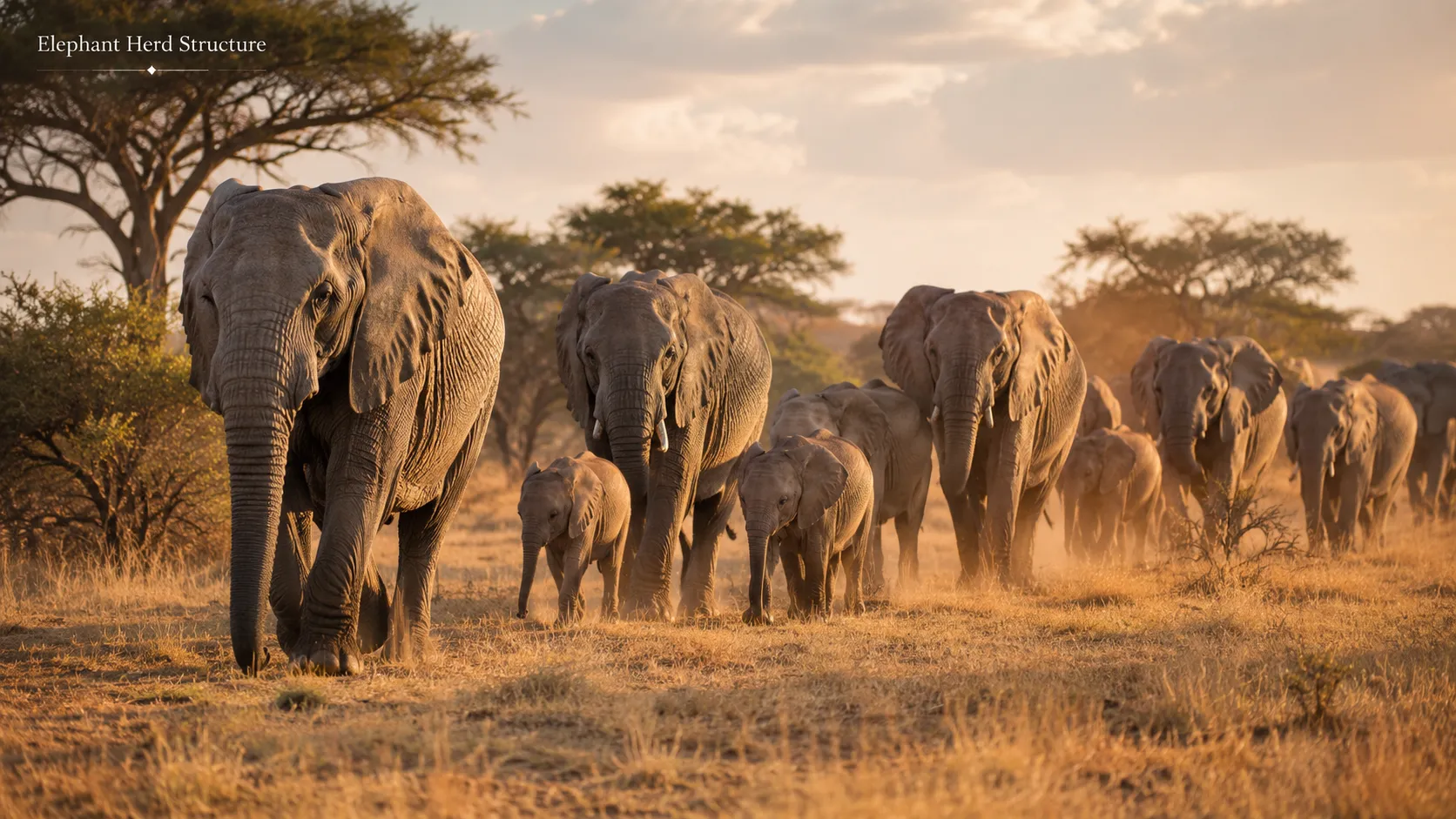
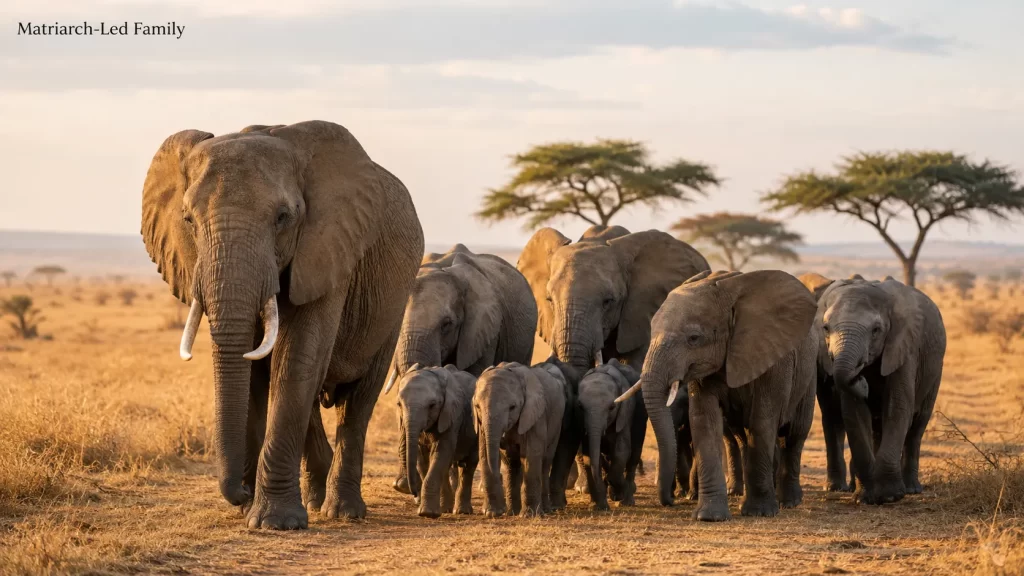
Elephant family structure is one of the most important parts of African Elephant behaviour. Families are usually led by a matriarch, often the oldest experienced female. Related females and their calves stay together in strong social units. Male calves usually leave as they mature.
This structure gives young elephants protection and education. Calves learn where to drink, what to eat, how to greet others, and how to respond to danger. Mothers are central, but aunts, sisters, and older calves also help. This shared care improves calf survival.
The matriarch plays a special role during stress. Older females carry memories of water sources, migration routes, safe areas, and danger signals. Research shows that older female leaders act as stores of social and ecological knowledge. That knowledge can help families make better decisions.
Matriarchs, Memory, and Leadership
Knowledge Can Save a Herd
The African Elephant is famous for its memory, but this is not just a romantic idea. In elephant society, memory has survival value. A matriarch may remember where water remained during past droughts. She may also recognize social calls from friendly or hostile groups.
Studies on African elephants show that older matriarchs improve group responses to social information. This means families led by experienced females may respond better to unfamiliar calls or possible threats. Leadership grows from age, learning, and trust.
This has a major conservation lesson. Killing an older female does not only reduce the population by one animal. It can remove decades of learned knowledge. A younger female may take over, but the group may lose important survival information. Protecting matriarchs protects family culture.
Communication and Intelligence
Sounds, Touch, Smell, and Name-Like Calls
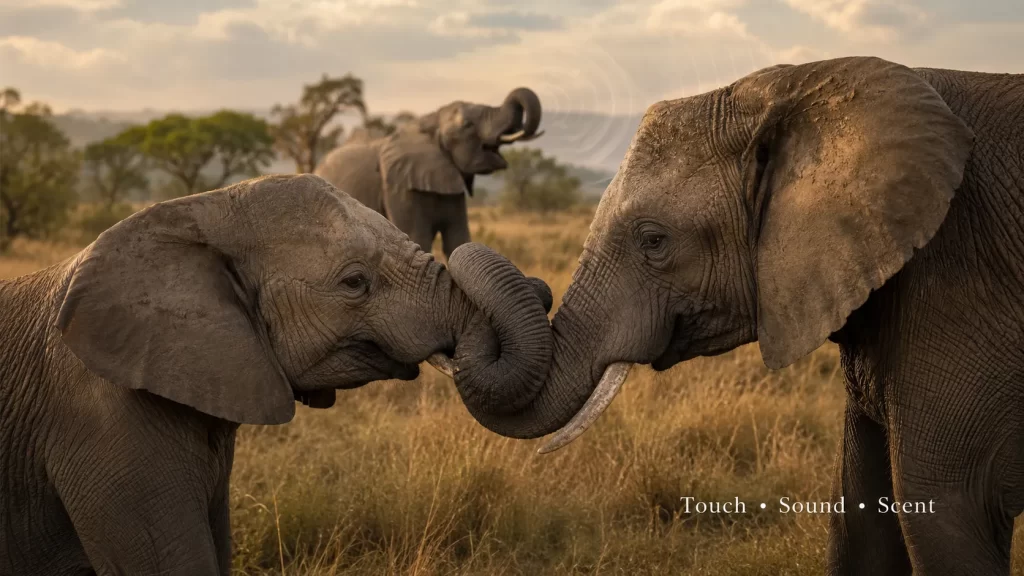
African Elephant communication is rich and layered. Elephants use rumbles, trumpets, roars, snorts, body posture, scent, touch, and ground vibrations. Low-frequency rumbles can travel far, helping separated family members stay connected. Trunk touching also supports greeting, comfort, bonding, and reassurance.
Recent research has made elephant behaviour even more fascinating. A 2024 Nature Ecology & Evolution study found that African savanna elephants use individually specific, name-like calls. Researchers used machine learning and playback experiments to test how elephants responded to calls.
This finding matters because it supports what field researchers have long suspected. Elephants do not just make noise. They communicate with social intention. They can direct calls toward specific individuals. This level of communication fits their complex family structure and long-term relationships.
Reproduction and Calf Development
Why African Elephant Populations Recover Slowly
African Elephant reproduction is slow compared with that of many mammals. A female carries her calf for about 22 months, the longest gestation period among mammals. WWF reports that females usually give birth to one calf every four to five years.
This slow cycle protects calf development but limits population recovery. After heavy poaching, a herd cannot rebuild quickly. Adult females must survive for decades to produce several calves. Calf survival also depends on food, water, safety, and social support.
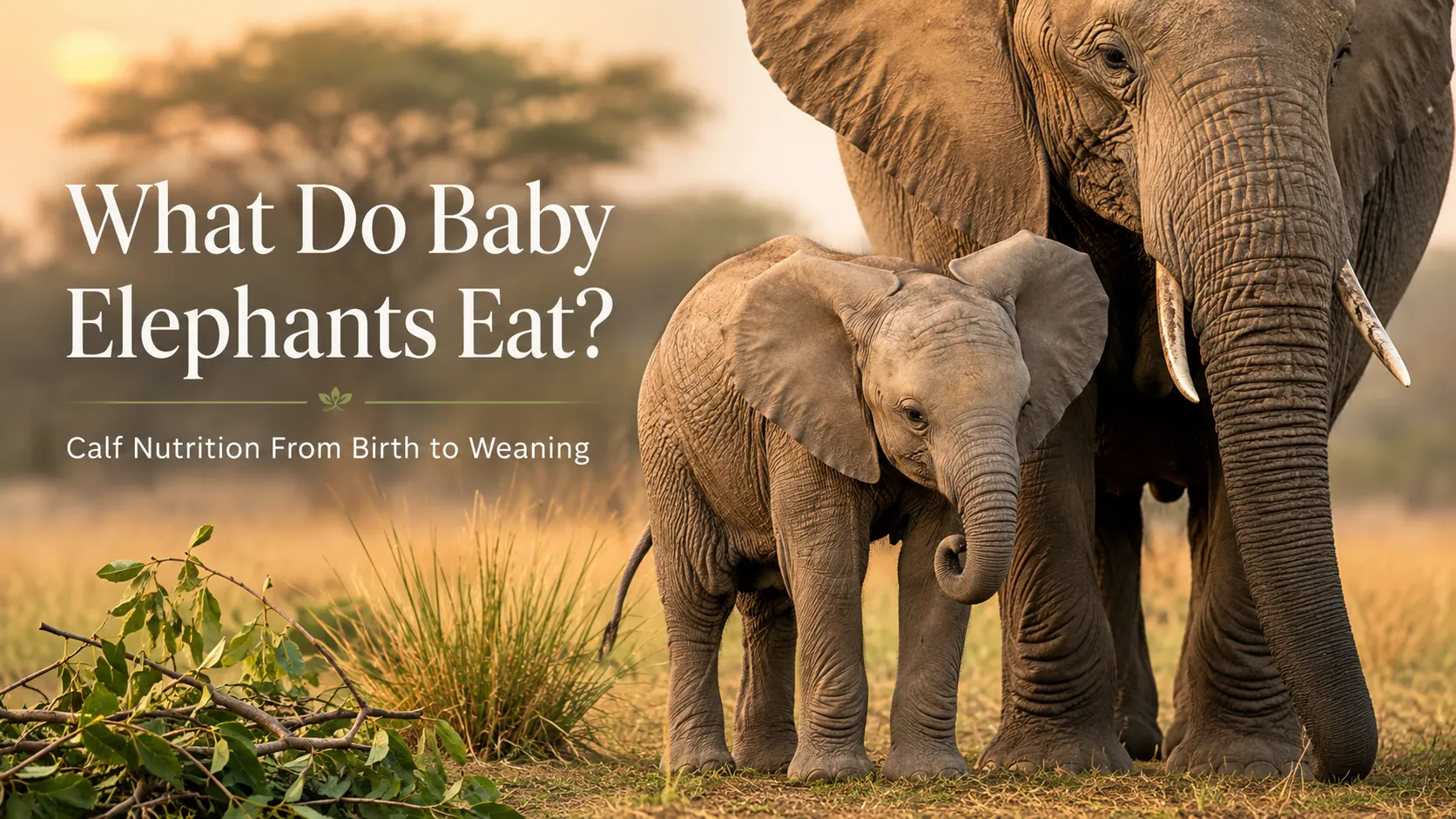
A newborn calf depends heavily on its mother. It must learn to walk, nurse, follow the herd, use its trunk, and avoid danger. Other females often help guide and protect it. This cooperative care is a major strength of the elephant family structure.
Male African Elephant Behaviour
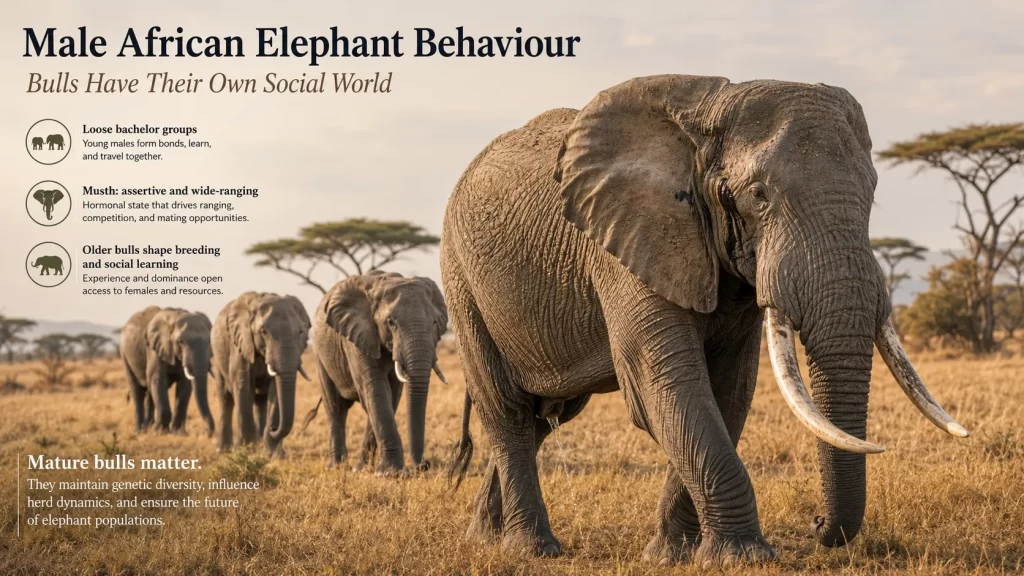
Bulls Have Their Own Social World
Male African Elephant behaviour is often misunderstood. Bulls are not simply lonely animals wandering away from families. Young males leave female-led groups as they mature, but they may form loose bachelor groups. Younger bulls can learn from older males through social contact.
Mature bulls enter a reproductive condition called musth. During musth, testosterone rises, the temporal glands secrete fluid, urine dribbling may occur, and behavior becomes more assertive. Musth bulls can travel widely while searching for receptive females. They need space and careful management near human areas.
Older bulls also matter genetically and socially. In some populations, mature males gain more mating opportunities. Removing large tusked bulls can affect breeding structure and local genetics. This is another reason conservation should protect both matriarchs and mature males.
African Elephant Conservation Status
Current Population and Risk
The African Elephant faces serious conservation pressure. IUCN listed the African savanna elephant as Endangered and the African forest elephant as Critically Endangered. IUCN reported that savanna elephants declined by at least 60% over 50 years. Forest elephants declined by more than 86% over 31 years.
WWF states that around 90% of African elephants were lost during the past century. It also gives an estimated current wild population of about 415,000 African elephants. This number is useful, but it should be read carefully. Populations vary by region, species, protection level, and survey quality.
The 2025 forest elephant assessment estimated 135,690 individuals in surveyed areas. It also noted additional tentative estimates where systematic surveys are still pending. The apparent increase reflects improved DNA methods, not confirmed rapid recovery.
Main Threats to African Elephants
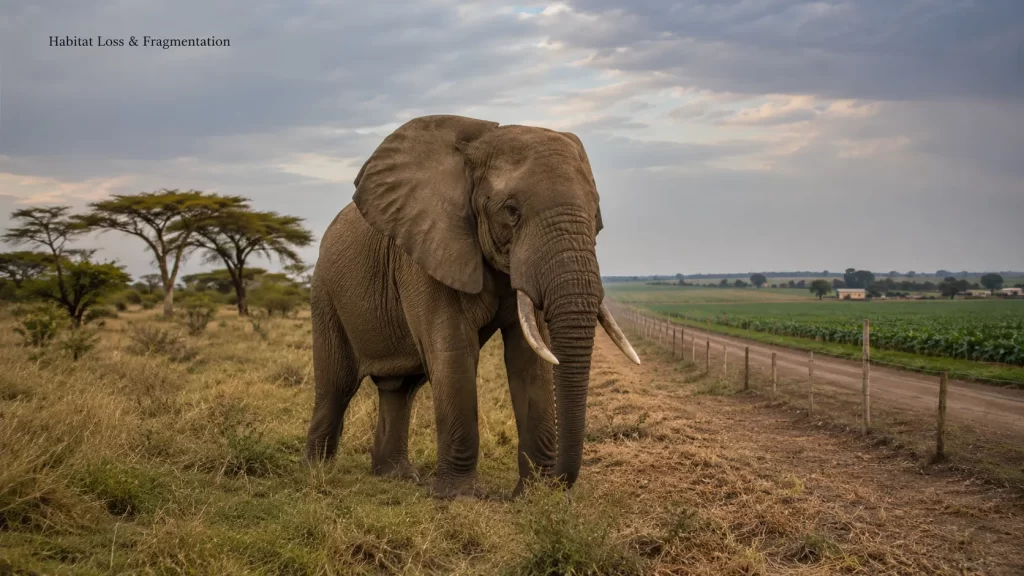
Poaching, Habitat Loss, and Fragmentation
Poaching remains one of the most damaging threats. Ivory demand has killed many adult elephants, especially older tusked animals. Poaching also breaks social systems. When adults die, calves may lose mothers, leaders, and family knowledge.
Habitat loss is now equally serious. Agriculture, roads, mining, fences, settlements, and infrastructure can block movement. Elephants need large connected landscapes. When routes close, herds may enter farms or become trapped in smaller areas. This raises conflict and reduces genetic exchange.
Genetic isolation is an emerging concern. A 2026 Reuters report described genetic trouble in some isolated African elephant populations. The report linked isolation to habitat fragmentation and reduced movement between groups. Connectivity is therefore a biological need, not just a map design.
Human-Elephant Conflict
Why Coexistence Is Essential
Human-elephant conflict happens when elephants and people compete for space, crops, water, or safety. A herd can destroy maize, sorghum, bananas, or stored food in one night. For a small farmer, that loss can threaten income and family security.
Communities living near elephants need practical support. Conservation cannot ask people to accept danger without benefits or tools. Useful methods include early warning systems, chili fences, beehive fences, crop guarding, safe grain storage, insurance, and fast response teams.
The best coexistence programs are local. They listen to farmers, herders, women, guides, and rangers. They also create benefits through tourism jobs, conservation payments, education, and local ownership. When people gain from living with elephants, protection becomes more realistic.
African Elephants as Ecosystem Engineers
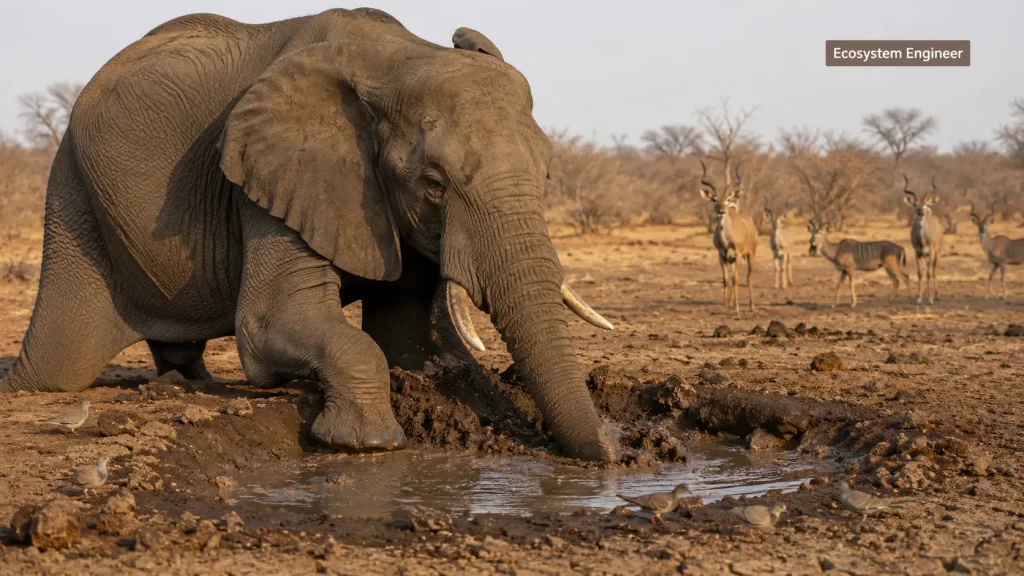
How Elephants Shape Landscapes
The African Elephant is an ecosystem engineer because it changes habitats in visible ways. It breaks branches, opens trails, digs water holes, spreads seeds, and creates feeding opportunities for other animals. These actions influence plants, insects, birds, mammals, and water access.
IFAW notes that elephants dig wells using feet, trunks, and tusks. These holes can reach underground water and help other animals drink during dry periods. This behavior makes elephants important during drought, especially in arid landscapes.
Forest elephants also support tree regeneration. They eat fruit and spread seeds through dung. Some seeds may travel long distances before germinating. This helps maintain forest diversity. When forest elephant numbers fall, forests may lose important seed dispersers.
Climate Change and Drought Pressure
Why Water Stress Matters
Climate change adds another layer of pressure to African Elephant conservation. Longer droughts, irregular rainfall, and hotter seasons can reduce water and food availability. Elephants can travel far, but blocked corridors make drought more dangerous.
During dry periods, elephants gather around permanent water sources. This can increase competition with livestock and people. It can also damage vegetation around rivers and water points. Good management must balance elephant needs with community needs.
Climate planning should protect movement routes. A herd that can move safely has more choices during drought. A fenced or isolated herd has fewer options. This makes landscape connectivity a climate adaptation tool for African Elephant survival.
Responsible Elephant Tourism
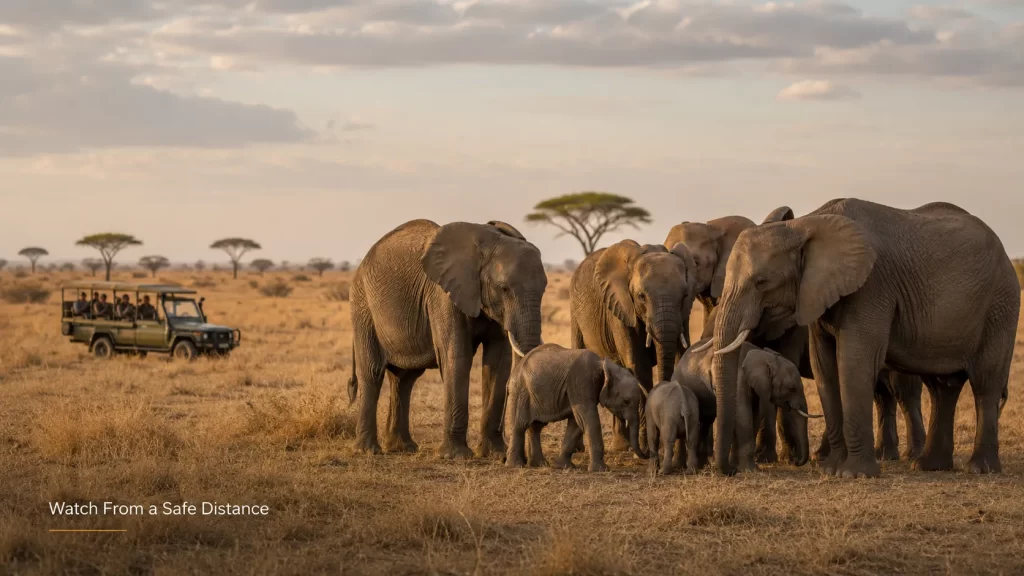
How Tourism Can Help or Harm
Wildlife tourism can support African Elephant conservation when managed well. Park fees, guide jobs, lodge employment, and community revenue can make living elephants valuable. However, poor tourism can stress animals and create danger.
Responsible viewing keeps a distance. Tourists should never ask guides to approach calves, block paths, or surround a herd. A calm elephant may feed, walk, dust, or drink naturally. A stressed elephant may raise its head, spread its ears, bunch its calves, or mock charge.
Good guides understand elephant behaviour. They read body language before problems begin. They also know that musth bulls, mothers with calves, and moving herds need special space. Ethical tourism protects visitors, guides, and elephants.
How Conservation Works Best
Science, Communities, and Corridors
African Elephant conservation works best when science and local knowledge support each other. Researchers provide surveys, collars, DNA tools, and population models. Communities provide daily landscape knowledge. Rangers provide enforcement and field protection. Governments provide law, land-use planning, and funding.
Corridors are especially important. They connect protected areas, reduce isolation, and allow seasonal movement. Corridors also help genetic exchange between populations. Without them, small groups can become trapped in a shrinking habitat.
Strong conservation should focus on these priorities:
- Protect mature females and bulls.
- Secure wildlife corridors.
- Reduce ivory demand.
- Support anti-poaching patrols.
- Fund community conflict prevention.
- Use DNA and survey tools responsibly.
- Plan roads away from key routes.
- Share tourism income fairly.
- Protect dry-season water access.
- Monitor population trends by species.
These actions are practical and connected. The African Elephant survives through movement, memory, and family. Conservation should respect all three.
African Elephant Behaviour: Key Signs to Understand
Reading Elephant Body Language
Understanding elephant behaviour helps researchers, guides, farmers, and tourists stay safer. A relaxed elephant may feed slowly, flap its ears gently, swing its trunk, or dust itself. A watchful elephant may stop feeding, raise its head, and test the air with its trunk.
Warning signs need respect. An elephant may spread its ears, shake its head, trumpet, kick dust, or make a short rush. A mock charge may stop before contact, but it is still serious. People should never test an elephant’s patience.
Mothers with calves deserve extra distance. Calves are curious but vulnerable. Adults may react strongly if a vehicle, person, or livestock group gets too close. Respecting space is the simplest safety rule.
African Elephant Biology and Adaptation
Built for Strength, Sensitivity, and Survival
Elephant biology combines power with sensitivity. The feet support a huge weight but also detect vibrations. The ears help with cooling and communication. The trunk performs delicate and heavy tasks. The brain supports memory, learning, and social awareness.
Skin may look thick, but it still needs care. Elephants bathe, wallow, and dust themselves to protect against the sun, insects, and dryness. Mud can cool the body and form a protective layer. Dusting after bathing helps create a natural coating.
Teeth also shape life history. Elephants replace molars through life as old grinding surfaces wear down. Since they eat tough plants, tooth wear affects feeding ability. Older elephants may struggle when their last molars fail.
Differences Between Savanna and Forest Elephants
Why the Difference Matters
Savanna and forest elephants look similar to casual observers, but they differ in important ways. Savanna elephants are usually larger, with broader ears and more open-habitat movement. Forest elephants are generally smaller, with straighter tusks suited to dense forest.
Their ecological roles also differ. Savanna elephants shape the grassland and woodland structure. Forest elephants disperse seeds and influence forest composition. Both species are vital, but they need different monitoring methods and conservation approaches.
Forest elephants are harder to protect because dense habitat hides both elephants and illegal activity. Surveys are more expensive and complex. This is why DNA-based methods have become so important for accurate population estimates.
FAQs
What is the African Elephant?
The African Elephant is a large herbivorous mammal found in Africa. The name includes the savanna elephant, Loxodonta africana, and the forest elephant, Loxodonta cyclotis. Both species are socially complex and conservation-dependent.
What are the best African Elephant facts?
The best African Elephant facts include its huge size, 22-month gestation, female-led family groups, strong memory, and ecosystem role. It also uses complex communication, including low rumbles and name-like calls.
What is the African elephant’s size?
African Elephant size varies by sex and species. Male savanna elephants can reach 10 to 10.5 feet at the shoulder. Males may weigh 12,000 to 15,000 pounds. Females can weigh up to 8,000 pounds.
What does an African Elephant eat?
An African Elephant eats grasses, leaves, bark, fruit, roots, branches, shrubs, and aquatic plants. Its diet changes with rainfall, habitat, and season. Forest elephants eat more fruit than savanna elephants.
How does elephant family structure work?
The elephant family structure is matriarchal. Related females and calves live together under an experienced female leader. Female calves may stay for life. Males usually leave as they mature.
Why is elephant behaviour so advanced?
Elephant behaviour is advanced because elephants are long-lived, social, and intelligent. They remember individuals, respond to calls, cooperate in families, care for calves, and adjust decisions based on experience.
Bottom Line
The African Elephant is one of the most intelligent, social, and ecologically important animals on Earth. Its biology explains its strength, but its behaviour explains its survival. Families depend on mothers, calves, matriarchs, bulls, memory, communication, and safe movement across large landscapes.
The future of the African Elephant depends on more than stopping poaching. It also depends on corridors, habitat planning, community support, climate resilience, and conflict prevention. Forest elephants and savanna elephants both need protection, but their needs are not identical.
A strong conservation model must value people and elephants together. Farmers need safety and fair support. Rangers need resources. Scientists need reliable data. Elephants need space, water, and time. When these pieces work together, the African Elephant can remain a living force across Africa’s forests, savannas, and wetlands.