Table of Contents
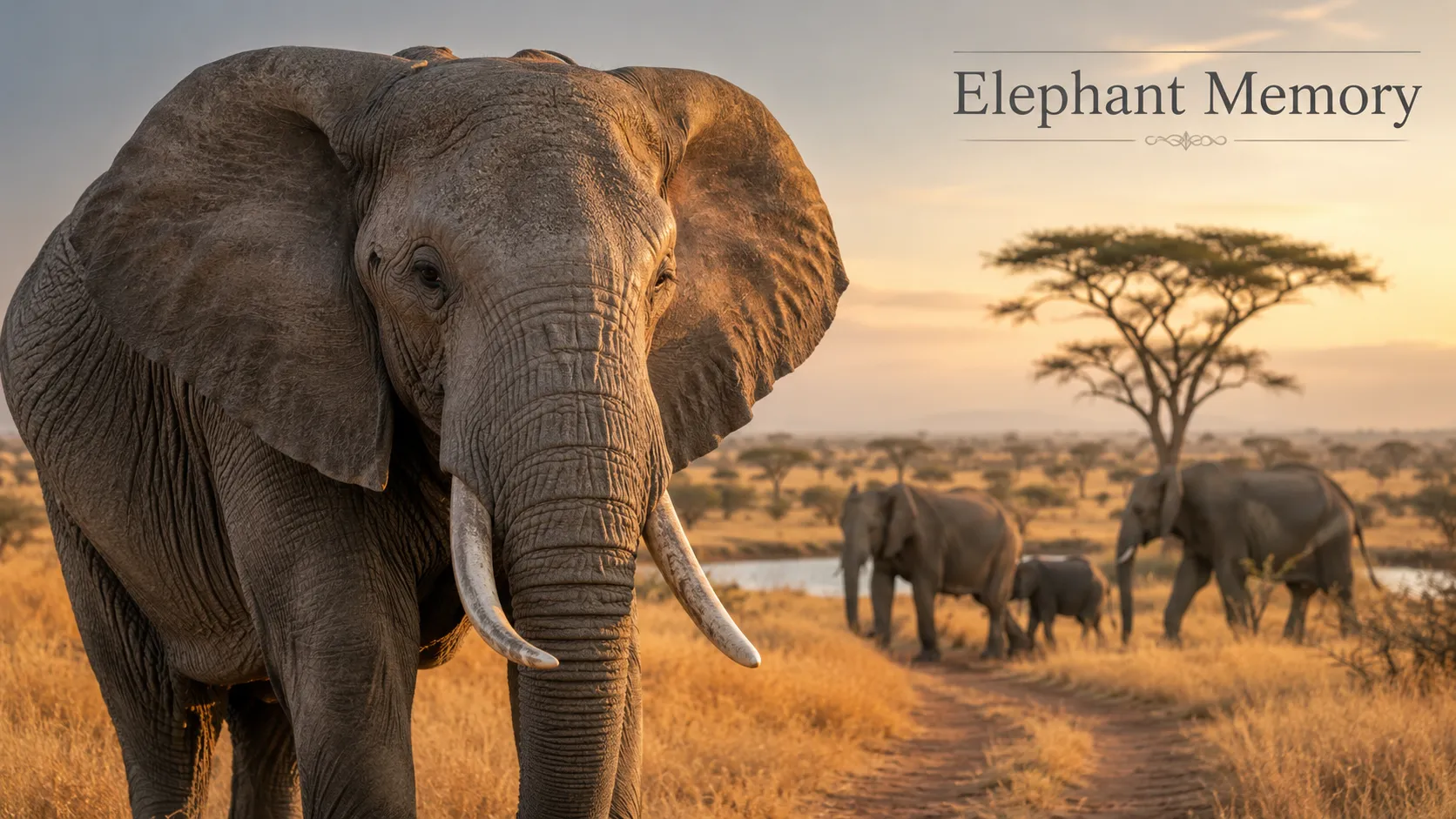
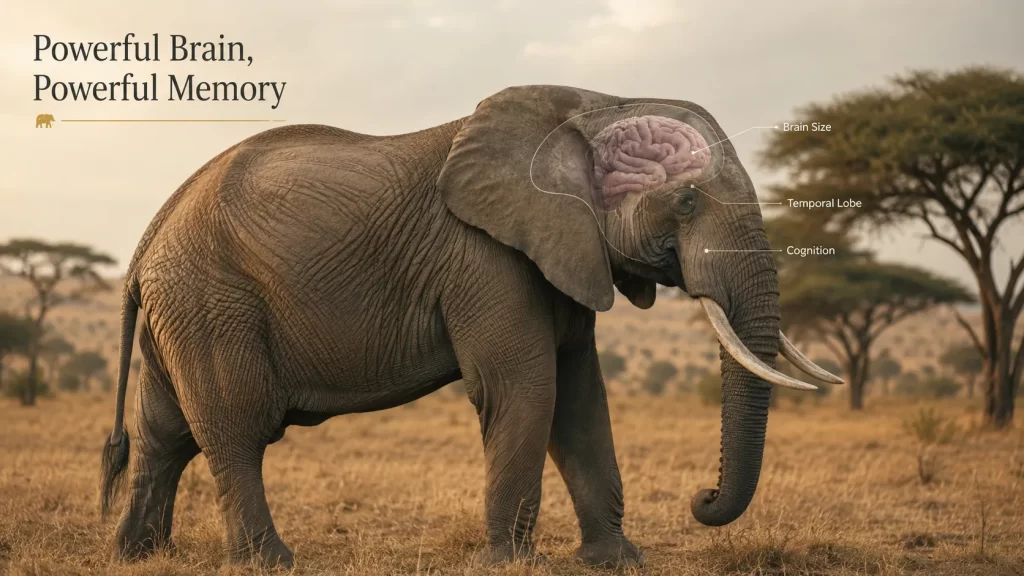
Elephant Memory is more than a popular saying. Science shows that elephants use memory to survive drought, recognize danger, track relatives, and navigate huge landscapes. Their brains support this skill in powerful ways. An elephant’s brain weighs about 4.5 to 5 kilograms, making it the largest brain of any land mammal. Its temporal lobes, which help process memory and social information, are especially large.
Researchers do not claim elephants remember everything forever. That would be a myth. Still, field studies show strong long-term memory in social, spatial, and survival contexts. Older matriarchs often guide families during stress because they carry years of experience. This matters in dry ecosystems, where a remembered water source can save calves. Elephant Memory, then, is not a cartoon idea. It is a practical survival tool shaped by evolution, long life, and complex social bonds.
What Makes Elephant Memory So Powerful?
Brain Size, Structure, and Social Pressure
Elephant Memory starts with a large, complex brain built for long lives. African and Asian elephants live in changing habitats, from forests to savannas. They must remember routes, water points, relatives, rivals, and threats. That pressure rewards animals that store useful information for years. Their elephant brain size gives them strong processing power, but size alone does not explain everything.
The elephant’s temporal lobe is a key clue. These lobes are linked with memory, sound, and social recognition. In elephants, they are so developed that they bulge outward. Scientists studying elephant cognition often connect this structure with long-term social memory. Elephants also live in fission-fusion societies. Family groups split and reunite, so each elephant must track many relationships across time.
Important memory demands include:
- Remembering seasonal water and food routes.
- Recognizing family members after long separations.
- Identifying dangerous humans or predators.
- Learning calls, smells, and social ranks.
- Following experienced matriarchs during drought.
Elephant Memory Studies in the Wild
Matriarchs, Drought, and Survival Data
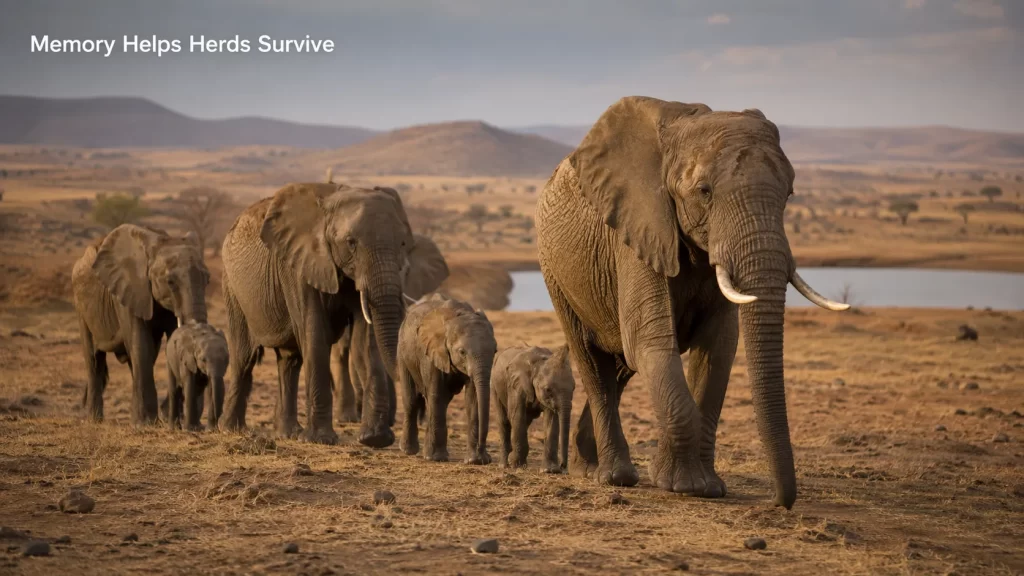
The strongest elephant memory studies come from long-term field research. One major study examined a severe 1993 drought in Tanzania’s Tarangire National Park. During nine months, 16 of 81 calves died in the three studied groups. That created a 20% calf mortality rate, compared with a normal non-drought rate of near 2%.
Researchers found that older females may help families survive extreme conditions. Their experience likely includes distant water sources and past drought responses. This does not prove an elephant “never forgets.” It shows that stored knowledge can shape real survival outcomes. Elephant Memory works like a living map, especially when younger animals lack experience.
Another study on leadership found that families with older matriarchs responded better to lion roars. The oldest females showed stronger judgment when danger increased. That supports the idea that memory improves decision-making over decades.
| Evidence Area | Exact Finding | What It Shows |
|---|---|---|
| Brain weight | About 4.5 to 5 kg | Large land-mammal brain supports complex cognition |
| 1993 drought study | 16 of 81 calves died | Memory may affect survival during crisis |
| Calf mortality | 20% during drought vs 2% normally | Harsh conditions expose leadership value |
| Human voice study | 35 voice examples used | Elephants classify human risk from sound |
| Social calls study | More than 100 elephants analyzed | Vocal memory supports social recognition |
How Elephants Remember Voices and Danger
Human Voices, Predators, and Social Learning
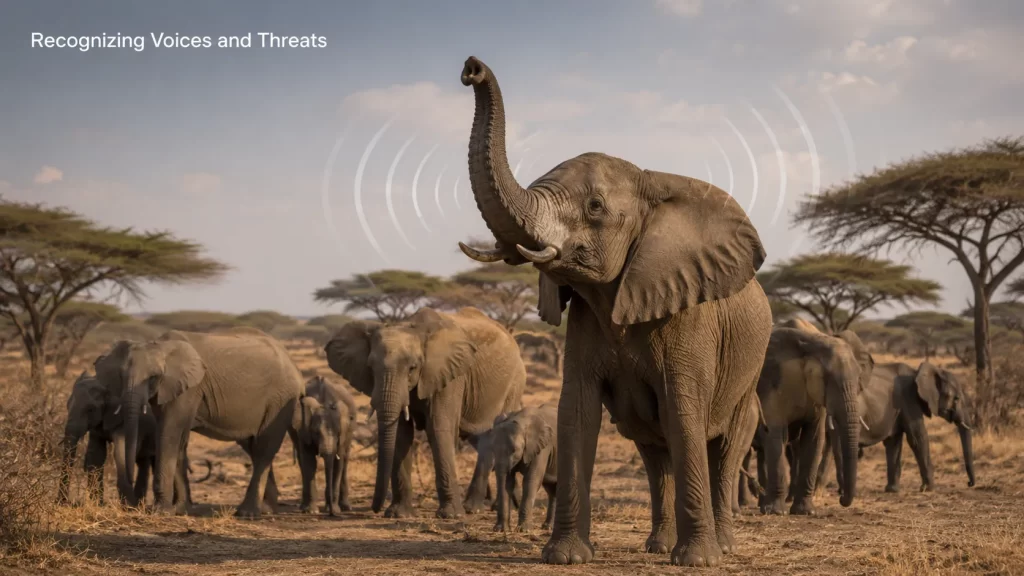
Elephant Memory also protects herds from danger. A 2014 study tested whether elephants could distinguish human voices by ethnicity, age, and gender. Researchers used 35 recorded voice examples from people around Amboseli National Park. Elephants reacted more strongly to voices linked with higher threat levels.
That finding shows advanced pachyderm intelligence. Elephants were not just hearing noise. They were sorting risk from sound details. In real life, this skill can reduce conflict. A herd that remembers dangerous voices or groups can move away before trouble begins.
Elephants also respond to predator cues. Lions threaten calves, and male lions are especially dangerous. Older matriarchs show better judgment when hearing lion roars, which suggests memory supports threat assessment. This type of Elephant Memory is not abstract. It helps families decide whether to bunch together, flee, or stay calm.
Social Memory and Elephant Cognition
Names, Calls, and Long-Term Bonds
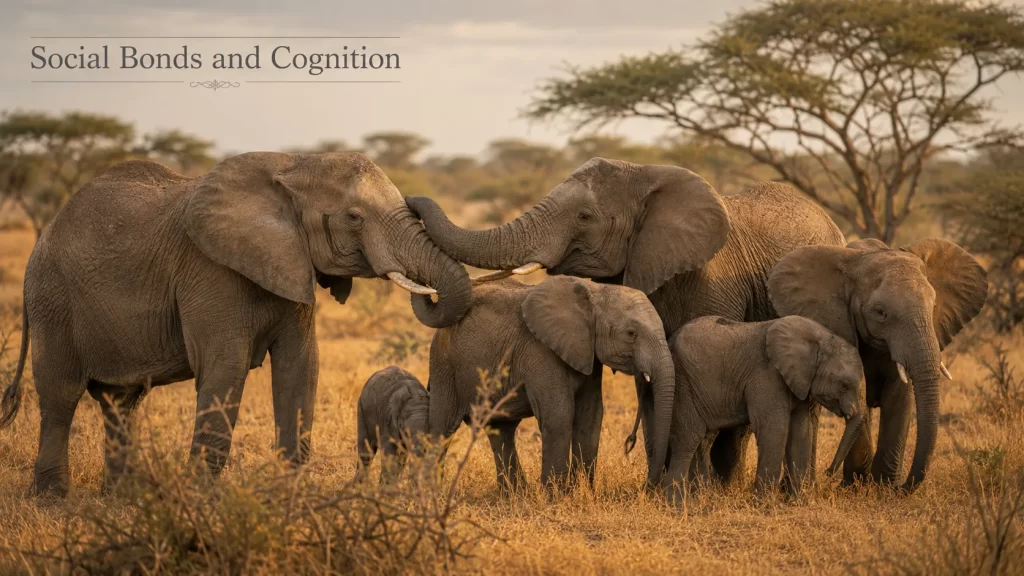
Elephants do not live simple social lives. They build layered relationships across mothers, calves, sisters, cousins, allies, and distant groups. This social complexity drives elephant cognition. In 2024, researchers studying wild African savanna elephants in Kenya found evidence that elephants may use name-like calls. They analyzed vocalizations from more than 100 elephants and tested playback responses with 17 elephants.
The results suggested elephants can direct calls toward specific individuals. That points to strong social memory. An elephant must know who is being addressed and remember that individual’s call pattern. This is not the same as human language. Still, it shows a deep level of social tracking.
Long-distance communication adds another layer. Elephant rumbles can travel across large spaces. Some reports describe elephants recognizing many other elephants by voice over long distances. In a fluid society, memory keeps social order from falling apart. Elephant Memory helps families reconnect after separation.
Spatial Memory: Routes, Water, and Food
Why Old Knowledge Matters in Harsh Landscapes
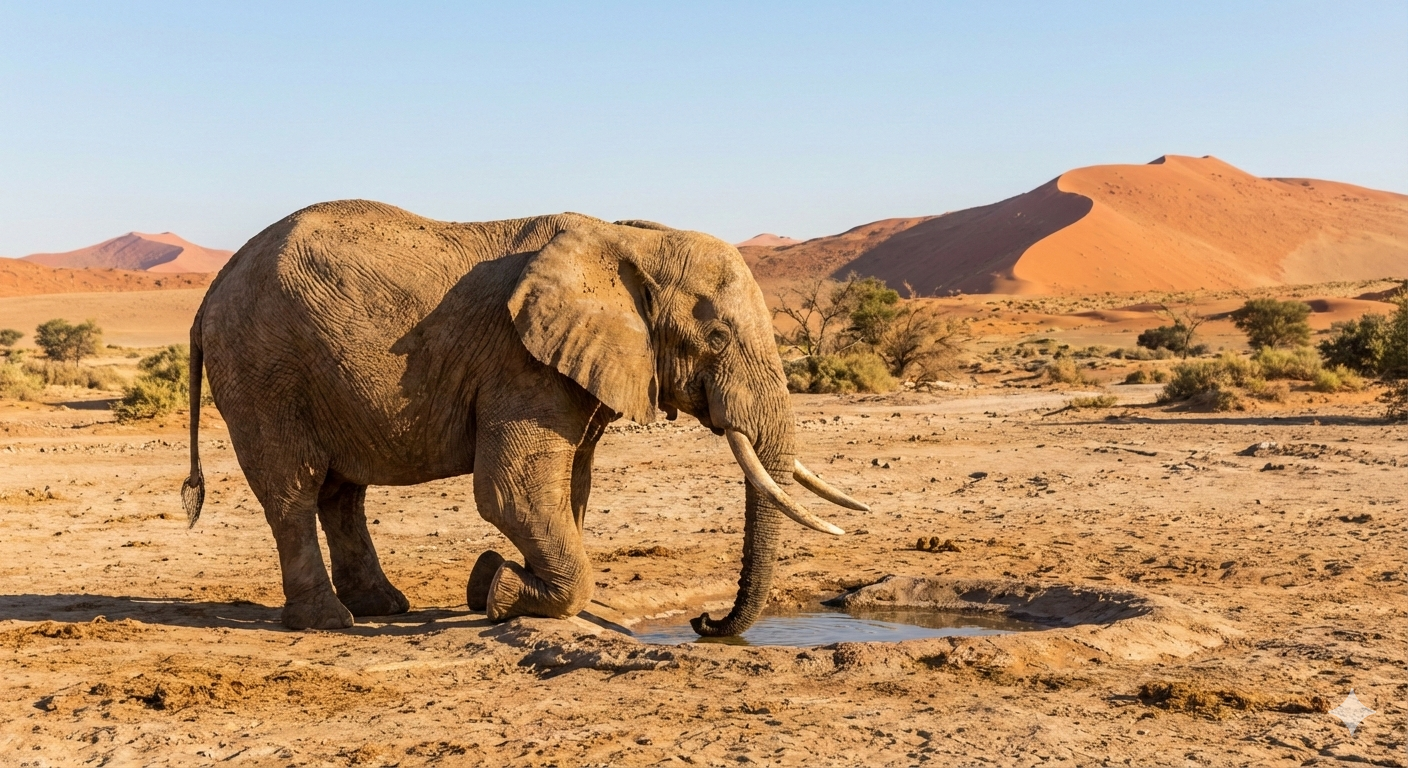
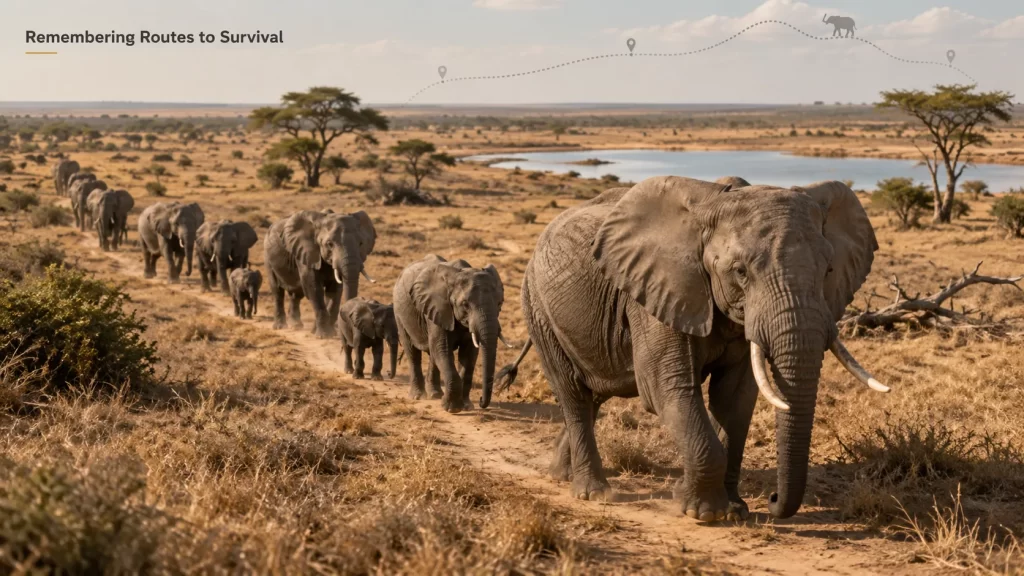
Elephant Memory becomes most visible during dry seasons. Elephants eat large amounts of vegetation and need regular water. When local food or water disappears, families must travel. A young elephant may know only recent routes. An older matriarch may remember paths used many years earlier.
This is why elephant conservation experts value older females. They are not just breeders. They are knowledge holders. Their memory can guide dozens of relatives through drought, famine, or human pressure. In landscapes affected by climate stress, that knowledge becomes even more important.
Spatial memory also reduces wasted energy. Elephants can weigh several tons, so long wrong turns cost calories and water. A remembered route to a seasonal river can protect calves and nursing mothers. These decisions show how Elephant Memory connects brain function with daily survival.
Is the “Never Forgets” Saying True?
Myth, Truth, and Scientific Balance
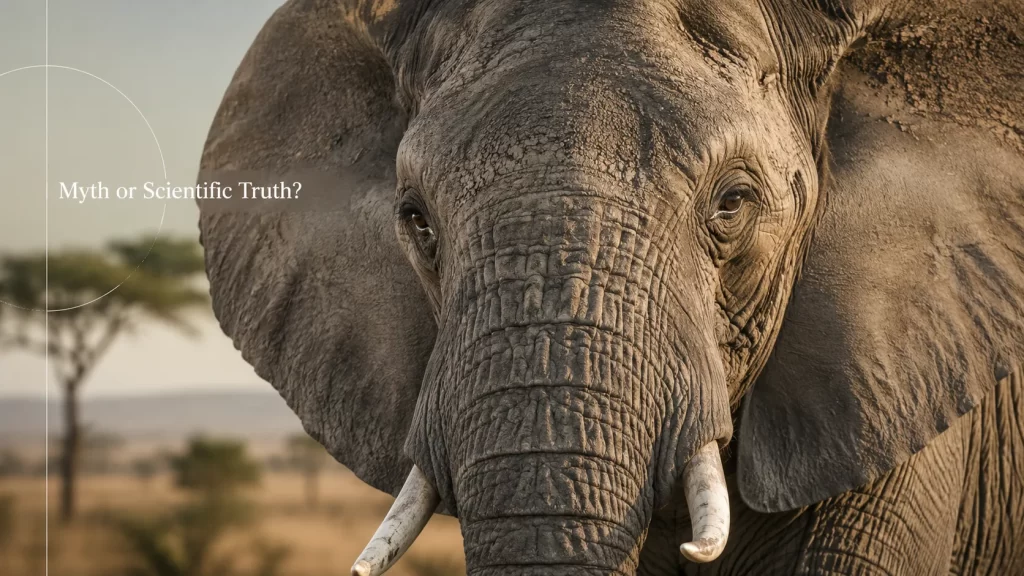
The phrase “an elephant never forgets” is not literally true. No animal stores every detail forever. Elephants can forget, misjudge, or fail to respond perfectly. Science supports a more balanced claim: elephants have exceptionally long-term memory in areas that matter most to survival.
This includes social memory, route memory, threat memory, and learned behavior. The saying likely became popular because elephants show clear recognition after long gaps. They may remember individuals, places, and danger cues for years. But researchers still need more controlled studies to measure the exact memory duration.
A 2025 review noted that elephant memory research connects behavior, cognition, and conservation. It also highlighted the need for more direct testing.
So, Elephant Memory is real, but it is specialized. It works best where life demands it.
Why Elephant Memory Matters for Conservation
Protecting Knowledge, Not Just Numbers
Conservation often focuses on population counts. Elephant Memory shows why age structure also matters. When poaching removes older females, herds lose more than individuals. They lose stored knowledge about routes, water, danger, and social bonds. Research on disrupted elephant groups found that removing adult females can weaken social cohesion.
This matters for human-elephant conflict, too. Elephants that remember farms, roads, fences, or hostile encounters may change movement patterns. Better planning can reduce repeated conflict. Wildlife corridors, safe water access, and protected migration paths all support learned movement.
Strong conservation should protect:
- Older matriarchs with long experience.
- Migration corridors between seasonal habitats.
- Water sources used during drought.
- Family groups are not only isolated animals.
- Long-term research sites that track behavior.
When we protect memory-rich herds, we protect cultural knowledge passed across generations.
Bottom Line
Elephant Memory is not magic, but it is remarkable science. Elephants use memory to recognize relatives, judge danger, follow routes, and survive drought. Their large brains, expanded temporal lobes, and complex societies all support this ability. Field data from drought, predator, and voice studies show that memory can affect real survival. The “never forgets” saying is too absolute, but it points toward a real truth. Elephants remember what matters, and that knowledge helps keep families alive. Protecting elephants means protecting the memories that guide them.