Table of Contents
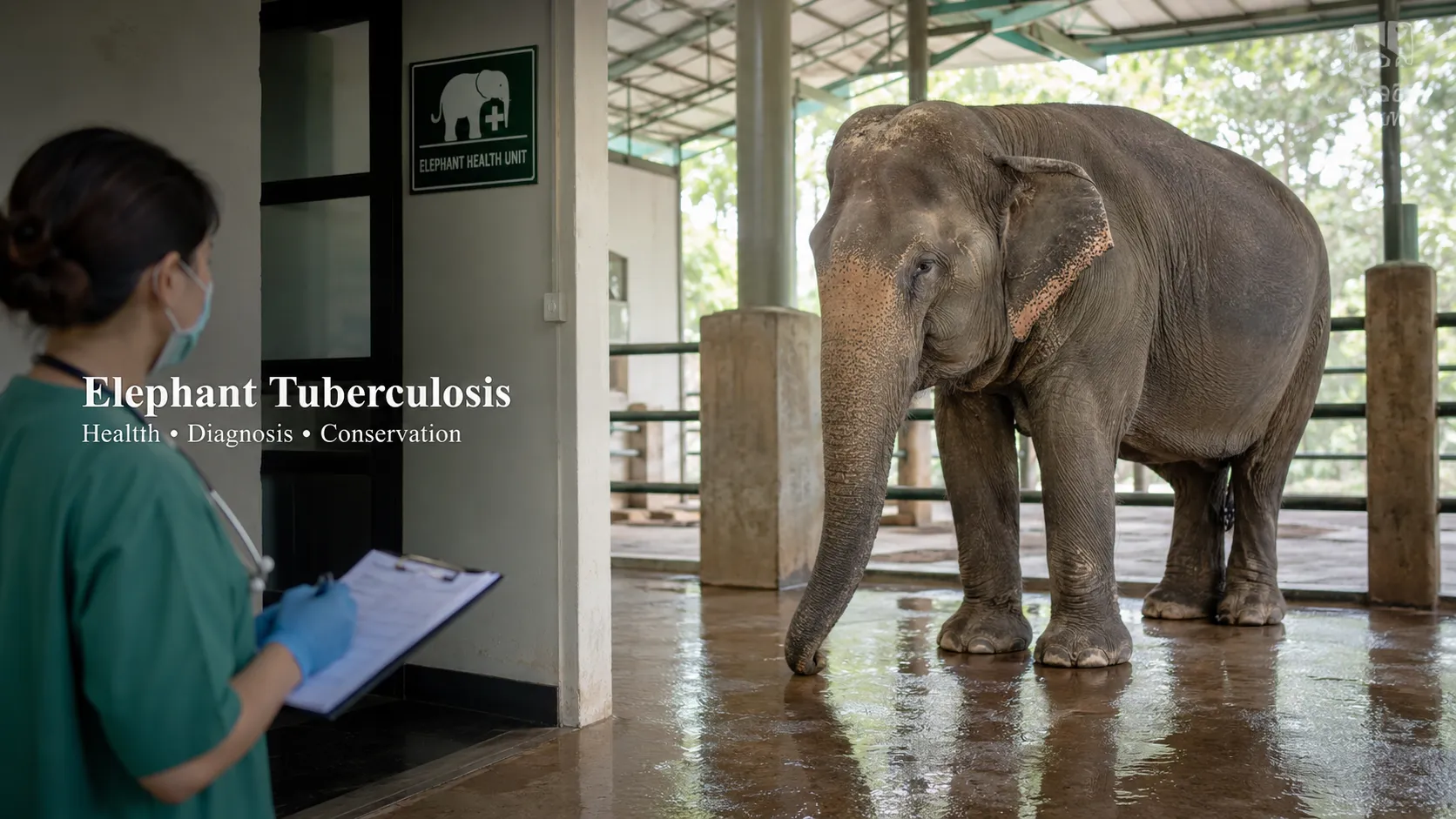
Elephant tuberculosis is one of the most serious infectious diseases affecting elephants in human care. It is usually linked to Mycobacterium tuberculosis, the same bacterium that causes most human TB. Elephants can also be infected by M. bovis, making this a clear One Health issue for animals, keepers, veterinarians, and nearby communities. Researchers describe TB in elephants as a re-emerging zoonotic disease, especially in captive and managed populations.
This disease matters because elephants are already conservation-sensitive animals. Asian elephants are endangered, with fewer than 52,000 left in the wild, while African forest elephants are critically endangered, and African savanna elephants are endangered. When elephant tuberculosis appears in zoos, sanctuaries, camps, or range-country programs, it affects welfare, breeding, transport, staffing, and public trust. It can also raise concerns at the captive-wild interface, where working elephants may share landscapes with wild elephants, rhinos, livestock, and people.
What Is Elephant Tuberculosis?
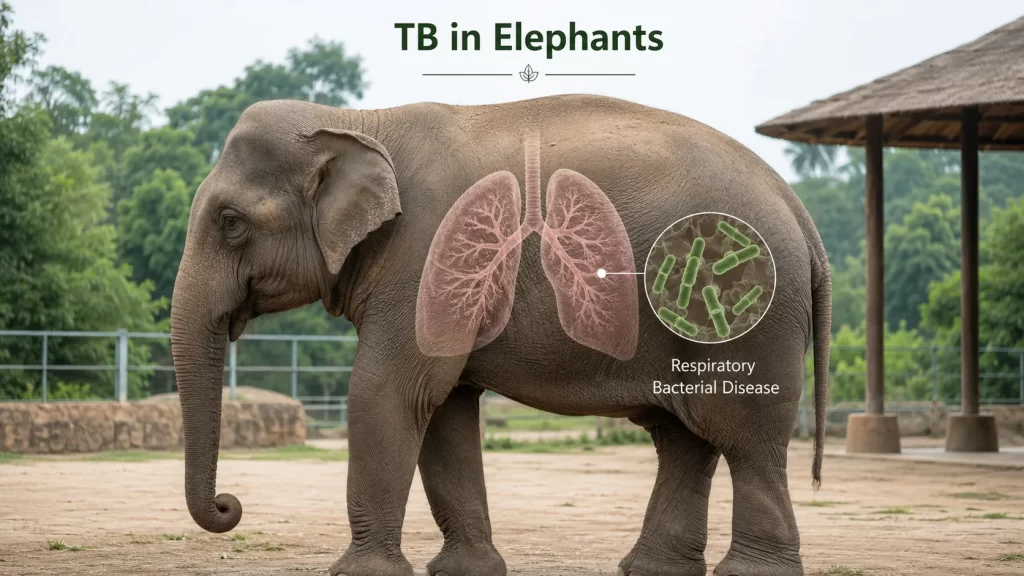
The Disease Behind TB in Elephants
Elephant tuberculosis is a chronic bacterial disease that most often affects the respiratory system. The main cause is Mycobacterium tuberculosis, often shortened to Mtb. Some reports also identify M. bovis, which belongs to the same bacterial complex. This group is often referred to as elephant mycobacterium in public discussions, though veterinarians use specific species names for diagnosis.
The disease can stay hidden for months or years. That creates a major challenge for elephant care teams. An infected elephant may look healthy while still carrying bacteria. In other cases, the disease becomes active and causes weight loss, weakness, coughing, trunk discharge, or reduced appetite. Because elephants are large, social, and long-lived, a single missed case can lead to prolonged monitoring periods. That is why TB in elephants requires structured testing, recordkeeping, and expert veterinary oversight.
Main Causes of Elephant Tuberculosis
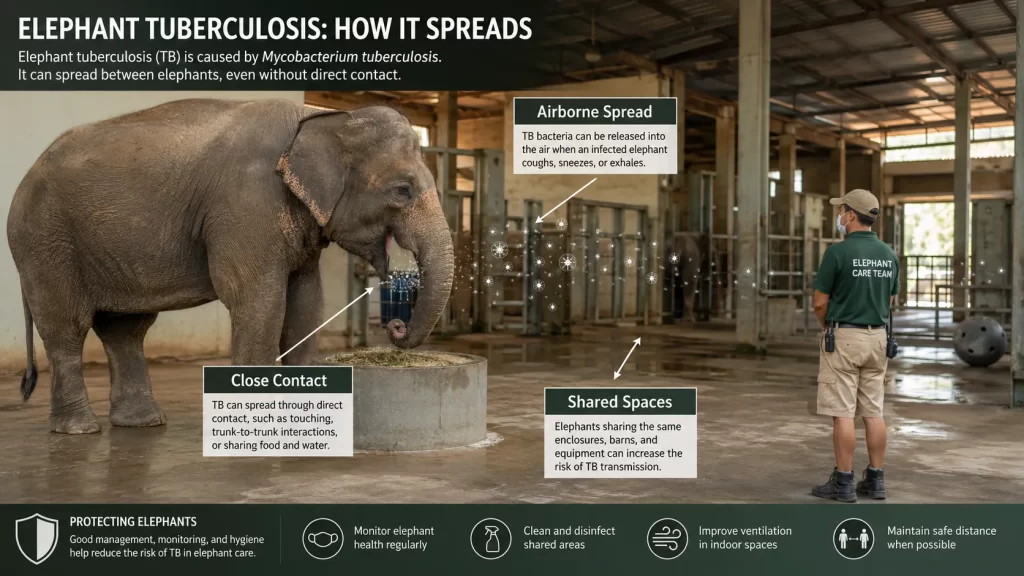
Human-to-Elephant Transmission
The strongest concern in many cases is close contact between elephants and people. Asian elephants have lived near humans for thousands of years, especially in logging, tourism, temple, and conservation settings. The 2017 elephant TB recommendations state that this long association likely helped explain infection risk in Asian elephants under human care.
TB spreads mainly through airborne particles from infected lungs. In elephant settings, risk can rise when keepers work near trunks, clean barns, perform close-contact training, or provide medical care. The risk grows when staff have long exposure times or work with infected elephants without strong respiratory protection. A 2022 systematic review found that elephant-to-human transmission risk increased with exposure duration and contact with infected elephants.
Elephant-to-Elephant Spread
Elephants are social animals, so close contact can support disease spread. They touch trunks, share water, use the same barns, and travel together. In managed herds, this makes isolation difficult. A single positive culture or strong serology result can affect the whole group.
Facilities reduce risk through quarantine, repeated testing, separate tools, airflow controls, and trained staff. These steps are not optional in high-risk cases. They protect elephants while keeping daily care safe. Without these measures, a zoo elephant disease problem can become a public health investigation.
Captive-Wild Interface Risks
The captive-wild interface deserves special attention. In Nepal and other Asian range countries, working elephants may enter national parks, tourism areas, and forest edges. One Nepal surveillance study noted that captive elephants can come into close contact with wild animals during conservation and tourism activities. Researchers warned that TB could threaten wild elephants, rhinos, and other susceptible species.
This matters because wild elephant populations recover slowly. Female elephants have long pregnancies and usually produce calves at long intervals. Any chronic disease that reduces survival or breeding success can add pressure to already fragmented populations. That is why elephant tuberculosis is not only a veterinary issue. It is also a conservation planning issue.
Symptoms of Elephant Tuberculosis
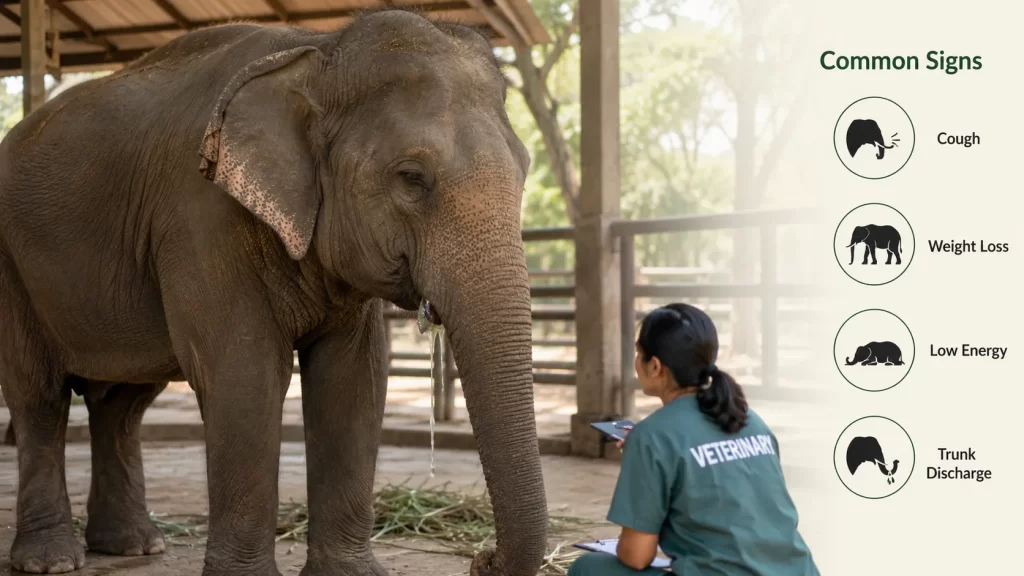
Early Signs Are Easy to Miss
Elephant tuberculosis often starts quietly. Early signs may be mild, vague, or absent. Care teams may first notice reduced energy, lower appetite, slight weight loss, or changes in behavior. These signs can look like stress, aging, dental pain, heat strain, or other infections.
Respiratory signs may appear later. These include coughing, wheezing, trunk discharge, abnormal breathing, or reduced exercise tolerance. Because elephants can mask illness, teams must track body weight, food intake, stool quality, activity, and social behavior. Daily records often reveal small changes before dramatic symptoms appear. This practical experience matters because early action can protect the whole herd.
Advanced Disease Signs
Advanced TB in elephants may cause a clear decline. Affected elephants may lose weight, eat less, rest more, or show chronic respiratory distress. Some may develop swollen lymph nodes or persistent discharge. Others may die before diagnosis if the disease remains hidden.
This disease can also resemble other conditions. An elephant respiratory infection may come from bacteria, viruses, dust, allergens, poor ventilation, or underlying lung disease. That is why symptoms alone cannot confirm TB. Veterinarians need testing, history, exposure records, and sometimes repeated sampling. A careful diagnosis prevents both missed infections and unnecessary panic.
How Elephant Tuberculosis Is Diagnosed
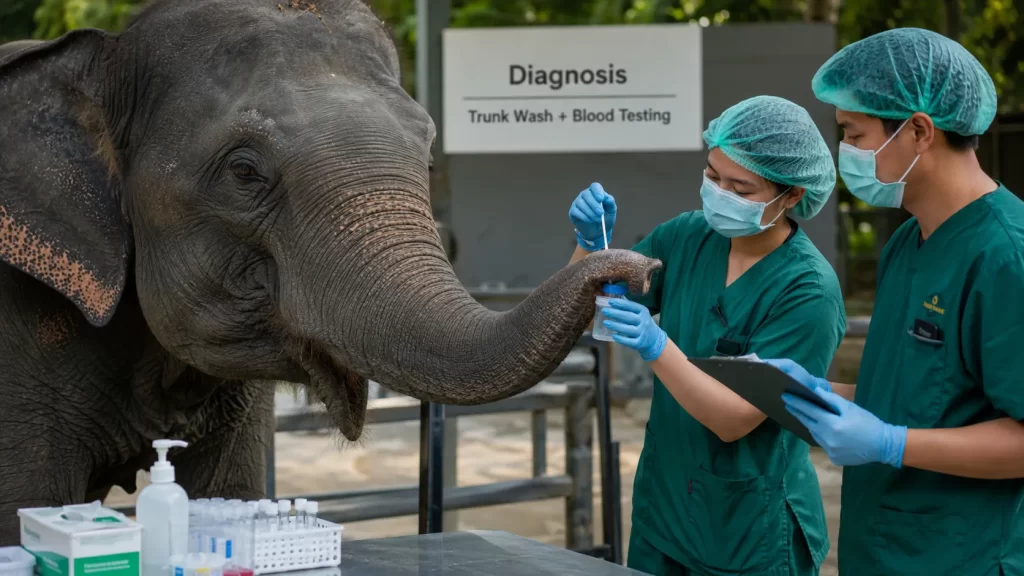
Trunk Wash Culture
The trunk wash is a key diagnostic tool. In this test, sterile fluid is placed into the trunk, recovered, and tested for mycobacteria. Culture can confirm infection, but it can miss cases because elephants may shed bacteria intermittently.
Older and current guidance has treated culture as central because it identifies the organism. However, culture may take weeks, and one negative result does not always rule out disease. That is why veterinarians often combine trunk wash culture with blood-based tests, imaging where possible, and exposure history.
Blood Tests and Serology
Serology looks for immune responses to TB proteins. It can help identify elephants that may have been exposed before culture becomes positive. A 2024 report supported increased trunk wash surveillance when an elephant has an exposure history and becomes seropositive.
Serology is useful, but it is not perfect. A positive result may require confirmation, and a negative result does not always remove risk. Strong programs repeat testing over time. They also separate screening decisions from final diagnosis. This balanced approach helps facilities act early without overreacting to one result.
Key Data on Elephant Tuberculosis
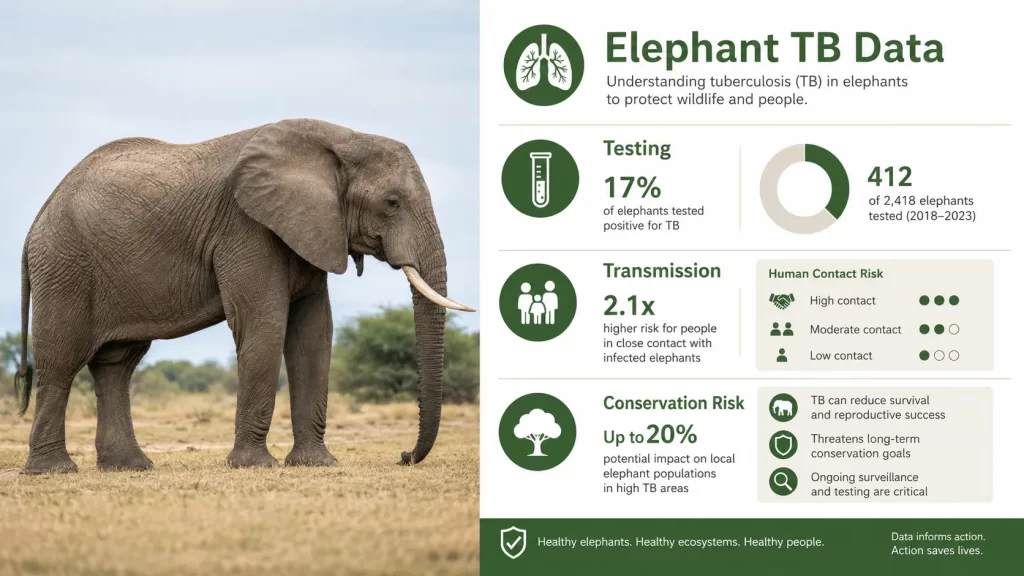
| Topic | Exact Data Point | Why It Matters |
|---|---|---|
| Oregon zoo outbreak | 3 bull elephants had active TB | Shows how one facility can face herd-level risk. |
| Human contacts in that outbreak | 118 people identified | Shows public health investigations can become large. |
| Contacts evaluated | 96 of 118, or 81% | Shows follow-up requires strong coordination. |
| Latent TB cases found | 7 close contacts | Shows that zoonotic risk cannot be ignored. |
| Reported elephant TB prevalence | 0% to 23.33% | The risk varies widely by setting and exposure. |
| Asian elephants in the wild | Fewer than 52,000 | Shows that disease affects an endangered species. |
| African forest elephants | 135,690 estimated in 2025 assessment | Shows improved counting, but the species remains critically endangered. |
Public Health and Zoo Elephant Disease Risk
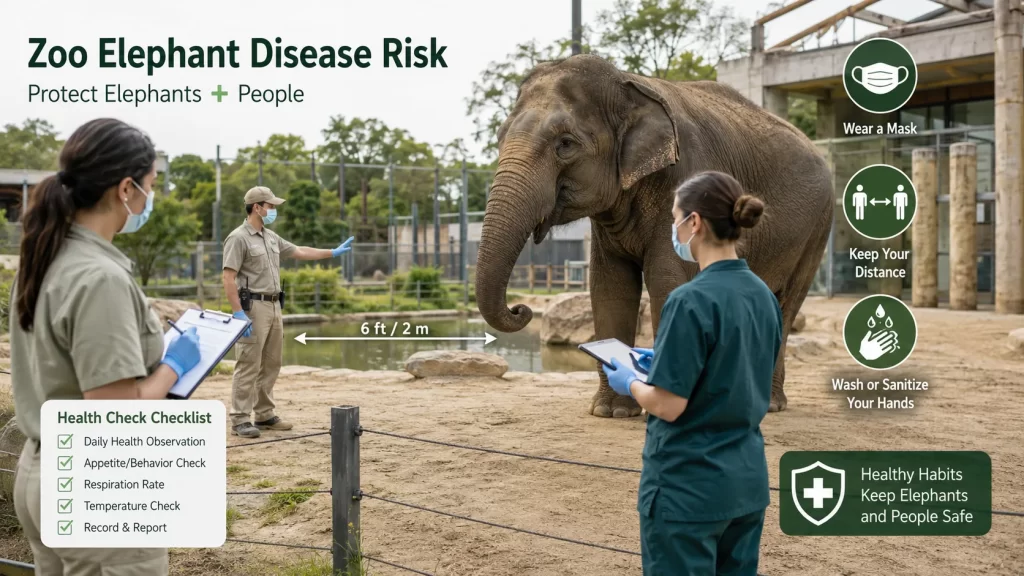
Why Keepers and Veterinarians Need Protection
Elephant tuberculosis can move between species, so worker safety matters. The CDC investigated a 2013 Oregon zoo outbreak involving three elephants and 118 human contacts. Seven close contacts were found to have latent TB infection after evaluation.
This does not mean every elephant with TB will infect people. It means close-contact facilities need clear protocols. Staff should use respiratory protection during risky procedures, follow testing schedules, and report symptoms early. CDC workplace recommendations from an elephant TB evaluation included respiratory protection and updated TB surveillance for exposed staff and volunteers.
Managing Visitor Risk
Visitor risk is usually lower than keeper risk because visitors have shorter contact. However, facilities still need barriers, ventilation, signage, and trained staff. Close public interactions, trunk feeding, photo sessions, and small indoor viewing spaces deserve special review.
Good elephant programs avoid fear-based messaging. They explain that TB is manageable when teams test, isolate, treat, and monitor correctly. Clear communication protects public trust. It also helps people understand that TB in elephants is a serious disease, not a reason to blame the animals.
Treatment and Management
Long Treatment Requires Expert Care
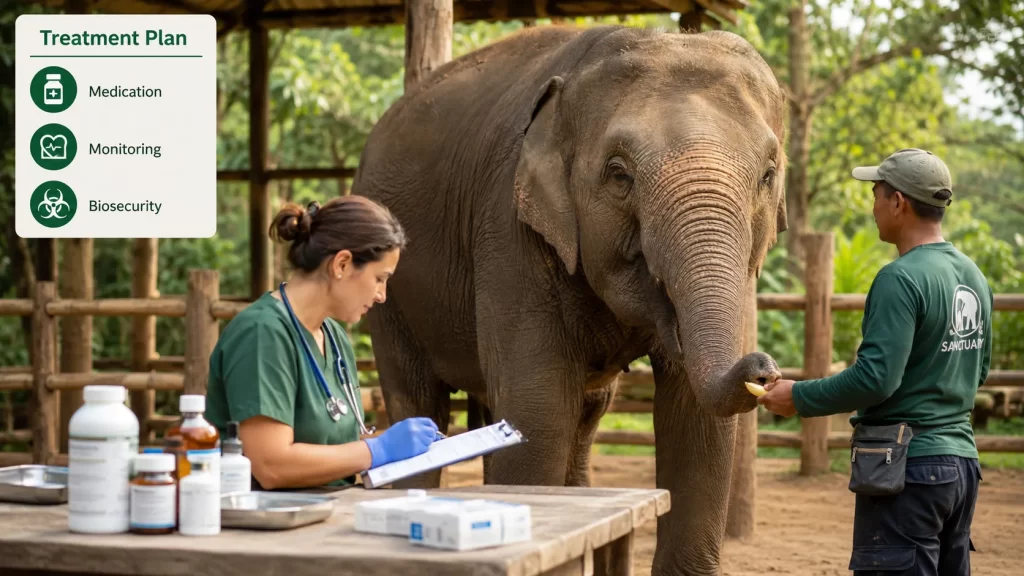
Treating elephant tuberculosis is complex. Elephants need long treatment plans, careful dosing, repeated testing, and close monitoring for side effects. Drugs used for TB can affect appetite, liver function, and behavior. Because elephants are massive animals, medication delivery also becomes a practical challenge.
Care teams often use food-based dosing, trained voluntary behaviors, and regular bloodwork. Treatment decisions should involve veterinarians with elephant and TB experience. A plan must also cover isolation, staff protection, waste handling, and records. This level of detail prevents treatment from becoming inconsistent or unsafe.
Prevention Works Better Than Crisis Response
Prevention starts before the disease appears. New elephants should enter quarantine and complete TB screening before joining a herd. Staff should complete health checks, especially if they work in high-TB regions or close-contact roles. Facilities should also review ventilation, barn design, cleaning routines, and emergency plans.
Strong prevention includes:
- Annual or risk-based TB testing for elephants.
- Quarantine for new arrivals and exposed animals.
- Staff TB screening and respiratory protection.
- Separate tools for suspect or confirmed cases.
- Clear communication with public health officials.
- Long-term records for symptoms, tests, treatment, and contacts.
These steps lower risk without disrupting care more than needed. They also support better welfare and safer conservation work.
Conservation Implications of Elephant Tuberculosis
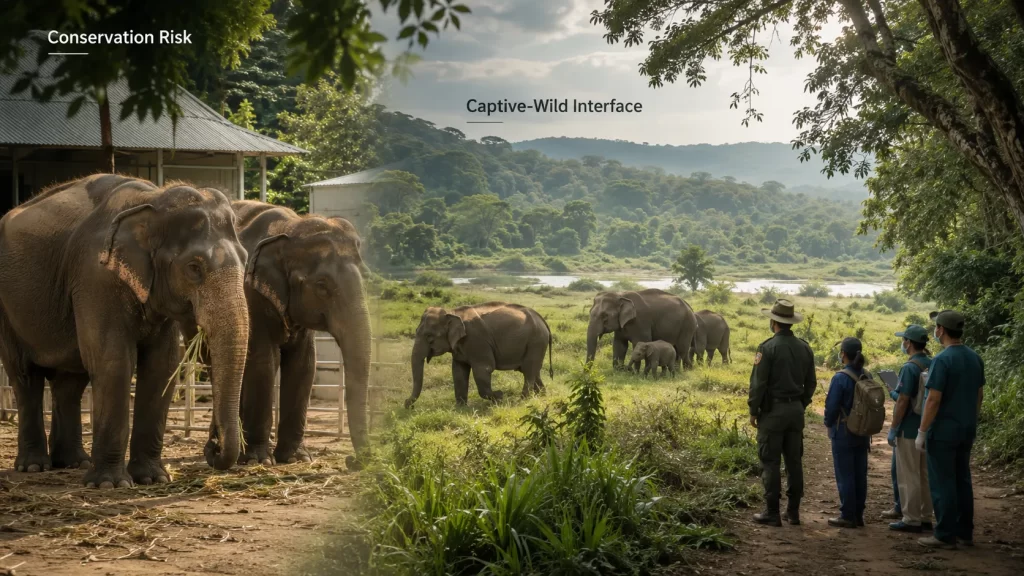
Disease Can Affect Small Populations
Elephant tuberculosis becomes more serious when populations are small, fragmented, or slow-breeding. Asian elephants already face habitat loss, conflict, and population isolation. African forest elephants remain critically endangered despite newer estimates identifying 135,690 individuals.
A chronic disease can reduce breeding, movement, and survival. In captive populations, TB can also affect transfers between zoos or sanctuaries. That matters because managed breeding programs rely on careful movement of animals. If the disease blocks transport, genetic planning becomes harder. Over time, health problems can reduce the resilience of already limited populations.
Wild Elephants Need Biosecurity Too
Wild elephant conservation often focuses on poaching, habitat loss, and conflict. Disease should sit beside those threats, especially where captive elephants enter wild areas. Working elephants used in patrols, tourism, or festivals may connect people, livestock, and wild animals.
Conservation teams should treat elephant tuberculosis as a landscape health issue. That means testing managed elephants near protected areas, reducing risky contact, and sharing data between veterinarians, park staff, and public health teams. A One Health approach protects elephants and people together.
Expert View: What Good Elephant TB Programs Do
Practical Experience From the Field
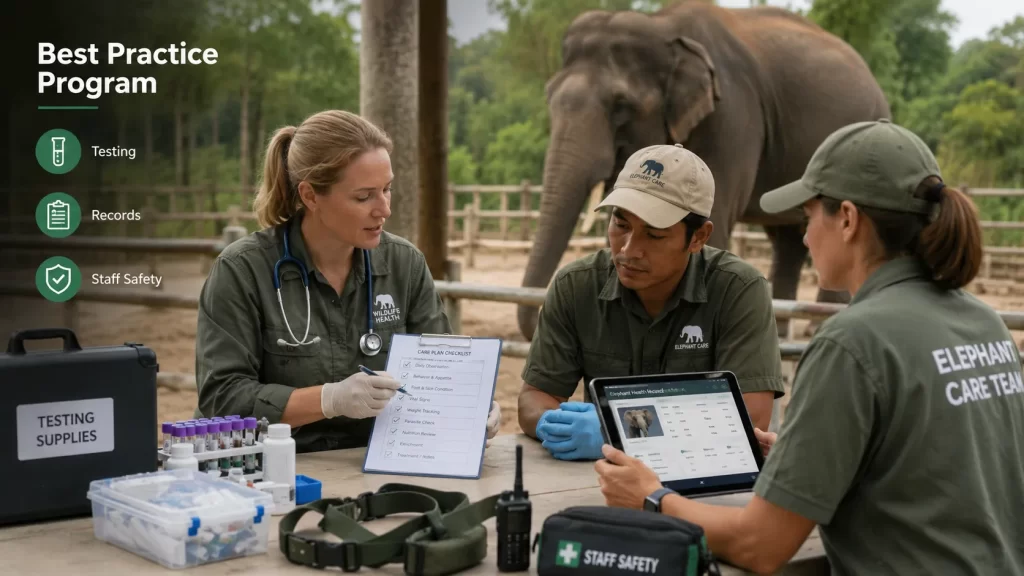
Strong elephant programs do not rely on one test or one yearly inspection. They build daily observation into disease control. Keepers track small changes in appetite, trunk behavior, breathing, weight, and mood. Veterinarians combine those observations with formal testing and exposure history.
Expert care also requires honest reporting. Facilities should not hide suspect cases because public reaction may be difficult. Delayed reporting can worsen risk, increase costs, and damage conservation credibility. Transparent action shows that elephant welfare and human health can work together.
Best-Practice Takeaway
The best programs treat elephant tuberculosis as preventable, testable, and manageable. They train staff, involve public health experts, follow written protocols, and update plans when science changes. They also avoid blaming elephants for a disease often linked to long human contact.
This balanced view is important. Elephants need protection from disease, but they also need public support. When facilities explain risks clearly, they help visitors understand why biosecurity, quarantine, and medical training matter.