Table of Contents
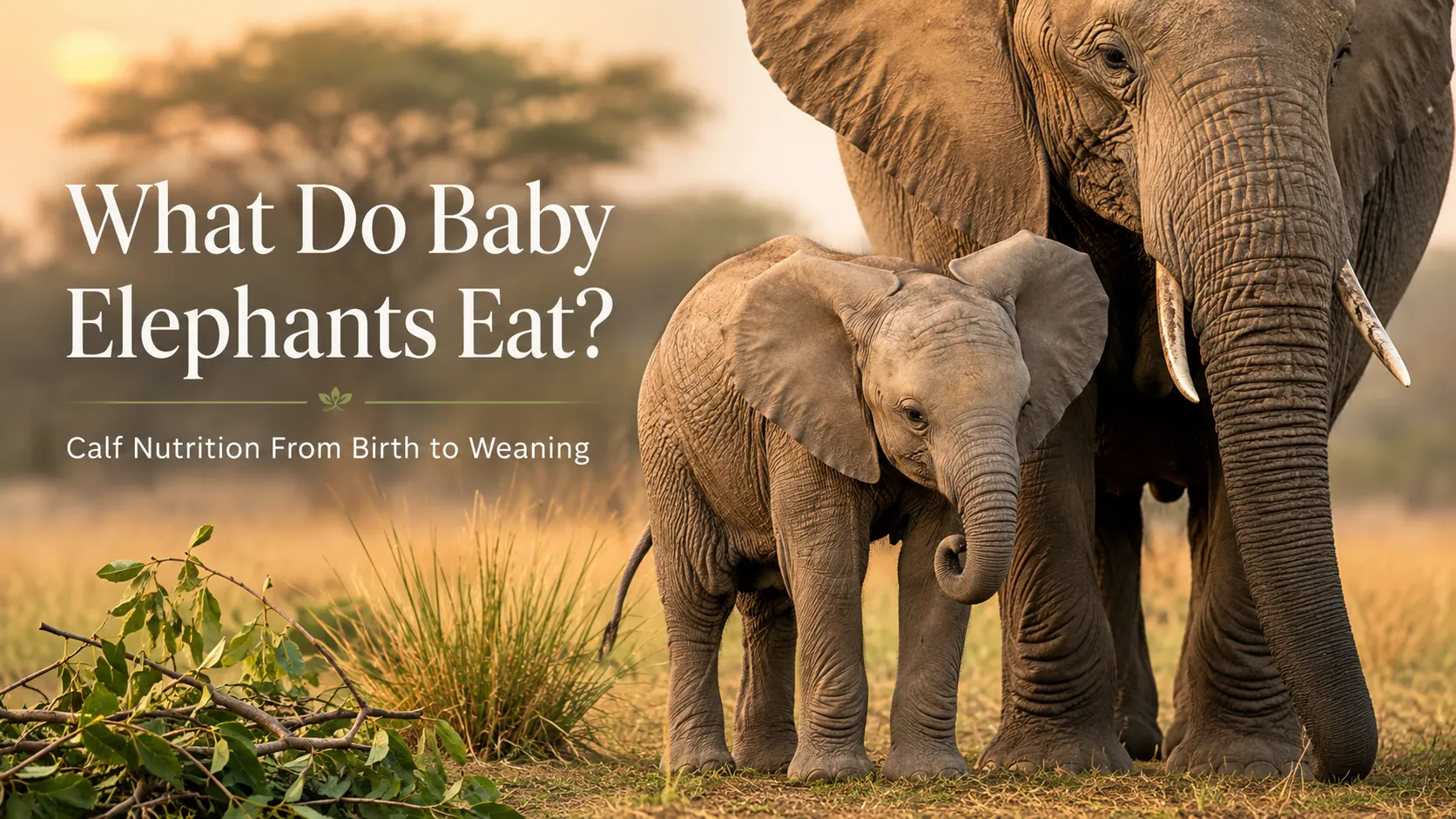
What do baby elephants eat? Baby elephants eat their mother’s milk first, then slowly add grasses, leaves, bark, fruits, roots, and water. For the first months, elephant milk drives nearly all growth. It gives calves fat, protein, minerals, antibodies, and energy needed for rapid development. Research on elephant milk shows it changes during lactation, with fat and protein rising as the calf grows. African elephant milk samples averaged 13.0% fat, 5.6% crude protein, and 3.1% sugar, with calves gaining about 0.8 kg per day during the first six months.
Baby elephants do not switch to plants overnight. Their trunks, teeth, gut, and feeding skills develop step by step. Calves begin testing grasses and leaves at about 4 to 6 months, but milk remains central for more than 2 years. In natural herds, some calves may suckle until 4 or 5 years old, especially when the mother allows it.
What Do Baby Elephants Eat at Birth?
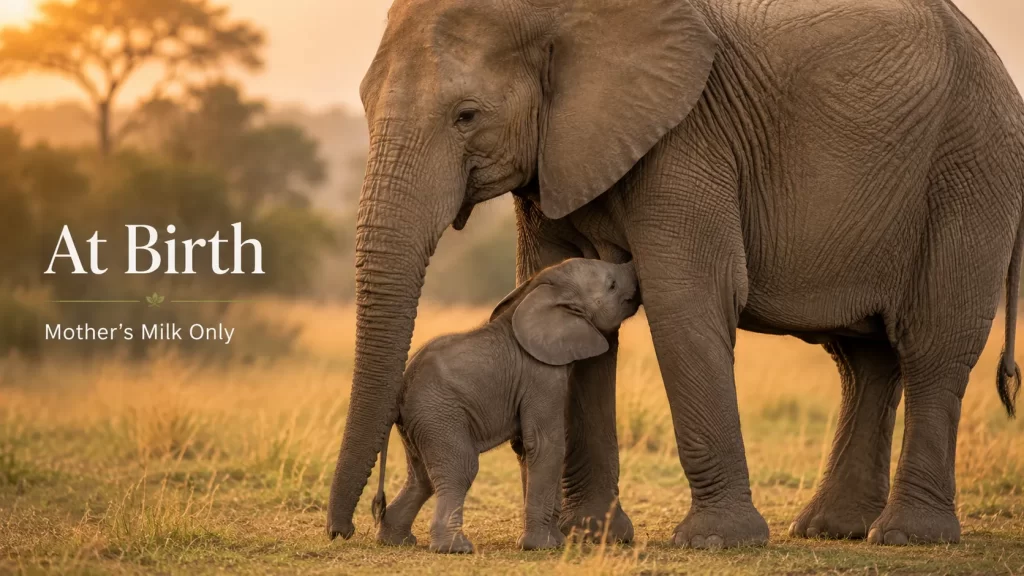
Newborn Calves Depend on Elephant Milk
Newborn calves eat only elephant milk because their bodies need dense, easy nutrition. A calf usually stands soon after birth and finds the mother’s teats by touch, smell, and sound. Its trunk is still clumsy, so it drinks with its mouth, not the trunk. This early feeding period builds strength, immunity, and coordination fast.
Elephant calves need frequent nursing because they grow quickly. A newborn African elephant can weigh around 200 to 260 pounds, while Asian calves often weigh 150 to 250 pounds. The mother’s milk supports muscle, bone, brain, and immune development. This makes the early elephant calf diet simple but extremely important.
Key newborn feeding facts:
- Main food: mother’s milk.
- Feeding method: mouth suckling.
- Trunk role: balance, touch, and exploration.
- Main needs: energy, hydration, antibodies, and fat.
- Risk factor: weak calves can dehydrate quickly without milk.
When Do Baby Elephants Start Eating Plants?
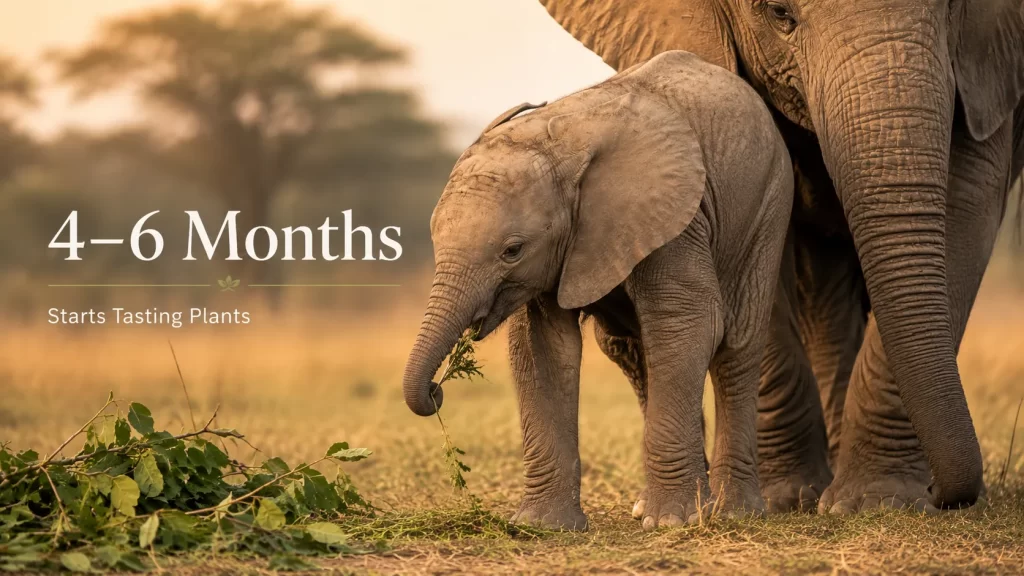
Solid Foods Begin as Practice, Not Replacement
Baby elephants start tasting plants at about 4 to 6 months, but they still depend on milk. At this stage, they pick up grasses, leaves, twigs, and soft plant parts. Most of this feeding is practice because trunk control is still developing. The calf learns what to eat by watching its mother and herd.
The shift to plants also teaches social feeding behavior. Calves often place their trunks near older elephants’ mouths to smell or sample food. ElephantVoices describes trunk-to-mouth contact as a behavior calves use during nourishment and weaning. This helps young elephants learn food choices from experienced herd members.
| Calf Age | Main Food | Feeding Skill | Nutrition Role |
|---|---|---|---|
| Birth to 3 months | Mother’s milk | Mouth suckling | Full nutrition and hydration |
| 4 to 6 months | Milk plus plant tasting | Trunk practice | Early gut and skill development |
| 6 to 12 months | Milk, grasses, leaves | Better trunk control | Mixed diet begins |
| 1 to 2 years | Milk plus more plants | Stronger chewing | Plants add more calories |
| 2 to 5 years | Mostly plants, some milk | Adult-like feeding | Baby elephant weaning completes |
What is in an elephant calf’s diet?
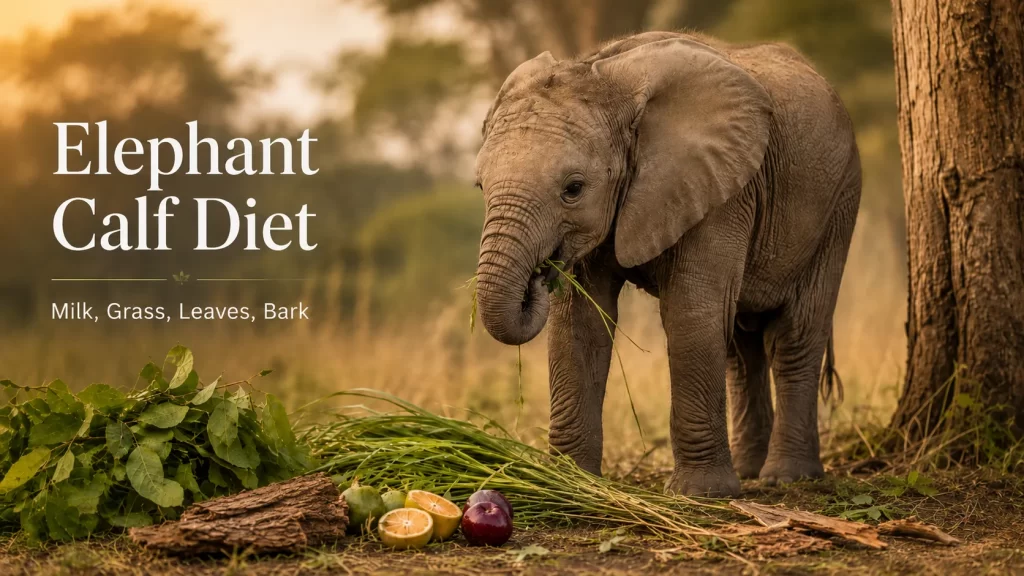
Milk, Plants, Water, and Gut Learning Matter
A healthy elephant calf’s diet includes milk first, then vegetation and water. Young calves eat soft grasses, tender leaves, fruits, bark strips, roots, and small branches. In the wild, the exact diet depends on habitat, season, rainfall, and plant availability. African savanna calves may sample grasses early, while forest calves often encounter more browse and fruit.
Water becomes important as plant intake increases. Calves learn to drink with their trunks after better coordination develops. By about 9 months, many calves improve mouth, trunk, and foot coordination. After 1 year, they can feed, drink, and groom far more independently.
Calves also learn through herd movement. They follow mothers to feeding grounds, waterholes, shade, and mineral-rich soils. This daily experience shapes elephant calf development beyond calories alone.
How Does Baby Elephant Weaning Work?
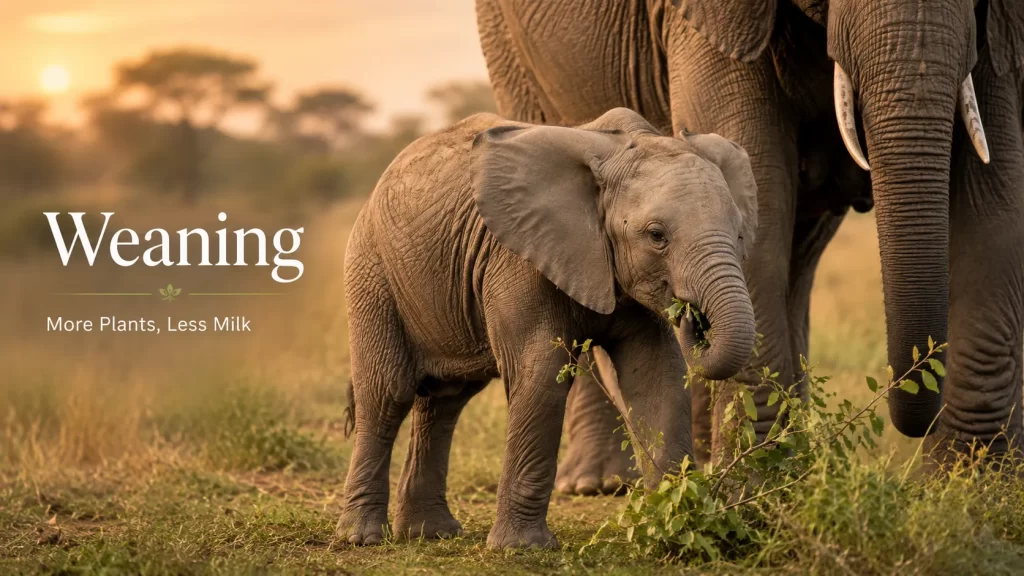
Weaning Is Slow, Social, and Flexible
Baby elephant weaning is a gradual process, not a fixed event. Many calves remain milk-dependent for the first 2 years. They may still suckle for 4 or 5 years in natural conditions. Mothers often reduce access slowly, especially when a younger calf is born.
Weaning also includes behavior changes. Mothers may block nursing attempts with a leg, body movement, or by walking away. ElephantVoices records these “reject-suckle” behaviors in calf nourishment and weaning contexts. This shows weaning is guided by both nutrition and social boundaries.
In orphan care, weaning may finish around 24 to 30 months, depending on growth and feeding ability. Care teams reduce milk while increasing forage and concentrate foods. That schedule must match body condition, stool quality, weight gain, and behavior.
Why Is Elephant Milk So Important?
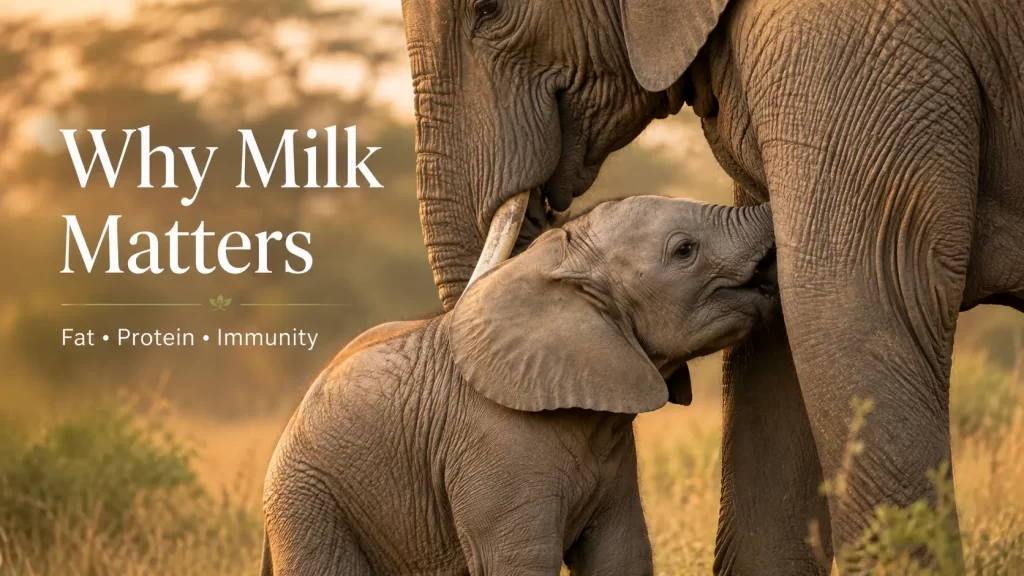
Elephant Milk Changes as Calves Grow
Elephant milk is not the same from birth to weaning. Early milk supports immunity and hydration. Later, milk becomes richer in fat and protein, which supports a larger body size and stronger bones. One study found elephant milk solids rise from about 10% to 13% early in lactation to 17% to 21% later.
This changing milk profile explains why calves cannot simply eat plants early. Their gut, teeth, and trunk skills are not ready. Milk gives stable nutrition while the calf learns adult feeding. Good nutrition also supports play, walking endurance, temperature control, and social learning.
For orphan calves, formula choice matters. Research on young Asian elephants found that goat milk was not suitable, while yak milk may be a better supplemental option. That finding highlights how specialized elephant calf nutrition can be.
Bottom Line
Baby elephants eat their mother’s milk first because it fuels fast growth and protects fragile calves. Plants enter the diet slowly as trunk control, teeth, and gut function improve. By asking what do baby elephants eat, we see that calf nutrition is more than food. It is also learning, bonding, movement, and herd guidance. From birth to weaning, the best diet supports both body growth and social development. That is why elephant calf care requires patience, data, and experienced observation.
FAQs About What Do Baby Elephants Eat
What do baby elephants eat in the first year?
Baby elephants eat mostly their mother’s milk in the first year. They begin tasting grasses, leaves, bark, and fruit around 4 to 6 months. Milk still provides most calories, hydration, and immune support during this stage.
When does baby elephant weaning start?
Baby elephant weaning starts when calves eat more plants and nurse less often. This usually begins after the plant tasting starts. Many calves are not fully weaned until after 2 years, and some suckle longer.
Can baby elephants drink cow’s milk?
Baby elephants should not receive regular cow’s milk without expert formulation. Elephant milk has a different nutrient balance. Orphaned calves need specialist care, controlled formulas, and close veterinary monitoring.