Table of Contents
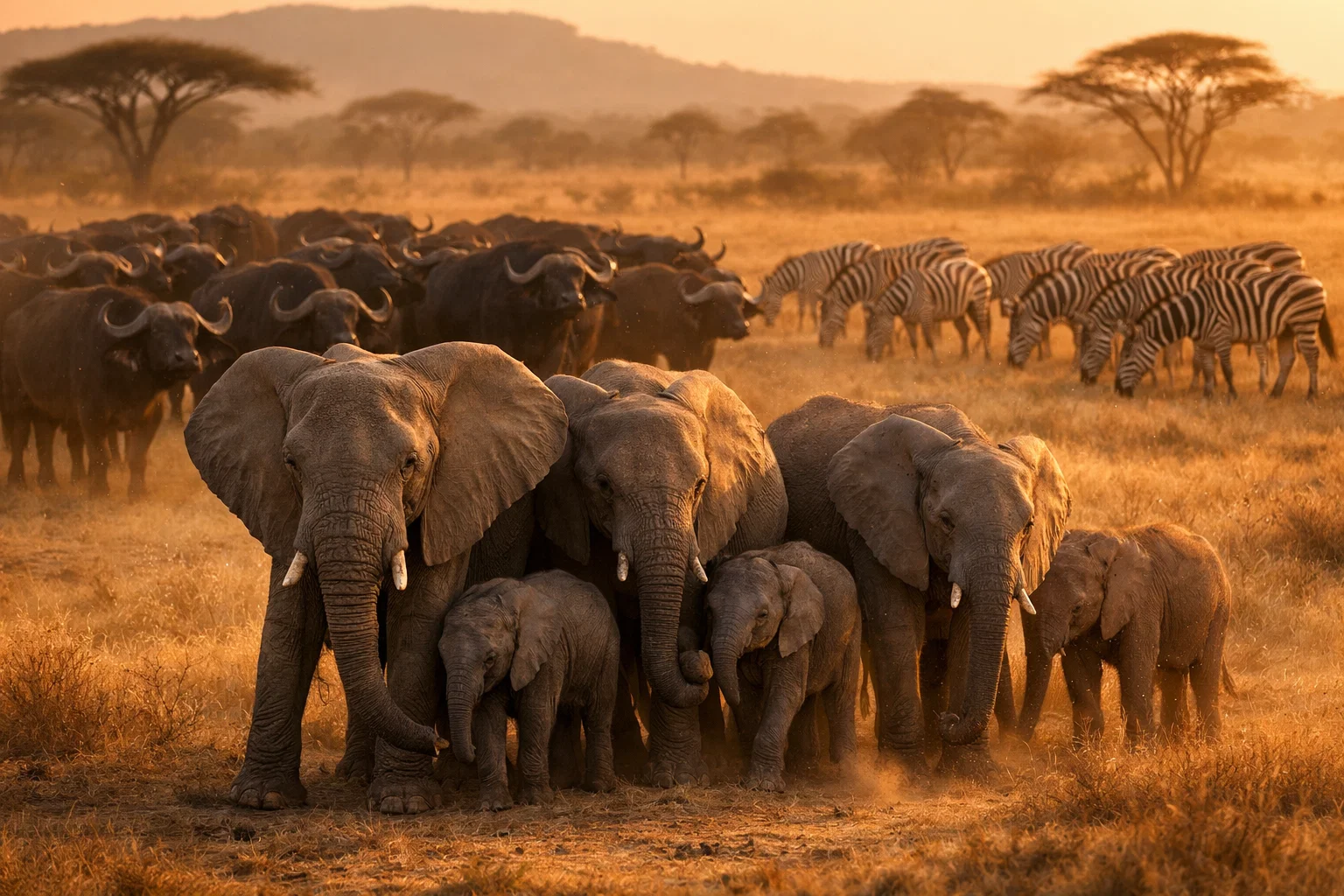
Understanding how elephants protect calves from predators reveals one of the most advanced social defense systems in the animal kingdom. Elephants rely on cooperation, memory, and coordinated behavior to safeguard their young. In African savannas and Asian forests, calves face threats mainly from lions, hyenas, crocodiles, and occasionally large predators targeting vulnerable newborns.
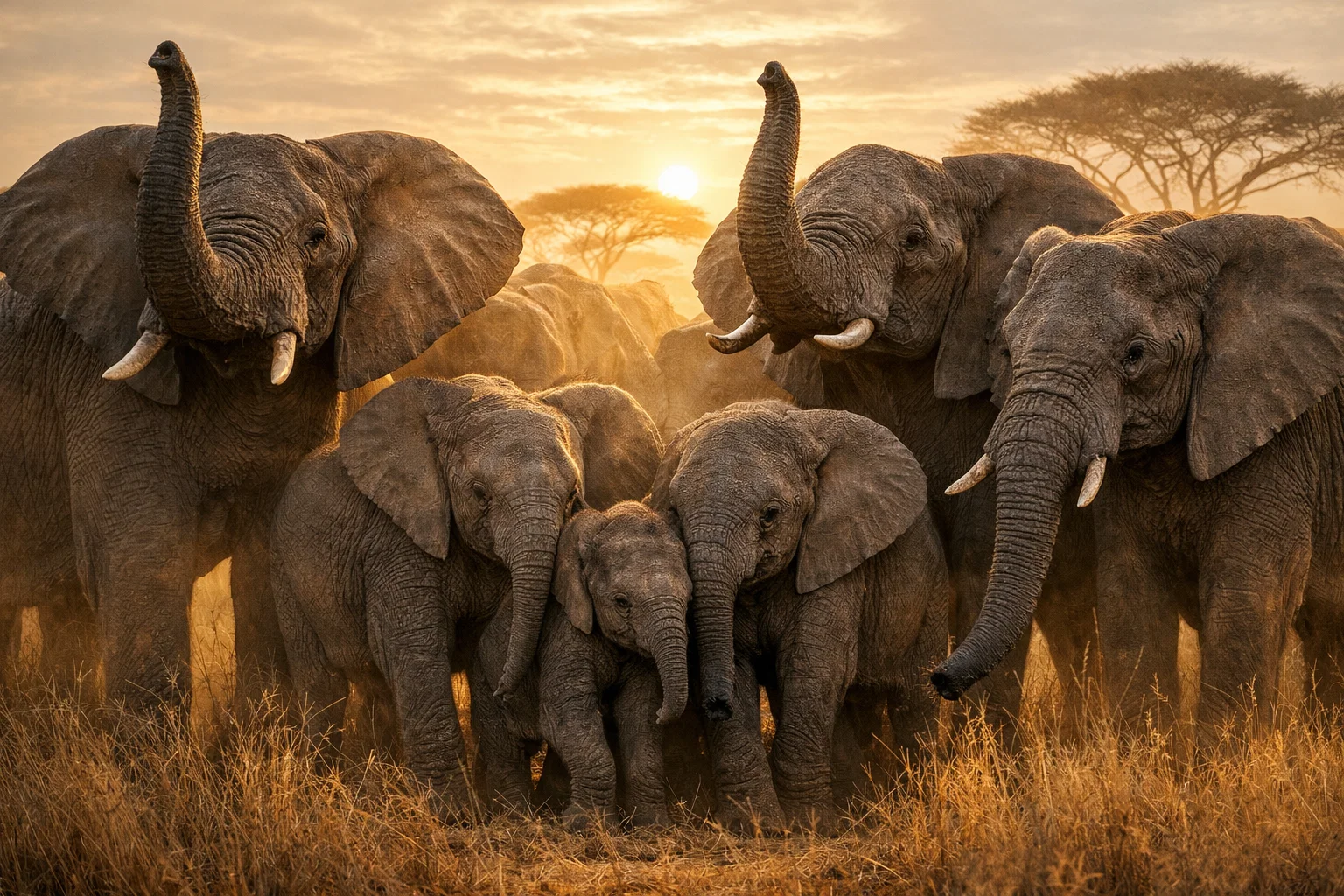
Elephant calves weigh about 200–260 pounds at birth and depend heavily on adults during their first years. Calves stay in the center of the herd for nearly 90% of daily movement time. Adult females form defensive circles, communicate through low-frequency rumbles, and react quickly to danger signals.
These strategies explain how elephants protect calves from predators across diverse ecosystems. The herd’s unity dramatically increases survival rates for young elephants in the wild.
Herd Structure: The First Line of Defense
Matriarch Leadership and Decision-Making
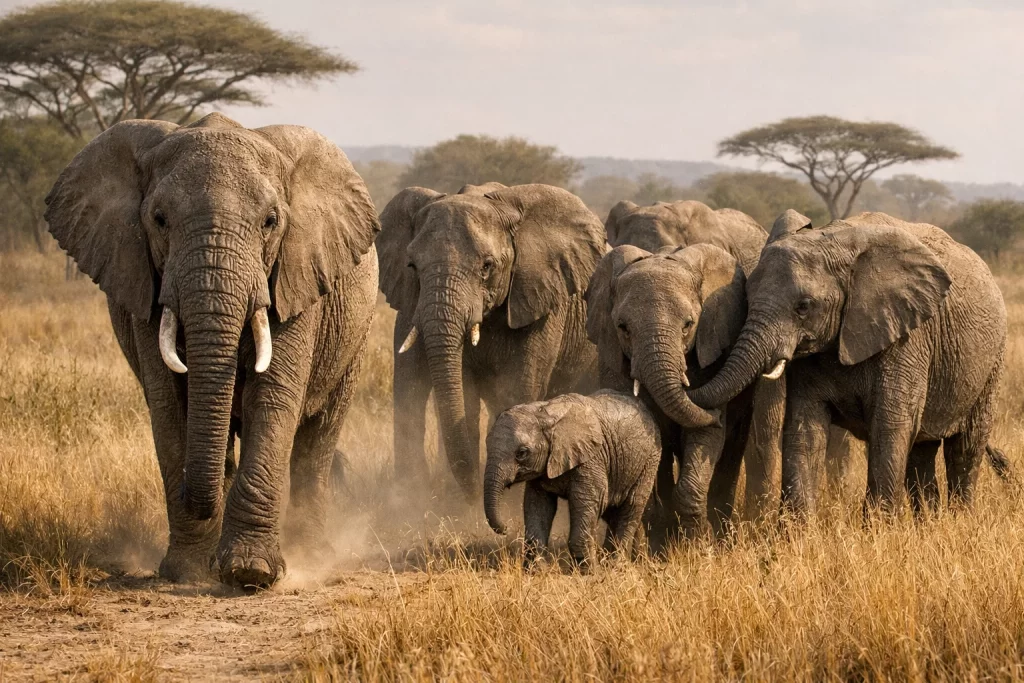
Elephant herds revolve around a matriarch, usually the oldest female. She can be over 50 years old and holds decades of environmental knowledge.
This knowledge helps determine travel routes and watering times. By avoiding high-risk areas during predator activity peaks, the herd lowers calf exposure. When danger appears, the matriarch immediately signals the group using infrasonic rumbles that travel over two miles. This leadership is a key reason why elephants protect calves from predators so effectively.
Allomothering: Shared Calf Protection
Female elephants practice “allomothering,” where other females help guard and raise calves. A single calf may receive protection from four to six adult females simultaneously.
This system allows the biological mother to feed or drink while others watch the calf. Younger females also gain parenting experience through this cooperative care. Calves remain within one body length of at least one adult female 95% of the time during the first year. This tight protection greatly reduces predator opportunities.
Defensive Formations Against Predators
Protective Circle Formation
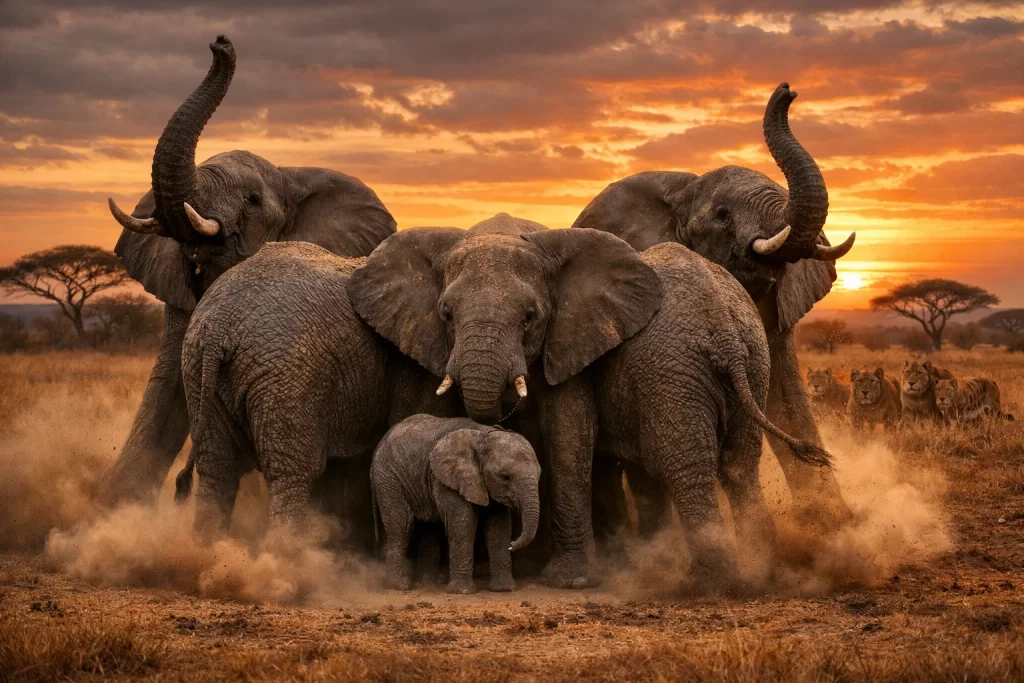
When predators approach, elephants form a defensive ring. Adults stand outward while calves move safely into the center.
This formation allows the herd to face threats collectively. Large females, weighing up to 7,000 pounds, create a physical barrier that predators rarely challenge. Lions typically abandon attacks once elephants organize into this formation. Observations from Tsavo National Park show lions successfully attack elephant calves in fewer than 1% of encounters involving full herds.
Charging and Intimidation Displays
Elephants often rely on intimidation before physical conflict. Adults trumpet loudly, flap their ears, and kick dust toward predators.
These displays make the herd appear larger and more threatening. If predators remain nearby, elephants may perform a coordinated charge. Speeds can reach 15–20 mph during these short bursts. Predators usually retreat before contact occurs. This aggressive response reinforces how elephants protect calves from predators in open landscapes.
Communication Signals That Warn the Herd
Infrasonic Communication
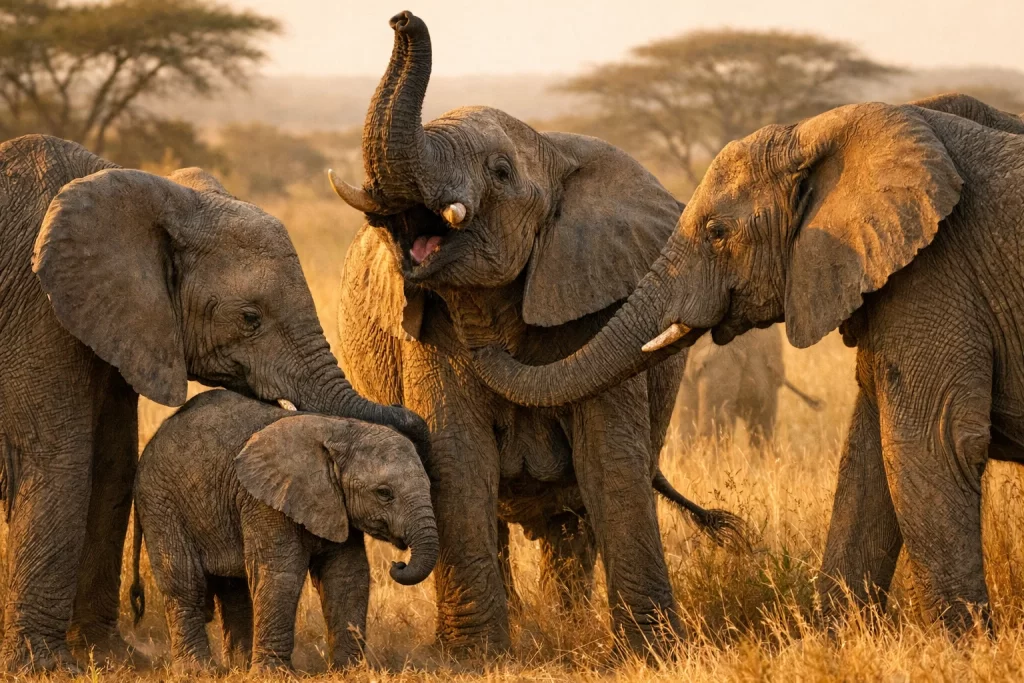
Elephants communicate using infrasonic rumbles below human hearing. These sounds travel long distances through air and ground vibrations.
A rumble warning spreads quickly across the herd. Even elephants several hundred meters away respond instantly. Calves react to these signals within seconds. Rapid communication keeps the herd synchronized during predator threats.
Visual and Physical Signals
Besides sound, elephants rely on body language. Raised trunks, stiff ears, and sudden stops indicate potential danger.
Calves learn to interpret these signals early in life. Within months, young elephants instinctively move closer to adult protectors during alerts. Physical touch also plays a role. Mothers often guide calves with their trunks or bodies toward safer positions.
Predator Threats to Elephant Calves
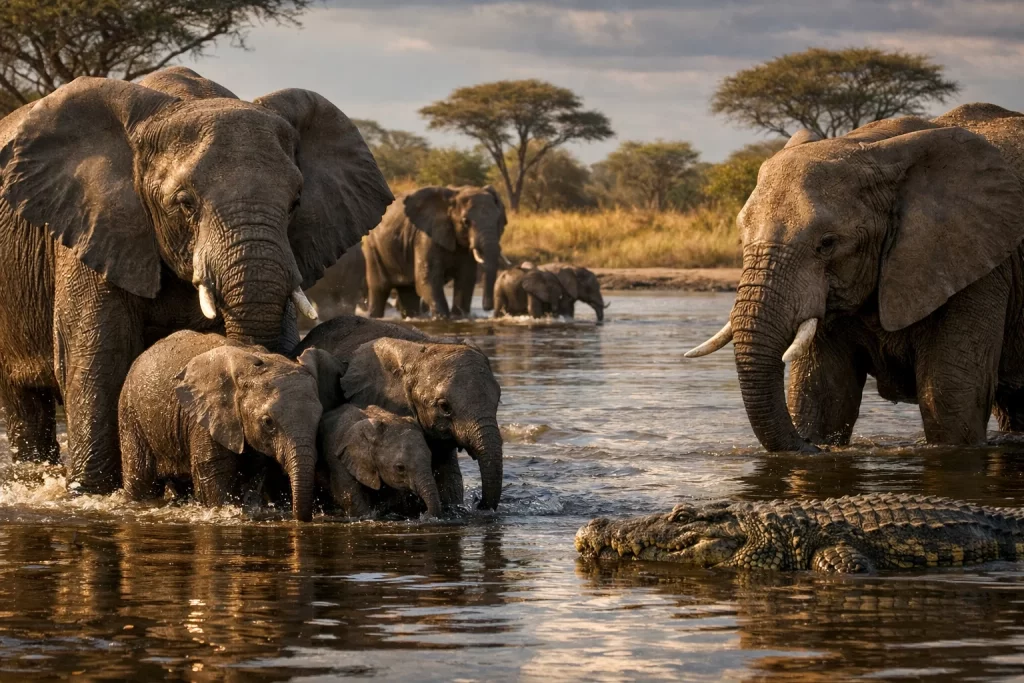
Elephants have few natural predators. However, calves remain vulnerable during their first two years.
Major threats include:
- Lions: Coordinated lion prides sometimes target isolated calves.
- Spotted hyenas: Opportunistic attacks occur during drought conditions.
- Nile crocodiles: Risk appears mainly at river crossings.
- Humans: Poaching and habitat pressure remain the biggest threats.
Fewer than 2% of wild elephant calf deaths result from natural predators. Human-related pressures still cause significantly higher mortality rates.
Discover how animal intelligence and problem-solving in wildlife reveal surprising survival strategies across the natural world.
Predator Interaction Comparison
| Predator | Typical Attack Method | Calf Risk Level | Herd Response |
|---|---|---|---|
| Lions | Group ambush at night | Moderate | Defensive circle and charge |
| Hyenas | Opportunistic pack attack | Low | Loud intimidation displays |
| Crocodiles | River ambush | Low | Adult shielding and rescue |
| Humans | Poaching or conflict | High | Herd stress and migration |
Learning and Memory in Calf Protection
Social Learning Among Young Elephants
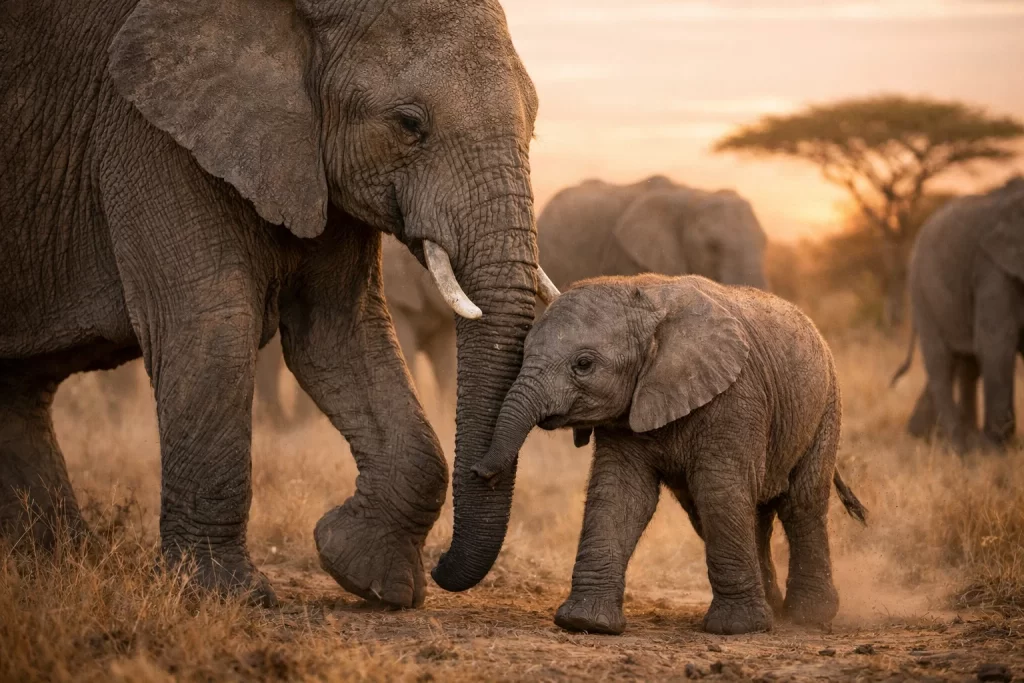
Calves do not simply rely on adults. They gradually learn survival behaviors by watching herd responses.
By age two, calves recognize predator scents and warning signals. They also practice defensive positioning during mock threats. This learning ensures that future generations maintain strong protective behaviors.
Long-Term Herd Memory
Elephants possess exceptional long-term memory. Matriarchs remember locations of dangerous encounters for decades.
This knowledge shapes migration patterns and seasonal movement. Herds often avoid areas where predators previously attacked calves. Such behavioral memory explains why elephant groups maintain stable survival strategies across generations.
Key Protective Strategies at a Glance
Elephants rely on several coordinated behaviors to defend calves effectively:
- Central herd positioning keeps calves surrounded by adults.
- Defensive circles create a living barrier against predators.
- Infrasonic communication spreads danger alerts quickly.
- Matriarch leadership guides herd movements away from threats.
- Allomothering ensures constant supervision of calves.
Together, these strategies explain how elephants protect calves from predators throughout their natural habitats.
Bottom Line
Elephant herds demonstrate one of the most advanced cooperative defense systems among mammals. Their strategies combine leadership, communication, and social learning. By keeping calves protected inside tight herd formations, elephants dramatically reduce predator success.
Understanding how elephants protect calves from predators also highlights the importance of conserving stable family groups. When herds remain intact, calves benefit from experienced matriarch leadership and collective protection.
Explore more fascinating insights about animal behavior and communication in the wild and discover how wildlife uses intelligence, signals, and social bonds to survive every day.