Table of Contents
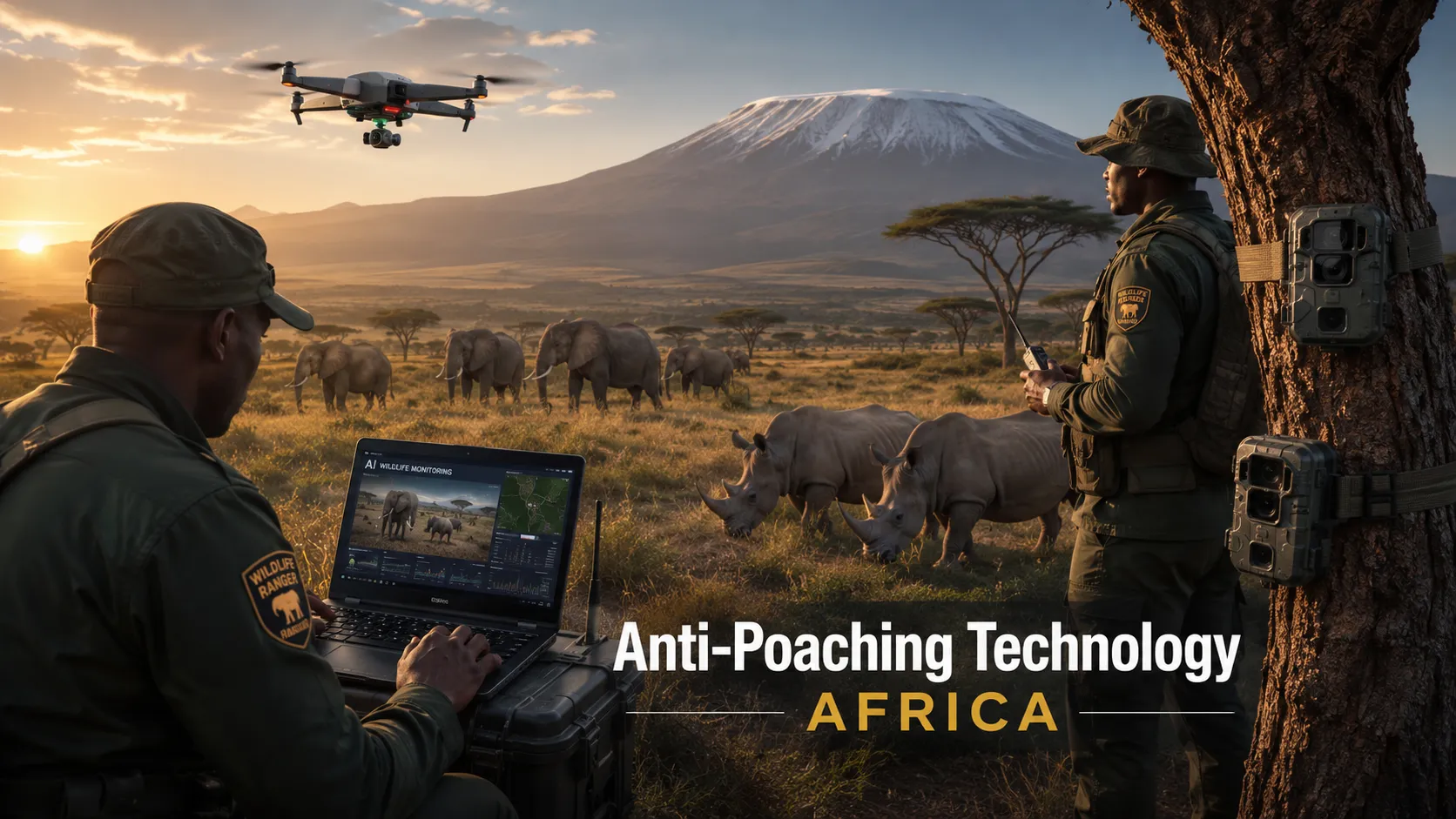
Wildlife crime remains one of the biggest threats to biodiversity across the continent. Today, anti-poaching technology Africa programmes use are transforming conservation efforts and giving endangered species a better chance of survival. From thermal drones and artificial intelligence to camera traps and GPS-enabled patrol systems, modern tools are helping rangers detect illegal activity faster and monitor animals more effectively.
Traditional patrols remain essential, but technology now provides additional support. Conservation organisations, governments, and researchers are combining data-driven systems with field experience to protect elephants, rhinos, and other vulnerable species. These innovations are also improving ranger safety and enabling teams to cover larger areas with limited resources.
As poachers adopt more sophisticated methods, conservation technology continues to evolve. Drones, machine learning, and smart monitoring systems are becoming important weapons in the fight against wildlife crime. Understanding how these tools work shows why technology has become a crucial part of African conservation.
Why Anti-Poaching Technology in Africa Matters
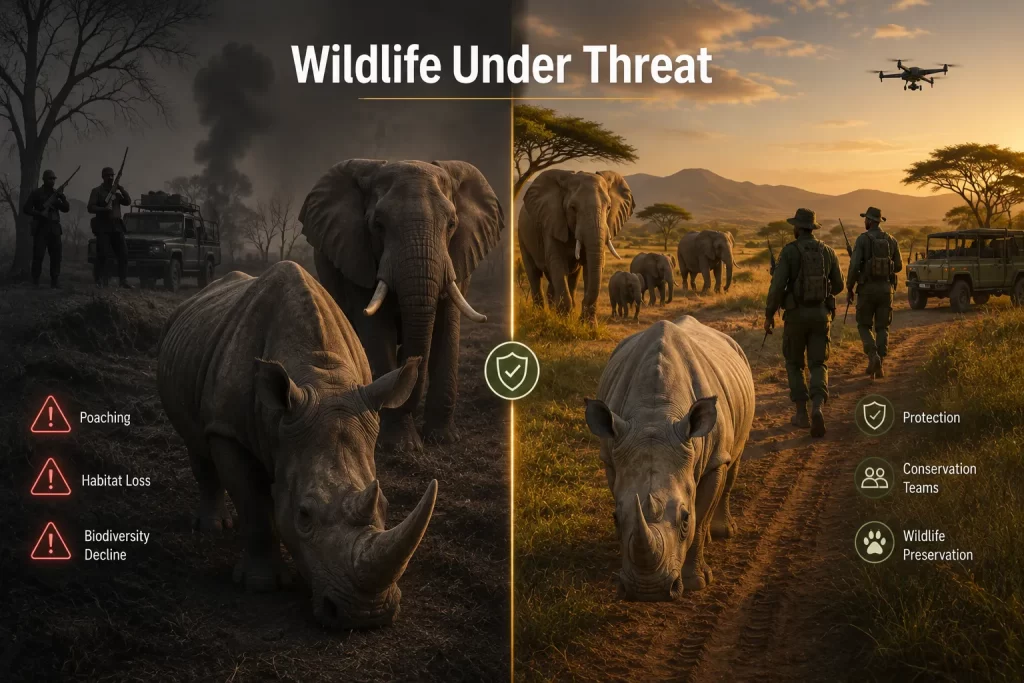
Wildlife crime affects many iconic species across Africa. Elephants, rhinos, and pangolins remain among the most heavily targeted animals. According to the International Union for Conservation of Nature (IUCN), African forest elephant populations have experienced severe declines over recent decades. Illegal trade and habitat loss continue to threaten their survival.
Traditional anti-poaching methods depend heavily on ranger patrols. While these patrols remain essential, vast landscapes and limited resources make monitoring difficult. Poachers often operate at night or in remote areas where detection is challenging.
Modern conservation technologies provide additional support. They help rangers gather information, identify threats, and respond quickly. Instead of replacing human expertise, these systems strengthen existing conservation efforts and improve the chances of protecting endangered wildlife.
How Anti-Poaching Technology Africa Uses Has Changed Conservation
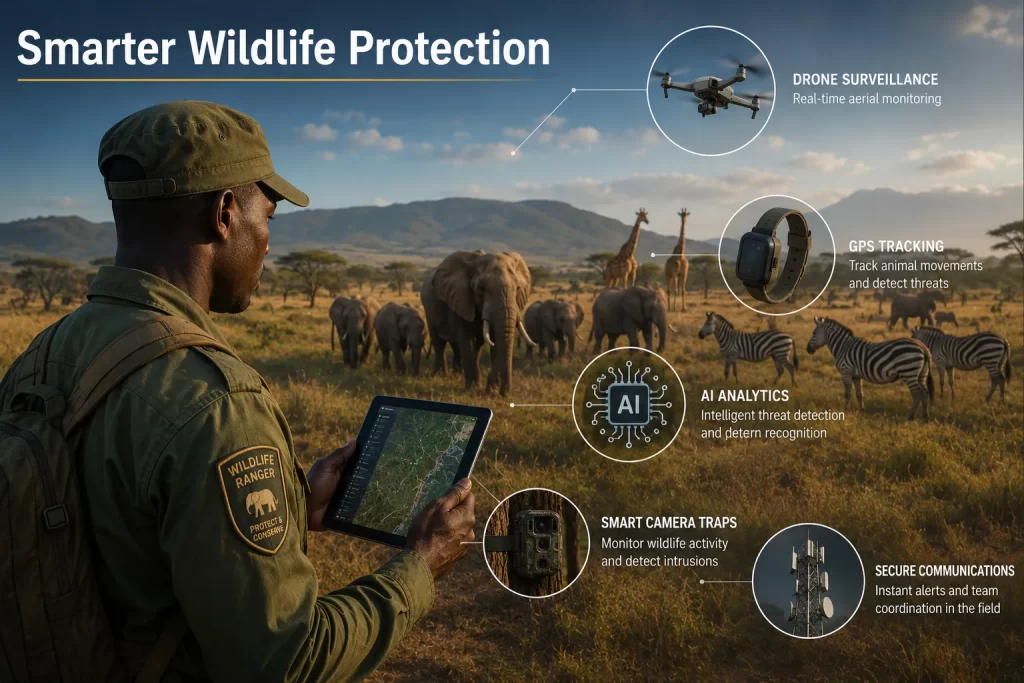
Conservation has moved beyond relying solely on manual patrols. Digital tools now provide real-time information and better situational awareness. Rangers can identify suspicious activities faster and coordinate responses more efficiently.
Technology offers several advantages:
- Faster threat detection.
- Improved ranger safety.
- Enhanced evidence collection.
- Wider monitoring coverage.
- Quicker emergency response.
- Better wildlife population tracking.
Modern systems also generate valuable data. Researchers use this information to understand animal movements and improve protection strategies. As a result, conservation programmes can allocate resources more effectively.
Drone Anti-Poaching Systems Protecting African Wildlife
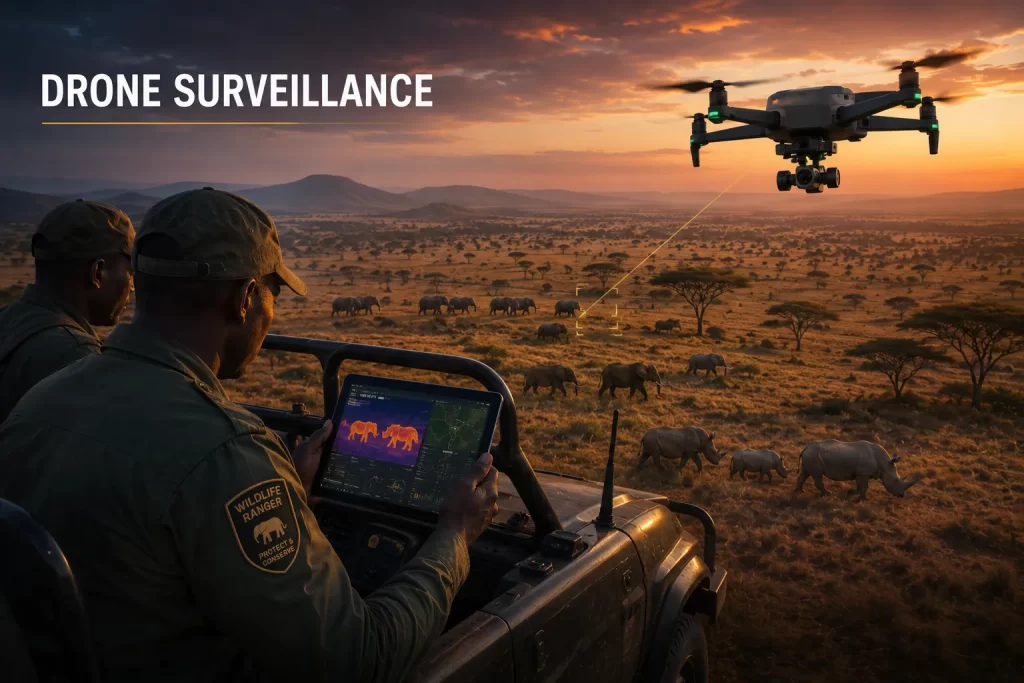
Drone anti-poaching programmes have expanded significantly across Africa. These unmanned aircraft provide aerial surveillance over large areas that are difficult to patrol on foot. They can quickly detect unusual movements and assist ranger teams during operations.
Many conservation drones use thermal imaging cameras. These cameras detect heat signatures, making night-time monitoring more effective. Thermal technology helps identify both wildlife and potential poachers in low-light conditions.
Several reserves in South Africa, Kenya, and Namibia have adopted drone systems to strengthen wildlife protection. Drones improve situational awareness and reduce the time required to investigate suspicious activity. Their ability to reach remote locations makes them valuable tools for modern conservation.
AI Wildlife Protection and Predictive Conservation
Artificial intelligence is becoming increasingly important in conservation. AI wildlife protection systems analyse large amounts of data to identify patterns and predict risks. Machine learning algorithms can process images, movement records, and patrol information much faster than manual analysis.
Predictive analytics helps conservation teams identify high-risk areas. By studying historical data and environmental factors, AI models can estimate where illegal activities are more likely to occur. Rangers can then focus patrols on vulnerable zones.
Real-time alerts also improve response times. AI systems connected to surveillance cameras and sensors can notify teams immediately when unusual activity occurs. These technologies provide an additional layer of protection without replacing human judgment.
Camera Trap Conservation Projects Across Africa
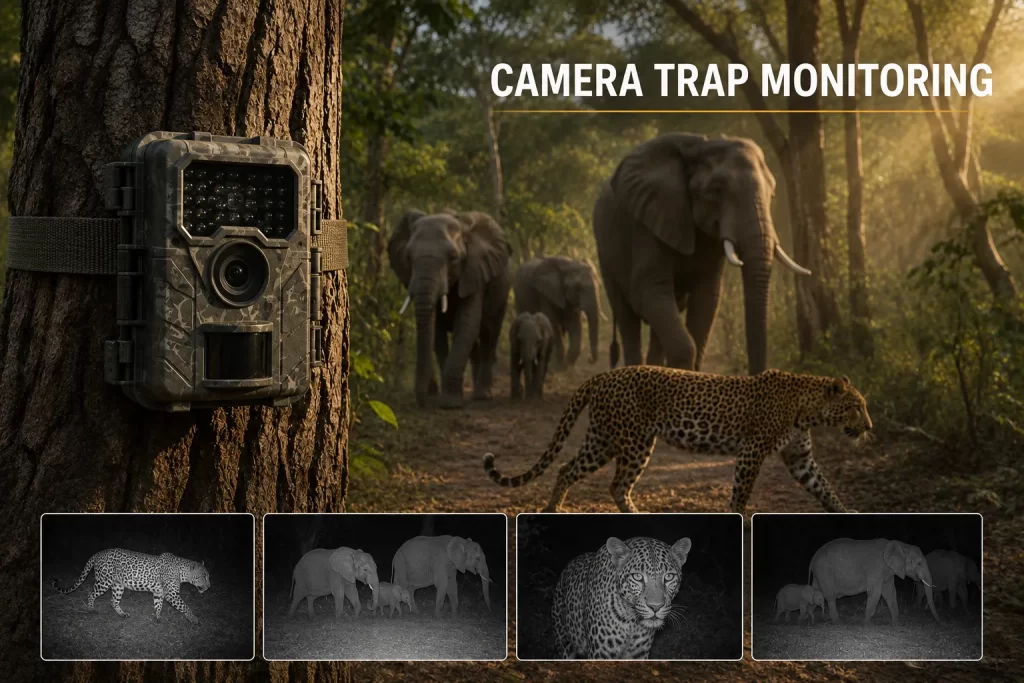
Camera trap conservation programmes have become essential tools for monitoring wildlife. Motion-activated cameras capture images when animals or people pass nearby. Researchers use these photographs to study species distribution and population trends.
Modern camera traps often work with AI-assisted software. Image recognition systems automatically identify species and organise large collections of photographs. This process saves time and improves research accuracy.
Camera traps support biodiversity monitoring and provide evidence of illegal activity. They also help scientists understand animal behaviour and habitat use. As technology improves, these systems are becoming even more valuable for conservation planning.
SMART Conservation and Ranger Tech Improving Patrol Efficiency
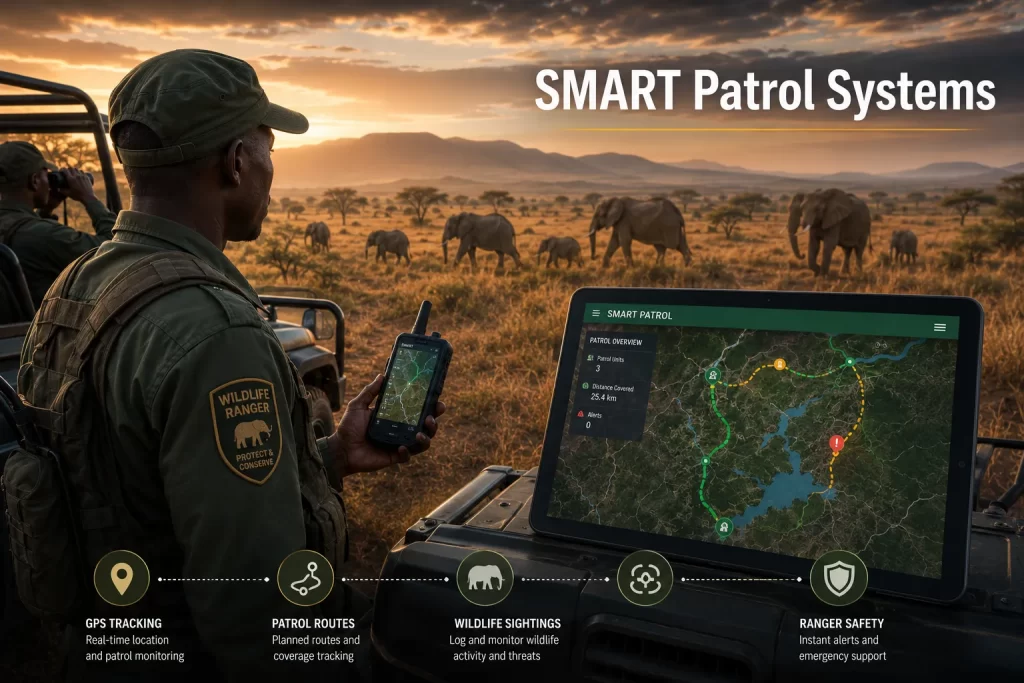
SMART conservation software has changed how many protected areas manage patrol activities. SMART stands for Spatial Monitoring and Reporting Tool. It helps conservation teams collect, analyse, and visualise field data.
GPS-enabled devices allow rangers to record patrol routes, sightings, and incidents. Managers can review this information and identify areas requiring additional protection. Data-driven decisions improve efficiency and strengthen conservation efforts.
Major Anti-Poaching Technologies Used in Africa
| Technology | Main Purpose | Key Benefit |
|---|---|---|
| Drones | Aerial surveillance | Faster detection |
| Artificial intelligence | Risk prediction | Real-time alerts |
| Camera traps | Wildlife monitoring | Species identification |
| SMART software | Patrol management | Improved efficiency |
| GPS devices | Ranger navigation | Better coverage |
Ranger tech continues to evolve. Mobile applications, satellite communication devices, and digital mapping tools provide teams with better information while working in challenging environments.
Success Stories Showing Technology Saving African Wildlife
Technology has contributed to several successful conservation initiatives across Africa. Elephant protection programmes increasingly use aerial surveillance and tracking systems to monitor herds and reduce illegal activity.
Rhino conservation efforts have also benefited from advanced monitoring technologies. Governments and wildlife organisations continue to strengthen surveillance systems and improve coordination among enforcement agencies.
Collaboration remains essential. Conservation groups, researchers, and national park authorities work together to develop practical solutions. Technology is most effective when combined with strong law enforcement and community engagement.
Challenges Facing Anti-Poaching Technology Africa Programmes
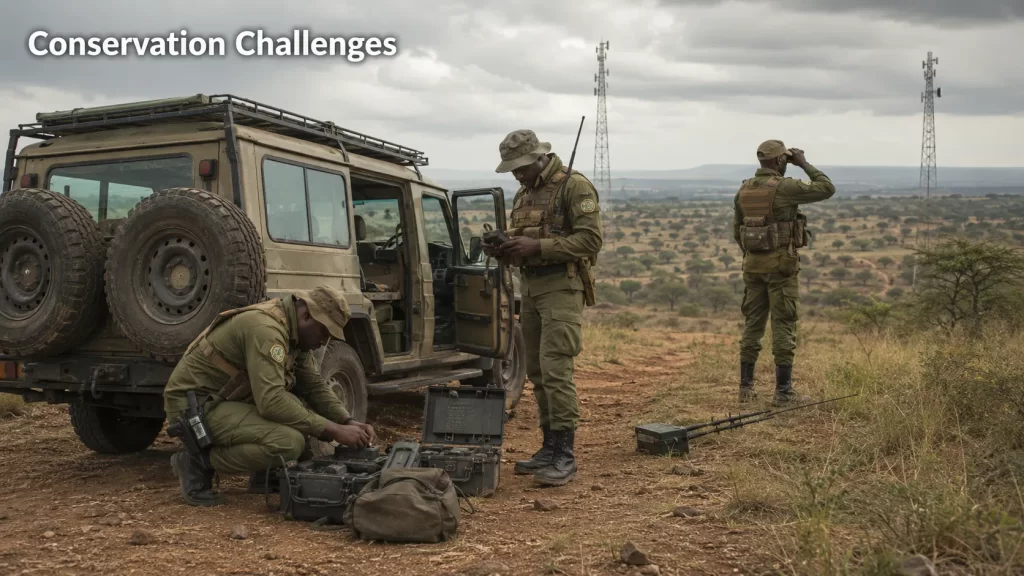
Although technology offers many advantages, several challenges remain. High costs can limit access to advanced systems. Equipment maintenance and replacement require continuous funding.
Remote areas often face connectivity and power supply problems. Some technologies depend on stable communication networks that may not always be available. Harsh weather conditions can also affect equipment performance.
Training represents another important challenge. Rangers and conservation staff must learn how to operate complex tools and interpret data correctly. Successful conservation programmes require both technological resources and skilled personnel.
Community involvement remains equally important. Technology alone cannot solve wildlife crime. Long-term success depends on education, sustainable livelihoods, and cooperation with local communities.
Future Innovations in African Wildlife Protection
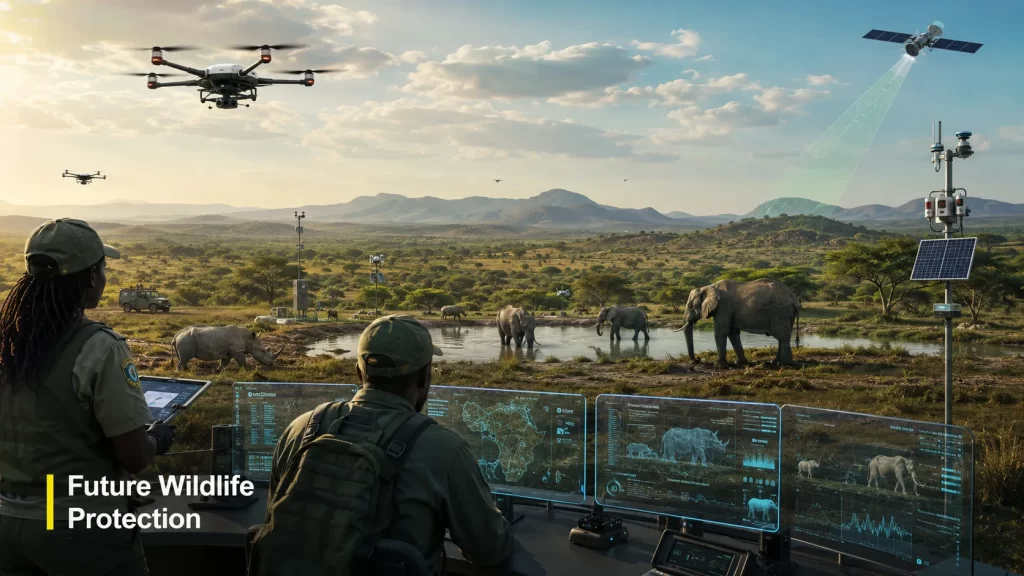
Emerging technologies may further strengthen conservation efforts. Satellite monitoring systems can provide broader coverage and support landscape-scale protection strategies. Advances in remote sensing continue to improve environmental monitoring.
Acoustic sensors capable of detecting gunshots and vehicle sounds are becoming increasingly sophisticated. These systems may provide faster warnings and allow quicker responses to illegal activity.
Artificial intelligence is expected to play an even larger role in predictive conservation. Future systems could integrate satellite imagery, weather data, and wildlife movements to improve decision-making. Autonomous monitoring technologies may also increase efficiency while reducing operational costs.
Innovation will continue to shape the future of conservation. However, successful wildlife protection will always depend on skilled rangers, scientific research, and strong partnerships.
Technology Is Transforming Wildlife Conservation in Africa
Modern conservation tools are changing how endangered species are protected across the continent. Anti-poaching technology Africa programmes rely on now includes drones, artificial intelligence, camera traps, and SMART patrol systems. These innovations provide faster detection, better data, and improved support for ranger teams.
Technology alone cannot eliminate wildlife crime, but it strengthens traditional conservation methods. When combined with experienced rangers, community engagement, and effective law enforcement, these tools offer hope for elephants, rhinos, and countless other species.