Table of Contents
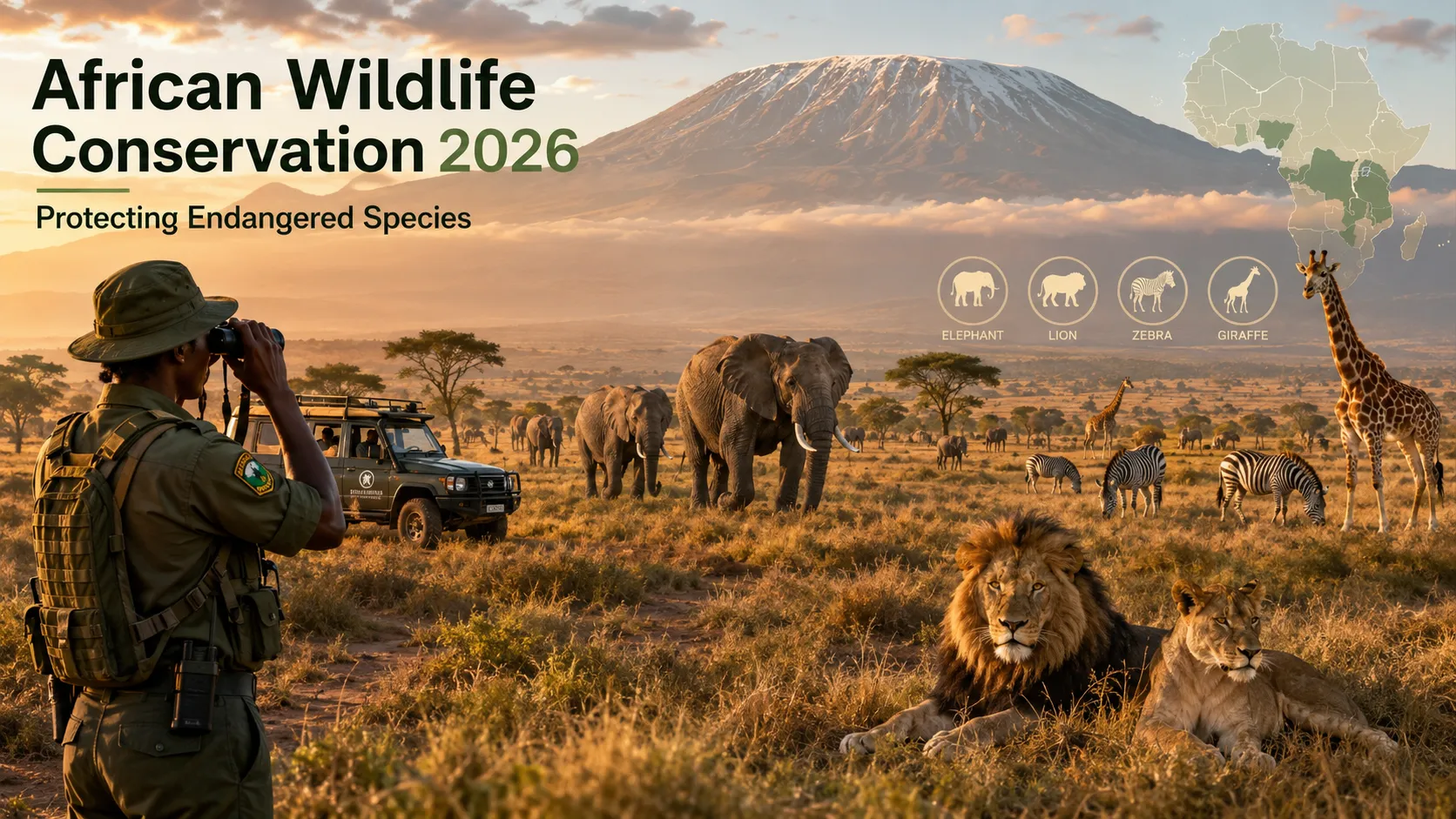
African wildlife conservation has become one of the world’s most important environmental priorities. Africa is home to thousands of species and some of the planet’s most iconic animals, including elephants, lions, rhinos, gorillas, and cheetahs. These species support healthy ecosystems, contribute to tourism economies, and hold cultural importance for millions of people. However, habitat loss, poaching, climate change, and illegal wildlife trade continue to threaten biodiversity across the continent.
In 2026, wildlife conservation initiatives in Africa are expanding through protected areas, anti-poaching programs, scientific research, and community-led projects. Governments, conservation organizations, and local communities are working together to protect endangered species in Africa and restore fragile ecosystems. Modern technologies such as drones, satellite tracking, and artificial intelligence are also transforming conservation efforts.
This guide explores the major threats facing wildlife, successful conservation strategies, protected areas, and ways individuals can support African wildlife conservation. Understanding these efforts helps ensure that future generations can continue to experience Africa’s remarkable biodiversity.
What Is African Wildlife Conservation?
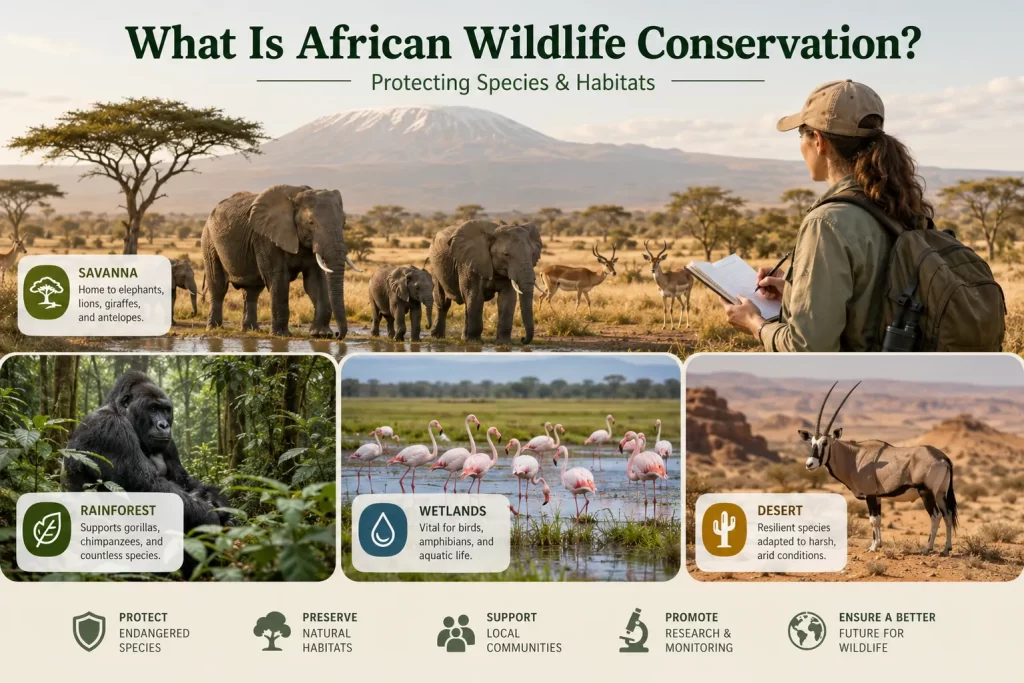
African wildlife conservation refers to the protection, management, and restoration of Africa’s animals and their habitats. The goal is to maintain biodiversity and ensure species survive for future generations. Conservation efforts focus on preserving ecosystems while balancing human needs and economic development.
Africa contains some of the world’s most diverse ecosystems. From savannas and deserts to rainforests and wetlands, these habitats support thousands of mammals, birds, reptiles, and plants. Protecting these environments helps maintain ecological balance and strengthens natural resilience against environmental change.
Modern conservation combines scientific research, law enforcement, habitat management, and community participation. Governments and organizations increasingly recognize that wildlife protection benefits both nature and people. Healthy ecosystems provide water, food security, tourism revenue, and climate regulation.
Definition and Importance of Wildlife Protection
Wildlife protection involves safeguarding species from extinction and preserving natural habitats. Conservation programs monitor animal populations, combat illegal activities, and restore damaged ecosystems. These actions help maintain biodiversity and support ecosystem services essential for human survival.
Many species act as keystone animals. Their presence influences entire ecosystems. Elephants, for example, shape landscapes and create habitats that benefit countless other species. Losing such animals can trigger widespread ecological consequences.
Wildlife conservation also contributes to sustainable development. Tourism based on healthy ecosystems generates jobs and income for local communities. Protecting biodiversity, therefore, supports both environmental and economic goals.
Why Africa Holds Exceptional Biodiversity
Africa contains extraordinary biological richness. The continent hosts over 1,100 mammal species and more than 2,600 bird species. Diverse climates and landscapes create unique habitats that support rare and endemic animals.
Large ecosystems such as the Serengeti, Congo Basin, Okavango Delta, and Kruger region provide refuge for globally significant wildlife populations. These areas support complex ecological interactions that have evolved over millions of years.
Many species found in Africa occur nowhere else on Earth. Mountain gorillas, Ethiopian wolves, and numerous antelope species represent irreplaceable components of global biodiversity. Their protection remains essential for maintaining ecological diversity.
The Role of Ecosystems in Species Survival
Species depend on healthy ecosystems for food, water, shelter, and breeding grounds. When habitats become fragmented, animal populations decline, and genetic diversity decreases. Conservation, therefore, focuses not only on individual species but also on entire ecosystems.
Savannas support grazing animals and predators. Rainforests provide homes for primates and countless bird species. Wetlands regulate water systems and sustain aquatic life. Every ecosystem performs functions that benefit both wildlife and human communities.
Protecting habitats remains one of the most effective conservation strategies available today. Maintaining ecological integrity strengthens resilience against climate change and other environmental pressures.
Why African Wildlife Conservation Matters in 2026
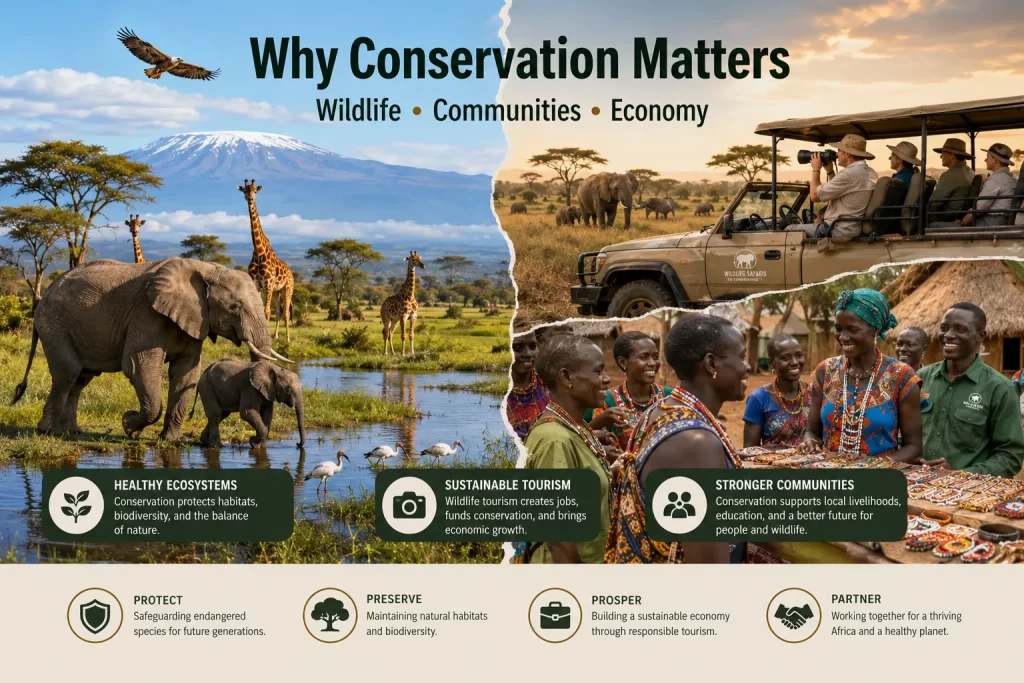
African wildlife conservation provides ecological, economic, and social benefits. Healthy ecosystems support biodiversity while contributing significantly to local livelihoods and national economies. As environmental challenges increase, conservation becomes even more important.
Scientists recognize that biodiversity loss threatens ecosystem stability worldwide. Africa’s wildlife plays an essential role in nutrient cycling, seed dispersal, and maintaining food chains. Preserving these natural processes benefits agriculture, water resources, and climate regulation.
In 2026, conservation programs increasingly emphasize sustainable development. Communities living near wildlife areas are becoming active participants in protecting biodiversity. This collaborative approach improves conservation outcomes and strengthens long-term ecosystem health.
Ecological Importance of Wildlife
Wild animals perform essential ecological functions. Herbivores shape vegetation patterns, predators regulate prey populations, and pollinators support plant reproduction. Together, these processes maintain ecosystem balance.
Elephants disperse seeds across vast distances. Predators such as lions and leopards help control herbivore populations. Birds and insects contribute to pollination and nutrient cycling. Removing any major component can disrupt ecological relationships.
Conserving biodiversity, therefore, protects ecosystem services that humans depend upon. Healthy ecosystems provide cleaner water, fertile soils, and greater resilience to climate change.
Economic Value Through Tourism
Wildlife tourism represents an important source of revenue across Africa. National parks and reserves attract millions of visitors annually. Tourism generates employment opportunities in hospitality, transportation, guiding, and conservation sectors.
Countries such as Kenya, Tanzania, Botswana, Namibia, and South Africa rely heavily on nature-based tourism. Income generated through tourism supports infrastructure development and local economies. Conservation success often translates directly into economic growth.
Sustainable tourism also encourages governments to prioritize wildlife protection. Protecting natural assets creates long-term economic benefits that exceed short-term exploitation.
The Impact on Local Communities
Conservation affects millions of people living near protected areas. Community-based programs provide employment, education, and healthcare benefits. Local involvement increases support for wildlife protection and reduces conflicts between humans and animals.
Communities increasingly participate in monitoring wildlife and managing natural resources. Revenue-sharing programs allow residents to benefit from tourism income. This approach creates incentives for protecting biodiversity.
When communities become conservation partners, long-term success becomes more achievable. Sustainable development and environmental protection work best when local people share in the benefits.
Benefits of African Wildlife Conservation
- Preserves biodiversity and endangered species.
- Supports tourism and economic growth.
- Creates employment opportunities.
- Protects water sources and ecosystems.
- Reduces the risk of species extinction.
- Strengthens resilience against climate change.
- Supports scientific research and education.
- Promotes sustainable development.
Endangered Species in Africa and Their Conservation Status
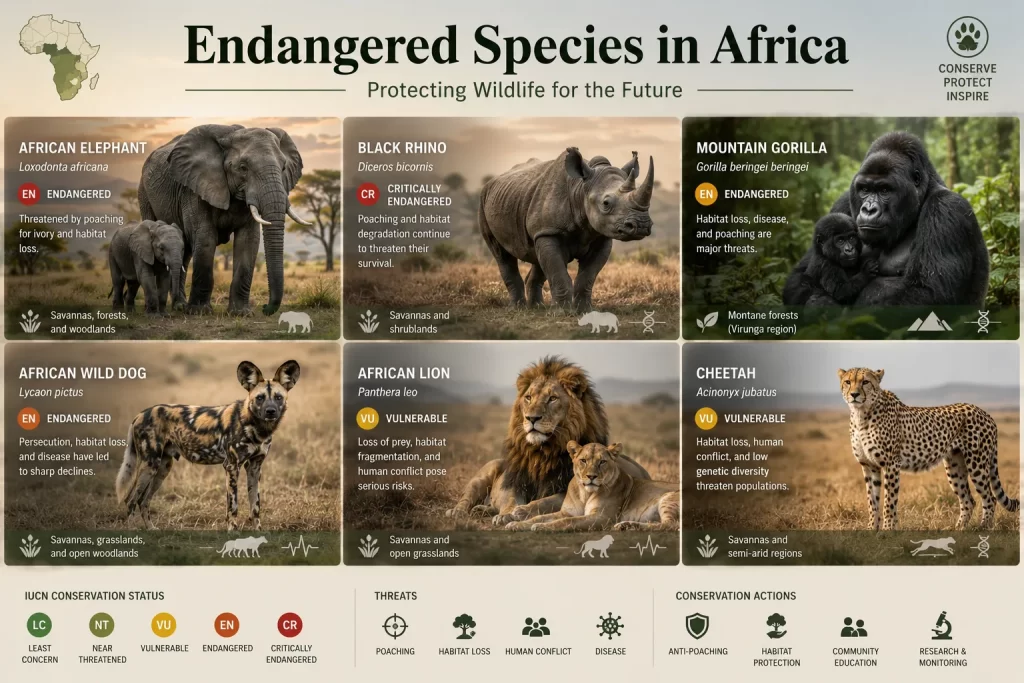
Many iconic animals face increasing threats. Habitat destruction, poaching, climate change, and human-wildlife conflict continue to reduce populations. The IUCN Red List Africa assessments help scientists evaluate extinction risks and prioritize conservation actions.
Understanding the conservation status of species allows governments and organizations to allocate resources effectively. Some populations are recovering due to successful programs, while others remain critically endangered.
Protecting endangered species in Africa remains one of the central goals of African wildlife conservation. Continuous monitoring and international cooperation are essential for long-term success.
African Elephants
African elephants are among the continent’s most recognizable animals. They play a vital role in maintaining ecosystems by dispersing seeds and modifying vegetation. Despite their ecological importance, elephant populations have experienced major declines due to ivory poaching and habitat loss.
Conservation efforts include anti-poaching patrols, habitat protection, and transboundary wildlife corridors. Advances in satellite tracking and community conservation are improving protection. Several populations show signs of stabilization, although threats remain significant.
Elephants also support tourism industries across Africa. Their survival has ecological, economic, and cultural importance. Continued conservation investment remains essential for ensuring their long-term future.
Black Rhinos
Black rhinos represent one of Africa’s greatest conservation success stories. Once pushed close to extinction by poaching, populations have gradually increased due to intensive management and international cooperation.
Rhino protection programs employ armed patrols, surveillance systems, and breeding initiatives. Many countries have established secure sanctuaries to safeguard populations. However, illegal trade in rhino horns continues to pose serious challenges.
Conservation organizations emphasize habitat protection and genetic diversity. Maintaining healthy populations requires sustained funding and strong law enforcement.
Mountain Gorillas
Mountain gorillas inhabit forests in Rwanda, Uganda, and the Democratic Republic of Congo. These primates remain among the world’s most endangered mammals. Habitat loss and disease outbreaks threaten their survival.
Intensive conservation programs have contributed to encouraging population recoveries. Veterinary interventions, ecotourism, and community involvement play important roles in protection efforts. Gorilla tourism generates substantial revenue that supports conservation programs and local communities.
Their recovery demonstrates how coordinated efforts can reverse population declines. Nevertheless, continued protection remains essential.
African Wild Dogs
African wild dogs are among the continent’s most endangered carnivores. Habitat fragmentation and disease have dramatically reduced their numbers. Their wide-ranging behavior makes conservation particularly challenging.
Protected areas and wildlife corridors help maintain connectivity between populations. Vaccination programs and conflict mitigation efforts are improving survival rates. Researchers also use GPS collars to study movements and social behavior.
These predators contribute to ecosystem health by regulating prey populations. Their conservation supports broader biodiversity goals.
Cheetahs and Lions
Cheetahs and lions face declining populations due to habitat loss and conflicts with humans. Expanding agriculture and livestock grazing reduce available habitat and increase competition for resources.
Conservation programs focus on coexistence strategies and landscape connectivity. Predator-friendly livestock practices help reduce retaliatory killings. Protected areas continue to provide important refuges for these species.
Long-term survival depends on maintaining large ecosystems and strengthening community engagement. Continued research supports evidence-based conservation strategies.
Conservation Status of Major African Species
| Species | IUCN Status | Main Threats | Conservation Measures |
|---|---|---|---|
| African Elephant | Endangered | Poaching, habitat loss | Protected areas, anti-poaching |
| Black Rhino | Critically Endangered | Illegal trade | Sanctuaries, surveillance |
| Mountain Gorilla | Endangered | Disease, habitat loss | Ecotourism, veterinary care |
| African Wild Dog | Endangered | Disease, fragmentation | Wildlife corridors |
| Lion | Vulnerable | Human conflict | Community conservation |
| Cheetah | Vulnerable | Habitat loss | Research and protected areas |
Understanding the IUCN Red List Africa Categories
The IUCN Red List provides a scientific framework for assessing extinction risk. Species are classified according to population trends, habitat conditions, and threats. Categories range from Least Concern to Critically Endangered.
These assessments guide conservation priorities worldwide. Governments, researchers, and organizations use Red List information to design protection strategies. Updated evaluations also help monitor progress and identify emerging threats.
Reliable assessments remain essential for effective African wildlife conservation. Scientific evidence allows conservation resources to be directed where they are needed most.
Major Threats Facing Wildlife Conservation in Africa
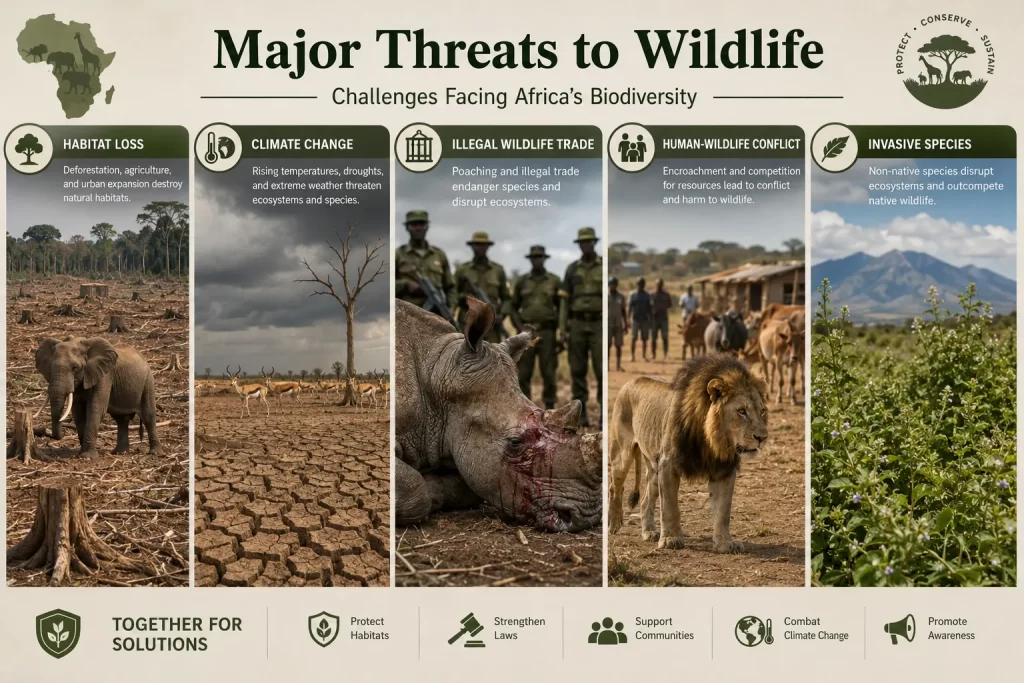
Wildlife conservation in Africa faces increasing pressure from human activities and environmental changes. Although conservation efforts have expanded, many species continue to experience population declines. Habitat destruction, poaching, climate change, and disease remain among the most significant challenges.
Conservation experts recognize that these threats often interact with one another. Habitat fragmentation can increase human-wildlife conflict, while climate change may intensify food shortages and migration pressures. Understanding these threats helps governments and organizations develop effective conservation strategies.
Protecting biodiversity requires a combination of scientific research, policy development, and community participation. Addressing these challenges remains essential for the long-term success of African wildlife conservation.
Habitat Loss and Fragmentation
Habitat destruction represents one of the greatest threats to biodiversity. Expanding agriculture, urban development, mining, and infrastructure projects continue to reduce natural ecosystems. As habitats shrink, wildlife populations become isolated and vulnerable.
Fragmented landscapes limit access to food, water, and breeding areas. Smaller populations often experience reduced genetic diversity, increasing extinction risks. Migratory species are especially affected because they depend on large, connected ecosystems.
Conservation organizations increasingly focus on maintaining wildlife corridors. These protected pathways allow animals to move safely between habitats and improve population resilience.
Illegal Wildlife Trade
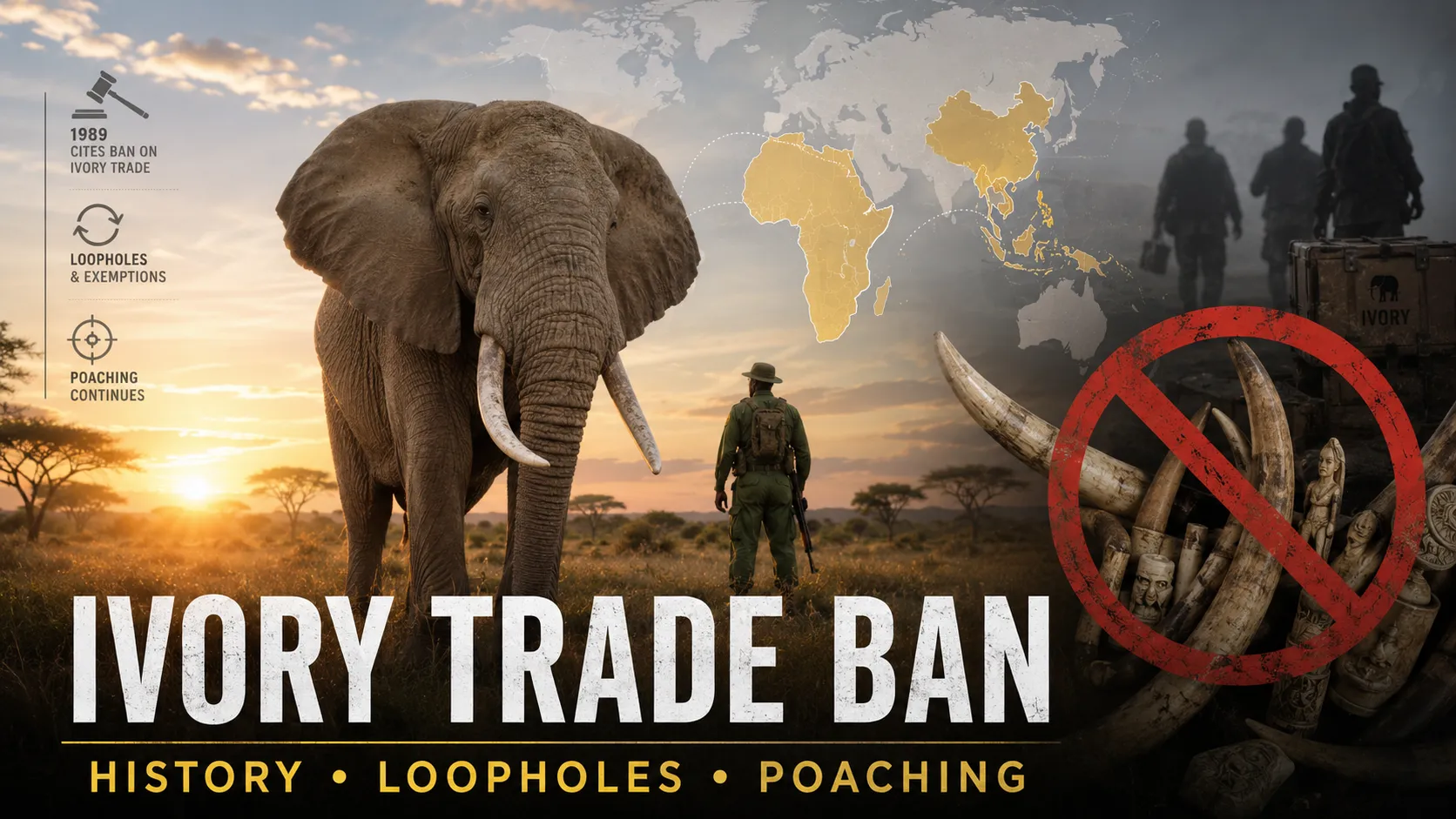
Illegal wildlife trade remains a serious global problem. High demand for ivory, rhino horns, exotic pets, and animal products drives organized criminal networks. Many species continue to suffer because of illegal hunting and trafficking.
Poaching affects not only iconic species but also reptiles, birds, and marine animals. Criminal networks often exploit weak law enforcement and international markets. Conservation agencies, therefore,e cooperate across borders to combat wildlife trafficking.
Strengthening regulations and increasing public awareness have contributed to some successes. However, illegal trade continues to threaten numerous species throughout Africa.
Climate Change
Climate change is transforming ecosystems across the continent. Rising temperatures, droughts, floods, and changing rainfall patterns affect both wildlife and habitats. Some species struggle to adapt to these rapidly changing conditions.
Water shortages and altered vegetation influence migration patterns and food availability. Sensitive ecosystems such as wetlands and montane forests face increasing pressure. Climate-related changes may also increase disease transmission among animals.
Conservation programs now incorporate climate adaptation strategies. Protecting large ecosystems and restoring degraded habitats helps strengthen resilience against environmental change.
Human-Wildlife Conflict
As human populations expand, interactions between people and wildlife become more common. Elephants may damage crops, while predators sometimes attack livestock. These conflicts create economic losses and increase negative attitudes toward conservation.
Retaliatory killings pose serious threats to many species. Lions, leopards, and hyenas often suffer when communities attempt to protect livestock. Human fatalities also contribute to tensions in affected areas.
Community-based conservation programs promote coexistence strategies. Improved fencing, compensation schemes, and predator-friendly livestock practices help reduce conflicts and encourage conservation support.
Invasive Species and Disease
Invasive species and emerging diseases present additional challenges. Non-native plants and animals can disrupt ecosystems and compete with native wildlife. Disease outbreaks may spread rapidly among vulnerable populations.
Climate change and habitat disturbance sometimes increase disease risks. Wildlife managers closely monitor outbreaks to prevent severe impacts. Veterinary interventions have become increasingly important in species recovery programs.
Research and early detection remain essential for managing these threats. Strong surveillance systems help conservationists respond quickly to emerging problems.
Anti-Poaching Efforts and Law Enforcement
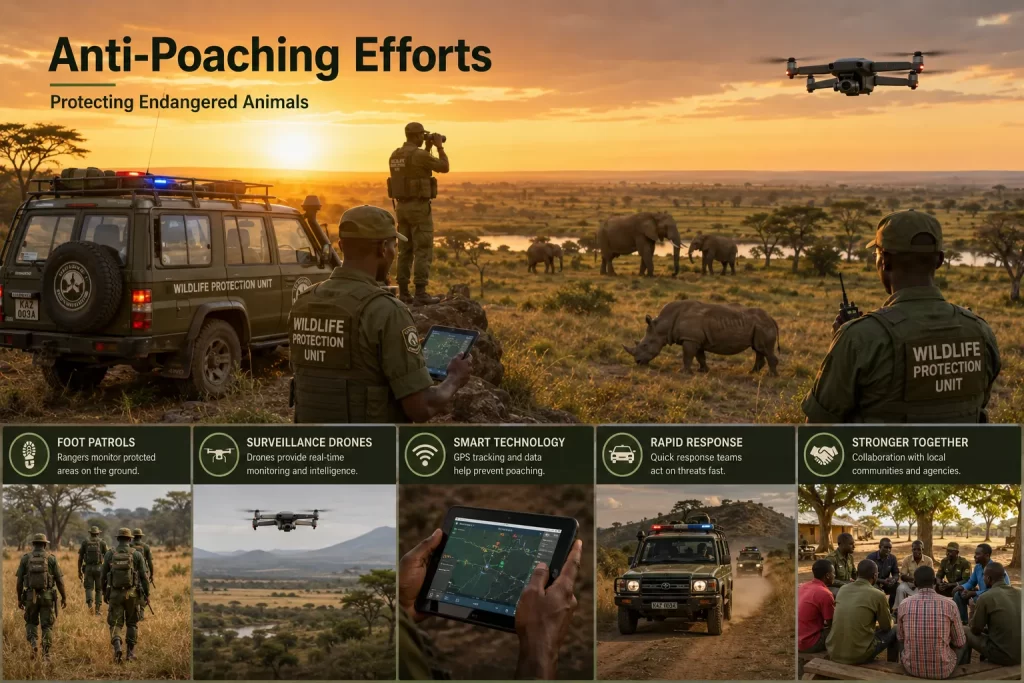
Anti-poaching initiatives represent one of the most visible components of African wildlife conservation. Governments and conservation organizations invest heavily in protecting species from illegal hunting and trafficking. These efforts combine traditional patrols with advanced technologies and international cooperation.
Poaching not only threatens species survival but also undermines tourism and economic development. Effective law enforcement helps protect ecosystems while supporting local communities that depend on wildlife-related income.
Modern conservation increasingly relies on intelligence gathering and regional partnerships. Collaboration among countries strengthens efforts to disrupt criminal networks and reduce illegal trade.
Why Poaching Remains a Threat
Despite progress, poaching continues to affect elephants, rhinos, pangolins, and other species. High market demand encourages criminal organizations to target wildlife populations. Sophisticated trafficking networks make enforcement increasingly difficult.
Poachers often exploit remote regions with limited surveillance. Economic hardship and lack of alternative livelihoods may also contribute to illegal hunting. Addressing these root causes remains essential for long-term success.
Conservation programs increasingly focus on education and community development. Providing economic opportunities helps reduce incentives for wildlife crimes.
Technologies Used in Anti-Poaching Operations
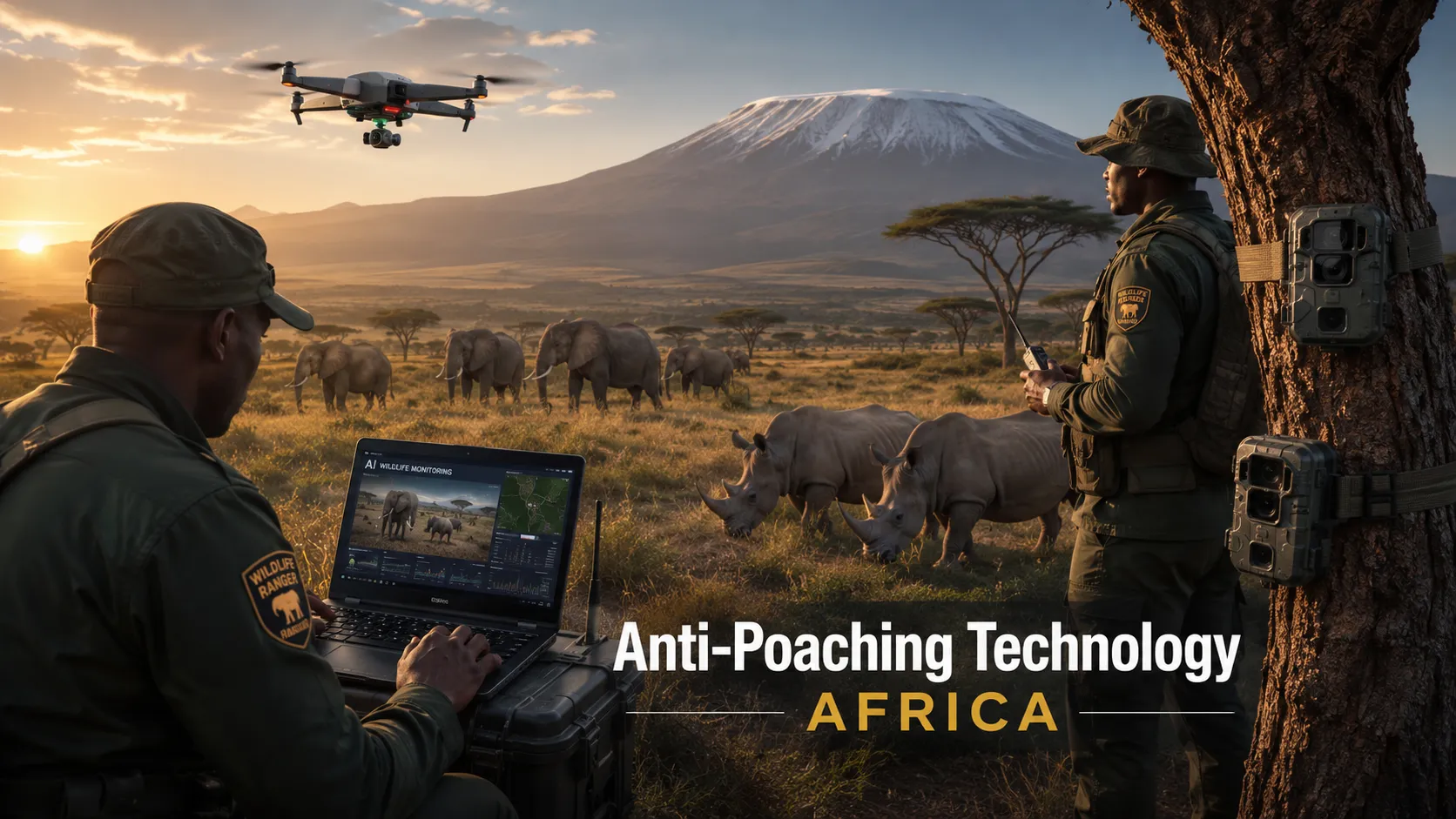
Technology is transforming anti-poaching efforts across Africa. Drones, satellite imagery, and GPS tracking improve surveillance capabilities. Rangers can monitor large areas more effectively and respond quickly to threats.
Camera traps provide valuable information about animal movements and human activity. Artificial intelligence helps analyze images and identify suspicious patterns. Some parks also employ thermal imaging systems for night patrols.
These innovations improve efficiency and strengthen law enforcement. However, technology works best when combined with trained personnel and strong community support.
CITES and International Cooperation
The Convention on International Trade in Endangered Species, commonly known as CITES, regulates global wildlife trade. International cooperation plays a critical role in reducing illegal trafficking and protecting vulnerable species.
Countries collaborate through information sharing and joint enforcement operations. Customs agencies and conservation authorities work together to identify illegal shipments and prosecute offenders. These partnerships strengthen global conservation efforts.
Continued international collaboration remains necessary because wildlife crime often crosses national boundaries. Strong regulations and enforcement mechanisms help reduce market demand and improve species protection.
Success Stories Across Africa
Several conservation programs have achieved remarkable results. Rhino populations in some regions have stabilized because of intensive protection efforts. Elephant populations in well-managed reserves also demonstrate encouraging trends.
Community conservancies in Kenya and Namibia show how local involvement can improve conservation outcomes. Tourism revenue and employment opportunities create incentives for protecting wildlife. These examples highlight the importance of integrating people into conservation strategies.
Successful programs demonstrate that population recovery is possible when science, funding, and community engagement work together.
Wildlife Reserves Africa and Protected Areas
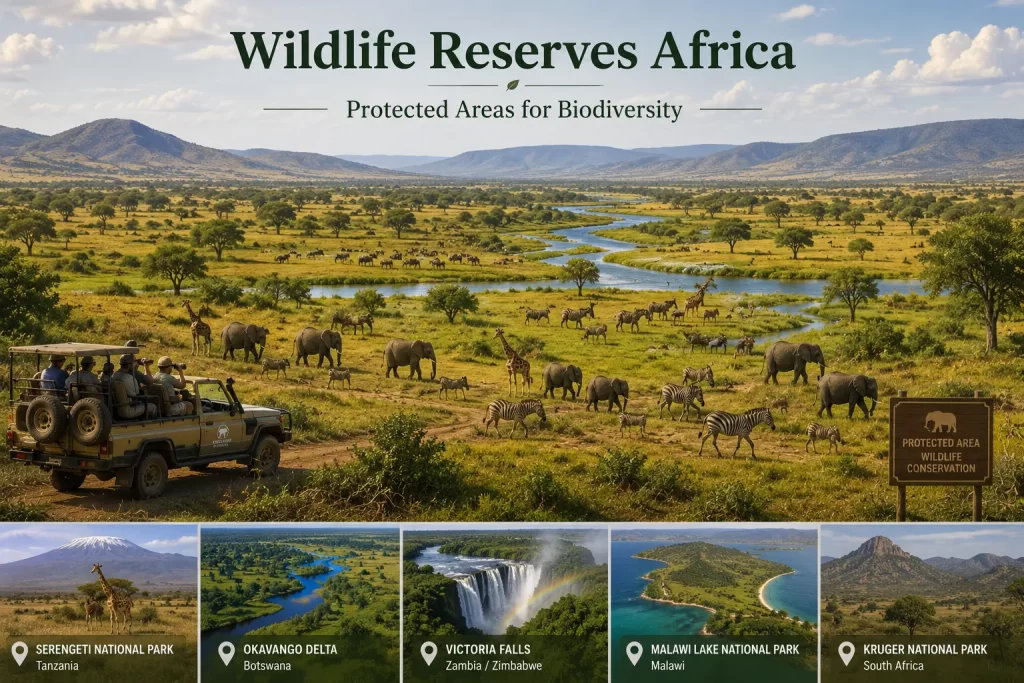
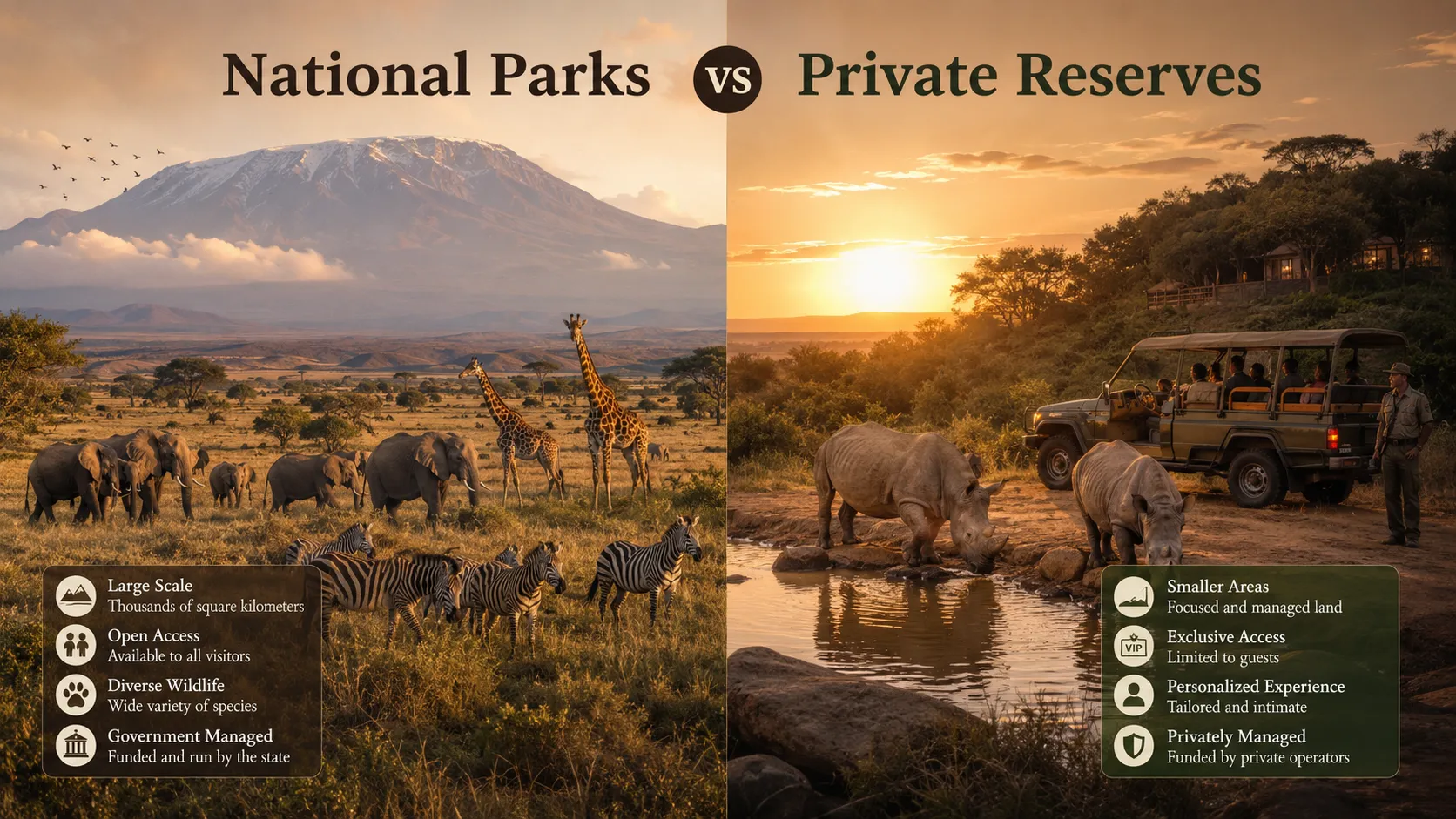
Protected areas remain the foundation of wildlife conservation in Africa. National parks, game reserves, and community conservancies provide safe habitats for thousands of species. These areas support ecological processes and maintain biodiversity.
Protected landscapes also contribute to scientific research and sustainable tourism. Many reserves generate economic benefits that support surrounding communities. Effective management ensures that conservation and development can coexist.
Expanding protected areas remains a major priority for conservation organizations. Larger and connected landscapes improve species survival and ecological resilience.
National Parks and Game Reserves
Africa contains some of the world’s most famous protected areas. Parks such as Serengeti, Kruger, Etosha, and Amboseli safeguard important wildlife populations and ecosystems.
These reserves provide habitats for elephants, lions, rhinos, zebras, and countless bird species. Management activities include monitoring, habitat restoration, and anti-poaching operations. Scientific research conducted within parks helps guide conservation decisions.
Protected areas also attract visitors from around the world. Tourism revenue supports local economies and conservation programs.
Community Conservancies
Community conservancies represent an increasingly successful conservation model. Local communities manage natural resources while benefiting from tourism and sustainable development initiatives.
These programs encourage residents to become active partners in wildlife protection. Employment opportunities and revenue-sharing systems create strong incentives for conservation. Community involvement often improves relationships between people and wildlife.
Many conservancies have demonstrated significant improvements in biodiversity and ecosystem health. Their success highlights the value of inclusive conservation approaches.
UNESCO World Heritage Sites
Several African ecosystems receive international recognition as UNESCO World Heritage Sites. These areas possess exceptional ecological and cultural importance. Examples include the Okavango Delta and Virunga National Park.
World Heritage status helps attract funding and scientific support. International recognition also raises awareness about conservation challenges and opportunities. Protecting these landscapes preserves natural heritage for future generations.
Many of these ecosystems support rare and endangered species. Continued management remains essential for maintaining their ecological value.
How Protected Areas Support Species Recovery
Protected areas provide secure habitats where species can reproduce and recover. Reduced hunting pressure and improved habitat conditions contribute to population growth. Many conservation success stories originate from well-managed reserves.
Wildlife corridors connecting protected landscapes allow animals to migrate and maintain genetic diversity. These connections strengthen ecosystem resilience and support long-term survival. Conservation planners increasingly prioritize landscape-scale approaches.
Protected areas also serve as research sites for understanding ecological processes. Scientific findings help improve management strategies and conservation outcomes.
Conservation Strategies Protecting African Wildlife
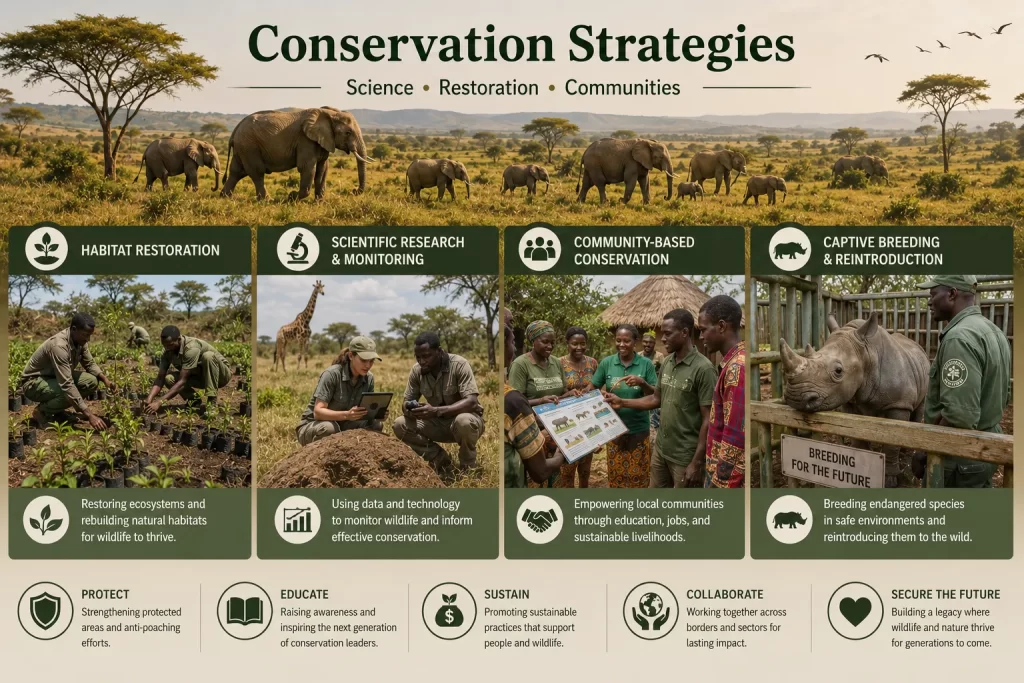
Conservation strategies have evolved significantly over recent decades. Modern approaches emphasize ecosystem management, scientific research, and community participation. Effective conservation requires addressing both biological and social factors.
Successful programs integrate local knowledge with advanced technologies. Collaboration among governments, scientists, communities, and international organizations strengthens conservation efforts. Adaptive management allows strategies to respond to changing conditions.
These approaches have contributed to several notable species recoveries. Continued innovation remains essential for addressing future challenges.
Habitat Restoration Programs
Habitat restoration improves ecosystem health and supports biodiversity. Reforestation, wetland recovery, and grassland management help restore degraded landscapes. Healthy habitats provide essential resources for wildlife populations.
Restoration projects often benefit both animals and people. Improved ecosystems enhance water quality, reduce erosion, and increase resilience to climate change. Community participation strengthens project sustainability.
Long-term monitoring ensures that restoration efforts achieve desired outcomes. Scientific evaluations guide improvements and future initiatives.
Captive Breeding and Reintroduction
Captive breeding programs support species facing severe population declines. Conservationists maintain genetically diverse populations and reintroduce animals into suitable habitats. These programs have helped several species avoid extinction.
Successful reintroductions require careful planning and habitat protection. Animals must adapt to natural environments and establish self-sustaining populations. Continuous monitoring helps evaluate success and identify challenges.
Although captive breeding cannot replace habitat conservation, it remains an important tool in species recovery efforts.
Community-Based Conservation
Community involvement represents a cornerstone of modern conservation. Local people often possess valuable ecological knowledge and play essential roles in resource management. Empowering communities improves conservation effectiveness.
Revenue-sharing programs and sustainable livelihoods encourage positive attitudes toward wildlife. Educational initiatives also increase awareness and strengthen environmental stewardship. Partnerships between communities and conservation organizations promote long-term success.
Community-based approaches have delivered impressive results in several African countries. These models continue to expand throughout the continent.
Wildlife Monitoring and Scientific Research
Scientific research provides the foundation for evidence-based conservation. Population surveys, satellite tracking, and ecological studies help researchers understand species dynamics and threats. Accurate information supports effective decision-making.
Monitoring programs detect population changes and identify emerging risks. Researchers also evaluate the effectiveness of conservation interventions. These findings contribute to adaptive management and improved outcomes.
Collaboration between universities and conservation organizations strengthens research capacity. Scientific knowledge remains essential for protecting biodiversity.
Genetic Diversity and Population Management
Maintaining genetic diversity is crucial for species survival. Small populations face increased risks from inbreeding and disease. Conservation managers, therefore, monitor genetic health and promote connectivity between populations.
Wildlife corridors and translocation programs help maintain genetic exchange. These measures improve resilience and reduce extinction risks. Advances in genetics are providing new tools for conservation planning.
Protecting genetic diversity ensures that species retain the ability to adapt to environmental change. This remains a key objective of long-term conservation programs.
How Technology Is Transforming African Wildlife Conservation
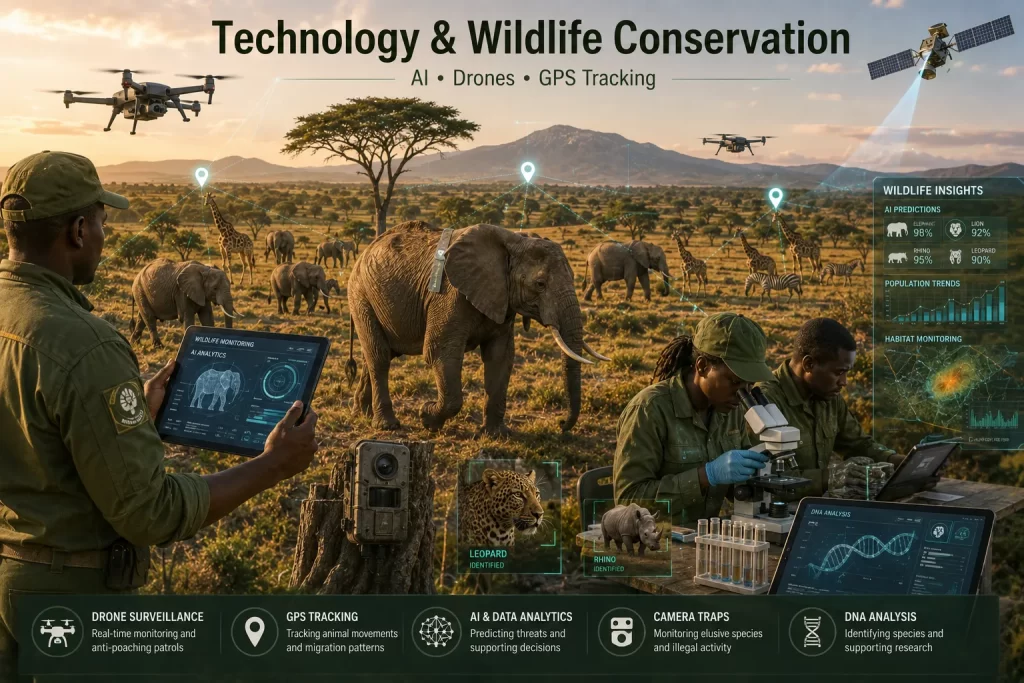
Technology is revolutionizing African wildlife conservation. Innovations allow researchers and park managers to collect more accurate data and respond rapidly to threats. These tools improve efficiency and enhance species protection.
Digital technologies also strengthen scientific understanding of ecosystems. Artificial intelligence and remote sensing provide insights that were previously impossible. Conservation increasingly depends on integrating technology with traditional field methods.
As these innovations continue to evolve, they offer new opportunities for protecting biodiversity across Africa.
Satellite Tracking and GPS Collars
Satellite tracking enables scientists to monitor animal movements in real time. GPS collars provide valuable information about migration routes, habitat use, and behavior. These data support landscape planning and conflict mitigation.
Tracking systems help identify critical habitats and wildlife corridors. Conservation managers use this information to improve protected area design and connectivity. Real-time monitoring also enhances anti-poaching operations.
Technological advances continue to improve accuracy and efficiency. These tools have become essential components of modern wildlife research.
Drones and Artificial Intelligence
Drones allow conservationists to survey large areas quickly and safely. High-resolution imagery helps detect illegal activities and monitor habitat conditions. Aerial surveys improve data collection and reduce operational costs.
Artificial intelligence analyzes images and identifies patterns that humans might overlook. Machine learning systems process enormous amounts of information and support decision-making. These technologies enhance conservation effectiveness and efficiency.
Their applications continue to expand across Africa. Innovation is becoming increasingly important for addressing complex environmental challenges.