Table of Contents
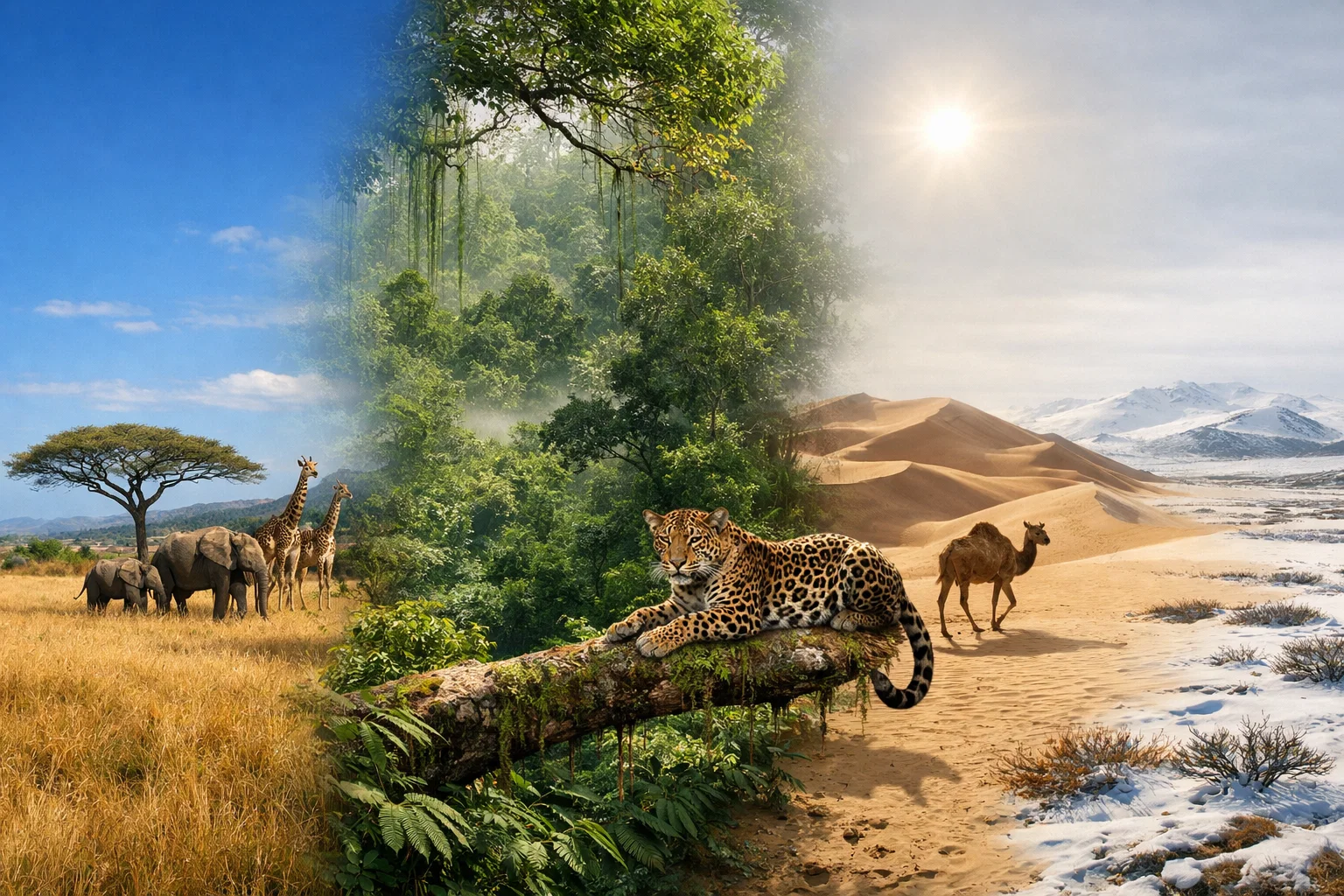
Wildlife habitats and ecosystems of the world shape how life survives, adapts, and evolves. As of 2026, Earth supports about 8.7 million species, according to global biodiversity assessments. These species depend on stable ecosystems for food, water, and shelter. From African savannahs to Amazon rainforests, each biome runs on precise climate patterns and nutrient cycles.
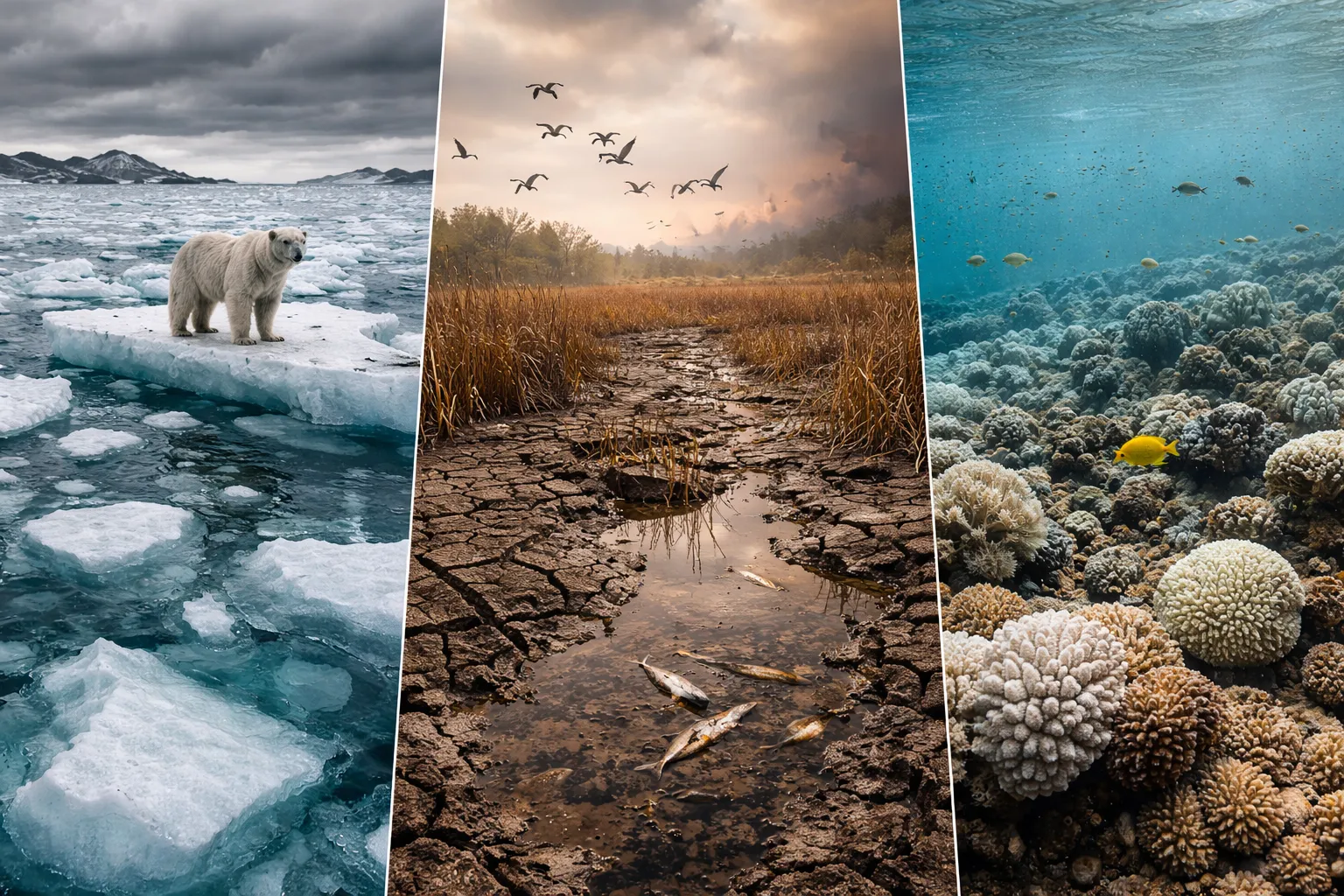
We now know that ecosystems cover roughly 71% water and 29% land, yet terrestrial habitats host over 80% of known species. Climate change has already shifted habitat ranges by an average of 17 kilometers per decade on land. That shift alters predator-prey balance and plant growth cycles.
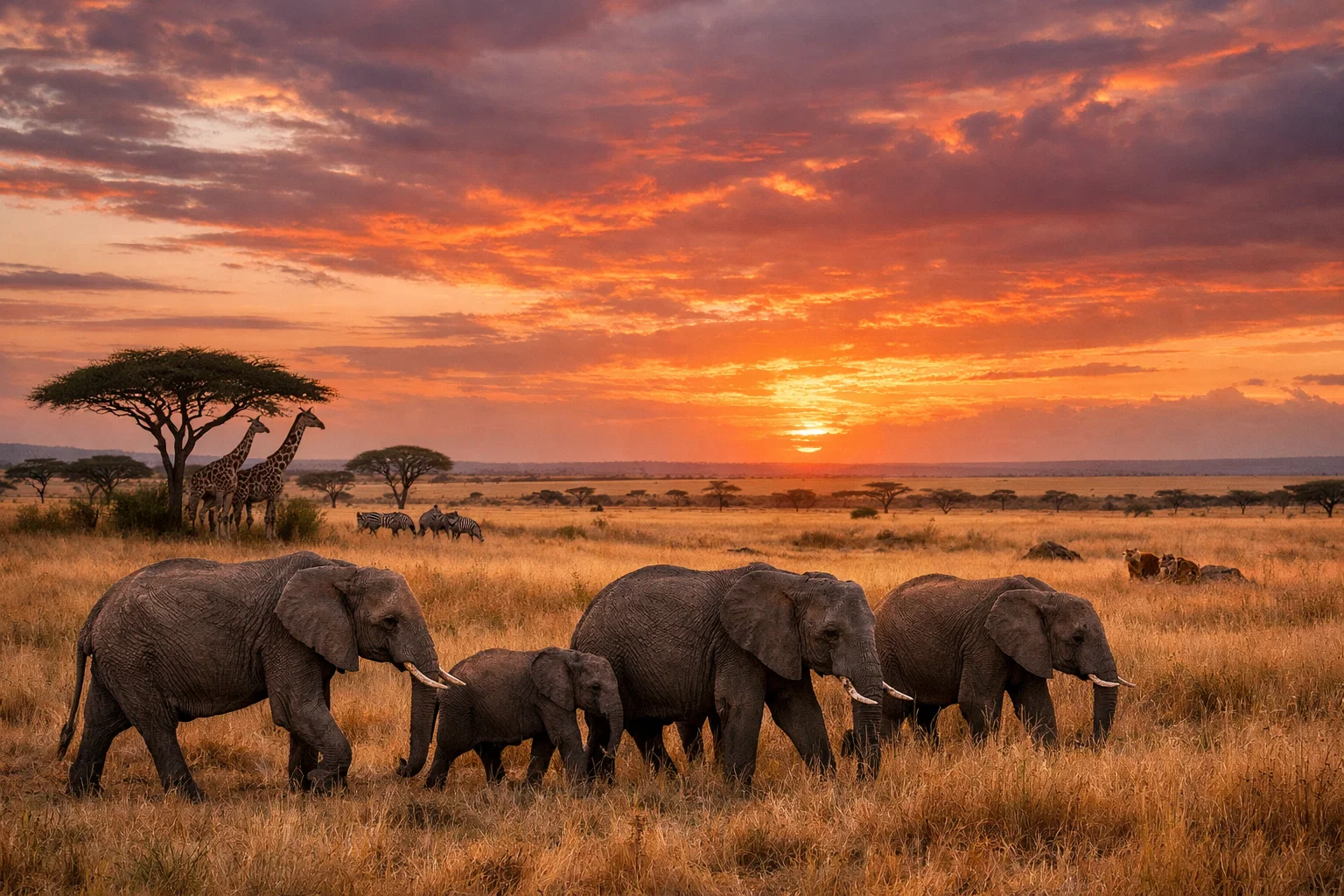
Savannah Ecosystems: Grasslands of Survival
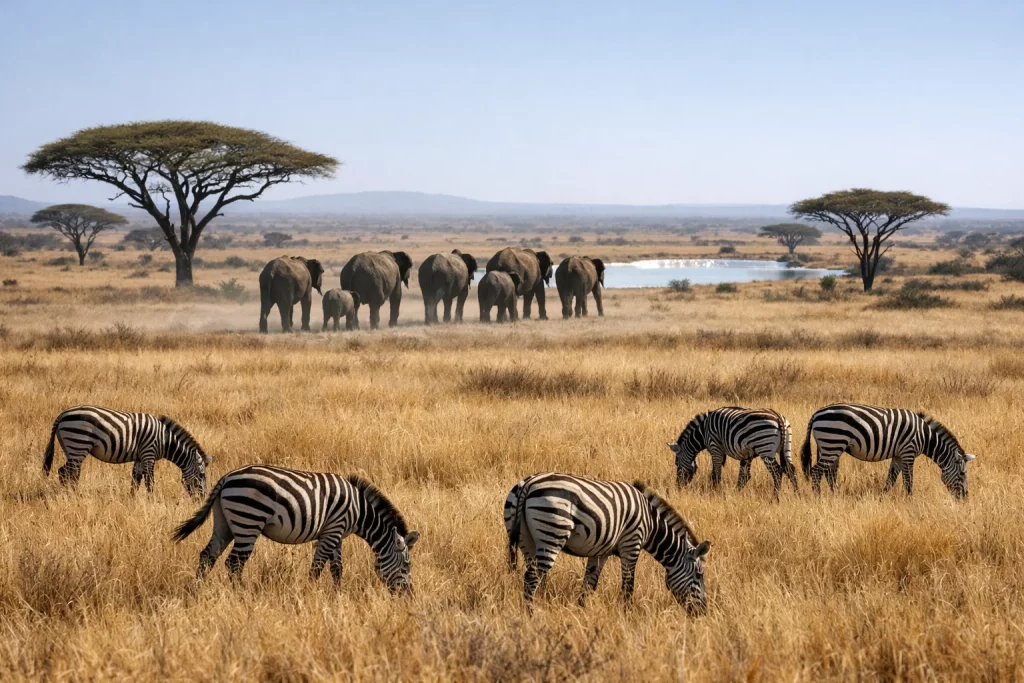
Savannah ecosystems cover about 20% of the Earth’s land surface. They are defined by tropical grasslands with scattered trees and seasonal rainfall. Annual rainfall ranges from 20 to 50 inches. Temperatures often stay above 64°F year-round. These clear climate rules shape wildlife behavior and vegetation cycles.
According to data summarized by Wikipedia’s Savanna page, savannahs support some of the planet’s largest land mammals. Fire plays a key ecological role here. Natural fires recycle nutrients and prevent dense forest growth.
Climate and Vegetation Patterns
Savannahs experience distinct wet and dry seasons. Rainfall arrives in intense bursts for four to six months. The remaining months remain dry and hot. Grasses grow up to 10 feet tall in the wet season. Acacia and baobab trees develop deep roots to reach groundwater.
These plants reduce water loss with small leaves and thick bark. That adaptation allows survival in drought conditions. Vegetation structure directly influences herbivore migration routes.
Wildlife Adaptations in Open Landscapes
Savannah wildlife evolved for speed and endurance. Cheetahs can reach 70 mph in short bursts. Elephants travel up to 30 miles daily for water. Lions hunt cooperatively to manage large prey.
Key species include:
- African elephants
- Giraffes
- Zebras
- Wildebeest
- African lions
Each species depends on seasonal grass growth. The open terrain demands constant movement and energy efficiency. This balance defines savannah stability. Explore grassland biodiversity in the African Savanna Ecosystem, Animals and Plants, and how species adapt to open landscapes.
Rainforest Ecosystems: Biodiversity Powerhouses
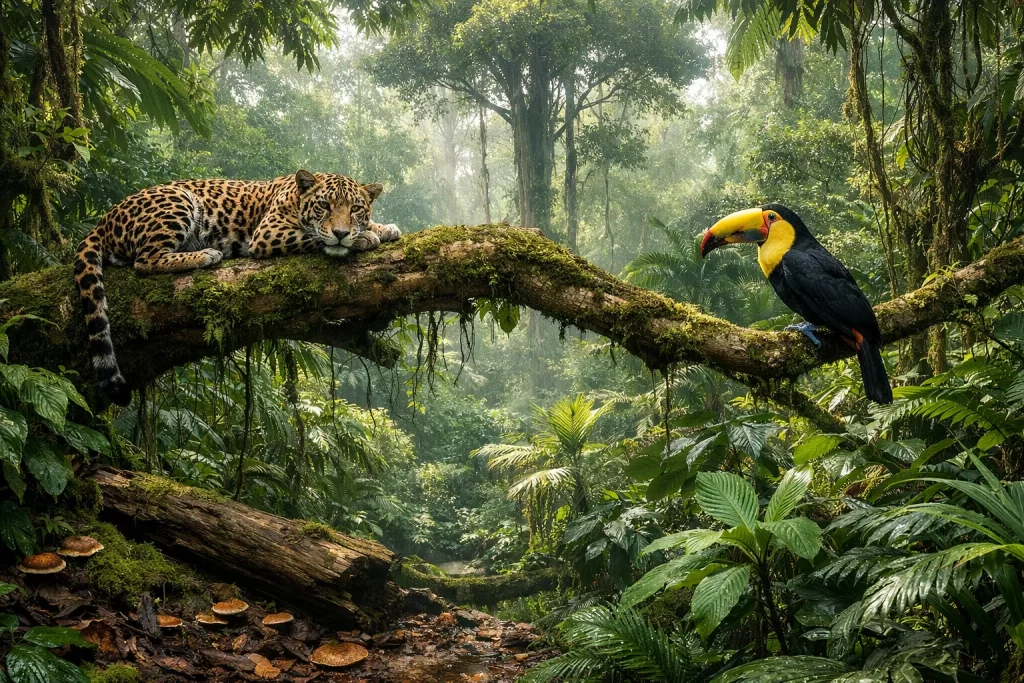
Rainforests represent less than 7% of Earth’s land surface. Yet they contain more than 50% of terrestrial species. Annual rainfall exceeds 80 inches. Temperatures average between 70°F and 85°F year-round. This climate fuels rapid plant growth and layered vegetation.
National Geographic Education explains that rainforests store vast carbon reserves. The Amazon rainforest alone absorbs about 2 billion metric tons of CO₂ annually. That carbon storage slows global warming. Rainforests remain central to wildlife habitats and ecosystems of the world because they regulate global climate systems.
Layers of Life in Tropical Forests
Rainforests have four distinct layers. These include the emergent layer, canopy, understory, and forest floor. The canopy blocks nearly 75% of sunlight. Only 2% reaches the forest floor.
This layered structure creates microhabitats. Monkeys and sloths dominate the canopy. Frogs and insects thrive in the understory. Decomposers break down organic matter below. Each layer performs a precise ecological function. See how environmental shifts reshape habitats in Impact of Climate Change on Wildlife Habitats.
Rainforest Species and Ecological Roles
Rainforests support jaguars, orangutans, toucans, and poison dart frogs. Insects alone may represent millions of species. Pollinators maintain plant reproduction cycles.
Key rainforest roles include:
- Carbon storage
- Oxygen production
- Rainfall regulation
- Medicinal plant resources
Losing even 1% of rainforest cover disrupts water cycles and species survival. These ecosystems remain biodiversity anchors. Discover dense biodiversity layers inside Rainforest Wildlife Habitat Characteristics across tropical regions.
Other Major Biomes Shaping Global Biodiversity
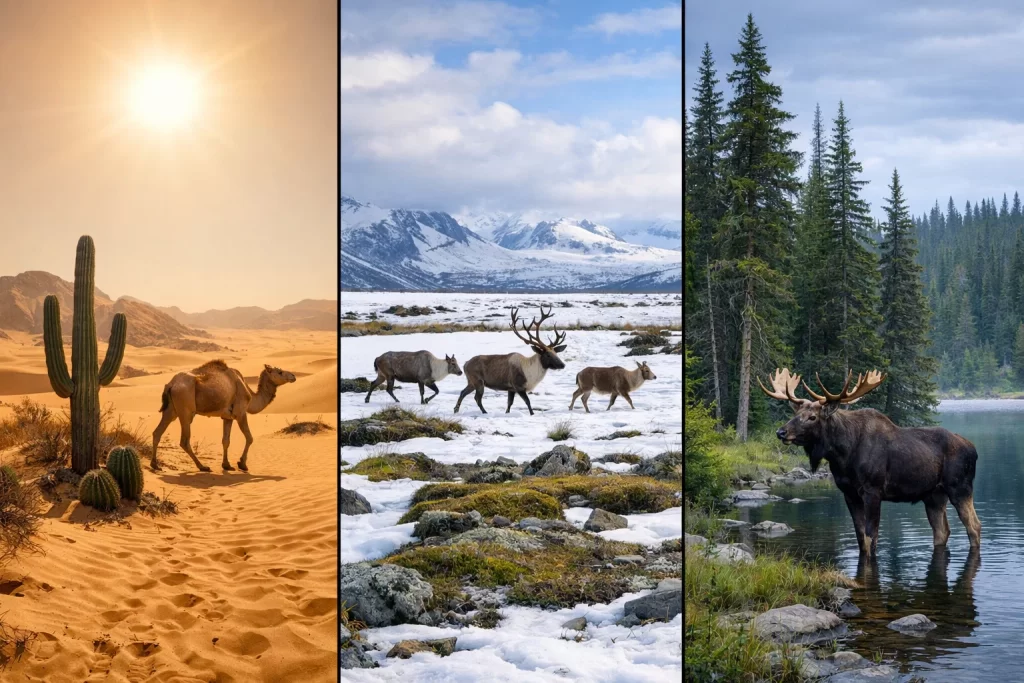
Beyond savannahs and rainforests, other biomes define wildlife habitats and ecosystems of the world. Deserts cover about 33% of the land surface. Tundra spans 20% of Earth’s land area. Temperate forests dominate large parts of North America and Europe.
Study.com’s biome comparison highlights how climate dictates plant density and species richness. Desert rainfall averages below 10 inches annually. Arctic tundra temperatures can drop below -30°F in winter.
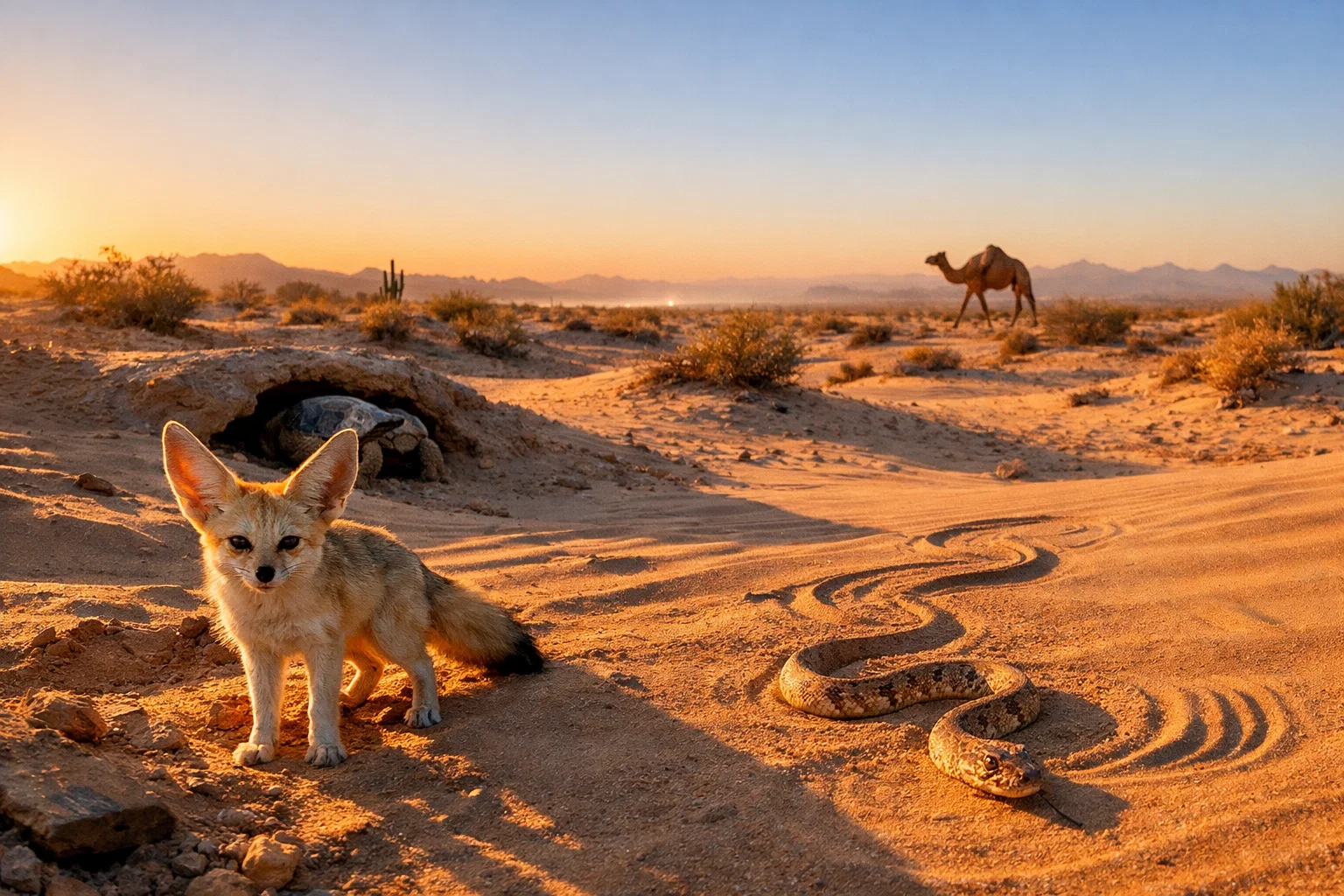
Desert Ecosystems: Extreme Survival
Desert plants store water in thick tissues. Cacti reduce leaves to spines. Camels conserve water with specialized kidneys.
Deserts may seem barren, yet they host over 6,000 reptile species globally. Life survives by minimizing water loss. This strategy defines desert ecosystems.
Tundra and Boreal Forest Systems
Tundra ecosystems experience short growing seasons of 50 to 60 days. Permafrost limits root growth. Mosses and lichens dominate the vegetation.
Boreal forests, also called taiga, store nearly 30% of global forest carbon. They act as major climate regulators. These cold ecosystems prove biodiversity thrives under harsh conditions. Learn how species endure harsh climates in Desert Animal Adaptations and Survival.
Human Impact and Conservation Efforts
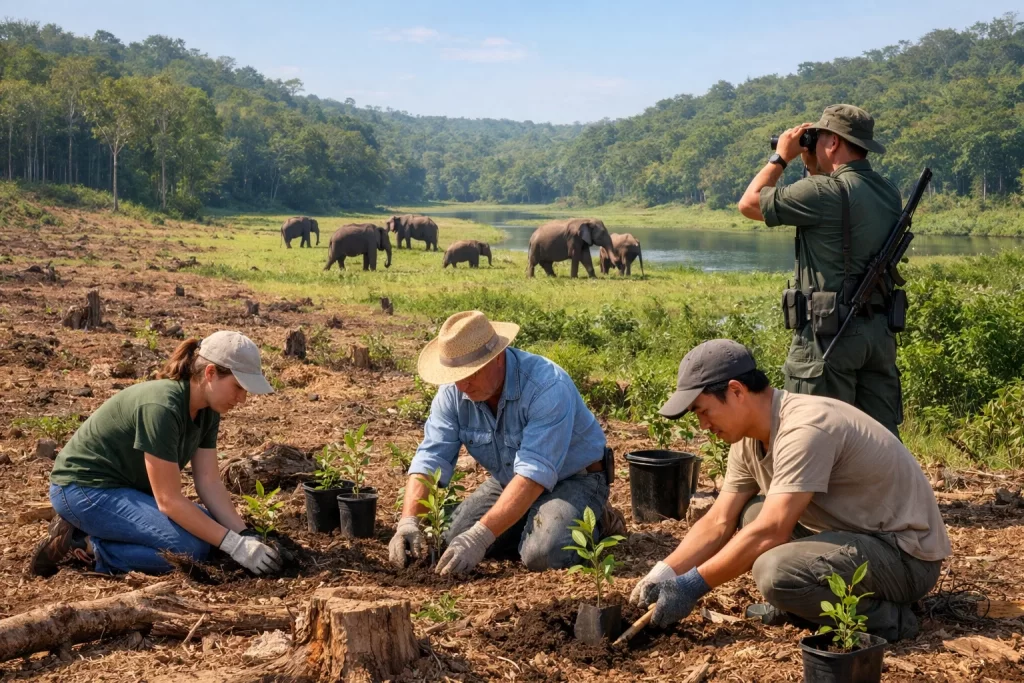
Human activity now affects over 75% of terrestrial ecosystems. The World Wildlife Fund reports a 69% average decline in wildlife populations between 1970 and 2022. Habitat loss remains the top threat.
Agriculture alone occupies 38% of the global land area. Deforestation removes about 10 million hectares annually. These numbers reshape wildlife habitats and ecosystems of the world at an unprecedented speed.
Conservation Strategies That Work
Effective conservation combines science and community action. Protected areas now cover 17% of land globally. Marine protected areas reach about 8% of oceans. Understand aquatic biodiversity through Freshwater Ecosystems, Animals, and Biodiversity in rivers and wetlands.
Proven conservation actions include:
- Habitat restoration projects
- Anti-poaching enforcement
- Indigenous land stewardship
- Reforestation programs
Biome Comparison Table
| Biome | Annual Rainfall | Avg Temperature | Species Density | Key Feature |
|---|---|---|---|---|
| Savannah | 20–50 inches | 64°F+ | Moderate | Seasonal fires |
| Rainforest | 80+ inches | 70–85°F | Very High | Layered canopy |
| Desert | <10 inches | Wide range | Low–Moderate | Water conservation |
| Tundra | 6–10 inches | -30°F winter | Low | Permafrost |
Bottom Line
Wildlife habitats and ecosystems of the world operate through precise ecological balances. Savannahs depend on fire cycles and migration patterns. Rainforests rely on rainfall and canopy layering. Deserts and tundras survive through adaptation to extremes.