Table of Contents
The Kalahari Desert hosts some of Africa’s most fascinating nocturnal animals, many of which rarely appear in daylight. Covering about 360,000 square miles across Botswana, Namibia, and South Africa, the Kalahari receives just 5 to 10 inches of rain annually. Daytime temperatures can exceed 104°F in summer, forcing wildlife to adapt by becoming active after sunset.
By night, the desert cools rapidly, often dropping below 50°F. This temperature swing creates ideal hunting conditions for predators and safer movement for prey. According to Botswana’s Department of Wildlife and National Parks, night safaris in areas like the Central Kalahari Game Reserve record peak sightings between 8:00 p.m. and midnight. These nocturnal animals rely on sharp hearing, night vision, and stealth rather than speed.
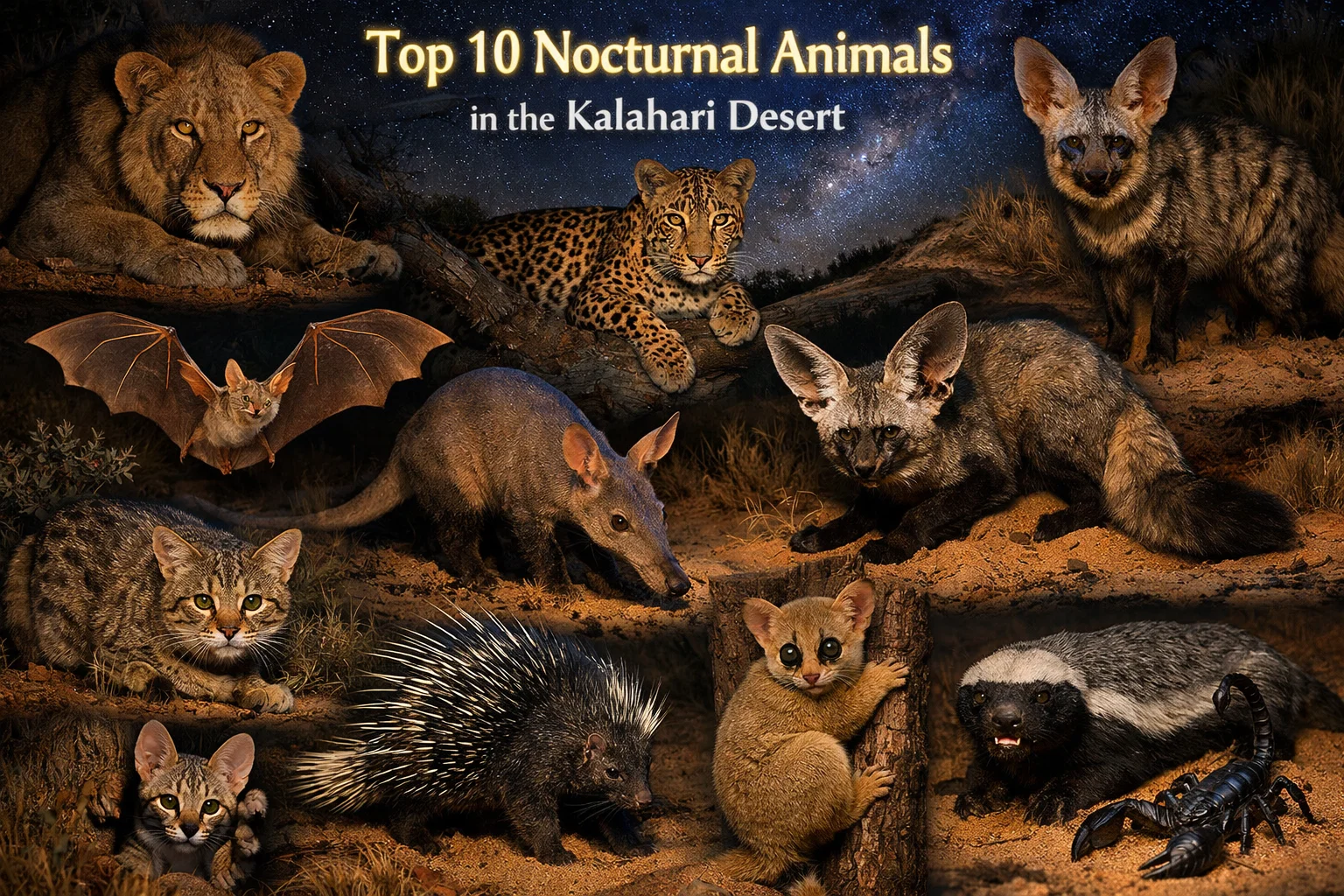
In this guide, we explore the top 10 species that rule the Kalahari after dark, backed by scientific data and field research.
1. Bat-Eared Fox (Otocyon megalotis)
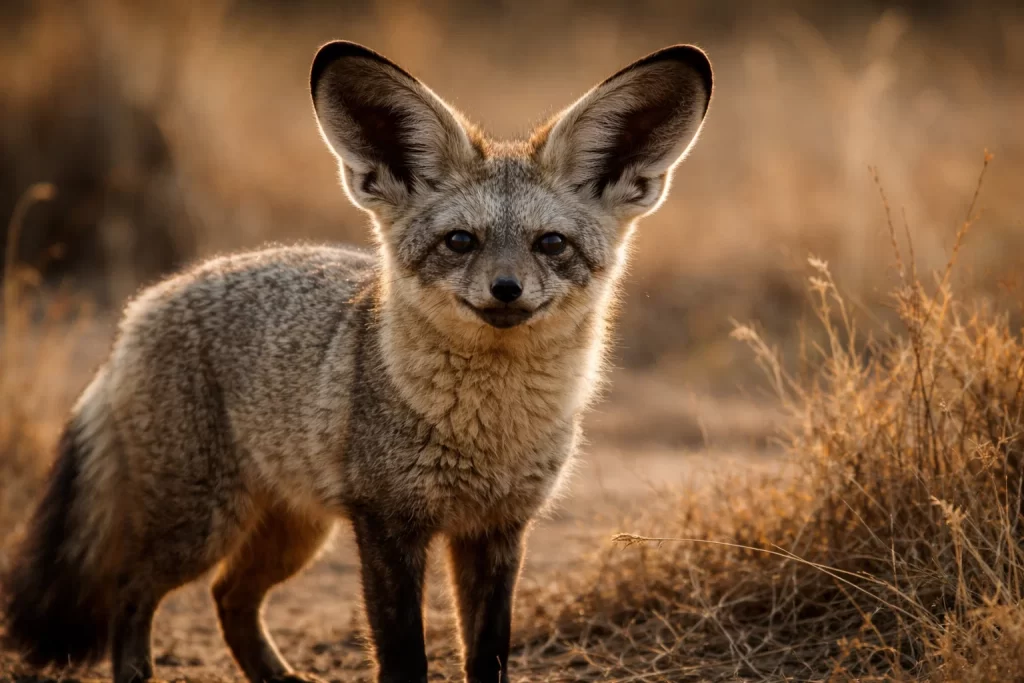
The bat-eared fox thrives among Kalahari nocturnal animals thanks to its oversized ears. Those ears measure up to 5.3 inches long and detect termites underground. Termites make up 80% of their diet.
Why It Hunts at Night
This fox weighs just 6 to 12 pounds. Night activity reduces heat stress and water loss. Studies published by the African Journal of Ecology show its hearing detects prey movement within 12 inches underground.
The bat-eared fox proves that survival here depends on precision, not strength. Some nocturnal species are scavengers. Learn why vultures don’t get sick from eating decayed meat.
2. Aardwolf (Proteles cristata)
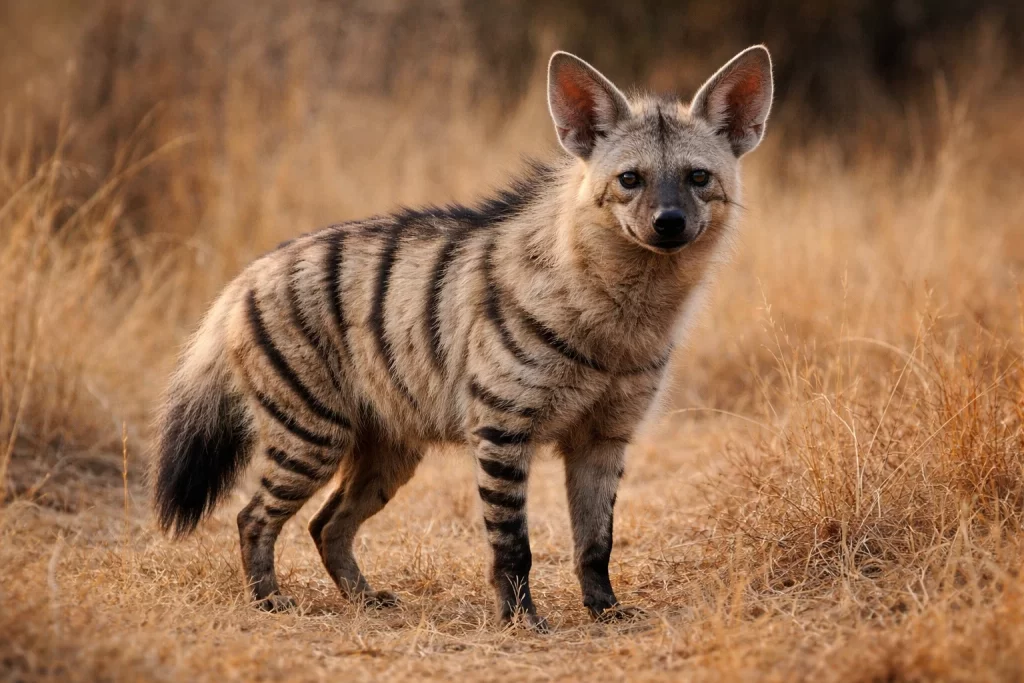
The aardwolf is often mistaken for a hyena, yet it feeds almost entirely on termites. An adult can consume 300,000 termites in a single night.
Specialized Desert Survivor
Weighing 17 to 30 pounds, it uses a sticky tongue to gather insects efficiently. According to africageographic.com, aardwolves patrol fixed territories nightly, often covering 7 to 9 miles.
Its termite-focused diet reduces competition with larger predators, ensuring ecological balance.
3. Brown Hyena (Parahyaena brunnea)
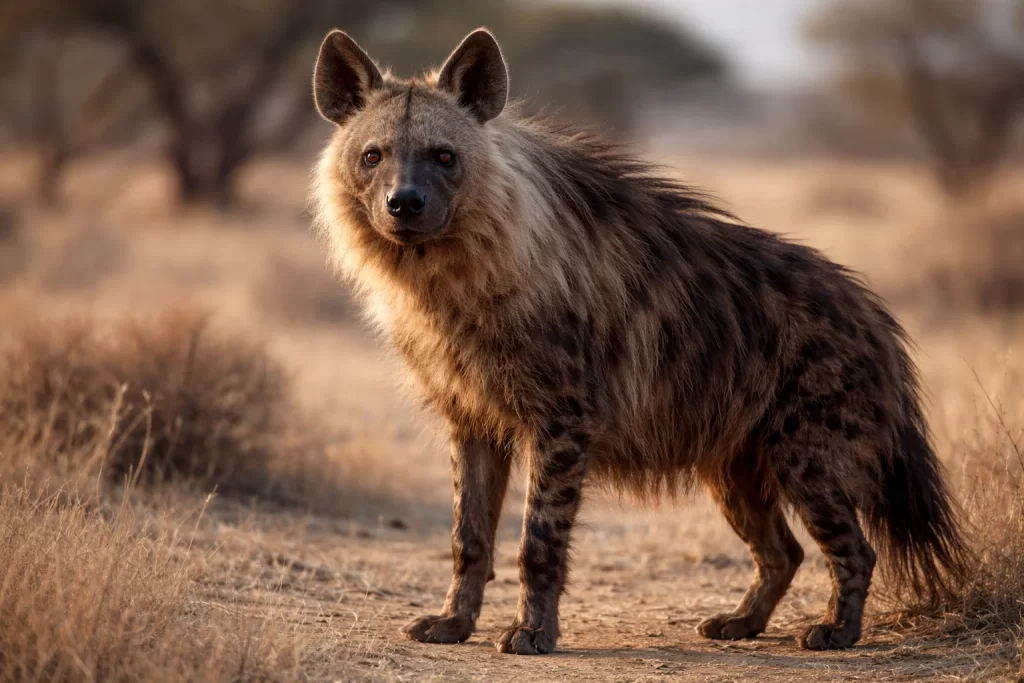
The brown hyena ranks among the largest nocturnal animals in the Kalahari. Adults weigh 80 to 96 pounds and roam up to 31 miles nightly.
Master Scavenger
It survives largely on carrion, bones, and fruit. Its bite force exceeds 1,100 PSI, strong enough to crush large bones.
According to National Geographic data updated in 2025, fewer than 10,000 brown hyenas remain globally. Night activity protects them from lions and extreme heat. Discover how large mammals adapt to harsh conditions in our guide to rhinos vs elephants and skin protection.
4. African Wild Cat (Felis lybica)
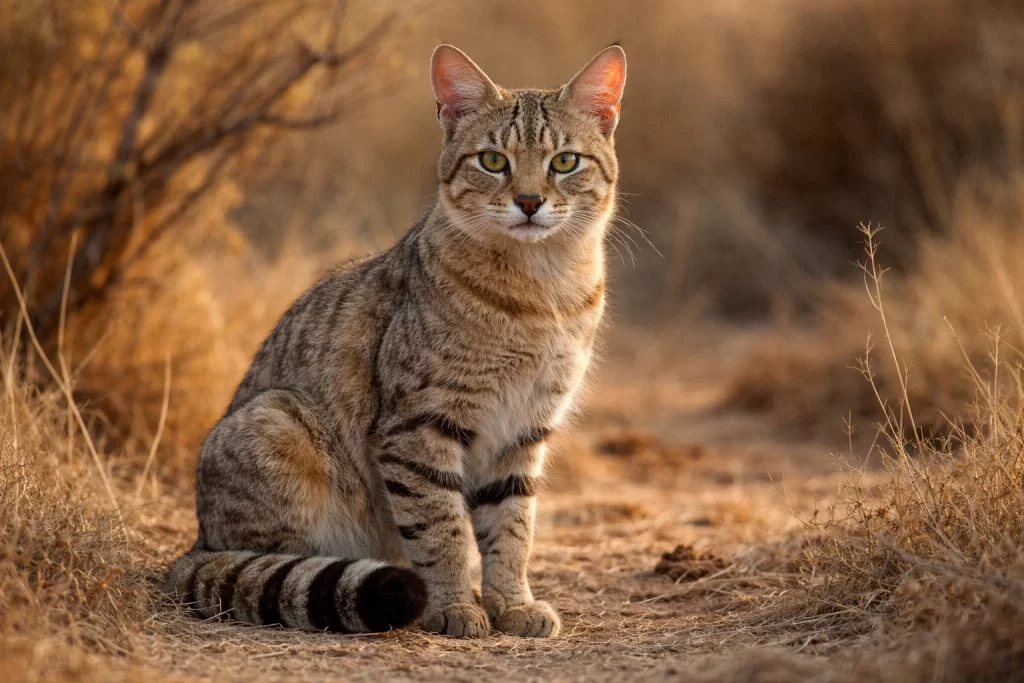
The African wildcat is the ancestor of domestic cats. It weighs 6 to 13 pounds and hunts rodents, birds, and reptiles.
Efficient Night Hunter
Its eyes reflect light through a tapetum lucidum layer, boosting night vision. Research shows it hunts successfully in light levels 1/6th of daylight brightness.
These stealthy hunters control rodent populations across arid grasslands.
5. Springhare (Pedetes capensis)
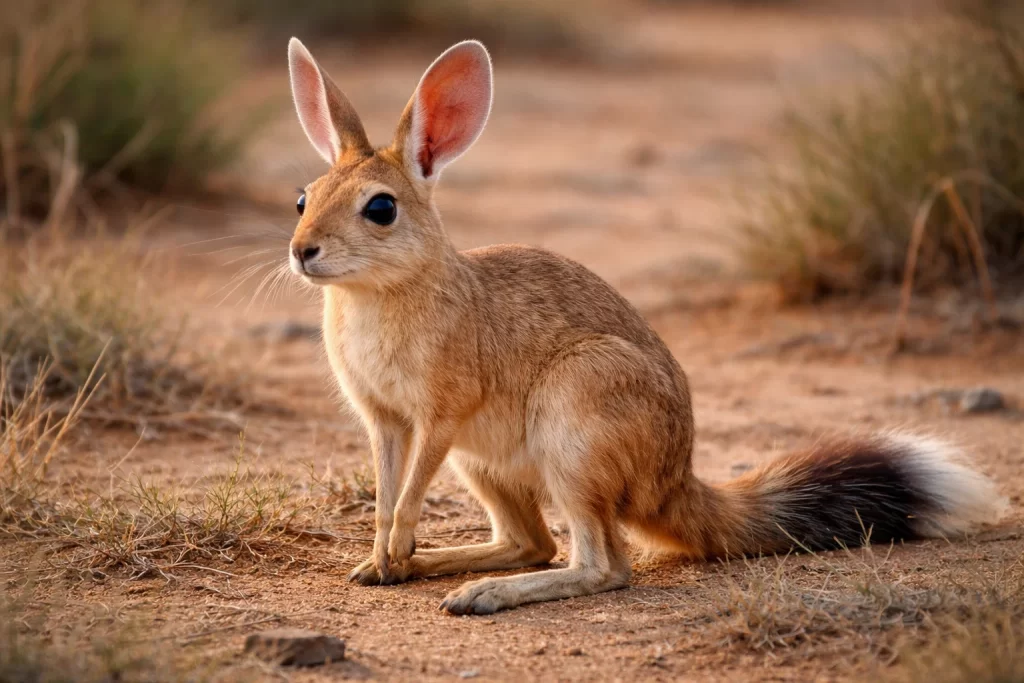
Springhares look like small kangaroos but are rodents. They weigh up to 8 pounds and leap over 6.5 feet in one bound.
Built for Darkness
They spend daylight hours in burrows. At night, they feed on roots and grasses.
Their large eyes improve low-light vision, helping them evade predators like jackals and owls.
6. Aardvark (Orycteropus afer)
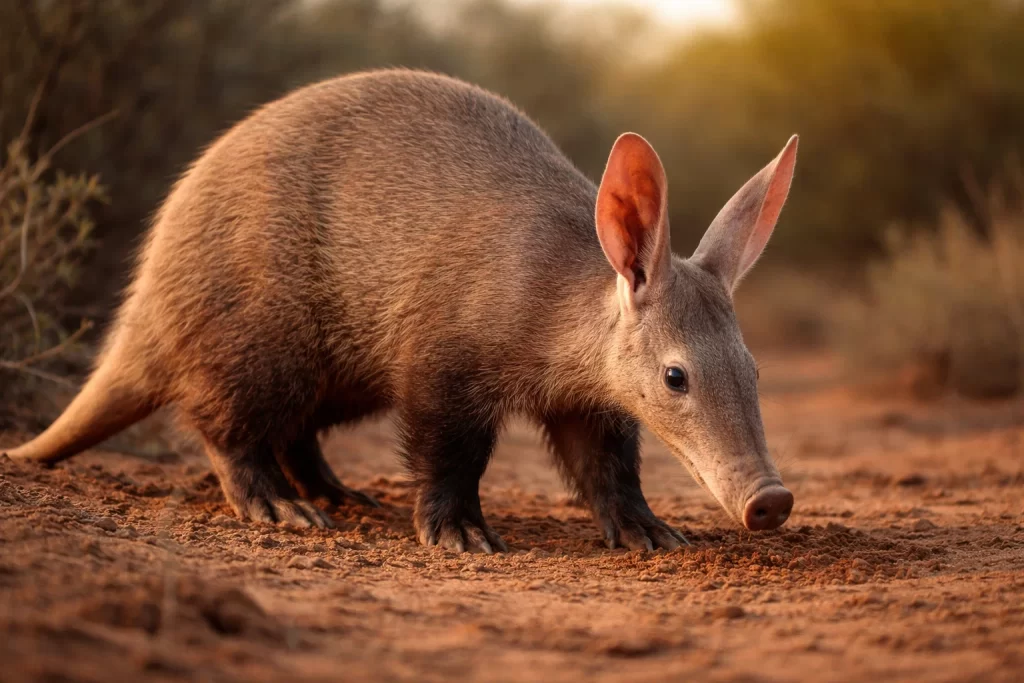
The aardvark is one of the most iconic nocturnal animals in southern Africa. Adults weigh 110 to 180 pounds.
Powerful Digger
It digs burrows up to 10 feet deep using strong claws. An aardvark consumes 50,000 ants and termites nightly.
According to data from fao.org updated in 2025, aardvark burrows provide shelter to over 17 other species.
7. Cape Porcupine (Hystrix africaeaustralis)
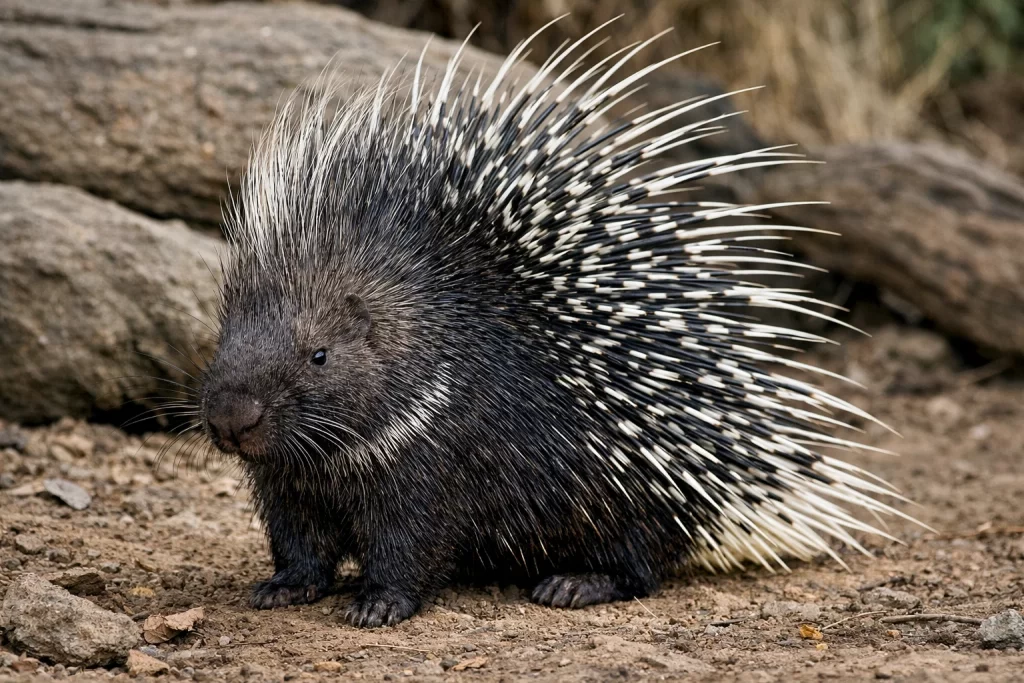
The Cape porcupine is Africa’s largest rodent, weighing up to 66 pounds.
Defensive Expert
It carries about 30,000 sharp quills. When threatened, it rattles them as a warning.
These herbivores forage at night for roots and tubers, limiting daytime heat exposure.
8. Leopard (Panthera pardus)
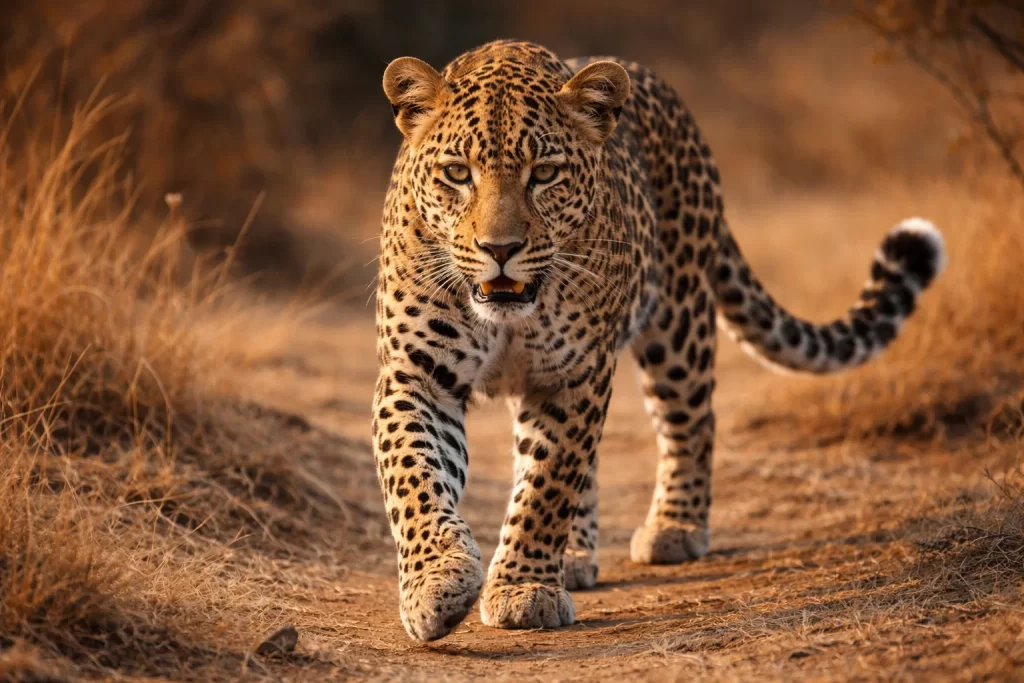
Leopards adapt well to desert life. Adult males weigh up to 198 pounds.
Stealth Predator
They rely on camouflage and silent stalking. Night hunting improves ambush success rates by over 40%.
According to worldwildlife.org, leopards remain listed as Vulnerable as of 2026.
9. African Civet (Civettictis civetta)
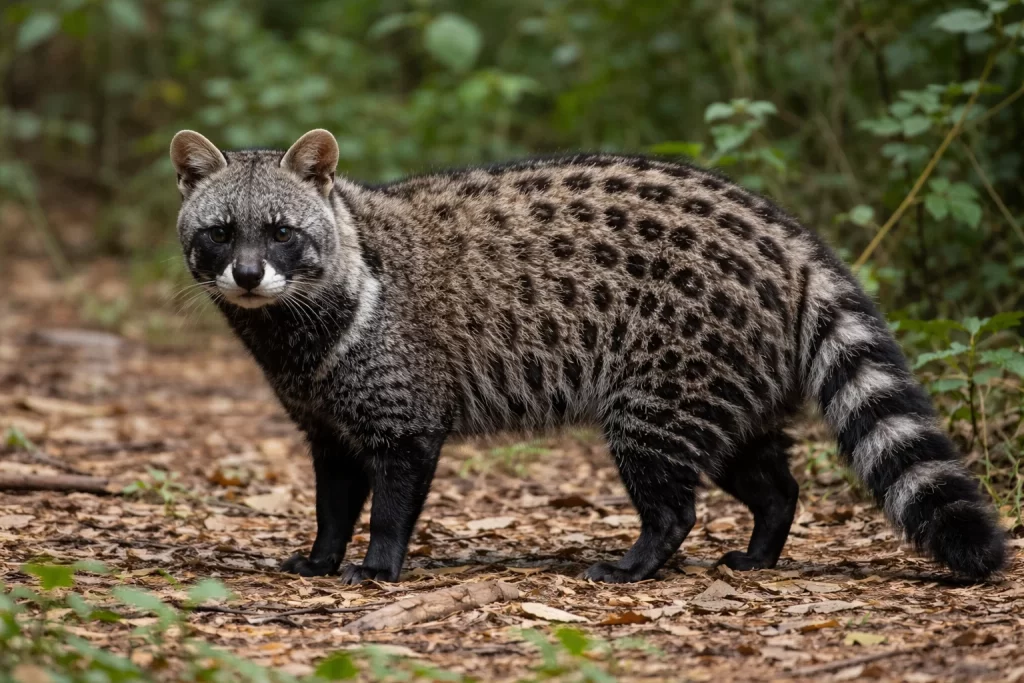
African civets weigh between 15 and 44 pounds. They are solitary and strictly nocturnal.
Omnivorous Diet
They eat insects, fruit, rodents, and carrion.
Their scent glands mark territories clearly, reducing conflict among nocturnal animals.
10. Spotted Eagle-Owl (Bubo africanus)
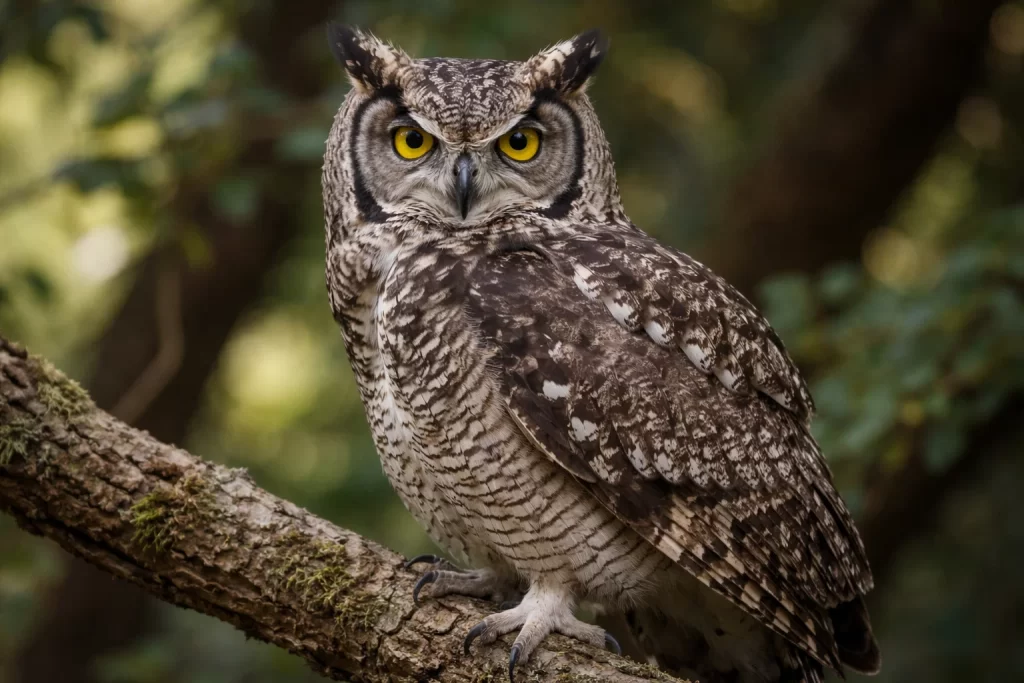
The spotted eagle-owl has a wingspan of 39 inches.
Silent Night Flier
Its specialized feathers reduce flight noise.
Owls control rodent populations and maintain ecological balance across desert ecosystems. To see how this species compares within Africa’s iconic animal groups, explore our full breakdown of The Big Five and The Ugly Five.
Key Adaptations of Kalahari Nocturnal Animals
| Species | Average Weight | Night Range | Primary Diet | Key Adaptation |
|---|---|---|---|---|
| Bat-Eared Fox | 6–12 lbs | 5 miles | Termites | Large ears |
| Brown Hyena | 80–96 lbs | 31 miles | Carrion | Bone-crushing jaws |
| Aardvark | 110–180 lbs | 6 miles | Ants | Powerful claws |
| Leopard | Up to 198 lbs | 12 miles | Antelope | Camouflage |
| Springhare | Up to 8 lbs | 2 miles | Roots | Long hind legs |
Bottom Line
The Kalahari Desert transforms completely after sunset. Temperatures drop, predators emerge, and insects fill the air. These nocturnal animals survive through sharp senses, energy efficiency, and smart hunting strategies.
If you plan a night safari in Botswana or Namibia, focus on habitats near dry riverbeds and termite mounds. Always use red-filtered lights to avoid disturbing wildlife.