Table of Contents
The African Rhino faces one of the most organized wildlife crimes on Earth. As of February 25, 2026, Africa holds about 23,300 rhinos, including roughly 16,800 southern white rhinos and 6,500 black rhinos, according to the International Rhino Foundation. Poaching remains a serious threat. South Africa reported 499 rhinos poached in 2023 and 420 in 2024, based on official conservation updates.
We now see a shift in how rangers protect the African Rhino. Thermal cameras, artificial intelligence, and drone surveillance have changed field operations across Kenya and South Africa. These tools detect heat signatures at night, track movement patterns, and alert response teams within seconds. Conservation groups report measurable declines in poaching inside tech-monitored reserves.
Thermal technology does not replace boots on the ground. Instead, it strengthens ranger teams with real-time intelligence. That shift marks a turning point in African Rhino protection.
Why the African Rhino Needs Night-Time Protection
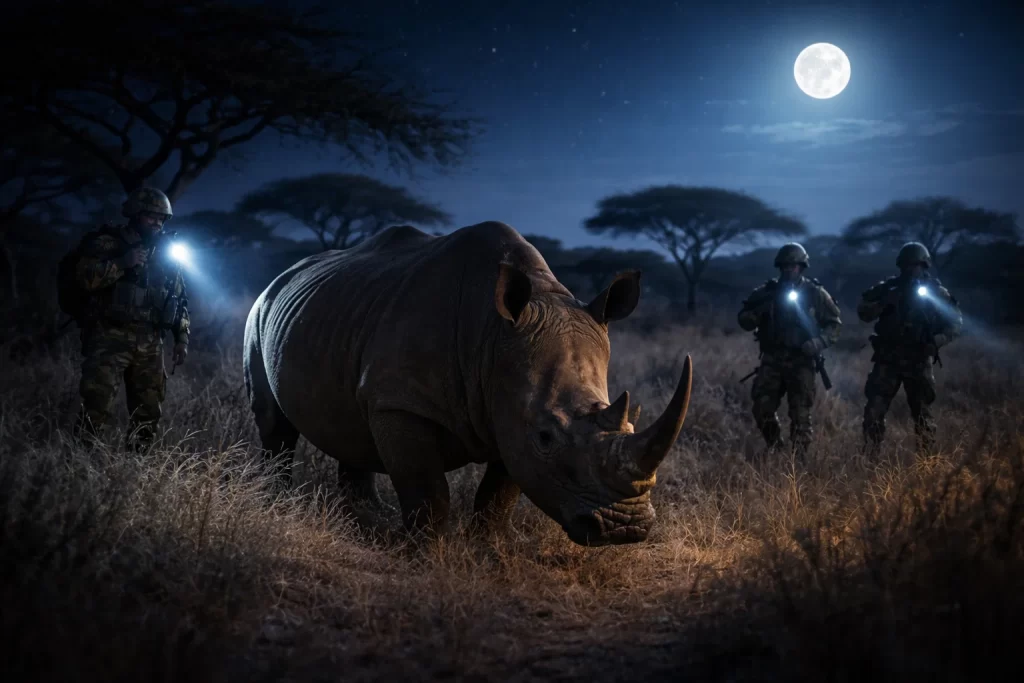
Poachers strike mostly at night. Darkness offers cover, and traditional patrols struggle to monitor large landscapes.
The Night Advantage for Poachers
African Rhino reserves often cover more than 20,000 hectares. Rangers cannot see clearly beyond 50 meters in low light. Poachers exploit this limitation using silencers and GPS tools. In South Africa’s Kruger National Park, night incidents accounted for over 65 percent of poaching attempts in recent years.
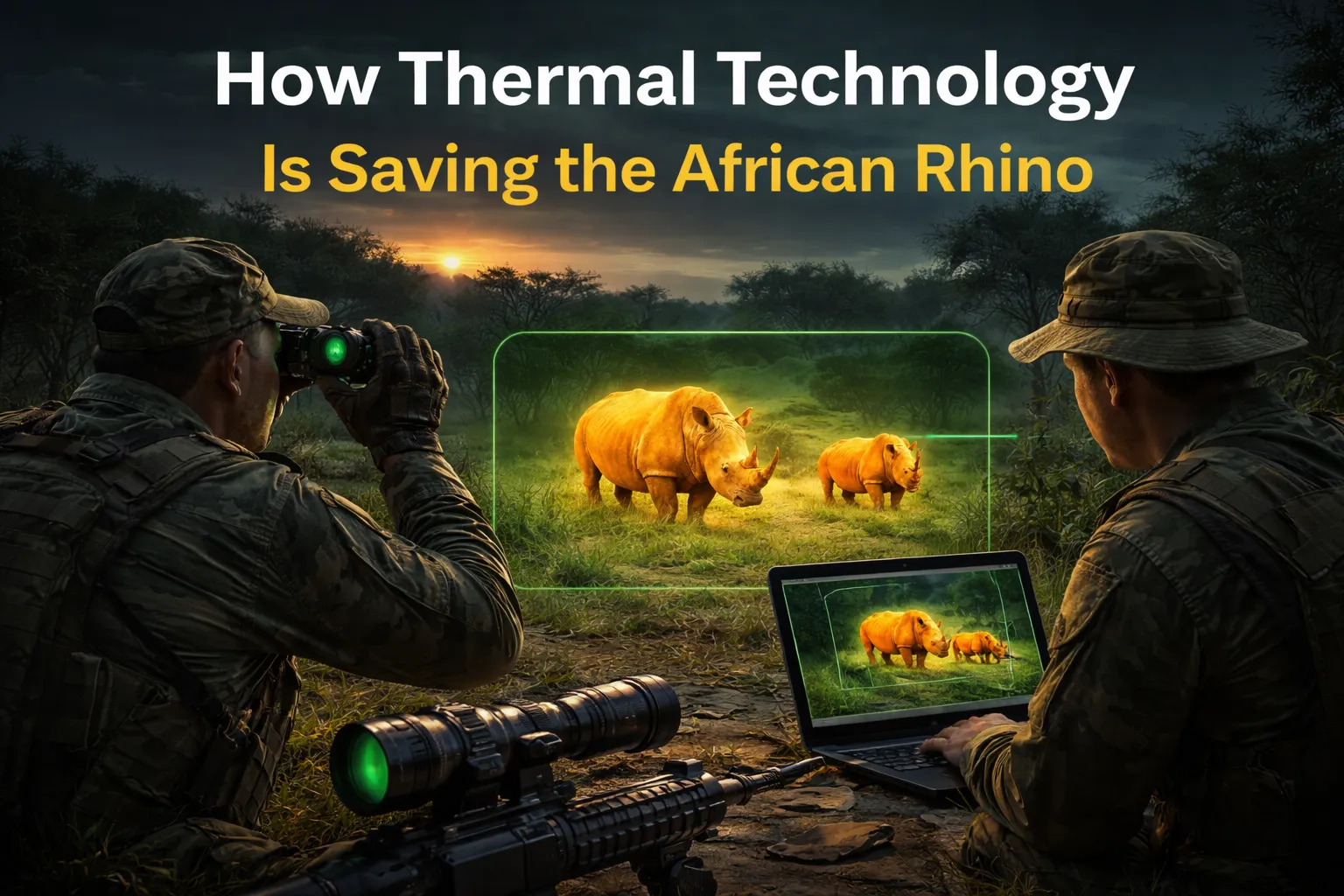
Thermal imaging changes that dynamic. These cameras detect body heat up to 1,500 meters away. A human appears as a bright heat signature against cooler vegetation. Rangers can identify threats before poachers approach rhinos.
Real-Time Detection Saves Minutes
Response time determines survival. A poaching incident often unfolds within 8 to 12 minutes.
Modern thermal systems connect to AI-powered monitoring centers. When unusual movement appears, alerts reach ranger teams instantly. In Kenya’s Ol Pejeta Conservancy, conservation teams reported a 96 percent reduction in poaching after deploying integrated thermal systems and AI analytics. To understand how this fits into wider protection efforts, read The Future of Wildlife: Conservation Strategies for the 21st Century.
How Thermal Cameras Work in Rhino Conservation
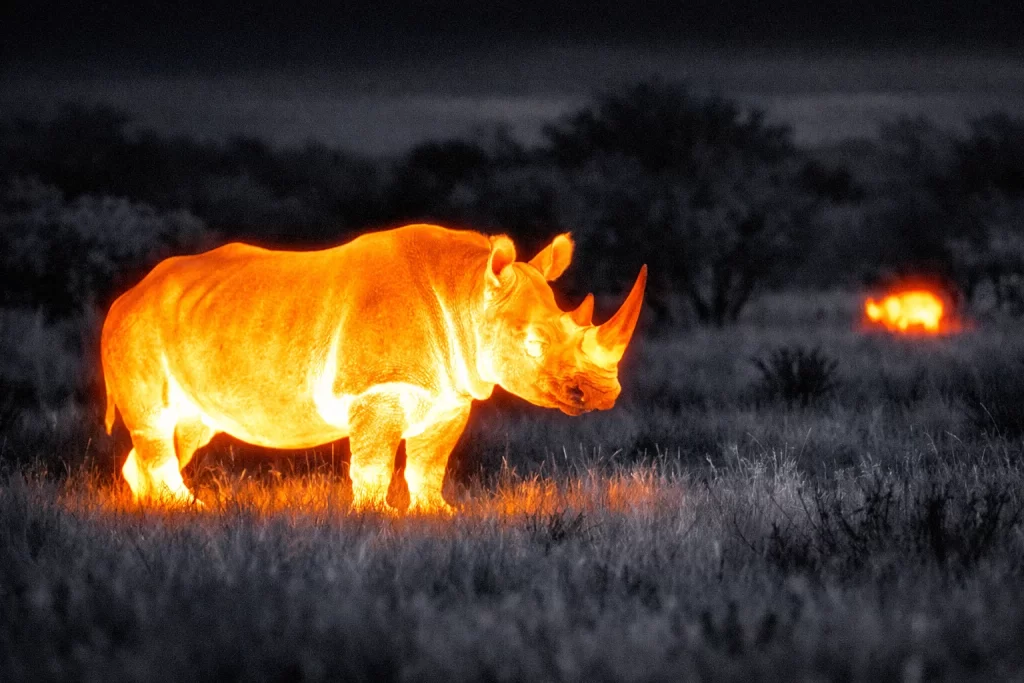
Thermal cameras detect infrared radiation. Every living body emits heat energy.
Infrared Imaging Explained
Unlike standard cameras, thermal devices do not rely on visible light. They translate heat differences into images. A warm-bodied African Rhino stands out clearly against cooler grasslands during night patrols.
Companies such as FLIR Systems have developed rugged thermal cameras designed for wildlife environments. According to flir.com, advanced thermal sensors operate in complete darkness, smoke, and light rain. That reliability makes them effective in African savannah conditions.
AI Integration Enhances Accuracy
Artificial intelligence reduces false alarms. Wind-blown branches or livestock once triggered frequent alerts.
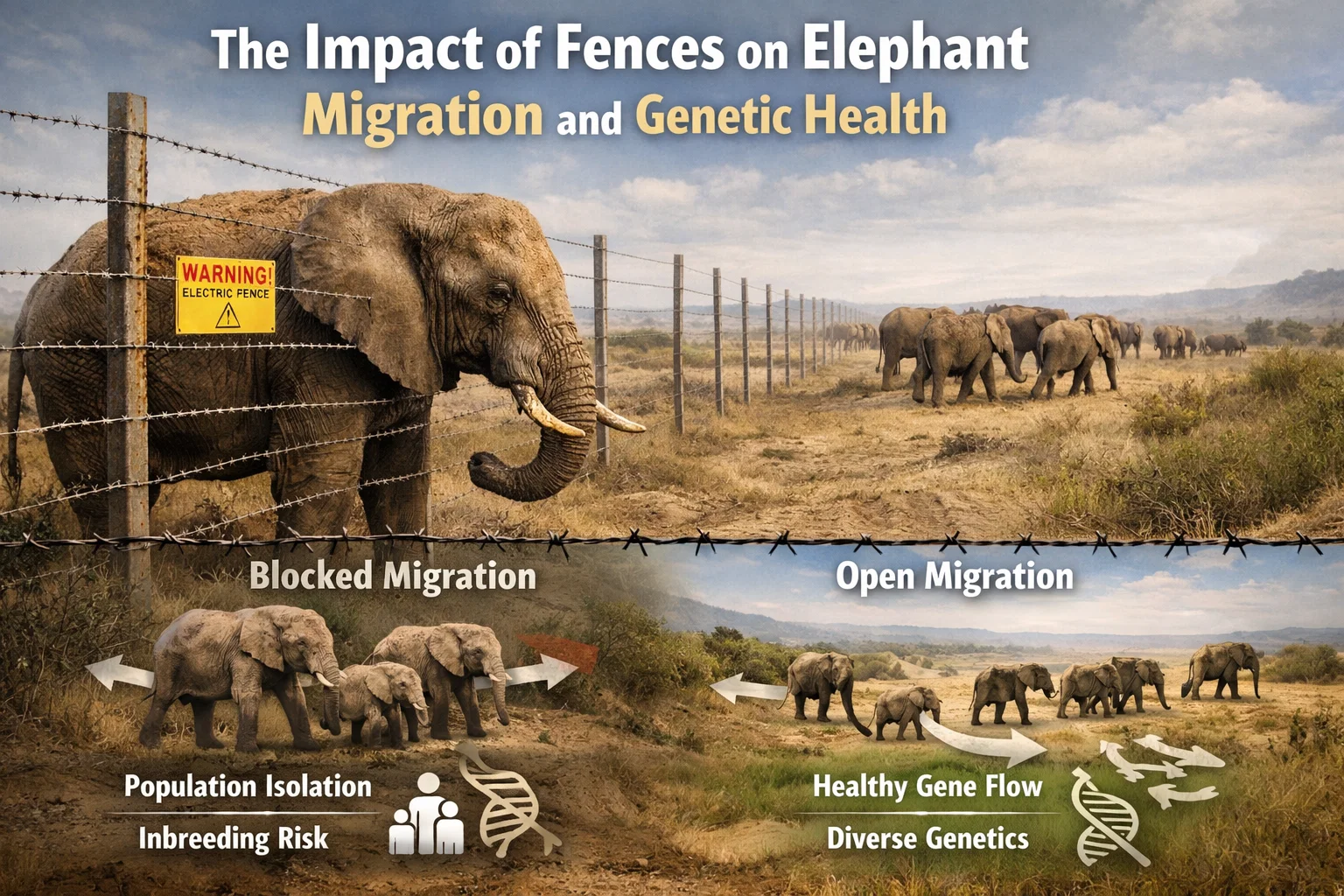
AI models now analyze movement patterns and shape recognition. Systems can distinguish between a rhino, a ranger vehicle, and a human intruder. IEEE Spectrum reported in 2024 that AI-assisted monitoring reduced false alerts by nearly 70 percent in pilot reserves. Habitat barriers also affect large mammals. Learn about the impact of fences on elephant migration and genetic health.
Thermal Technology at a Glance
| Feature | Traditional Patrol | Thermal + AI System |
|---|---|---|
| Visibility Range | 50 meters at night | Up to 1,500 meters |
| Detection Speed | Manual spotting | Instant AI alerts |
| False Alarm Rate | High | Reduced by ~70% |
| Coverage | Limited ground patrol | Ground + aerial |
| Response Time | 10+ minutes | Under 5 minutes |
Drones and Thermal Tech: A Powerful Combination
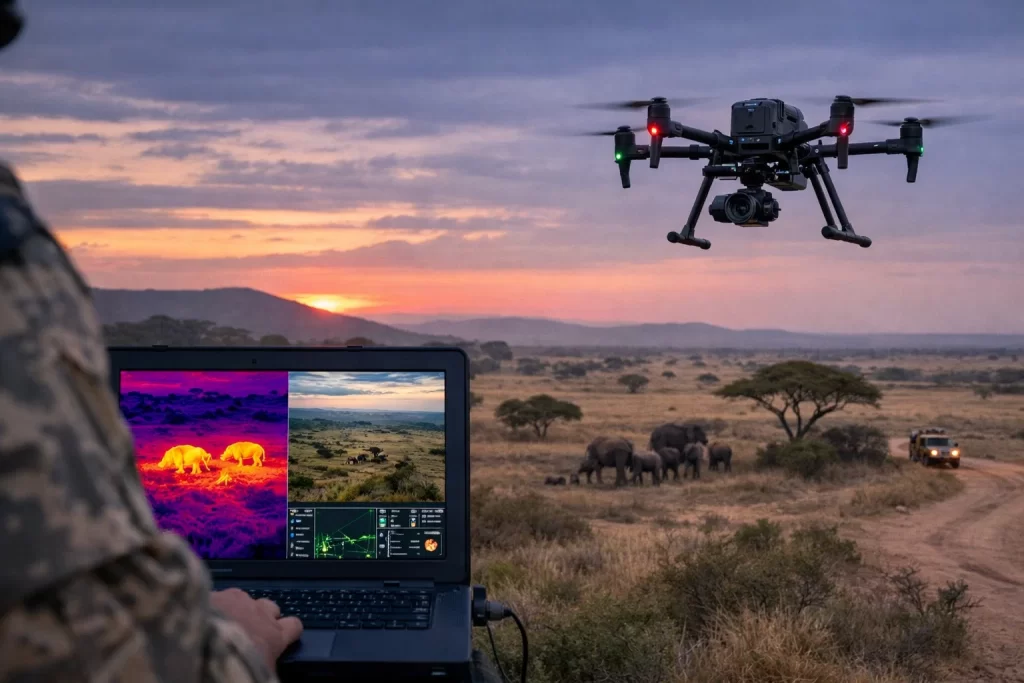
Drones extend surveillance beyond fixed camera zones.
Expanding Coverage from the Air
Thermal-equipped drones fly at altitudes of 60 to 120 meters. They scan large landscapes within minutes. A drone can cover 5 square kilometers in under 15 minutes.
Kenyan wildlife teams report improved perimeter control after introducing drone patrols in 2023. Data from World Wildlife Fund updates show technology-driven protection contributed to zero rhino poaching incidents in select Kenyan conservancies during 2024. Source: worldwildlife.org.
Cost Efficiency Over Time
Technology requires upfront investment. However, it lowers long-term losses.
A single rhino poaching incident can cost conservation agencies over $25,000 in investigation, veterinary care, and security upgrades. Thermal systems reduce repeated losses. Kariega Game Reserve in South Africa reported measurable cost savings after integrating smart surveillance. Source: kariega.co.za.
Measurable Impact on African Rhino Populations
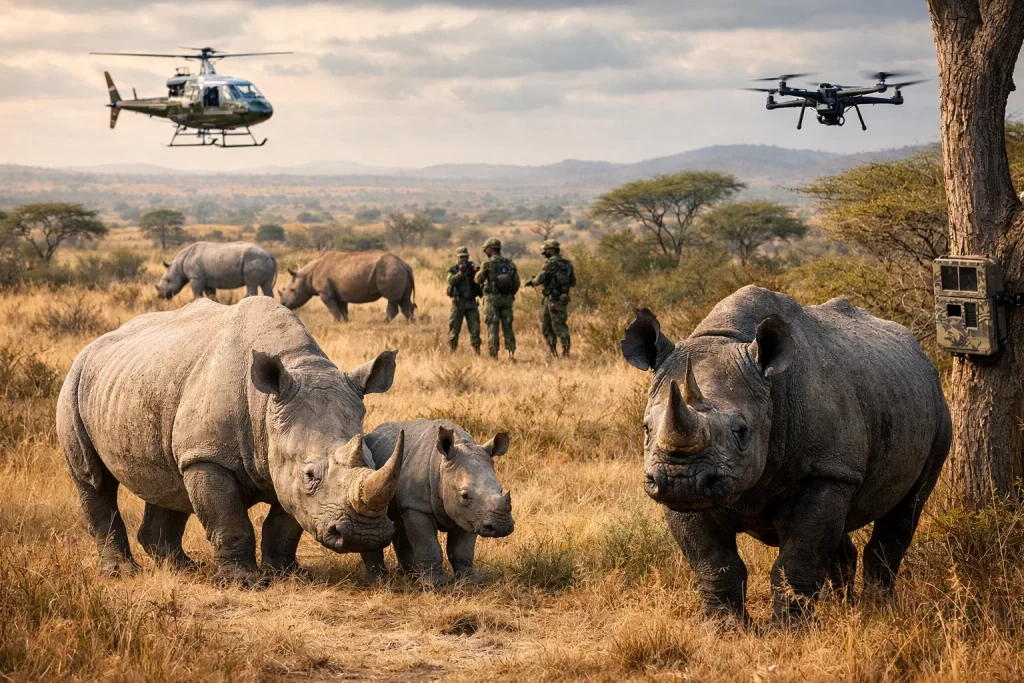
Technology alone does not guarantee survival. However, it strengthens conservation outcomes.
Population Stabilization Trends
African Rhino numbers show cautious recovery. The southern white rhino population grew by about 3 percent between 2023 and 2025. Black rhino numbers also increased modestly, supported by anti-poaching improvements.
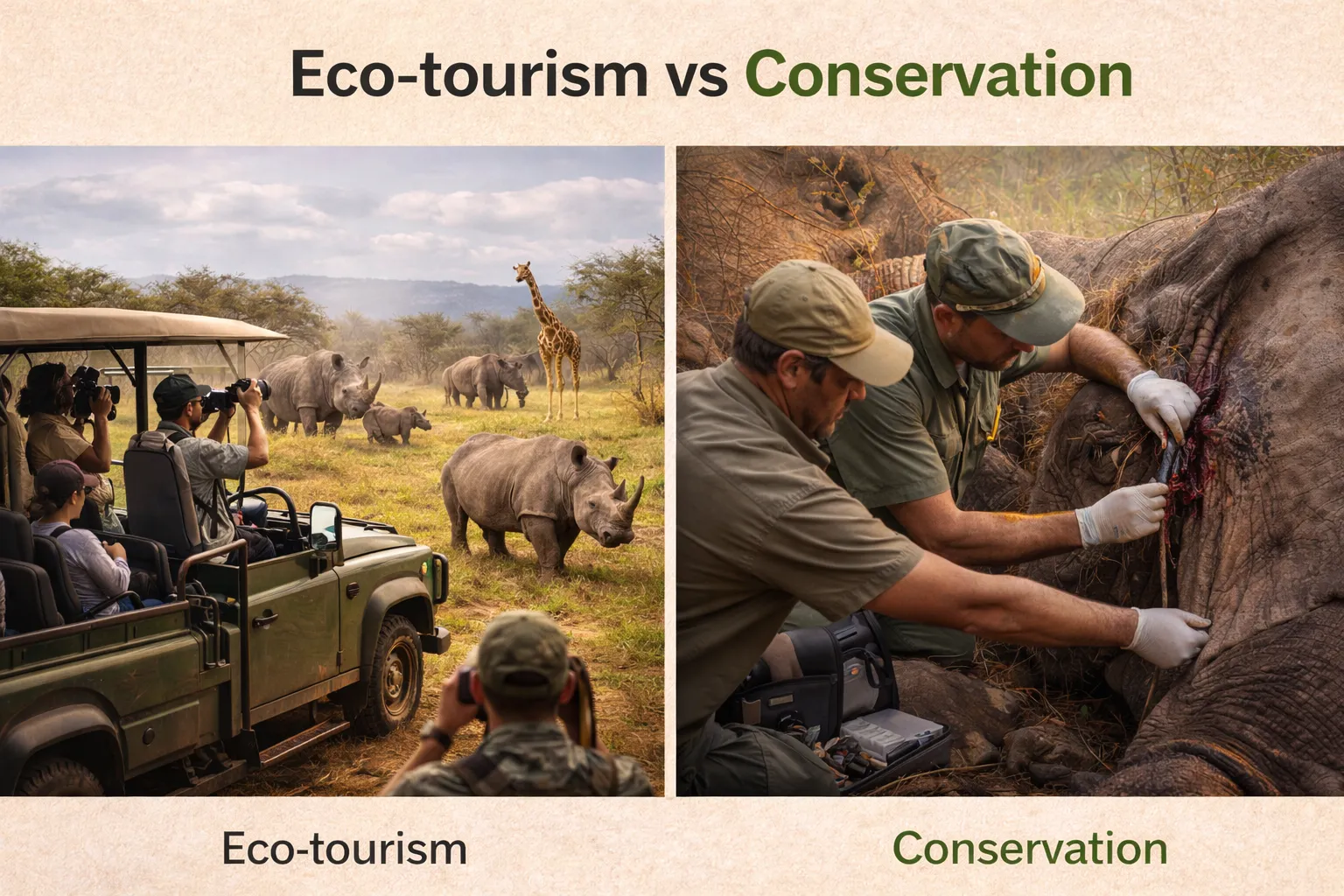
Kenya recorded zero rhino poaching deaths in 2020 and again in several conservancies during 2024. Thermal monitoring contributed significantly to those results. Strong enforcement combined with technology drives stability. Sustainable funding models matter. Explore eco-tourism vs conservation at Elephant Sands.
Key Benefits of Thermal Protection
- Detects human heat signatures up to 1.5 km away.
- Operates in total darkness and low visibility.
- Reduces false alerts by up to 70 percent with AI.
- Improves ranger response time to under 5 minutes in tech zones.
- Supports 24/7 monitoring without fatigue.
Bottom Line
The African Rhino stands at a critical point in conservation history. Poaching networks remain active, but protection tools have evolved. Thermal cameras, drones, and AI analytics now give rangers the advantage at night. Data from 2024 and 2025 show measurable declines in poaching within tech-monitored reserves.
We must view technology as a force multiplier, not a replacement for human commitment. Funding, training, and collaboration remain essential. When conservation teams combine real-time thermal monitoring with strong enforcement, the African Rhino gains a fighting chance.