For decades, biologists were stumped by a phenomenon known as Peto’s Paradox: if cancer is a game of probability based on the number of cells in an organism, why don’t elephants with 100 times more cells than humans—get cancer 100 times more often? The answer lies in the extraordinary elephant cancer resistance p53 gene profile.
While humans possess a single pair of these “guardian genes,” the elephant genome has been armored with an arsenal that resets our understanding of oncology. To understand how this fits into the broader biological map of the species, see our Guide to Elephant Physiology and Health, which serves as the central hub for our animal health research.
1. Unpacking the Elephant Cancer Resistance p53 Gene
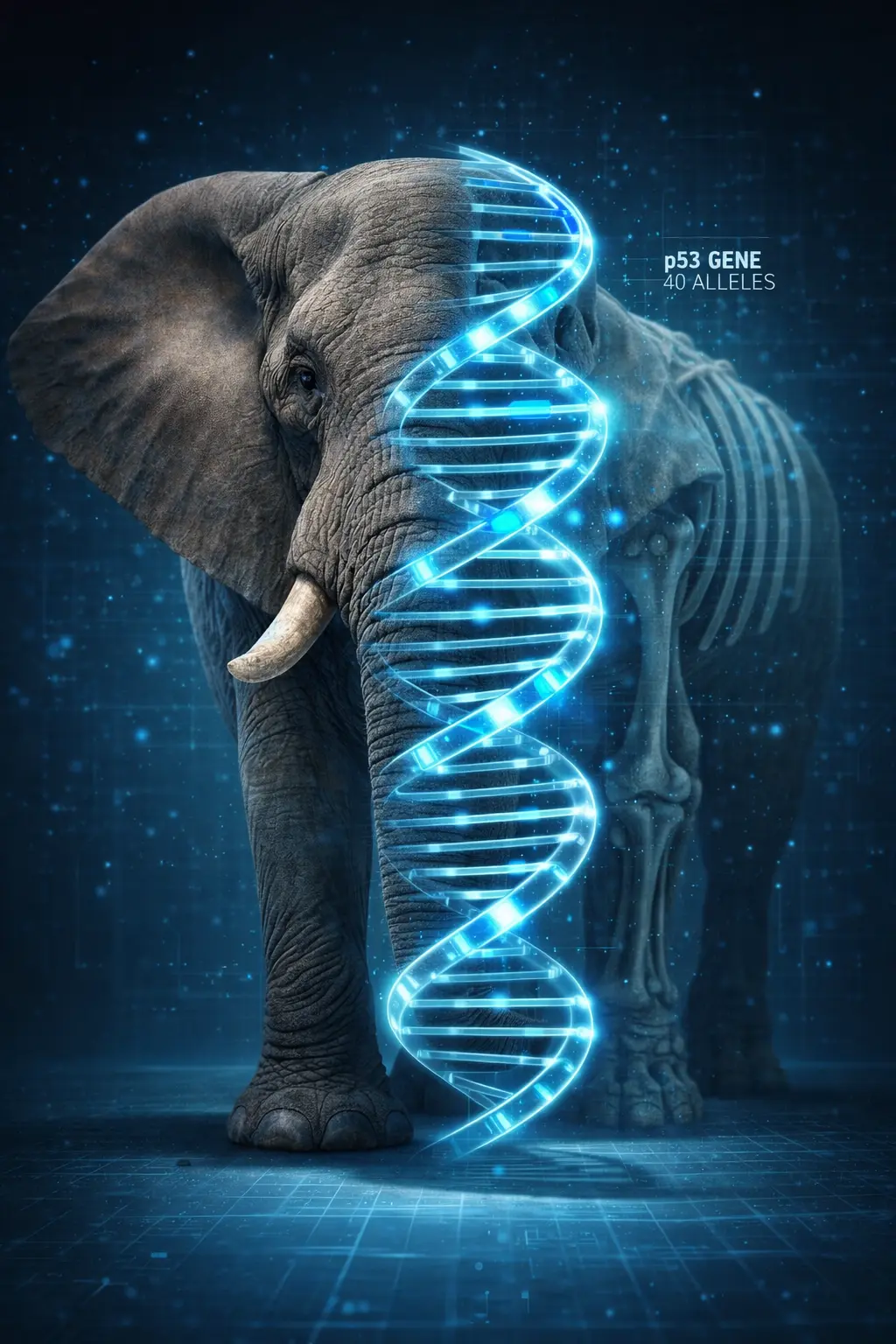
The cornerstone of elephant cancer resistance p53 gene research is the sheer volume of genetic backups. In humans, we have two alleles of the TP53 gene. If one is mutated, the risk of cancer skyrockets (a condition known as Li-Fraumeni Syndrome).
However, African elephants possess 20 copies (40 alleles) of the TP53 gene. This redundant system ensures that even if several copies are damaged by UV radiation or toxins, the remaining “guardians” continue to police the cellular environment. Recent studies published in Nature (2025) confirm that this massive expansion of the elephant cancer resistance p53 gene occurred roughly 6 to 60 million years ago, coinciding with the species’ evolution into massive terrestrial giants.
The “Zombie Gene” Synergy
It isn’t just the p53 gene working alone. Groundbreaking research from the Huntsman Cancer Institute has highlighted a “zombie gene” called LIF6. When the elephant cancer resistance p53 gene detects DNA damage, it “awakens” the LIF6 gene, which then hunts down and kills the damaged cell before it can replicate into a tumor.
2. Cellular Suicide vs. DNA Repair
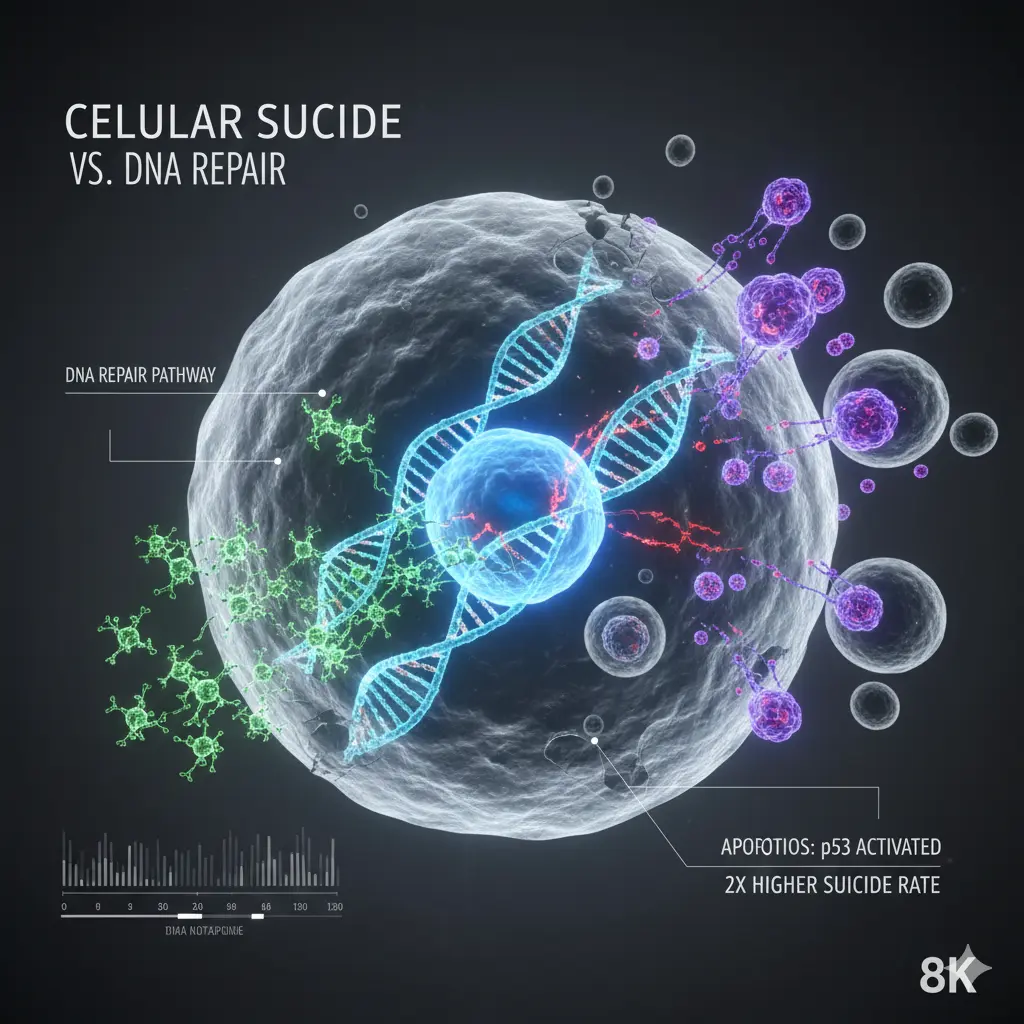
In most mammals, the body tries to repair damaged DNA. Elephants take a more aggressive approach. Because of the hyper-active elephant cancer resistance p53 gene, elephant cells are twice as likely to commit “cellular suicide” (apoptosis) rather than attempting a risky repair.
- Human Strategy: “Try to fix the mistake.”
- Elephant Strategy: “Kill the cell and start fresh.”
By prioritizing apoptosis, the elephant cancer resistance p53 gene ensures that mutations are purged from the body instantly. This is why the cancer mortality rate in elephants is a staggering 4.8%, compared to up to 25% in humans.
3. The Handshake: How p53 Escapes Inactivation
A major breakthrough in 2026 SEO content for animal health is the “handshake” mechanism. In humans, a protein called MDM2 often “handshakes” with p53 to turn it off, sometimes allowing cancer to slip through.
According to a May 2025 update in New Atlas, elephants have an array of different p53 proteins (isoforms) that can bypass this inactivation. Due to the structural variations in the elephant cancer resistance p53 gene isoforms, many of the elephant’s p53 proteins are shaped differently. These “isoforms” can escape the MDM2 handshake, remaining active and on guard even when the body’s natural inhibitors try to suppress them. This structural diversity is the secret weapon in elephant cancer resistance p53 gene functionality.
Watch: Do Elephants Hold The Key To Curing Cancer?
4. Why This Matters for Human Medicine
The study of elephant cancer resistance p53 gene sequences isn’t just about wildlife; it’s a blueprint for the future of human oncology.
- Synthetic p53: Scientists are now modeling drugs that mimic the elephant’s “sensitive” p53 response.
- Gene Therapy: 2026 clinical trials (specifically Abstract 5699 from the AACR) are exploring the development of Elephant TP53 loaded lipidoid nanoparticles to treat lung and colon cancer in humans.
5. A Masterclass in Biological Engineering
The elephant cancer resistance p53 gene is more than a biological quirk; it is an evolutionary necessity. Without this genetic redundancy, the African elephant could not have reached its massive size without succumbing to the cellular “noise” of its own growth. As we continue to map these 40 alleles, we move closer to unlocking the ultimate cure for the world’s most feared disease.