Elephants are the largest terrestrial mammals on Earth, but they are far from a single, uniform group. In this complete guide to elephant species, we break down the biological differences, unique habitats, and conservation status of the three distinct species recognized in 2026.
Whether you are a researcher or a wildlife enthusiast, understanding these giants begins with their classification.
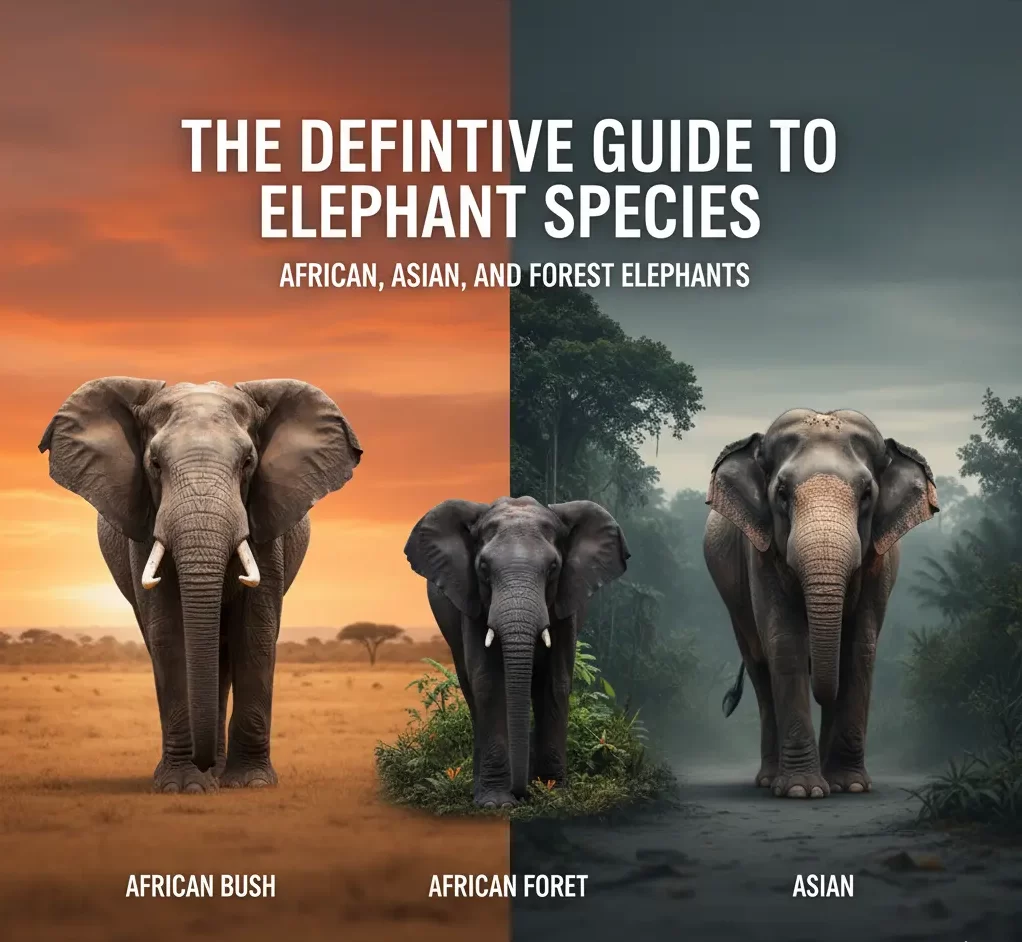
1. The African Bush Elephant (Loxodonta africana)
The African Bush (or Savanna) elephant is the most iconic member of the family. These are the giants of the open plains and the primary focus of many desert-adaptation studies.
- Size: The largest of all species, reaching up to 4 meters at the shoulder.
- Key Feature: Large “fan-shaped” ears that mimic the shape of the African continent. Both males and females grow tusks.
- Habitat: Open savannas, grasslands, and the arid “Sands” of Namibia.
- Authority Insight: According to the IUCN Red List, the African Bush elephant is currently listed as Endangered.
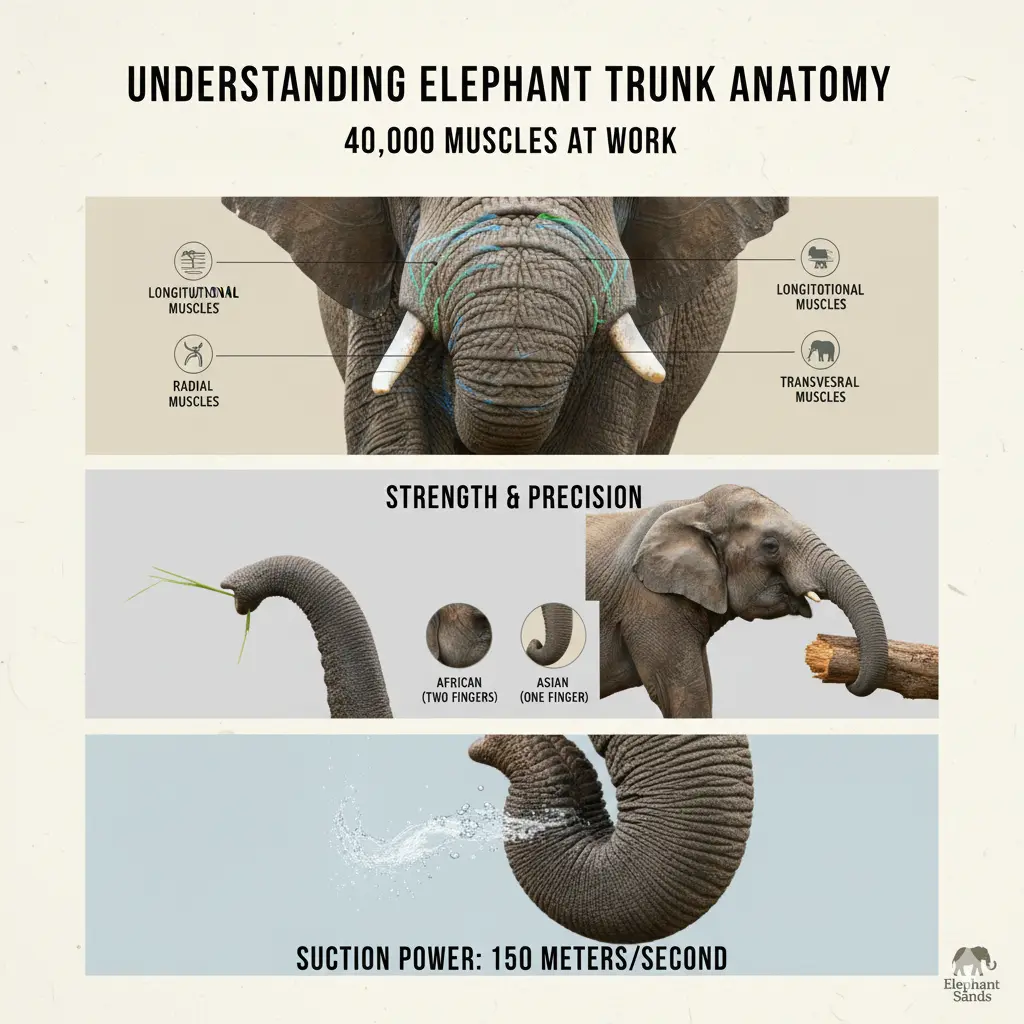
To sustain such massive bulk in the heat of the savanna, these elephants have evolved remarkable internal mechanics. For instance, the understanding of elephant trunk anatomy reveals how 40,000 muscles work in tandem to help the Bush elephant reach high acacia branches and siphon water from deep wells.
2. The African Forest Elephant (Loxodonta cyclotis)
Long considered a subspecies, genetic testing has confirmed the Forest Elephant as its own distinct species.
- Size: Smaller and more compact than the Bush elephant to navigate dense jungles.
- Key Feature: Straighter, downward-pointing tusks and rounded ears.
- Habitat: The tropical rainforests of the Congo Basin.
- Dietary Note: They are “mega-gardeners” of the forest, dispersing seeds for trees that sequester massive amounts of carbon.
A critical biological distinction in these forest dwellers lies in their dental and skeletal structure. When comparing elephant tusk vs bone, researchers find that forest elephants often have denser ivory, which is highly sought after but structurally vital for foraging through dense tropical hardwoods.
3. The Asian Elephant (Elephas maximus)
The Asian elephant is the only surviving species of the Elephas genus and has a long history of coexistence with humans.
- Size: Smaller than the African Bush elephant, with a distinct “twin-domed” head.
- Key Feature: Smaller, rounded ears and a smoother skin texture. Often, only males grow tusks (called “tuskers”), while females may have small “tushes.”
- Habitat: Scrub forests and tropical jungles across Southeast Asia and India.
Comparison: How to Tell Them Apart?
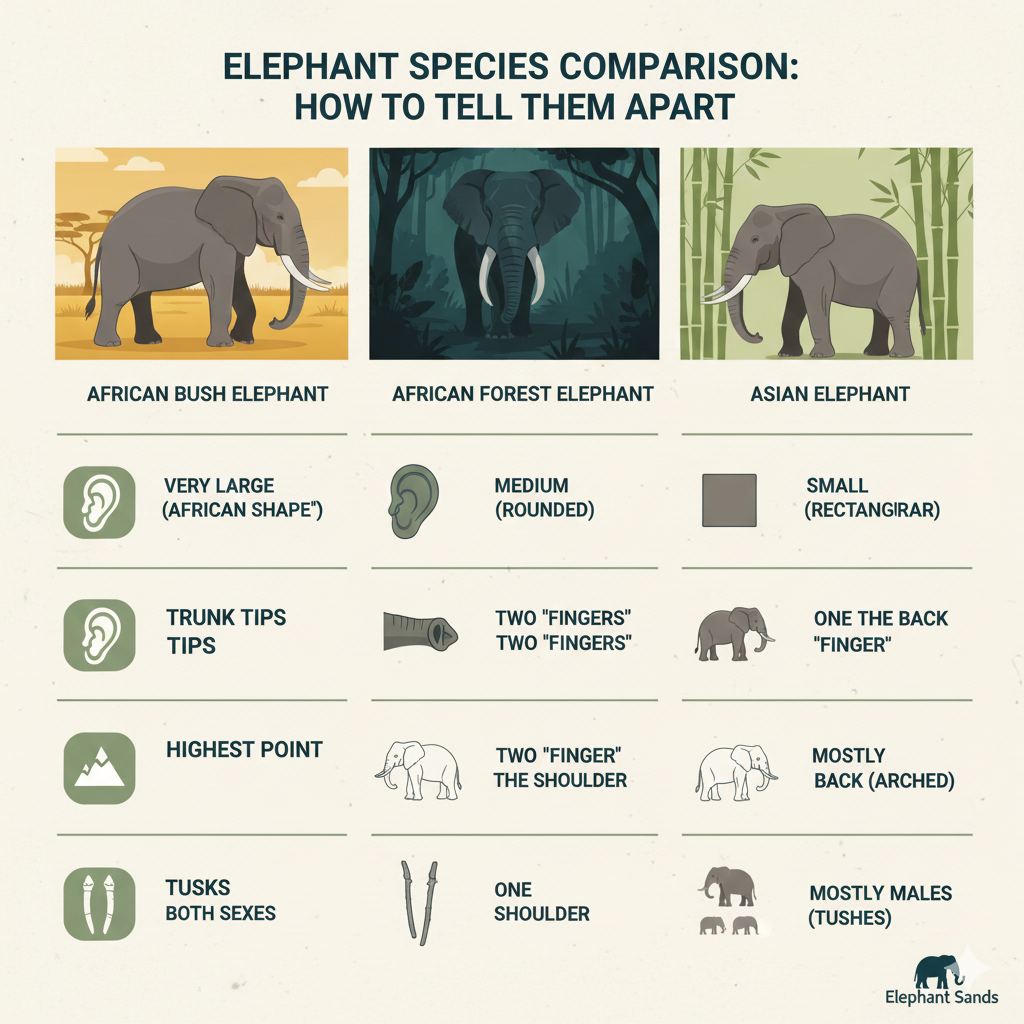
| Feature | African Bush | African Forest | Asian Elephant |
| Ear Size | Very Large (African shape) | Medium/Rounded | Small/Rectangular |
| Trunk Tips | Two “fingers” | Two “fingers” | One “finger” |
| Highest Point | The Shoulder | The Shoulder | The Back (Arched) |
| Tusks | Both Sexes | Both Sexes | Mostly Males |
The Science of Survival: Elephant Adaptations
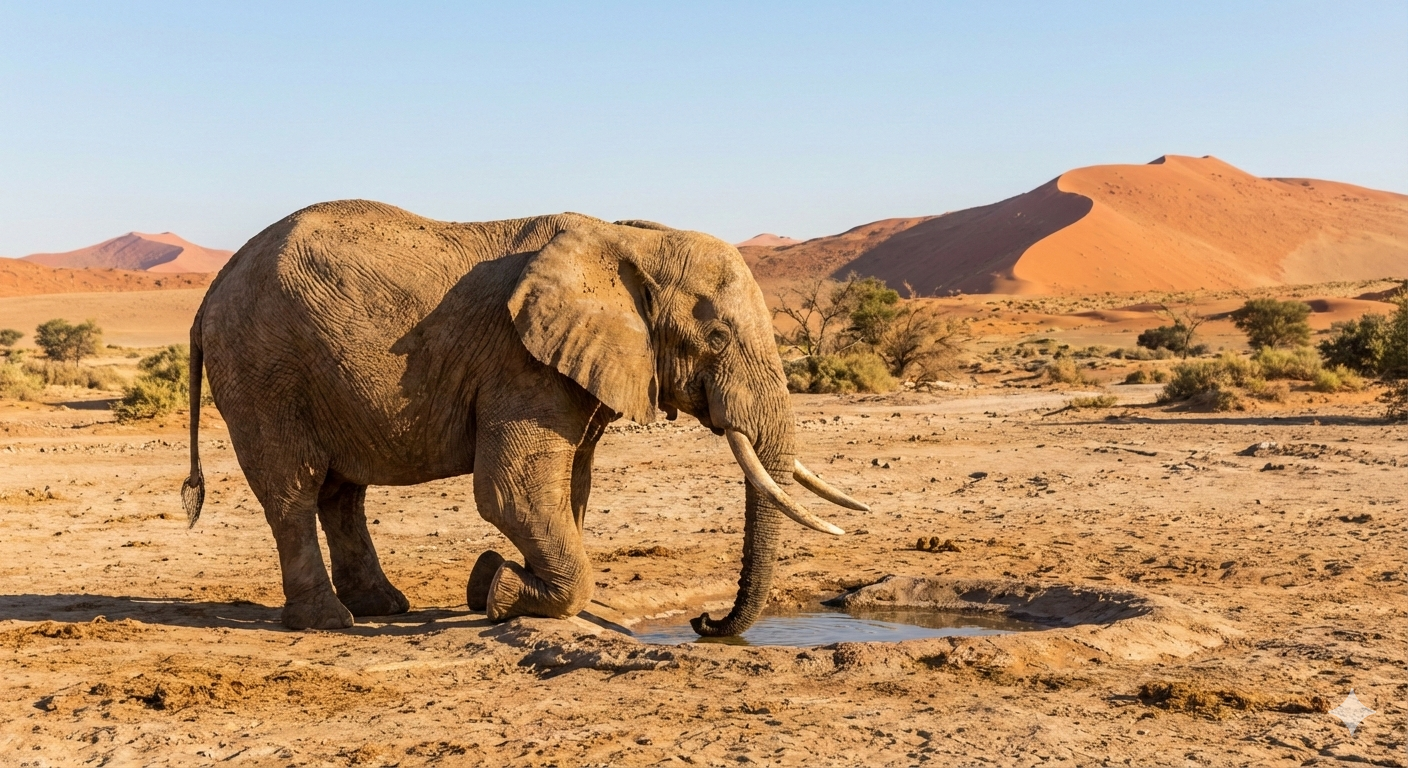
Every species in this guide to elephant species has evolved specialized traits to manage resource scarcity. The desert-adapted herds we study at Elephant Sands are technically African Bush elephants, but they have developed longer legs and leaner bodies to travel vast distances between food and water.
Their survival during the “brown season” is a marvel of biology. To understand the nutritional stress these animals face, read our deep dive into what elephants eat in the dry season, which details their transition from grass to woody browse.
Furthermore, water management is a primary physiological hurdle. In arid regions, an elephant’s survival depends on its ability to consume and store massive amounts of fluid. Discover the specific data in our report: How much water does a desert-adapted elephant drink?
Watch: The 3 Types of Elephants Explained
To see these differences in motion, watch this excellent breakdown of the evolutionary paths taken by these three species:
Conservation and the Future
Protecting these species requires more than just land; it requires the protection of migration corridors. Organizations like Save the Elephants work tirelessly to track these movements using GPS technology to prevent human-wildlife conflict.