Table of Contents
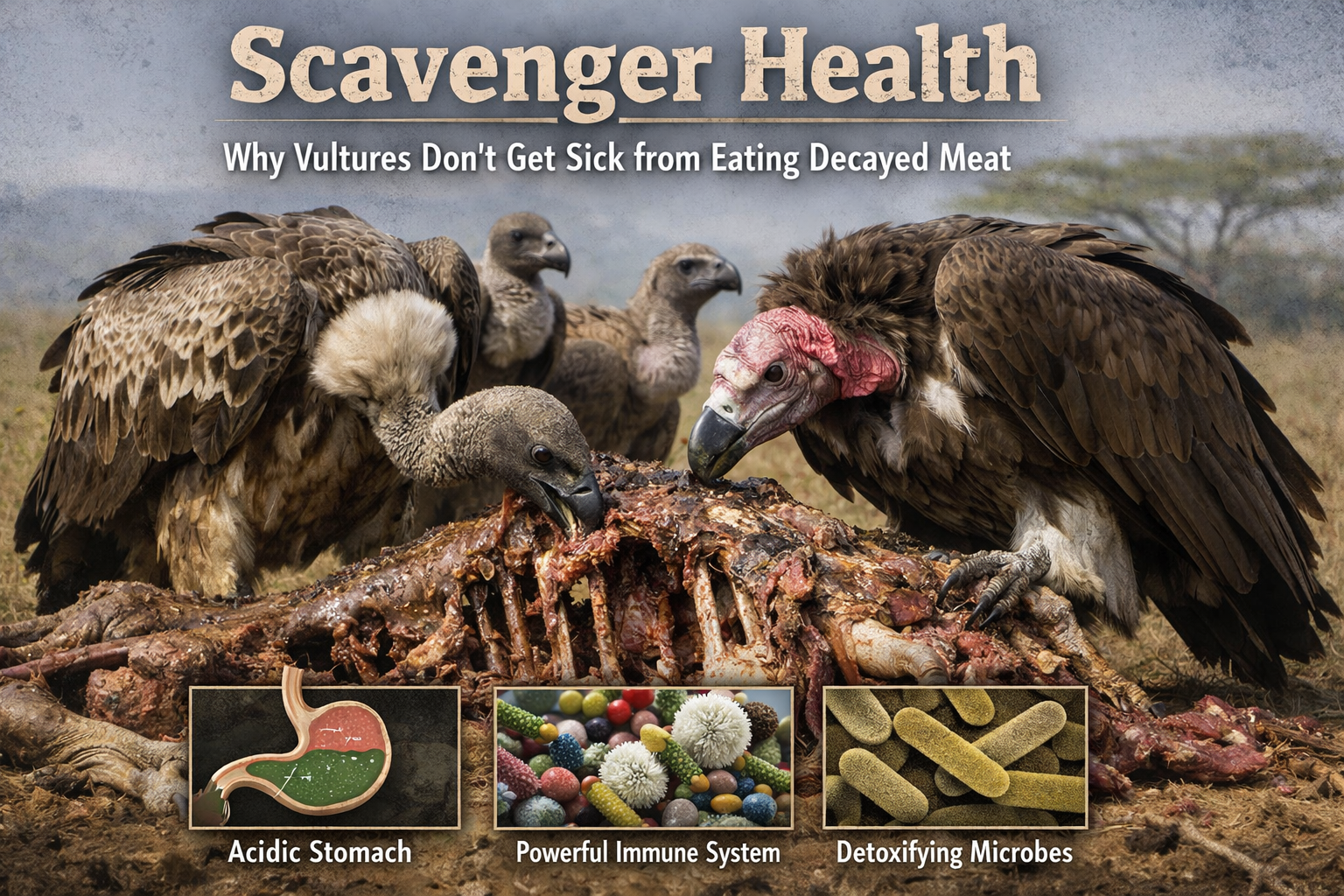
Scavenger health fascinates scientists because vultures eat rotting carcasses packed with deadly microbes and rarely fall ill. A single vulture can consume over 2 pounds of decayed meat in one sitting. That meat may carry anthrax, botulism toxins, or the rabies virus. Yet wild vultures show remarkable disease resistance.
As of 2026-02-25, global vulture populations remain under pressure, with 16 of 23 species listed as threatened or endangered by the International Union for Conservation of Nature. At the same time, research published in 2025 on PubMed and ScienceDirect confirms that vulture microbiomes and stomach chemistry form a powerful disease barrier. This natural defense protects ecosystems and reduces disease spread to humans.
When we examine scavenger health closely, we see a biological system built for extreme conditions. Vultures are not just tough birds. They are living sanitation units that protect wildlife, livestock, and people.
Extreme Stomach Acid: The First Line of Defense
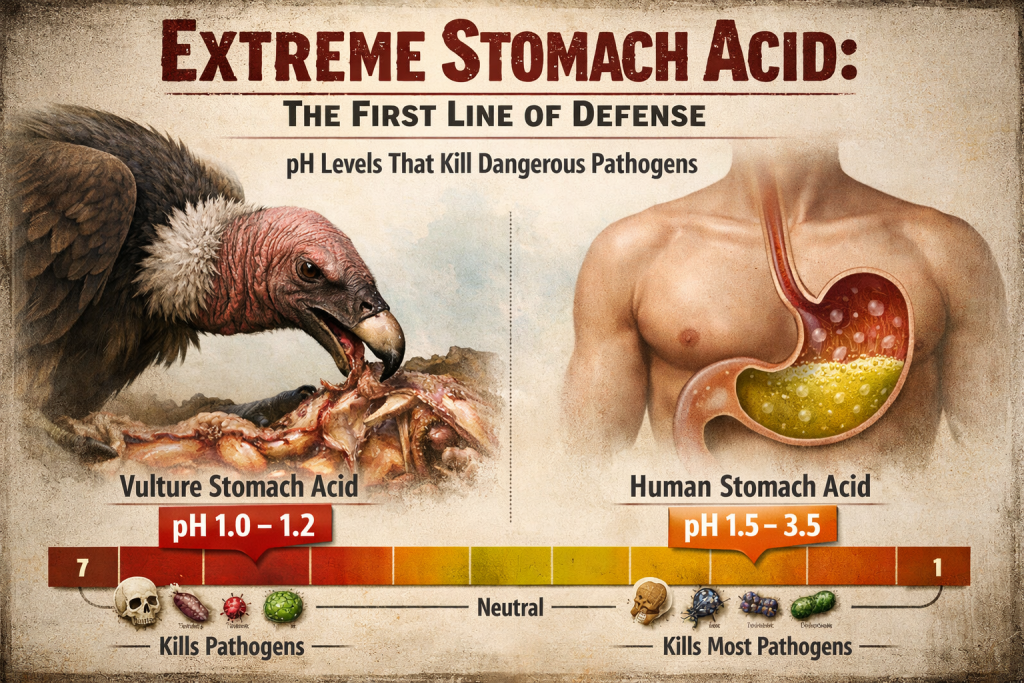
pH Levels That Kill Dangerous Pathogens
Vultures survive because their stomach acid is incredibly strong. Their gastric pH measures between 1.0 and 1.2. Human stomach acid typically ranges from 1.5 to 3.5. That difference matters.
At a pH of 1.0, most bacteria cannot survive. Studies published in 2025 show that pathogens such as Clostridium botulinum and Bacillus anthracis struggle to remain active under such acidity. Even spores face chemical stress. This acidic barrier neutralizes toxins before they reach the bloodstream.
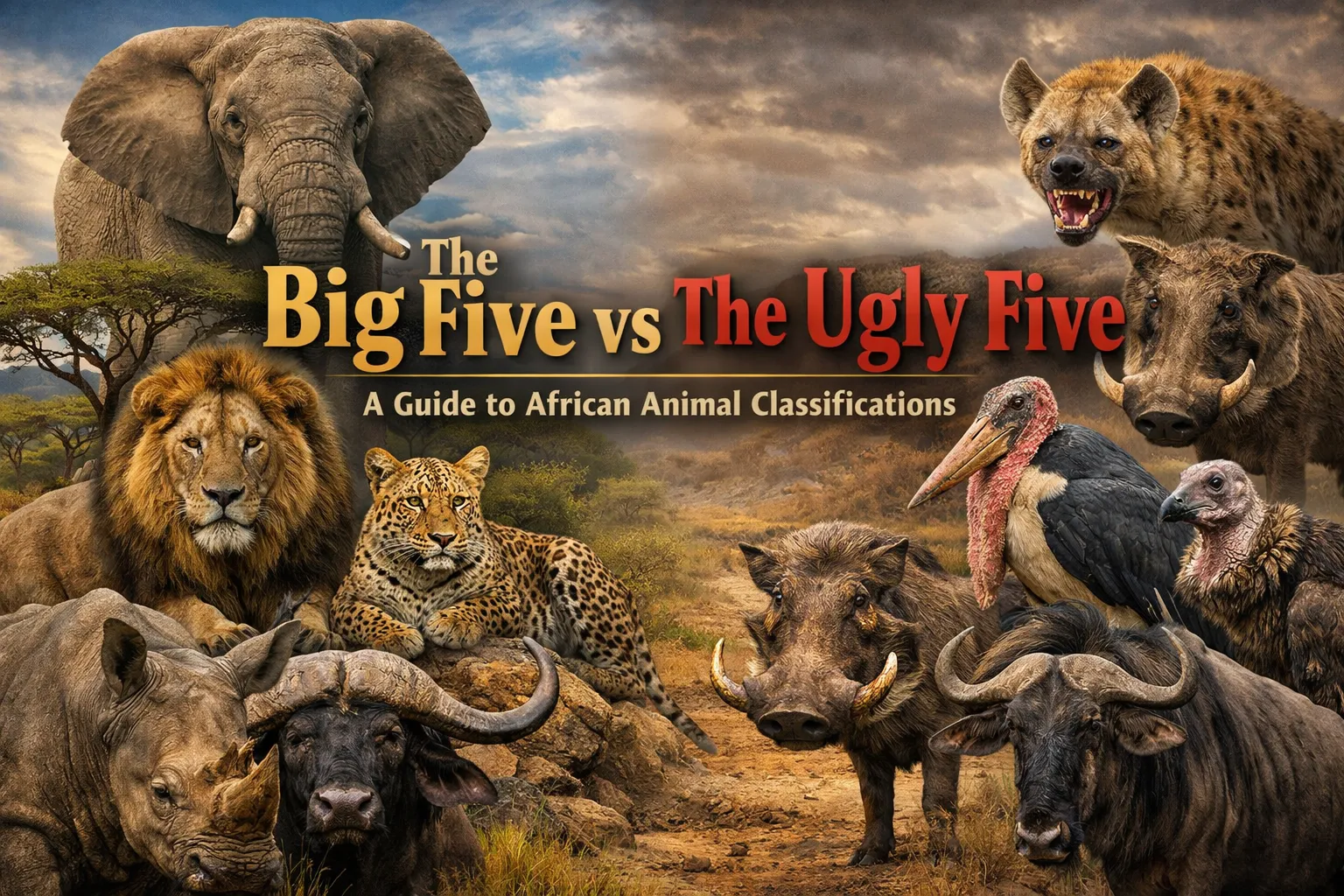
Strong acid is not the only factor. Vultures digest tissue rapidly, limiting microbial growth time. Food often passes through their system in under 24 hours. That speed reduces infection risk. This powerful digestive chemistry forms the foundation of scavenger health. For a broader understanding of how these animals fit into Africa’s wildlife classifications, return to our main guide on The Big Five vs The Ugly Five.
A Specialized Microbiome That Works With Pathogens
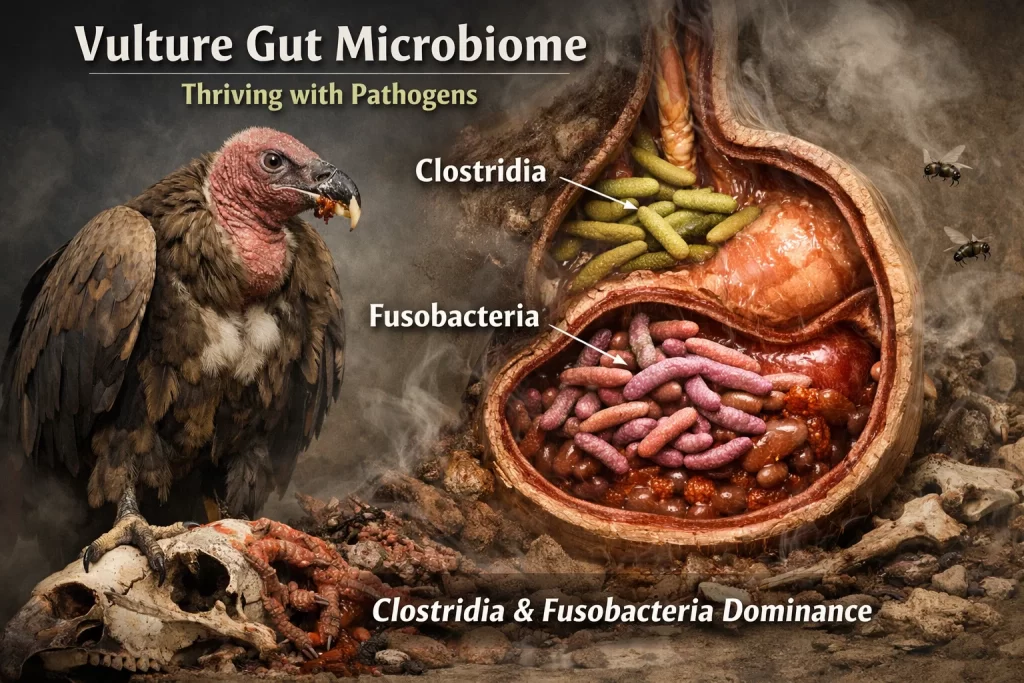
Beneficial Bacteria in a Hostile Environment
The vulture gut microbiome is unlike most animals. Research published in 2025 highlights the dominance of bacteria such as Clostridia and Fusobacteria. In humans, these groups may cause illness. In vultures, they help break down decaying tissue.
This microbiome competes directly with harmful microbes. Harmful invaders struggle to establish themselves because the gut already hosts aggressive bacterial communities. Scientists call this competitive exclusion. It limits pathogen colonization.
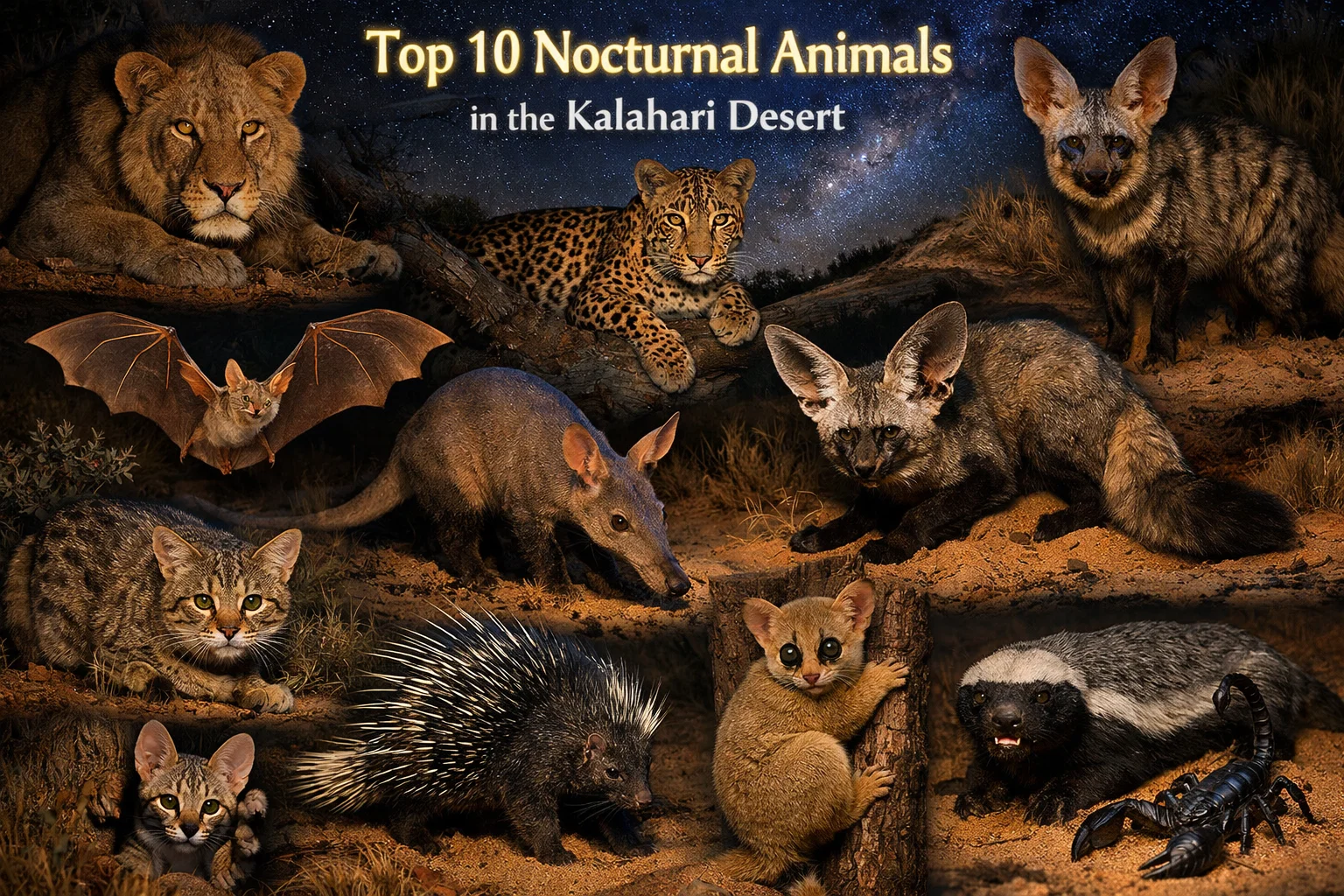
Genetic sequencing data shows vultures also carry bacteriophages, viruses that infect bacteria. These phages may help regulate harmful microbial populations inside the gut. The result is balance rather than infection. This microbial partnership strengthens scavenger health at a cellular level. Night activity impacts scavenger behaviour. Explore the top nocturnal animals in the Kalahari Desert.
Immune System Adaptations That Add Protection
Antibodies and Inflammation Control
Vultures possess robust immune genes linked to pathogen recognition. Genome studies show expansion in genes associated with innate immunity. These genes detect bacterial toxins quickly.
Unlike many animals, vultures avoid excessive inflammation. Controlled immune responses prevent tissue damage while neutralizing threats. This balance keeps birds healthy despite constant exposure to disease.
Blood tests from wild vultures rarely show systemic infection markers. That evidence supports long-term adaptation rather than short-term tolerance. Their immune systems evolved alongside carrion consumption. This evolutionary tuning reinforces scavenger health beyond digestion alone.
Bald Heads and Behavioral Hygiene
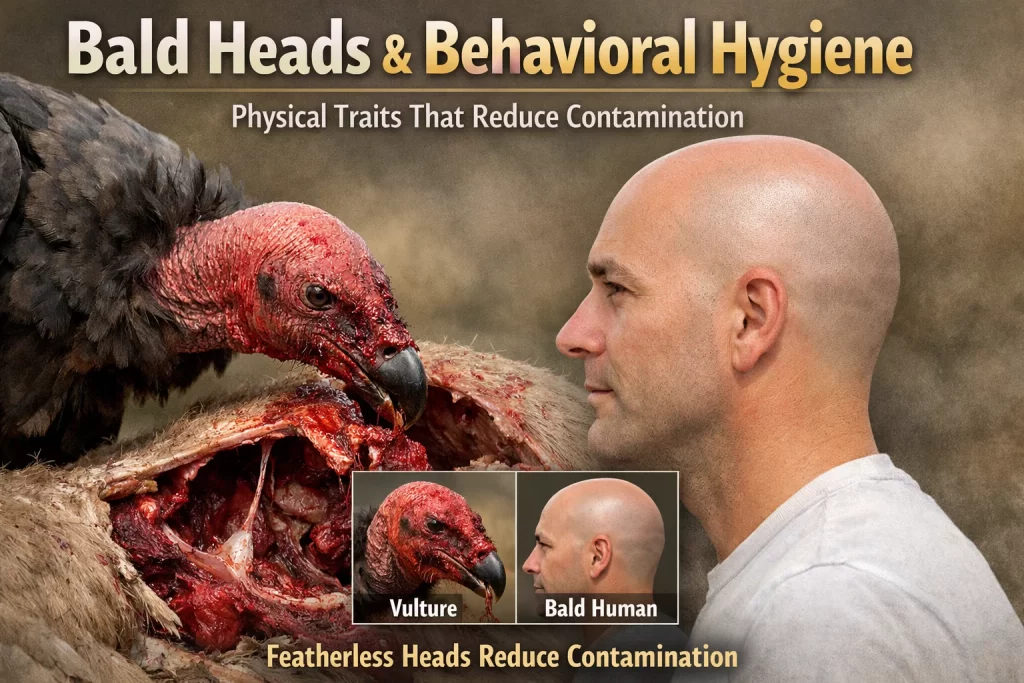
Physical Traits That Reduce Contamination
Vultures have featherless heads and necks for a reason. When they feed on inside carcasses, blood and fluids coat their skin. Feathers would trap bacteria. Bare skin reduces contamination.
Sunlight also plays a role. Vultures sunbathe frequently. Ultraviolet radiation kills surface bacteria. Behavioral observations confirm daily sun exposure lasting up to 30 minutes. That habit acts as natural disinfection.
Many species urinate on their legs in a process called urohydrosis. This cools them and may reduce bacterial growth. These visible adaptations complement internal defenses. Together, they enhance scavenger health in practical ways.
Ecosystem Impact: Why Vulture Health Protects Humans
Disease Control on a Landscape Scale
When vultures disappear, disease risk rises. A 2025 Smithsonian report notes that scavenger declines correlate with increased feral dog populations. In India, vulture losses exceeding 95% since the 1990s were linked to a spike in rabies cases.
Vultures remove carcasses within hours. Without them, carcasses persist for days. That delay allows pathogens to spread to dogs, rodents, and livestock. Faster carcass removal interrupts disease cycles.
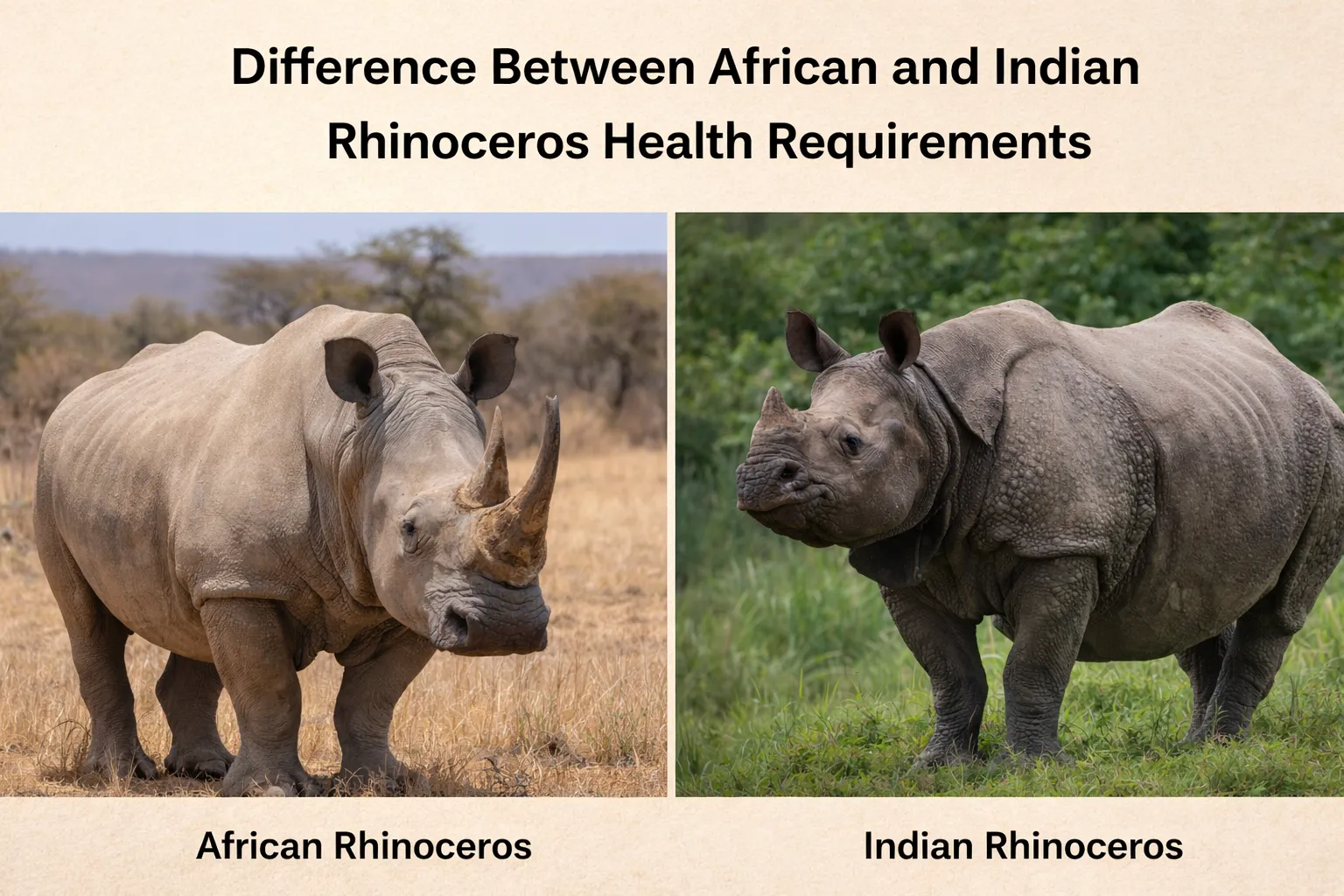
We often overlook this service. Yet a single vulture can consume up to 20% of its body weight in one meal. Multiply that by colonies of hundreds. The sanitation impact becomes enormous. Healthy vulture populations directly support scavenger health across ecosystems and communities. Large herbivores share unique adaptations. Compare digestive survival with rhinos vs elephants and their skin protection strategies.
Key Biological Features at a Glance
| Feature | Measured Value | Health Impact |
|---|---|---|
| Stomach pH | 1.0–1.2 | Kills most bacteria and toxins |
| Digestion time | Under 24 hours | Limits pathogen survival |
| Threatened species | 16 of 23 globally | Signals conservation urgency |
| Feeding capacity | Up to 20% body weight | Rapid carcass removal |
| Sun exposure | ~30 minutes daily | Surface disinfection |
These numbers show how multiple systems work together. Each trait reinforces scavenger health under extreme exposure conditions.
Why Vultures Rarely Get Sick
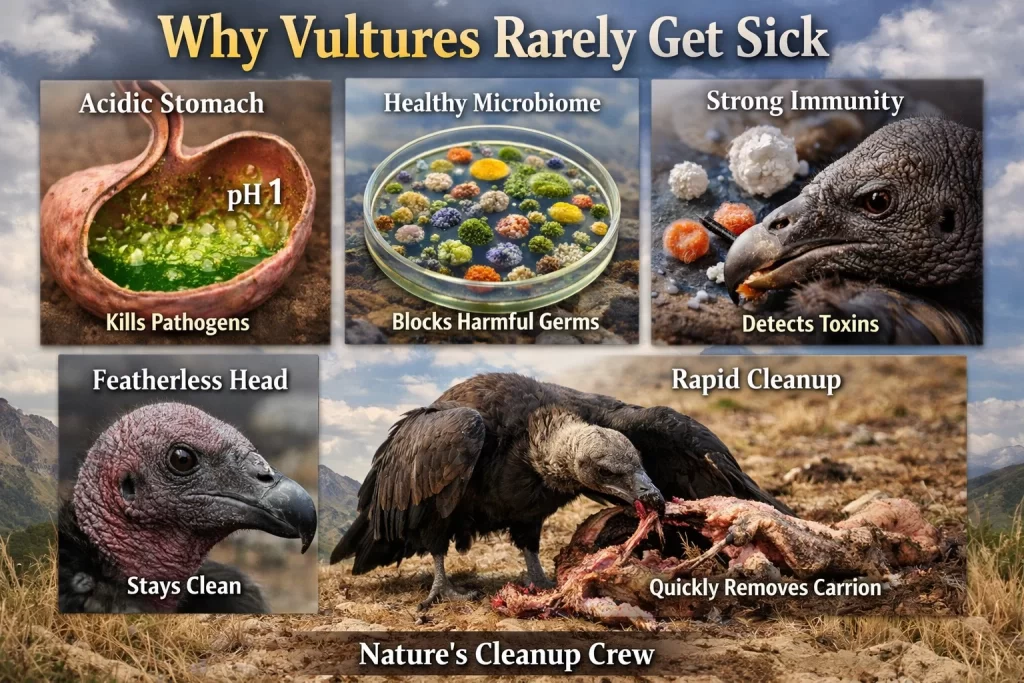
Let us break down the main reasons clearly:
- Extremely acidic stomach chemistry neutralizes pathogens.
- A competitive microbiome blocks harmful colonization.
- Strong innate immunity detects toxins quickly.
- Featherless skin reduces bacterial buildup.
- Rapid carcass removal prevents prolonged exposure.
No single factor explains their resilience. The synergy among these traits explains why vultures thrive on decayed meat.
Bottom Line
Scavenger health reveals one of nature’s most efficient defense systems. Vultures combine chemistry, microbiology, immunity, and behavior into a unified survival strategy. Their stomach acid destroys pathogens. Their microbiome manages microbial balance. Their immune genes detect threats without overreacting. Each adaptation supports the next.
We benefit directly from this resilience. By removing carcasses quickly, vultures limit rabies, anthrax, and botulism spread. Protecting vultures protects public health. Conservation efforts must reduce poisoning, habitat loss, and toxic veterinary drugs.