Table of Contents
Rainforest wildlife habitat characteristics shape the most biologically rich ecosystems on Earth. Tropical rainforests cover about 6% of the planet’s land surface, yet they hold more than 50% of all terrestrial species as of 2026. These forests stretch across the Amazon Basin, Central Africa, Southeast Asia, and parts of Australia. Annual rainfall exceeds 80 inches in most regions, and temperatures stay between 68°F and 93°F year-round.
We see unmatched biodiversity in these forests because climate stability supports continuous plant growth. That growth fuels complex food webs. According to Britannica, a single hectare of tropical rainforest can contain over 750 tree species and 1,500 plant species. The Amazon alone houses around 390 billion trees. These numbers explain why rainforest wildlife habitat characteristics remain central to global conservation efforts.
Today, deforestation rates remain high. The FAO reported 10 million hectares of forest lost annually between 2015 and 2020. This ongoing loss threatens biodiversity and climate stability. Understanding rainforest wildlife habitat characteristics helps us protect what remains.
Climate Stability and Vertical Structure
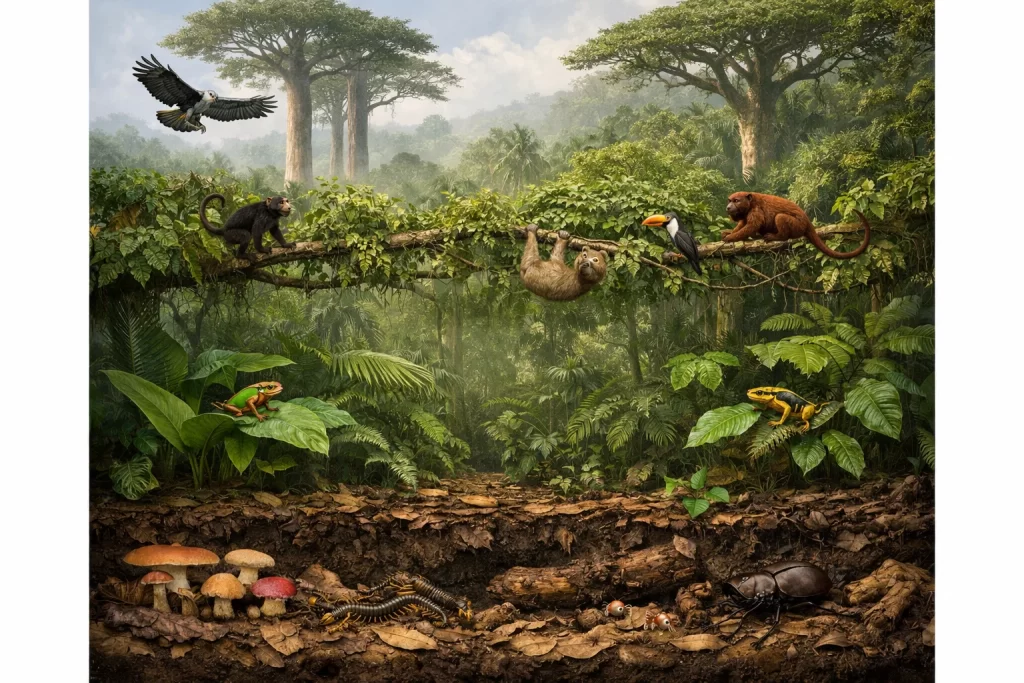
Rainforest wildlife habitat characteristics start with climate consistency and layered forest structure. These two factors define species distribution and survival patterns.
Emergent Layer: Giants Above the Canopy
The emergent layer rises 150 to 200 feet above ground. Trees like kapok and Brazil nut dominate this level. Strong winds and direct sunlight shape plant adaptations.
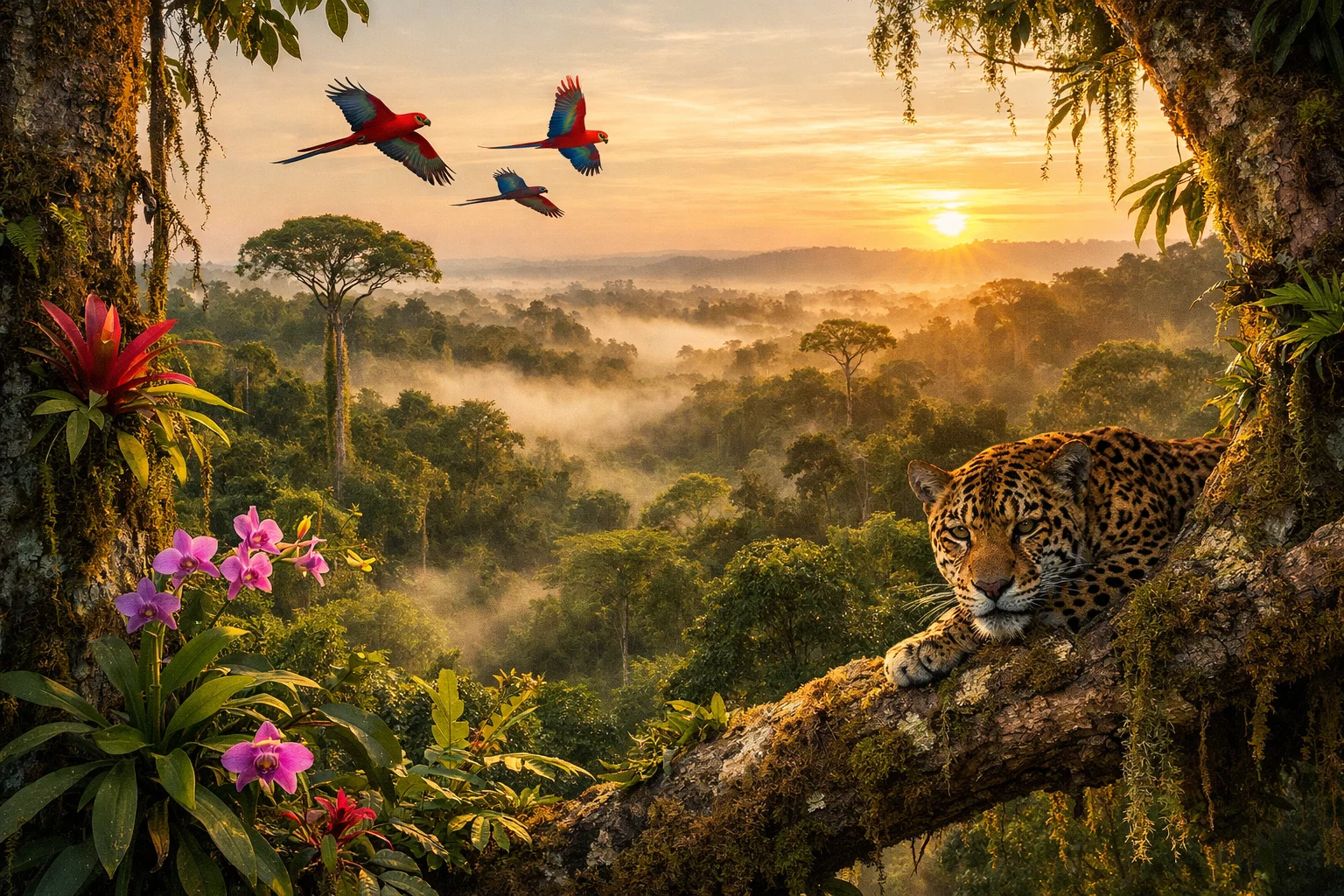
Harpy eagles, macaws, and some bats use this space for nesting and feeding. Limited cover means only specialized species survive here. This layer shows how vertical stratification increases biodiversity.
Canopy Layer: The Biodiversity Core
The canopy forms a dense roof about 60 to 130 feet above the ground. It blocks nearly 75% of sunlight. This layer supports the highest concentration of life.
Monkeys, sloths, tree frogs, and countless insects depend on canopy vegetation. Epiphytes such as orchids grow on tree branches without harming them. The canopy demonstrates how rainforest wildlife habitat characteristics promote species coexistence. For a complete global perspective, explore Wildlife Habitats and Ecosystems of the World.
Understory and Forest Floor: Hidden Activity
Below the canopy lies the understory. Light drops to 2% to 5% of surface levels. Plants grow broad leaves to capture limited sunlight.
The forest floor stays warm and humid. Decomposition happens rapidly due to fungi and insects. Nutrients recycle quickly, supporting continuous plant growth. This rapid nutrient cycle defines tropical forest productivity.
Key structural facts:
- Rainfall: 80–400 inches annually.
- Temperature range: 68–93°F year-round.
- Soil nutrients concentrate in biomass, not deep soil layers.
- Light penetration: less than 5% reaches ground level.
Biodiversity, Density, and Species Interactions
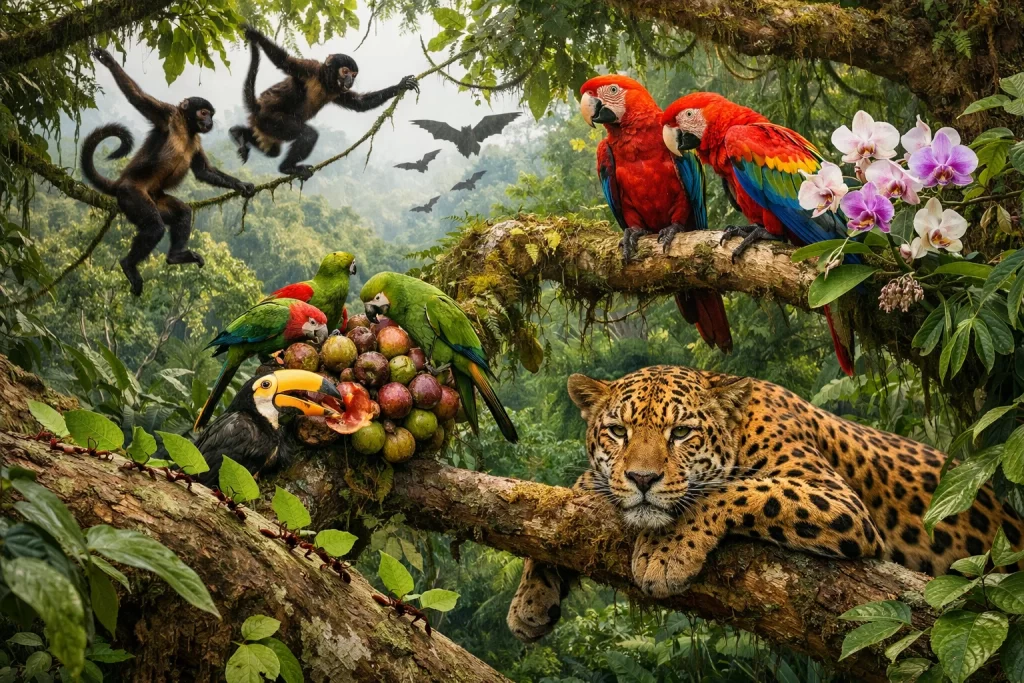
Rainforest wildlife habitat characteristics drive extreme species density and complex ecological relationships.
Species Richness per Area
Tropical rainforests hold roughly 170,000 of the world’s 250,000 known plant species. A 2025 update from National Geographic Kids confirms that rainforests contain millions of insect species, many still undocumented.
The Amazon Basin alone contains about 2.5 million insect species and over 2,000 bird species. This density exceeds temperate forests by several multiples. Biodiversity thrives because stable climates reduce seasonal stress.
Food Web Complexity
Food webs in tropical forests involve producers, herbivores, omnivores, carnivores, and decomposers. A single fig tree can support dozens of animal species.
Mutualism plays a key role. For example, ants protect acacia trees from herbivores. Pollinators such as bats and insects ensure plant reproduction. These interdependencies define rainforest wildlife habitat characteristics at every level. Tropical forest diversity contrasts sharply with grasslands in Rainforest Wildlife Habitat Characteristics.
Keystone Species Impact
Keystone species influence entire ecosystems. Jaguars regulate herbivore populations. Large fruit-eating birds disperse seeds across vast areas.
When keystone species decline, biodiversity declines quickly. This connection highlights why habitat preservation remains essential.
| Biodiversity Metric | Tropical Rainforest | Temperate Forest |
|---|---|---|
| Tree species per hectare | Up to 750 | 10–30 |
| Annual rainfall | 80–400 inches | 30–60 inches |
| Average temperature | 68–93°F | 32–77°F |
| Global species share | 50%+ | Less than 20% |
The table shows how rainforest wildlife habitat characteristics exceed those of other forest systems in biodiversity metrics.
Soil, Water Cycles, and Nutrient Efficiency
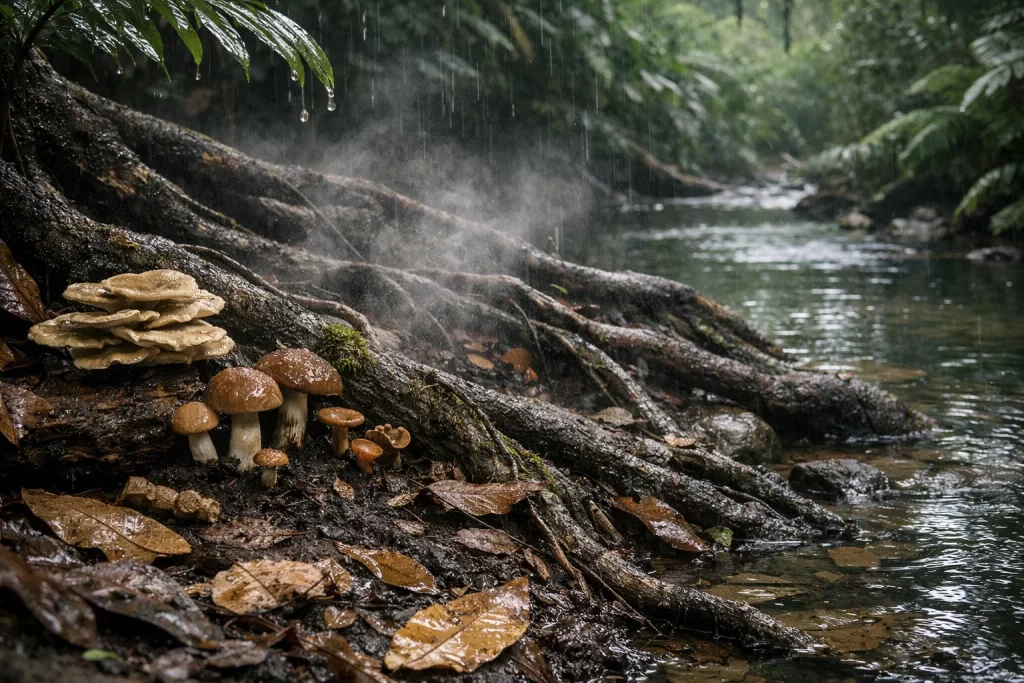
Rainforest wildlife habitat characteristics depend on rapid nutrient cycling and intense water movement.
Thin but Efficient Soils
Tropical rainforest soils often appear poor. Heavy rainfall leaches nutrients away. However, most nutrients remain locked in plant biomass.
Decomposition happens quickly due to warmth and humidity. Fallen leaves break down within weeks. This rapid recycling sustains dense vegetation despite shallow topsoil.
The Water Cycle Engine
Rainforests generate their own rainfall through evapotranspiration. Trees release moisture into the atmosphere daily.
In the Amazon, about 50% of rainfall recycles internally. Moisture rises, condenses, and falls again as rain. This cycle regulates regional and global climate systems.
Carbon Storage and Climate Role
Rainforests store around 250 billion metric tons of carbon globally. The Amazon alone absorbs roughly 2 billion metric tons of CO₂ annually.
Deforestation releases stored carbon into the atmosphere. This release accelerates global warming. Protecting rainforest wildlife habitat characteristics supports climate stability worldwide. Water availability plays a critical role in shaping life, as discussed in Freshwater Ecosystems, Animals, and Biodiversity.
Human Pressure and Conservation Status in 2026
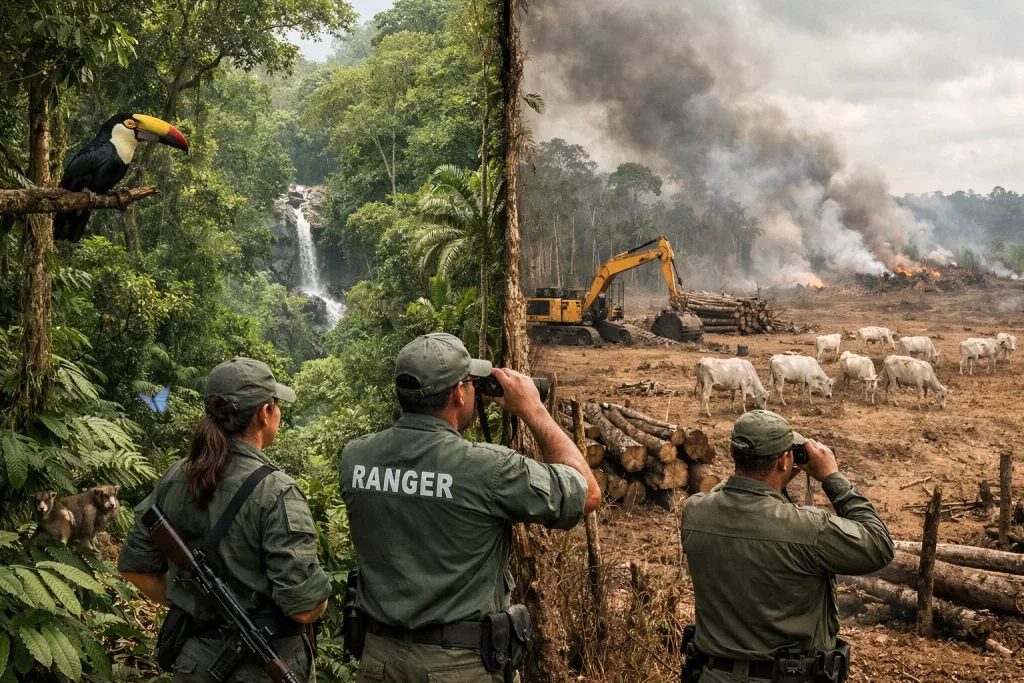
Rainforest wildlife habitat characteristics face growing threats from human activity.
Deforestation Rates and Drivers
Between 2015 and 2020, the world lost 10 million hectares of forest annually. Agriculture remains the primary driver.
Palm oil, cattle ranching, and soy farming contribute heavily to tropical forest loss. Illegal logging also persists. These pressures fragment wildlife corridors.
Biodiversity at Risk
The IUCN Red List reports over 41,000 species globally threatened with extinction as of 2026. Many inhabit tropical rainforests.
Habitat fragmentation isolates animal populations. Isolation reduces genetic diversity. This decline weakens ecosystem resilience.
Conservation Efforts
Protected areas now cover approximately 17% of the global land area. Many tropical rainforest regions fall under national parks or reserves.
Community-based conservation programs also show measurable success. Indigenous-managed forests often record lower deforestation rates.
Bottom Line
Rainforest wildlife habitat characteristics explain why tropical forests hold the planet’s richest biodiversity. Stable temperatures, heavy rainfall, vertical layering, and rapid nutrient cycling create unmatched ecological complexity. More than half of Earth’s species rely on these systems. Yet ongoing deforestation threatens both biodiversity and climate stability.
We must strengthen conservation policies, support sustainable supply chains, and protect Indigenous lands. Individual choices also matter. Reducing demand for unsustainable palm oil and timber helps limit forest loss.