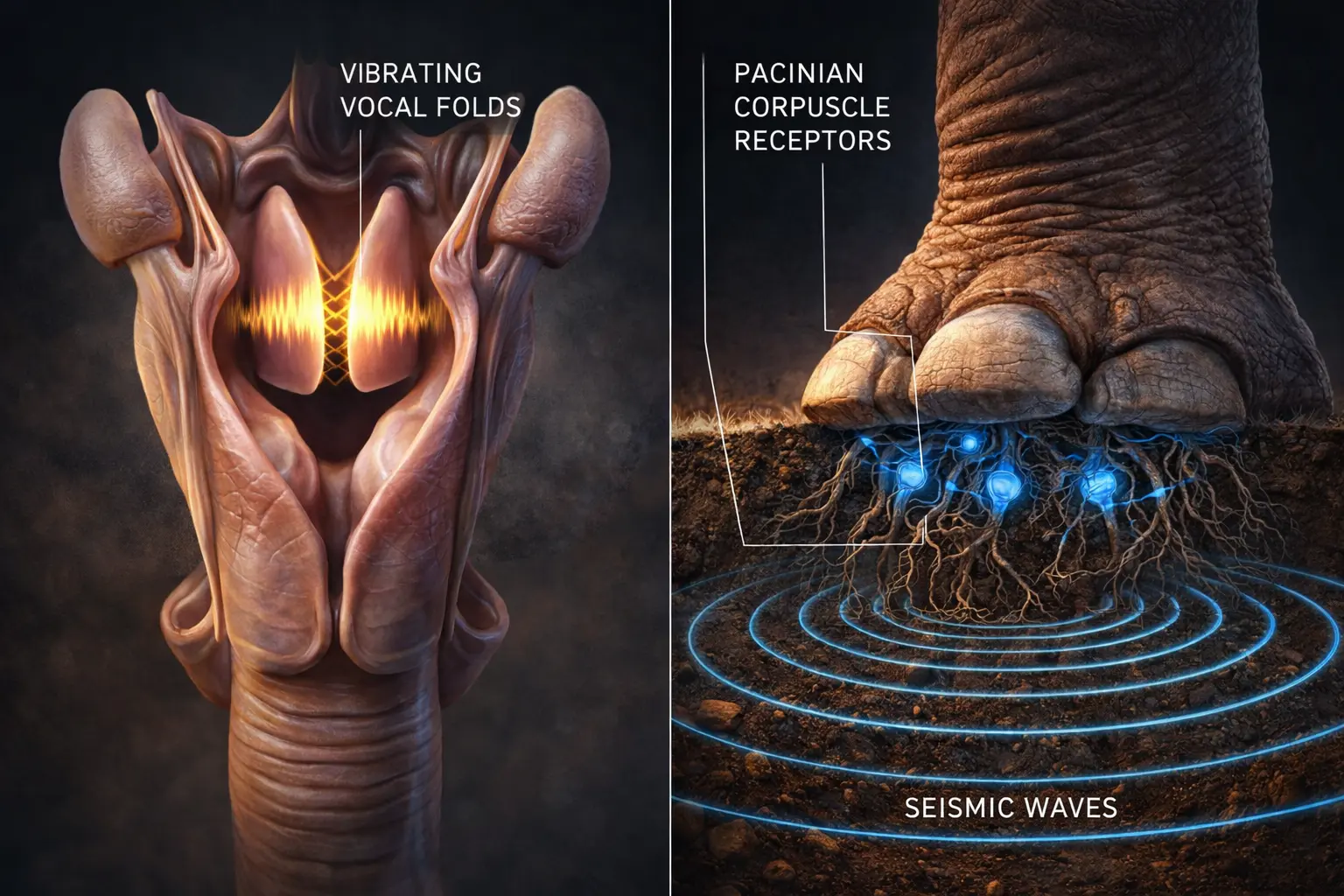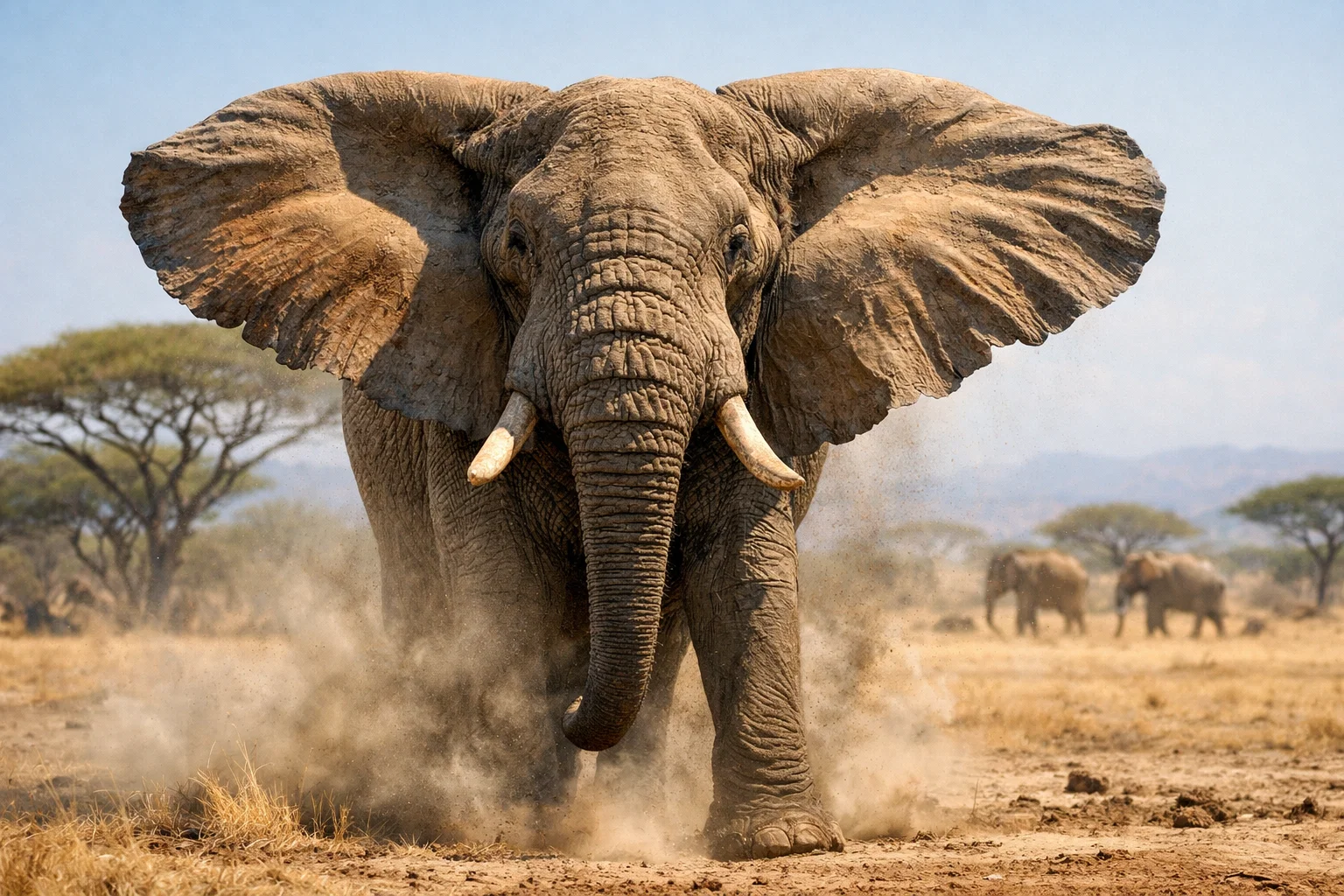
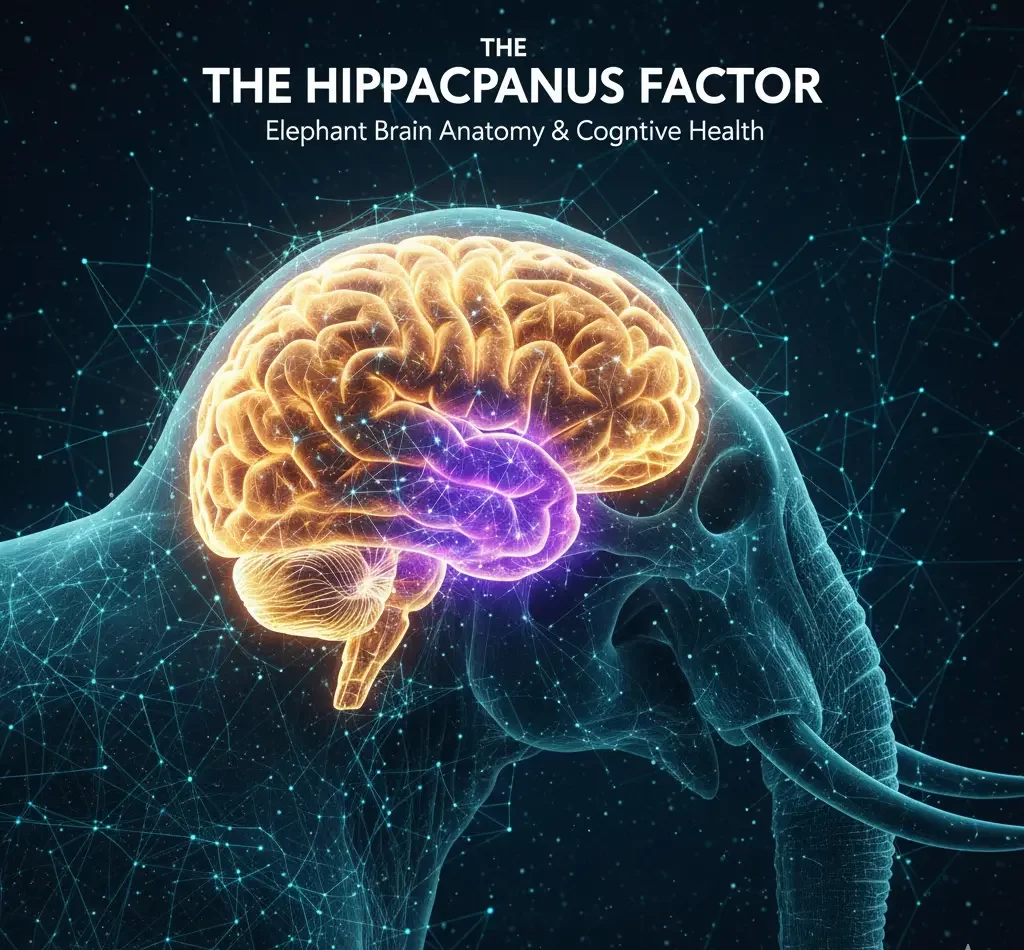
For centuries, the phrase “an elephant never forgets” was mere folklore. Today, advanced neuroimaging has transformed that proverb into a scientific certainty. The study of elephant brain anatomy and cognitive health reveals a neural architecture designed for massive social networks, 30-year memories, and complex emotional processing. While their brains are three times larger than ours, the way they distribute their “processing power” is what truly defines their unique intelligence.
1. The Neuron Paradox: Quantity vs. Location
The most startling fact in elephant brain anatomy and cognitive health is the raw number of neurons. An African elephant’s brain contains roughly 257 billion neurons three times the 86 billion found in the human brain.
However, the “intelligence” we associate with problem-solving lives in the cerebral cortex.
- Human Cortex: 16 billion neurons.
- Elephant Cortex: 5.6 billion neurons.
Instead of high-speed abstract reasoning, elephant brain anatomy and cognitive health is geared toward motor control. A staggering 97.5% of an elephant’s neurons are located in the cerebellum. This is largely due to the trunk—an organ with 40,000 muscles that requires massive neural bandwidth to operate with the precision of a human hand and the strength of a crane.
2. The Hippocampus: The Seat of 30-Year Memories
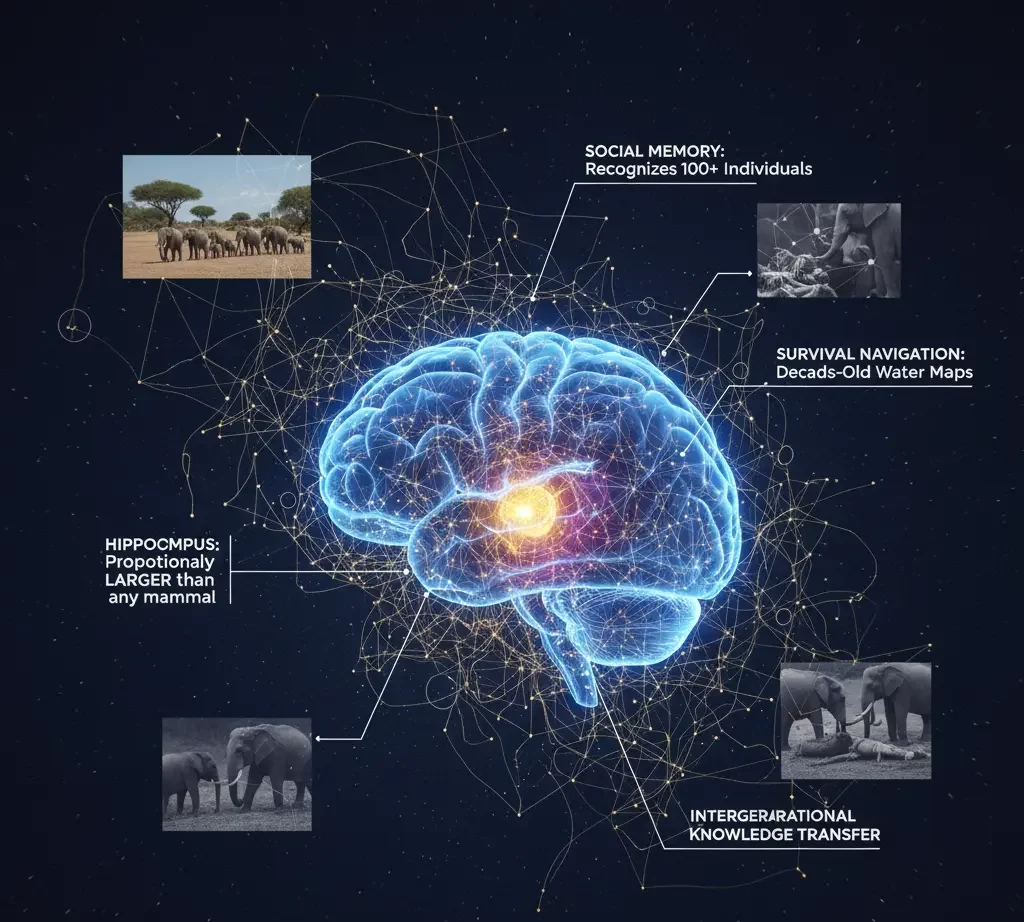
In the realm of elephant brain anatomy and cognitive health, the hippocampus is the star. This structure, vital for memory and spatial navigation, is proportionally larger in elephants than in almost any other mammal.
According to 2026 research from the Bernstein Center for Computational Neuroscience, elephants use this massive hippocampus to store “cognitive maps” of thousands of square miles.
- Social Memory: They can recognize the “contact calls” of over 100 different individuals.
- Survival Navigation: During droughts, matriarchs use decade-old memories to lead herds to water sources they visited only once in their youth.
This long-term retention is a core pillar of elephant brain anatomy and cognitive health, ensuring the survival of the herd through “intergenerational knowledge transfer.”
To see how this neurological command center coordinates with the rest of the body, explore our Elephant Physiology and Health blog.
3. Emotional Intelligence and Spindle Neurons
One of the most human-like aspects of elephant brain anatomy and cognitive health is the presence of Von Economo neurons (spindle neurons). Once thought to be unique to humans and great apes, these specialized cells are found in the elephant’s anterior cingulate and fronto-insular cortices.
Spindle neurons are associated with:
- Empathy: The ability to sense and respond to the distress of others.
- Social Awareness: Understanding one’s place within a complex hierarchy.
- Grief: Elephants are one of the few species observed “mourning” their dead, a behavior rooted in their highly developed temporal lobes.
4. Species Differences: Asian vs. African Brains
A major 2025 breakthrough published in PNAS Nexus has refined our understanding of elephant brain anatomy and cognitive health across species. Surprisingly, despite being smaller in body size, Asian elephants have heavier brains and more cerebral cortical gray matter than African savanna elephants.
- Asian Elephant Brain: ~5,346g (more gray matter, smaller cerebellum).
- African Elephant Brain: ~4,417g (larger cerebellum for complex trunk-tip motor skills).
This suggest that Asian elephants may have a higher degree of “encephalization,” potentially explaining their noted proficiency in tool-use and complex task-solving compared to their African cousins.
Watch: Inside the Mind of a Giant
5. Protecting the Elephant Mind
As we advance into 2026, the study of elephant brain anatomy and cognitive health highlights a growing concern: PTSD in wild populations. Due to habitat loss and poaching, younger elephants are losing the “mentors” who provide the social data their large brains are designed to process. Protecting their health means more than just protecting their bodies—it means preserving the social environments that allow their magnificent minds to thrive.