Table of Contents
Tracking elephants ethically is now central to modern wildlife research and responsible tourism. As of February 25, 2026, African savanna elephant populations stand at about 415,000 individuals, according to the International Union for Conservation of Nature. Asian elephants number fewer than 50,000 in the wild. These figures remind us that every tracking method matters.
When we monitor elephants ethically, we protect their feeding behavior, social bonds, and migration routes. An adult elephant eats up to 150 kilograms of vegetation daily and drinks 100–200 liters of water. Disrupting these routines can affect entire ecosystems. Ethical tracking ensures researchers gather data without altering diet patterns or causing stress.
Today, conservation groups use non-invasive science, satellite data, and strict field protocols. Organizations such as World Animal Protection and Save the Elephants stress that observation must never change elephant behavior. Our goal is simple: collect accurate data while keeping elephants wild, healthy, and undisturbed.
Why Ethical Tracking Matters for Elephant Diets
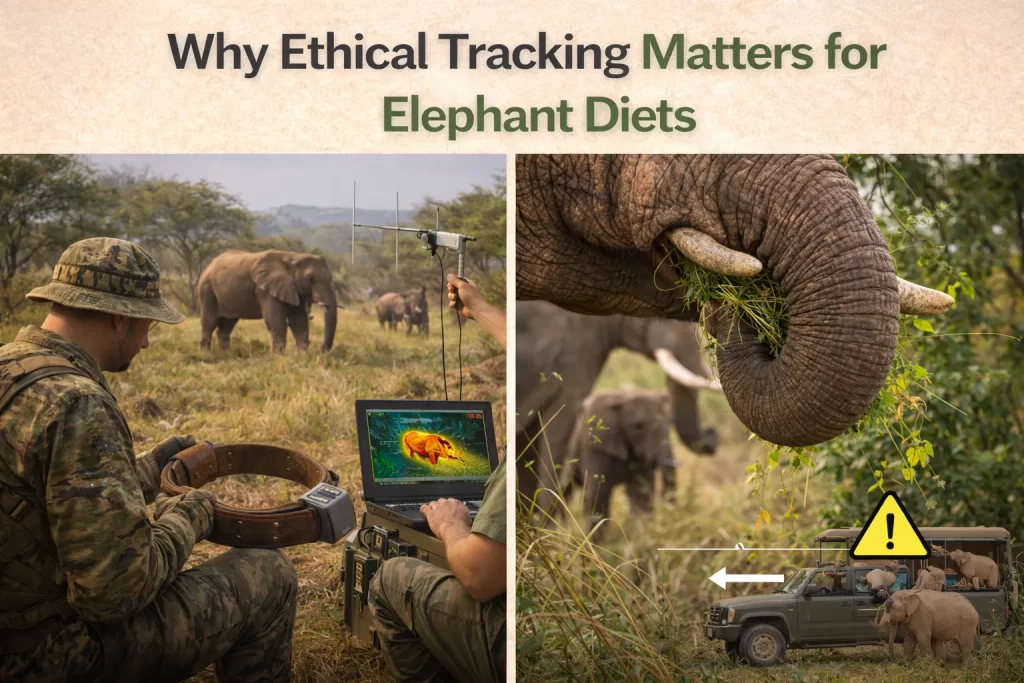
Tracking elephants ethically protects more than individual animals. It safeguards complex feeding systems across savannas and forests. Elephants disperse thousands of seeds daily, shaping plant diversity. When disturbed, they may shift feeding routes, affecting ecosystem balance.
Understanding Elephant Feeding Behavior
Elephants feed up to 18 hours per day. They consume grasses, bark, leaves, fruit, and roots. In dry seasons, they dig for water and strip tree bark. Any human interference can alter these behaviors.
Research from Save the Elephants shows that stress can increase movement by 5–15 percent. Increased movement burns energy and may reduce feeding time. That shift directly impacts nutrition and herd health. Ethical tracking avoids triggering these changes.
The Risk of Poor Tracking Practices
Unregulated tourism and close vehicle approaches disrupt feeding. World Animal Protection reports that captive elephant attractions often rely on food conditioning. That practice shifts natural diets toward sugar-rich fruits like bananas.
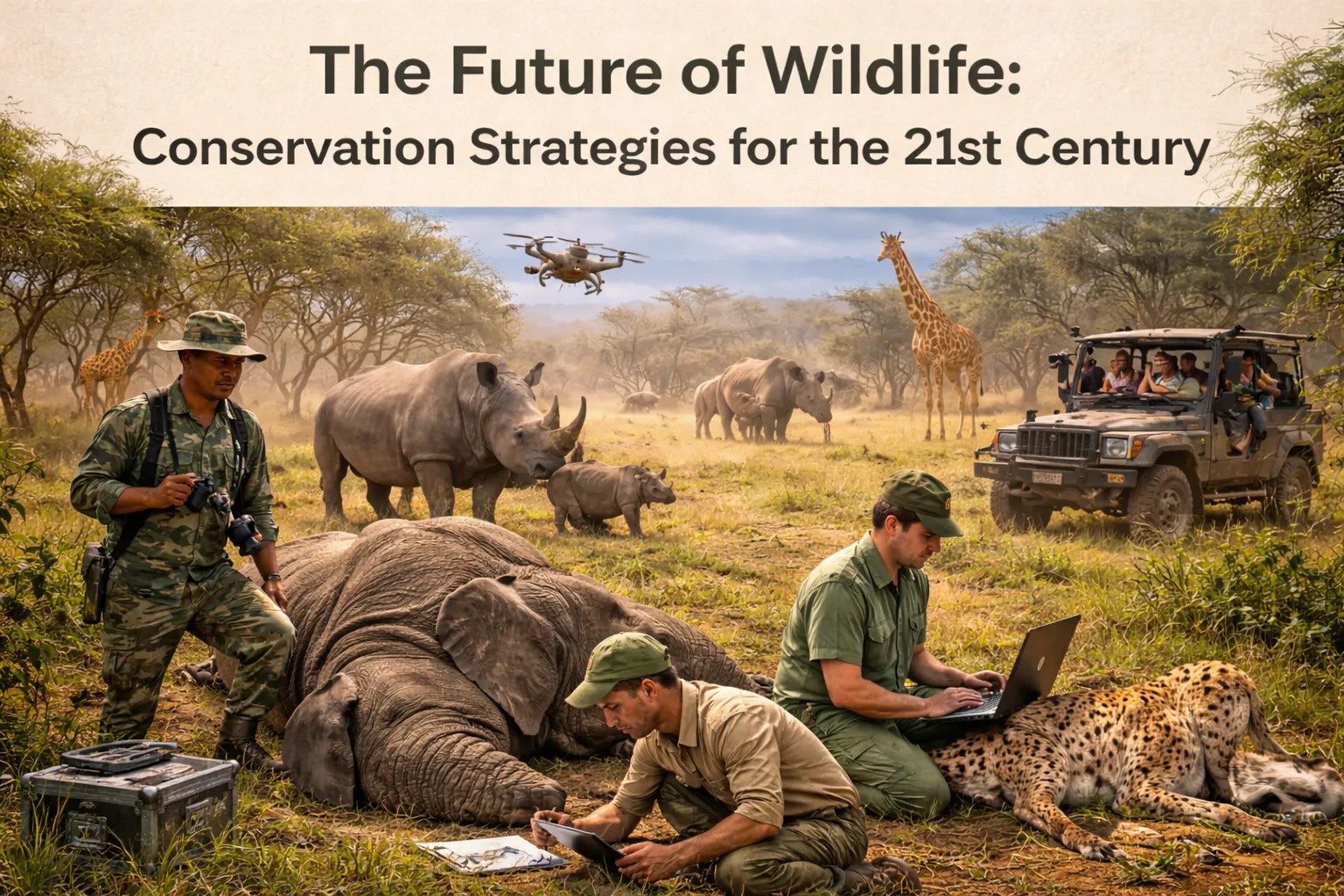
In the wild, similar feeding interference can cause long-term habitat avoidance. According to Sustainable Travel International, ethical elephant tourism requires maintaining at least 50 meters of distance during observation. Distance protects diet integrity and reduces stress responses. To see how ethical research supports modern protection goals, explore The Future of Wildlife: Conservation Strategies for the 21st Century.
Modern Non-Invasive Methods to Track Elephants Ethically
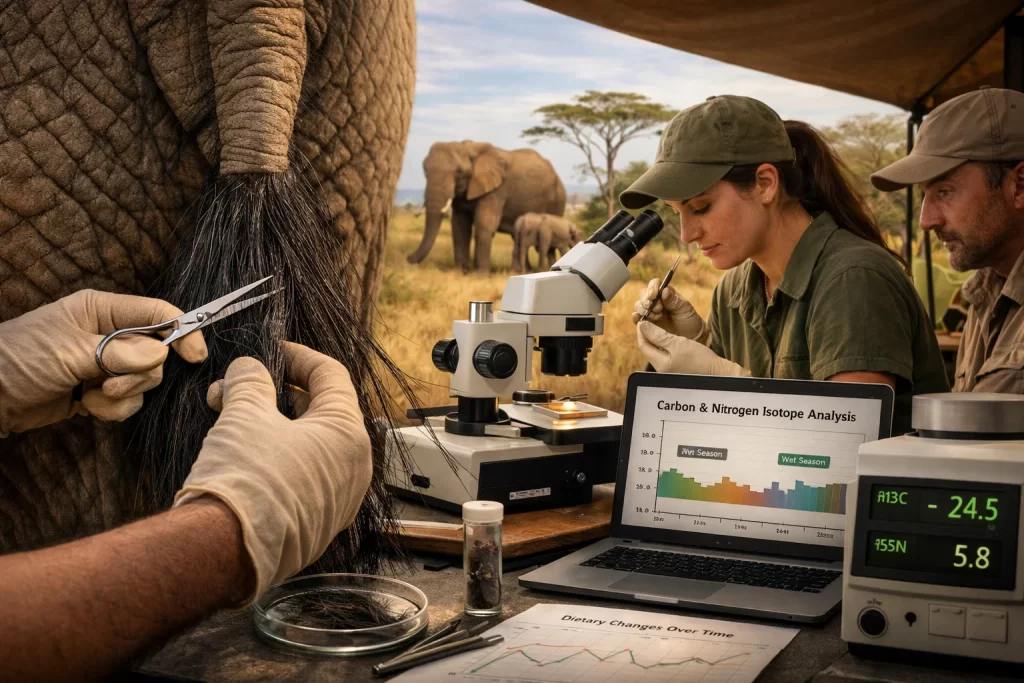
Technology now allows us to track elephants ethically without disturbing their feeding patterns. The shift toward non-invasive science has accelerated since 2020.
Tail Hair Isotope Analysis
One breakthrough method involves tail hair isotope analysis. Save the Elephants uses this technique to examine carbon and nitrogen isotopes. Tail hair grows about 0.7 millimeters per day. Scientists can map dietary changes over months without disturbing the animal.
This method avoids sedation or repeated interference. It provides seasonal diet records and habitat data. The science is precise and leaves elephants completely undisturbed.
GPS Satellite Collars with Ethical Standards
GPS collars remain common, but strict guidelines now apply. Modern collars weigh less than 0.5 percent of body weight. For a 4,000-kilogram elephant, that equals a maximum of 20 kilograms.
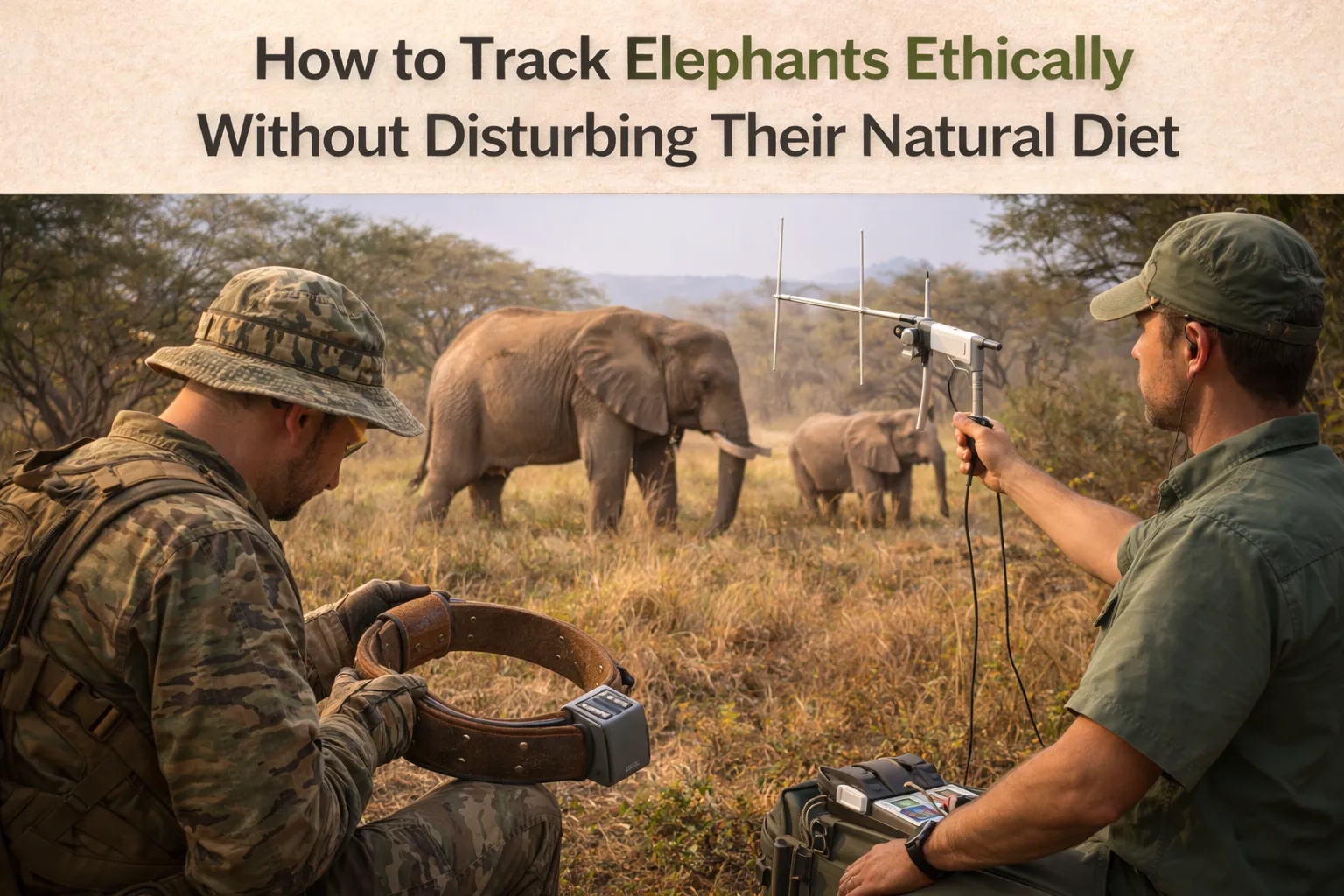
Collars transmit location data every 30 to 60 minutes. Researchers analyze migration, feeding zones, and water use patterns. Ethical standards require minimal sedation and veterinary supervision. Monitoring stops immediately if health risks appear.
Drone Monitoring at Safe Altitudes
Conservation teams increasingly use drones at altitudes above 120 meters. At that height, elephants show no measurable stress response. Drones collect thermal and spatial data without blocking feeding routes.
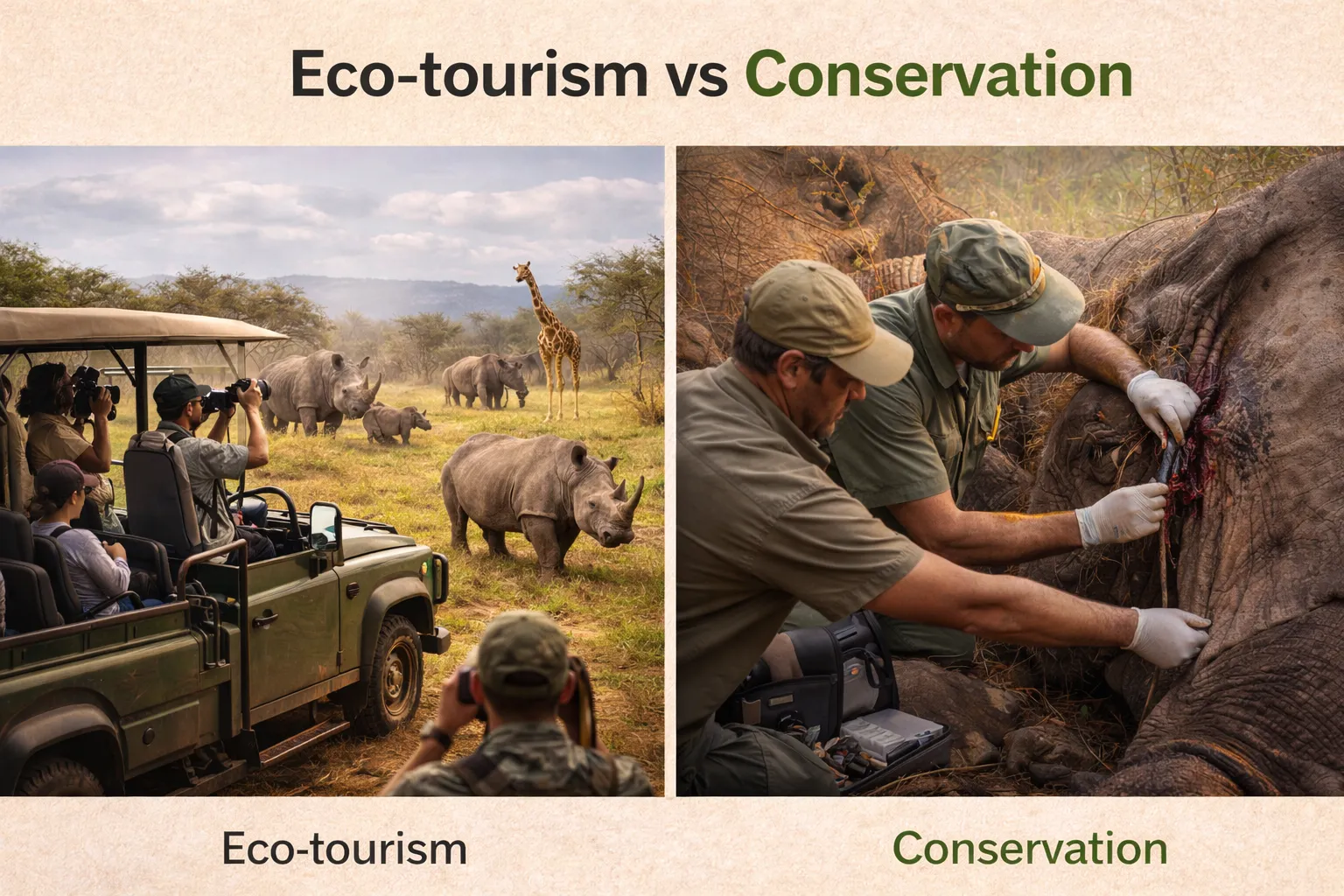
These modern tools allow us to track elephants ethically while preserving their natural behavior. The data remains strong, and the animals remain undisturbed. Tourism directly affects wildlife behaviour. Learn about eco-tourism vs conservation at Elephant Sands.
Field Guidelines for Researchers and Photographers
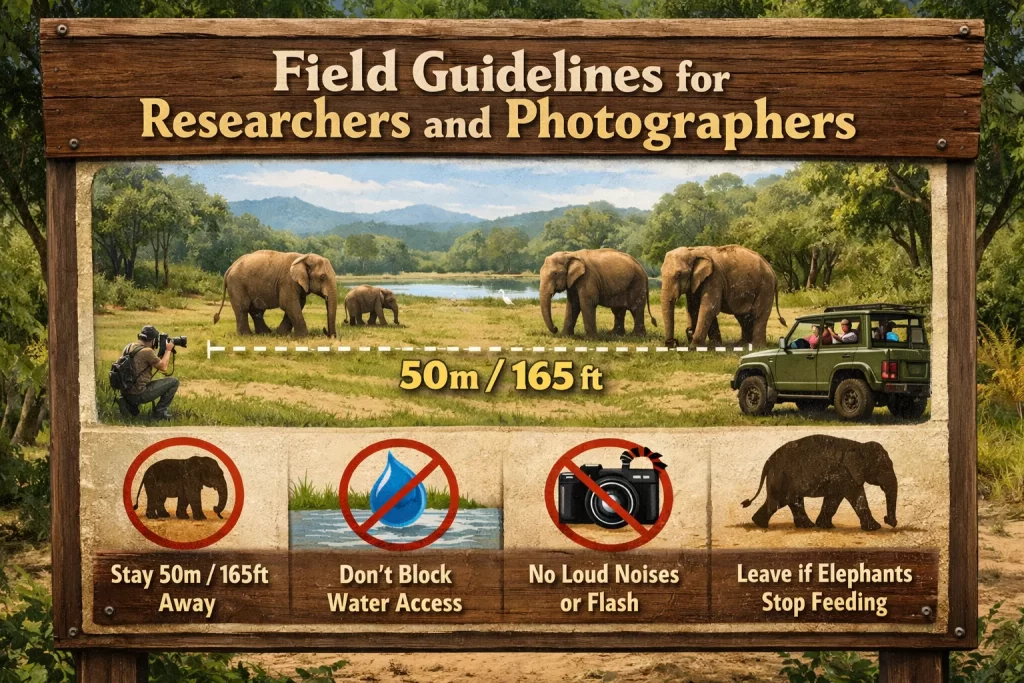
Tracking elephants ethically requires strict on-ground rules. Whether you are a scientist or photographer, behavior matters.
Ethical Distance and Positioning
Elephant Haven Thailand recommends never surrounding a herd. Vehicles must stay parallel and avoid cutting across feeding paths. Observers should keep engines low and movements minimal.
A simple rule applies:
- Stay at least 50 meters away.
- Never block access to water.
- Avoid loud sounds or flash photography.
- Leave immediately if elephants stop feeding.
These steps reduce stress and prevent feeding disruption.
Avoiding Artificial Feeding or Baiting
Feeding elephants to attract them is unethical and harmful. Artificial food alters digestive balance and creates dependency. Elephants naturally eat high-fiber vegetation. Bananas and sugar-rich fruit change gut bacteria and increase obesity risk in captive settings.
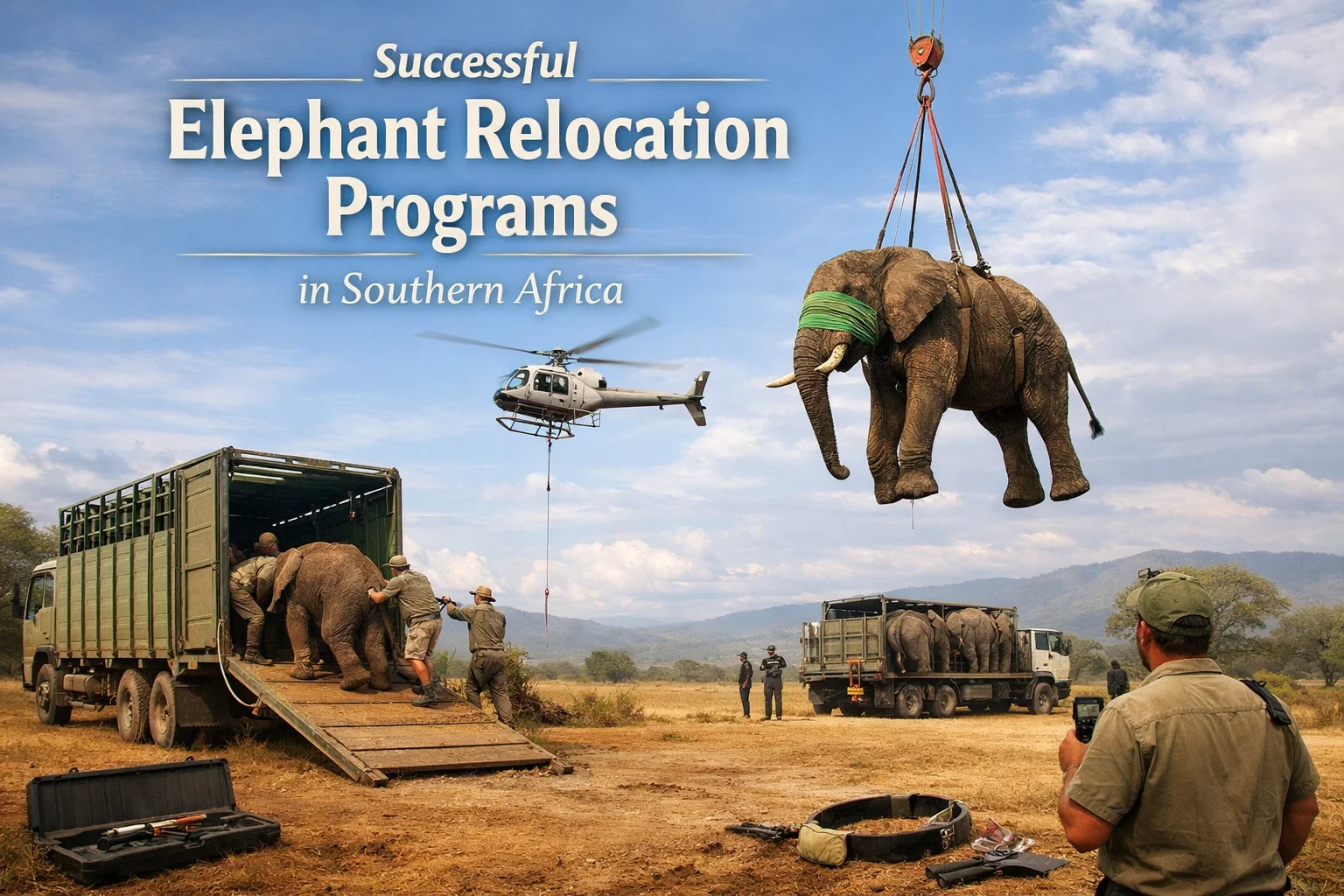
Sustainable Travel International clearly states that ethical tourism prohibits feeding or riding elephants. Observing from a safe distance protects their natural diet. Population recovery depends on movement planning. See successful elephant relocation programs in Southern Africa.
Key Ethical Tracking Principles
Below is a structured overview of core practices.
| Practice | Why It Matters | Data Standard (2026) |
|---|---|---|
| Minimum distance | Prevents feeding disruption | 50 meters or more |
| GPS collar weight | Avoids physical strain | <0.5% of body weight |
| Drone altitude | Reduces stress response | >120 meters |
| No baiting | Protects gut health | Zero artificial feeding |
| Minimal sedation | Ensures welfare | Veterinary supervision mandatory |
These standards reflect current global conservation guidelines. Following them ensures we track elephants ethically without altering their diet patterns.
Balancing Conservation and Observation
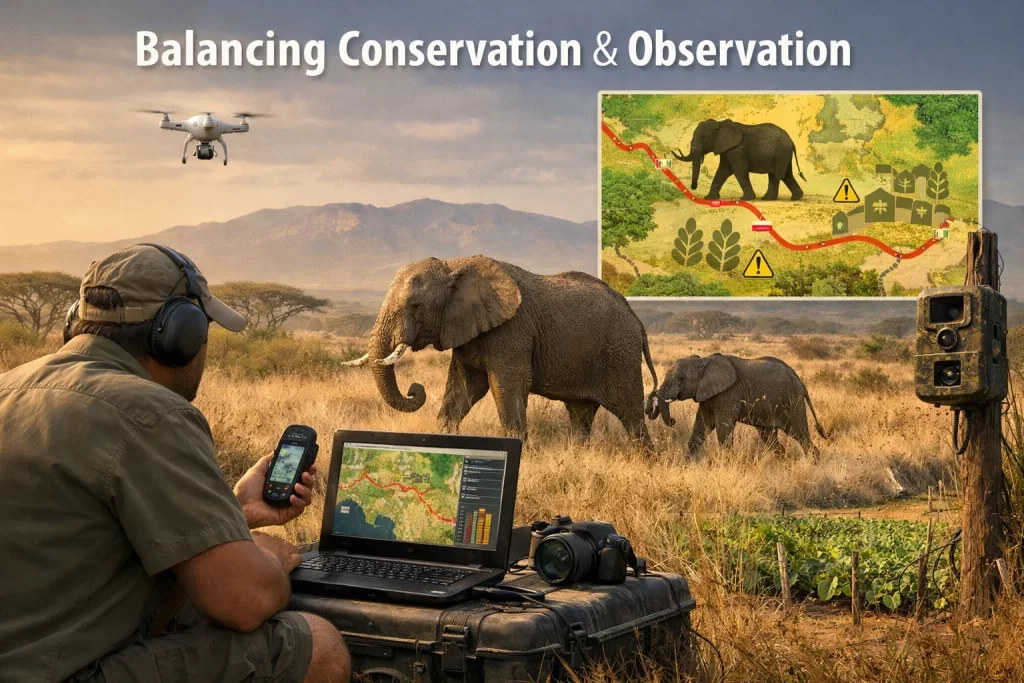
Tracking elephants ethically also supports long-term conservation goals. Reliable data helps governments map migration corridors. In Kenya, over 65,000 elephants depend on protected landscapes. Accurate tracking data reduces human-elephant conflict by identifying high-risk crop areas.
When elephants feed undisturbed, ecosystems remain stable. Forest elephants disperse large seeds across up to 10 kilometers daily. That process maintains forest regeneration.
Responsible tourism also plays a role. Ethical elephant tourism generates revenue while discouraging exploitative practices. According to Sustainable Travel International, wildlife tourism contributes billions annually to conservation economies when responsibly managed.
Bottom Line
Tracking elephants ethically is not optional in 2026. It is the foundation of modern conservation. Elephants consume up to 150 kilograms of vegetation daily, shaping ecosystems with every step. Disturbing that this cycle weakens habitats and herds alike.
We now have precise tools such as isotope analysis, GPS tracking, and high-altitude drones. These methods provide data without altering feeding behavior. Field guidelines further protect diet integrity and social structure.