Table of Contents
I always find it fascinating how something so small, like a pearl, can carry such elegance and mystery. For centuries, pearls have symbolized wealth, beauty, and timeless charm. But let’s be honest today’s market is flooded with imitations, making it harder than ever to tell real from fake.
We often wonder: Is the necklace from grandma genuine? Did that market stall deal give me the real thing? These questions matter because real pearls are not only valuable but also pieces of nature’s art.
Fake vs Real Pearls Guide ones, on the other hand, are usually made from glass, plastic, or shell coated with paint or lacquer. In this guide, I’ll walk you through easy at-home tricks, professional methods, types of authentic pearls, and smart buying practices so you’ll never be fooled again.
At-Home Tests for Real vs Fake Pearls
Tooth Test (gritty = real)
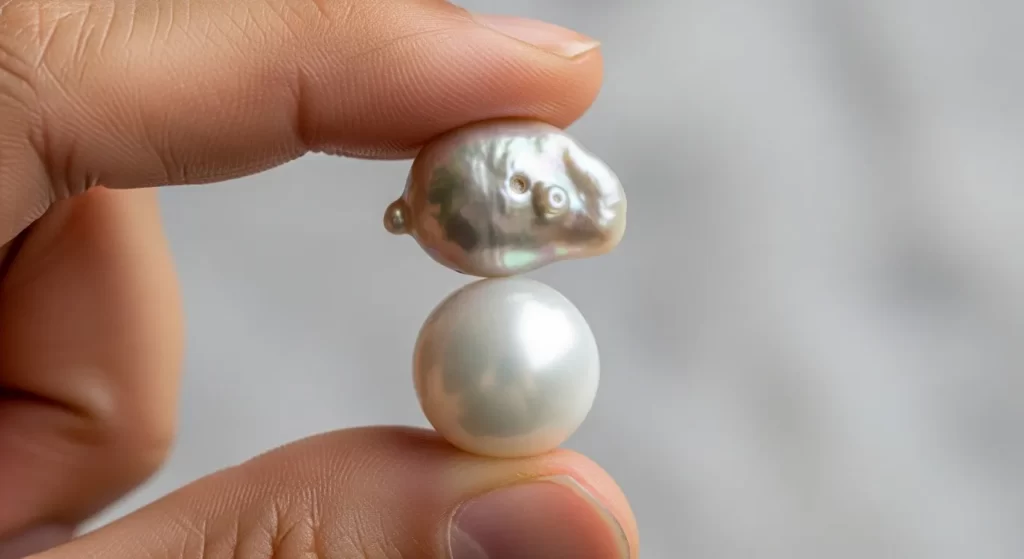
We often start with the simplest method the tooth test. If you gently rub a pearl against the edge of your front teeth, a real one will feel gritty or sandy. This is because genuine pearls are made of layers of nacre. Fake pearls, whether glass or plastic, feel smooth like marbles.
Think about it: pearls form inside oysters through years of natural layering. That rough texture is basically the oyster’s fingerprint.
Surface & Luster Check
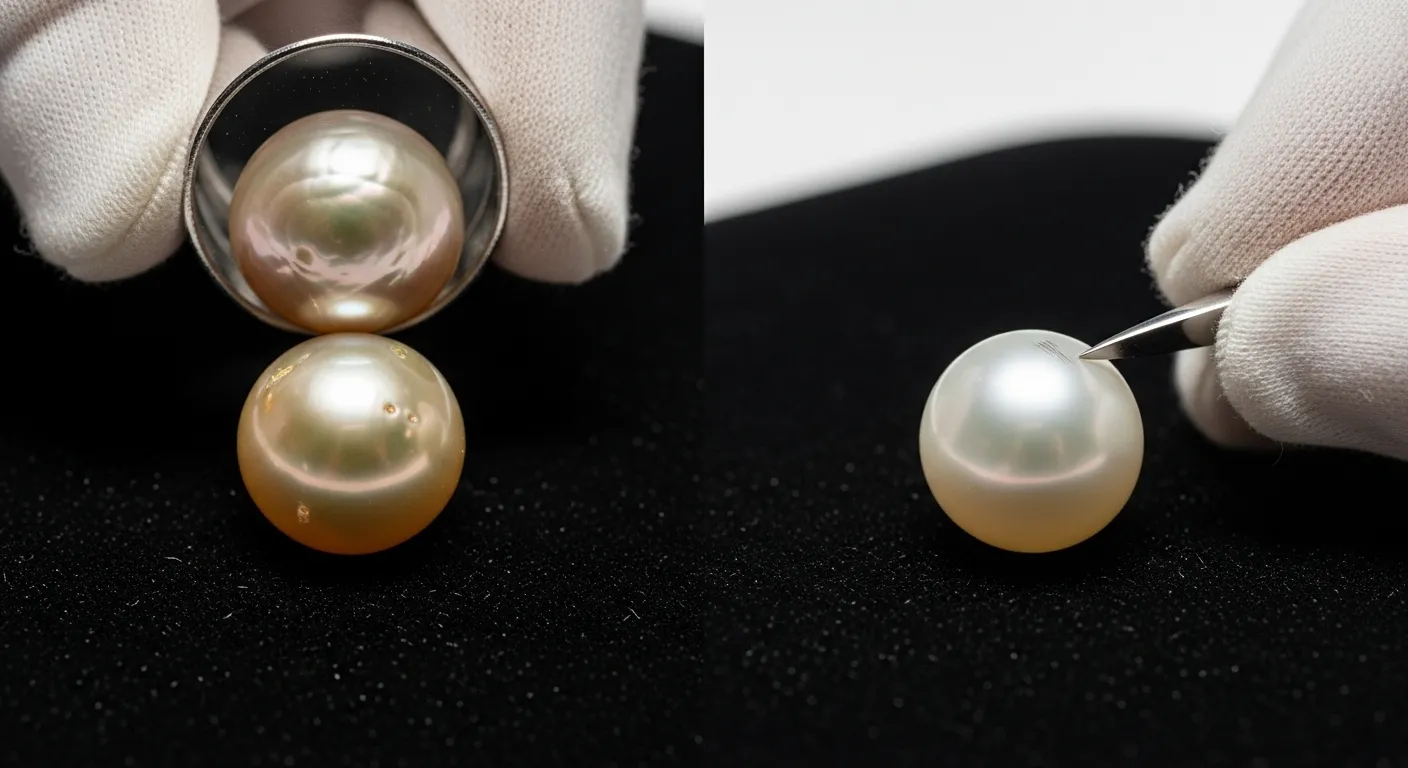
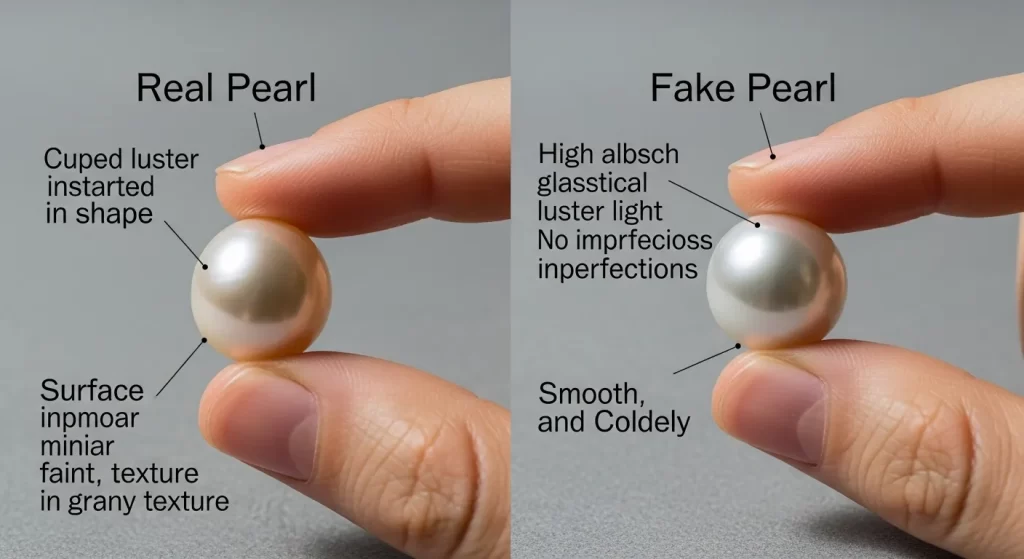
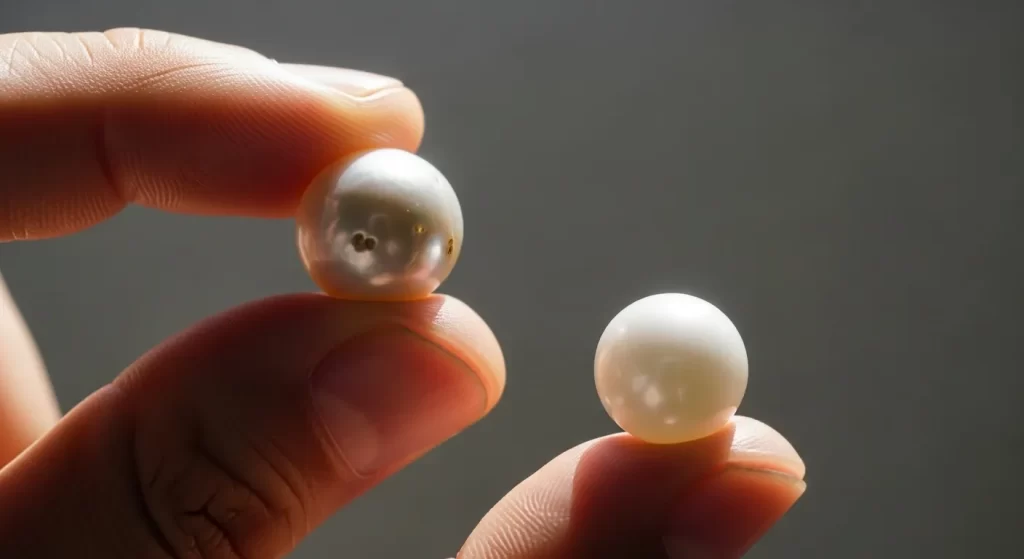
I usually hold pearls under good light and look closely at the surface. Real pearls show slight imperfections tiny bumps, ridges, or irregularities. Fake ones look too perfect, almost plastic-like.
Another giveaway is luster. Genuine pearls glow with depth, giving you a soft inner shine. Imitations only bounce light off the surface, like a painted ball”Jewelry Care Tips“.
Temperature Test
We know real pearls are made of calcium carbonate. When you touch them, they feel cool for a few seconds before warming against your skin. Fake pearls, especially plastic ones, match room temperature immediately. This quick temperature change is a reliable clue.
Knock/Sound Test
They say pearls talk if you listen. When two real pearls are tapped together, they create a soft, deep, and dull sound. Fake ones make a hollow click, like glass marbles. I always compare the sound it’s like hearing the difference between wood and plastic knocking.
Drill Hole Inspection
We often forget to check the small details. Look at the drill holes of your pearls. Real ones have neat, sharp edges, and you may see nacre layers around the hole. Fake pearls show uneven edges, sometimes with coating peeling off. That tiny flaw is a huge hint.
UV Light Observation
If you have a UV flashlight at home, this test is eye-opening. Real pearls fluoresce, glowing softly under ultraviolet light. Fakes often show no reaction or look dull. I find this method particularly fun at night it’s like the pearls are revealing their secrets.
Professional Methods (GIA, X-ray)
We may try home tricks, but professionals go deeper. The Gemological Institute of America (GIA) uses advanced methods like real-time X-ray microradiography and micro-CT scanning. These tests show nacre thickness and concentric layers.
The GIA also measures seven Pearl Value Factors: size, shape, color, luster, surface, nacre, and matching. With these standards, jewelers can issue authentication reports. For peace of mind, nothing beats lab verification.
Types of Real Pearls (Akoya, Tahitian, South Sea, Freshwater)
I always remind friends that not all pearls are the same. Each type has its story and origin.
- Akoya Pearls: Cultured in saltwater, known for their perfect roundness and mirror-like luster. Sizes often range from 8.0–8.5 mm.
- Tahitian Pearls: Grown in the black-lipped oyster, famous for dark tones like black, gray, or peacock green. They measure 8.0–10.0 mm on average.
- South Sea Pearls: The giants of the pearl world. These golden or silky white gems can grow up to 21 mm, making them the rarest and most valuable.
- Freshwater Pearls: Produced in lakes and rivers, these come in natural pastel shades like peach, lavender, or pink. They’re often off-round but charmingly unique.
Buy Smart: Reputable Sellers & Certificates
We all want to avoid scams. The smartest way is to buy from trusted sellers. For example, Pearls of Joy, a company with over 20 years in the industry, has served more than 40,000 satisfied customers. Reputable sellers usually provide certificates of authenticity, ensuring that your pearls have been graded and tested.
Always ask for documentation. Real pearls are measured in millimeters or even carats, and sellers should provide this data. Trustworthy jewelers don’t hide information.
Final Thoughts
I think learning how to see if a pearl is real or fake is more than a party trick it’s protecting your money and valuing nature’s beauty. At-home tests like the tooth rub, sound check, and surface inspection work well for quick judgments. Still, professional certification remains the gold standard.
We can appreciate pearls better once we know their journey from an oyster’s patient layering to a jeweler’s skilled setting. So, the next time you hold a pearl necklace, remember these checks, trust your eyes and touch, and always buy smart. Authentic pearls are treasures meant to last a lifetime.
FAQ
Q1: Are natural pearls the same as cultured pearls?
No. Natural pearls form without human help, making them extremely rare. Cultured pearls, though grown with human assistance, are still real. Almost every pearl on the market today is cultured.
Q2: What about Majorica pearls?
These are high-end imitations from Spain. They’re made by applying dozens of thin lacquer layers on glass beads. Beautiful? Yes. Real? No.
Q3: Do pearls dissolve in vinegar?
Yes, because they’re made of calcium carbonate. However, this test damages pearls, so it’s not recommended.
Q4: Can weight help in testing?
Sometimes. Real pearls feel dense for their size, but beware: some fakes, especially glass beads, can be heavier than real ones.
Q5: How are pearls measured?
By millimeters for size, and occasionally by carats for weight. Precision tools, like the troy scale, give accuracy.
References
- Gemological Institute of America (GIA). Pearls | Facts and Information. Retrieved from https://www.gia.edu/pearls
- Gemological Institute of America (GIA). Pearl Quality Factors. Retrieved from https://www.gia.edu/pearl-quality-factor
- Smithsonian Institution. Pearls in Natural History Collections. Retrieved from https://naturalhistory.si.edu
- American Gem Society (AGS). Certification Standards for Jewelry and Gemstones. Retrieved from https://www.americangemsociety.org
- Pearl Guide. Types of Pearls: Akoya, Tahitian, South Sea, Freshwater. Retrieved from https://www.pearl-guide.com
- Pearls of Joy. About Us – Pearl Expertise and Customer Service. Retrieved from https://www.pearlsofjoy.com
- Majorica. Official Majorica Pearl Manufacturing Process. Retrieved from https://www.majorica.com
- International Gem Society (IGS). How to Tell If a Pearl Is Real or Fake. Retrieved from https://www.gemsociety.org
- CIBJO – The World Jewellery Confederation. Pearl Blue Book Standards. Retrieved from https://www.cibjo.org
- Britannica. Pearl: Composition and Formation. Retrieved from https://www.britannica.com/science/pearl
Disclaimer: Information provided is for educational purposes only. Pearl tests shared here are general guidelines and not a substitute for expert gemological evaluation or certified authentication.
About the Author
Ben Dawson is a jewelry and gemology enthusiast with years of experience studying pearls and fine gemstones. He shares practical advice to help readers spot authentic pearls with confidence. His passion lies in making gem knowledge simple and accessible.