
Table of Contents
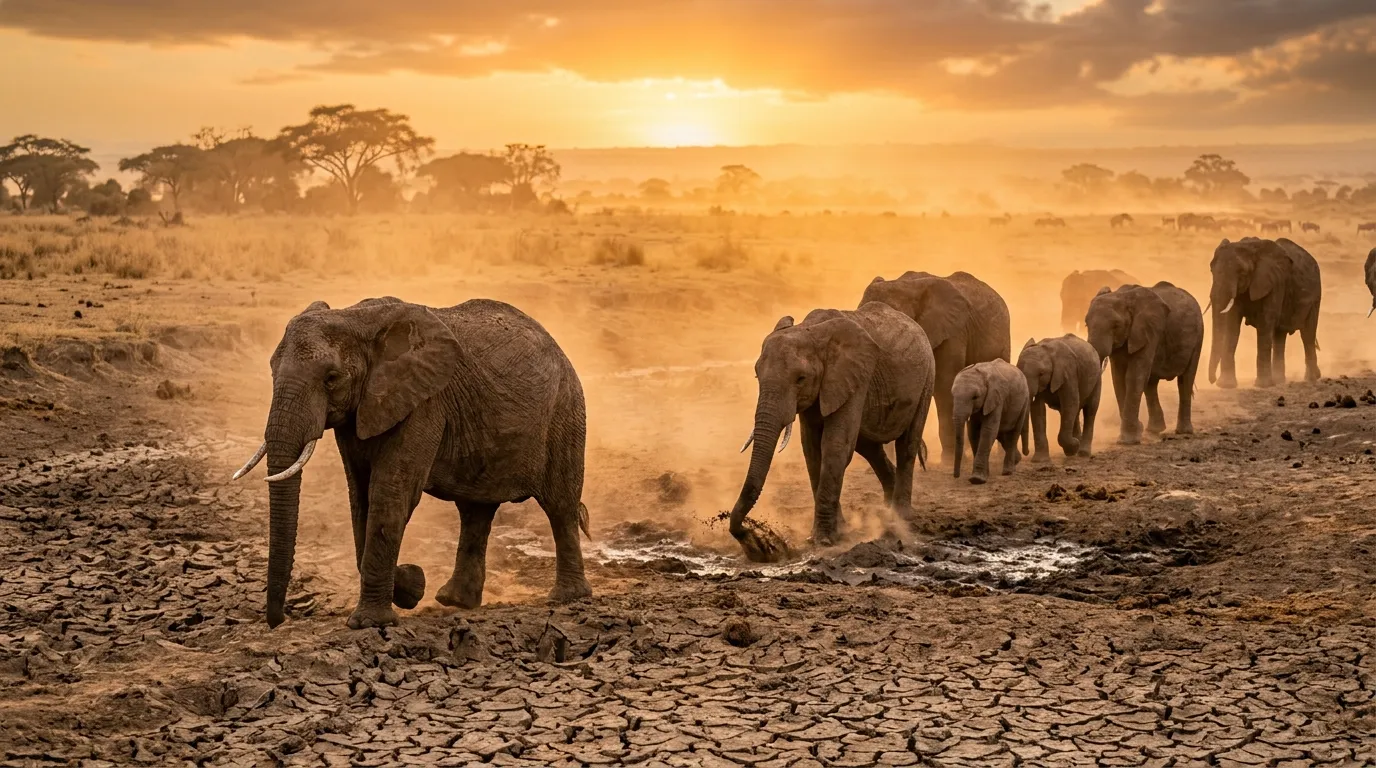
Understanding how elephants find water during drought reveals one of the most impressive survival skills in the animal kingdom. African and Asian elephants live in ecosystems where rainfall can disappear for months. In severe drought years, water sources shrink dramatically. Yet elephants still locate hidden water with remarkable accuracy.
The Kenya Wildlife Service shows elephants can travel 40–70 kilometers in a single day searching for water during extreme dry periods. Their survival depends on memory, environmental awareness, and cooperation within the herd. These animals use smell, seismic sensing, and long-term landscape memory to locate underground water and distant rivers.
Because an adult elephant drinks 150–200 liters of water daily, finding reliable sources becomes critical during drought. When natural water disappears, elephants often create new water access points for themselves and other wildlife.
Understanding how elephants find water during drought helps scientists protect elephant habitats and maintain balanced ecosystems.
Elephant Memory and Migration Patterns
Long-Term Water Source Memory
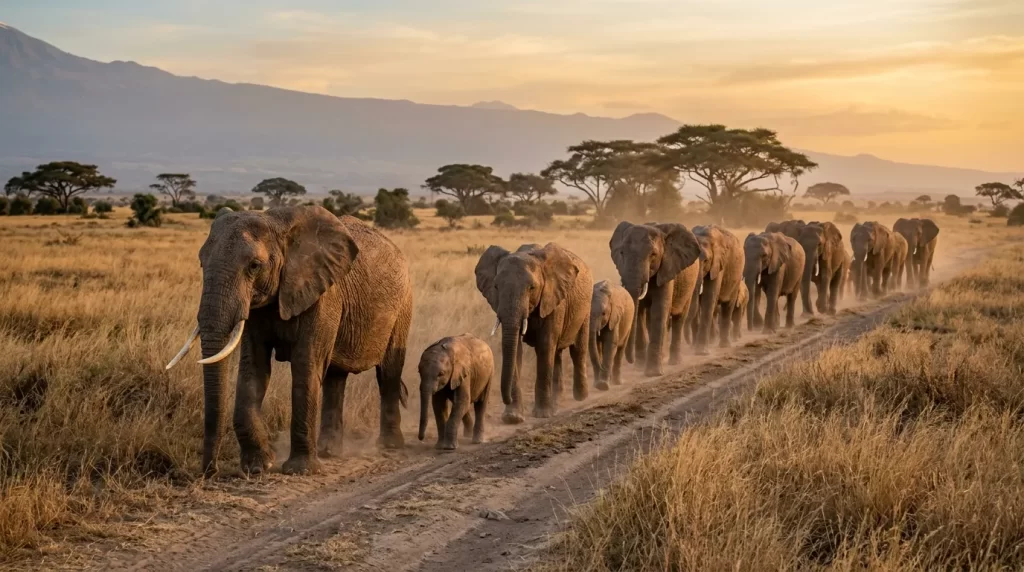
One of the strongest abilities explaining how elephants find water during drought is their extraordinary memory. Elephant matriarchs lead herds using knowledge accumulated over decades. Matriarchs older than 35 years guide herds more successfully during drought events.
Elephants remember seasonal rivers, ancient waterholes, and even dry riverbeds that refill after underground digging. Their brains, weighing about 5 kilograms, contain highly developed hippocampus regions responsible for spatial memory.
Tsavo Trust confirms elephants often revisit water sites last used 10–20 years earlier. This deep memory allows them to survive drought cycles that occur once every decade.
Seasonal Migration Routes
Migration also explains how elephants find water during drought across large landscapes. Elephants follow traditional routes connecting rivers, wetlands, and underground aquifers.
GPS collar tracking between 2022 and 2025 showed elephants consistently migrate toward permanent water sources such as the Tana River and Galana River during dry months.
These migration corridors include:
- Ancient river valleys.
- Seasonal marshlands.
- Underground water zones.
- Human-made reservoirs.
Protecting migration corridors is essential. When blocked, elephants struggle to access water during severe drought years.
Using Their Sense of Smell to Detect Water
Detecting Moist Soil
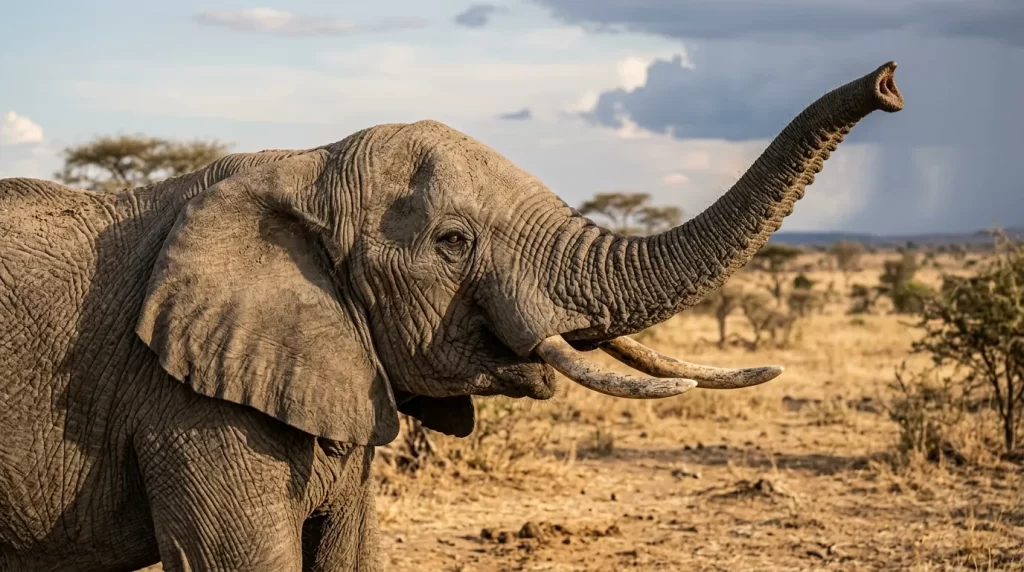
Another key factor in how elephants find water during drought is their exceptional sense of smell. Elephants possess roughly 2,000 functional olfactory receptor genes, more than any other land mammal.
Their trunks contain about 40,000 muscles and highly sensitive scent receptors. This allows elephants to detect moisture in soil several kilometers away.
During drought, elephants often move toward areas where soil retains humidity beneath the surface. They recognize subtle scent differences between dry ground and water-bearing soil layers.
Scientists from Save the Elephants documented elephants detecting underground moisture up to 12 kilometers away under favorable wind conditions.
Smelling Distant Rainfall
Elephants can also detect rainfall from long distances. Fresh rain releases distinctive soil compounds called geosmin, which elephants can smell from kilometers away.
This ability allows herds to move toward regions where rainfall has recently occurred. In drought seasons, following rain patterns dramatically improves survival.
Animal Welfare shows elephants frequently change direction within hours after distant rainfall events. This behavior increases their chance of reaching temporary water pools.
Digging for Underground Water
Elephant-Created Wells
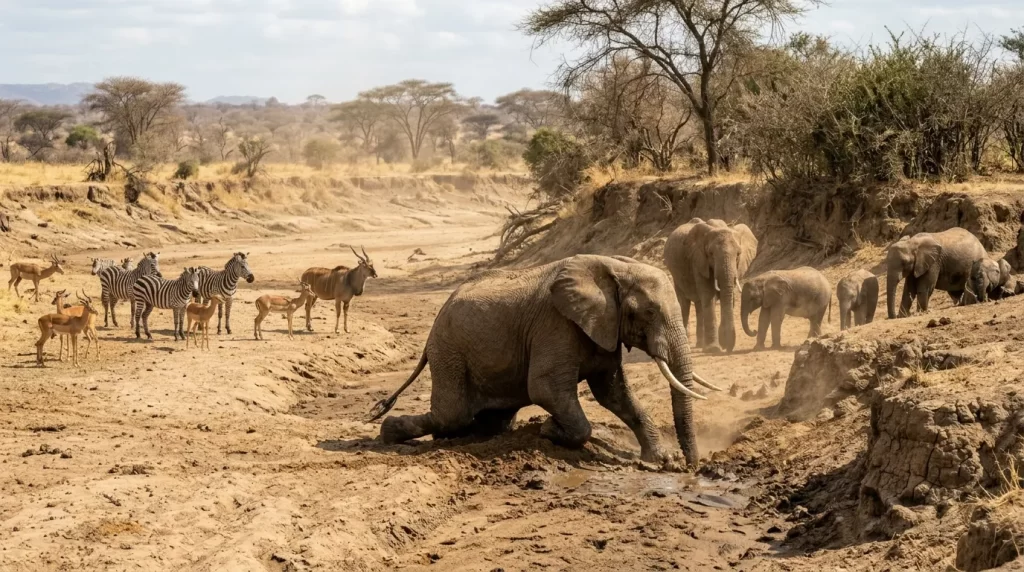
One of the most fascinating examples of how elephants find water during drought involves digging wells in dry riverbeds. Elephants use their tusks, feet, and trunks to dig into sand where underground water flows.
These wells can reach depths of 60–120 centimeters before water begins seeping upward. Once exposed, the water becomes accessible for drinking.
Elephants often dig wells in dry riverbeds because groundwater flows beneath the sand layer even when surface water disappears.
Animals using elephant-dug wells include:
- Zebras
- Warthogs
- Antelope
- Birds
- Smaller mammals
Strategic Riverbed Selection
Elephants rarely dig randomly. They choose locations carefully based on terrain signals.
Preferred digging locations include:
- Dry river bends.
- Areas with thick sand layers.
- Regions with dense vegetation.
- Historical watering points.
These choices dramatically increase success rates. Elephants locate underground water within 30 minutes in most attempts.
Want to understand the difference between ivory and skeletal structure? Explore elephant tusks vs bone to learn how tusks function and why they matter for survival.
Listening to Underground Water Vibrations
Seismic Communication and Sensing
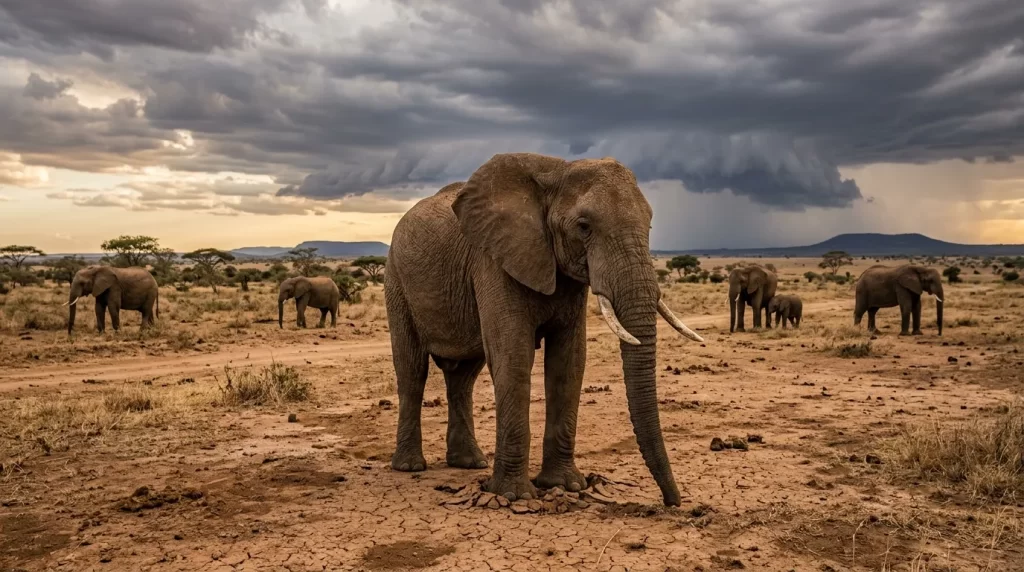
A lesser-known explanation for how elephants find water during drought involves seismic sensing. Elephants detect low-frequency ground vibrations through sensitive receptors in their feet.
These vibrations travel through soil and rock over long distances. Elephants can detect frequencies between 14 and 35 Hertz, which humans cannot hear.
Scientists believe elephants sometimes detect underground water movement or distant thunder through these vibrations.
Coordinated Herd Decision-Making
Elephants rarely search for water alone. Herds rely on coordinated movement guided by experienced leaders.
A matriarch assesses environmental signals, including:
- Smell of moisture.
- Vegetation density.
- Ground vibration patterns.
- Memory of past water sources.
When signs indicate water availability, the herd moves collectively toward that area. This teamwork improves success during extreme drought conditions.
Botswana recorded coordinated herd travel patterns covering up to 90 kilometers in three days during the dry seasons.
Key Methods Elephants Use to Find Water
| Method | How It Works | Distance Range | Benefit |
|---|---|---|---|
| Memory | Matriarch remembers ancient water sources | Up to 100 km | Reliable navigation |
| Smell | Detects moisture and rainfall scents | Up to 12 km | Fast water detection |
| Digging Wells | Access underground river water | Localized | Creates new water access |
| Migration | Follows traditional water corridors | 50–200 km | Seasonal survival |
| Seismic Sensing | Detects vibrations through feet | Several km | Access to underground river water |
Why Elephant Water Knowledge Matters for Ecosystems
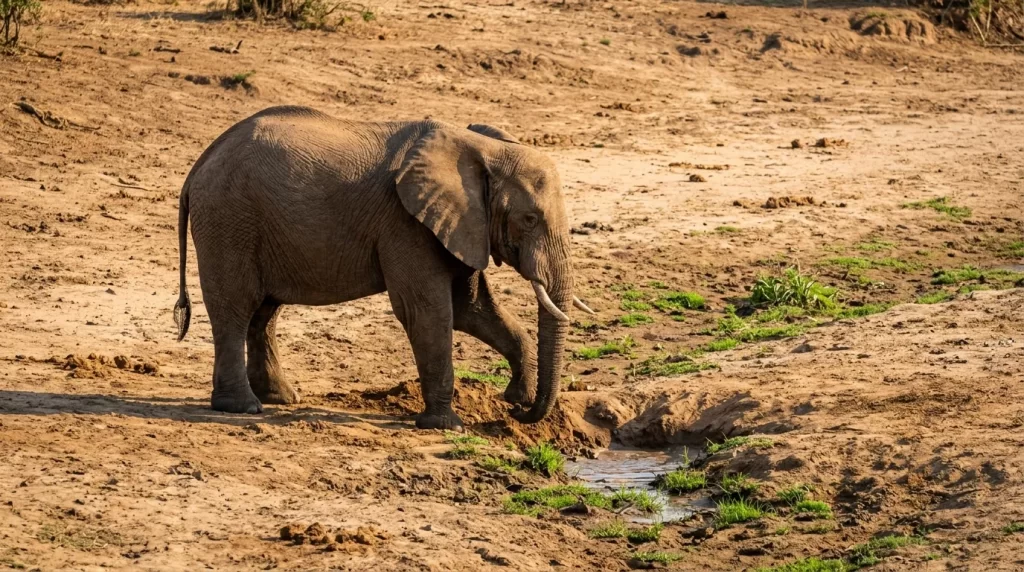
Understanding how elephants find water during drought also explains their importance in African ecosystems. Elephant water digging helps dozens of other species survive dry seasons.
During severe droughts, wildlife cameras recorded over 40 species using elephant-dug wells in Namibia. Without elephants, many of these animals would struggle to access drinking water.
Elephants also help maintain vegetation balance. Their movement between water sources spreads seeds across large landscapes. This process supports forest regeneration and grassland diversity.
However, climate change is increasing drought intensity across Africa and Asia. Drought frequency increased 29 percent between 2000 and 2023. Protecting elephant habitats, migration routes, and water access points remains essential for ecosystem stability.
Bottom Line
Learning how elephants find water during drought reveals a combination of intelligence, memory, and environmental awareness. Elephants rely on long-term memory, smell, underground digging, and seismic sensing to survive extreme dry conditions.
Their actions support entire ecosystems by creating water access for other wildlife. Protecting elephant migration routes and natural habitats ensures these survival strategies continue working.
Curious about the different elephant species around the world? Explore our Guide to Elephant Species to learn how African and Asian elephants differ in habitat, behavior, and survival strategies.