Table of Contents
Understanding how do elephants cool their bodies in extreme heat reveals one of nature’s most impressive survival systems. Elephants live in regions where daytime temperatures regularly exceed 104°F (40°C). In African savannas, surface temperatures can even reach 122°F (50°C) during peak dry seasons. Because elephants weigh between 5,000 and 14,000 pounds, their bodies generate significant internal heat.
Fortunately, elephants evolved powerful natural cooling mechanisms. Large ears, specialized skin, mud bathing, and water spraying all help regulate body temperature. Elephant ears alone can dissipate up to 20% of body heat during intense heat waves. These adaptations protect elephant health and energy balance in extreme climates.
In this article, we explore how do elephants cool their bodies in extreme heat, examining the anatomy, behavior, and environmental strategies that keep the largest land animal healthy in scorching environments.
Elephant Ears: Nature’s Giant Cooling Fans
Large Ear Surface Area Releases Heat
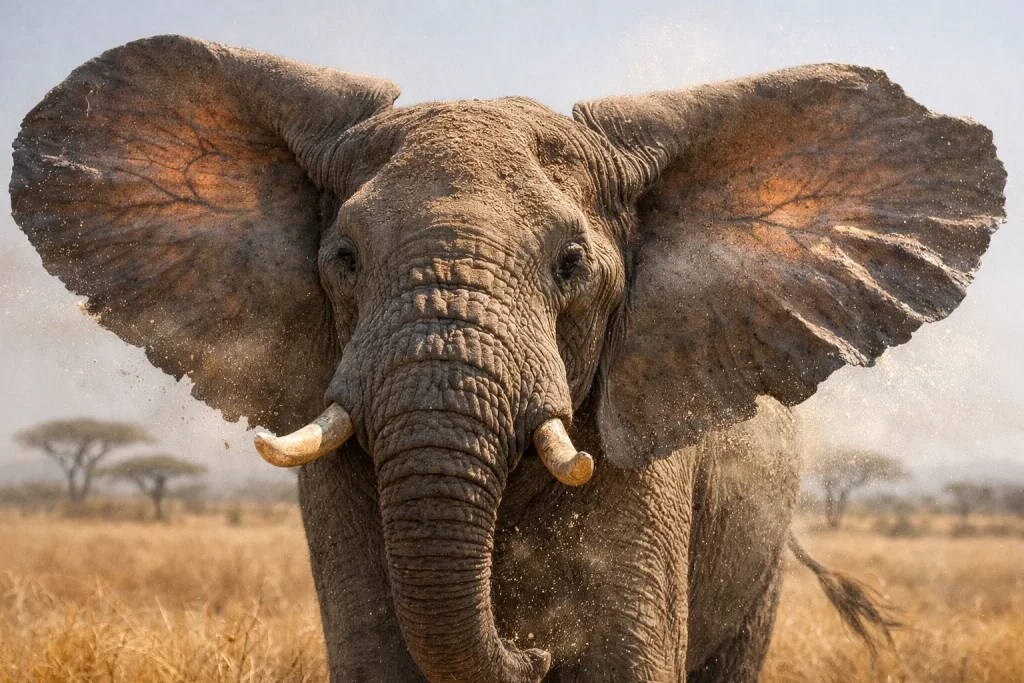
Elephant ears function like biological radiators. African elephant ears can reach 6 feet long and 4 feet wide, creating a massive heat-exchange surface.
Inside the ears, dense blood vessels carry warm blood from the body’s core. When elephants flap their ears, air moves across this thin skin. Heat transfers from the blood into the surrounding air. Ear flapping can lower blood temperature by 4–6°F (2–3°C) within minutes.
This cooling process protects organs from overheating during long walks and feeding periods. Without ear-based heat loss, elephants would struggle to survive in equatorial climates.
Ear Flapping Increases Airflow
Elephants actively flap their ears when temperatures rise above 86°F (30°C). This behavior accelerates heat dissipation by increasing airflow across blood vessels.
Key benefits of ear flapping include:
- Increased heat exchange between blood and air
- Faster cooling during midday heat
- Reduced internal body temperature
- Improved stamina during long migrations
Research from the University of Notre Dame’s biomechanics study explains that ear movement can increase heat loss efficiency by up to 15%.
Skin Structure That Prevents Overheating
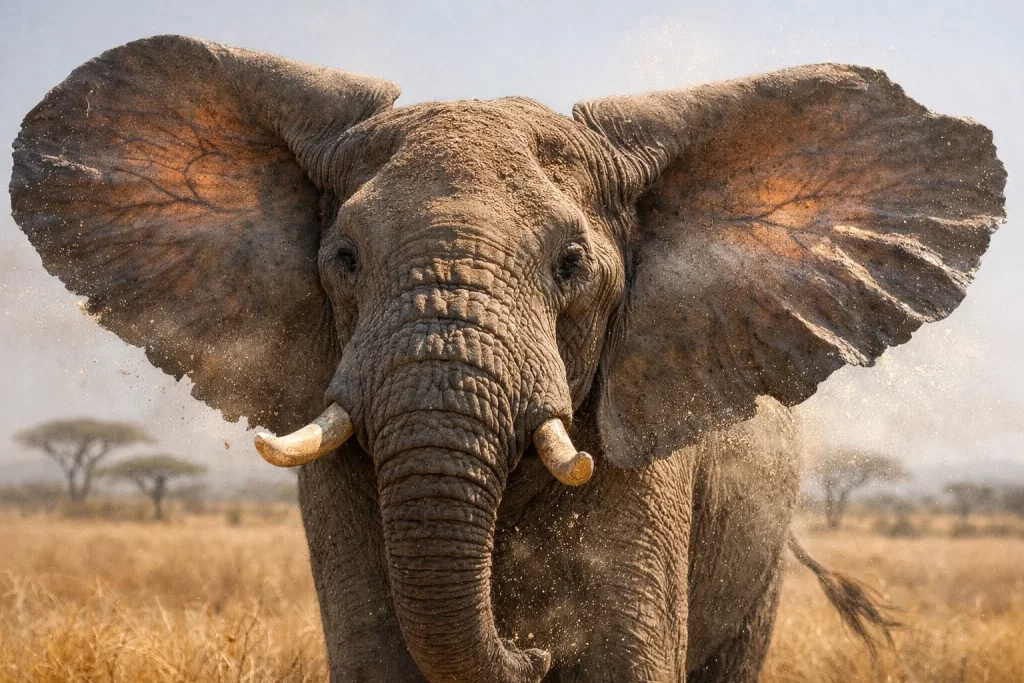
Wrinkled Skin Holds Cooling Moisture
Elephant skin appears rough and deeply wrinkled for a reason. These wrinkles help retain water and mud, creating a natural cooling layer.
Elephant skin wrinkles increase moisture retention by five to ten times compared with smooth skin. Water trapped in the grooves evaporates slowly, providing continuous cooling.
This natural design works similarly to evaporative cooling systems used in modern engineering.
Sparse Hair Aids Heat Dissipation
Although elephants appear hairless, they actually have sparse body hair that assists thermoregulation.
Each hair strand creates small airflow channels above the skin. This allows heat to escape more easily. Elephant hair can increase heat loss by up to 15% under windy conditions.
Together, wrinkled skin and sparse hair create a passive cooling system that works all day without energy expenditure.
Mud Baths: A Natural Sunscreen and Cooling Layer
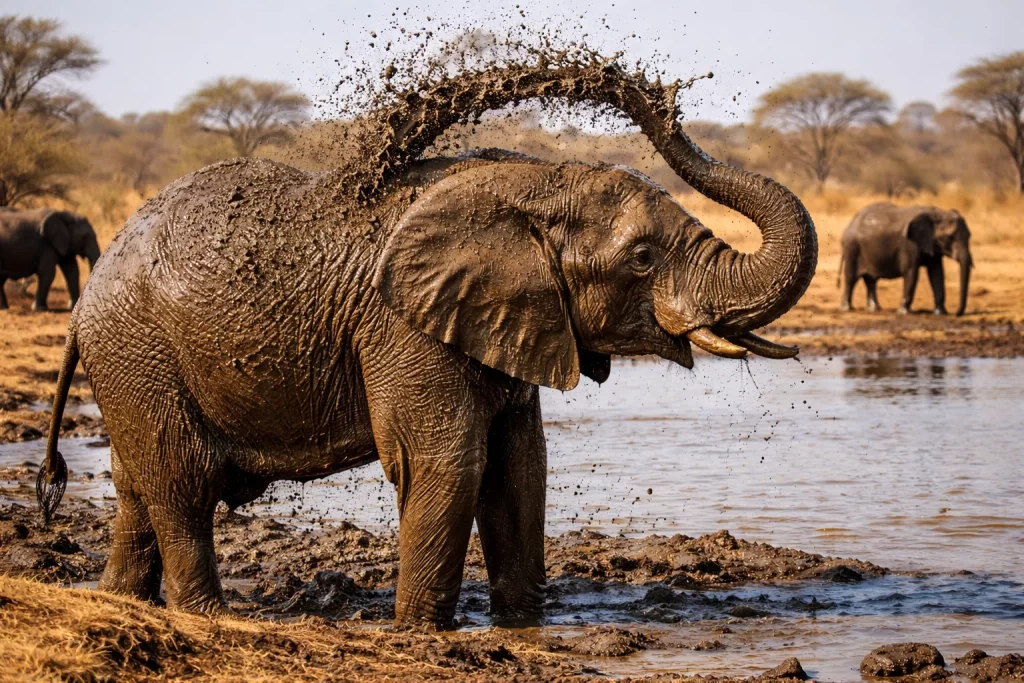
Mud Protects Against Solar Radiation
Mud bathing plays a critical role in answering how do elephants cool their bodies in extreme heat. Elephants regularly cover themselves with mud using their trunks.
This layer blocks solar radiation and reduces direct skin heating. Measurements show mud coatings can lower surface temperature by 5–8°F (3–4°C).
Mud also protects sensitive skin from sunburn and biting insects. That protection improves overall animal health and comfort.
Evaporative Cooling From Wet Mud
Wet mud dries slowly, producing evaporative cooling similar to sweat.
Unlike humans, elephants have very few sweat glands. Instead, evaporation from mud and water replaces sweating as a cooling mechanism.
Benefits of mud bathing include:
- Reduced skin temperature
- Protection from UV radiation
- Prevention of insect irritation
- Extended cooling during dry periods
Elephants may repeat mud baths five to seven times daily during intense heat waves.
Water Spraying and Swimming Behavior
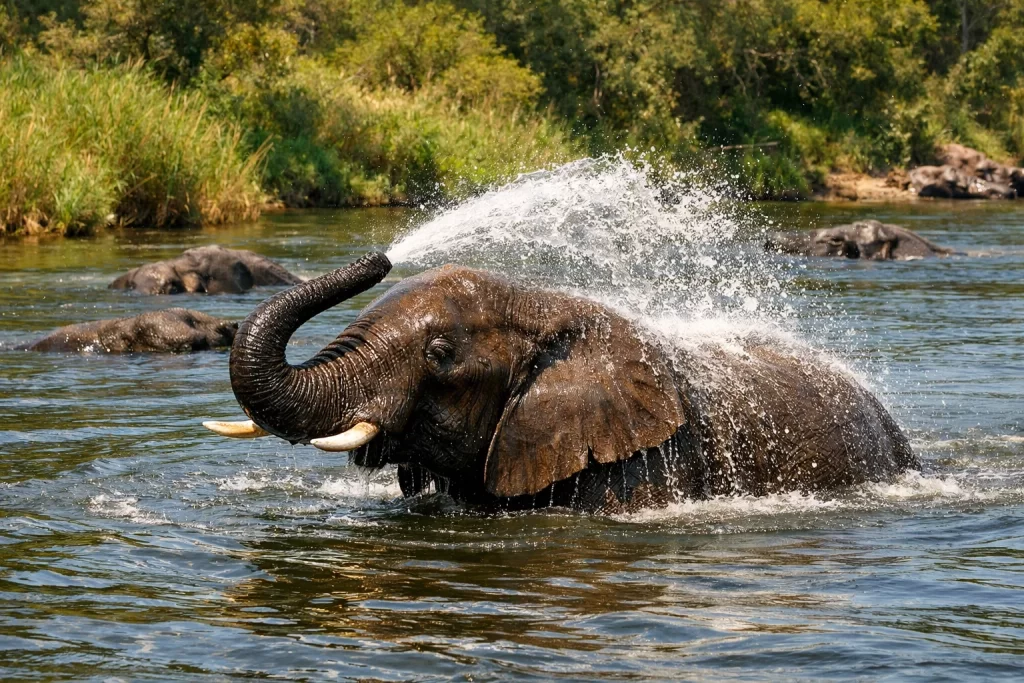
Trunk Spraying Helps Rapid Cooling
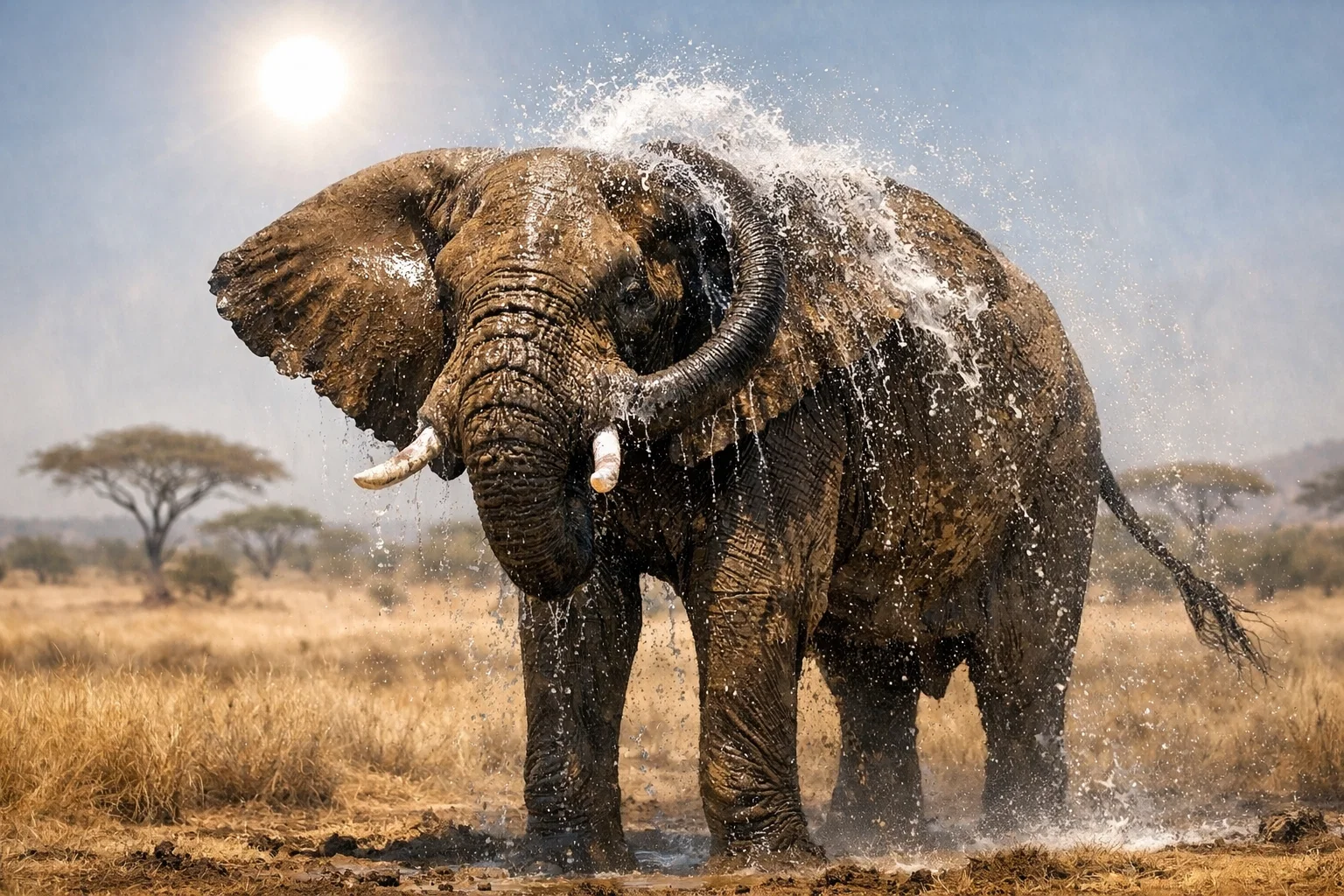
Elephants often spray water across their bodies using their trunks. A trunk can hold about 2 gallons (7.5 liters) of water per spray.
The water spreads across the skin and settles inside wrinkles. As it evaporates, it removes body heat efficiently.
This technique is especially important when elephants travel far from rivers during drought seasons.
Swimming Reduces Core Body Temperature
When available, elephants spend long periods swimming or standing in water. This behavior cools the entire body simultaneously.
Water conducts heat 25 times faster than air, making it an extremely effective cooling medium.
Wild elephants often stay submerged for 30 to 60 minutes during the hottest hours of the day. This dramatically lowers core body temperature.
Discover how elephant feet help them walk silently, revealing the unique foot structure that lets the world’s largest land animal move almost noiselessly through the wild.
Behavioral Strategies for Heat Management
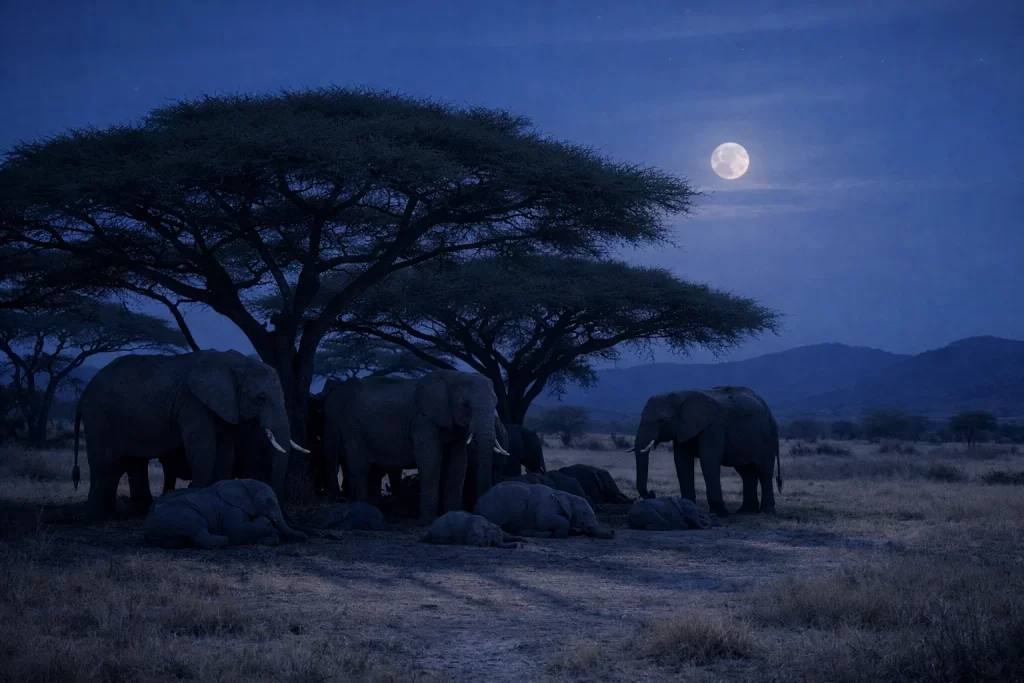
Seeking Shade During Peak Heat
Elephants avoid direct sunlight during the hottest hours. Most herds rest between 11:00 AM and 3:00 PM, when temperatures peak.
They often gather beneath acacia trees or rocky outcrops. Shade can reduce environmental temperature exposure by 10–15°F (5–8°C).
Traveling at Night
Many elephant populations shift their movement patterns to nighttime travel during hot seasons.
Nighttime temperatures in African savannas often drop to 68–77°F (20–25°C). Moving during these cooler hours prevents dangerous heat buildup.
Key Cooling Mechanisms Summary
| Cooling Method | Temperature Reduction | Health Benefit |
|---|---|---|
| Ear flapping | 4–6°F blood cooling | Protects organs |
| Mud coating | 5–8°F surface cooling | UV protection |
| Water spraying | Rapid evaporative cooling | Prevents overheating |
| Swimming | Whole-body cooling | Lowers core temperature |
| Shade resting | 10–15°F environmental reduction | Conserves energy |
Why Elephant Cooling Systems Matter for Health
Understanding how do elephants cool their bodies in extreme heat helps scientists protect these animals from climate stress.
Heat waves in African ecosystems have increased by 1.3°C since 1960. Rising temperatures may challenge traditional cooling behaviors.
Healthy cooling systems allow elephants to maintain stable internal temperatures around 96–99°F (35.5–37.2°C). When elephants cannot cool down effectively, they risk dehydration, heat exhaustion, and metabolic stress.
Bottom Line: How Do Elephants Cool Their Bodies in Extreme Heat?
Learning how do elephants cool their bodies in extreme heat highlights the remarkable adaptations of the world’s largest land animal. Giant ears, moisture-holding skin, mud baths, and water spraying work together to regulate body temperature. Behavioral strategies like shade resting and nighttime travel add another layer of protection.
These cooling mechanisms allow elephants to thrive in climates exceeding 104°F (40°C). However, rising global temperatures may place additional pressure on these natural systems. Protecting habitats, water sources, and migration routes remains essential for elephant health and survival.
Want to understand elephants even deeper? Explore Elephant Physiology and Health to discover how their body systems support strength, survival, and long-term health in the wild.