While both elephant tusks and bones serve as the structural and defensive framework for the animal, they are fundamentally different biological tissues. A common misconception in wildlife circles is that tusks are simply “large bones” protruding from the face. In reality, tusks are specialized teeth, and the distinction in their mineral density, regenerative capacity, and metabolic function is a critical health marker for wildlife researchers.
The Compositional Divide: Ivory vs. Bone
Both tissues share a primary inorganic building block: Hydroxyapatite, a crystalline form of calcium phosphate. However, the ratio of organic to inorganic material differs significantly, leading to distinct mechanical properties.
Elephant Bone: The Living Scaffold
Elephant bone is a living, vascularized organ. It is composed of roughly 70% inorganic minerals and 30% organic matter (mostly Type I collagen) and water. Bones contain a marrow cavity and a complex network of blood vessels known as the Haversian system. This allows bone to be “plastic”—it can remodel, grow, and heal itself after a fracture through a process of osteoblastic and osteoclastic activity.
Elephant Tusk: The Modified Incisor
In contrast, an elephant tusk is a modified upper incisor tooth. It is composed primarily of dentine (commonly known as ivory). Unlike bone, ivory is an avascular solid once formed, meaning it does not have a blood vessel system running through its length.
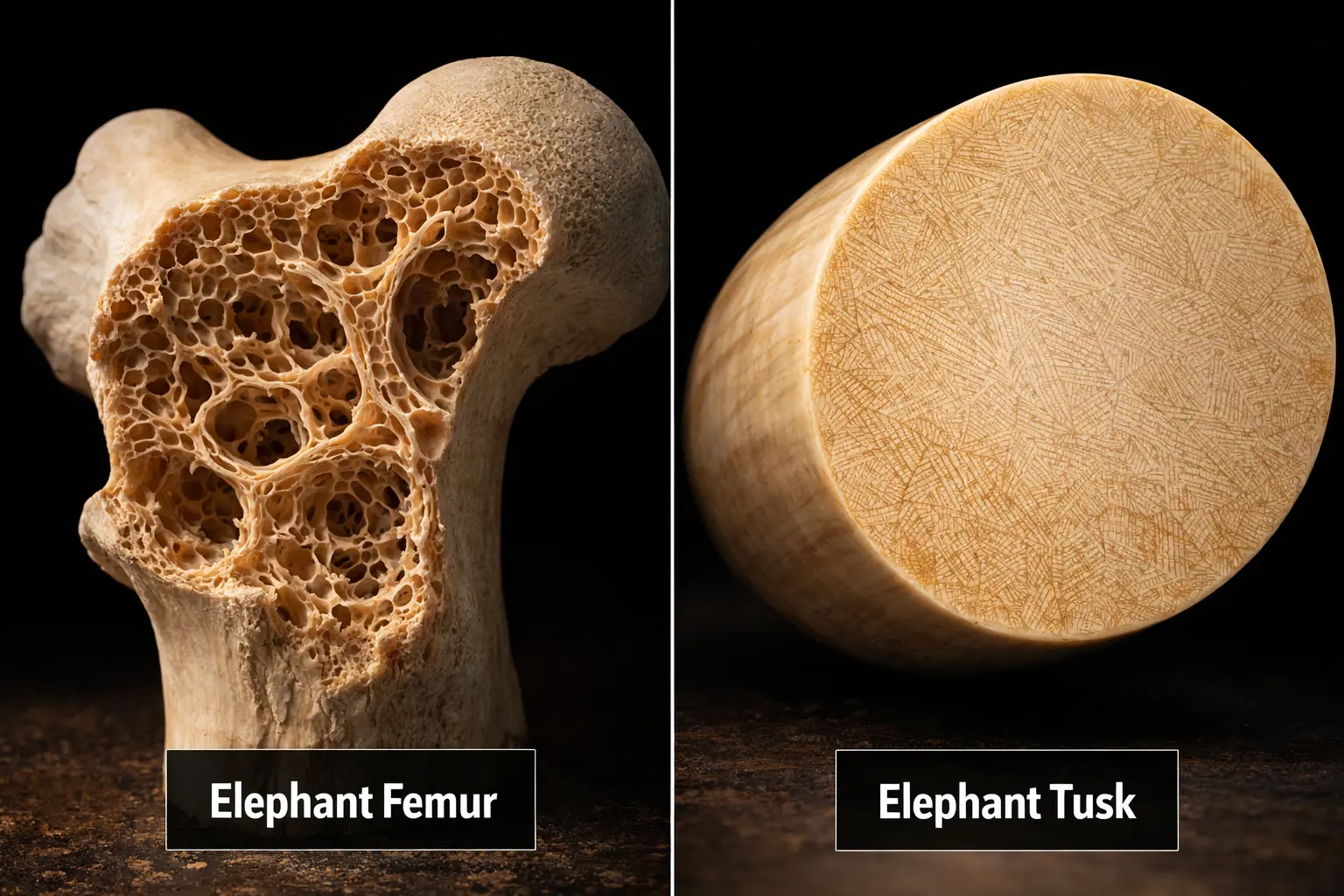
Dentine is characterized by Schreger lines—a unique cross-hatching pattern visible in cross-sections. These lines are not just aesthetic; they are the result of the path taken by the odontoblasts (dentin-forming cells) and act as a biological “fingerprint” used by forensic scientists to identify species.
Comparative Mineral Density and Strength
The higher mineral density of the tusk is an evolutionary adaptation for its role as a multipurpose tool for digging, debarking, and defense.
| Feature | Elephant Bone | Elephant Tusk (Ivory) |
| Primary Material | Mineralized Bone Tissue | Dentine (Ivory) |
| Healing Ability | High (Regenerative) | None (Permanent damage) |
| Vascularization | High (Contains blood/nerves) | None (Avascular solid) |
| Hardness (Vickers) | ~25–30 | ~35–40 |
| Structural Pattern | Porous/Spongy center | Schreger Lines |
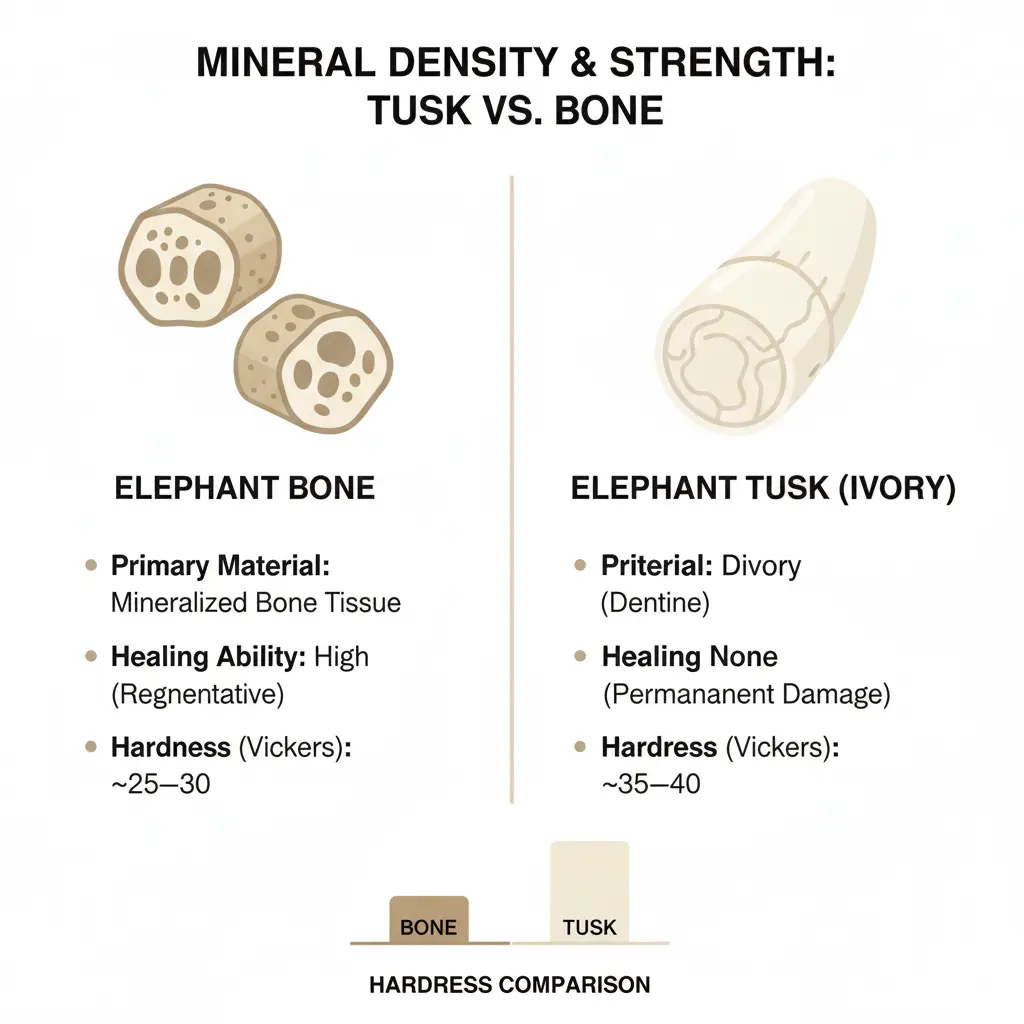
Visualizing the Biological Differences
Understanding the internal mechanics of these tissues requires a look at how they are anchored into the skull. The following video explores the sheer scale of elephant ivory and its connection to the skeletal system.
Elephant Tusk vs Bone Health Impacts
The health of an elephant’s skeletal system and its tusks are intrinsically linked to its diet and environment.
1. Mineral Leaching and Resorption
During the dry season, when nutrient availability drops, an elephant’s body can resorb minerals from its bones to maintain vital organ functions. However, it cannot easily resorb minerals from the ivory of its tusks. This is why we often see elephants with strong tusks but weak, brittle bones if they are suffering from long-term malnutrition. As explored in our guide on what elephants eat in the dry season, a lack of diverse mineral forage is the leading cause of skeletal decline.
2. The Pulp Cavity and Nerve Sensitivity
While the outer ivory is “dead” tissue, the tusk is rooted in a deep pulp cavity within the skull. This cavity is filled with nerves and blood vessels. This makes the tusk highly sensitive to temperature and pressure. Damage to the base of the tusk can lead to systemic infections, a major concern in wildlife health management.
3. Mechanical Synergy
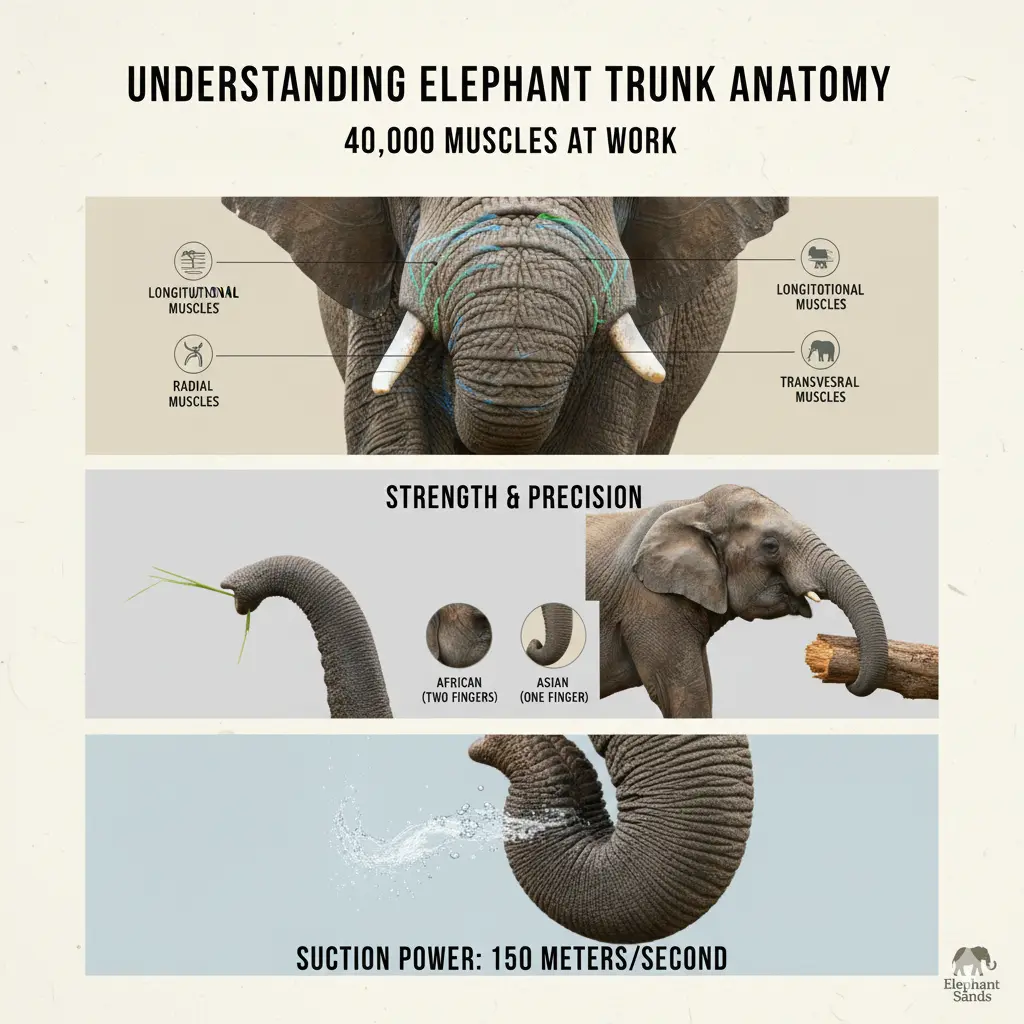
The tusk provides the necessary leverage for the elephant to perform heavy labor. For instance, the 40,000 muscles of the elephant trunk rely on the stability of the tusks to act as a fulcrum when stripping bark or uprooting trees. If tusk health is compromised, the efficiency of the trunk is diminished, leading to a cascade of nutritional issues.
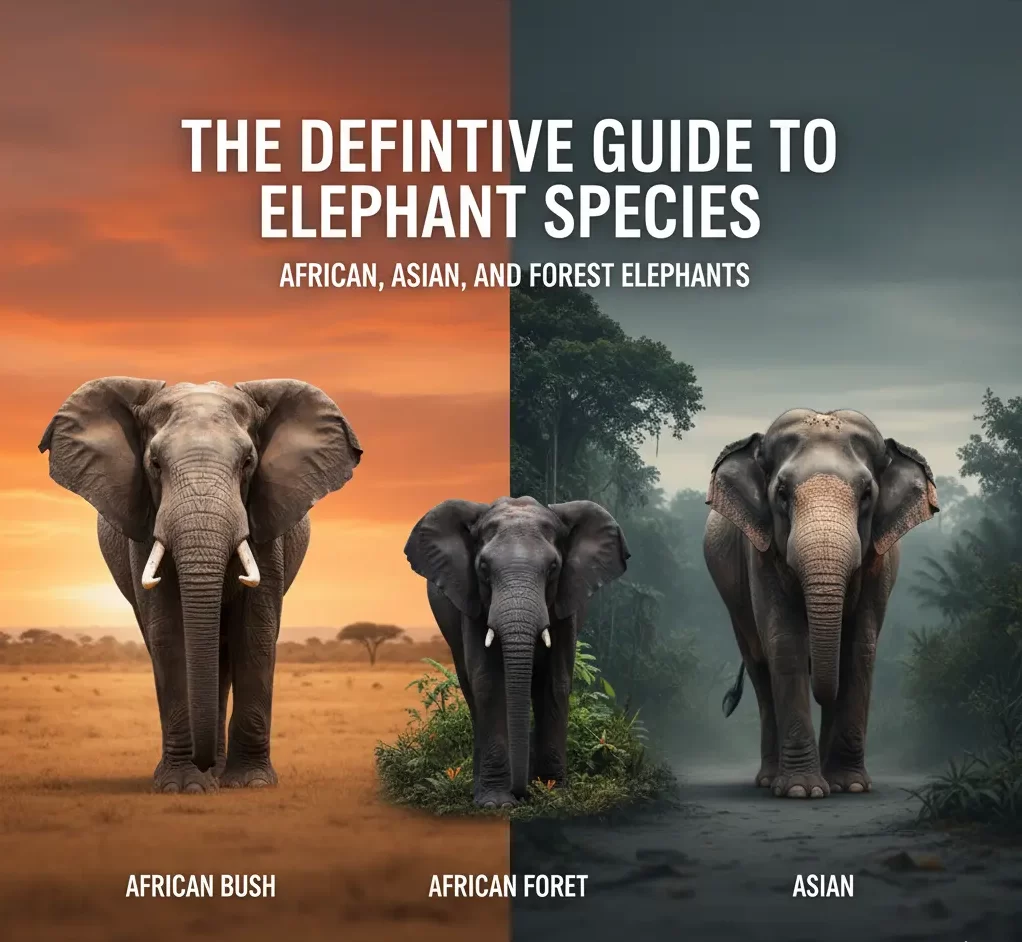
For more details on the evolution of these skeletal traits, refer to The Definitive Guide to Elephant Species.