Table of Contents
Elephant relocation programs are reshaping conservation across Southern Africa in 2026. With Africa’s savanna elephant population estimated at 415,000 by the IUCN African Elephant Specialist Group in 2024, some protected areas now exceed ecological carrying capacity. Overcrowding leads to habitat damage, crop conflict, and rising mortality. Well-designed elephant relocation programs reduce pressure while strengthening underpopulated reserves.
We now see coordinated translocations moving entire family groups, not isolated individuals. Between 2022 and 2025, more than 2,000 elephants were safely moved across Malawi, Mozambique, Zambia, and South Africa through collaborative efforts led by African Parks. These operations rely on helicopters, veterinary teams, and GPS monitoring. When executed ethically, elephant relocation programs protect ecosystems and give elephants secure, connected habitats.
Why Elephant Relocation Programs Are Needed
Population Pressure and Habitat Limits
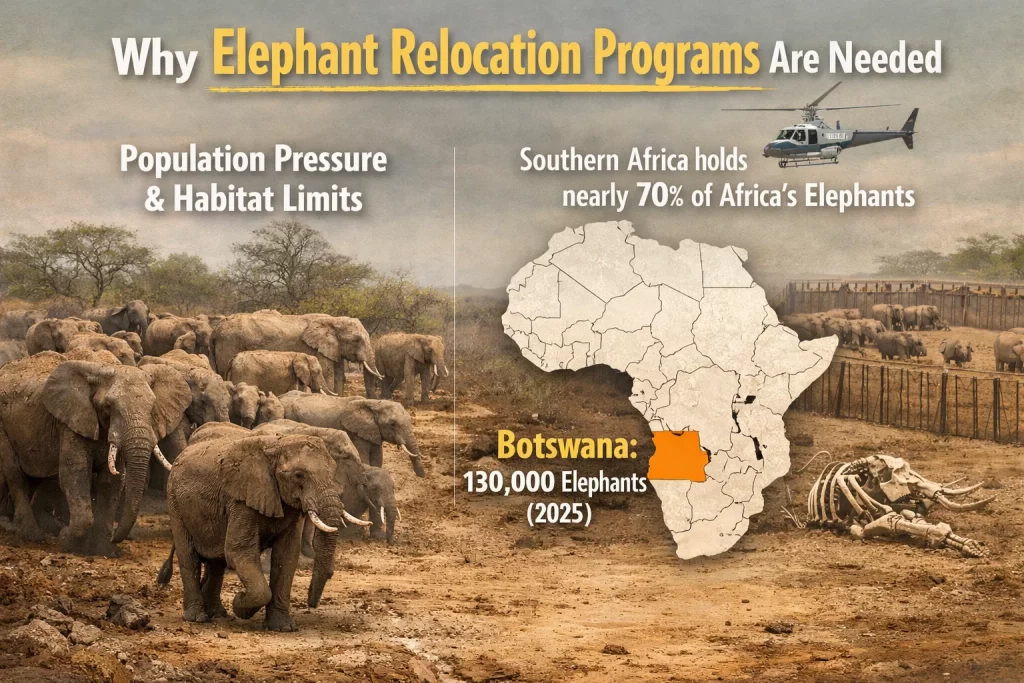
Southern Africa holds nearly 70 percent of Africa’s elephants. Botswana alone supports about 130,000 elephants as of the 2025 government wildlife reports. In fenced parks like Kruger, densities can exceed 1.5 elephants per square kilometer. That density strains woodlands and water systems.
High densities damage mopane and acacia trees, reducing biodiversity. Elephants push into farms when food declines inside reserves. Human-elephant conflict incidents rose by 12 percent in parts of Zambia between 2023 and 2025, according to National Geographic data. Elephant relocation programs ease this pressure and restore ecological balance.
A Science-Based Alternative to Culling
Culling remains controversial and socially divisive. Research highlighted by Mongabay in December 2025 shows that wildlife corridors and translocations offer long-term solutions. Moving elephants maintains genetic diversity while protecting vegetation recovery zones.
Elephant relocation programs also help repopulate areas where poaching once wiped out herds. In Malawi, Majete Wildlife Reserve increased from fewer than 100 elephants in 2003 to over 450 by 2025 after phased relocations. This growth demonstrates measurable ecological recovery through structured intervention. For a strategic overview of modern conservation planning, visit The Future of Wildlife: Conservation Strategies for the 21st Century.
Key Benefits of Elephant Relocation Programs:
- Reduce habitat degradation in overpopulated parks.
- Restore elephants to their former ranges.
- Improve genetic diversity.
- Lower human-elephant conflict incidents.
- Strengthen tourism and local conservation funding.
These outcomes prove relocation works when guided by ecological data and veterinary oversight.
Table: Recent Elephant Relocation Programs (2022–2025)
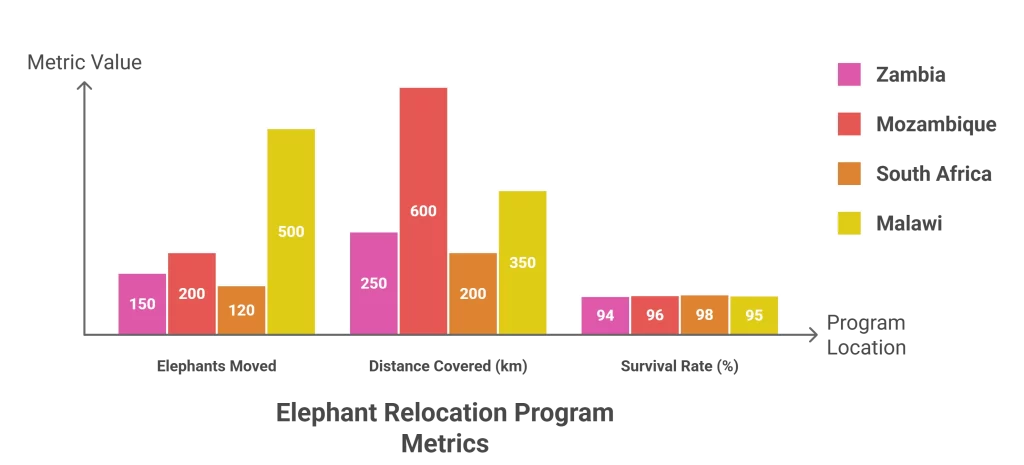
| Program Location | Elephants Moved | Distance Covered | Survival Rate | Key Outcome |
|---|---|---|---|---|
| Malawi (Liwonde to Kasungu) | 500+ | 350 km | 95% | Habitat pressure reduced |
| South Africa (Private Reserves) | 120+ | 200 km | 98% | Zero poaching losses |
| Mozambique to Zinave | 200+ | 600 km | 96% | Population restored |
| Zambia Regional Transfers | 150+ | 250 km | 94% | Conflict reduced |
These figures show consistent survival above 94 percent, confirming operational reliability.
Landmark Elephant Relocation Programs in Action
African Parks’ Cross-Border Moves
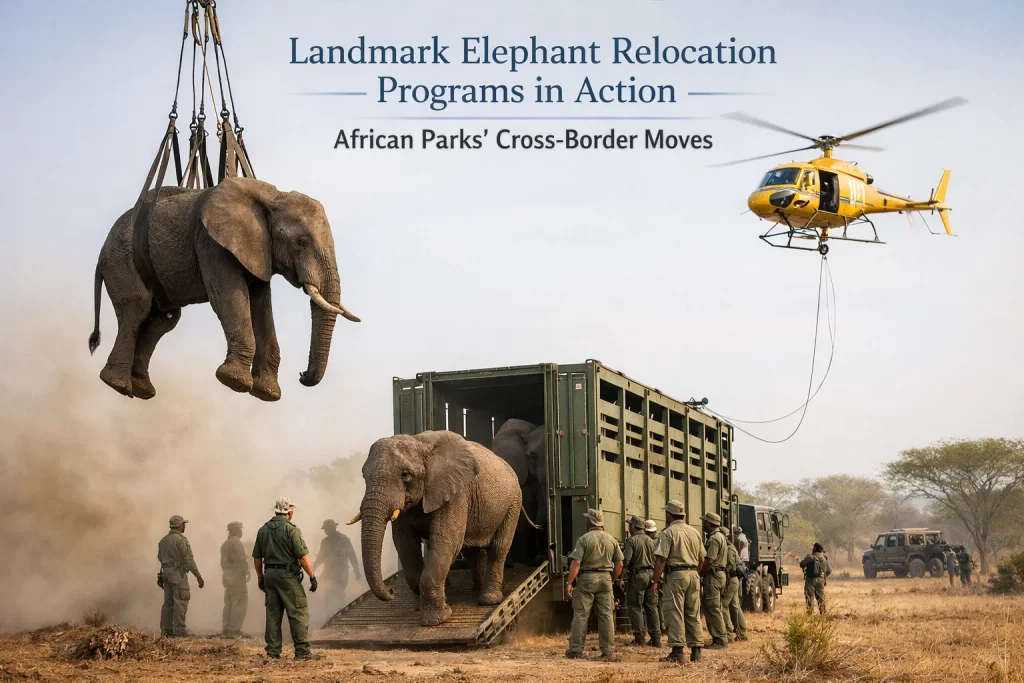
African Parks led one of the largest elephant relocation programs between 2022 and 2024. The organization moved over 500 elephants from Liwonde National Park and Majete Wildlife Reserve in Malawi to Kasungu National Park. The full report appears at africanparks.org/campaign/elephants-move.
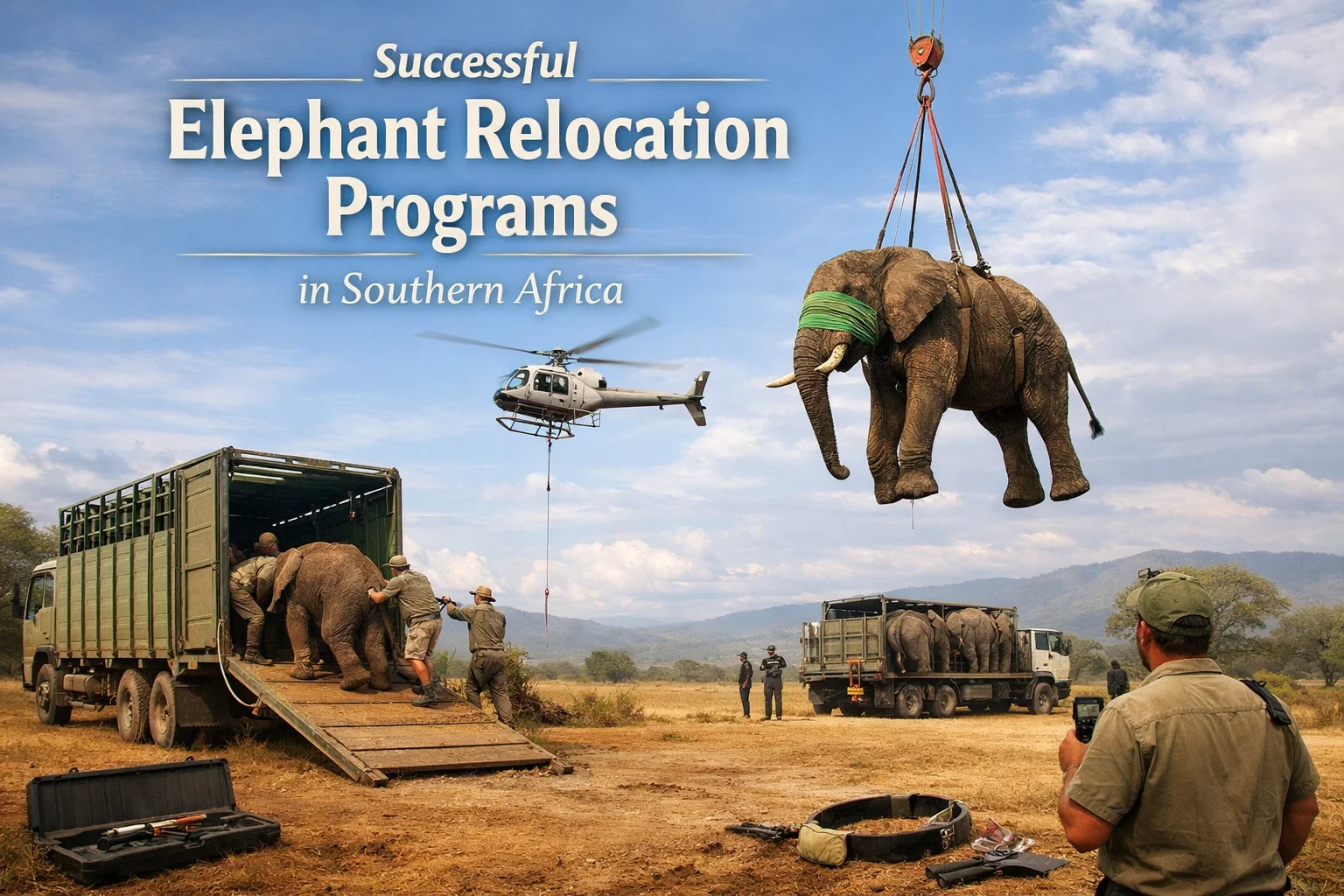
Veterinary teams tranquilized entire family groups. Cranes lifted elephants into reinforced transport crates. Trucks traveled up to 350 kilometers per operation. Post-release monitoring showed a 95 percent survival rate after the first year. This success underscores the value of moving cohesive herds rather than individuals.
South Africa’s Sango Nature Project
The Sango Nature Project in South Africa relocated elephants from high-density reserves to private conservancies between 2021 and 2025. According to sangonatureproject.com/elephant-translocation/, over 120 elephants were moved with zero poaching losses recorded in receiving reserves.
The program emphasizes habitat suitability studies before movement. Soil type, water access, and forage quality determine release sites. Elephant relocation programs only succeed when habitat assessments align with herd needs. This careful planning reduces stress and long-term displacement risks. Ethical tracking supports relocation success. Read how to track elephants without disturbing their natural diet.
How Elephant Relocation Programs Work
Capture and Veterinary Protocols
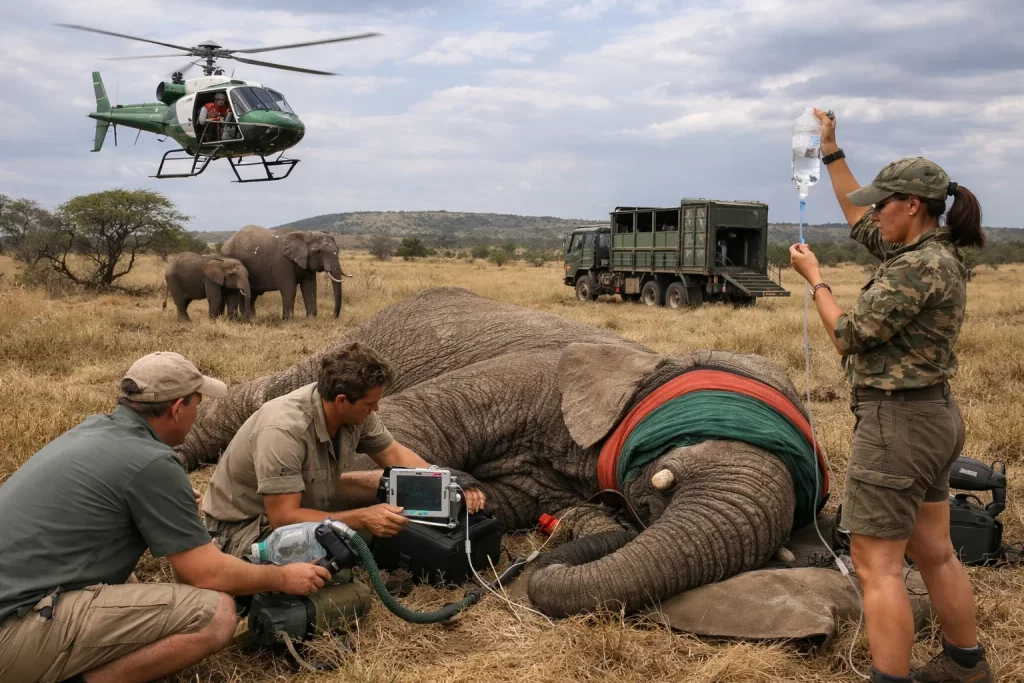
Each relocation begins with aerial identification of stable family units. Veterinarians use darting helicopters to sedate individuals safely. Teams monitor heart rate and oxygen levels continuously. Immobilization drugs are reversed within hours of release.
A single adult elephant weighs 3,000 to 6,000 kilograms. Transport crates must withstand extreme weight and shifting movement. Each relocation costs between $3,000 and $7,000 per elephant in 2025 operational budgets. Elephant relocation programs require precise coordination to minimize risk and maximize welfare.
Monitoring and Long-Term Success
GPS collars track herd movements for up to five years. Data reveals travel distances, water use, and seasonal migration patterns. In Malawi’s Kasungu National Park, relocated elephants expanded their range by 18 percent within 12 months.
Monitoring data also informs corridor planning. A December 2025 National Geographic report at nationalgeographic.com/science/article/partner-content-moving-giants highlights how cross-border corridors reduce isolation. Elephant relocation programs function best when linked to protected migration routes. Connectivity ensures long-term population stability.
Ecological and Community Impacts
Vegetation Recovery and Biodiversity
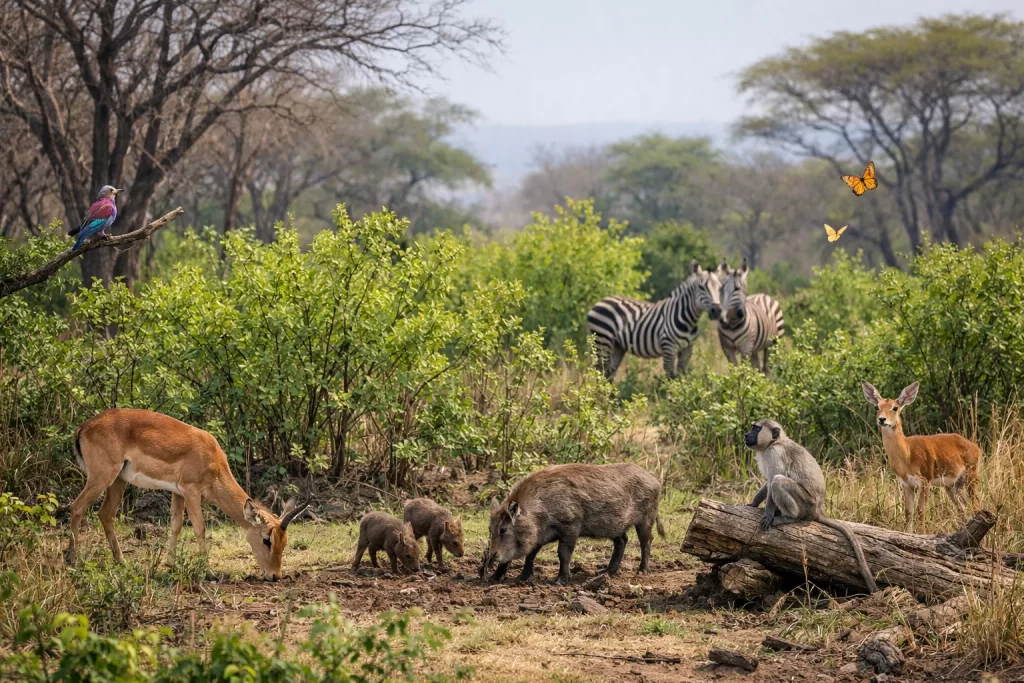
Overbrowsed areas show measurable recovery after relocation. In Liwonde, mopane woodland regeneration increased by 22 percent between 2023 and 2025 following herd transfers. Reduced pressure allows smaller herbivores to thrive again.
Elephants shape landscapes, but balanced densities matter. Elephant relocation programs prevent permanent woodland conversion into grassland. That balance supports birds, antelope, and predators. Healthy ecosystems depend on regulated elephant movement.
Community Safety and Economic Gains
Conflict mitigation remains a major goal. Zambia recorded a 15 percent decline in crop-raiding reports near relocation source parks by late 2025. Fewer incidents mean stronger community trust in conservation authorities.
Tourism also benefits. Parks receiving elephants often see visitor growth within two seasons. Wildlife-based tourism supports over 1.6 million jobs across Africa as of 2025 data from the World Travel & Tourism Council. Elephant relocation programs strengthen this economic chain by stabilizing wildlife populations responsibly. Migration barriers often require intervention. Learn about the impact of fences on elephant migration and genetic health.
Bottom Line
Elephant relocation programs represent one of Southern Africa’s strongest conservation tools in 2026. They reduce ecological stress, restore depleted parks, and lower human conflict without resorting to culling. Success depends on science, veterinary precision, and community support.
We must continue investing in corridors, habitat studies, and monitoring technology. Relocation alone cannot solve every challenge, but it delivers measurable results when combined with landscape planning. Strong policy, transparent funding, and cross-border cooperation will keep elephant relocation programs effective for decades.