Table of Contents
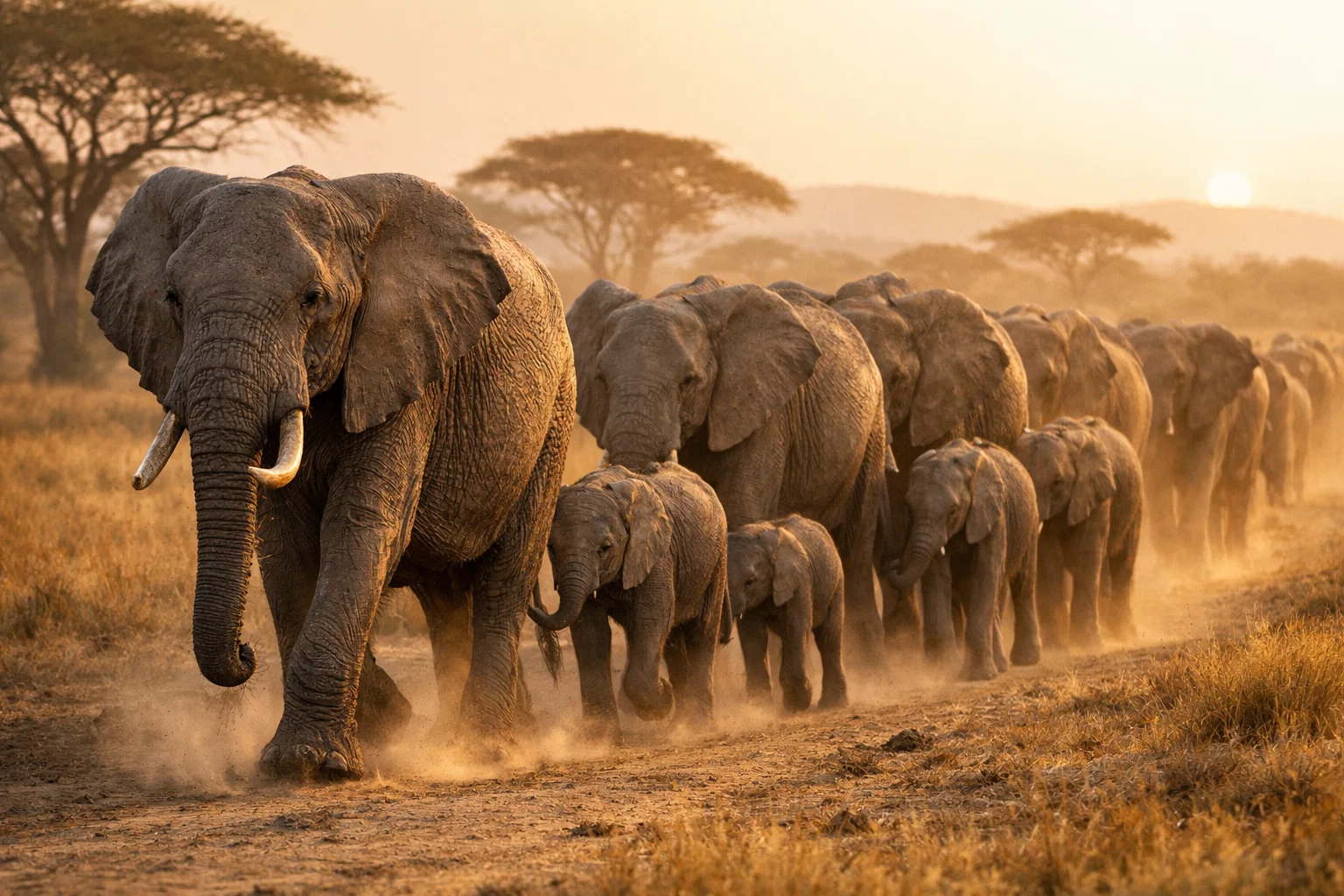
Elephant herd decision making in the wild reveals one of the most advanced social systems in the animal kingdom. African and Asian elephants live in tightly bonded family groups, typically led by an experienced matriarch. These groups often contain 6 to 20 individuals, according to 2026 field observations. Decisions about movement, feeding, and safety rarely happen randomly.
Elephant behavior note that matriarchs often carry decades of ecological knowledge. Some leaders are over 50 years old and remember drought routes and safe water sources. Herd members also influence decisions through vocalizations and body signals. This mix of leadership and cooperation keeps the group organized.
Understanding how elephant herds make decisions helps researchers protect their habitats and predict movement patterns.
Matriarch Leadership in Elephant Herd Decision Making
The role of experience in herd leadership
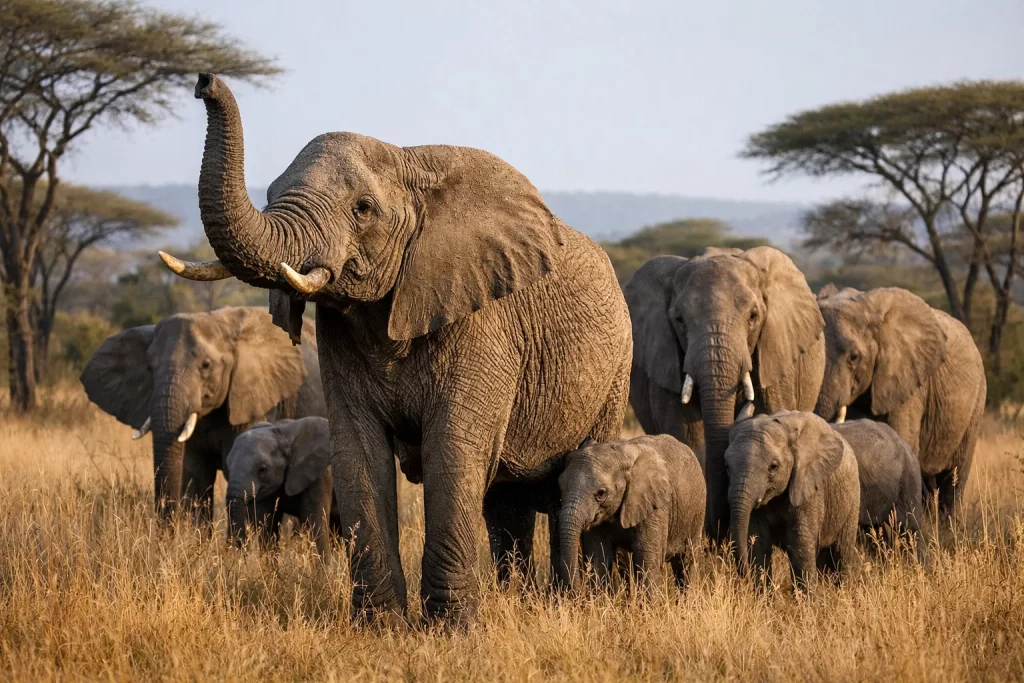
Strong leadership defines elephant herd decision making in the wild. Most elephant families follow a matriarch, usually the oldest female. She often leads daughters, sisters, and calves. Matriarchs can guide herds for more than 40 years. Their experience helps identify migration paths, seasonal food sources, and hidden water holes.
Herds with older matriarchs respond faster to threats. For example, matriarch-led groups detected predator sounds 30 percent quicker during field experiments in 2024. Experience allows these leaders to interpret danger signals and guide the group safely. This leadership reduces calf mortality and improves survival rates.
Matriarch memory and environmental knowledge
Memory plays a powerful role in herd decisions. Elephants can remember migration routes across hundreds of kilometers. Matriarchs recall drought survival routes from decades earlier.
This knowledge becomes critical during climate stress. In East Africa’s 2023 drought, herds led by older matriarchs reached water sources earlier than younger-led groups. These results highlight how memory strengthens herd resilience.
Key leadership signals include:
- Low-frequency rumbles to guide movement.
- Ear and trunk gestures signaling direction.
- Slow walking patterns that trigger herd alignment.
Collective Voting Behavior Among Elephants
Group signals during movement decisions
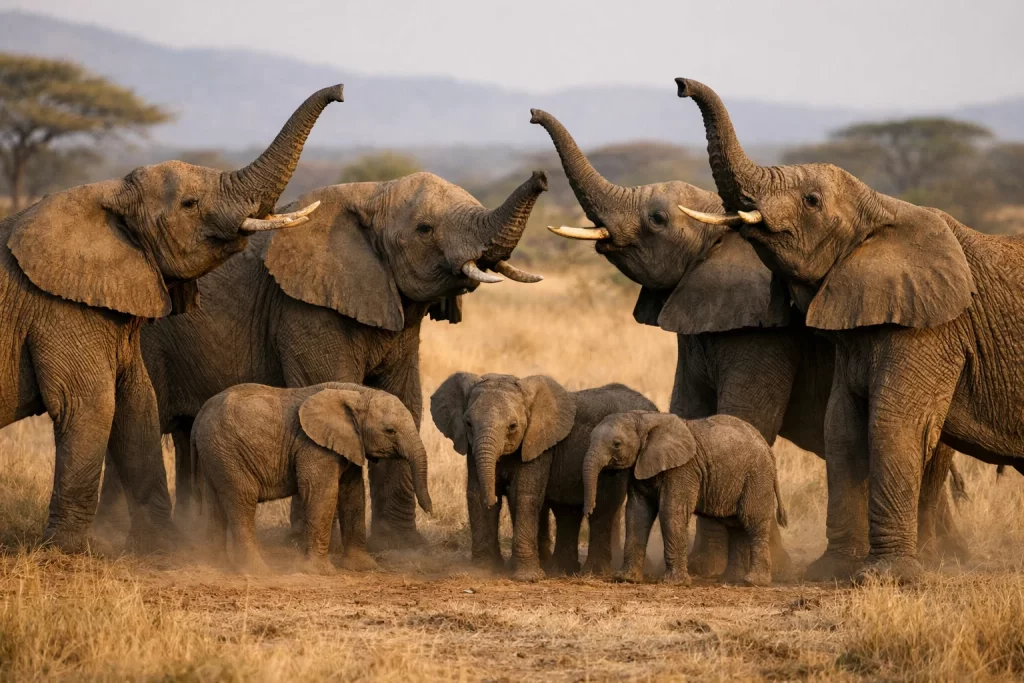
While matriarchs guide the herd, other members contribute. Elephant herd decision making in the wild often resembles a voting system. Multiple adults signaling direction before herd movement.
Adult females frequently raise their heads and orient their bodies toward preferred routes. If several individuals display the same signal, the matriarch often follows that direction. This process ensures group consensus. Scientists call this “collective decision reinforcement.”
In one 2022 study, 73 percent of herd movements followed signals from multiple adults. This indicates that elephants combine leadership with shared input. Cooperative behavior strengthens herd unity and reduces internal conflict.
Communication tools used for consensus
Elephants communicate decisions through sound and body language. Their most important communication tool is the infrasonic rumble. These calls travel up to 10 kilometers under ideal conditions.
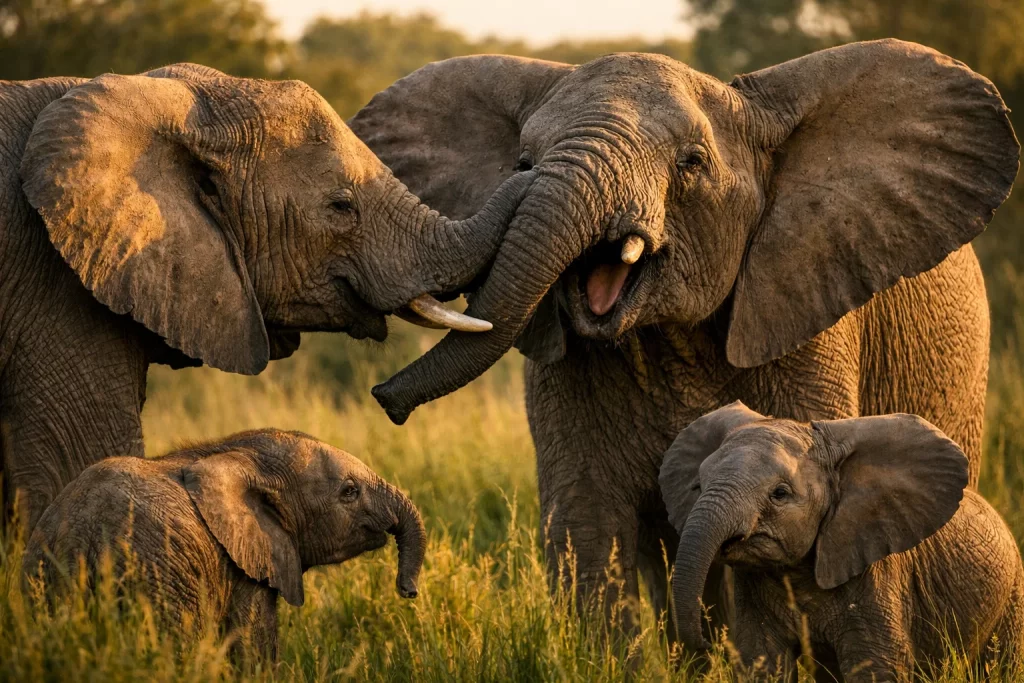
Elephants also use tactile communication. A gentle trunk touch may encourage calves or hesitant members to follow. Head shakes, tail movements, and ear flaps reinforce direction signals.
Researchers note that decision-making moments often involve a brief pause. During this pause, herd members listen and observe signals before moving together. This pause helps ensure alignment across the group.
Environmental Factors Influencing Herd Decisions
Food availability and seasonal migration
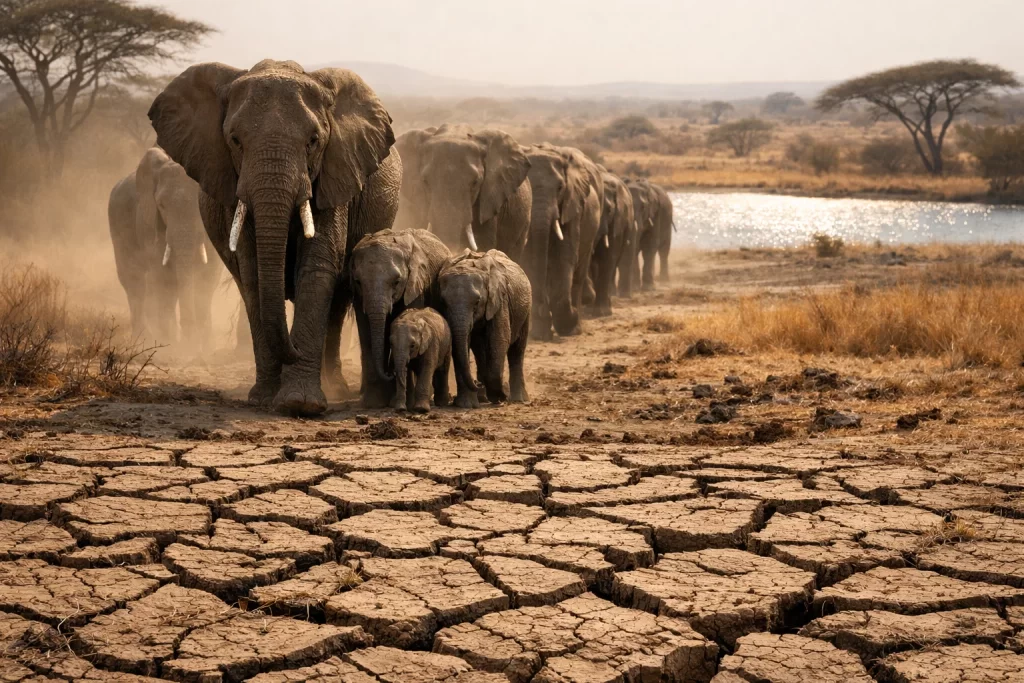
Environmental pressure strongly shapes elephant herd decision making in the wild. Food supply often determines when and where a herd travels. Adult elephants consume 150 to 300 kilograms of vegetation daily. A herd of 12 elephants may require over 2,000 kilograms of plant matter each day.
Seasonal rainfall patterns drive migration. During dry seasons, elephants move toward permanent water sources. In Botswana’s Okavango region, herds travel up to 80 kilometers during drought months. These journeys rely on matriarch memory and collective signals.
Habitat changes also influence decisions. Human development and agriculture have altered migration routes across Africa and Asia. Herds sometimes adapt by traveling at night to avoid human conflict.
Threat detection and safety strategies
Predators rarely threaten adult elephants, but calves remain vulnerable. Lions occasionally target young calves. As a result, safety decisions remain critical.
Elephants detect threats using hearing, smell, and ground vibration. Their feet sense vibrations through specialized fatty pads. This ability helps them detect distant predators or approaching humans.
Once a threat appears, the matriarch often signals a defensive formation. Adults surround calves in a protective circle. This formation reduces attack opportunities and increases herd security.
Communication Systems That Guide Herd Decisions
Vocal communication and infrasonic signals
Communication drives elephant herd decision making in the wild. Elephants produce more than 70 distinct vocal sounds. The most important are low-frequency rumbles.
These rumbles can travel long distances. Scientists recorded calls reaching 10 kilometers in open savanna environments. Herd members interpret these calls as instructions about movement, danger, or gathering.
Different rumble patterns signal different actions. A long rumble may encourage movement, while a short rumble signals caution. These vocal cues maintain coordination across large distances.
Body language and physical signals
Elephants rely heavily on visual signals. Body posture often communicates immediate decisions. A raised trunk may indicate curiosity or alertness. Forward-facing ears often signal readiness to move.
Physical touch also reinforces decisions. Adult females frequently touch calves to guide them during movement. This behavior maintains cohesion across the group.
Visual signals become especially important in dense forests. In these environments, sound travels less effectively. Body cues help maintain communication when vocal signals weaken.
Learn how elephants protect calves from predators and the defensive strategies herds use to keep their young safe in the wild.
Key Elements of Elephant Herd Decision Making
| Factor | Role in Decision Making | Example Impact |
|---|---|---|
| Matriarch leadership | Guides herd direction | Identifies water during drought |
| Collective signals | Allows group participation | Multiple females signal route |
| Environmental pressure | Drives migration timing | Dry season triggers long travel |
| Communication system | Maintains herd coordination | Rumbles travel 10 km |
| Safety strategy | Protects calves | Multiple females signal the route |
Why Elephant Herd Decision Making Matters for Conservation
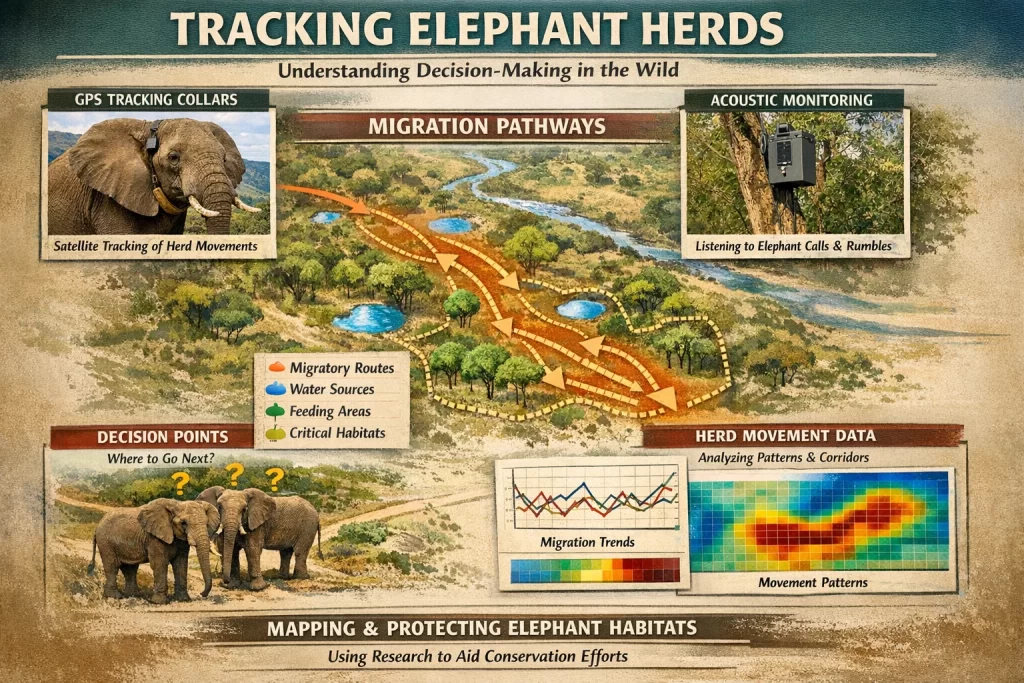
Understanding elephant herd decision making in the wild helps conservationists protect elephant populations. Decision patterns reveal migration corridors and critical habitats. Conservation groups use GPS tracking and acoustic monitoring to map herd movement.
Protected corridors increased elephant survival by 18 percent in monitored regions. Preserving these routes allows herds to follow traditional movement patterns.
Three key conservation insights emerge from studying herd decisions:
- Older matriarchs carry critical ecological knowledge.
- Migration corridors must remain open for herd survival.
- Noise pollution can disrupt elephant communication.
Protecting experienced matriarchs and maintaining habitat connectivity supports healthy elephant populations.
Bottom Line
Elephant societies rely on cooperation, communication, and leadership to survive. Elephant herd decision making in the wild combines matriarch wisdom with group consensus. Environmental pressures, migration needs, and predator threats shape every decision.
These systems allow elephants to adapt to changing landscapes. Protecting matriarchs, migration corridors, and communication environments helps preserve these remarkable animals.
Curious how animals communicate and make decisions in nature? Explore more insights in our guide to animal behavior and communication in the wild.