Table of Contents
Elephant communication methods in the wild reveal one of the most advanced social systems in the animal kingdom. Elephants use infrasound, touch, chemical cues, and body language to coordinate across miles. As of February 28, 2026, researchers estimate there are about 415,000 African elephants and fewer than 50,000 Asian elephants remaining worldwide. Their survival depends heavily on strong social bonds and precise communication.
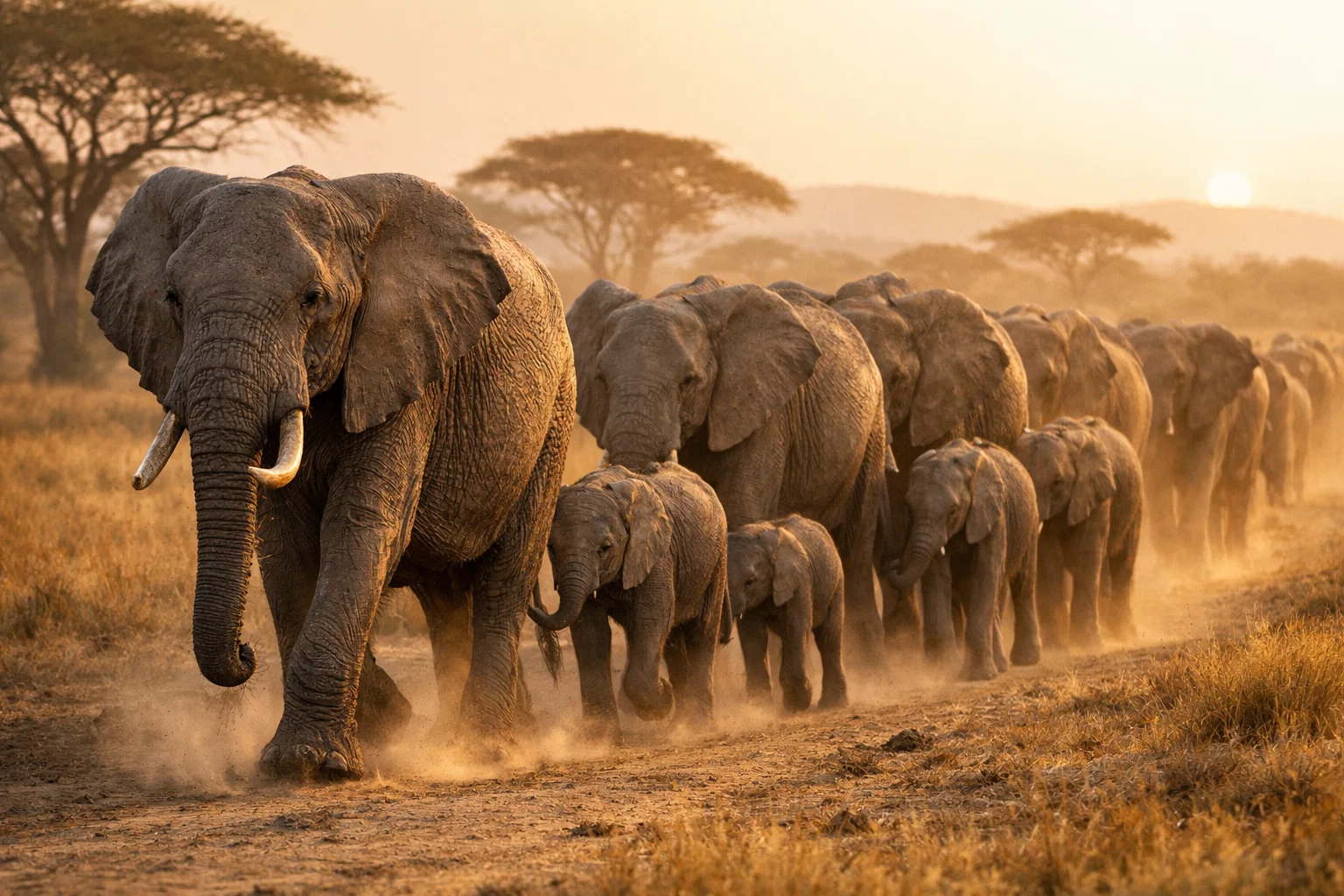
Elephants live in matriarch-led family units that can span 8 to 20 individuals. These groups maintain contact even when spread over several square miles. Field studies show low-frequency rumbles can travel up to 6 miles in optimal conditions. According to ElephantVoices, some calls measure below 20 Hz, which humans cannot hear. These elephant communication methods in the wild allow herds to warn, reunite, and migrate efficiently.
Infrasound: The Long-Distance Channel
How Infrasound Travels Miles
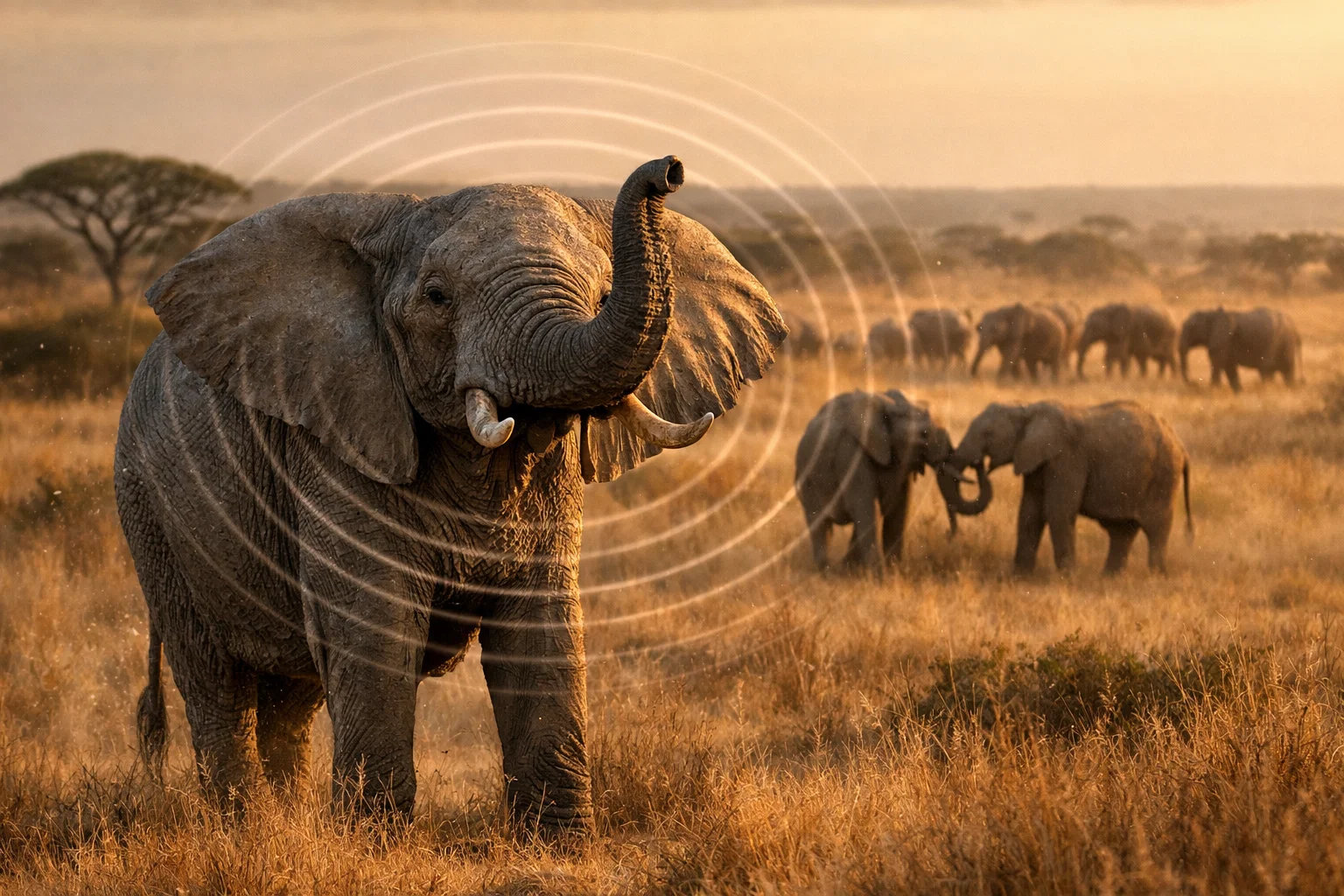
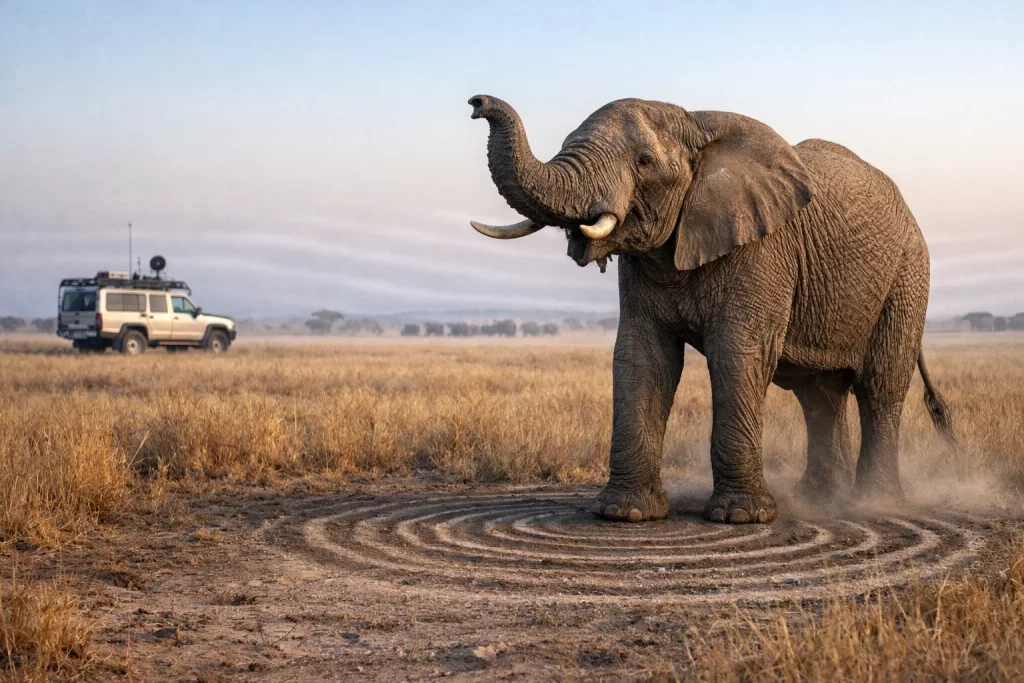
Infrasound forms the backbone of elephant communication methods in the wild. These rumbles range between 14 and 35 Hz. Humans hear sounds above 20 Hz. Elephants detect vibrations through both their ears and specialized receptors in their feet. Ground vibrations can travel nearly 10 kilometers, depending on soil density.
Research published by ElephantVoices confirms elephants adjust call frequency based on distance. Lower frequencies travel farther with less energy loss. During droughts, herds use infrasound to locate distant water sources. This ability increases the odds of survival in fragmented habitats. Long-range contact keeps families connected and organized.
What the Rumbles Mean
Not all rumbles carry the same message. Acoustic analysis identifies over 70 distinct call types. Some signal alarm, others indicate mating readiness. Mothers use softer rumbles to reassure calves during stress. Males emit powerful calls during musth, a heightened reproductive phase lasting up to 3 months.
We see that infrasound supports migration, mating, and safety. Without it, herds would fragment quickly. These elephant communication methods in the wild show advanced cognitive processing. Elephants recognize individual voices even after years apart. That memory strengthens lifelong bonds. To understand broader survival strategies, explore Animal Behavior and Communication in the Wild.
Touch: The Social Glue
Trunk-to-Trunk Contact
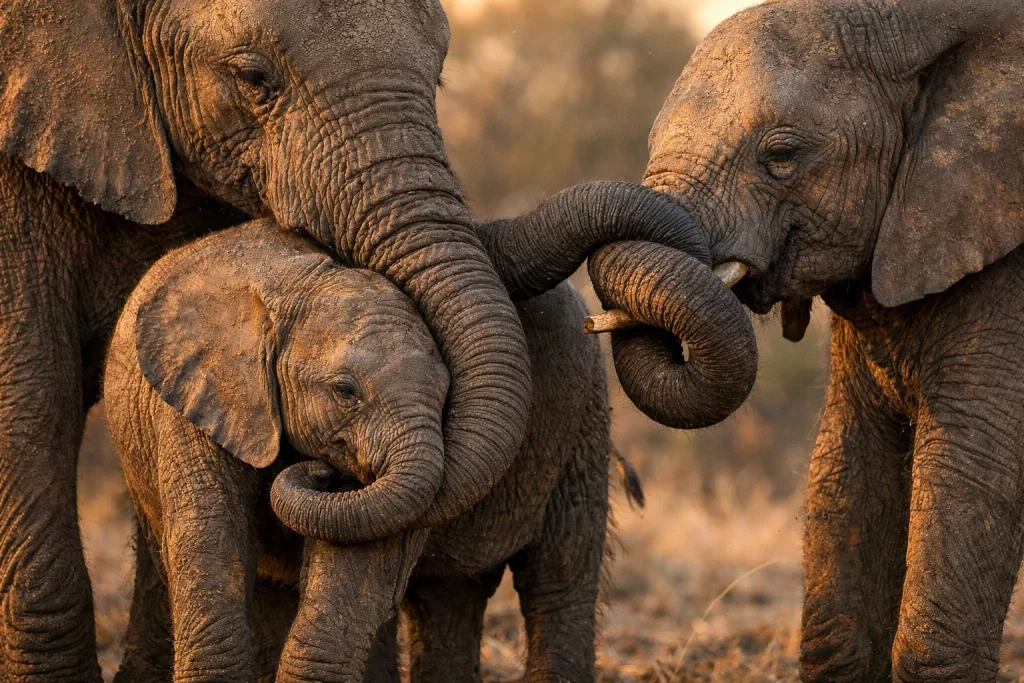
Touch builds trust inside elephant societies. The trunk contains over 40,000 muscles and functions as both a tool and a communicator. Elephants intertwine trunks to greet or comfort each other. Calves receive frequent touches from mothers and aunts, reinforcing safety.
Observational studies from sanctuaries and wild reserves show greeting ceremonies can last 3 to 5 minutes. During reunions, elephants vocalize and touch simultaneously. These combined signals increase emotional clarity. Touch reduces stress hormones in social mammals, including elephants. Physical contact stabilizes the group.
Calf Guidance and Discipline
Young elephants depend on tactile instruction. Mothers nudge calves away from danger within seconds of threat detection. Older siblings also discipline through gentle trunk taps. This behavior teaches boundaries without aggression.
We know elephant calves stay with their mothers for up to 16 years. That extended childhood requires constant communication. Touch ensures calves learn feeding routes and migration paths. These elephant communication methods in the wild support generational knowledge transfer. Strong tactile bonds protect herd cohesion. Migration timing often depends on social cues, as explained in Animal Migration Patterns and Navigation.
Body Language and Visual Signals
Ear Position and Posture
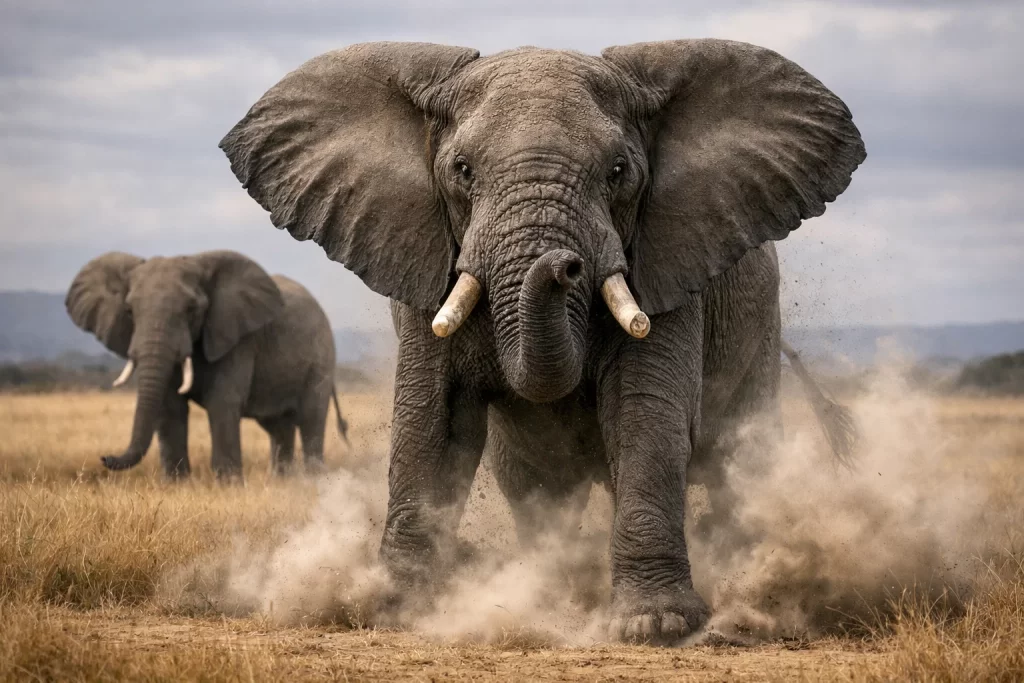
Body language provides immediate visual cues. Ear spreading makes an elephant appear larger and signals a threat. This display can increase apparent body size by nearly 2 feet in width. Head lifting often indicates alertness. A relaxed elephant keeps its ears loosely flapping to regulate heat.
Rapid ear stiffening paired with a forward stance suggests defensive readiness. These signals require no sound. In close encounters, visual communication prevents escalation. Observers from Roundglass Sustain document clear posture shifts before charges occur.
Mock Charges vs. Real Charges
Mock charges serve as warning displays. Elephants may trumpet loudly and stop short. Real charges involve tucked trunks and direct speed. Behavioral studies show mock charges outnumber real charges by more than 5 to 1 in protected reserves.
This distinction reduces unnecessary conflict. Body language allows elephants to resolve tension efficiently. These elephant communication methods in the wild minimize injury while protecting territory. Clear signals prevent chaos in large groups. Complex cognition behind signaling connects directly to Animal Intelligence and problem-solving in Wildlife.
Chemical Signals and Scent
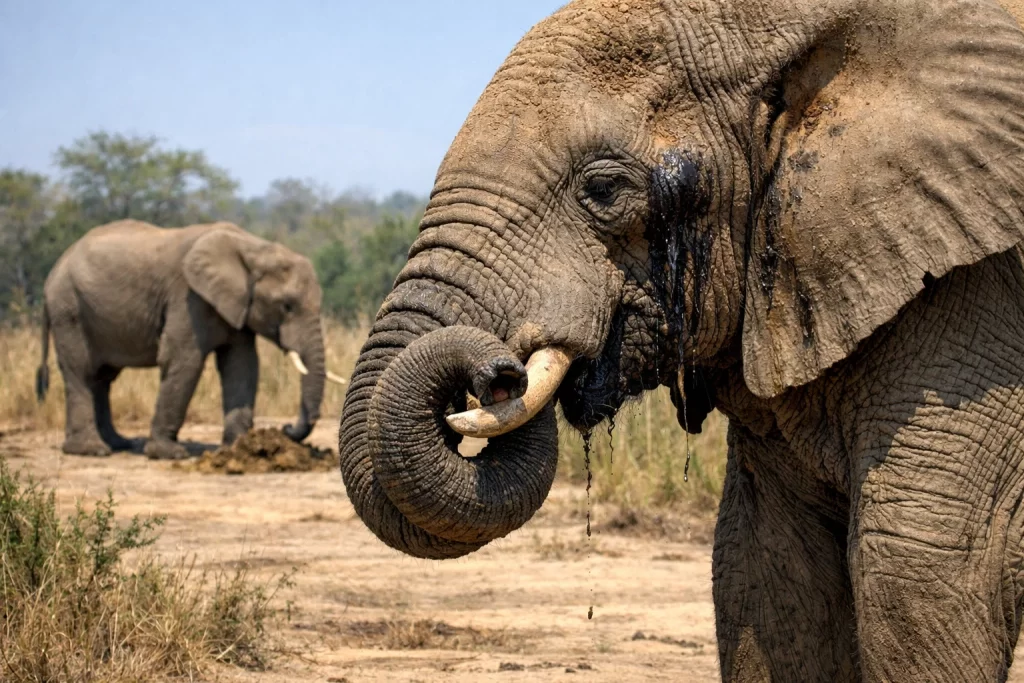
Elephants also rely on scent communication. Temporal gland secretions increase during stress or musth. Urine and dung carry chemical markers that inform reproductive status. Males in musth experience testosterone levels up to 60 times higher than baseline. These changes alter scent intensity.
Elephants use their trunks to sample airborne chemicals. They perform a flehmen-like response by curling the trunk tip. This action transfers scent particles to sensory receptors. Chemical cues complement vocal and tactile signals. Multi-layered communication strengthens accuracy.
Key Communication Channels at a Glance
| Method | Distance Range | Primary Purpose | Unique Feature |
|---|---|---|---|
| Infrasound | Up to 6 miles | Long-distance coordination | Below 20 Hz |
| Touch | Direct contact | Bonding and reassurance | 40,000 muscles |
| Body Language | Visual range | Warning and dominance | Ear expansion |
| Chemical | Short to medium range | Reproductive signaling | Musth markers |
Why These Methods Matter
- Maintain herd cohesion across large landscapes.
- Coordinate migration during drought cycles.
- Protect calves from predators.
- Reduce conflict within and between groups.
- Preserve social memory across decades.
Bottom Line
Elephant communication methods in the wild combine sound, touch, sight, and scent into a coordinated system. Each channel serves a clear biological purpose. Infrasound connects families across miles. Touch reinforces emotional bonds. Body language prevents conflict. Chemical cues guide reproduction.
We can learn from this layered system. Protecting habitats preserves these communication networks. Disruptions like highway noise reduce infrasonic reach. Fragmented land blocks migration signals. Conservation efforts must consider communication corridors, not just territory size.