Table of Contents
Desert animal adaptations and survival define life across nearly one-third of Earth’s land surface. Deserts cover about 33% of the global land area as of 2026, according to National Geographic. These regions receive less than 10 inches, or 250 millimeters, of rain per year. Daytime temperatures often exceed 120°F (49°C). Night temperatures can drop below 32°F (0°C).
We often picture deserts as empty and lifeless. In reality, they host over 2,000 plant species and hundreds of specialized animals in places like the Sonoran Desert alone. Wildlife here survives heat, drought, and scarce food through precise biological and behavioral strategies. Desert animal adaptations and survival are not random traits. They are tested solutions shaped by millions of years of evolution.
Extreme Heat and Water Scarcity: The Core Survival Challenge
Deserts push animals to their physical limits every day. Water loss can mean death within hours. Temperatures swing by 40°F or more between day and night. Desert animal adaptations and survival begin with solving these two pressures.
Water Conservation Strategies
Water drives every survival decision in deserts. Many species rarely drink free-standing water.
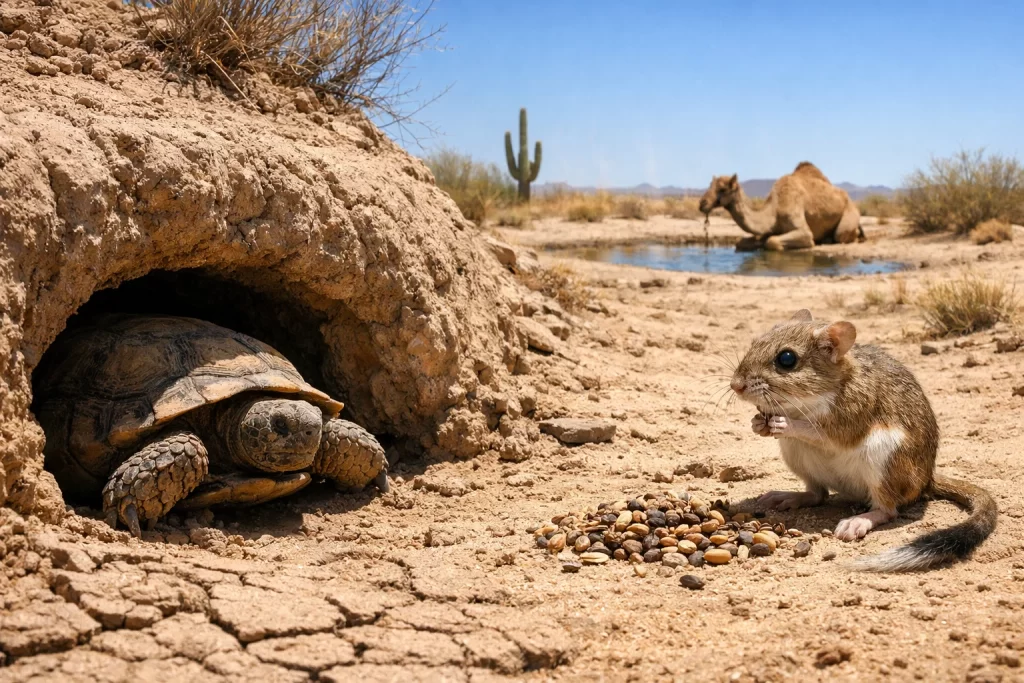
The kangaroo rat can survive its entire life without drinking liquid water. It extracts moisture from dry seeds and produces highly concentrated urine. Camels tolerate up to 25% body water loss, compared to 12% in humans. According to National Geographic, camels can drink 40 gallons in one sitting when water is available. These physiological controls reduce dehydration risk.
Heat Avoidance and Regulation
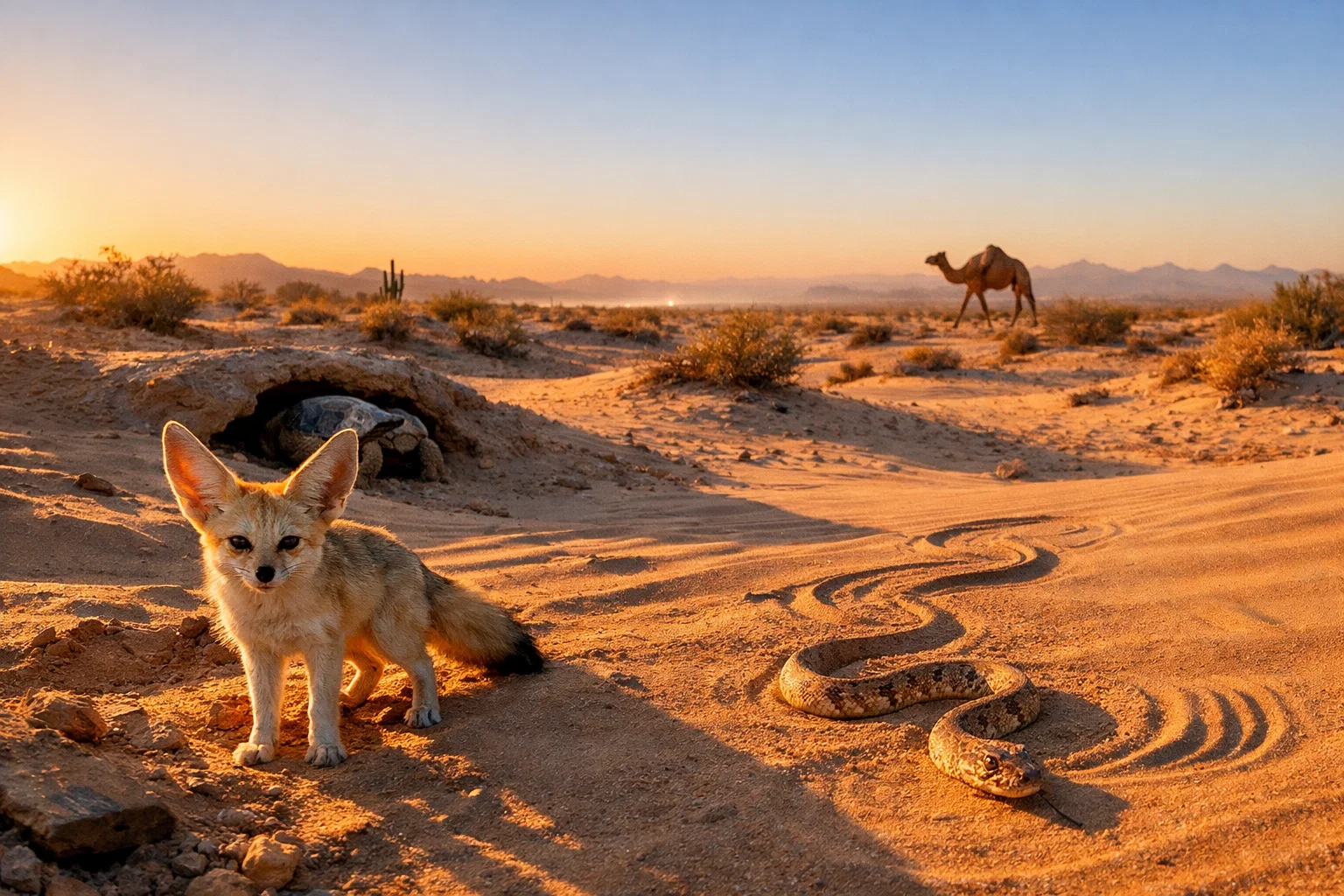
Heat management is equally critical. Desert tortoises spend up to 95% of their lives in underground burrows. Burrows remain 20°F to 30°F cooler than surface air. Fennec foxes have large ears that radiate excess body heat.
Many reptiles use behavioral thermoregulation. They bask briefly in the morning, then retreat to shade. These strategies reduce direct sun exposure and prevent lethal overheating. Heat avoidance remains a core pillar of desert animal adaptations and survival. For broader ecosystem comparisons, visit Wildlife Habitats and Ecosystems of the World.
Physical Adaptations: Built for Harsh Landscapes
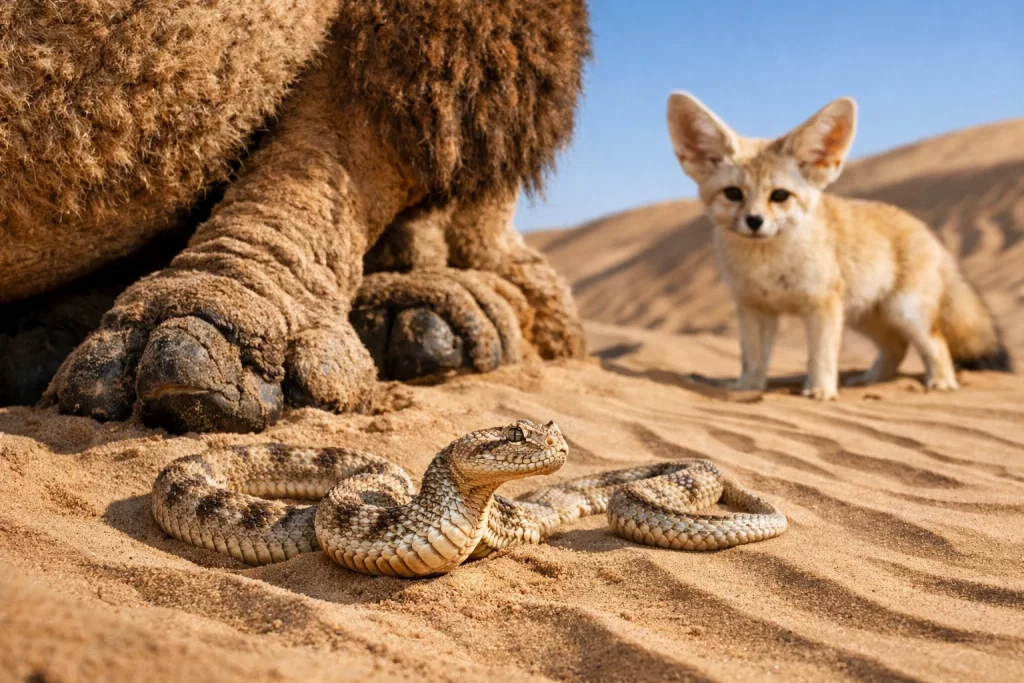
Desert bodies reflect their environment. Fur, scales, fat storage, and limb design all serve survival. Desert animal adaptations and survival often begin with anatomy.
Specialized Body Structures
Camels store fat in humps, not water. This fat converts to metabolic water during digestion. Sidewinder snakes move in a looping motion that reduces body contact with hot sand. This limits heat transfer and prevents burns.
Thick pads on camel feet prevent sinking into loose sand. Long eyelashes protect eyes from blowing dust. These structural traits reduce injury and energy waste.
Protective Coverings
Reptiles have scaly skin that reduces water evaporation. Many desert insects possess waxy coatings that prevent moisture loss. According to the Arizona-Sonora Desert Museum, desert birds often have lighter plumage to reflect sunlight.
Coloration also provides camouflage. Tan or gray fur blends into sand and rock. This reduces predation risk and supports energy conservation. Physical traits make desert animal adaptations and survival efficient and sustainable. Dense canopy survival differs from arid strategies in Rainforest Wildlife Habitat Characteristics.
| Animal | Key Adaptation | Survival Benefit |
|---|---|---|
| Kangaroo rat | Concentrated urine | Minimal water loss |
| Camel | Fat-storing hump | Energy and metabolic water |
| Fennec fox | Large ears | Heat dissipation |
| Sidewinder snake | Sidewinding motion | Reduced sand contact |
| Desert tortoise | Burrowing | Temperature control |
Behavioral Strategies: Timing Is Everything
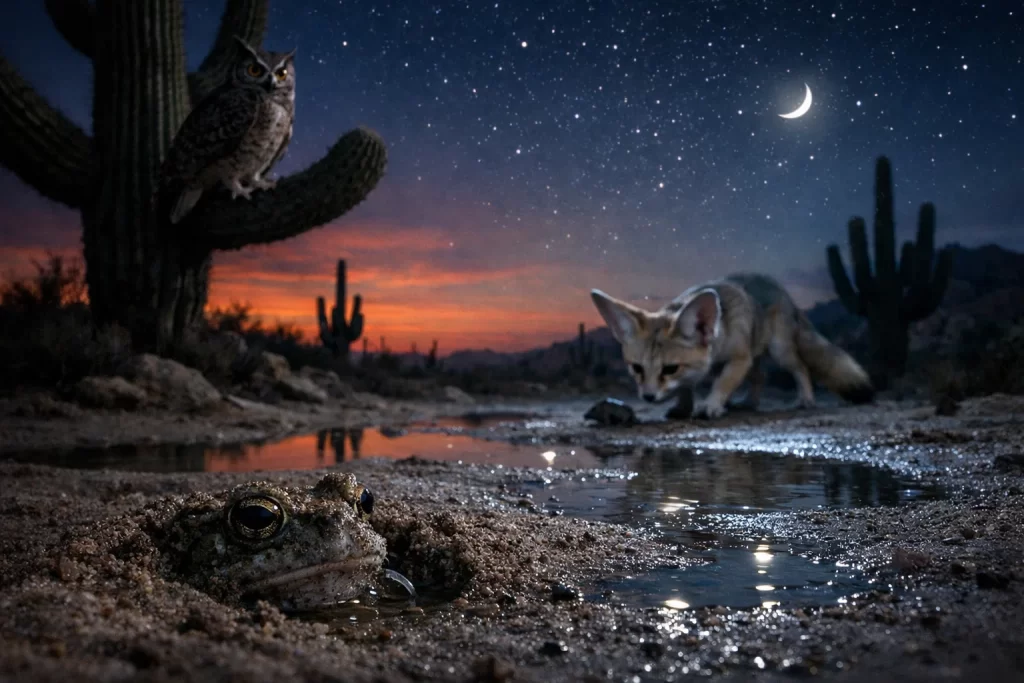
Behavior determines when animals eat, move, and rest. Desert animal adaptations and survival depend heavily on timing.
Nocturnal Lifestyles
More than 70% of desert mammals are nocturnal. They hunt or forage at night when temperatures drop significantly. This reduces water loss through sweating or panting.
Owls, foxes, and rodents rely on sharp night vision and sensitive hearing. Cooler air lowers metabolic stress. This behavior improves energy efficiency in extreme climates.
Seasonal Dormancy and Migration
Some desert animals enter estivation during extreme drought. This state slows metabolism and conserves energy. Spadefoot toads can remain underground for months, waiting for rainfall.
Desert bighorn sheep migrate to higher elevations during hotter months. Movement aligns with resource availability. Water scarcity solutions contrast with aquatic systems in Freshwater Ecosystems, Animals, and Biodiversity.
Food Scarcity and Efficient Energy Use
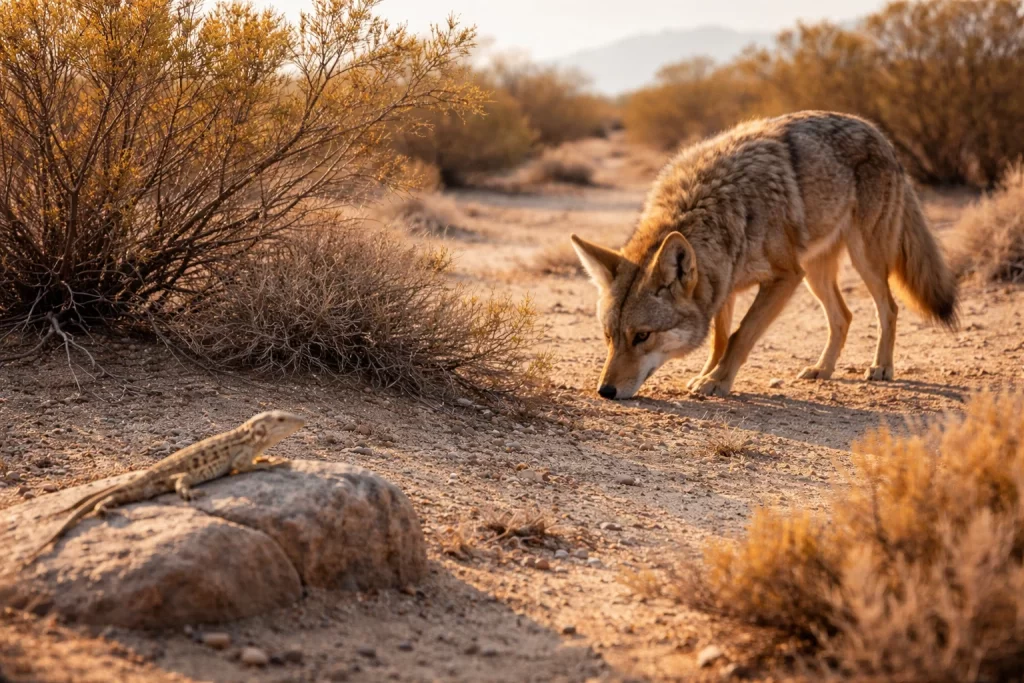
Food is unpredictable in deserts. Rainfall may occur only once or twice per year. Desert animal adaptations and survival require efficient feeding strategies.
Opportunistic Feeding
Many desert predators eat a wide range of prey. Coyotes consume rodents, reptiles, fruits, and insects. This dietary flexibility reduces starvation risk.
Herbivores feed on drought-resistant plants like the creosote bush. These plants contain chemical defenses, yet desert herbivores evolved tolerance. Adaptation supports nutrient extraction from limited resources.
Metabolic Efficiency
Reptiles require less food than mammals because they are cold-blooded. Their slower metabolism reduces energy demand. Some lizards can survive weeks without eating.
Birds reduce activity during peak heat to conserve calories. Every calorie saved increases survival chances. Efficient metabolism remains central to desert animal adaptations and survival.
Climate Change and the Future of Desert Wildlife
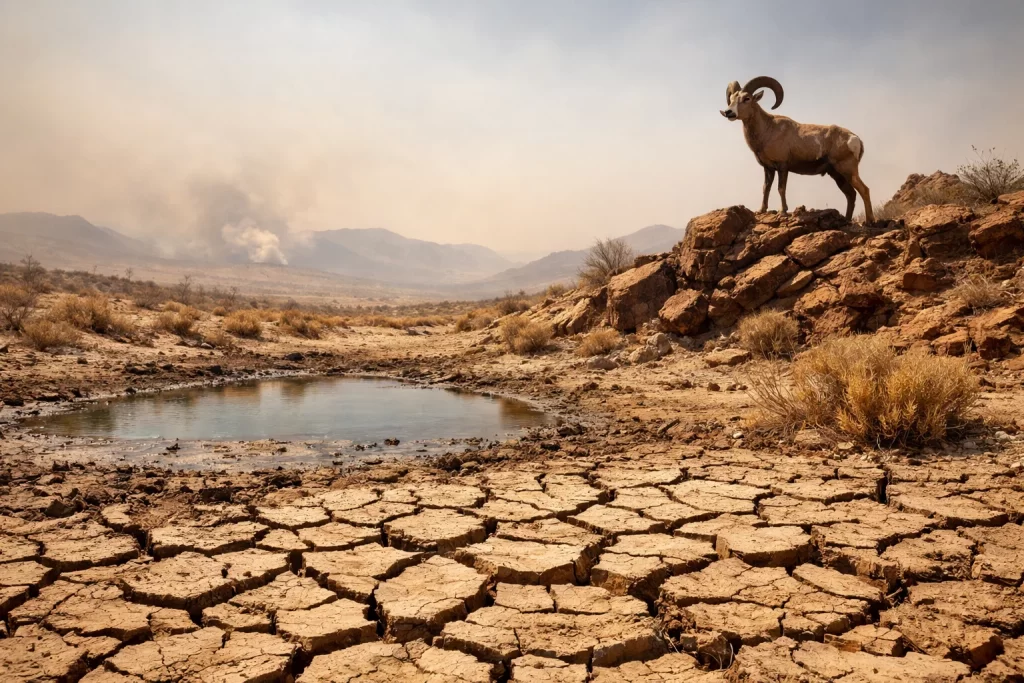
Deserts are expanding due to global warming. The United Nations reports that desertification affects 100 million hectares of land annually. Rising temperatures increase heat stress on wildlife.
Extreme heat days above 110°F are becoming more frequent in North America. Water sources dry faster than in previous decades. Some species may adapt. Others face habitat loss and population decline.
Conservation efforts now focus on protecting migration corridors and groundwater systems. Organizations like the World Wildlife Fund monitor desert biodiversity trends. Protecting desert ecosystems supports long-term resilience.
Bottom Line: Lessons from Desert Resilience
Desert animal adaptations and survival show us how life persists under intense pressure. Animals conserve water, regulate heat, and optimize energy use with remarkable precision. These strategies reflect millions of years of evolution shaped by scarcity.