Table of Contents
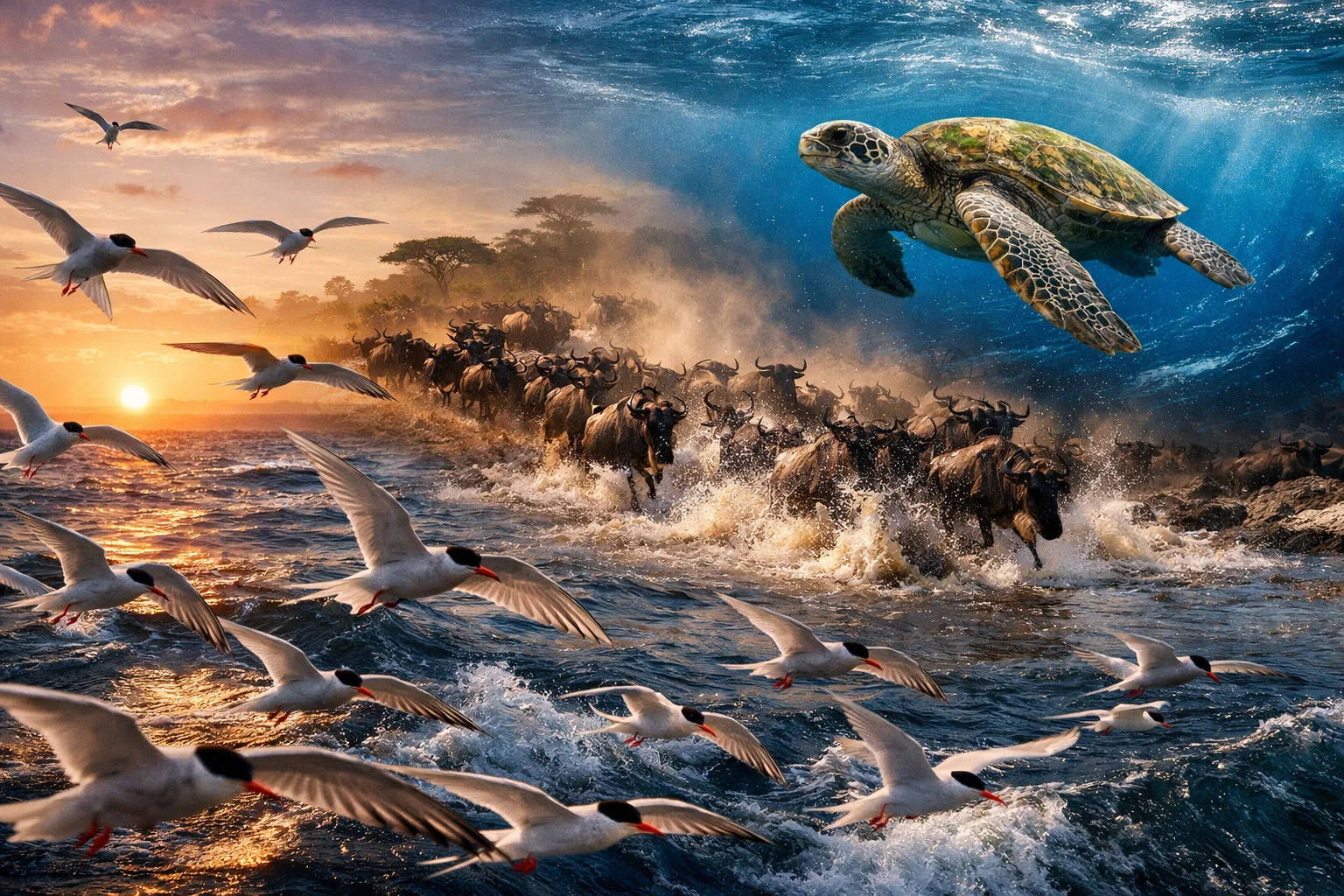
Animal migration patterns and navigation shape life on Earth in powerful ways. Every year, billions of animals travel across continents and oceans to survive. The Arctic tern flies nearly 44,000 miles annually between the Arctic and Antarctica. In East Africa, about 1.3 million wildebeest move across the Serengeti ecosystem. These journeys demand energy, timing, and precise orientation.
We now know far more about animal migration patterns and navigation than we did a decade ago. Satellite tags, geolocators, and genetic tools have expanded research rapidly. As of 2026, over 2,000 bird species show regular migratory behavior. That equals nearly 20% of the world’s 11,000 known bird species. Climate shifts and habitat loss also alter routes and timing. These changes make migration research urgent and practical.
Why Animal Migration Happens
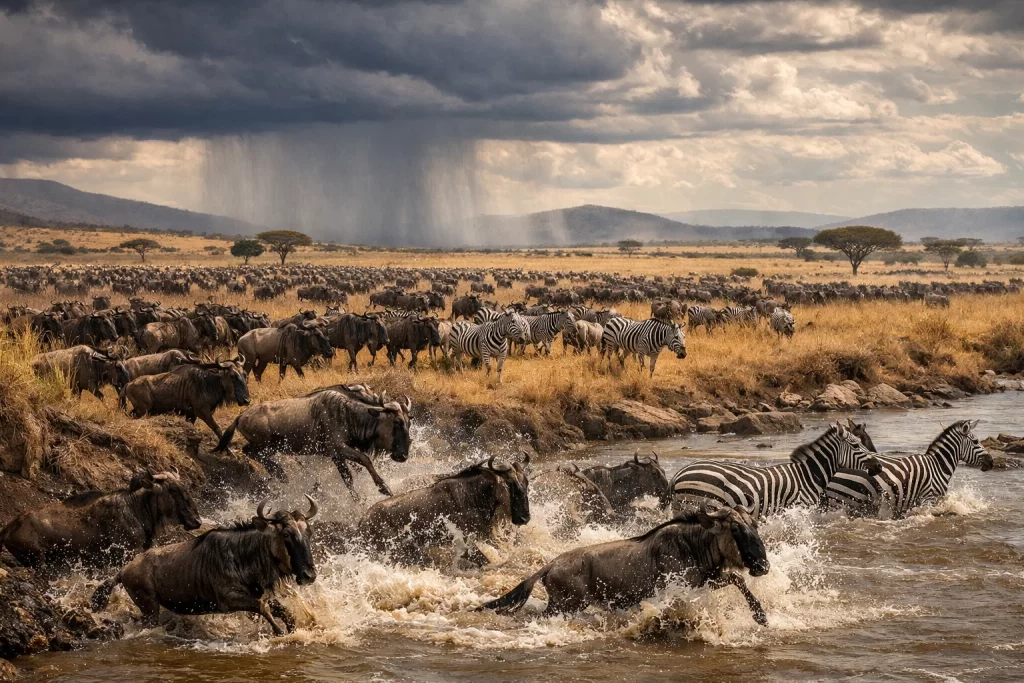
Animal migration patterns and navigation start with one core need: survival. Animals move to find food, breed, or escape harsh weather. These movements follow predictable seasonal cycles. That predictability separates migration from random wandering.
Seasonal Food Availability
Food drives most long-distance migration. In the Arctic summer, insects explode in number. This surge feeds migratory birds like sandpipers and geese. When winter returns, food vanishes quickly. Birds then fly thousands of miles south to survive.
In Africa, rainfall controls grass growth. Wildebeest track fresh grass across 1,800 miles yearly. Their movement depends on rain patterns, not borders. This cycle shows how climate and food tightly control migration.
Breeding and Reproduction
Reproduction shapes many animal migration patterns and navigation routes. Pacific salmon hatch in freshwater rivers. They migrate to the ocean for years. Then they return to the exact river to spawn. This round trip can exceed 2,000 miles.
Sea turtles also show strong breeding migration. Female green sea turtles return to the beach where they hatched. Some travel over 1,400 miles to nest. Reproductive success depends on precise timing and orientation. For a complete understanding of survival communication, visit Animal Behavior and Communication in the Wild.
How Animals Navigate Long Distances
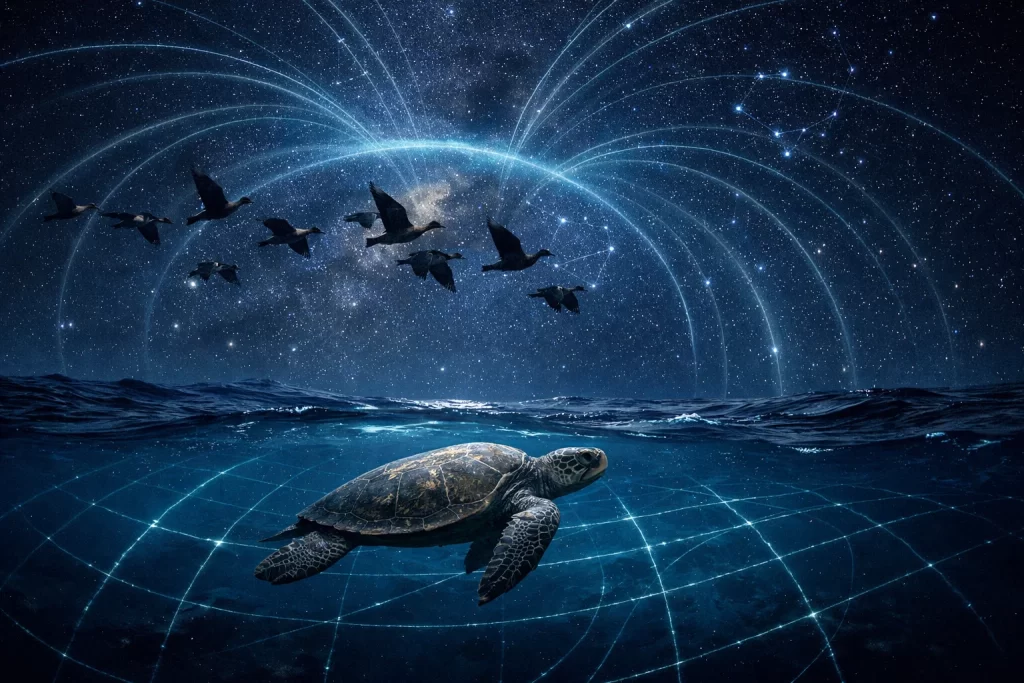
Animal migration patterns and navigation rely on advanced biological tools. Animals use the sun, stars, smell, landmarks, and Earth’s magnetic field. These systems work together, not alone.
Magnetic Field Detection
Many species detect Earth’s magnetic field. Studies confirm that birds have magnetoreception cells in their eyes. These cells respond to magnetic direction. This ability allows orientation even on cloudy days.
Loggerhead sea turtles also sense magnetic signatures. Each coastal region has a unique magnetic intensity. Hatchlings memorize this pattern. Years later, they return using that invisible map.
Celestial and Solar Cues
Birds often navigate using the sun by day and stars by night. Experiments show that European robins adjust direction when star maps shift artificially. This proves star-based navigation.
During daylight, birds combine sun angle with internal clocks. This system corrects for the sun’s movement. It ensures stable directional travel across thousands of miles.
Olfactory and Landmark Memory
Salmon rely heavily on smell. They imprint on river chemicals as juveniles. Adults later follow that scent home. Pigeons also use smell and visual landmarks to navigate locally.
Navigation systems overlap for accuracy. If one cue fails, another guides the route. That redundancy explains migration precision. Elephants rely on similar long-distance signaling discussed in Elephant Communication Methods in the Wild.
Navigation Tools at a Glance
| Species | Primary Cue | Distance Traveled | Notable Feature |
|---|---|---|---|
| Arctic tern | Sun + magnetic | 44,000 miles/year | Longest migration recorded |
| Wildebeest | Rain + memory | 1,800 miles/year | Largest land migration |
| Green sea turtle | Magnetic + smell | 1,400+ miles | Natal beach return |
| Bar-tailed godwit | Wind + magnetic | 7,000+ miles nonstop | Longest nonstop flight |
Major Continental Migration Routes
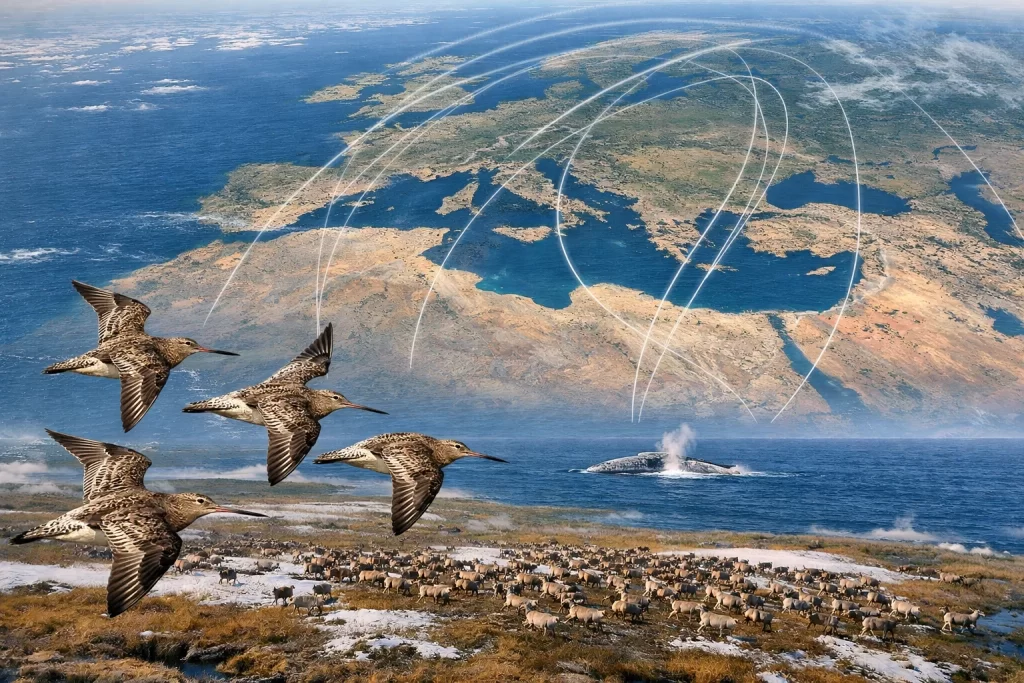
Global flyways and corridors define animal migration patterns and navigation. These routes repeat yearly and connect ecosystems across continents.
Bird Flyways
There are eight major global bird flyways. The East Atlantic Flyway links Europe and Africa. Millions of birds use this path each year. Shorebirds like the bar-tailed godwit depend on coastal stopovers.
North America hosts four main flyways. The Mississippi Flyway supports over 325 bird species annually. Wetland protection along these paths remains critical.
Terrestrial Mega-Migrations
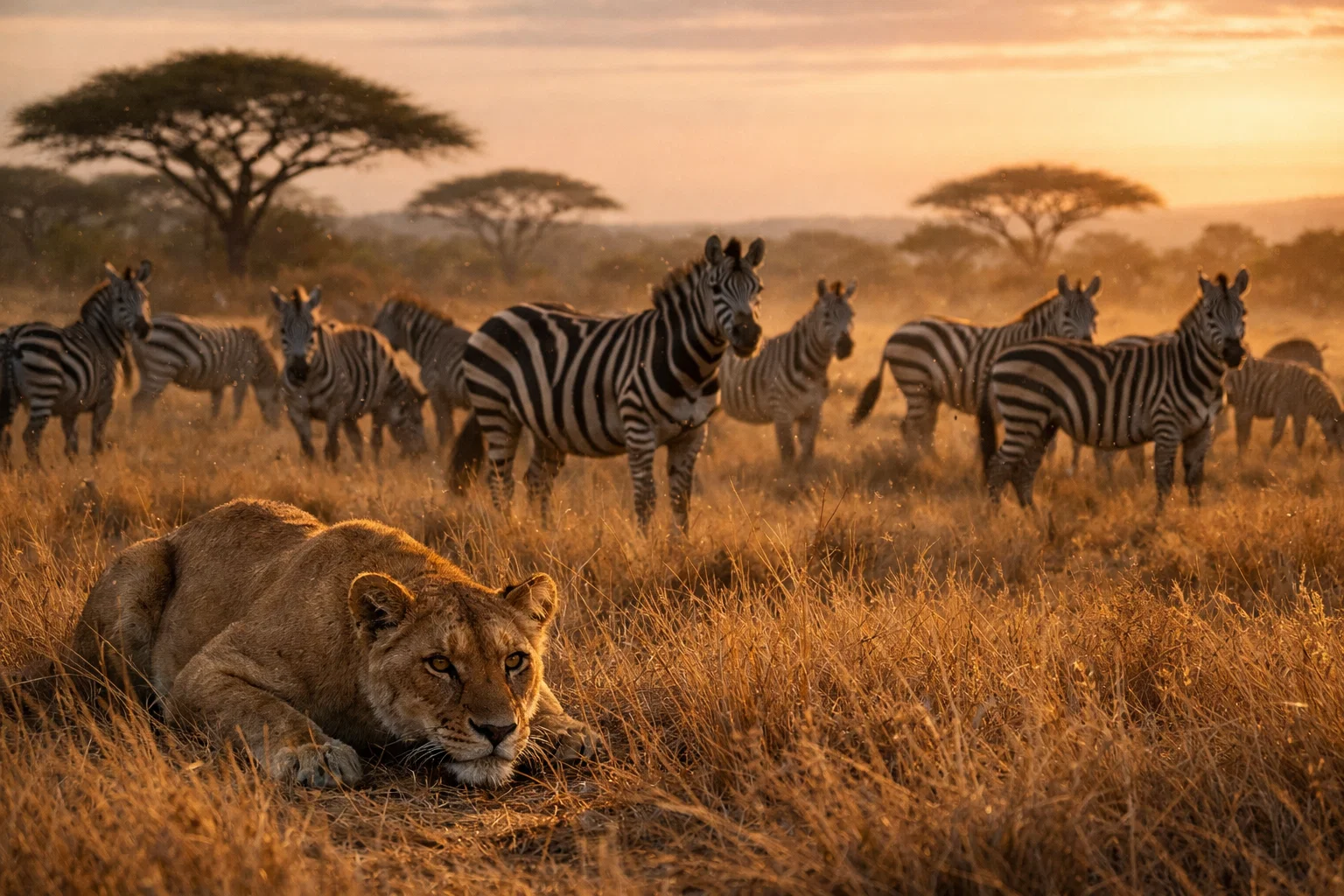
The Serengeti-Mara ecosystem supports 1.3 million wildebeest. Zebras and gazelles join them. This migration sustains predators like lions and hyenas. It drives an entire food web.
Caribou in North America migrate up to 3,000 miles yearly. Their tundra route depends on snow melt timing. Shifts in Arctic warming now alter those paths.
Marine Highways
Oceans host vast migration corridors. Gray whales travel about 12,000 miles round-trip. They move between Baja California and Arctic feeding grounds. Ocean warming shifts prey availability.
Marine migration depends heavily on temperature gradients. Even a 1°C change alters fish distribution significantly. That shift disrupts predator routes.
Climate Change and Human Impact
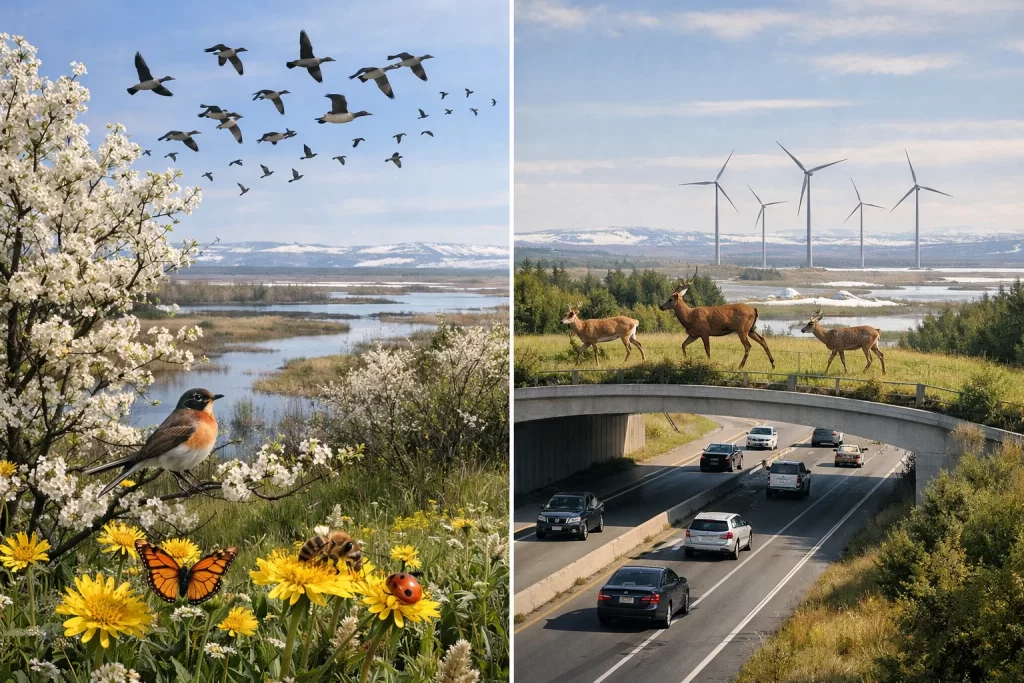
Modern pressures reshape animal migration patterns and navigation at scale. Climate change shifts timing and distance. Urbanization fragments routes.
Timing Shifts
Spring migration now begins earlier in many species. Data from 2025 shows North American birds arriving 2 to 5 days earlier than in 1990. Earlier insect emergence creates mismatch risks.
When food peaks too early, chicks starve. This mismatch reduces breeding success significantly.
Habitat Fragmentation
Highways, cities, and fences block terrestrial migrations. In Wyoming, wildlife overpasses reduced vehicle collisions by 85% since installation. Corridors protect movement and survival.
Wind turbines also affect migratory birds. Proper placement reduces fatality rates by over 30%. Smart planning improves coexistence. Migration groups depend heavily on hierarchy, as explained in Social Structure of Herd Animals.
Bottom Line
Animal migration patterns and navigation show nature’s precision at scale. From 44,000-mile Arctic tern journeys to salmon river returns, migration connects ecosystems globally. These movements regulate food webs, nutrient flow, and biodiversity stability.
As of 2026, climate shifts and habitat loss increase migration stress. Earlier arrivals, fragmented corridors, and warming oceans create measurable impacts. Yet research tools now offer better tracking than ever before. Satellite telemetry and genetic mapping guide smarter conservation.