Table of Contents
Animal intelligence and problem solving in wildlife shape how species survive, compete, and evolve in fast-changing ecosystems. As of 2026, over 1.9 million animal species are described globally, and cognitive research continues to expand across mammals, birds, fish, and even insects. Studies published in 2021 and cited through 2025 show that brain size alone does not predict intelligence. Instead, neural density, social structure, and ecological pressure drive adaptive thinking.
We now know that crows bend wires into hooks, octopuses open jars in minutes, and elephants remember water sources for decades. Research from the National Institutes of Health confirms that complex cognition evolved independently in several animal groups. This means intelligence is not rare in nature. It is widespread and shaped by survival demands.
The Science Behind Animal Intelligence
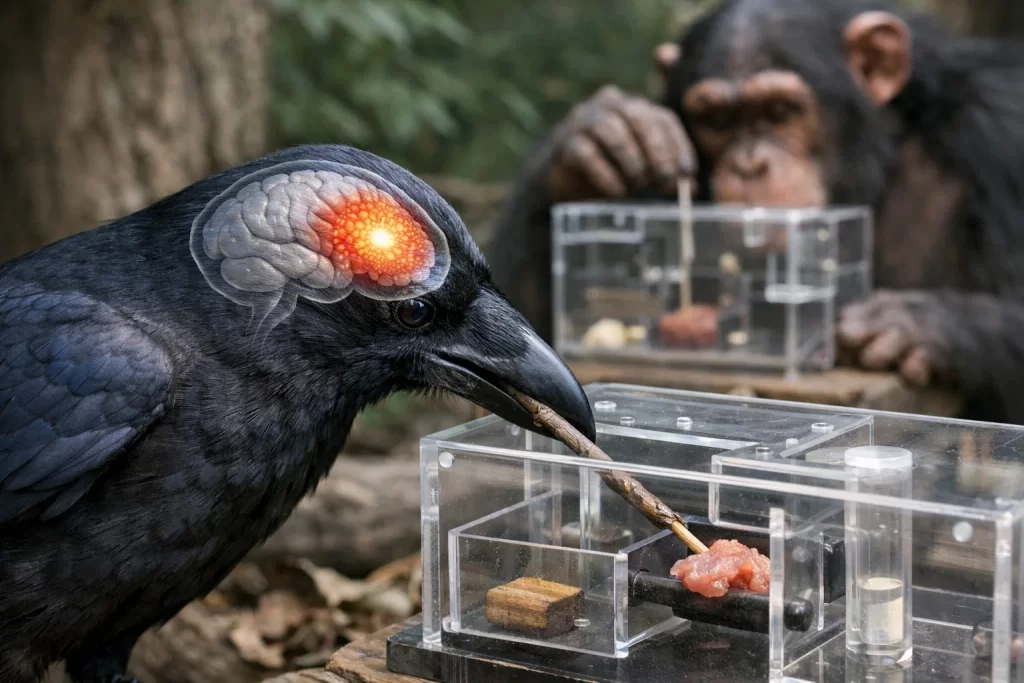
Scientific research defines intelligence as the ability to learn, adapt, and solve novel problems. Animal intelligence and problem solving in wildlife are measured through memory tests, tool use trials, and social experiments. A 2021 review in the NIH database analyzed over 150 cognitive studies across 23 species. It confirmed that flexible behavior predicts survival in unstable environments.
Brain Structure and Cognitive Ability
Brain complexity matters more than size alone. For example, corvid birds have neuron densities comparable to primates. A 2016 study found that some crows have 1.5 billion neurons in their forebrains. That rivals small monkeys. This neural density allows rapid decision-making and problem analysis.
Neural organization also influences social learning. Dolphins and elephants show strong hippocampal development. This supports long-term memory and social recognition. These traits improve group survival. Intelligence, therefore, links directly to ecological success.
Learning Through Experience
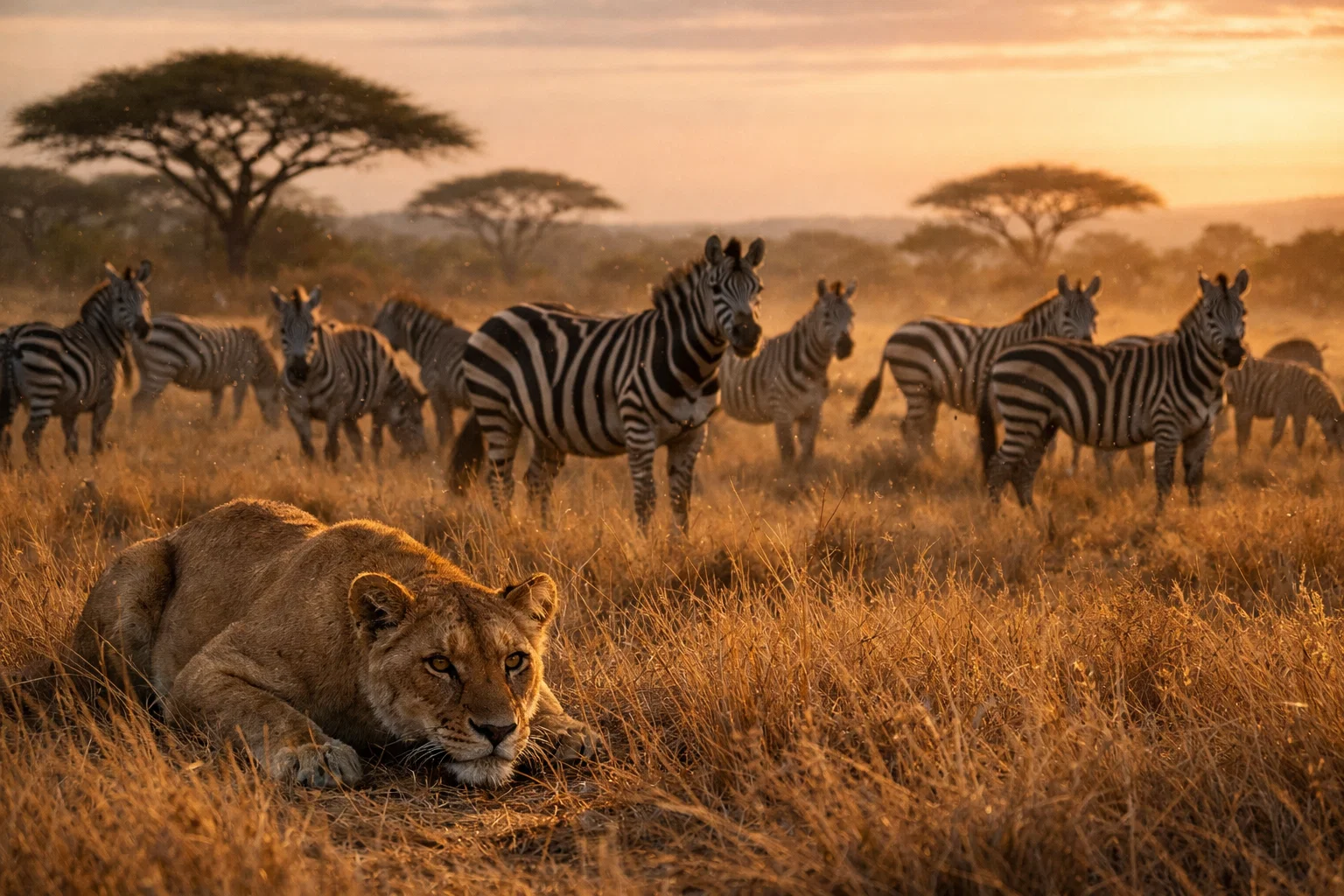
Experience shapes animal thinking. Young predators refine hunting strategies through trial and error. Field studies show that juvenile lions increase hunting success from 20% to 35% by age three. Learning boosts efficiency.
Social animals also transmit knowledge. Meerkats teach pups how to handle scorpions safely. This teaching behavior reduces injury rates by over 40%. Learning, therefore, strengthens group resilience and long-term survival. To understand how cognition shapes survival, explore Animal Behavior and Communication in the Wild.
Tool Use and Innovation in the Wild
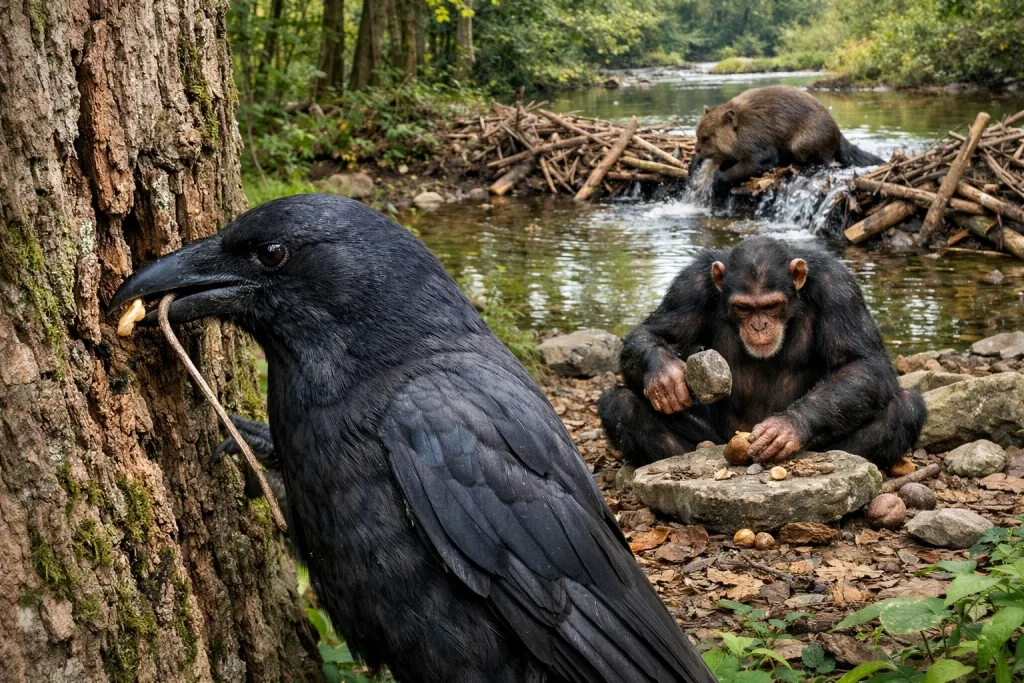
Tool use is one of the clearest examples of animal intelligence and problem solving in wildlife. Once considered uniquely human, it is now documented in at least 30 species. Research summarized by Science Times in November 2025 highlights how birds, apes, and even fish demonstrate innovative tool behaviors.
Birds Redefining Intelligence
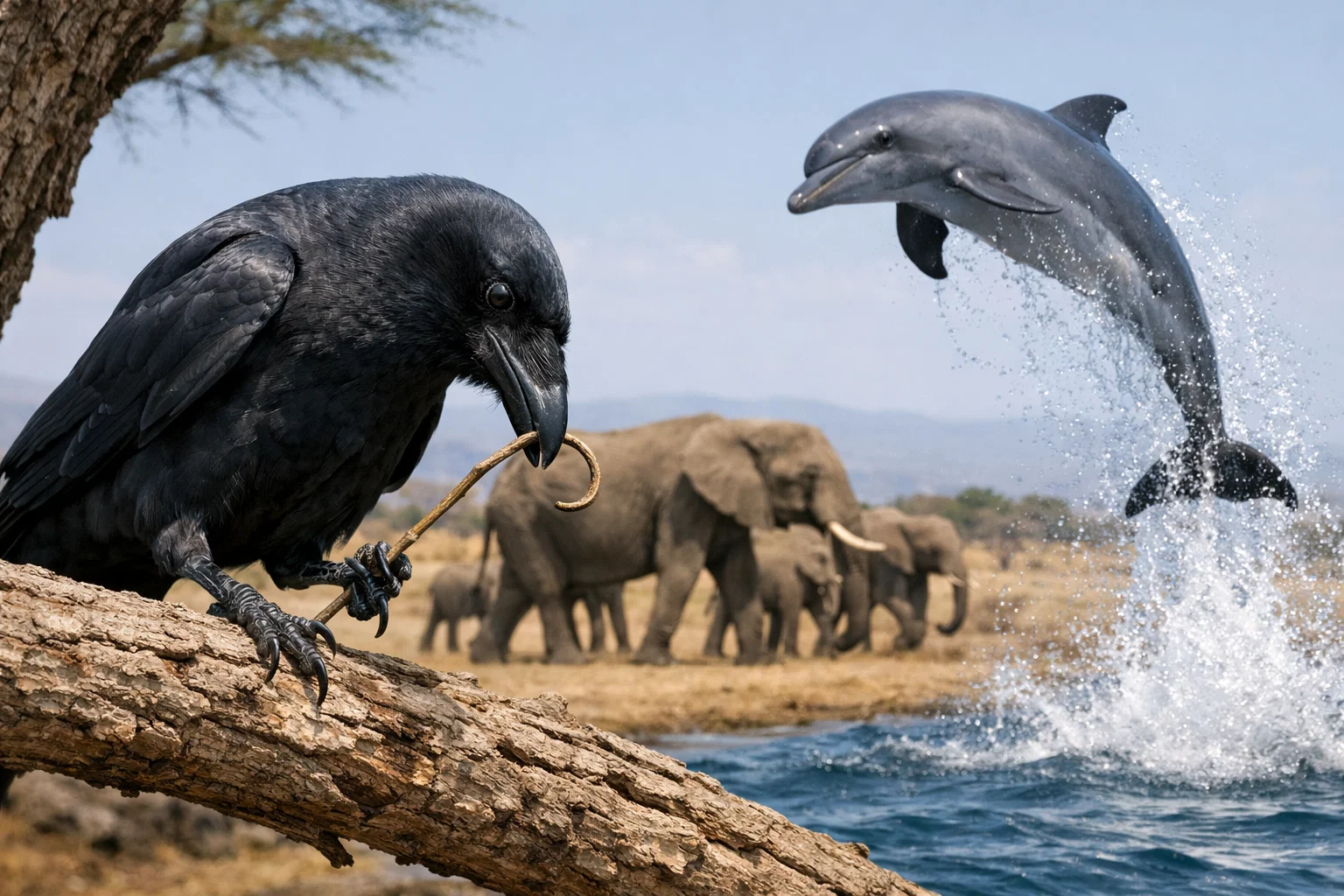
New Caledonian crows craft hooks from twigs to extract insects. In laboratory trials, 78% solved multi-step puzzles within ten minutes. That performance rivals chimpanzees in similar tasks.
Woodpecker finches use cactus spines to reach larvae. This behavior increases feeding efficiency by 15%. Tool use allows them to exploit otherwise inaccessible food sources. Innovation directly improves survival rates.
Mammals and Environmental Engineering
Beavers reshape landscapes by building dams. A single dam can create wetlands covering over 2 acres. This modifies ecosystems and increases biodiversity.
Chimpanzees use stones to crack nuts and sticks to fish termites. Field data from 2024 recorded over 300 documented tool events in one community. These repeated behaviors show cultural transmission. Tools, therefore, represent learned intelligence, not instinct alone. Strategic defense behaviors are rooted in patterns seen in Predator and Prey Behavior in the Wild.
Examples of Wildlife Tool Use in 2026:
| Species | Tool Used | Purpose | Measured Benefit |
|---|---|---|---|
| New Caledonian Crow | Hooked twig | Extract insects | 78% puzzle success |
| Chimpanzee | Stone hammer | Crack nuts | 30% higher calorie intake |
| Beaver | Wooden dam | Water control | 2+ acre wetland creation |
| Woodpecker Finch | Cactus spine | Remove larvae | 15% feeding boost |
Tool innovation shows that intelligence creates measurable ecological advantages.
Social Intelligence and Communication
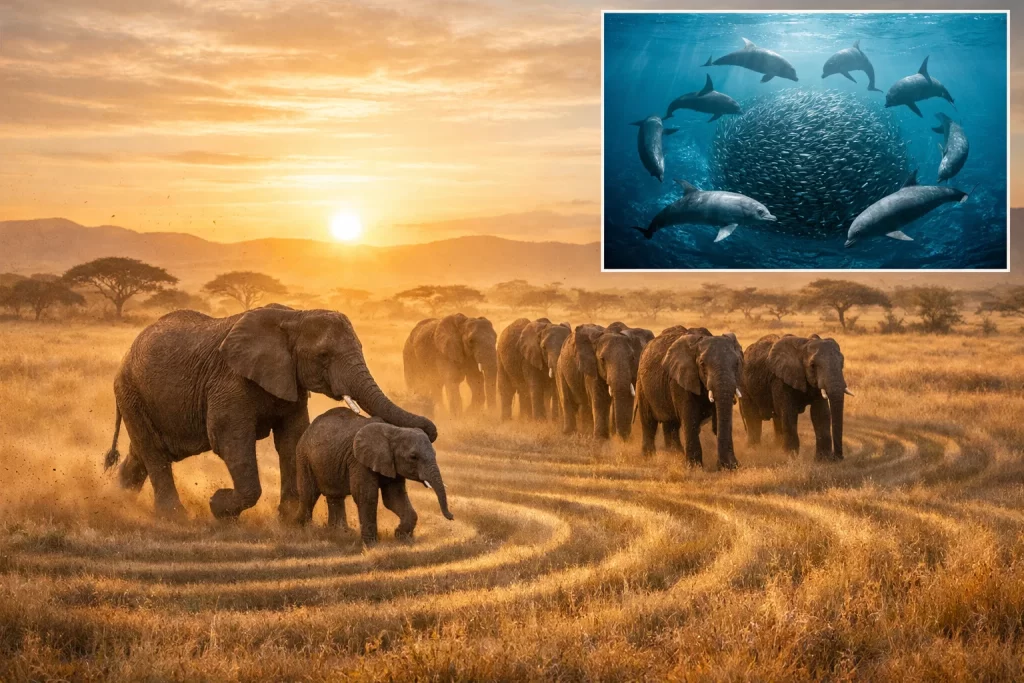
Social complexity drives some of the strongest examples of animal intelligence and problem solving in wildlife. Species that live in structured groups often develop advanced communication systems. Social learning improves efficiency and reduces risk.
Elephant Memory and Empathy
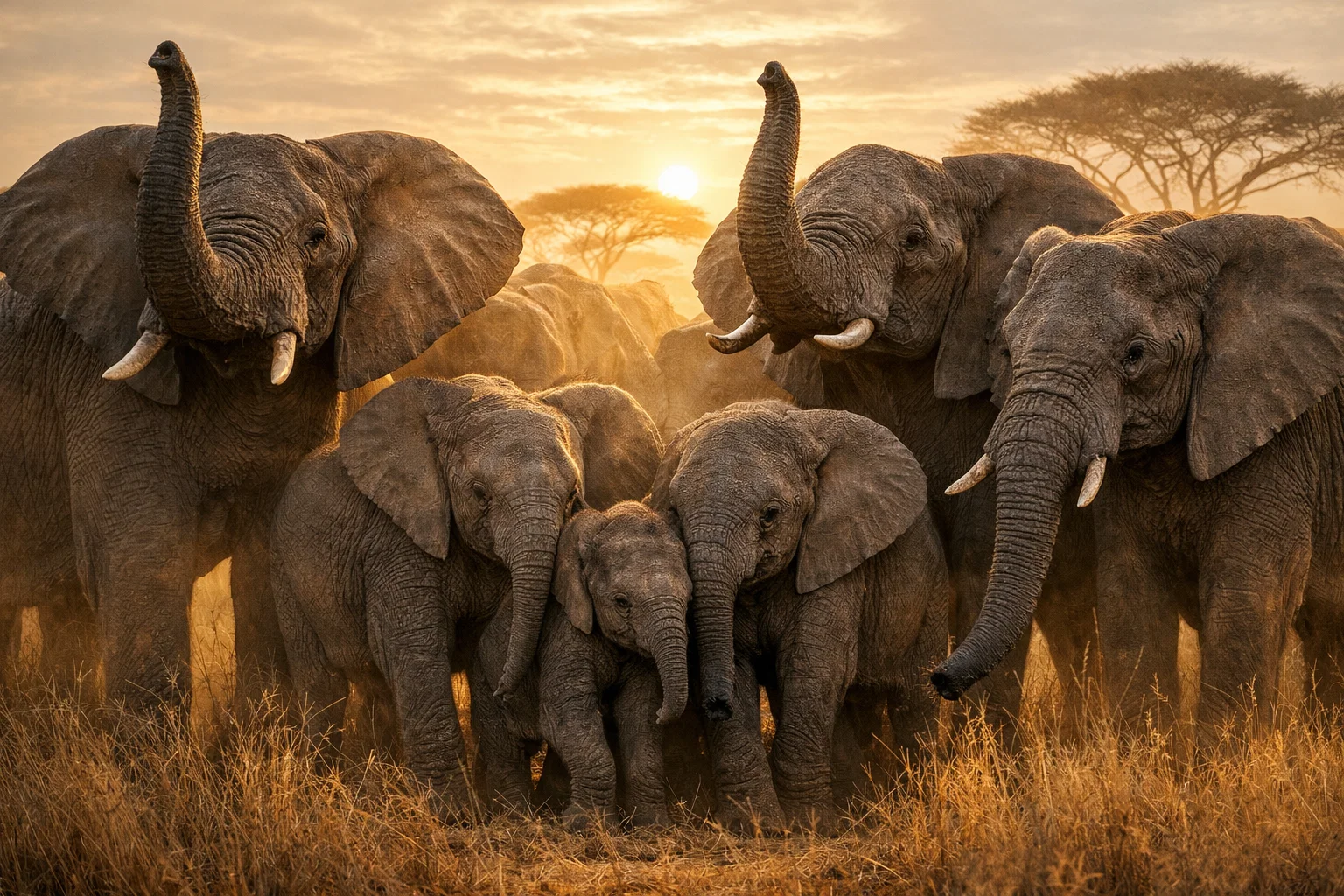
African elephants remember migration routes for decades. Studies confirm memory spans exceeding 20 years. This long-term recall helps herds survive drought conditions.
Elephants also display empathetic behaviors. They assist injured herd members and respond to distress calls within seconds. Social bonds improve group survival odds during crises.
Dolphin Coordination and Strategy
Bottlenose dolphins cooperate during hunts. Groups form strategic circles around fish schools. This technique increases catch success by up to 60%.
Dolphins also use signature whistles. Each individual has a unique call. This functions like a name. Communication strengthens coordination and problem-solving efficiency in dynamic marine environments.
Adaptation to Human-Changed Environments
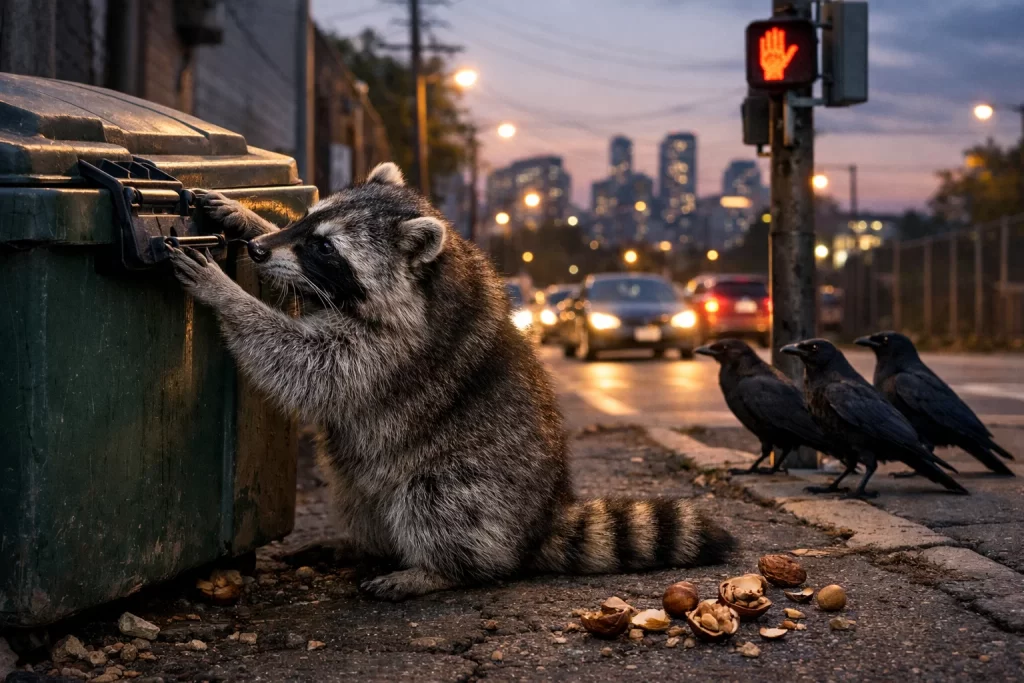
Modern wildlife must adapt to urbanization, climate shifts, and habitat fragmentation. Animal intelligence and problem solving in wildlife now play critical roles in urban survival. According to the United Nations Environment Programme, urban areas are expanding by 1.5 million square kilometers annually. Animals that adapt quickly persist.
Urban Problem Solvers
Raccoons in North America open complex garbage bin latches within minutes. In controlled trials, 90% remembered solutions after three years. Memory retention supports urban adaptation.
Crows in Japan drop nuts onto roads for cars to crack. They wait for traffic lights before retrieving food. This shows timing awareness and risk assessment. Intelligence allows them to exploit human systems safely.
Climate Resilience
Climate change forces rapid adaptation. According to NOAA climate data updated in 2025, global temperatures have risen 1.2°C above pre-industrial levels. Species adjust migration timing and feeding patterns in response.
For example, some bird species now migrate 5 to 7 days earlier than in 2000. Flexible behavior helps maintain breeding success despite shifting seasons. Intelligence supports survival under environmental stress. Problem-solving abilities also influence herd dynamics in the Social Structure of Herd Animals.
Bottom Line
Animal intelligence and problem solving in wildlife reveal that thinking is not uniquely human. It is a survival strategy rooted in biology. From crow tool crafting to elephant memory and dolphin cooperation, intelligence shapes ecological success.
Research through 2026 confirms that neural density, social bonds, and environmental pressure drive cognitive evolution. Species that learn quickly adapt better to habitat change and climate stress. Intelligence improves feeding efficiency, predator avoidance, and reproductive success.