Table of Contents
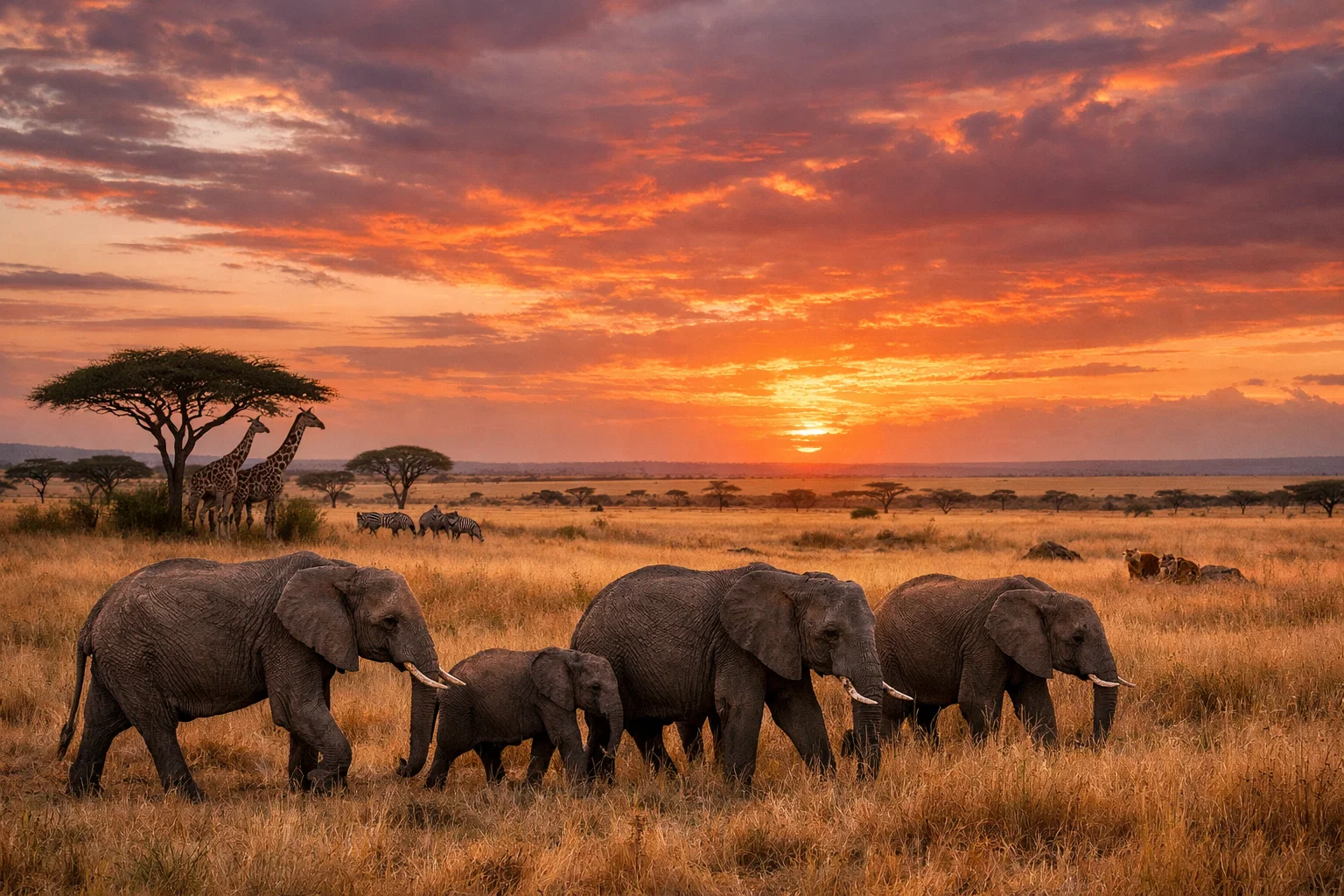
The African savanna ecosystem animals and plants define one of Earth’s most iconic landscapes. Savannas cover about 20% of the planet’s land surface and nearly 50% of Africa’s area, according to data updated through 2026. These tropical grasslands stretch across East, Southern, and parts of West Africa. Countries like Kenya, Tanzania, Botswana, and South Africa hold vast savanna regions.
Climate shapes everything here. The African savanna ecosystem animals and plants adapt to warm temperatures that average 68°F to 86°F year-round. Annual rainfall ranges from 20 to 50 inches, with a clear wet and dry season. Fire also plays a critical role. Natural and human-set fires occur almost every year, recycling nutrients into the soil.
This biome supports some of the highest concentrations of large mammals on Earth. The Serengeti alone hosts over 1.5 million wildebeest during migration. Plants survive through deep roots and drought resistance.
Climate and Geography of the African Savanna Ecosystem
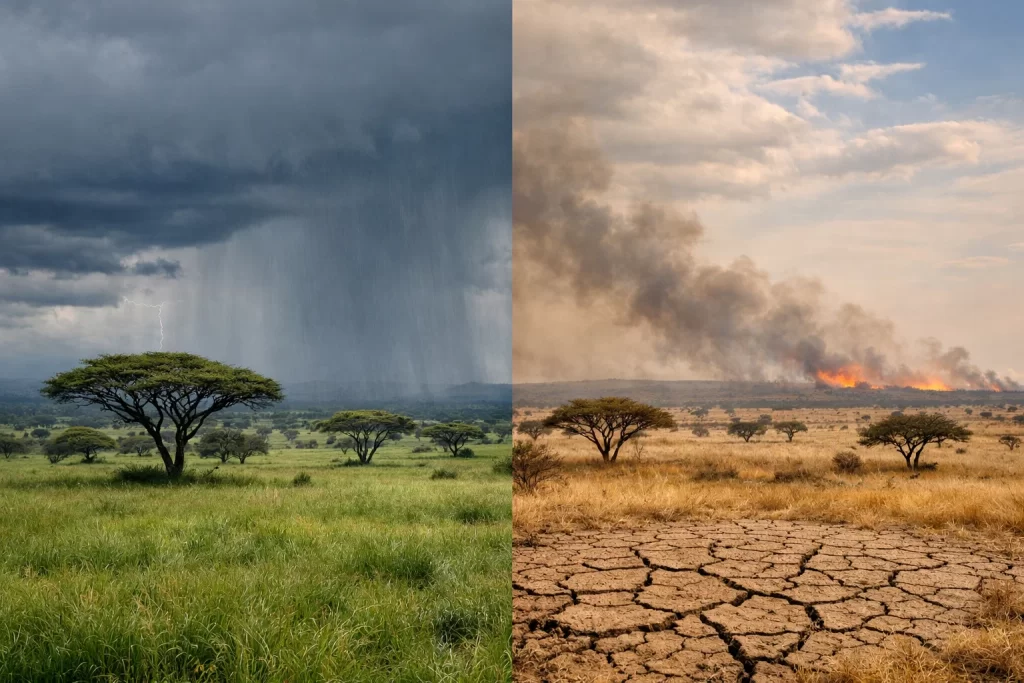
Seasonal Rainfall Patterns
Rainfall drives the African savanna ecosystem animals and plants. The wet season usually runs from November to April in East Africa. During this period, grasses grow rapidly, and water sources refill. The dry season follows with little rain and intense heat.
Rainfall averages between 500 and 1,270 millimeters annually. This moderate level prevents dense forests from forming. Instead, grasses dominate the landscape. Seasonal shifts force animals to migrate or adapt. This predictable rhythm shapes life across the savanna.
Fire and Soil Conditions
Fire maintains the balance in the African savanna ecosystem animals and plants system. Lightning ignites many fires during the late dry season. Grasses burn quickly but recover fast due to underground stems.
Savanna soils often contain iron and aluminum oxides. These soils drain quickly and lose nutrients easily. Fires return minerals to the surface. Without fire, shrubs and trees would overtake grasses. Fire ensures open grasslands remain dominant.
Key Climate Facts:
- Covers nearly 13 million square miles globally.
- Rainfall: 20–50 inches per year.
- Temperatures: 68°F–86°F year-round.
- Distinct wet and dry seasons.
The climate creates predictable challenges that shape survival strategies. To understand how forests fit into the global picture, read Wildlife Habitats and Ecosystems of the World.
Plants in the African Savanna Ecosystem
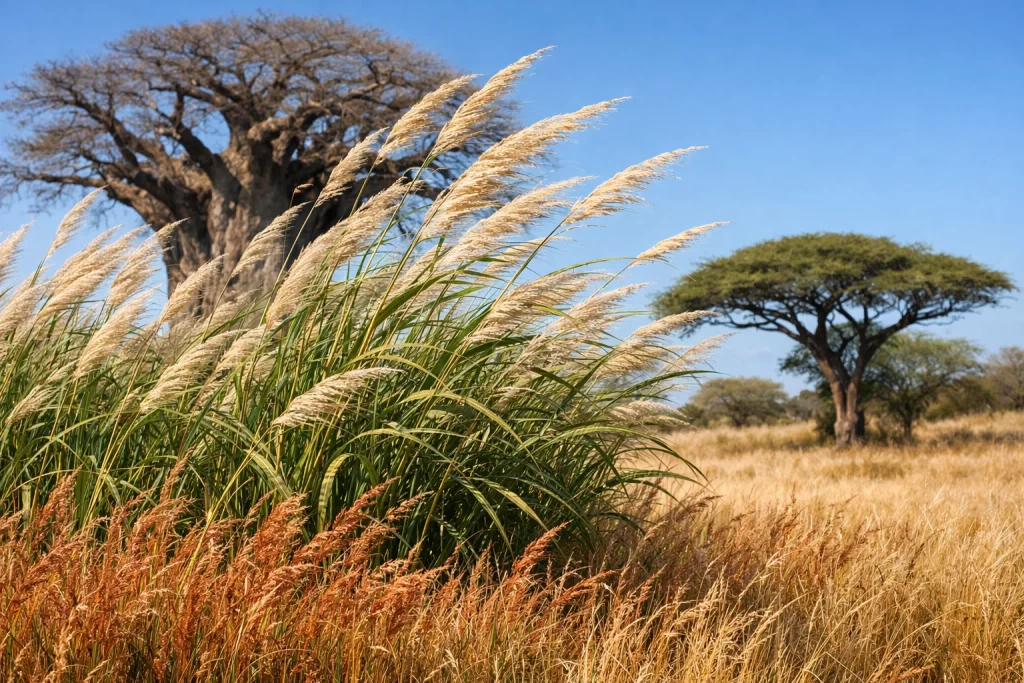
Dominant Grass Species
Grasses form the base of the African savanna ecosystem animals and plants. Species like elephant grass can reach 10 feet tall during the wet season. Red oat grass dominates parts of southern Africa.
These grasses grow from basal meristems. That means they regrow quickly after grazing or fire. Their fibrous roots hold soil together during heavy rains. Grasses feed herbivores that power the entire food chain.
Iconic Savanna Trees
Trees remain scattered across the savanna. The acacia tree develops flat tops and thorns to deter herbivores. Baobab trees store up to 32,000 gallons of water in thick trunks.
These trees survive drought through deep taproots. Leaves often drop during dry months to conserve water. According to Britannica, savannas support a mix of grasses and drought-resistant trees. This balance prevents forest formation. Grassland predator-prey balance differs from dense jungles in the African Savanna Ecosystem Animals and Plants.
Animals in the African Savanna Ecosystem
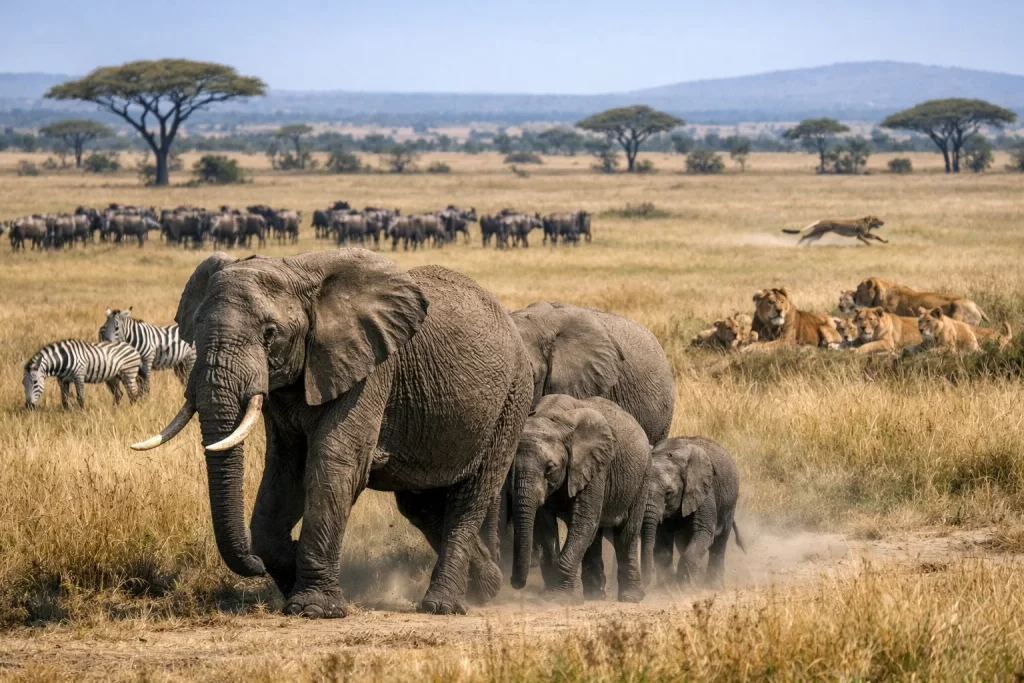
Large Herbivores
Large mammals define the African savanna ecosystem animals and plants. African elephants weigh up to 14,000 pounds and shape vegetation by uprooting trees. Giraffes browse treetops beyond most herbivores’ reach.
The Serengeti migration remains the largest land animal movement globally. Over 1.5 million wildebeest and 200,000 zebras travel annually. They follow fresh grass growth after the rains. Herbivores convert plant energy into biomass that supports predators.
Apex Predators
Predators maintain population balance. Lions hunt cooperatively in prides of up to 15 members. Cheetahs can sprint at 60 miles per hour for short distances.
Hyenas play both predator and scavenger roles. They prevent disease by consuming carcasses. Balanced populations protect plant regeneration.
Trophic Structure Table:
| Level | Examples | Role |
|---|---|---|
| Producers | Grasses, Acacia | Convert sunlight into energy |
| Primary Consumers | Zebras, Wildebeest | Graze on plants |
| Secondary Consumers | Lions, Cheetahs | Hunt herbivores |
| Decomposers | Termites, Fungi | Recycle nutrients |
Human Impact and Conservation
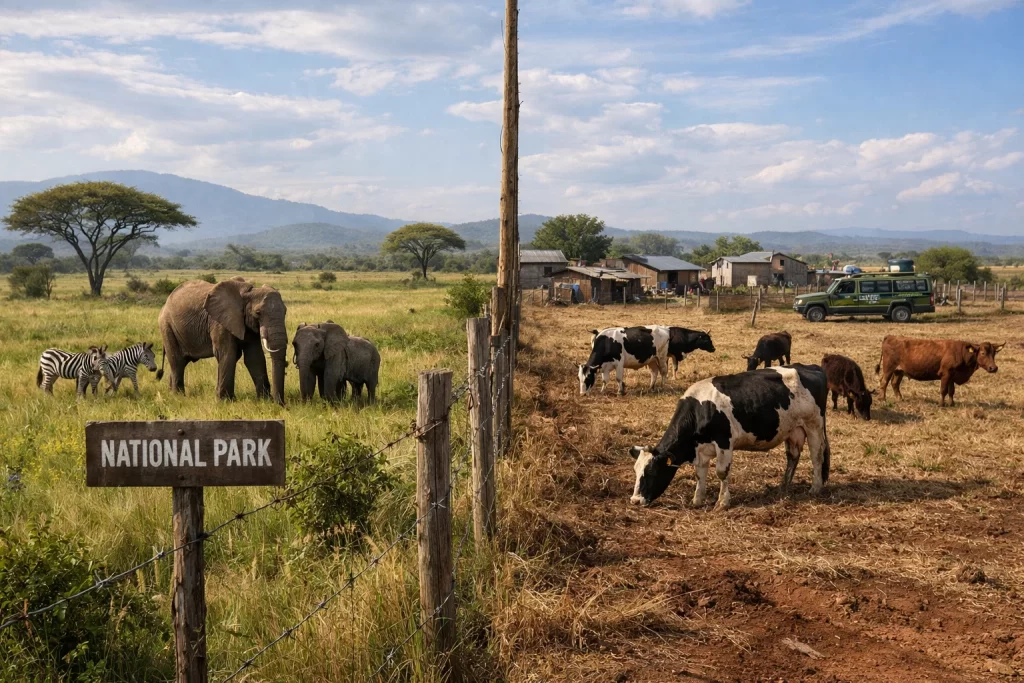
Land Use Changes
Human expansion alters the African savanna ecosystem animals and plants. Agriculture and livestock grazing convert native grasslands into farmland. As of 2026, Africa’s population exceeds 1.5 billion people. Pressure on land continues to rise.
Overgrazing reduces grass cover and increases soil erosion. Infrastructure fragments migration routes. Fragmentation disrupts predator-prey balance. Land management decisions directly influence ecosystem stability.
Conservation Efforts
Protected areas safeguard biodiversity. Serengeti National Park covers 5,700 square miles. Kruger National Park spans 7,523 square miles. These parks protect critical habitats.
Organizations support anti-poaching patrols and wildlife corridors. Conservation works best when local communities benefit economically. Long-term protection requires cooperation between governments and residents. Rising temperatures are altering forest systems in Impact of Climate Change on Wildlife Habitats.
Bottom Line
The African savanna ecosystem animals and plants demonstrate nature’s balance under seasonal stress. Grasses fuel herbivores, predators regulate populations, and fire maintains open landscapes. Covering nearly half of Africa’s land area, this biome supports unmatched wildlife diversity.
Climate change and land conversion pose growing risks in 2026. However, protected parks and community programs show measurable progress. We must support habitat conservation, responsible tourism, and sustainable agriculture.