Table of Contents
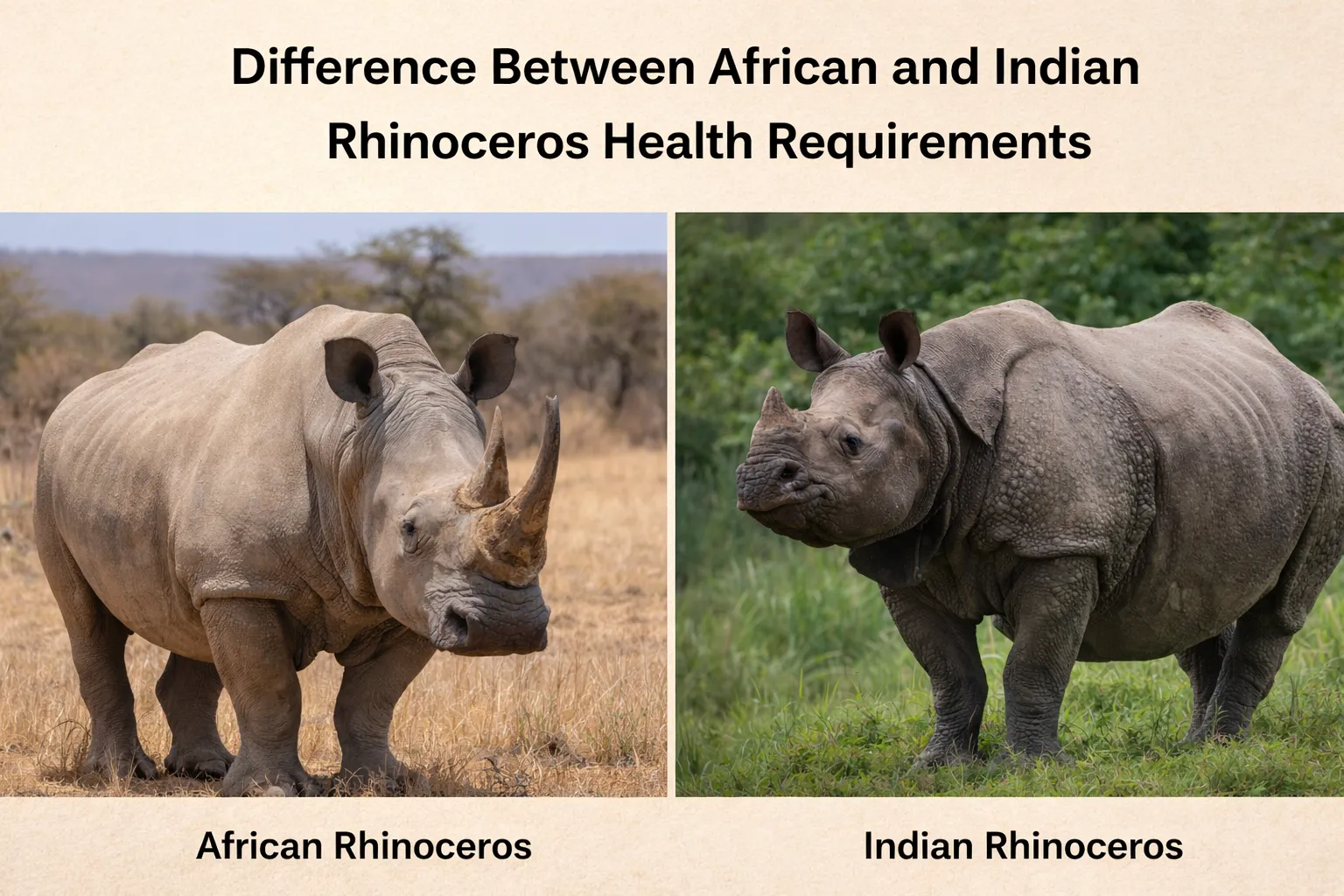
African and Indian rhinoceros health depends on habitat, diet, climate, and disease exposure. As of February 25, 2026, there are about 27,000 rhinos left in the wild worldwide. Africa holds roughly 23,000 white and black rhinos. India and Nepal protect about 4,014 greater one-horned rhinos. Each population faces different health risks.
African rhinos live in savannas and semi-arid grasslands. Indian rhinos live in river floodplains and tall grasslands. These habitats shape their immune stress, parasite load, and injury patterns. Health teams now use dung analysis, GPS tracking, and blood profiling to monitor rhino well-being.
We must understand these differences clearly. Conservation success depends on species-specific care. When we compare African and Indian rhinoceros health, we see that geography drives medical strategy. That distinction guides veterinary planning worldwide.
Habitat and Climate Impact on African and Indian Rhinoceros Health
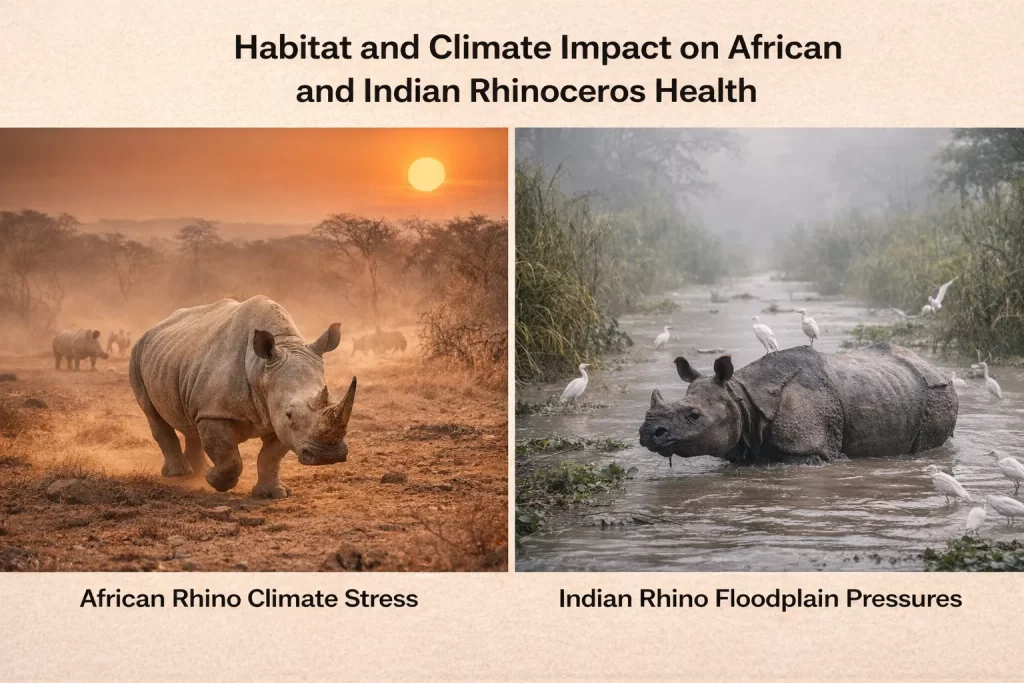
African Rhino Climate Stress
African rhinos face heat and drought stress. Southern Africa recorded temperatures exceeding 44°C in 2025. An extended drought reduces grazing quality and water access. Dehydration weakens the immune response. Poor forage lowers protein intake below optimal 8–10% dry matter levels.
White rhinos prefer short grasses. Black rhinos browse shrubs and trees. During drought, plant nutrient value drops sharply. This leads to weight loss and reproductive decline. Climate instability directly influences African and Indian rhinoceros health planning in Africa.
Indian Rhino Floodplain Pressures
Indian rhinos live in monsoon-driven ecosystems. Kaziranga National Park receives over 2,200 mm of rainfall annually. Seasonal floods submerge up to 70% of the habitat. Flooding increases bacterial infections and foot rot. Standing water raises parasite density.
High humidity supports ticks and gastrointestinal worms. These conditions require targeted parasite management. Therefore, African and Indian rhinoceros health protocols differ sharply in disease prevention strategies. Compare physical adaptations in our detailed look at rhinos vs elephants and their skin thickness differences.
Diet and Nutritional Requirements
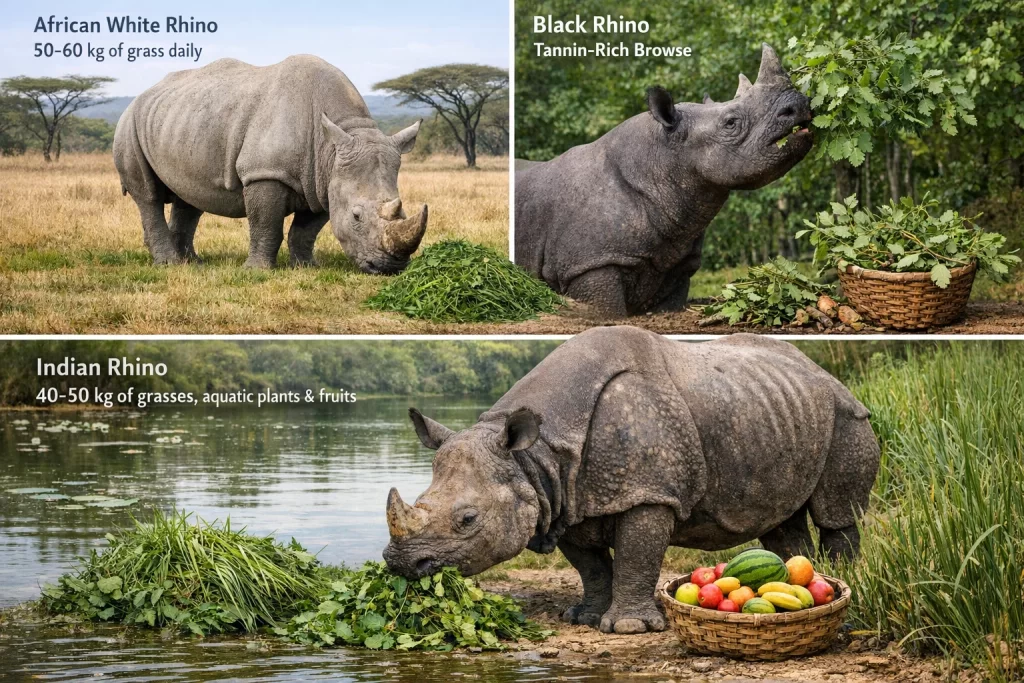
Feeding Patterns and Nutritional Balance
African white rhinos consume 50–60 kg of grass daily. Black rhinos eat browse rich in tannins. Indian rhinos consume 40–50 kg of tall grasses, aquatic plants, and fruits. Diet variety affects gut microbiome stability.
According to the World Wildlife Fund, dung analysis reveals nutrient absorption efficiency and stress markers. Rhino dung can show hormonal levels and parasite counts.
Comparative Nutritional Risks
| Factor | African Rhinos | Indian Rhinos |
|---|---|---|
| Daily intake | 50–60 kg | 40–50 kg |
| Drought risk | High | Moderate |
| Flood impact | Low | High |
| Parasite exposure | Moderate | High |
| Iron overload risk (captivity) | Documented | Rare |
Captive African black rhinos show a higher risk of iron storage disease. Indian rhinos rarely show this condition. This difference influences dietary mineral management.
Disease Exposure and Veterinary Monitoring
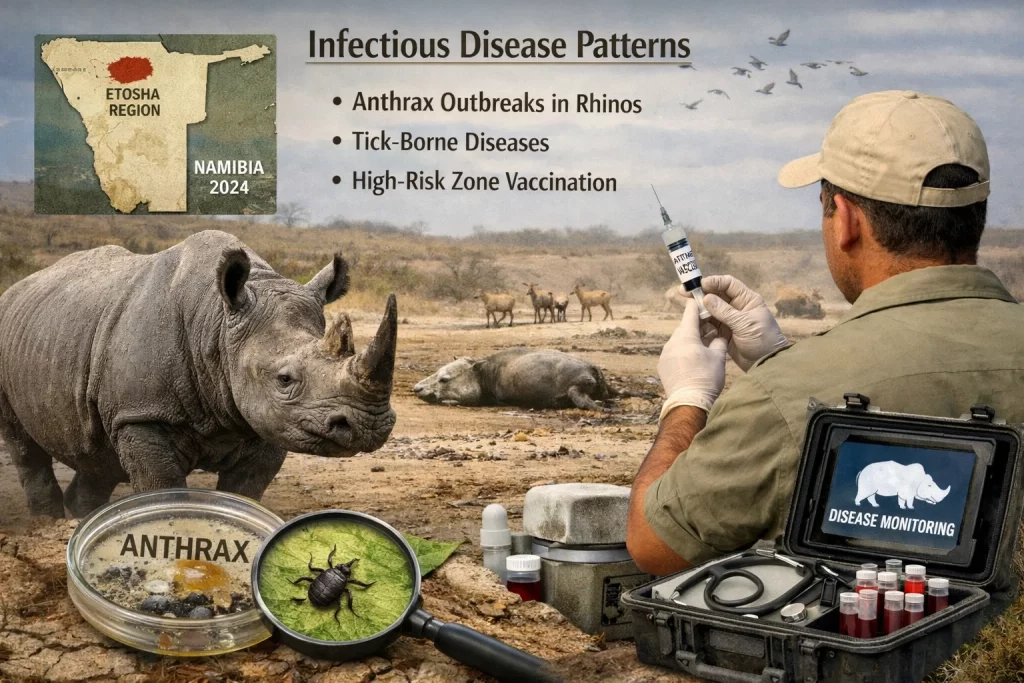
Infectious Disease Patterns
African rhinos face anthrax outbreaks. In Namibia, 2024 surveillance reported localized cases in Etosha. Tick-borne diseases also affect black rhinos. Monitoring requires vaccination in high-risk zones.
Indian rhinos face hemorrhagic septicemia and foot infections. Flood-related wounds increase bacterial entry. Cornell Wildlife Health Lab reports strong veterinary collaboration in Nepal. Their work highlights targeted disease tracking in Chitwan National Park.
Monitoring Techniques
Modern African and Indian rhinoceros health systems rely on:
- GPS collars for stress mapping.
- Dung hormone analysis for fertility tracking.
- Blood sampling for disease markers.
- Thermal drones for injury detection.
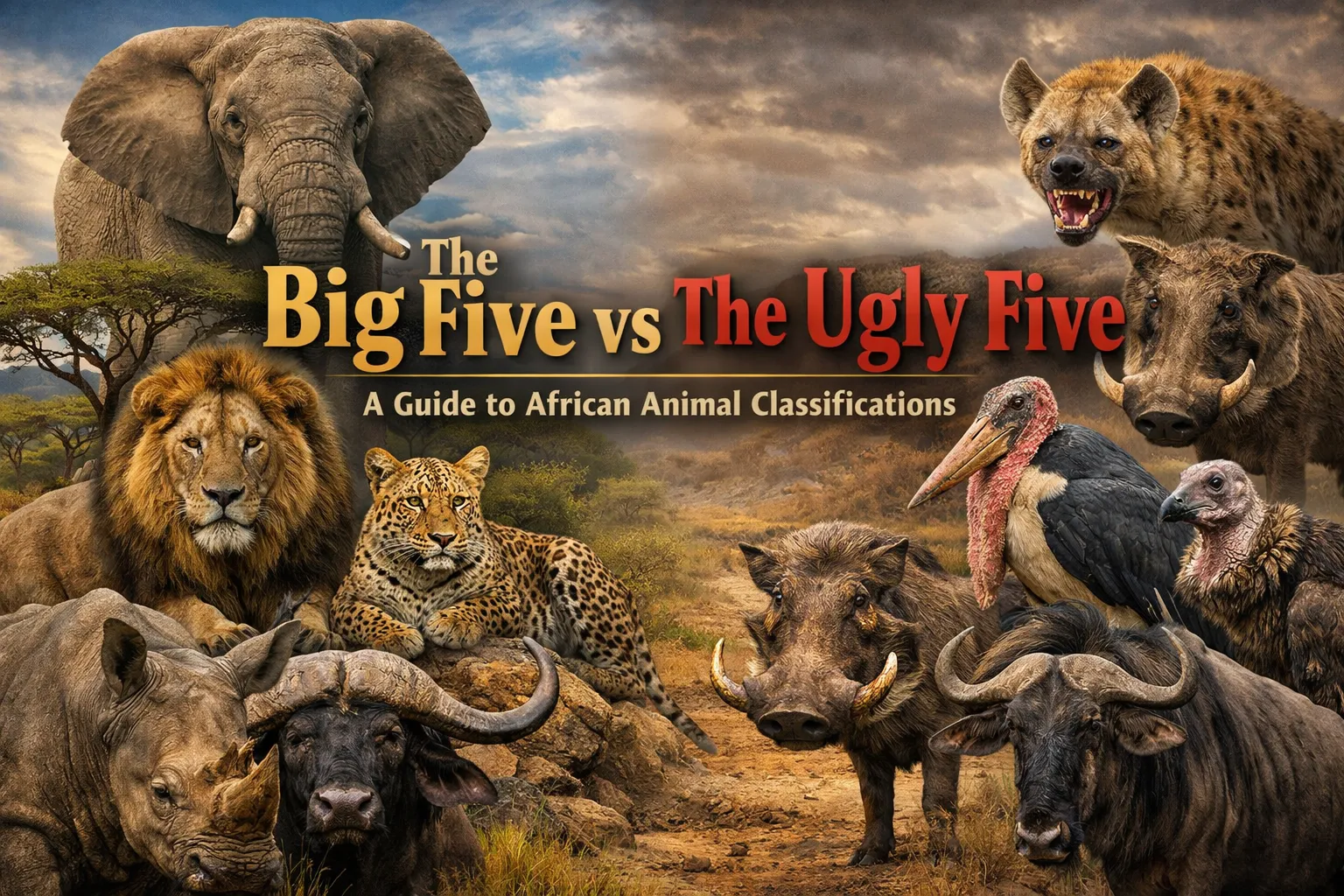
These tools allow early diagnosis and treatment. Health response now relies on measurable data rather than observation alone. See how rhinos fit into broader wildlife categories in The Big Five vs The Ugly Five guide.
Reproductive Health and Population Stability
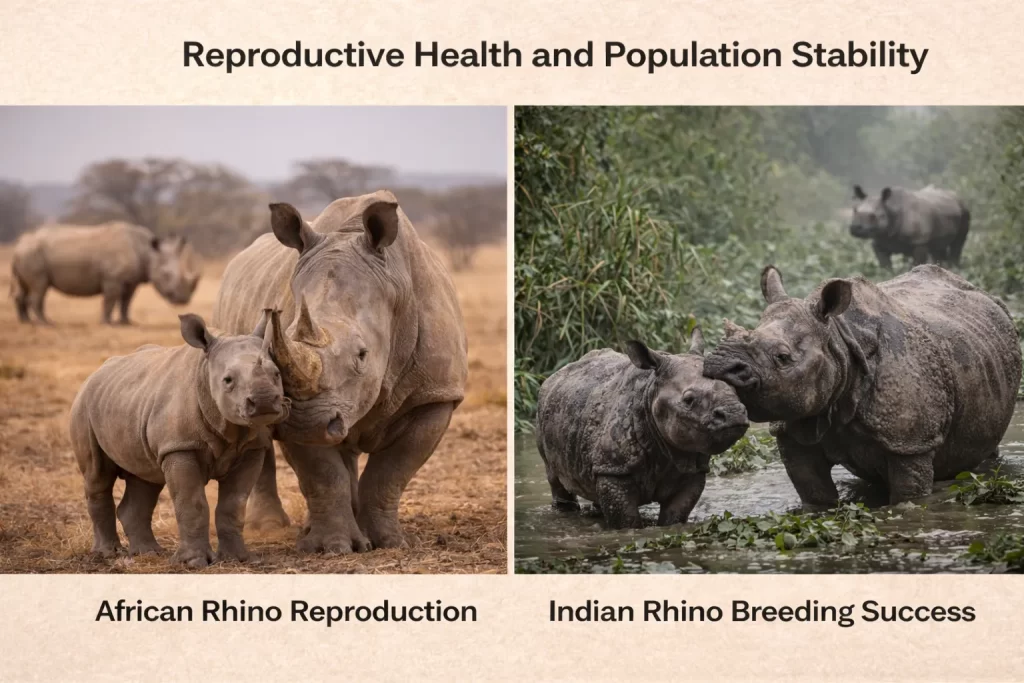
African Rhino Reproduction
White rhino gestation lasts 16 months. Females reproduce every 2.5–3 years under healthy conditions. However, poaching stress disrupts breeding cycles. South Africa lost over 400 rhinos to poaching in 2025. Chronic stress elevates cortisol levels and reduces fertility.
Indian Rhino Breeding Success
Indian rhinos show strong recovery numbers. According to conservation reports in 2025, India hosts about 3,262 greater one-horned rhinos. Nepal protects about 752 individuals. Strict anti-poaching and habitat expansion improved birth rates.
African and Indian rhinoceros health strategies must include reproductive hormone monitoring. Stable populations depend on stress-free habitats and safe breeding grounds.
Key Health Management Differences
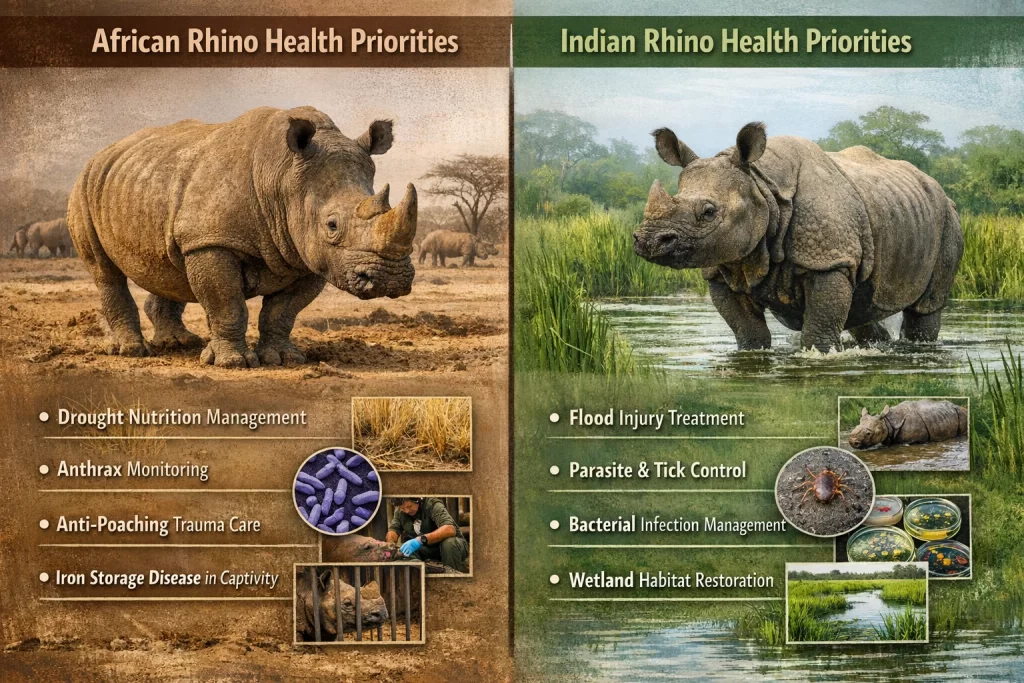
We can summarize the major differences clearly.
African Rhino Health Priorities:
- Drought nutrition management.
- Anthrax monitoring.
- Anti-poaching trauma care.
- Iron storage disease monitoring in captivity.
Indian Rhino Health Priorities:
- Flood injury treatment.
- Parasite and tick control.
- Bacterial infection management.
- Wetland habitat restoration.
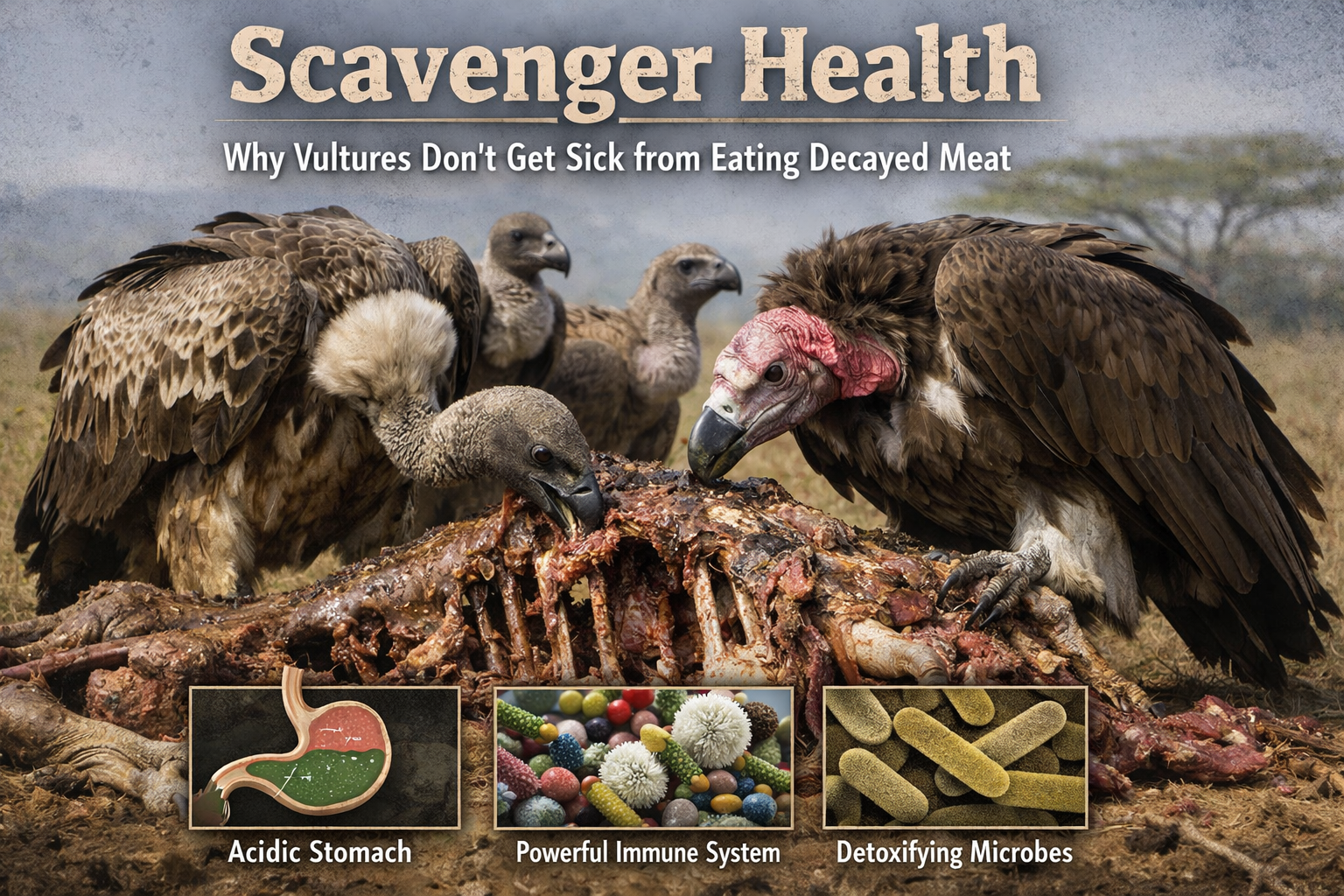
Both species benefit from habitat stability. However, regional conditions dictate medical focus. That is the central distinction in African and Indian rhinoceros health planning. Night activity impacts scavenger behaviour. Explore the top nocturnal animals in the Kalahari Desert.
Bottom Line
African and Indian rhinoceros health depends on geography, climate, diet, and disease exposure. African rhinos battle drought and anthrax risk. Indian rhinos manage floods and parasite pressure. Veterinary teams now use GPS tracking, dung science, and blood diagnostics to protect both populations.
As of 2026, conservation gains remain fragile. Climate change intensifies stress factors in both regions. Habitat stability remains the strongest predictor of rhino health. We must support science-based management and strong anti-poaching efforts.
FAQs
How many Indian rhinos exist in 2026?
About 4,014 greater one-horned rhinos live in India and Nepal.
Do African rhinos face more drought stress?
Yes. Semi-arid habitats increase dehydration and food scarcity risk.
Why is dung important for rhino health monitoring?
Dung reveals hormones, parasites, and stress levels.
Are flood conditions harmful to Indian rhinos?
Yes. Floods increase infection and parasite exposure.
What is the biggest shared health threat?
Habitat instability remains the biggest long-term health threat.