Table of Contents
The impact of climate change on wildlife habitats is accelerating in 2026, with measurable shifts across ecosystems worldwide. Global temperatures have risen about 1.1°C above pre-industrial levels, according to the Intergovernmental Panel on Climate Change. The last ten years rank as the warmest on record. Rising heat, shifting rainfall, and extreme weather now reshape forests, oceans, wetlands, and grasslands.
We see habitats being fragmented, species migrating, and food chains being destabilized. The World Wildlife Fund reports that wildlife populations have declined by an average of 69% since 1970. Climate change acts as a major driver of that loss. Coral reefs bleach, Arctic sea ice shrinks, and droughts intensify across continents.
Rising Temperatures and Habitat Loss
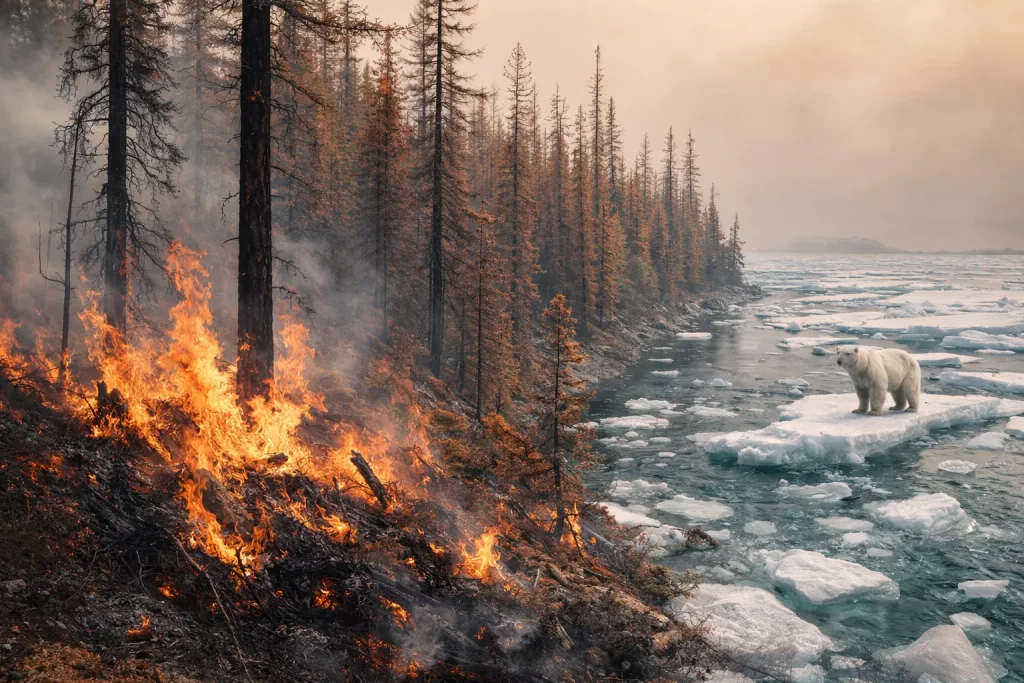
Rising temperatures directly alter ecosystems, forcing species to move or perish. The impact of climate change on wildlife habitats becomes clear in warming forests and melting polar regions. Many species depend on narrow temperature ranges for survival.
Heat Stress and Species Range Shifts
Heat stress disrupts breeding cycles and feeding behavior. Scientists report that species now shift toward poles or higher elevations at an average rate of 17 kilometers per decade. Alpine plants and cold-water fish face shrinking ranges as warming pushes them upward.
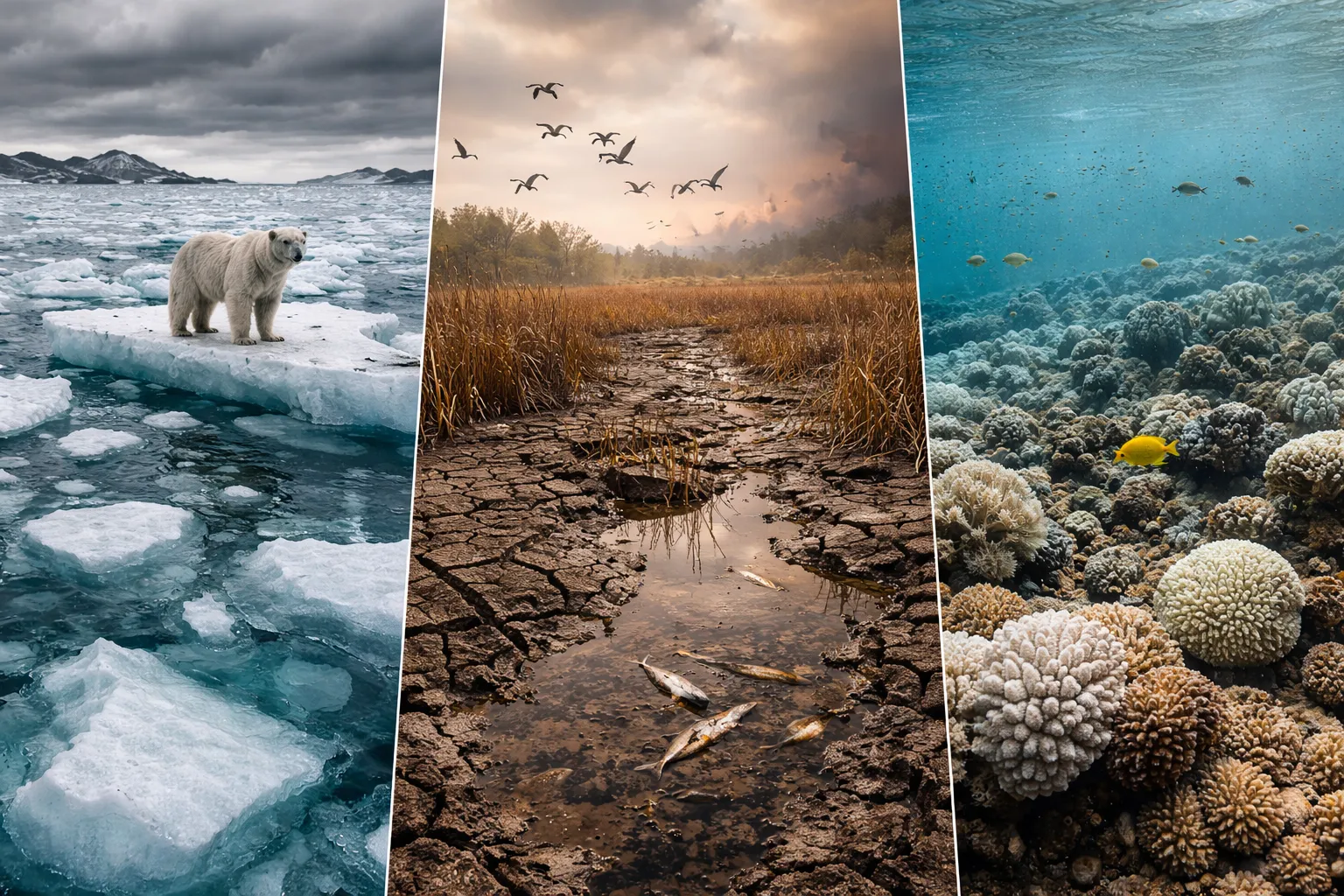
Polar ecosystems show stark changes. Arctic sea ice minimum levels declined by about 13% per decade since 1979. Species like polar bears depend on stable ice platforms to hunt. Habitat loss reduces hunting time and lowers cub survival rates.
Forest Dieback and Wildfires
Hotter conditions increase wildfire frequency and intensity. In 2023 alone, Canada recorded over 18 million hectares burned, the largest wildfire season on record. Fire destroys nesting grounds, food sources, and shelter.
Forests also face drought-driven dieback. Trees weakened by heat become vulnerable to pests. Bark beetle outbreaks have devastated millions of hectares in North America and Europe. These combined pressures show how the impact of climate change on wildlife habitats extends beyond temperature alone. Understand global ecosystem diversity in Wildlife Habitats and Ecosystems of the World.
Changing Rainfall Patterns and Water Ecosystems
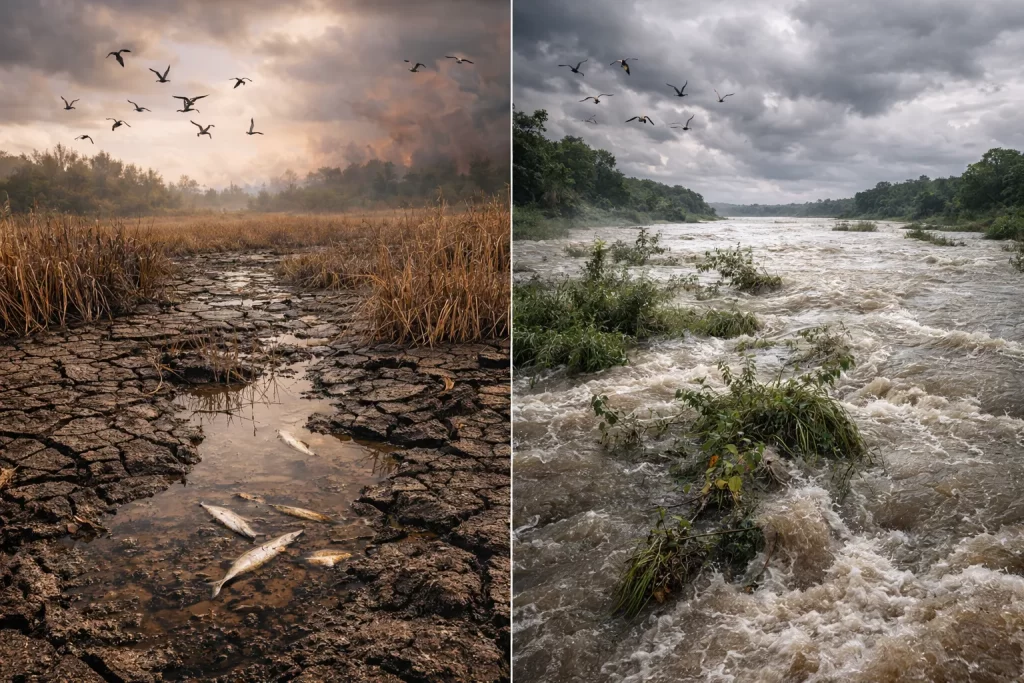
Shifting rainfall disrupts freshwater and wetland systems worldwide. The impact of climate change on wildlife habitats is severe in rivers, lakes, and marshlands. Water availability determines breeding success for countless species.
Drought and Wetland Shrinkage
Prolonged drought reduces wetland coverage. The United Nations reports that 35% of global wetlands disappeared between 1970 and 2015. Wetlands store carbon, filter water, and host migratory birds. Their loss threatens fish, amphibians, and waterfowl populations.
Reduced rainfall lowers river flow, affecting spawning grounds. Salmon require specific water temperatures and depths for migration. Warmer, shallower streams reduce survival rates. These losses disrupt entire food webs.
Flooding and Habitat Destruction
Intense rainfall events also damage ecosystems. Heavy floods wash away nests and erode soil. In 2022, extreme flooding in Pakistan submerged over 2 million hectares of cropland and wildlife areas. Floods alter sediment patterns, harming riverine habitats.
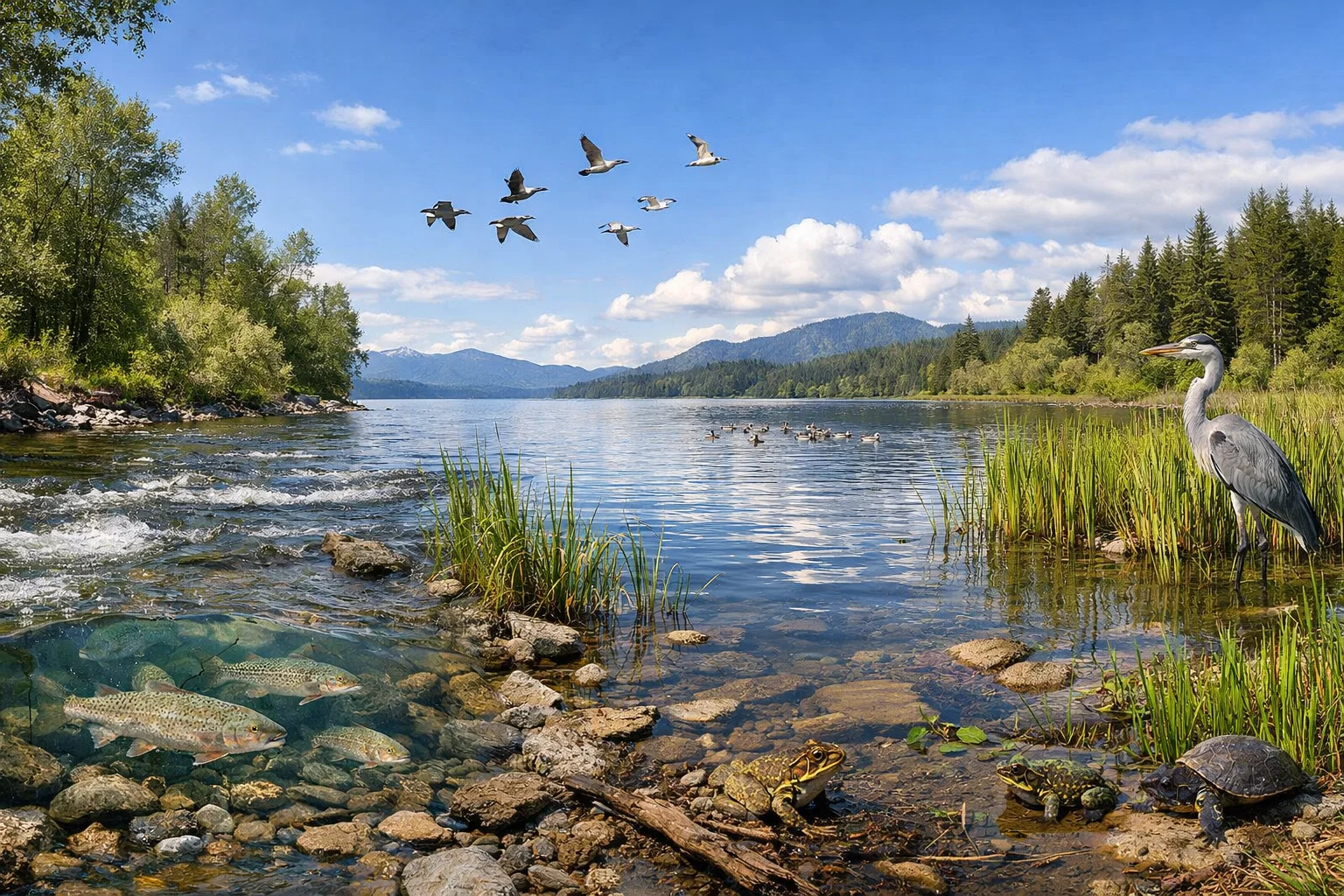
According to the National Wildlife Federation at nwf.org, climate-driven storms increase habitat fragmentation. Repeated flooding reshapes landscapes faster than species can adapt. Water ecosystems face unique risks explored in Freshwater Ecosystems, Animals, and Biodiversity.
Ocean Warming and Coral Reef Collapse
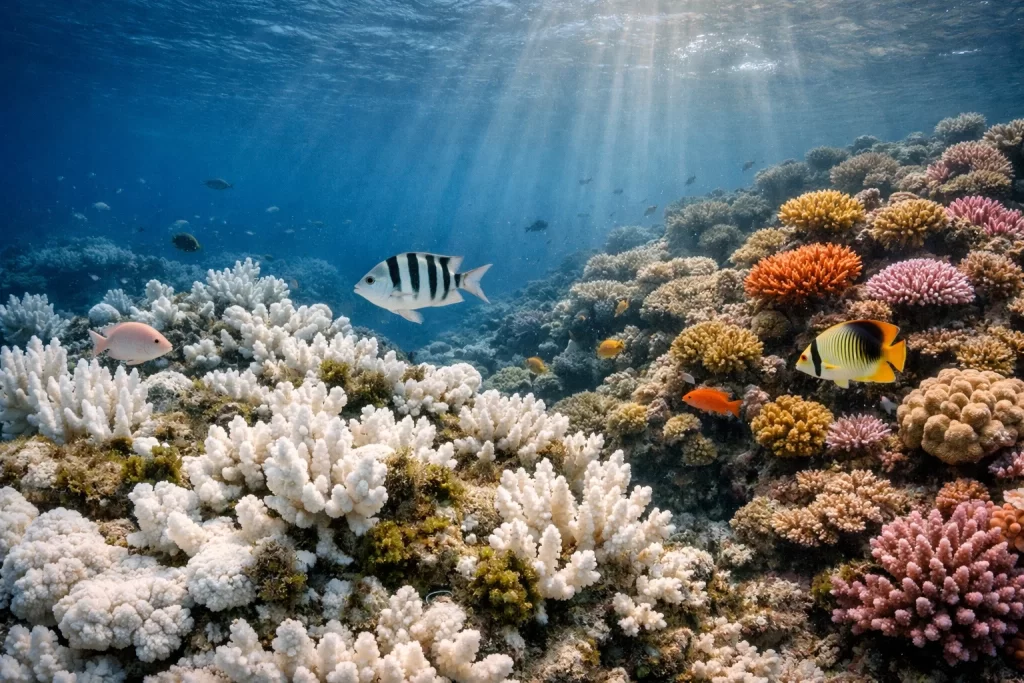
Oceans absorb over 90% of the excess heat from greenhouse gases. The impact of climate change on wildlife habitats is evident in marine ecosystems. Coral reefs, which support 25% of marine species, face unprecedented bleaching events.
Coral Bleaching and Marine Biodiversity
When water temperatures rise above normal limits, corals expel symbiotic algae. The Great Barrier Reef experienced mass bleaching in 2016, 2017, 2020, and 2022. Scientists estimate that more than 50% of shallow-water corals have declined in some regions.
Bleached reefs lose structural complexity. Fish, crustaceans, and mollusks lose shelter and feeding grounds. According to worldwildlife.org, warming seas threaten millions of livelihoods tied to fisheries and tourism.
Ocean Acidification and Food Chains
Carbon dioxide absorption lowers ocean pH levels. Since the Industrial Revolution, ocean acidity increased by about 30%. Acidic waters weaken shell-forming organisms like oysters and plankton.
Plankton form the base of marine food webs. Their decline affects fish, seabirds, and marine mammals. The cascading effect shows how chemical shifts compound physical habitat changes. Marine ecosystems now face both warming and acidification pressures.
Adaptation Strategies and Conservation Solutions
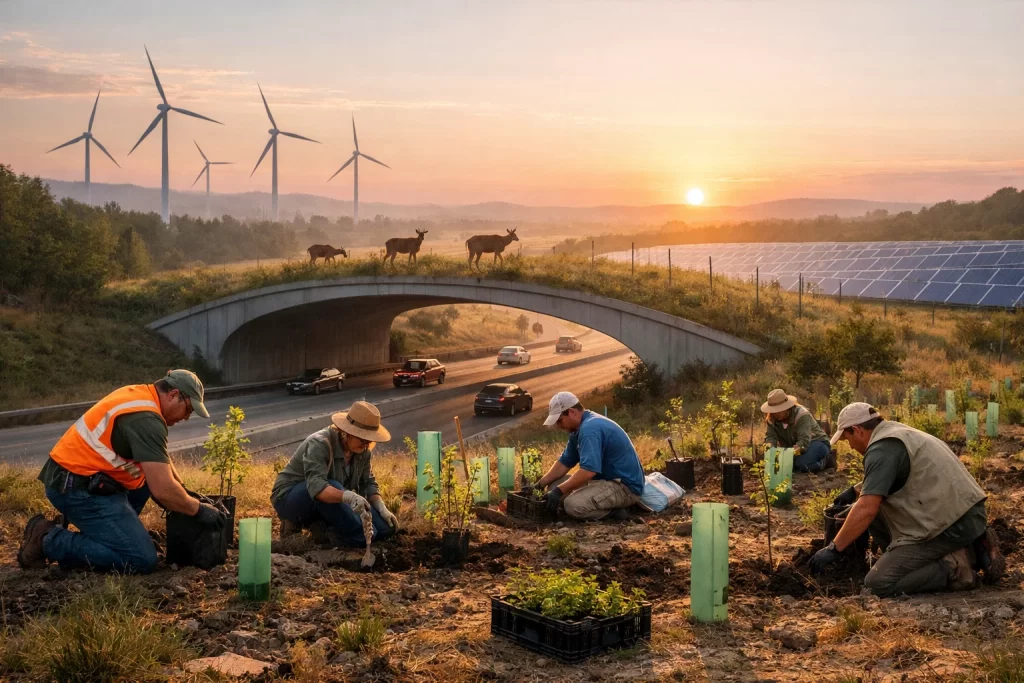
Despite growing threats, adaptation strategies offer hope. Addressing the impact of climate change on wildlife habitats requires coordinated global action. Conservation groups focus on resilience and ecosystem restoration.
Protected Areas and Climate Corridors
Protected areas safeguard biodiversity hotspots. Currently, about 16% of land and 8% of oceans are under protection. However, static reserves may not protect shifting species ranges.
Climate corridors connect fragmented habitats. These corridors allow species migration in response to warming. Reforestation and wetland restoration improve carbon storage and habitat stability.
Community-Based Conservation
Local communities play a key role in adaptation. Indigenous stewardship protects nearly 80% of the remaining biodiversity globally. Sustainable land management reduces deforestation and improves ecosystem resilience.
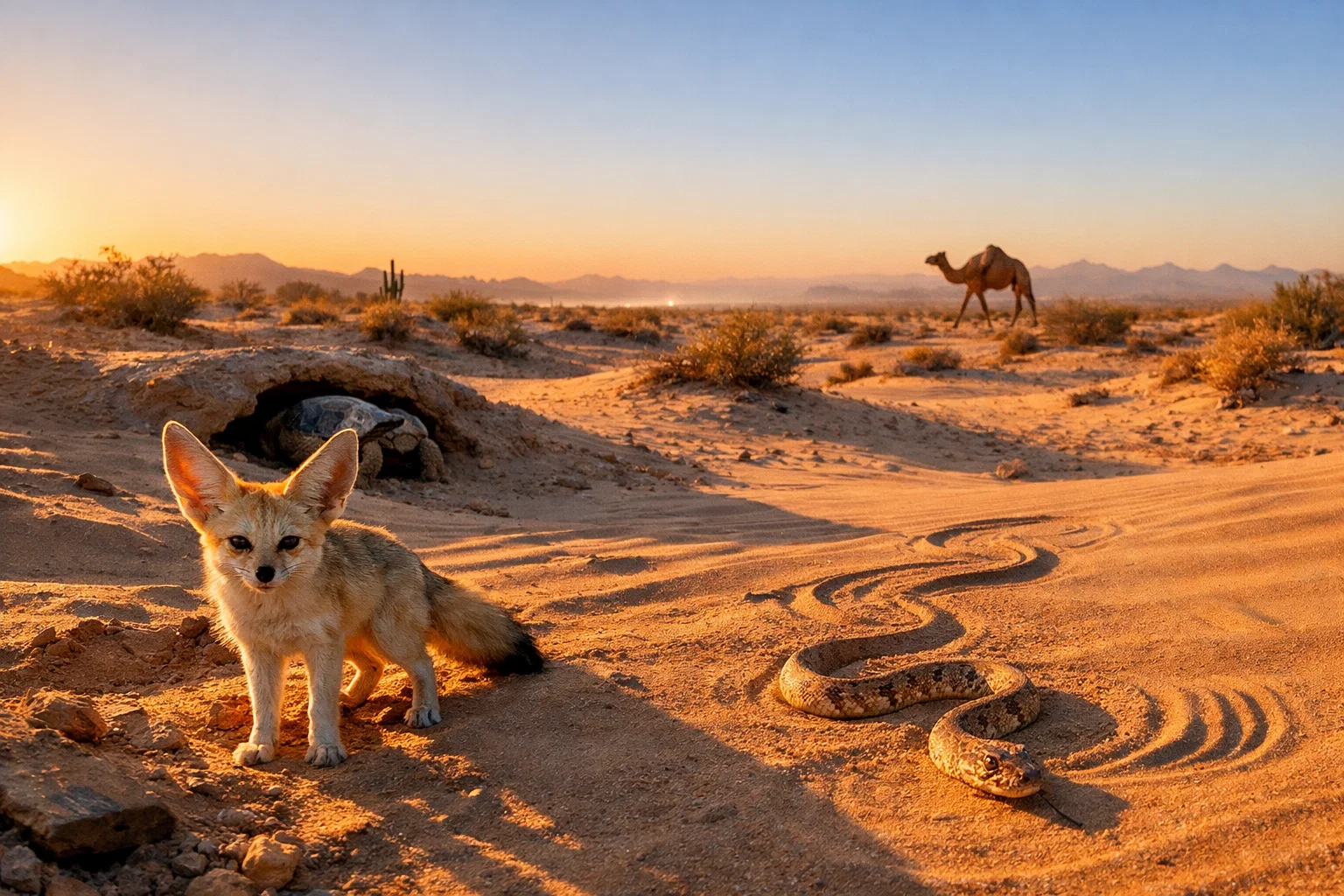
We can also reduce greenhouse gas emissions. Transitioning to renewable energy and conserving forests limits further warming. Every degree of temperature stabilization reduces habitat stress. Shifting rainfall and drought patterns also affect survival in Desert Animal Adaptations and Survival.
Major Habitat Changes Overview
| Ecosystem Type | Primary Climate Threat | Measurable Impact | Ecological Consequence |
|---|---|---|---|
| Arctic Regions | Rising temperatures | 13% ice loss/decade | Reduced polar bear hunting time |
| Tropical Forests | Drought and fire | 18M hectares burned in 2023 | Nest and canopy loss |
| Wetlands | Drought | 35% lost since 1970 | Bird and fish decline |
| Coral Reefs | Ocean warming | 50% decline in some reefs | Fish habitat collapse |
| Freshwater Rivers | Heat and low flow | Rising water temps | Lower salmon survival |
Bottom Line: Acting Before Habitats Collapse
The impact of climate change on wildlife habitats defines one of the most urgent environmental challenges of 2026. We now measure habitat loss, species migration, and ecosystem collapse in real time. Rising temperatures, extreme weather, and ocean changes reshape biodiversity at unprecedented speed.
We must strengthen protected areas, restore wetlands, and reduce emissions immediately. Governments, scientists, and communities share responsibility for action. Conservation corridors, renewable energy, and sustainable land use offer practical solutions.