Table of Contents
How Giraffes Digest Food is one of the most fascinating processes in wildlife biology. Giraffes are the tallest land mammals on Earth, reaching up to 18 feet in height and weighing between 1,600 and 3,000 pounds. Yet their diet consists mainly of leaves, shoots, and twigs. These plant materials are tough, fibrous, and low in protein.
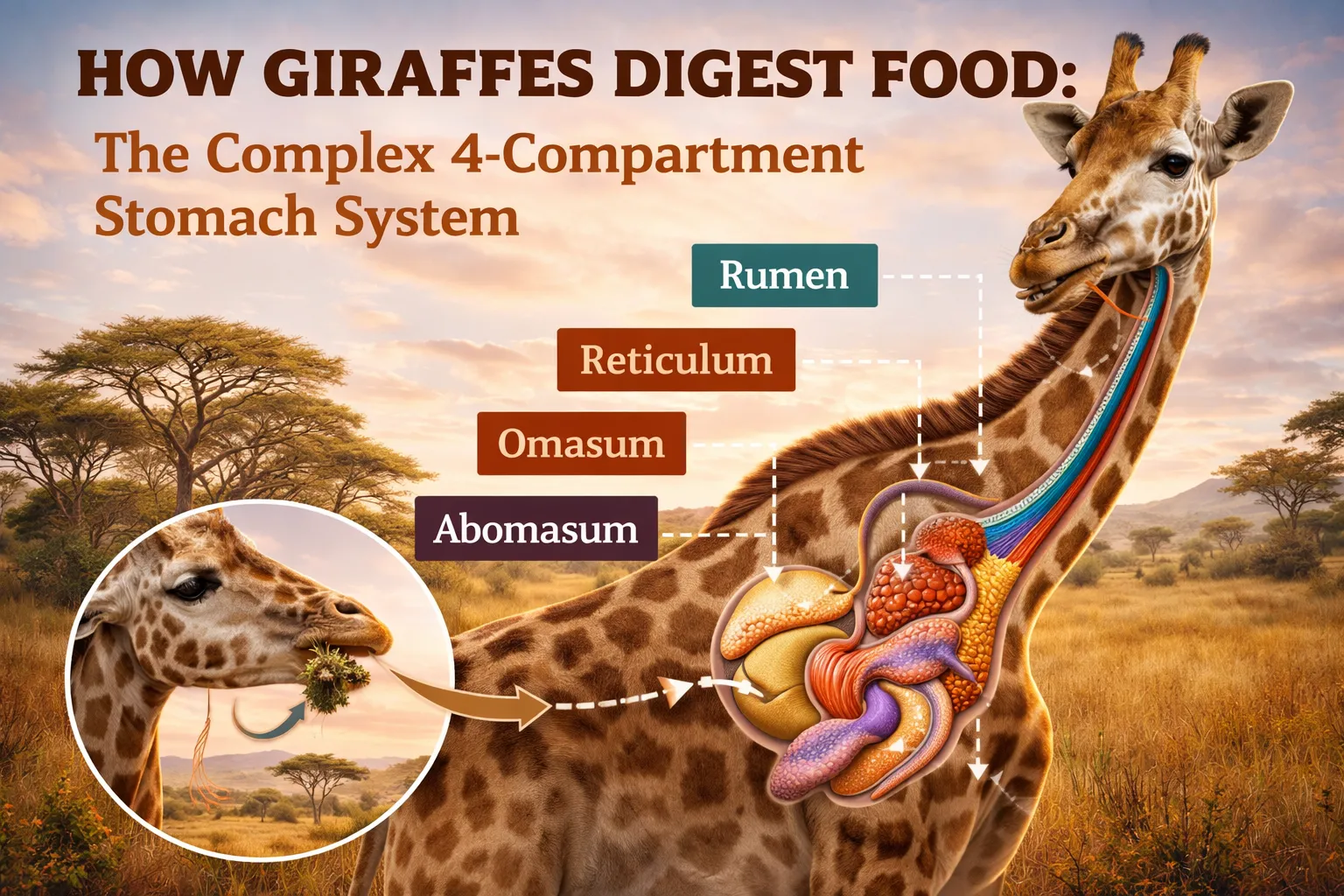
To survive on this diet, giraffes rely on a specialized four-compartment stomach system. This system allows them to break down cellulose, extract nutrients efficiently, and conserve energy in dry African savannas. According to the San Diego Zoo Wildlife Alliance, adult giraffes consume up to 75 pounds of foliage per day. That volume demands a highly efficient digestive design.
In this article, we explain How Giraffes Digest Food using verified biological research and current wildlife data as of February 24, 2026. We break down each stomach compartment, explore microbial fermentation, and explain why this system ensures survival in harsh environments.
The Four-Compartment Stomach: Built for Efficiency
Rumen – The Fermentation Chamber
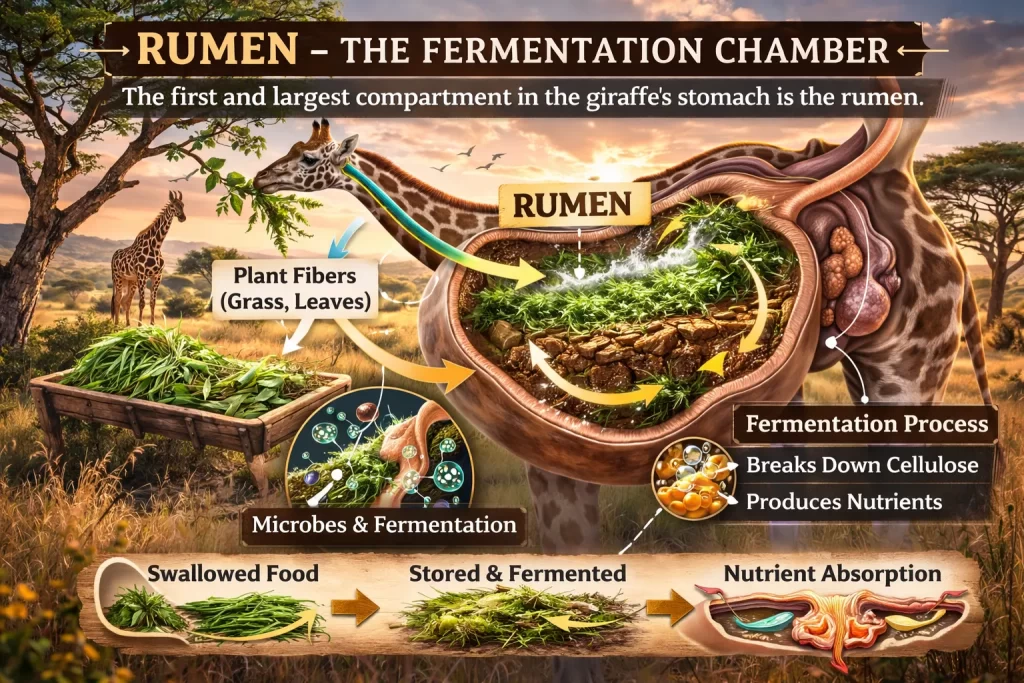
The first and largest compartment in the giraffe’s stomach is the rumen. In adult giraffes, the rumen can hold more than 25 gallons of partially digested plant material. This chamber acts as a fermentation vat filled with billions of microbes.
These microbes break down cellulose, a complex carbohydrate found in leaves and bark. Without microbial fermentation, giraffes could not access the nutrients locked inside plant cell walls. Research published by Oxford Academic confirms that ruminants rely heavily on microbial symbiosis for survival.
The rumen allows giraffes to extract volatile fatty acids, their main energy source. This adaptation makes leaf-based diets sustainable. For a broader understanding of how these animals fit into Africa’s wildlife classifications, return to our main guide on The Big Five vs The Ugly Five.
Reticulum – The Sorting Center
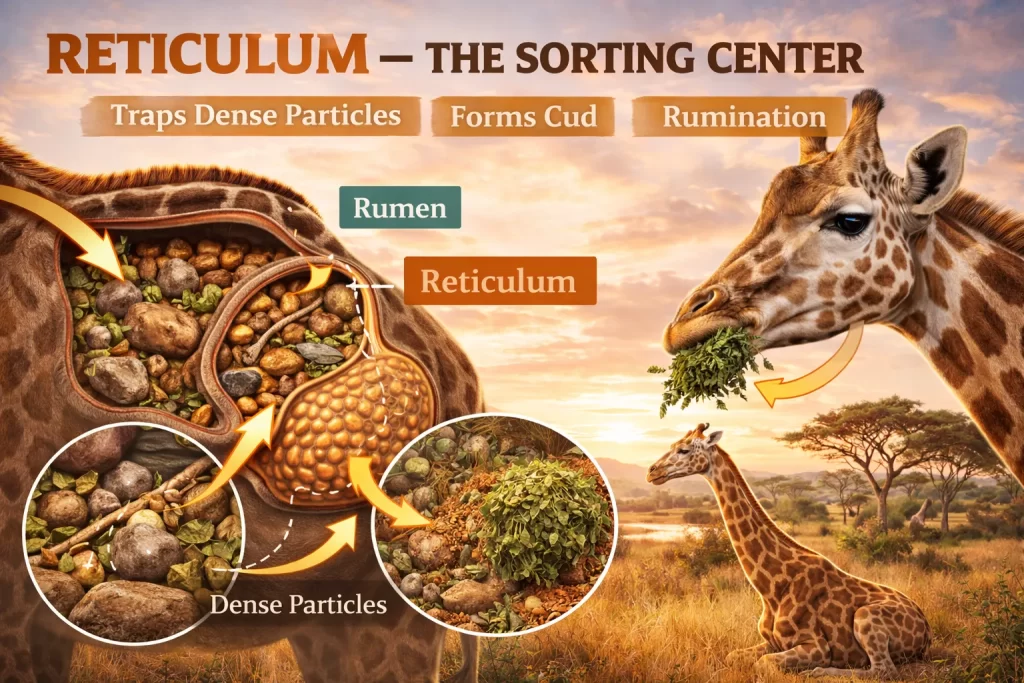
The reticulum works closely with the rumen. It traps dense particles and forms cud, which giraffes regurgitate and chew again. This process is called rumination.
A giraffe may spend up to 8 hours per day chewing cud. This repeated chewing reduces particle size and increases surface area for microbial digestion. Efficient particle sorting ensures that only properly processed material moves forward.
This step improves nutrient absorption and reduces digestive waste. Large herbivores share unique adaptations. Compare digestive survival with rhinos vs elephants and their skin protection strategies.
Omasum and Abomasum: Final Processing Stages
Omasum – Water and Nutrient Absorption
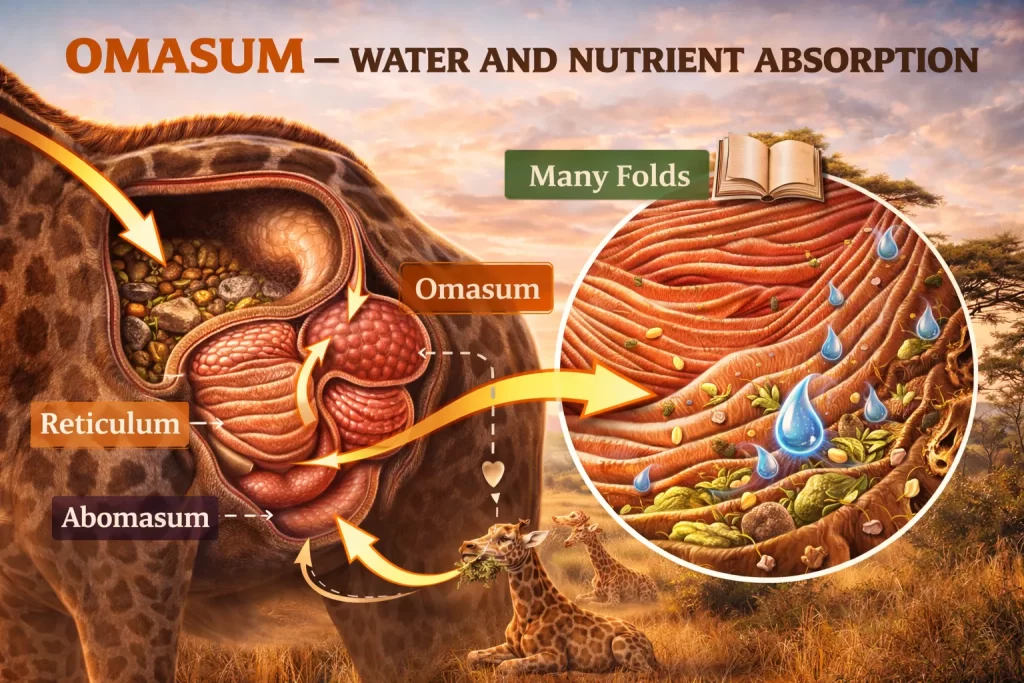
The omasum acts as a filter. It contains many folds, often described as pages of a book. These folds increase surface area for absorption.
Here, water and minerals are absorbed before food passes to the final chamber. In dry habitats across Kenya and Tanzania, water conservation is critical. Giraffes may go several days without direct water intake, relying heavily on moisture from leaves.
Efficient water extraction in the omasum supports survival during drought periods. This adaptation reduces dehydration risk in semi-arid regions.
Abomasum – The True Stomach
The abomasum functions like a human stomach. It secretes hydrochloric acid and digestive enzymes.
This acidic environment breaks down microbes from the rumen. Ironically, those microbes become a protein source. According to studies in comparative digestive physiology, microbial protein supplies essential amino acids to ruminants.
The abomasum completes chemical digestion before nutrients enter the small intestine. This final stage ensures maximum energy extraction from low-quality forage. You can explore the full guide here: The Big Five vs The Ugly Five.
Why This System Matters in the Wild
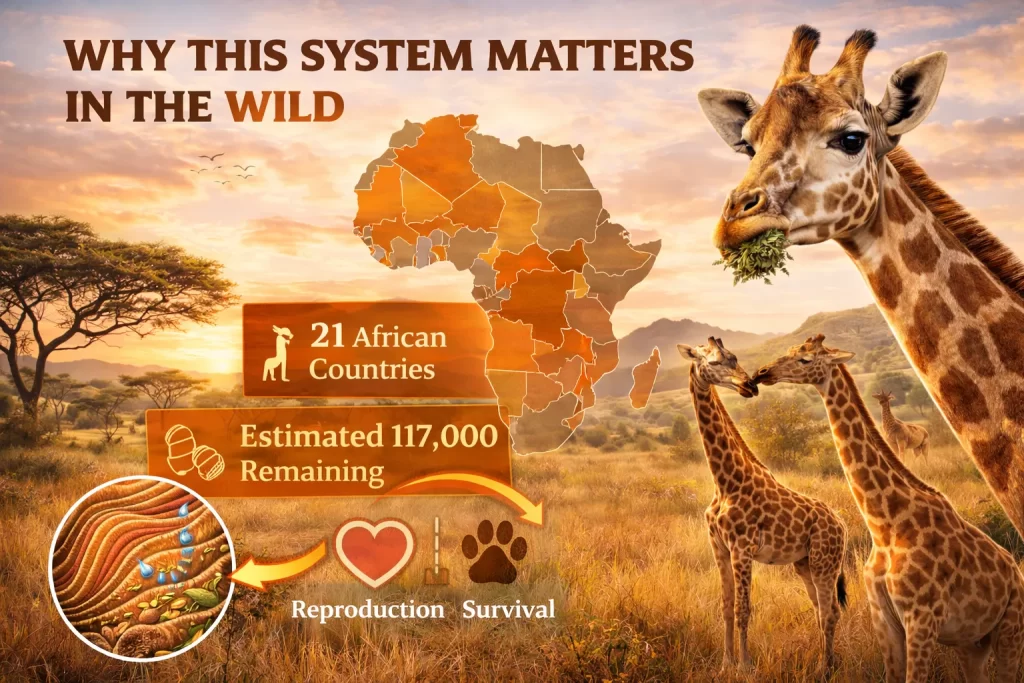
How Giraffes Digest Food directly impacts their survival and reproduction. Giraffes inhabit 21 African countries as of 2026, with an estimated 117,000 individuals remaining, according to the Giraffe Conservation Foundation at giraffeconservation.org. Habitat loss and climate shifts increase dietary pressure.
Their digestive system provides several survival advantages:
- Extracts energy from low-nutrient leaves.
- Maximizes water conservation in dry climates.
- Converts microbes into protein.
- Allows rapid feeding followed by safe rumination.
This system enables giraffes to feed quickly while standing. They often eat for 16 to 20 hours daily, but can retreat to safer areas to chew cud. That balance reduces predation risk from lions.
Efficient digestion supports their large body size and long neck growth.
Daily Feeding and Digestion Data (2026 Snapshot)
Below is a data summary that explains How Giraffes Digest Food in measurable terms.
| Digestive Metric | Data (2026) | Why It Matters |
|---|---|---|
| Daily food intake | Up to 75 lbs | Meets energy needs |
| Rumination time | 6–8 hours daily | Enhances fiber breakdown |
| Rumen capacity | 25+ gallons | Supports microbial fermentation |
| Stomach chambers | 4 | Enables staged digestion |
| Countries inhabited | 21 African nations | Reflects ecological adaptation |
Data sources include San Diego Zoo Wildlife Alliance at animals.sandiegozoo.org and peer-reviewed comparative digestion research on sciencedirect.com. These sources provide updated biological insights as of 2026.
This structured stomach system represents one of nature’s most efficient plant-processing designs.
Key Adaptations That Enhance Digestion
Saliva Production
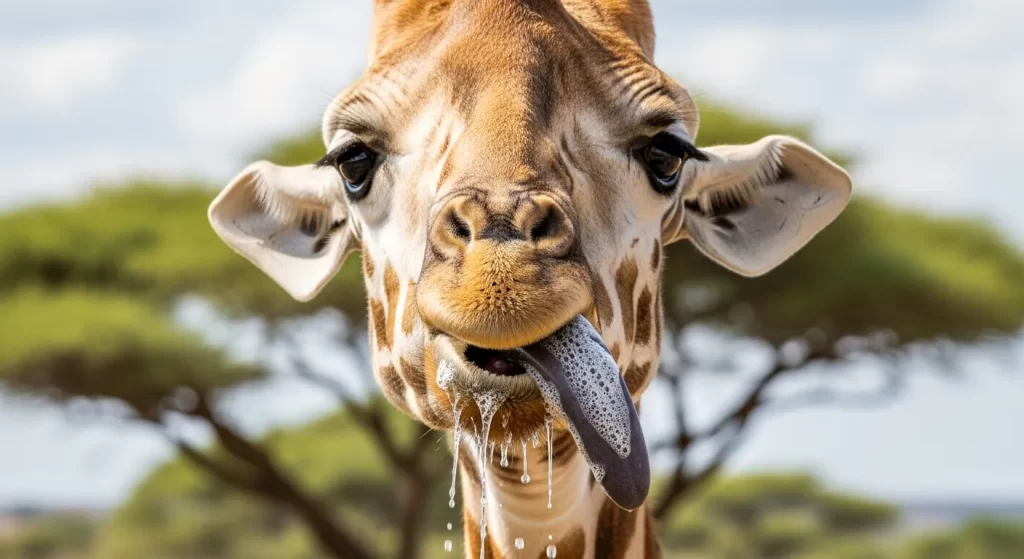
Giraffes produce large amounts of alkaline saliva. Saliva buffers rumen acidity and protects microbes. Without proper pH balance, fermentation would slow significantly.
Continuous saliva flow keeps digestion stable throughout long feeding periods.
Long Neck Advantage
Their 6-foot neck allows access to acacia leaves beyond other herbivores’ reach. Reduced competition ensures consistent nutrient intake.
Better access to food supports the demands of their four-compartment stomach.
Slow Metabolism
Giraffes maintain a relatively slow metabolic rate compared to smaller herbivores. This efficiency reduces total daily energy requirements.
Combined with microbial fermentation, this trait allows survival in seasonal food shortages.
Each adaptation strengthens the overall digestive system. Many herbivores are active at dusk. Discover the top nocturnal animals in the Kalahari Desert.
Bottom Line
Understanding How Giraffes Digest Food reveals why these towering mammals thrive in demanding ecosystems. Their four-compartment stomach system converts fibrous leaves into usable energy through microbial fermentation, rumination, and staged digestion.
This process supports water conservation, nutrient extraction, and protein synthesis. It allows giraffes to consume up to 75 pounds of foliage daily while surviving in semi-arid habitats.
FAQs
How many stomachs do giraffes have?
Giraffes have one stomach with four compartments: rumen, reticulum, omasum, and abomasum.
How long do giraffes chew cud daily?
They chew cud for 6 to 8 hours each day.
What do giraffes mainly eat?
They primarily eat acacia leaves, shoots, and twigs.
Why is the rumen important?
The rumen ferments cellulose using microbes to produce energy.
Can giraffes survive without drinking water daily?
Yes. They extract moisture from leaves and conserve water efficiently.