Supporting up to six tons of weight on four points of contact requires more than just “big feet.” It requires a biological masterpiece of engineering. The study of elephant foot anatomy and skeletal weight distribution reveals a complex system of shock absorbers, “zombie toes,” and columnar bone structures that allow these giants to walk with more silence and less ground pressure than a human in high heels.
To see how this weight-bearing system integrates with the rest of the animal’s biology, consult our Comprehensive Guide to Elephant Physiology and Health.
1. The Skeletal Scaffold: Columnar vs. Compliant
The foundation of elephant foot anatomy and skeletal weight distribution is the graviportal (weight-carrying) limb structure. Unlike the angled legs of a horse or dog, an elephant’s legs are stacked vertically under the body.
The “4×4 Vehicle” Analogy
Recent 2026 biomechanical research has debunked the myth that elephant legs are rigid pillars. Instead, they function like “bouncy struts.”
- Vertical Alignment: The long bones (humerus and femur) are positioned to minimize muscle effort while standing still.
- Limb Compliance: When moving, the limbs bend and rebound. This “compliance” ensures that the peak forces on the joints remain low, preventing the catastrophic bone fractures that would occur if the limbs were truly rigid.
- Weight Ratio: Approximately 60% of an elephant’s body mass is supported by the forelimbs, which is a critical factor in elephant foot anatomy and skeletal weight distribution.
2. The Secret “6th Toe”: The Prepollex and Prehallux
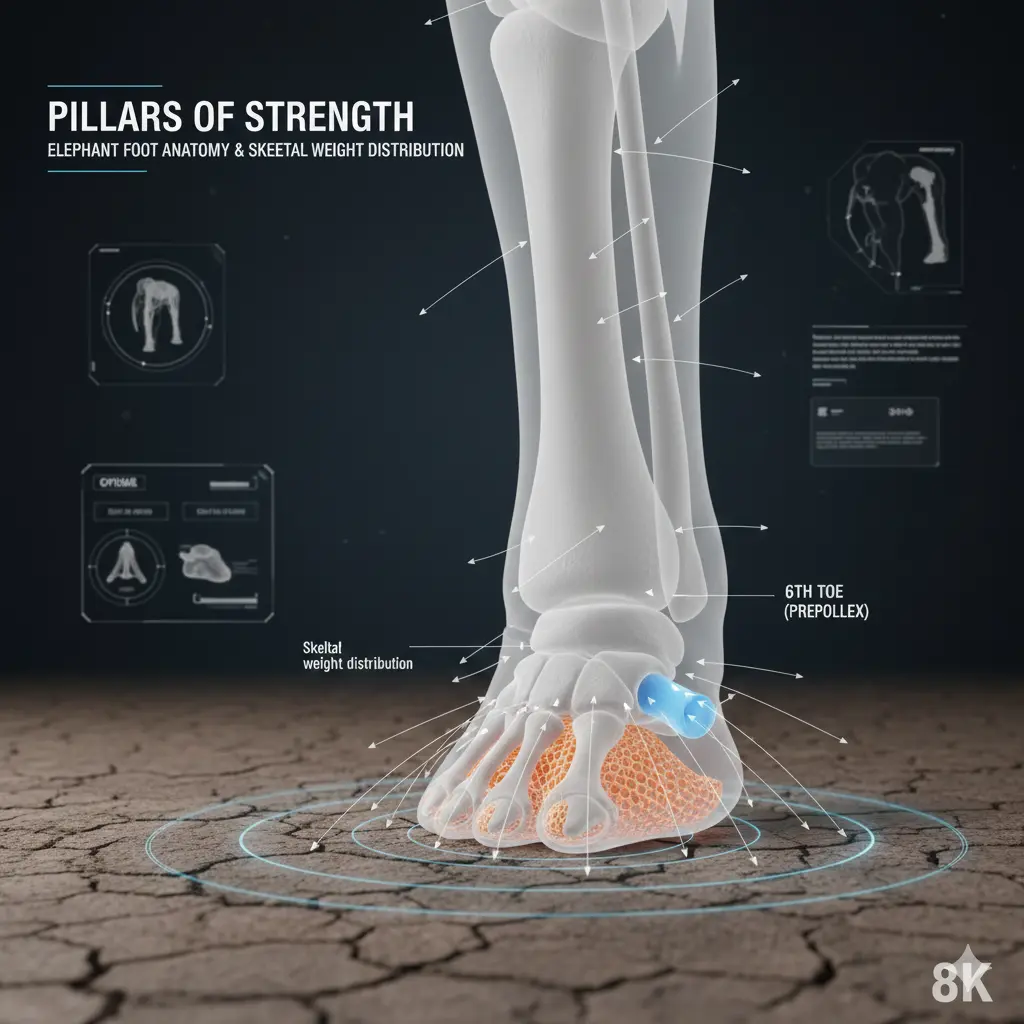
One of the most remarkable features of elephant foot anatomy and skeletal weight distribution is the presence of a “sixth digit.” Known as the prepollex (in the front foot) and prehallux (in the back), these are cartilaginous rods that act like a structural kickstand.
These “predigits” do not touch the ground. Instead, they point backward into the large, fibrous fat pad. Their purpose is to provide an internal “scaffold” that supports the massive cushion, ensuring the fat pad doesn’t collapse under the pressure of the elephant’s weight. Without these rods, the entire elephant foot anatomy and skeletal weight distribution would lose its shock-absorbing capability.
3. The Digital Cushion: Nature’s High-Tech Shock Absorber
The “sole” of the elephant is not a simple block of fat. The digital cushion involved in elephant foot anatomy and skeletal weight distribution is a sophisticated honeycomb of:
- Collagenous Sheets: To provide structural tension.
- Adipose (Fat) Pockets: To absorb and distribute energy.
- Elastic Fibers: To allow the foot to expand when it hits the ground and “shrink” when it is lifted.
When an elephant puts weight on its foot, the foot actually expands in circumference. This increases the surface area in contact with the ground, reducing the pressure (PSI) to roughly that of a human. When the foot is lifted, it contracts, allowing the elephant to pull its feet out of deep mud with ease. This “dynamic expansion” is the secret to the effective elephant foot anatomy and skeletal weight distribution.
4. Sensory Feedback: The Foot as an Ear
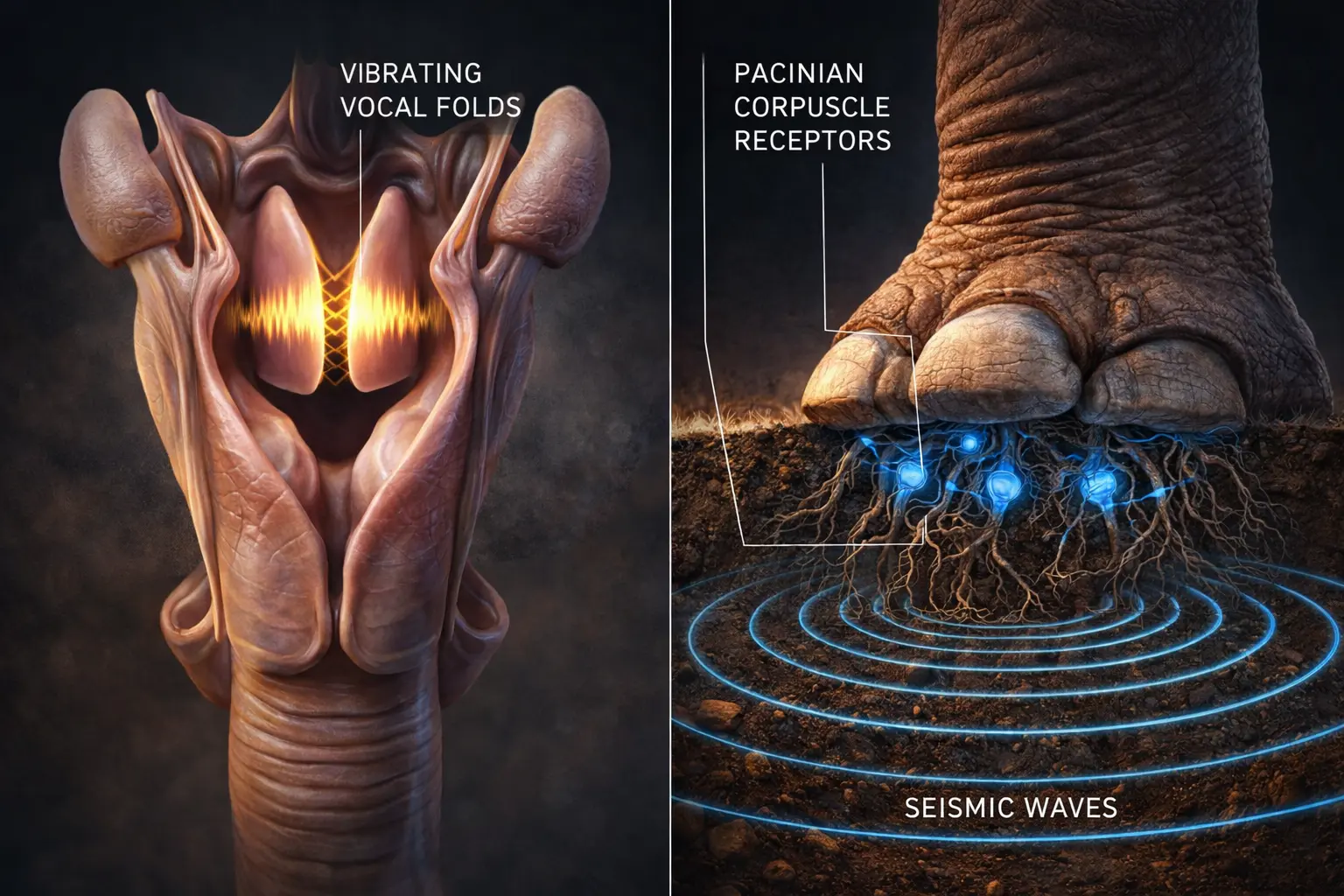
We cannot discuss elephant foot anatomy and skeletal weight distribution without mentioning the Pacinian corpuscles. These are highly sensitive mechanoreceptors located in the dermis and the distal cushion of the foot.
Research updated in 2025 confirms that elephants “lean” onto their front feet to better detect seismic vibrations. By shifting their weight distribution, they can “triangulate” the direction of a distant rumble. Their feet are essentially satellite dishes for the ground, merging the worlds of biomechanics and communication.
5. Clinical Implications: Why This Matters
For SEO experts in the animal health niche, understanding elephant foot anatomy and skeletal weight distribution is vital for captive care.
- Substrate Matters: Walking on hard concrete disrupts the natural expansion-contraction cycle of the foot, leading to osteoarthritis and cracked nails.
- Obesity: Even a 10% increase in body weight can overstress the prepollex/prehallux rods, causing permanent lameness.