
Table of Contents
Key Takeaways
- Solar power offers significant long-term savings on energy bills and reduces environmental impact.
- There are various solar panels and systems to consider for household needs.
- Government incentives and rebates can substantially ease the upfront cost of solar installation.
- Proper system sizing and maintenance are crucial for maximizing benefits.
- Choosing a qualified installer and understanding warranties helps ensure a successful investment.
- Payback periods vary, but most homeowners see returns within a few years.
Why More Homeowners Are Adopting Solar Power
The shift toward renewable energy is more than a trend—it’s a response to increasing energy bills and environmental concerns. More families are exploring solar solutions to lower costs and reduce their homes’ carbon emissions. Those interested in a reliable local provider can look into Pensacola home solar systems, which offer tailored solar solutions for various property types.
According to The New York Times, the U.S. continues to experience an unprecedented surge in residential solar installations—a signal that the technology is becoming increasingly accessible for the average homeowner. The long-term savings and sustainability advantages are particularly compelling in regions with abundant sunlight, such as Florida and California.
How Solar Panels Actually Work
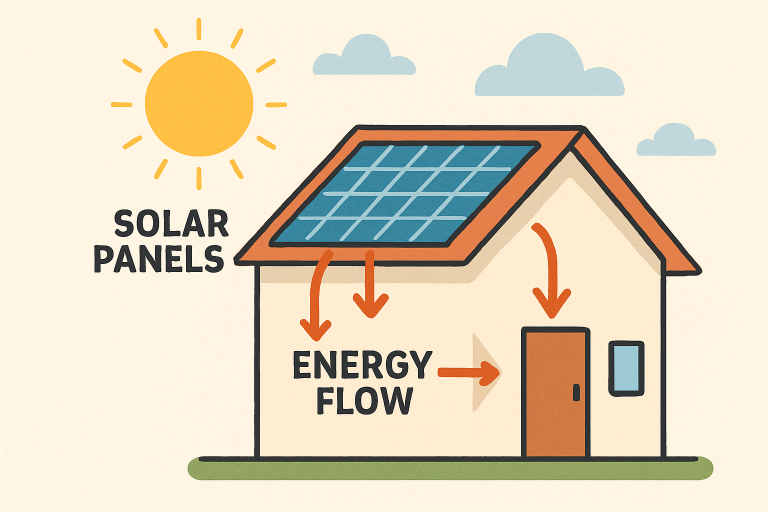
A basic understanding of solar energy’s functions can empower homeowners to make informed decisions. Photovoltaic (PV) cells within solar panels absorb sunlight and convert it to direct current (DC) electricity. An inverter transforms this energy into alternating current (AC), which powers household devices and appliances. Any excess energy your system produces can be sent back to the grid through net metering, earning you energy credits and further reducing monthly costs. See How Does Solar Work – Department of Energy for a detailed explanation.
Types of Solar Systems for Homes
Home solar systems come in three primary configurations: grid-tied, off-grid, and hybrid. Grid-tied setups are ideal for most suburban and urban households, as they allow homeowners to draw power from the utility when needed and feed surplus energy back into the grid. While more independent, off-grid systems require larger battery storage to ensure you never run out of energy, these are best for remote properties without reliable grid access. Hybrid systems combine batteries with a grid connection, offering the flexibility of energy independence with backup. For an overview, visit Types of Solar Energy Systems – Department of Energy.
What to Know About Installation and Sizing
Choosing the right system size is crucial for cost-effectiveness and efficiency. Professional solar installers use historical energy usage data, assess the position and angle of your roof, and evaluate shading from nearby trees or neighboring structures. This personalized evaluation ensures you don’t over- or under-invest in your solar system. Comprehensive warranties on panels and inverters can further protect your investment, so compare coverage terms before making a final decision. For more, see Installing and Maintaining Your Photovoltaic (PV) System – Energy Saver.
Financial Benefits and Government Incentives
Although the upfront investment might seem daunting, federal, state, and local rebates can dramatically reduce out-of-pocket expenses. For example, the federal solar tax credit remains a significant incentive, covering up to 30% of the installation cost. Many homeowners also benefit from property tax exemptions and state-specific rebate programs. To fully understand the range of incentives applicable to your area, consult resources from the U.S. Department of Energy and your local utility company. For comprehensive, up-to-date incentive information, you can also visit the official Database of State Incentives for Renewables & Efficiency (DSIRE).
Maintenance Tips For Maximizing System Life
Solar panels require little intervention, but routine care maximizes performance and longevity. Dust, pollen, and debris accumulation can reduce output; regular rinsing and occasional professional cleaning, especially in areas with heavy foliage or pollen, keep panels running efficiently. Many systems now come with real-time monitoring apps, making it easy to catch performance issues early and schedule maintenance as needed. Learn more from the Energy Saver guide to PV system maintenance.
Estimating Payback Periods and Long-Term Savings
Most U.S. homeowners see a payback period of about seven to ten years—when cumulative savings match the system cost. System size, available sunlight, utility rates, and government incentives influence the timeline. The payoff can begin sooner than many expect because of the steadily rising price of electricity and the declining cost of solar panels. Once a system is paid off, the home often enjoys decades of nearly free power, boosting overall property value. For estimates and calculators, review Planning a Home Solar Electric System – Department of Energy.
Choosing the Right Installer: What to Look For
A successful solar project starts with choosing an experienced and certified installer. Look for companies with solid reputations, transparent price quotes, and well-defined warranty policies. It’s also good to check industry certifications, such as those from the North American Board of Certified Energy Practitioners (NABCEP). Recent customer reviews on platforms like Consumer Reports can provide invaluable insight into service quality, installation timelines, and post-installation support.
Solar Power: A Smarter, Cleaner Choice for the Future
The shift toward solar power is more than a financial calculation—it invests in sustainability and self-reliance. As panel efficiency improves and incentives remain generous, more households are discovering how easy and sensible it is to generate electricity. With proper research and partnering with reliable professionals, homeowners can take full advantage of economic and environmental benefits, ensuring a cleaner, more cost-effective future for themselves and their communities.